

The DOI matches its Crossref record.
Energy Efficiency On Smart Street Lighting Using Raspberry Pi Based On Scada And Internet Of Things (IoT)
Open accessAbstract
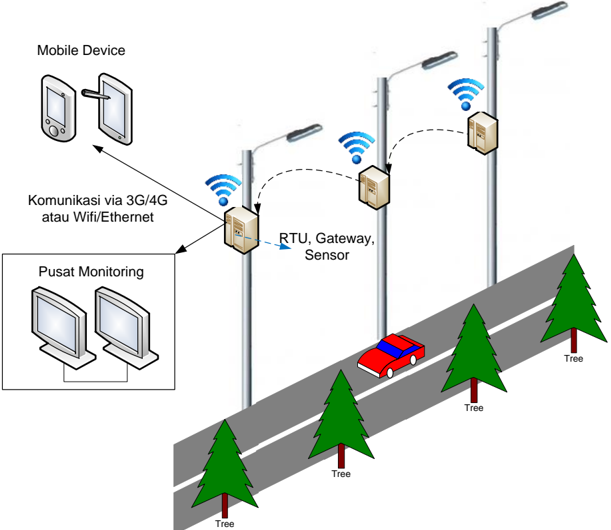
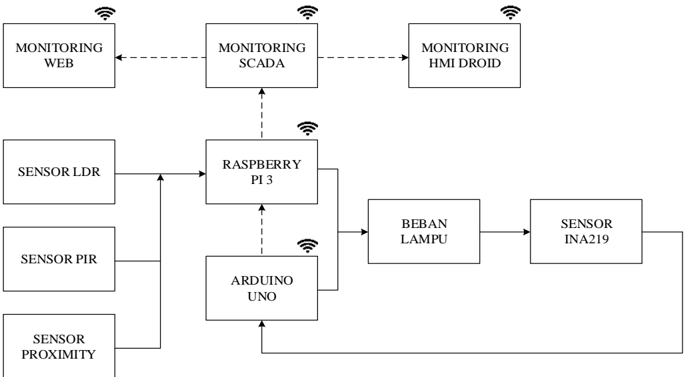
One of the criteria of a city categorized as Smart city is the ability to manage infrastructure, property and human resources intelligently. A reliable, sustainable and customable electric energy source is an absolute requirement for a smart city. However, the management of electrical energy must be economically so that it does not burden the local government budget. From a number of infrastructures that consume a lot of electrical energy under the authority of the responsibility of the local government, namely Public Street Lighting (PSL). Lighting from PLS that emits too much light when unnecessary is useless. At present, conventional PLS systems are synonymous with energy waste. Monitors and controls only do locally without having the ability to monitor and control remotely so that if there is damage or theft, it is slow to handle. The solution is to build a smart PSL system and its management. This paper presents a real-world proven solution that relies on aRaspberry Pi, SCADA, and Internet of Things (IoT). This system provide an energy efficiency. Smart PSL will work intelligently in accordance with their environmental conditions. Lighting and illumination are arranged based on the presence of people and vehicles so that they can avoid over lighting and glare. SCADA and IoT technologies are used for work process monitoring systems and data viewers that are carried out continuously and in real time. The result is the smart PLS mode is 43% more efficient than conventional PLS modes.
Overview
The claims and statistics of this paper haven’t been checked yet.
Run the check — free, no account needed. It reads the open-access text and checks the sources it cites.
Integrity signals
Registry
Cites
Statistics
Figures
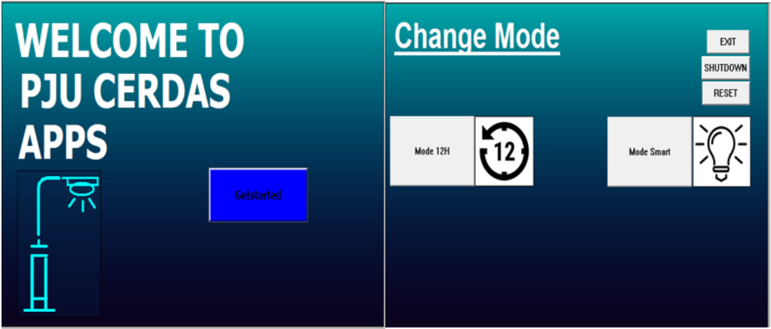
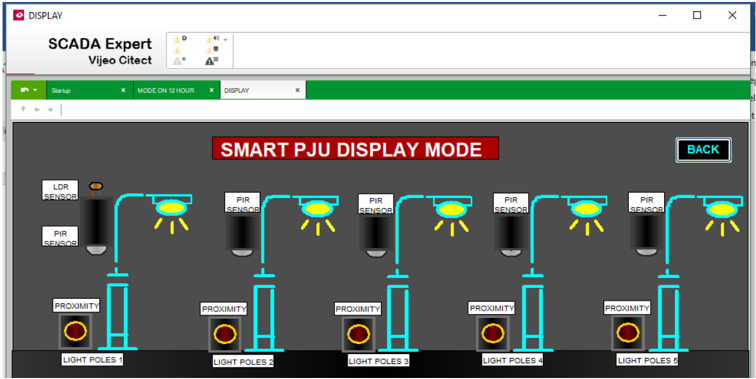
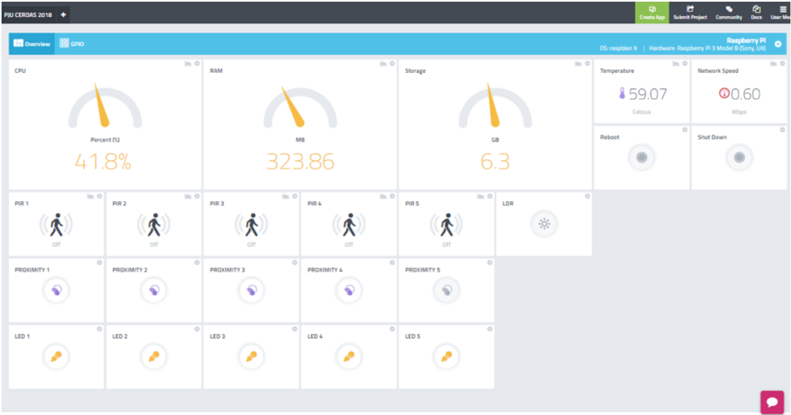
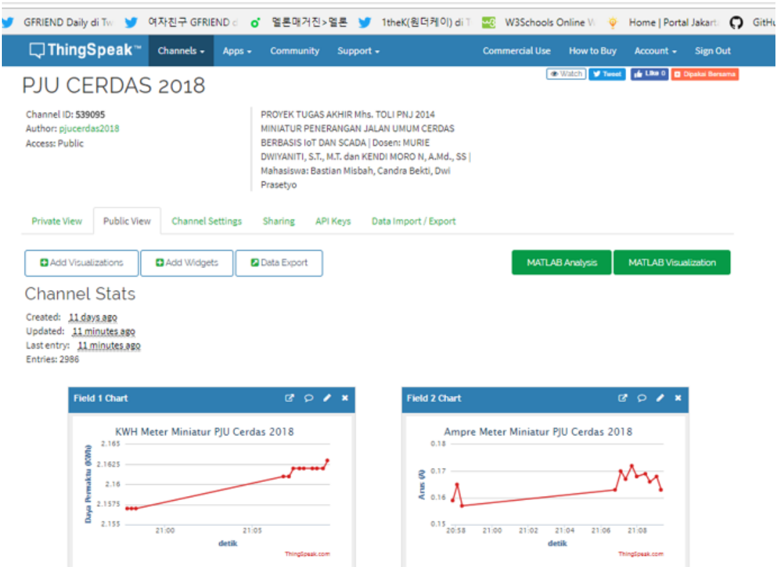
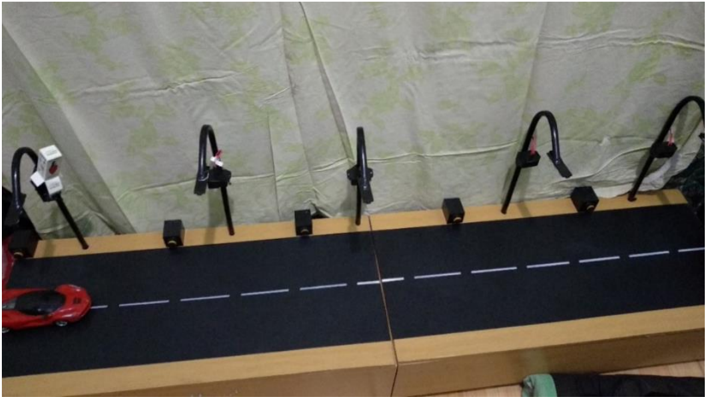
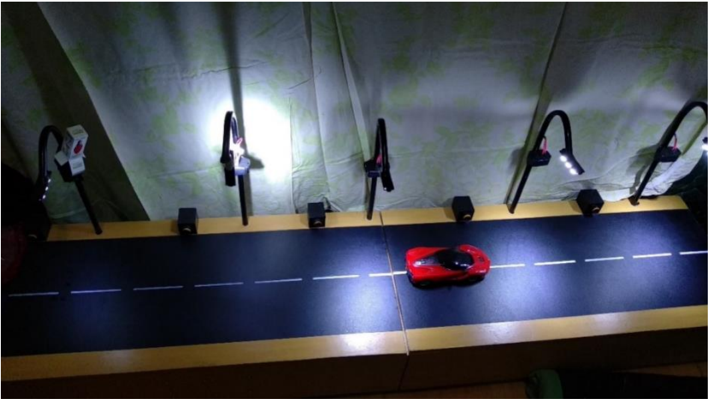
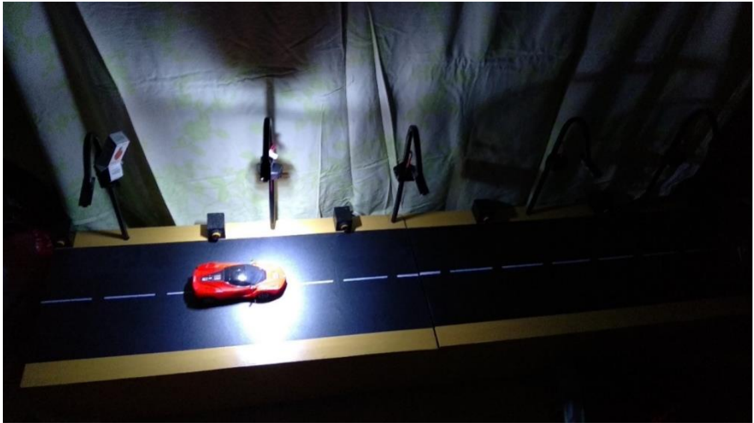
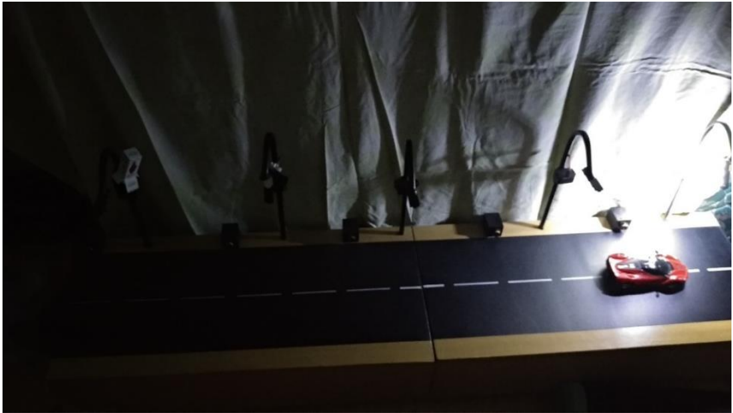
Verification
Claims the paper makes
The claims and statistics of this paper haven’t been checked yet.
Run the check — free, no account needed. It reads the open-access text and checks the sources it cites.
Claims other papers make about this one
Each is checked against this paper’s own text: does it say what the citing paper says it does?
In the citing paper
“Based on data from Dwiyaniti et al. [64], outdoor lighting in the United States (US), which mostly comes from roads and parking lots, consumes 120 hours of energy.The same amount of energy could be used to power the whole of New York for two years.”
From Machine Learning Methods in Smart Lighting Toward Achieving User Comfort: A Survey (2022) · cites this paper as Dwiyaniti et al. [64]
Self-check
Percentages, sums and reported differences re-computed from the paper’s own numbers.
The self-check needs the paper’s full text.
Citations
Cites
No references could be resolved yet.
Research works printed but not linked: 11
- Elejoste, 2013, An Easy to Deploy Street Light Control System Based on Wireless Communication and LED Technology, Sensors, 1, 6492, 10.3390/s130506492 · DOI
- Nanavatia, 2016, Street Light Control System Using Sun Tracking Solar Panel Review, International Journal of Innovative and Emerging Research in Engineering, 3, 9
- Tiwari, 2015, Concept of Smart Solar Street Ligth, International Advanced Research Journal in Science, Engineering and Technology (IARJSET), 2, 152
- Alsakkaf, 2016, An Automatic Off-grid Solar Street Lighting System, International Journal of Innovative Research in Elekctrical, Electronics, Instrumetation and Control Engineering, 4, 1
- Mohamed, 2017, An Intelligent Lighting Control System (ILCS) Using Lab VIEW, Journal of Fundamental and Applied Sciences, 9, 602, 10.4314/jfas.v9i2s.38 · DOI
- Leccese, 2013, Remote-control System of High Efficiency and Intelligent Street Lighting using a Zigbee network of devices and sensors, IEEE Trans. Power Deliv, 28, 21, 10.1109/TPWRD.2012.2212215 · DOI
- R, 2015, Intelligent Street Lighting System, IJETEMAS, 3, 132
- 2012, Wireless Streetlight Control System, International Journal Computer Application, 4, 1
- 2011, A Novel Design of an Automatic Lightinf Control System for a wirelles sensor network with increased sensor lifetime and reduced sensor number, Sensors, 11, 8933, 10.3390/s110908933 · DOI
- Gehlot, 2016, IoT and Zigbee based Street Light Monitoring System with Lab VIEW, International Journal of Sensor and Its Applications for Control System, 4, 1, 10.14257/ijsacs.2016.4.2.01 · DOI
- Dwiyaniti, 2016, Desain dan Implementasi Remote Terimnal Unit (RTU) berbasis Arm Cortex pada Simulator Distribusi Air, Jurnal Nasional Teknik Elektro (JNTE), 5
Cited by
Sorted by citations
Machine Learning Methods in Smart Lighting Toward Achieving User Comfort: A Survey
Putrada, A. G., Abdurohman, M., Perdana, D., & Nuha, H. H. (2022) · IEEE Access · doi:10.1109/access.2022.3169765 · Cited by 101
“Based on data from Dwiyaniti et al. [64], outdoor lighting in the United States (US), which mostly comes from roads and parking lots, consumes 120 hours of energy.”
Method
Metadata
- Authors
- Dwiyaniti, M., Nitisasmita, K. M., & Tohazen
- Affiliations
- Jakarta State Polytechnic (ID)
- Corresponding author
- Dwiyaniti, Murie
- ORCID
- Dwiyaniti, Murie
- Venue
- Journal of Physics: Conference Series
- Publisher
- IOP Publishing
- Published
- 2019-12-01
- Volume
- 1364
- Issue
- 1
- Pages
- 012034
- ISSN
- 1742-6588 (ISSN-L)
- 1742-6596
- OpenAlex
- W2995299372
- Cited by
- 14
- References
- 0
- Citations by year
- 2024: 1 · 2023: 4 · 2022: 6 · 2021: 1 · 2020: 2
- FWCI
- 3.61
- Type
- conference paper
- Language
- en
- Open access
- diamond
- doi.org
- Licence
- Locations
- Journal of Physics Conference Series (publishedVersion, cc-by)
- Topics
- Social Sciences › Urban Studies › Smart Cities and Technologies
- Physical Sciences › Environmental Science › Global and Planetary Change › Impact of Light on Environment and Health
- Physical Sciences › Engineering › Electrical and Electronic Engineering › Arduino and IoT Applications
- Keywords
- smart street lighting, energy efficiency, Raspberry Pi, SCADA, Internet of Things, smart cities, remote monitoring and control, real-time data visualization, adaptive lighting, street lighting
About these checks
Registry, retraction, Cites and statistics results are computed, not judged, with one exception: a printed reference that no index lists is read once by a model before it counts as a citation error. Claims are extracted by a model and kept only when their quote appears verbatim in the text; each cited source is then checked, with a model’s help, for whether it says what the claim relies on. Those verdicts can be wrong — read the claim’s quote and the cited source before relying on one.
Statistics and arithmetic are recomputed, not judged.
Confidence bands are shown only for fields calibrated on our annotated test set. None is calibrated yet, so no band is shown.
What counts as a claim ›How we measure confidence ›How we check this ›
Are you an author, or do you see a problem with this page? Request a review
