

The DOI matches its Crossref record; 3 of the 3 references it cites were found in a registry or an index.
Spatial arrangement of biogenic reefs alters boundary layer characteristics to increase risk of microplastic bioaccumulation
Abstract
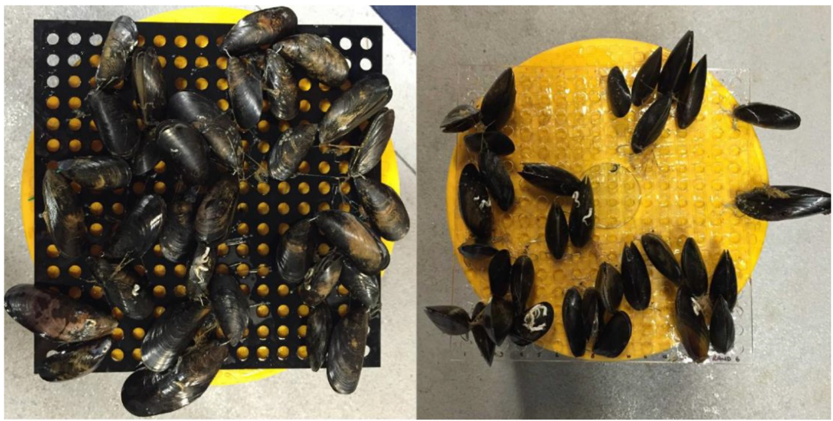
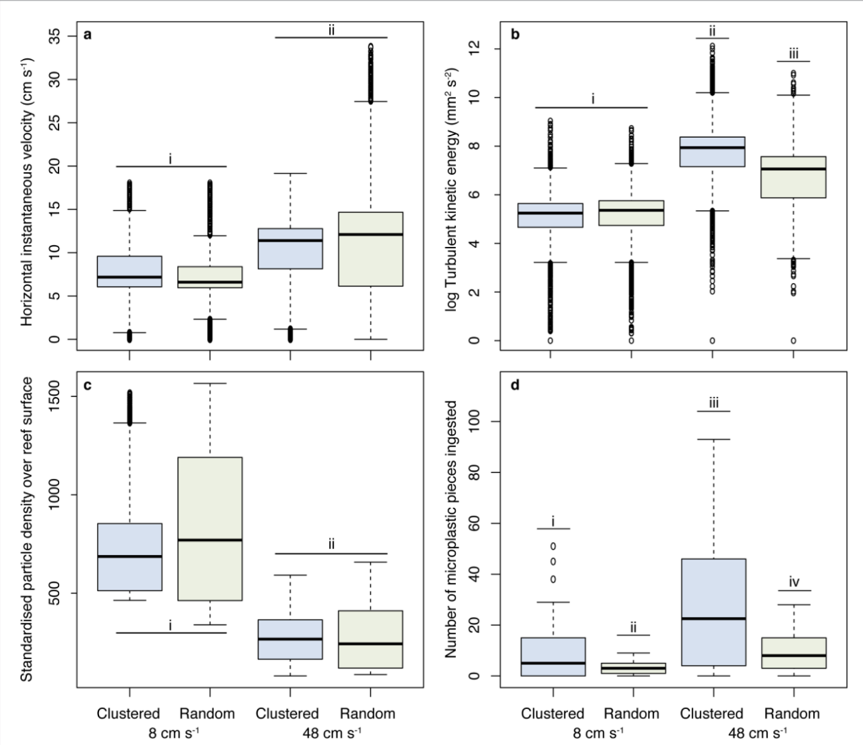
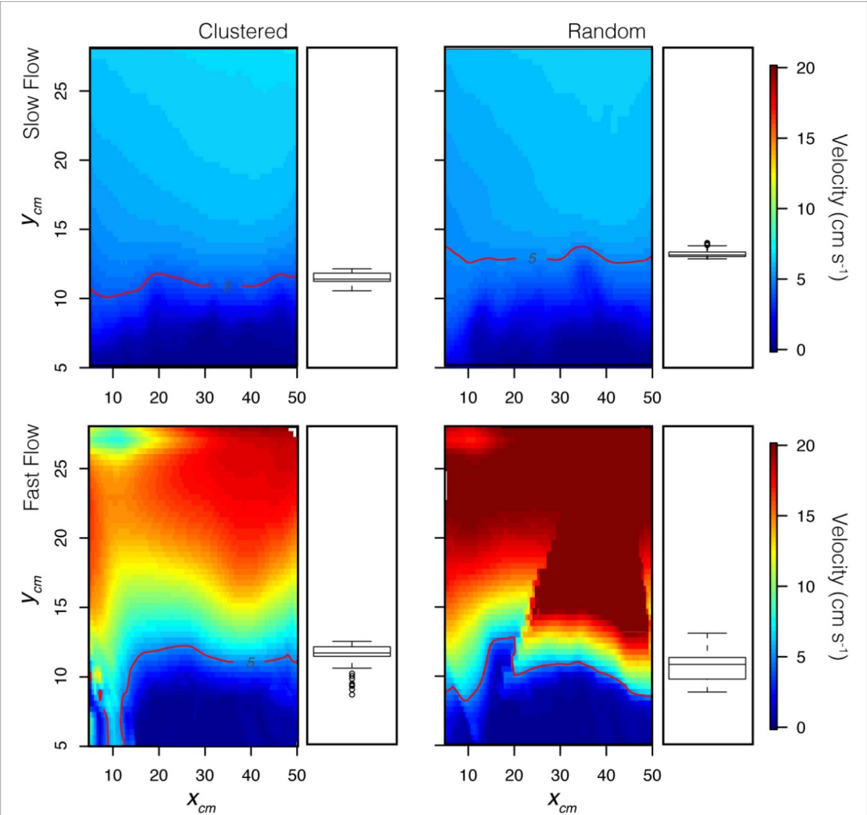
Microplastics are now synonymous with human impacts on the environment and as a threat to marine organisms. Numerous taxa are at risk from microplastics including commercially valuable bivalves as seafood, which are also disproportionately important as biogenic reef-forming species that enhance biodiversity such that they are commonly protected under conservation actions. As a sessile filter-feeding organism, bivalves are highly susceptible to microplastic ingestion but despite their socio-economic and ecological importance, no research has been undertaken to assess how a reef’s structural arrangement might affect plastic ingestion. Here, using a series of flume experiments, we examined how change in spatial arrangement of the blue mussel, Mytilus edulis , interacts with different flow speeds to effect retention of microplastic over reef surfaces and ingestion risk by individual mussels. Our results show that clumped spatial arrangements reduce boundary layer velocities, and increase turbulence, boundary layer thickness and plastic retention over reef surfaces under faster flow conditions, increasing plastic ingestion by 3-fold. Our findings suggest that the structural arrangement and rugosity of natural reef structures may create natural sinks of anthropogenic pollution, and species like Mytilus that are also important species for human consumption, while disproportionately susceptible to microplastic pollution, may be useful bioindicators of microplastic pollution.
Overview
The claims and statistics of this paper haven’t been checked yet.
Run the check — free, no account needed. It reads the open-access text and checks the sources it cites.
Integrity signals
Registry
Cites
Statistics
Figures
Verification
Claims the paper makes
The claims and statistics of this paper haven’t been checked yet.
Run the check — free, no account needed. It reads the open-access text and checks the sources it cites.
Claims other papers make about this one
Each is checked against this paper’s own text: does it say what the citing paper says it does?
In the citing paper
“Most research to date has focused on the presence and impact of MP on the marine environment and organisms (Haegerbaeumer et al. 2019;Lim, Fraser, and Knights 2020)”
From Microplastics and nanoplastics science: collecting and characterizing airborne microplastics in fine particulate matter (2021) · cites this paper as Lim, Fraser, and Knights 2020
Self-check
Percentages, sums and reported differences re-computed from the paper’s own numbers.
The self-check needs the paper’s full text.
Citations
Cites
New Effect Size Rules of Thumb
Sawilowsky, S. S. (2009) · Journal of Modern Applied Statistical Methods · doi:10.22237/jmasm/1257035100 · Cited by 3,254
Interactions of microplastic debris throughout the marine ecosystem
Galloway, T. S., Cole, M., & Lewis, C. (2017) · Nature Ecology & Evolution · doi:10.1038/s41559-017-0116 · Cited by 1,955
Trophic level transfer of microplastic: Mytilus edulis (L.) to Carcinus maenas (L.)
Farrell, P., & Nelson, K. (2013) · Environmental Pollution · doi:10.1016/j.envpol.2013.01.046 · Cited by 1,507 · cited 1×
“These mechanisms may result in the increased susceptibility of reefs to microplastic ingestion and increase the likelihood of trophic-level transfer (Farrell and Nelson 2013, Khan and Prezant 2018) and biomagnification of microplastic-associated contaminants (Mato et al 2001) to higher trophic…”
Background
Research works printed but not linked: 62
- Arcement, 1989, Guide for selecting Manning’s roughness coefficients for natural channels and flood plains, 2339, 10.3133/wsp2339 · DOI
- Asmus, 1992, Benthic-pelagic flux rates on mussel beds: tunnel and tidal flume methodology compared, Helgoländer Meeresuntersuchungen, 46, 341, 10.1007/BF02367104 · DOI
- Bell, 1994, Quantifying “wave exposure”: a simple device for recording maximum velocity and results of its use at several field sites, J. Exp. Mar. Biol. Ecol., 181, 9, 10.1016/0022-0981(94)90101-5 · DOI
- Brandon, 2016, Long-term aging and degradation of microplastic particles: comparing in situ oceanic and experimental weathering patterns, Mar. Pollut. Bull., 110, 299, 10.1016/j.marpolbul.2016.06.048 · DOI · Paper page
- Brillant, 2000, Post-ingestive selection in the sea scallop, Placopecten magellanicus (Gmelin): the role of particle size and density, J. Exp. Mar. Biol. Ecol., 253, 211, 10.1016/S0022-0981(00)00258-6 · DOI
- Browne, 2008, Ingested microscopic plastic translocates to the circulatory system of the mussel, Mytilus edulis (L.), Environ. Sci. Technol., 42, 5026, 10.1021/es800249a · DOI · Paper page
- Butman, 1994, Flume experiments on food supply to the blue mussel Mytilus edulis L. as a function of boundary layer flow., Limnol. Oceanogr., 39, 1755, 10.4319/lo.1994.39.7.1755 · DOI
- Christaki, 1998, Consumption of picoplankton-size particles by marine ciliates: effects of physiological state of the ciliate and particle quality, Limnol. Oceanogr., 43, 458, 10.4319/lo.1998.43.3.0458 · DOI
- Cole, 2013, Microplastic ingestion by zooplankton, Environ. Sci. Technol., 47, 6646, 10.1021/es400663f · DOI · Paper page
- Commito, 2000, Structural complexity in mussel beds: the fractal geometry of surface topography, J. Exp. Mar. Biol. Ecol., 255, 133, 10.1016/S0022-0981(00)00285-9 · DOI
- D’Onghia, 2017, Anthropogenic impact in the Santa Maria di Leuca cold-water coral province (Mediterranean Sea): observations and conservation straits, Deep Sea Research Part II: Topical Studies in Oceanography, 145, 87, 10.1016/j.dsr2.2016.02.012 · DOI
- Darbha, 2012, Site-specific retention of colloids at rough rock surfaces, Environ. Sci. Technol., 46, 9378, 10.1021/es301969m · DOI
- Denny, 1987, Lift as a mechanism of patch initiation in mussel beds, J. Exp. Mar. Biol. Ecol., 113, 231, 10.1016/0022-0981(87)90103-1 · DOI
- Dustan, 2013, Digital reef rugosity estimates coral reef habitat complexity, PLoS One, 8, 10.1371/journal.pone.0057386 · DOI
- Folkard, 2010, Flow regimes in gaps within stands of flexible vegetation: laboratory flume simulations, Environmental Fluid Mechanics, 11, 289, 10.1007/s10652-010-9197-5 · DOI
- Friedman, 2012, Multi-scale measures of rugosity, slope and aspect from benthic stereo image reconstructions, PLoS One, 7, 10.1371/journal.pone.0050440 · DOI
- Fuchs, 2013, Biophysical constraints on optimal patch lengths for settlement of a reef-building bivalve, PLoS One, 8, 10.1371/journal.pone.0071506 · DOI
- Gacia, 2001, Sediment retention by a Mediterranean Posidonia oceanica meadow: the balance between deposition and resuspension, Estuarine Coastal and Shelf Science, 52, 505, 10.1006/ecss.2000.0753 · DOI
- Graham, 2009, Deposit- and suspension-feeding sea cucumbers (Echinodermata) ingest plastic fragments, J. Exp. Mar. Biol. Ecol., 368, 22, 10.1016/j.jembe.2008.09.007 · DOI
- Granata, 2001, Flow and particle distributions in a nearshore seagrass meadow before and after a storm, Mar. Ecol. Prog. Ser., 218, 95, 10.3354/meps218095 · DOI
- Green, 2016, Microplastics affect the ecological functioning of an important biogenic habitat, Environ. Sci. Technol., 51, 68, 10.1021/acs.est.6b04496 · DOI
- Green, 2019, Exposure to microplastics reduces attachment strength and alters the haemolymph proteome of blue mussels (Mytilus edulis), Environmental Pollution, 246, 423, 10.1016/j.envpol.2018.12.017 · DOI
- Green, 1998, Seabed drag coefficient over natural beds of horse mussels (Atrina zelandica), J. Mar. Res., 56, 613, 10.1357/002224098765213603 · DOI
- Harwell, 2010, A comparison of Crassostrea virginica and C. ariakensis in Chesapeake Bay: does oyster species affect habitat function?, J. Shellfish Res., 29, 253, 10.2983/035.029.0201 · DOI
- Hurlbert, 1984, Pseudoreplication and the design of ecological field experiments, Ecol. Monogr., 54, 187, 10.2307/1942661 · DOI · Paper page
- Jones, 1994, Organisms as ecosystem engineers, Oikos, 69, 373, 10.2307/3545850 · DOI
- Jørgensen, 1996, Bivalve filter feeding revisited, Mar. Ecol. Prog. Ser., 142, 287, 10.3354/meps142287 · DOI
- Kent, 2017, Commercially important species associated with horse mussel (Modiolus modiolus) biogenic reefs: A priority habitat for nature conservation and fisheries benefits, Mar. Pollut. Bull., 118, 71, 10.1016/j.marpolbul.2017.02.051 · DOI
- Khan, 2018, Microplastic abundances in a mussel bed and ingestion by the ribbed marsh mussel Geukensia demissa, Mar. Pollut. Bull., 130, 67, 10.1016/j.marpolbul.2018.03.012 · DOI
- Kiørboe, 1980, Feeding, particle selection and carbon absorption in Mytilus edulis in different mixtures of algae and resuspended bottom material, Ophelia, 19, 193, 10.1080/00785326.1980.10425516 · DOI
- Koivisto, 2010, Habitat structure and complexity as determinants of biodiversity in blue mussel beds on sublittoral rocky shores, Marine Biology, 157, 1463, 10.1007/s00227-010-1421-9 · DOI
- Krogstad, 1999, Surface roughness effects in turbulent boundary layers, Exp Fluids, 27, 450, 10.1007/s003480050370 · DOI
- Lapointe, 1999, Influence of substratum heterogeneity scales and complexity on a temperate epibenthic marine community, Mar. Ecol. Prog. Ser., 189, 159, 10.3354/meps189159 · DOI
- Lemasson, 2017, Linking the biological impacts of ocean acidification on oysters to changes in ecosystem services: A review, J. Exp. Mar. Biol. Ecol., 492, 49, 10.1016/j.jembe.2017.01.019 · DOI
- Lemasson, 2018, Indications of future performance of native and non-native adult oysters under acidification and warming, Mar. Environ. Res., 142, 178, 10.1016/j.marenvres.2018.10.003 · DOI
- Mato, 2001, Plastic resin pellets as a transport medium for toxic chemicals in the marine environment, Environ. Sci. Technol., 35, 318, 10.1021/es0010498 · DOI
- McNair, 1997, Turbulent transport of suspended particles and dispersing benthic organisms: how long to hit bottom?, J. Theor. Biol., 188, 29, 10.1006/jtbi.1997.0453 · DOI
- Moore, 2008, Synthetic polymers in the marine environment: A rapidly increasing, long- term threat, Environ. Res., 108, 131, 10.1016/j.envres.2008.07.025 · DOI
- Murray, 2011, Plastic contamination in the decapod crustacean Nephrops norvegicus (Linnaeus, 1758), Mar. Pollut. Bull., 62, 1207, 10.1016/j.marpolbul.2011.03.032 · DOI
- Nel, 2018, Presence of microplastics in the tube structure of the reef- building polychaete Gunnarea gaimardi (Quatrefages 1848), Afr. J. Mar. Sci., 40, 87, 10.2989/1814232X.2018.1443835 · DOI
- Nielsen, 2014, Clearance rate of Mytilus edulis (L.) as a function of current velocity and mussel aggregation, J. Shellfish Res., 33, 457, 10.2983/035.033.0214 · DOI
- Nikora, 2002, Structure of the internal boundary layer over a patch of pinnid bivalves (Atrina zelandica) in an estuary, J. Mar. Res., 60, 121, 10.1357/002224002762341276 · DOI
- Nowell, 1979, Turbulent flow in a depth-limited boundary layer, J. Geophys. Res., 84, 4816, 10.1029/JC084iC08p04816 · DOI
- Ricciardi, 1997, The role of the zebra mussel (Dreissena polymorpha) in structuring macroinvertebrate communities on hard substrata, Can. J. Fish. Aquat. Sci., 54, 2596, 10.1139/f97-174 · DOI
- Saarenrinne, 2000, Turbulent kinetic energy dissipation rate estimation from PIV velocity vector fields, Exp Fluids, 29, S300–S307, 10.1007/s003480070032 · DOI
- Schneider, 2012, NIH Image to ImageJ: 25 years of image analysis, Nat. Methods, 9, 671, 10.1038/nmeth.2089 · DOI · Paper page
- Seltenrich, 2015, New link in the food chain? Marine plastic pollution and seafood safety, Environ. Health Perspect., 123, A34eA41, 10.1289/ehp.123-A34 · DOI
- Setälä, 2016, Feeding type affects microplastic ingestion in a coastal invertebrate community, Mar. Pollut. Bull., 102, 95, 10.1016/j.marpolbul.2015.11.053 · DOI
- Shumway, 1985, Particle selection, ingestion, and absorption in filter-feeding bivalves, J. Exp. Mar. Biol. Ecol., 91, 77, 10.1016/0022-0981(85)90222-9 · DOI
- Stewart, 2005, Effects of spacing and geometry of distributed roughness elements on a two-dimensional turbulent boundary layer, 10.21236/ADA462101 · DOI
- Thompson, 2009, Plastics, the environment and human health: current consensus and future trends, Phil. Trans. R. Soc. B, 364, 2153, 10.1098/rstb.2009.0053 · DOI
- van de Koppel, 2008, Experimental evidence for spatial self-organization and its emergent effects in mussel bed ecosystems, Science, 322, 739, 10.1126/science.1163952 · DOI
- van Duren, 2006, Effects of mussel filtering activity on boundary layer structure, J. Sea Res., 55, 3, 10.1016/j.seares.2005.08.001 · DOI
- Ward, 2004, Separating the grain from the chaff: particle selection in suspension- and deposit-feeding bivalves, J. Exp. Mar. Biol. Ecol., 300, 83, 10.1016/j.jembe.2004.03.002 · DOI
- Westerbom, 2002, Blue mussels, Mytilus edulis, at the edge of the range: population structure, growth and biomass along a salinity gradient in the north-eastern Baltic Sea, Marine Biology, 140, 991, 10.1007/s00227-001-0765-6 · DOI
- Widdows, 1998, Use of annular flumes to determine the influence of current velocity and bivalves on material flux at the sediment-water interface, Estuaries, 21, 552, 10.2307/1353294 · DOI
- Wildish, 2008, Does skimming flow reduce population growth in horse mussels?, J. Exp. Mar. Biol. Ecol., 358, 33, 10.1016/j.jembe.2008.01.017 · DOI
- Woodall, 2015, Using a forensic science approach to minimize environmental contamination and to identify microfibres in marine sediments, Marine Pollution Bulletin, 95, 40, 10.1016/j.marpolbul.2015.04.044 · DOI
- Wooding, 1973, Drag due to regular arrays of roughness elements of varying geometry, Boundary-Layer Meteorology, 5, 285, 10.1007/BF00155238 · DOI
- Woods, 2018, Microplastic fiber uptake, ingestion, and egestion rates in the blue mussel (Mytilus edulis)., Mar. Pollut. Bull., 137, 638, 10.1016/j.marpolbul.2018.10.061 · DOI
- Yager, 1993, Enhanced deposition to pits—a local food source for benthos, J. Mar. Res., 51, 209, 10.1357/0022240933223819 · DOI
- Yanovski, 2017, Structural complexity in coral reefs: examination of a novel evaluation tool on different spatial scales, Frontiers in Ecology and Evolution, 5, 27, 10.3389/fevo.2017.00027 · DOI
Cited by
Sorted by citations
Rahman, L., Mallach, G., Kulka, R., & Halappanavar, S. (2021) · Nanotoxicology · doi:10.1080/17435390.2021.2018065 · Cited by 79
Metadata
- Authors
- Lim, H. S., Fraser, A., & Knights, A. M.
- Venue
- Environmental Research Letters
- Publisher
- IOP Publishing
- Published
- 2020-05-29
- Volume
- 15
- Issue
- 6
- Pages
- 064024
- ISSN
- 1748-9326
- Cited by
- 36
- References
- 3
About these checks
Registry, retraction, Cites and statistics results are computed, not judged, with one exception: a printed reference that no index lists is read once by a model before it counts as a citation error. Claims are extracted by a model and kept only when their quote appears verbatim in the text; each cited source is then checked, with a model’s help, for whether it says what the claim relies on. Those verdicts can be wrong — read the claim’s quote and the cited source before relying on one.
Statistics and arithmetic are recomputed, not judged.
Confidence bands are shown only for fields calibrated on our annotated test set. None is calibrated yet, so no band is shown.
What counts as a claim ›How we measure confidence ›How we check this ›
Are you an author, or do you see a problem with this page? Request a review
How to cite
Cite CoChat for the checks on this page, and the paper for its own findings.
- This page
- CoChat. (2026). Citation check: Spatial arrangement of biogenic reefs alters boundary layer characteristics to increase risk of microplastic bioaccumulation. https://app.cochat.ai/papers/10.1088/1748-9326/ab83ae
- The paper
- Lim, H. S., Fraser, A., & Knights, A. M. (2020). Spatial arrangement of biogenic reefs alters boundary layer characteristics to increase risk of microplastic bioaccumulation. Environmental Research Letters. https://doi.org/10.1088/1748-9326/ab83ae
