

Plastic degrading fungi Trichoderma viride and Aspergillus nomius isolated from local landfill soil in Medan
Open accessThe DOI matches its Crossref record; 10 of the 10 references it cites were found in a registry or an index.
Abstract
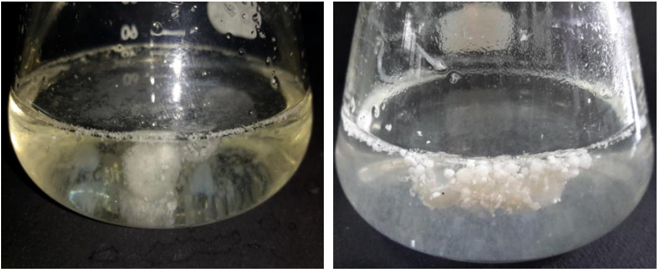
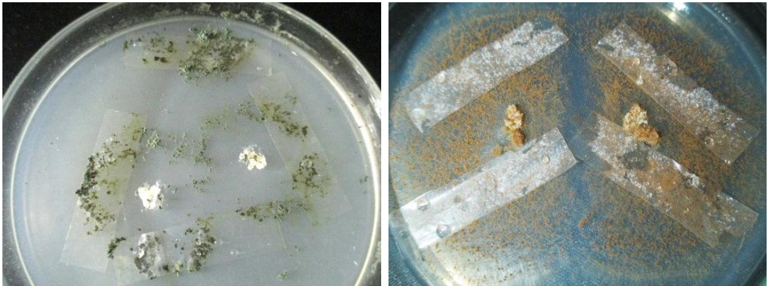
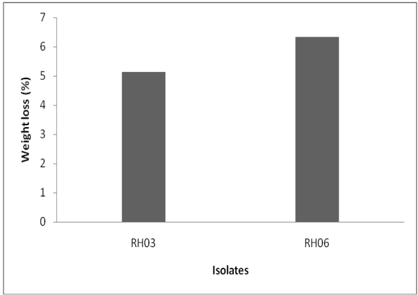
Plastic is a naturally recalcitrant polymer, once it enters the environment, it will remain there for many years. Accumulation of plastic as wastes in the environment poses a serious problem and causes an ecological threat. Alternative strategies to reduce accumulation of plastic wastes have been initiated and implemented from a different aspect including from microbiological view point. The study to obtain potential fungi in degrading plastic molecule has been initiated in our laboratory. Low density polyethylene (LDPE) plastic was used as a tested material. Candidate fungi were isolated from local landfill soil. The fungi were cultured in mineral salt medium broth containing LDPE powder. Two of nine isolates showed best growth response in broth media containing LDPE. These isolates (RH03 and RH06) were used in degradation test. Results showed that isolate RH03 and RH06 reduced the weight of LDPE film by 5.13% and 6.63%, respectively after 45 days of cultivation. The tensile strength of treated film even reduced significantly by 58% and 40% of each isolate. Analyses of electron micrograph exhibited grove ands rough were formed on the surface of LDPE film. These were not found in the untreated film. Furthermore, molecular analysis through polymerase chain reaction and DNA sequencing indicated that RH03 is Trichoderma viride and RH06 is Aspergillus nomius with 97% and 96% similarities, respectively.
Overview
The claims and statistics of this paper haven’t been checked yet.
Free: it reads the open-access text and checks the first 5 claims that cite a source we can check. Create a free account to check every claim.
Integrity signals
Registry
Cites
Statistics
Figures
Verification
Claims the paper makes
The claims and statistics of this paper haven’t been checked yet.
Free: it reads the open-access text and checks the first 5 claims that cite a source we can check. Create a free account to check every claim.
Self-check
Percentages, sums and reported differences re-computed from the paper’s own numbers.
The self-check needs the paper’s full text.
Citations
Cites
Plastic waste inputs from land into the ocean
Jambeck, J. R., Geyer, R., Wilcox, C., Siegler, T. R., Perryman, M., Andrady, A., Narayan, R., & Law, K. L. (2015) · Science · doi:10.1126/science.1260352 · Cited by 13,163
Biodegradation of Chemicals of Environmental Concern
Alexander, M. (1981) · Science · doi:10.1126/science.7444456 · Cited by 684
Shimao, M. (2001) · Current Opinion in Biotechnology · doi:10.1016/s0958-1669(00)00206-8 · Cited by 611
Biodegradation of polyesters containing aromatic constituents
Müller, R.-J., Kleeberg, I., & Deckwer, W.-D. (2001) · Journal of Biotechnology · doi:10.1016/s0168-1656(00)00407-7 · Cited by 497
Esmaeili, A., Pourbabaee, A. A., Alikhani, H. A., Shabani, F., & Esmaeili, E. (2013) · PLoS ONE · doi:10.1371/journal.pone.0071720 · Cited by 358
Scott, G. (2000) · Polymer Degradation and Stability · doi:10.1016/s0141-3910(99)00182-2 · Cited by 330
Biodegradation of microbial and synthetic polyesters by fungi
Kim, D. Y., & Rhee, Y. H. (2003) · Applied Microbiology and Biotechnology · doi:10.1007/s00253-002-1205-3 · Cited by 248
Microorganisms associated with dump sites in Port Harcourt Metropolis, Nigeria
Janet, O. W., & Kelechi, H. (2016) · Journal of Ecology and the Natural Environment · doi:10.5897/jene2015.0522 · Cited by 26
Using Biomass of Basidiomyceteous Fungi in Decolorization of Wastewater of Textile Industry
Munır, E., Priyani, N., Suryanto, D., & Naimah, Z. (2017) · Journal of Pure and Applied Microbiology · doi:10.22207/jpam.11.2.04 · Cited by 18
Self-citationCapability of selected mushrooms to biodegrade polyethylene
Nwogu, N. A. (2012) · Mycosphere · doi:10.5943/mycosphere/3/4/9 · Cited by 13
Research works printed but not linked: 16
- [4] Pavani P and Rajeswari TR 2014 JCHPS Special Issue 3 87 -
- [7] Deepika S and Jaya MR 2015 J. Experimen. Biol. Agric. Sci. 3 15 -
- [8] Mukherjee S and Chatterjee S 2014 Intern. J . Curr. Microbiol. App. Sci. 3 318 -
- [9] Hussein A, Al-Mayaly IK and Khudeir SH 2015 Mesop. Environ. J. 4 1 -
- [11] Labuzek S, Pajak J and Nowak B 2006 Corrosion Protection , 9s/A 85 -
- [12] Nowak B, Pajak J and Labuzek S 2010 Composites 10 224 -
- [13] Prabhat S, Bhattacharyya S, Vishal V, Kalyan RK, Vijai K, Pandey KN and Singh M 2013 Inter. Res. J. Environ. Sci. 2 83 -
- [14] Usha R, Sangeetha T and Palaniswamy M 2011 Libyan Agric. Res. Cen. J. Intl. 2 200 -
- [15] Dineshraj D and Ganesh P 2016 ISJR. 5 301 -
- [17] Obire O, Nwaubeta O and Adue SBN 2002 J. Appl. Sci. Environt. Mgt. 6 78 -
- [19] Seneviratne G, Tennkoon NS, Weerasekara MLMAW and Nandasena KA 2006 Curr Sci. 90 20 -
- [20] Kim DY and Rhee YH 2003 Appl. Micro. Biotech. 61 300 I IOP Conf. Series: Earth and Environmental Science 126 (201 8 ) 012 145 doi:10.1088/1755-1315/ 126 /1/012 145 - · doi:10.1088/1755-1315/
- [21] Singh J and Gupta KC 2014 Intern. J. Curr. Microbiol.& Appl. Sci. 3 443 -
- [23] Das MP and Kumar S 2014 Intern. J. ChemTech Res. 6 299 -
- [24] Vijaya C and Reddy RM 2008 Indian J. Biotechnol. 7 235 -
- [25] Nowak B, Pajak J and Karcz J 2012 Biodegradation of pre-aged modified polyethylene films, Scanning Electron Microscopy, Dr. Viacheslav Kazmiruk (Ed.) INTECH EUROPE. University Campus STeP Ri, Slavka Krautzeka, pp. 643-670.
Cited by
Items 101–127 of 127
Current Progress and Potential Microbial Cornucopia for Plastic Degradation
Puranik, S., Shylla, A., Manoj, M., & Vijaysri, D. (2024) · Springer eBooks · doi:10.1007/978-3-031-55661-6_3 · Cited by 5
Recent Catalytic Technologies for Microplastics Removal in Water: Current status
Piao, M., Teng, H., Zhao, L., & Du, H. (2024) · Water Air & Soil Pollution · doi:10.1007/s11270-024-07464-z · Cited by 1
Rojas-Flores, S., Cruz-Noriega, M. D. L., Otiniano, N. M., & Cabanillas-Chirinos, L. (2024) · Sustainability · doi:10.3390/su16177413 · Cited by 1
“The need for standardization of parameters is a clear call to action, emphasizing the importance of ongoing research and development in these areas.”
BackgroundSutaoney, P., Sharma, A., Kulkarni, P., & Ghosh, P. (2025) · Elsevier eBooks · doi:10.1016/b978-0-443-23599-3.00011-3 · Cited by 2
Parray, J. A., & Li, W.-J. (2025) · Synthesis lectures on chemical engineering and biochemical engineering · doi:10.1007/978-3-031-84437-9_2 · Cited by 1
Pinheiro, L. M., Andreola, L. T., Mendes, C. R. B., Morales, M. L. P., Agostini, V. O., & Pinho, G. L. L. (2026) · Archives of Microbiology · doi:10.1007/s00203-026-04759-z · Cited by 1
“Our find - ings provide novel insights into plastisphere composition over a 21-day period and how plastic contamination may 2022; Munir et al. 2018), raising the hypothesis that environmental conditions could influence the activity or com - petitiveness of these taxa.”
Enhancing Green Smart Campus Development with Data Mining Technology
Liu, Q. (2025) · Journal of Machine and Computing · doi:10.53759/7669/jmc202505041 · Cited by 4
“Regulation limits Chinese sustainability projects [27-32].”
Bhanot, V., Pareek, V., Fadanavis, S. V., & Panwar, J. (2020) · Elsevier eBooks · doi:10.1016/b978-0-12-821007-9.00003-6 · Cited by 2
Mycoremediation: An Emerging Technology for Mitigating Environmental Contaminants
Mishra, M., & Srivastava, D. (2022) · Rhizosphere biology · doi:10.1007/978-981-19-4101-6_12 · Cited by 2
Diacids from Oil Producing Plant
Fatimah, I., Fadillah, G., Muraza, O., & Mahlia, T. M. I. (2022) · Wiley eBooks · doi:10.1002/9783527830756.ch26 · Cited by 2
Liu, J., Pan, Z., Sun, K., Chen, Y., Yang, Y. H., Gao, B., & Xing, B. (2022) · SSRN Electronic Journal · doi:10.2139/ssrn.4167068
Application of fungal microorganisms for the degradation “in vitro” of synthetic polymers
Cabrera, J. P. G., Torres, R. J. C., GONZALES, L. G. V., Flores, A. G., & Quispe, P. R. (2022) · LACCEI International Multi-Conference for Engineering, Education and Technology (LACCEI) · doi:10.18687/laccei2022.1.1.155 · Cited by 1
Microorganisms: Promising approach to quench plastic pollution
(2023) · International Research Journal of Modernization in Engineering Technology and Science · doi:10.56726/irjmets43121
Setting New Standards: Multiphasic Analysis of Microplastic Mineralization by FungiPreprint
Rohrbach, S., Gkoutselis, G., Mauel, A., Telli, N., Senker, J., Ho, A., Rambold, G., & Horn, M. A. (2023) · SSRN Electronic Journal · doi:10.2139/ssrn.4570461
Biodegradation of plastic by some Microorganisms as influenced by Chemical factors
zade, G., Radwan, T. E.-S. E.-D., & aboalkasem, N. (2023) · Labyrinth : Fayoum University Journal Of Science and Interdisciplinary Studies · doi:10.21608/ifjsis.2023.216552.1029
Environmental plastic pollution: mechanisms of plastic degradation for sustainable future
Javed, M. U., & Mukhtar, H. (2025) · Elsevier eBooks · doi:10.1016/b978-0-443-23599-3.00025-3 · Cited by 2
Environmental risks of plastics pollutants and their mycoremediation strategies
Mahmoud, G. A., Badawy, M. S. E. M., Bougafa, F. H. E., Barakat, H. M., & Ahmed, L. I. (2025) · Elsevier eBooks · doi:10.1016/b978-0-443-23796-6.00007-9 · Cited by 1
Liu, M., Wang, X.-Z., Fan, T., & Zhao, X. (2025) · Waste Disposal & Sustainable Energy · doi:10.1007/s42768-025-00242-5
“Among these, Pseudomonas stands out as one of the most prominent examples [22].”
Peels from Fruits and Vegetables: Opening the Door for the Creation of Novel Medicines
Kumar, R., Kumar, G., & Kumar, A. (2025) · Current Functional Foods · doi:10.2174/0126668629357599250703004238
Hu, R., Song, L., Liu, H., Tao, H., Shi, Y., Liu, Q., Zhang, H., & Yanjiao, Q. (2025) · Process Safety and Environmental Protection · doi:10.1016/j.psep.2025.107744
Ex-situ Microbiome Dynamics During Polystyrene Biodegradation: Isolation from Tenebrio molitorPreprint
Matyakubov, B., & Lee, T.-J. (2025) · SSRN Electronic Journal · doi:10.2139/ssrn.5445919
Bioremediation Approach for Plastics and Microplastics Wastes
Sharma, A., Kaur, G., Kaur, A., & Sankhla, M. S. (2025) · Springer proceedings in earth and environmental sciences · doi:10.1007/978-3-031-93444-5_108
Alexeeva, O. V., Tertyshnaya, Y. V., Kozlov, S. S., Podmasterev, V. V., Siracusa, V., Karyagina, O. K., Ломакин, С. М., Petrova, T. V., Martirosyan, L. Y., Nikolskaia, A. B., et al. (2026) · Polymers · doi:10.3390/polym18020216
Krishnamurthy, S., & Murthy, K. N. (2026) · Springer water · doi:10.1007/978-3-032-01955-4_14
Basak, N., Chowdhury, A. A., Chatterjee, A., Gupta, P. D., Sabarathinam, S., Brusetti, L., & Shah, M. P. (2026) · Water Air & Soil Pollution · doi:10.1007/s11270-026-09537-7 · Cited by 1
Poyrazoğlu, E., Bıyık, H. H., Yılmaz, H. Ç., Bozdağ, A., & Köse, S. Ö. (2026) · Biodegradation · doi:10.1007/s10532-026-10382-y
“A culture medium containing 0.5% glucose was used as a positive con-trol, while a medium without carbon source was used as a negative control (Munir et al. 2018; Spina et al. 2021).”
InfluentialEnhanced Photo-Oxidative Degradation of Polyethylene Films Using Piperonyl-Functionalized TiO2
Ortiz, R. A., Macías, R. Y., Texle, H. M., Crúz‐Delgado, V. J., Ledezma-Pérez, A. S., & Valdez, A. E. G. (2026) · Microplastics · doi:10.3390/microplastics5040199
Metadata
- Authors
- Munir, E., Harefa, R. S. M., Priyani, N., & Suryanto, D.
- Affiliations
- Universitas Sumatera Utara (ID)
- Venue
- IOP Conference Series: Earth and Environmental Science
- Publisher
- IOP Publishing
- Published
- 2018-03
- Volume
- 126
- Pages
- 012145
- ISSN
- 1755-1315 (ISSN-L)
- 1755-1307
- OpenAlex
- W2789618809
- Semantic Scholar
- 0425cb3d503daf87553d6eda86b845f17f43ce6a
- Cited by
- 126
- References
- 10
- Citations by year
- 2026: 8 · 2025: 23 · 2024: 23 · 2023: 25 · 2022: 19 · 2021: 14 · 2020: 7 · 2019: 5 · 2018: 2
- FWCI
- 31.91
- Type
- conference paper
- Language
- en
- Open access
- diamond
- doi.org
- Licence
- cc-by
- iopscience.iop.org/info/page/text-and-data-mining (tdm)
- creativecommons.org/licenses/by/3.0/ (vor)
- Locations
- IOP Conference Series Earth and Environmental Science (publishedVersion, cc-by)
- Topics
- Physical Sciences › Environmental Science › Pollution › Microplastics and Plastic Pollution
- Physical Sciences › Environmental Science › Pollution › Microbial bioremediation and biosurfactants
- Life Sciences › Immunology and Microbiology › Applied Microbiology and Biotechnology › Enzyme-mediated dye degradation
- Keywords
- Trichoderma viride, Aspergillus nomius, low-density polyethylene, plastic biodegradation, plastic waste, tensile strength reduction, fungal isolation from soil, Medan
About these checks
Registry, retraction, Cites and statistics results are computed, not judged, with one exception: a printed reference that no index lists is read once by a model before it counts as a citation error. Claims are extracted by a model and kept only when their quote appears verbatim in the text; each cited source is then checked, with a model’s help, for whether it says what the claim relies on. Those verdicts can be wrong — read the claim’s quote and the cited source before relying on one.
Statistics and arithmetic are recomputed, not judged.
Confidence bands are shown only for fields calibrated on our annotated test set. None is calibrated yet, so no band is shown.
What counts as a claim ›How we measure confidence ›How we check this ›
Are you an author, or do you see a problem with this page? Request a review
Data sources
Bibliographic data: Semantic Scholar, OpenAlex, Crossref.
Contains information from the Semantic Scholar Academic Graph Datasets, made available under the ODC Attribution License (ODC-BY 1.0).
Semantic Scholar’s data is described in: Kinney, R., et al. (2023). The Semantic Scholar Open Data Platform. arXiv:2301.10140.
