

Plastic degrading fungi Trichoderma viride and Aspergillus nomius isolated from local landfill soil in Medan
Open accessThe DOI matches its Crossref record; 10 of the 10 references it cites were found in a registry or an index.
Abstract
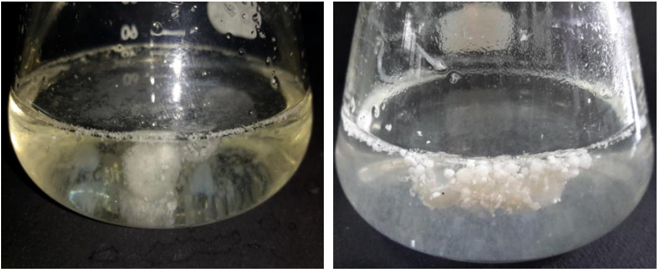
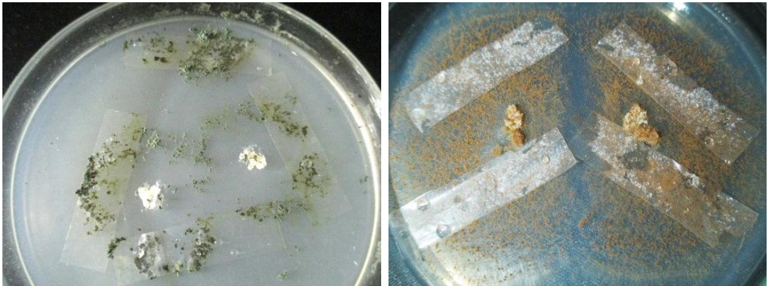
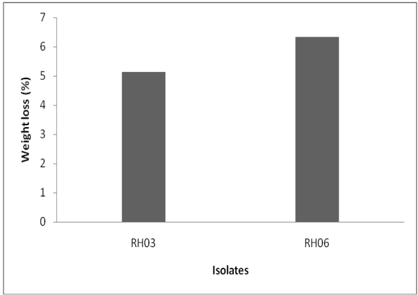
Plastic is a naturally recalcitrant polymer, once it enters the environment, it will remain there for many years. Accumulation of plastic as wastes in the environment poses a serious problem and causes an ecological threat. Alternative strategies to reduce accumulation of plastic wastes have been initiated and implemented from a different aspect including from microbiological view point. The study to obtain potential fungi in degrading plastic molecule has been initiated in our laboratory. Low density polyethylene (LDPE) plastic was used as a tested material. Candidate fungi were isolated from local landfill soil. The fungi were cultured in mineral salt medium broth containing LDPE powder. Two of nine isolates showed best growth response in broth media containing LDPE. These isolates (RH03 and RH06) were used in degradation test. Results showed that isolate RH03 and RH06 reduced the weight of LDPE film by 5.13% and 6.63%, respectively after 45 days of cultivation. The tensile strength of treated film even reduced significantly by 58% and 40% of each isolate. Analyses of electron micrograph exhibited grove ands rough were formed on the surface of LDPE film. These were not found in the untreated film. Furthermore, molecular analysis through polymerase chain reaction and DNA sequencing indicated that RH03 is Trichoderma viride and RH06 is Aspergillus nomius with 97% and 96% similarities, respectively.
Overview
The claims and statistics of this paper haven’t been checked yet.
Free: it reads the open-access text and checks the first 5 claims that cite a source we can check. Create a free account to check every claim.
Integrity signals
Registry
Cites
Statistics
Figures
Verification
Claims the paper makes
The claims and statistics of this paper haven’t been checked yet.
Free: it reads the open-access text and checks the first 5 claims that cite a source we can check. Create a free account to check every claim.
Self-check
Percentages, sums and reported differences re-computed from the paper’s own numbers.
The self-check needs the paper’s full text.
Citations
Cites
Plastic waste inputs from land into the ocean
Jambeck, J. R., Geyer, R., Wilcox, C., Siegler, T. R., Perryman, M., Andrady, A., Narayan, R., & Law, K. L. (2015) · Science · doi:10.1126/science.1260352 · Cited by 13,163
Biodegradation of Chemicals of Environmental Concern
Alexander, M. (1981) · Science · doi:10.1126/science.7444456 · Cited by 684
Shimao, M. (2001) · Current Opinion in Biotechnology · doi:10.1016/s0958-1669(00)00206-8 · Cited by 611
Biodegradation of polyesters containing aromatic constituents
Müller, R.-J., Kleeberg, I., & Deckwer, W.-D. (2001) · Journal of Biotechnology · doi:10.1016/s0168-1656(00)00407-7 · Cited by 497
Esmaeili, A., Pourbabaee, A. A., Alikhani, H. A., Shabani, F., & Esmaeili, E. (2013) · PLoS ONE · doi:10.1371/journal.pone.0071720 · Cited by 358
Scott, G. (2000) · Polymer Degradation and Stability · doi:10.1016/s0141-3910(99)00182-2 · Cited by 330
Biodegradation of microbial and synthetic polyesters by fungi
Kim, D. Y., & Rhee, Y. H. (2003) · Applied Microbiology and Biotechnology · doi:10.1007/s00253-002-1205-3 · Cited by 248
Microorganisms associated with dump sites in Port Harcourt Metropolis, Nigeria
Janet, O. W., & Kelechi, H. (2016) · Journal of Ecology and the Natural Environment · doi:10.5897/jene2015.0522 · Cited by 26
Using Biomass of Basidiomyceteous Fungi in Decolorization of Wastewater of Textile Industry
Munır, E., Priyani, N., Suryanto, D., & Naimah, Z. (2017) · Journal of Pure and Applied Microbiology · doi:10.22207/jpam.11.2.04 · Cited by 18
Self-citationCapability of selected mushrooms to biodegrade polyethylene
Nwogu, N. A. (2012) · Mycosphere · doi:10.5943/mycosphere/3/4/9 · Cited by 13
Research works printed but not linked: 16
- [4] Pavani P and Rajeswari TR 2014 JCHPS Special Issue 3 87 -
- [7] Deepika S and Jaya MR 2015 J. Experimen. Biol. Agric. Sci. 3 15 -
- [8] Mukherjee S and Chatterjee S 2014 Intern. J . Curr. Microbiol. App. Sci. 3 318 -
- [9] Hussein A, Al-Mayaly IK and Khudeir SH 2015 Mesop. Environ. J. 4 1 -
- [11] Labuzek S, Pajak J and Nowak B 2006 Corrosion Protection , 9s/A 85 -
- [12] Nowak B, Pajak J and Labuzek S 2010 Composites 10 224 -
- [13] Prabhat S, Bhattacharyya S, Vishal V, Kalyan RK, Vijai K, Pandey KN and Singh M 2013 Inter. Res. J. Environ. Sci. 2 83 -
- [14] Usha R, Sangeetha T and Palaniswamy M 2011 Libyan Agric. Res. Cen. J. Intl. 2 200 -
- [15] Dineshraj D and Ganesh P 2016 ISJR. 5 301 -
- [17] Obire O, Nwaubeta O and Adue SBN 2002 J. Appl. Sci. Environt. Mgt. 6 78 -
- [19] Seneviratne G, Tennkoon NS, Weerasekara MLMAW and Nandasena KA 2006 Curr Sci. 90 20 -
- [20] Kim DY and Rhee YH 2003 Appl. Micro. Biotech. 61 300 I IOP Conf. Series: Earth and Environmental Science 126 (201 8 ) 012 145 doi:10.1088/1755-1315/ 126 /1/012 145 - · doi:10.1088/1755-1315/
- [21] Singh J and Gupta KC 2014 Intern. J. Curr. Microbiol.& Appl. Sci. 3 443 -
- [23] Das MP and Kumar S 2014 Intern. J. ChemTech Res. 6 299 -
- [24] Vijaya C and Reddy RM 2008 Indian J. Biotechnol. 7 235 -
- [25] Nowak B, Pajak J and Karcz J 2012 Biodegradation of pre-aged modified polyethylene films, Scanning Electron Microscopy, Dr. Viacheslav Kazmiruk (Ed.) INTECH EUROPE. University Campus STeP Ri, Slavka Krautzeka, pp. 643-670.
Cited by
Ali, S. S., Elsamahy, T., Koutra, E., Kornaros, M., El-Sheekh, M., Abdelkarim, E. A., Zhu, D., & Sun, J. (2021) · Science of The Total Environment · doi:10.1016/j.scitotenv.2020.144719 · Cited by 634
Sánchez, C. (2020) · Biotechnology Advances · doi:10.1016/j.biotechadv.2019.107501 · Cited by 475
Conversion and removal strategies for microplastics in wastewater treatment plants and landfills
Hou, L., Kumar, D., Yoo, C. G., Gitsov, I., & Majumder, E. L.-W. (2021) · Chemical Engineering Journal · doi:10.1016/j.cej.2020.126715 · Cited by 302
Biodegradation of Polymers: Stages, Measurement, Standards and Prospects
Silva, R. R. A., Marques, C. S., Arruda, T. R., Teixeira, S. C., & de Oliveira, T. V. (2023) · Macromol · doi:10.3390/macromol3020023 · Cited by 284
“Low-density polyethylene (LDPE) Solid mineral salt medium (Petri dish) Tensile testing, SEM, mass loss [61]”
BackgroundMethodInfluentialOliveira, J., Belchior, A., da Silva, V. D., Rotter, A., Petrovski, Ž., Almeida, P. L., Lourenço, N. D., & Gaudêncio, S. P. (2020) · Frontiers in Marine Science · doi:10.3389/fmars.2020.567126 · Cited by 239
Role of fungi in bioremediation of emerging pollutants
Vaksmaa, A., Guerrero-Cruz, S., Ghosh, P., Zeghal, E., Hernando-Morales, V., & Niemann, H. (2023) · Frontiers in Marine Science · doi:10.3389/fmars.2023.1070905 · Cited by 236
“For example, Trichoderma viride and Aspergillus nomius were two species isolated from a landfill nearby Medan, Indonesia (Munir et al., 2018).”
BackgroundVan Yken, J., Boxall, N. J., Cheng, K. Y., Nikoloski, A. N., Moheimani, N. R., & Kaksonen, A. H. (2021) · Metals · doi:10.3390/met11081313 · Cited by 216
Biodegradation of different types of microplastics: Molecular mechanism and degradation efficiency
Thakur, B., Singh, J., Singh, J., Angmo, D., & Vig, A. P. (2023) · Science of The Total Environment · doi:10.1016/j.scitotenv.2023.162912 · Cited by 212
Mechanisms and the Engineering Approaches for the Degradation of Microplastics
Bacha, A.-U.-R., Nabi, I., & Zhang, L. (2021) · ACS ES&T Engineering · doi:10.1021/acsestengg.1c00216 · Cited by 193
Potential of fungi isolated from the dumping sites mangrove rhizosphere soil to degrade polythene
Sangale, M. K., Shahnawaz, M., & Ade, A. B. (2019) · Scientific Reports · doi:10.1038/s41598-019-41448-y · Cited by 187
Biodegradation of Typical Plastics: From Microbial Diversity to Metabolic Mechanisms
Lv, S., Li, Y., Zhao, S., & Shao, Z. (2024) · International Journal of Molecular Sciences · doi:10.3390/ijms25010593 · Cited by 174
“Other fungal species of terrestrial origin also have significant plastic degradability, including Trichoderma sp. [91,93], Monascus sp. [94], Clitocybe sp. [95], Penicillum spp. [96], and Phanerochaete sp. [97].”
BackgroundA Review of the Fungi That Degrade Plastic
Ekanayaka, A. H., Tibpromma, S., Dai, D., Xu, R., Suwannarach, N., Stephenson, S. L., Dao, C., & Karunarathna, S. C. (2022) · Journal of Fungi · doi:10.3390/jof8080772 · Cited by 162
The potential role of marine fungi in plastic degradation – a review
Zeghal, E., Vaksmaa, A., Vielfaure, H., Boekhout, T., & Niemann, H. (2021) · Frontiers in Marine Science · doi:10.3389/fmars.2021.738877 · Cited by 155
Santacruz-Juárez, E., Buendia-Corona, R. E., Ramírez, R. E., & Sánchez, C. (2021) · Journal of Hazardous Materials · doi:10.1016/j.jhazmat.2021.125118 · Cited by 150
Photocatalytic and biological technologies for elimination of microplastics in water: Current status
Ebrahimbabaie, P., Yousefi, K., & Pichtel, J. (2021) · The Science of The Total Environment · doi:10.1016/j.scitotenv.2021.150603 · Cited by 154
Plastic waste management, a matter for the ‘community’
Drzyzga, O., & Prieto, A. (2019) · Microbial Biotechnology · doi:10.1111/1751-7915.13328 · Cited by 144
Goswami, S., Adhikary, S., Bhattacharya, S., Agarwal, R., Ganguly, A., Nanda, S., & Rajak, P. (2024) · Life Sciences · doi:10.1016/j.lfs.2024.122937 · Cited by 160
Plastic-Degrading Potential across the Global Microbiome Correlates with Recent Pollution Trends
Zrimec, J., Kokina, M., Jonasson, S., Zorrilla, F., & Zelezniak, A. (2021) · mBio · doi:10.1128/mbio.02155-21 · Cited by 162
Wallbank, J. A., Lear, G., Kingsbury, J. M., Weaver, L., Doake, F., Smith, D. A., Audrézet, F., Maday, S. D. M., Gambarini, V. M. D. O., Donaldson, L. A., et al. (2022) · Frontiers in Marine Science · doi:10.3389/fmars.2022.841142 · Cited by 96
“Sarocladium kiliense is another fungus identified within our samples, which has been reported to biodegrade PE (Karlsson et al., 1988), whilst Trichoderma viride, also found in soil and landfill material, has been reported to biodegrade PLA (Lipsa et al., 2016) and LDPE (Munir et al., 2018).”
BackgroundMicrobes' role in environmental pollution and remediation: a bioeconomy focus approach
Maglione, G., Zinno, P., Tropea, A., Mussagy, C. U., Dufossé, L., Giuffrida, D., & Mondello, A. (2024) · AIMS Microbiology · doi:10.3934/microbiol.2024033 · Cited by 82
“A spergillus nomius RH06 degrades 6.63% of LDPE in 45 days [48], and Bacillus cereus strain A5 degrades 35.72% of LDPE in 112 days [49].”
BackgroundInfluentialPolyethylene degradation and assimilation by the marine yeast Rhodotorula mucilaginosa
Vaksmaa, A., Polerecky, L., Dombrowski, N., Kienhuis, M. V. M., Posthuma, I., Gerritse, J., Boekhout, T., & Niemann, H. (2023) · ISME Communications · doi:10.1038/s43705-023-00267-z · Cited by 73
The problem of polyethylene waste – recent attempts for its mitigation
Tiago, G. A. O., Mariquito, A., Martins-Dias, S., & Marques, A. C. (2023) · The Science of The Total Environment · doi:10.1016/j.scitotenv.2023.164629 · Cited by 82
Ten decadal advances in fungal biology leading towards human well-being
Mapook, A., Hyde, K. D., Hassan, K., Kemkuignou, B. M., Čmoková, A., Surup, F., Kuhnert, E., Paomephan, P., Cheng, T., de Hoog, S., et al. (2022) · Fungal Diversity · doi:10.1007/s13225-022-00510-3 · Cited by 86
Myco-remediation of plastic pollution: current knowledge and future prospects
Khatua, S., Simal‐Gándara, J., & Acharya, K. (2023) · Biodegradation · doi:10.1007/s10532-023-10053-2 · Cited by 73
Solanki, S., Sinha, S., & Singh, R. (2022) · Biodegradation · doi:10.1007/s10532-022-10001-6 · Cited by 60
Cucini, C., Leo, C., Vitale, M., Frati, F., Carapelli, A., & Nardi, F. (2020) · Animal Gene · doi:10.1016/j.angen.2020.200109 · Cited by 60
Gaylarde, C. C., de Almeida, M. P., Neves, C. V., Neto, J. A. B., & da Fonseca, E. M. (2023) · Micro · doi:10.3390/micro3010022 · Cited by 56
Cao, Z., Kim, C., Li, Z., & Jung, J. (2024) · The Science of The Total Environment · doi:10.1016/j.scitotenv.2024.175735 · Cited by 50
Zhao, S., & Zhang, J. (2023) · The Science of The Total Environment · doi:10.1016/j.scitotenv.2023.163700 · Cited by 41
Thanigaivel, S., Kamalesh, R., Ragini, Y. P., Saravanan, A., Vickram, A. S., Abirami, M., & Thiruvengadam, S. (2025) · Marine Environmental Research · doi:10.1016/j.marenvres.2025.106993 · Cited by 45
Distribution, sources, transportation and biodegradation of microplastics in the soil environment
Li, Y., Liu, Q., Junaid, M., Chen, G., & Wang, J. (2023) · TrAC Trends in Analytical Chemistry · doi:10.1016/j.trac.2023.117106 · Cited by 37
Dąbrowska, G. B., Garstecka, Z., Olewnik‐Kruszkowska, E., Szczepańska, G., Ostrowski, M., & Mierek‐Adamska, A. (2021) · International Journal of Molecular Sciences · doi:10.3390/ijms22073491 · Cited by 32
“[68], who isolated several strains from landfill sites.”
BackgroundLi, X., Qi, X., Liu, X., Khalid, M., Ye, J., Romantschuk, M., Chen, F., Hua, Y., & Hui, N. (2023) · Journal of Cleaner Production · doi:10.1016/j.jclepro.2023.136066 · Cited by 34
Wu, X., Zhang, Z., & Guo, X. (2024) · TrAC Trends in Analytical Chemistry · doi:10.1016/j.trac.2024.117543 · Cited by 30
Peng, L., Mehmood, T., Bao, R., Wang, Z., & Fu, D. (2022) · Sustainability · doi:10.3390/su142114338 · Cited by 27
Fungal diversity and its mechanism of community shaping in the milieu of sanitary landfill
Ye, R., Xu, S., Wang, Q., Fu, X., Dai, H.-X., & Lü, W. (2020) · Frontiers of Environmental Science & Engineering · doi:10.1007/s11783-020-1370-6 · Cited by 30
Kharangate‐Lad, A., & D’Souza, N. C. (2021) · Springer eBooks · doi:10.1007/978-981-16-0602-1_11 · Cited by 29
Dhaundiyal, A., & Mittal, A. (2024) · Water Air & Soil Pollution · doi:10.1007/s11270-024-07506-6 · Cited by 26
Yadav, P., & Mishra, V. (2024) · International Biodeterioration & Biodegradation · doi:10.1016/j.ibiod.2024.105953 · Cited by 24
The Amazing Potential of Fungi in Human Life
(2019) · ARC Journal of Pharmaceutical Sciences · doi:10.20431/2455-1538.0503003 · Cited by 23
Liu, B., Shen, Z., Zhou, Q., Hu, L., Zeng, G., Wang, X., Zhang, M., Zhang, D., & Pan, X. (2024) · TrAC Trends in Analytical Chemistry · doi:10.1016/j.trac.2024.117855 · Cited by 24
Cladosporium cladosporioides (strain Clc/1): a candidate for low-density polyethylene degradation
Puliga, F., Zuffi, V., Baldo, D., Cavatorta, D., Zambonelli, A., Francioso, O., & Sánchez‐Cortés, S. (2023) · Chemical and Biological Technologies in Agriculture · doi:10.1186/s40538-023-00419-2 · Cited by 27
Sun, Y., Hu, J., Yusuf, A., Wang, Y., Jin, H., Zhang, X., Liu, Y., Wang, Y., Yang, G., & He, J. Y. (2022) · Biodegradation · doi:10.1007/s10532-021-09969-4 · Cited by 20
Polyethylene-biodegrading Microbes and Their Future Directions
Seo, M., Yun, S.-D., Kim, H.-W., & Yeom, S. (2023) · Biotechnology and Bioprocess Engineering · doi:10.1007/s12257-022-0264-9 · Cited by 22
“Specifically, the genera Alternaria Stagonosporopsis [71], Thyrostroma [71], Trichoderma [73], and Zalerion [81] have been reported to decompose several types of PE.”
Agarwal, T., Atray, N., & Sharma, J. G. (2024) · Future Journal of Pharmaceutical Sciences · doi:10.1186/s43094-024-00645-x · Cited by 23
Dehal, A., Prajapati, A., Patil, M. P., & Kumar, A. R. (2023) · Chemistry and Ecology · doi:10.1080/02757540.2023.2290183 · Cited by 20
The Emerging Threat of Micro- and Nanoplastics on the Maturation and Activity of Immune Cells
Dan, K.-B., Yoo, J. Y., & Min, H. (2024) · Biomolecules & Therapeutics · doi:10.4062/biomolther.2024.195 · Cited by 23
Grgić, D. K., Miloloža, M., Bulatović, V. O., Ukić, Š., Šlouf, M., & Gajdošová, V. (2023) · Separations · doi:10.3390/separations10020079 · Cited by 21
An overview on role of fungi in systematic plastic degradation
Varshney, S., Gupta, V., Yadav, A. N., Rahi, R. K., Devki, D., & Neelam, D. K. (2022) · Journal of Applied Biology & Biotechnology · doi:10.7324/jabb.2023.108929 · Cited by 26
Ali, S. S., Al-Tohamy, R., & Sun, J. (2025) · Environmental Chemistry and Ecotoxicology · doi:10.1016/j.enceco.2025.05.008 · Cited by 19
Effect of Palmitic Acid in the Acceleration of Polyethylene Biodegradation by Aspergillus oryzae
Jayaprakash, V., & Palempalli, U. M. D. (2018) · Journal of Pure and Applied Microbiology · doi:10.22207/jpam.12.4.66 · Cited by 18
Wang, L., Huang, J., Xu, J., Li, X., Ma, H., Qian, X., & Abolfathi, S. (2025) · Process Safety and Environmental Protection · doi:10.1016/j.psep.2025.107956 · Cited by 20
Chaudhary, A. K., Chitriv, S. P., Chaitanya, K., & P., V. R. (2023) · Environmental Monitoring and Assessment · doi:10.1007/s10661-023-10982-8 · Cited by 16
Rani, R., Malik, S., Kumar, D., Kumar, R., Mukherjee, S., Saharan, B. S., & Duhan, J. S. (2024) · Sustainable Chemistry and Pharmacy · doi:10.1016/j.scp.2024.101595 · Cited by 22
Akter, S., Mahmud, U., Shoumik, B. A. A., & Khan, M. Z. (2025) · Archives of Microbiology · doi:10.1007/s00203-025-04285-4 · Cited by 20
“…, Aspergillus flavus , Aspergillus nidulans Aspergillus oryzae Trichoderma viride , Penicillium griseofulvum , and saprotrophic fungi like Agaricus bisporus , Pleurotus abalones and Pleurotus eryngii are known to effectively break down micro-plastics (Munir et al. 2018; Srikanth et al. 2022).”
Microbial Degradation of Polyethylene: Recent Progress and Challenges
Shankar, S., Singh, S., Mishra, A., Sharma, M., & Shikha, S. (2019) · Microorganisms for sustainability · doi:10.1007/978-981-13-7462-3_12 · Cited by 15
Setting new standards: Multiphasic analysis of microplastic mineralization by fungi
Rohrbach, S., Gkoutselis, G., Mauel, A., Telli, N., Senker, J., Ho, A., Rambold, G., & Horn, M. A. (2023) · Chemosphere · doi:10.1016/j.chemosphere.2023.141025 · Cited by 14
Case Studies and Recent Update of Plastic Waste Degradation
Shahnawaz, M., Sangale, M. K., & Ade, A. B. (2019) · Springer eBooks · doi:10.1007/978-981-13-7492-0_4 · Cited by 14
Plastic waste management, a concern for community
Gupta, P. (2021) · The holistic approach to environment · doi:10.33765/thate.11.2.3 · Cited by 16
Ramos, J. G. M., Tarrillo, L. M. F., Bravo, A. X. G., Sánchez-Purihuamán, M., Carreño-Farfán, C., Estrada, C. S. L., Ynga, E. G. L., & Silva, H. D. L. C. (2024) · F1000Research · doi:10.12688/f1000research.151338.1 · Cited by 15
Bioprospecting of Mangrove Filamentous Fungi for the Biodegradation of Polyethylene Microplastics
Aguiar, A. P., Gama, L. F. S. A. M., Fornari, M., Neto, A. O., Souza, R. F. B. D., Perna, R. F., Castro, L., Kovacs, S. D., Simões, M. F., Ferreira, N. R., et al. (2024) · Journal of Marine Science and Engineering · doi:10.3390/jmse12091629 · Cited by 14
Fungal Degradation of Microplastics—An Environmental Need
West, R. R., MacDonald, M. T., & Emenike, C. U. (2026) · Toxics · doi:10.3390/toxics14010070 · Cited by 12
Introducing the LDPE degrading microbes of sedimentary systems: from dumpsite to laboratory
Tirkey, A., & Upadhyay, L. S. B. (2025) · Environmental Science Advances · doi:10.1039/d5va00058k · Cited by 17
Seenivasagan, R., Karthika, A., & Poonkuzhali, K. (2022) · Water Air & Soil Pollution · doi:10.1007/s11270-022-05534-8 · Cited by 10
Microbes mediated plastic degradation: A sustainable approach for environmental sustainability
Kour, H., Khan, S. S., Kour, D., Rasool, S., Sharma, Y. P., Rai, P. K., Singh, S., Chaubey, K. K., Rai, A. K., & Yadav, A. N. (2022) · Journal of Applied Biology & Biotechnology · doi:10.7324/jabb.2023.110515 · Cited by 17
Plastic-degrading potential across the global microbiome correlates with recent pollution trendsPreprint
Zrimec, J., Kokina, M., Jonasson, S., Zorrilla, F., & Zelezniak, A. (2020) · bioRxiv (Cold Spring Harbor Laboratory) · doi:10.1101/2020.12.13.422558 · Cited by 9
Plastic Biodegrading Microbes in the Environment and Their Applications
Singh, P., & Ting, A. S. Y. (2022) · Wiley eBooks · doi:10.1002/9781119905301.ch19 · Cited by 10
Liu, J., Pan, Z., Sun, K., Chen, Y., Yang, Y. H., Gao, B., & Xing, B. (2022) · Renewable and Sustainable Energy Reviews · doi:10.1016/j.rser.2022.112963 · Cited by 9
Rai, M., Dhanker, R., Sharma, N., Kamakshi, Kamble, S. S., Tiwari, A., Du, Z., & Mohamed, H. I. (2025) · Archives of Microbiology · doi:10.1007/s00203-025-04334-y · Cited by 8
Microplastics as emerging threats: advancement in biofilm interactions and remediation technologies
Kumari, S., Yadav, A., Rajput, P., Minkina, T., & Rajput, V. D. (2025) · International Journal of Environmental Science and Technology · doi:10.1007/s13762-025-06493-3 · Cited by 11
Chigwada, A. D., Tekere, M., & Ogola, H. J. O. (2025) · Ecological Genetics and Genomics · doi:10.1016/j.egg.2025.100378 · Cited by 17
Kheswa, N., Gokul, A., & Dube, N. (2025) · Biodegradation · doi:10.1007/s10532-025-10170-0 · Cited by 11
“Certain microbial species, including fungi, can secrete extra-cellular oxidative enzymes (e.g., laccases, peroxi-dases) that break down long-chain hydrocarbons into smaller molecules ultimately mineralized to CO 2 and H 2 O (Labuzek et al. 2006; Munir et al. 2018; Zhang et al. 2022).”
InfluentialPerera, T., Weerasinghe, R. H., Attanayake, R. N., & Paranagama, P. A. (2022) · Letters in Applied Microbiology · doi:10.1111/lam.13819 · Cited by 10
“Biodeterioration assay was performed with few modifications to the methods described in Munir et al. (2018) and Shrestha et al. (2019).”
MethodResultUnveiling potential PET degrading eukaryotes through in silico bioprospecting of PETases
Méndez-Zamora, A., Diaz‐Vidal, T., Robles-Machuca, M., Pereira‐Santana, A., & Casas‐Godoy, L. (2024) · The Science of The Total Environment · doi:10.1016/j.scitotenv.2024.174978 · Cited by 9
Vijayalakshmi, S., Gopalsamy, P., Muthusamy, K., Sundarraj, D. K., Francis, S. P., Ramesh, T., Oh, D., Thuy, D. L. T., Truong, T. T. A., Van, H. T., et al. (2022) · Journal of Chemistry · doi:10.1155/2022/9402236 · Cited by 9
Harrat, R., Bourzama, G., Sadrati, N., Zerroug, A., Burgaud, G., Ouled-Haddar, H., & Soumati, B. (2024) · Brazilian Journal of Microbiology · doi:10.1007/s42770-024-01487-8 · Cited by 10
“14 and 15).”
Zheng, Y., Liu, Y., Wang, S., Tang, S., Yu, X., Chen, S., & Su, Y. (2025) · Journal of Cleaner Production · doi:10.1016/j.jclepro.2025.147073 · Cited by 8
González-Márquez, Á., Andrade-Alvarado, A. D., González-Mota, R., & Sánchez, C. (2024) · World Journal of Microbiology and Biotechnology · doi:10.1007/s11274-024-04116-6 · Cited by 11
“The capabilities for PE degradation of several fungi such as Aspegillus spp. (Munir et al. 2018; Sangale et al. 2019; Zhang et al. 2020; Nakei et al. 2022 ), Cephalosporium sp. (Chaudhary and Vijayakumar 2020 ), Trichoderma spp. (Sowmya et al. 2014; Munir et al. 2018 ), Rhizopus oryzae (Awasthi et…”
Biodegradation of plastics waste using fungi: A review
Asiandu, A., Wahyudi, A. H., & Sari, S. (2021) · Current Research in Environmental & Applied Mycology · doi:10.5943/cream/11/1/1 · Cited by 10
Microbial Degradation of Polymers
Stawiński, W., & Wal, K. (2021) · Environmental and microbial biotechnology · doi:10.1007/978-981-16-0518-5_2 · Cited by 10
Microbial Bioresource for Plastic‐Degrading Enzymes
Amobonye, A., Aruwa, C. E., & Pillai, S. (2023) · Wiley eBooks · doi:10.1002/9781119874096.ch20 · Cited by 6
Mycoremediation of Micro-/Nanoplastics-Contaminated Soils
Varma, C. A. S. L., Sahasrabudhe, M., Ganguly, S., & Mallu, M. R. (2023) · Springer eBooks · doi:10.1007/978-3-031-21195-9_15 · Cited by 7
Nanoplastics and fungi: exploring dual roles in degradation and pathogenicity
Ma, Y., Zhou, Y., Zheng, D., Bu, W., Wang, F., Zhao, X., & Xue, P. (2025) · Frontiers in Microbiology · doi:10.3389/fmicb.2025.1679160 · Cited by 6
“…sp., which enhance the degradation of polyethylene (both LDPE and HDPE), polylactic acid, polyurethanes, polyethylene terephthalate, and bisphenol A polycarbonate (Artham and Doble, 2010; El-Morsy et al., 2017; Ojha et al., 2017; Satti et al., 2017; Janczak et al., 2018; Munir et al., 2018).”
Experimental and Numerical Modeling of Tunneling-Induced Ground Settlement in Clayey Soil
Sadique, M. R., Ali, A., Zaid, M., & Alam, M. M. (2021) · Lecture notes in civil engineering · doi:10.1007/978-981-33-6969-6_3 · Cited by 4
The Diversity of Fungi in Landfill and their Potential to Degrade Plastic
Munır, E., Pasaribu, Y., Mubtasima, S., & Nasution, A. F. (2024) · OnLine Journal of Biological Sciences · doi:10.3844/ojbsci.2024.374.381 · Cited by 8
“The radial diameters of the colonies were measured and compared to those of the positive control at the experimental endpoint (Munir et al ., 2018a).”
ResultRojas-Flores, S., Cabanillas-Chirinos, L., Otiniano, N. M., Cruz-Noriega, M. D. L., Soto-Deza, N., Alviz-Meza, A., & González-Delgado, Á. D. (2025) · Fermentation · doi:10.3390/fermentation11060341 · Cited by 3
Microbial bioremediation of polythene and plastics: a green sustainable approach
Tari, V. S., & Kannan, K. (2022) · Elsevier eBooks · doi:10.1016/b978-0-323-90452-0.00003-7 · Cited by 5
Asmi, N., Baharuddin, M., & Febryanti, A. (2022) · AL-Kauniyah Jurnal Biologi · doi:10.15408/kauniyah.v15i1.19826 · Cited by 3
Microbial Approaches for the Plastic Bioremediation and Ecofriendly Environmental Sustainability
Devi, R. J., & Usha, R. (2023) · Asian Journal of Chemistry · doi:10.14233/ajchem.2023.26928 · Cited by 5
A Review on the Role of Microbes in Polyethene Degradation
Okoth, B. A., Makonde, H. M., Bosire, C. M., Mwajuma, J. J., & Kibiti, C. M. (2023) · Multidisciplinary Journal of Technical University of Mombasa · doi:10.48039/mjtum.v2i1.42 · Cited by 4
Understanding the Structure and Function of Landfill Microbiome Through Genomics
Merchant, M., Kahali, T., Kumawat, D. K., Mande, S. S., & Sar, P. (2024) · Elsevier eBooks · doi:10.1016/b978-0-443-13320-6.00023-8 · Cited by 3
Microbial Bioremediation: Harnessing the Potential of Microbes for Environmental Clean-up
Teronpi, V., Bordoloi, A., Kalita, A., Saikia, A., Neog, A. P., & Kumar, A. (2024) · Springer eBooks · doi:10.1007/978-981-97-6270-5_22 · Cited by 5
Plastic and Polythene Waste Degradation
Garg, A. P., & Ateeq, A. (2025) · Springer eBooks · doi:10.1007/978-981-96-2343-3_5 · Cited by 3
Yaradir, E., Yilmaz, H., & Tunca, S. (2026) · Scientific Reports · doi:10.1038/s41598-025-34649-1 · Cited by 3
“In one of them, a strain identified as Trichoderma viride was shown to degrade LDPE polymer by 5.13% after 45 days of incubation 28 .”
InfluentialRecyclable and biodegradable smart electronic circuits on flexible substrates
Shoyiga, H. O., Martincigh, B. S., & Nyamori, V. O. (2023) · Polymer-Plastics Technology and Materials · doi:10.1080/25740881.2023.2252896 · Cited by 3
Biodegradation of Low-Density Polyethylenes (LDPE) Using Microbial Consortia
Shyam, S., & Sarma, H. (2023) · Springer eBooks · doi:10.1007/978-981-99-4221-3_15 · Cited by 5
Degradation of Low-Density Polyethylene by Physical, Chemical, and Microbial-Based Approaches
Ojha, M. D., & Skariyachan, S. (2024) · Springer eBooks · doi:10.1007/978-3-031-62600-5_14 · Cited by 2
Um, N., Cho, S.-J., & Yoon, Y. (2024) · Sustainability · doi:10.3390/su162210054 · Cited by 2
The utilization of paving blocks as environmental heat reduction materials
Imran, M., Shamin, N., & As’adiyah, R. B. (2020) · ARTEKS Jurnal Teknik Arsitektur · doi:10.30822/arteks.v5i3.564 · Cited by 2
“It is necessary to use a material that reduces heat, such as solid objects (Munir et al. 2018).”
BackgroundNanocellulose-reinforced biocomposites
Ting, S. S., Gie, G. P., Omar, M. F., & Abdullah, M. F. (2021) · Elsevier eBooks · doi:10.1016/b978-0-12-821888-4.00016-2 · Cited by 3
Metadata
- Authors
- Munir, E., Harefa, R. S. M., Priyani, N., & Suryanto, D.
- Affiliations
- Universitas Sumatera Utara (ID)
- Venue
- IOP Conference Series: Earth and Environmental Science
- Publisher
- IOP Publishing
- Published
- 2018-03
- Volume
- 126
- Pages
- 012145
- ISSN
- 1755-1315 (ISSN-L)
- 1755-1307
- OpenAlex
- W2789618809
- Semantic Scholar
- 0425cb3d503daf87553d6eda86b845f17f43ce6a
- Cited by
- 126
- References
- 10
- Citations by year
- 2026: 8 · 2025: 23 · 2024: 23 · 2023: 25 · 2022: 19 · 2021: 14 · 2020: 7 · 2019: 5 · 2018: 2
- FWCI
- 31.91
- Type
- conference paper
- Language
- en
- Open access
- diamond
- doi.org
- Licence
- cc-by
- iopscience.iop.org/info/page/text-and-data-mining (tdm)
- creativecommons.org/licenses/by/3.0/ (vor)
- Locations
- IOP Conference Series Earth and Environmental Science (publishedVersion, cc-by)
- Topics
- Physical Sciences › Environmental Science › Pollution › Microplastics and Plastic Pollution
- Physical Sciences › Environmental Science › Pollution › Microbial bioremediation and biosurfactants
- Life Sciences › Immunology and Microbiology › Applied Microbiology and Biotechnology › Enzyme-mediated dye degradation
- Keywords
- Trichoderma viride, Aspergillus nomius, low-density polyethylene, plastic biodegradation, plastic waste, tensile strength reduction, fungal isolation from soil, Medan
About these checks
Registry, retraction, Cites and statistics results are computed, not judged, with one exception: a printed reference that no index lists is read once by a model before it counts as a citation error. Claims are extracted by a model and kept only when their quote appears verbatim in the text; each cited source is then checked, with a model’s help, for whether it says what the claim relies on. Those verdicts can be wrong — read the claim’s quote and the cited source before relying on one.
Statistics and arithmetic are recomputed, not judged.
Confidence bands are shown only for fields calibrated on our annotated test set. None is calibrated yet, so no band is shown.
What counts as a claim ›How we measure confidence ›How we check this ›
Are you an author, or do you see a problem with this page? Request a review
Data sources
Bibliographic data: Semantic Scholar, OpenAlex, Crossref.
Contains information from the Semantic Scholar Academic Graph Datasets, made available under the ODC Attribution License (ODC-BY 1.0).
Semantic Scholar’s data is described in: Kinney, R., et al. (2023). The Semantic Scholar Open Data Platform. arXiv:2301.10140.
