

Perspective: Obesity—an unexplained epidemic
Open accessThe DOI matches its Crossref record; 37 of the 38 references it cites were found in a registry or an index.
Abstract
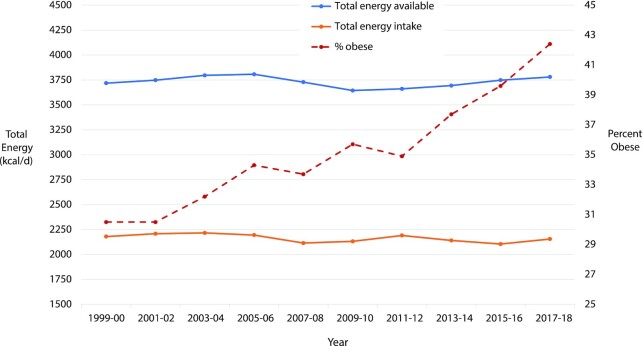
Since 1980, obesity prevalence among US adults has soared from 14% to 42%. The commonly accepted explanation is pervasive overeating: ever-increasing energy intake as the population gains weight, year after year. However, evidence does not support this hypothesis. National data on energy intake and energy availability show increases between 1961 and 2000, during modern industrialization of food; but a plateau or declines thereafter-even as obesity continued rising-and while physical activity modestly increased. Thus, Americans appear to be eating relatively less since 2000, for ever-increasing body sizes, as time has progressed. Although both energy intake and energy availability are measured with error, such errors would have to be new since 2000 and systematically increasing over time for these 2 separate, independent measures. Given the tremendous societal consequences of obesity, and failure to date of energy balance-focused interventions to stem the tide, it is critical for the scientific community to consider and test alternative hypotheses. Growing evidence suggests complex, interrelated biological interactions between food processing (including acellular nutrients, depleted prebiotics, additives), gut microbial composition and function, host metabolic expenditure, and intergenerational transmission of risk (including epigenetics, noncoding RNAs, microbial species). In this paradigm, whereas increasing energy intake may have contributed to rising obesity in earlier years, today pervasive adiposity and its physiologic adaptations have created a biological milieu which interacts with industrialized foods to promote escalating obesity, even with stable energy intake-a self-sustaining, difficult-to-reverse cycle. These scientific hypotheses must be rigorously evaluated, because even partial confirmation would dramatically shift and expand current prevention and treatment strategies. Urgent new investment in research is required. Simultaneously, uncertain evidence on the obesity epidemic's primary drivers does not mean there is no evidence on actions that can help, and existing science must be more rapidly translated and refined into clinical, public health, and policy interventions.
Overview
The claims and statistics of this paper haven’t been checked yet.
Free: it reads the open-access text and checks the first 5 claims that cite a source we can check. Create a free account to check every claim.
Integrity signals
Registry
Cites
Statistics
Figures
Verification
Claims the paper makes
The claims and statistics of this paper haven’t been checked yet.
Free: it reads the open-access text and checks the first 5 claims that cite a source we can check. Create a free account to check every claim.
Claims other papers make about this one
Each is checked against this paper’s own text: does it say what the citing paper says it does?
In the citing paper
“Beyond obvious effects on energy balance, dietary quality can also influence obesity risk through changes in metabolic adaptation due to a high refined carbohydrate diet, in resting energy expenditure (such as through brown or beige adipose tissue thermogenesis), in microbiome calorie utilization (with corresponding greater or lesser utilization by the host tissues), and in epigenetic or trans-”
Self-check
Percentages, sums and reported differences re-computed from the paper’s own numbers.
The self-check needs the paper’s full text.
Citations
Cites
The gut microbiota as an environmental factor that regulates fat storage
Bäckhed, F., Ding, H., Wang, T., Hooper, L. V., Koh, G. Y., Nagy, A., Semenkovich, C. F., & Gordon, J. I. (2004) · Proceedings of the National Academy of Sciences · doi:10.1073/pnas.0407076101 · Cited by 6,245 · cited 1×
“In animal models, changes to the gut microbiome can substantially alter weight gain and obesity, without changes in total energy intake or physical activity (16, 17); and changes in both absolute and relative microbiome energy use influence host weight gain (10, 11).”
Epigenetics in Human Obesity and Type 2 Diabetes
Ling, C., & Rönn, T. (2019) · Cell Metabolism · doi:10.1016/j.cmet.2019.03.009 · Cited by 941 · cited 1×
“Both dietary changes and diet-induced microbial metabolites can also induce epigenetic changes that influence risk of weight gain and obesity (26, 27); and maternal obesity and metabolism are linked to DNA methylation and childhood obesity (28, 29).”
The Western Diet–Microbiome-Host Interaction and Its Role in Metabolic Disease
Zinöcker, M. K., & Lindseth, I. A. (2018) · doi:10.20944/preprints201803.0064.v1 · Cited by 776 · cited 1×
“Such refined “acellular” carbohydrates—lacking any natural, intact plant cellular structure—are rapidly and completely digested in the stomach and small intestine, causing a double insult of excess flux of nutrients to the host and insufficient nourishment of the gut microbiome (12, 13).”
Rising rural body-mass index is the main driver of the global obesity epidemic in adults
NCD Risk Factor Collaboration (NCD-RisC), Bixby, H., Bentham, J., Zhou, B., Di Cesare, M., Paciorek, C. J., Bennett, J. E., Taddei, C., Stevens, G. A., Rodriguez-Martinez, A., et al. (2019) · Nature · doi:10.1038/s41586-019-1171-x · Cited by 735
Trends in Energy Intake in U.S. between 1977 and 1996: Similar Shifts Seen across Age Groups
Nielsen, S. J., Siega‐Riz, A. M., & Popkin, B. M. (2002) · Obesity Research · doi:10.1038/oby.2002.51 · Cited by 634 · cited 1×
“And, data from other national surveys support a gradual increase in energy intake between 1977– 1978 and 1994–1996 (36).”
Cuevas-Sierra, A., Ramos-Lopez, O., Riezu-Boj, J. I., Milagro, F. I., & Martinez, J. A. (2019) · Advances in Nutrition · doi:10.1093/advances/nmy078 · Cited by 523 · cited 1×
“Both dietary changes and diet-induced microbial metabolites can also induce epigenetic changes that influence risk of weight gain and obesity (26, 27); and maternal obesity and metabolism are linked to DNA methylation and childhood obesity (28, 29).”
Mozaffarian, D., Rosenberg, I., & Uauy, R. (2018) · BMJ · doi:10.1136/bmj.k2392 · Cited by 484 · cited 1×
“This included the mid-20th-century Green Revolution, a strategy to dramatically increase global agricultural production of commodity crops, and the corresponding evolution of food processing to create shelf-stable, inexpensive, starchrich, vitamin-fortified products (34).”
Self-citationMicha, R., Shulkin, M. L., Peñalvo, J. L., Khatibzadeh, S., Singh, G. M., Rao, M., Fahimi, S., Powles, J., & Mozaffarian, D. (2017) · PLOS ONE · doi:10.1371/journal.pone.0175149 · Cited by 476 · cited 1×
“There are also many other reasons to eat a healthy diet, such as dietary priorities for prevention of cardiovascular diseases and type 2 diabetes (39), independent of body weight.”
Self-citationHeslehurst, N., Vieira, R., Akhter, Z., Bailey, H., Slack, E., Ngongalah, L., Pemu, A., & Rankin, J. (2019) · PLOS Medicine · doi:10.1371/journal.pmed.1002817 · Cited by 435 · cited 1×
“Both dietary changes and diet-induced microbial metabolites can also induce epigenetic changes that influence risk of weight gain and obesity (26, 27); and maternal obesity and metabolism are linked to DNA methylation and childhood obesity (28, 29).”
Du, Y., Liu, B., Sun, Y., Snetselaar, L. G., Wallace, R. B., & Bao, W. (2019) · JAMA Network Open · doi:10.1001/jamanetworkopen.2019.7597 · Cited by 373
Cited by
The interplay of factors in metabolic syndrome: understanding its roots and complexity
Islam, M. S., Wei, P., Suzauddula, M., Nime, I., Feroz, F., Acharjee, M., & Pan, F. (2024) · Molecular Medicine · doi:10.1186/s10020-024-01019-y · Cited by 169
Mozaffarian, D., Agarwal, M., Aggarwal, M., Alexander, L., Apovian, C. M., Bindlish, S., Bonnet, J., Butsch, W. S., Christensen, S., Gianos, E., et al. (2025) · The American Journal of Clinical Nutrition · doi:10.1016/j.ajcnut.2025.04.023 · Cited by 154
“…a high refined carbohydrate diet, in resting energy expenditure (such as through brown or beige adipose tissue thermogenesis), in microbiome calorie utilization (with corresponding greater or lesser utilization by the host tissues), and in epigenetic or trans -generational risk of obesity [81,82].”
Self-citationUltraprocessed Foods and Obesity Risk: A Critical Review of Reported Mechanisms
Valicente, V. M., Peng, C.-H., Pacheco, K. N., Lin, L., Kielb, E. I., Dawoodani, E., Abdollahi, A., & Mattes, R. D. (2023) · Advances in Nutrition · doi:10.1016/j.advnut.2023.04.006 · Cited by 144
“However, the validity of the “energy intake-energy expenditure model” has been questioned recently based on observations that energy intake and energy expenditure have been relatively stable in the population for the past 20 y, yet the prevalence of obesity increased by over 25% [273].”
BackgroundMozaffarian, D., Agarwal, M., Aggarwal, M., Alexander, L., Apovian, C. M., Bindlish, S., Bonnet, J., Butsch, W. S., Christensen, S., Gianos, E., et al. (2025) · Obesity · doi:10.1002/oby.24336 · Cited by 143
“…a high refined carbohydrate diet, in resting energy expenditure (such as through brown or beige adipose tissue thermo-genesis), in microbiome calorie utilization (with corresponding greater or lesser utilization by the host tissues), and in epigenetic or trans-generational risk of obesity [87, 88].”
Self-citationCompeting paradigms of obesity pathogenesis: energy balance versus carbohydrate-insulin models
Ludwig, D. S., Apovian, C. M., Aronne, L. J., Astrup, A., Cantley, L. C., Ebbeling, C. B., Heymsfield, S. B., Johnson, J. D., King, J. C., Krauss, R. M., et al. (2022) · European Journal of Clinical Nutrition · doi:10.1038/s41430-022-01179-2 · Cited by 111
Obesogens: a unifying theory for the global rise in obesity
Heindel, J. J., Lustig, R. H., Howard, S. G., & Corkey, B. E. (2024) · International Journal of Obesity · doi:10.1038/s41366-024-01460-3 · Cited by 128
“A recent perspective noted that we do not have a clear explanation for the obesity epidemic [3].”
BackgroundInfluentialLiu, J., & Mozaffarian, D. (2024) · Annals of Internal Medicine · doi:10.7326/m24-0190 · Cited by 88
“…changes in energy intake that could be related to nondietary factors, such as changes in physical activity, the gut microbiome, or metabolic expenditure, and to minimize measurement error in dietary estimates, intake of all dietary components was energy-adjusted using the residual method (15, 16).”
MethodSelf-citationO’Hearn, M., Erndt-Marino, J. D., Gerber, S., Lauren, B. N., Economos, C. D., Wong, J. B., Blumberg, J. B., & Mozaffarian, D. (2022) · Nature Communications · doi:10.1038/s41467-022-34195-8 · Cited by 48
Self-citationThe Age-Related Obesity Paradox: Results from Two Large Prospective Cohort Studies
Ge, Y., Liu, T., Deng, L., Zhang, Q., Liu, C., Ruan, G., Xie, H., Song, M., Lin, S., Yao, Q.-H., et al. (2022) · Journal of Cachexia Sarcopenia and Muscle · doi:10.1002/jcsm.13415 · Cited by 35
Farsijani, S., Mao, Z., Cauley, J. A., & Newman, A. B. (2023) · Clinical Nutrition · doi:10.1016/j.clnu.2023.08.007 · Cited by 39
Heindel, J. J., Alvarez, J. A., Atlas, E., Cave, M. C., Chatzi, V. L., Collier, D. N., Corkey, B. E., Fischer, D. K., Goran, M. I., Howard, S. G., et al. (2023) · American Journal of Clinical Nutrition · doi:10.1016/j.ajcnut.2023.05.024 · Cited by 40
Mozaffarian, D., Agarwal, M., Aggarwal, M., Alexander, L., Apovian, C. M., Bindlish, S., Bonnet, J., Butsch, W. S., Christensen, S., Gianos, E., et al. (2025) · Obesity Pillars · doi:10.1016/j.obpill.2025.100181 · Cited by 28
Self-citationMozaffarian, D., Agarwal, M., Aggarwal, M., Alexander, L., Apovian, C. M., Bindlish, S., Bonnet, J. P., Butsch, W. S., Christensen, S. M., Gianos, E., et al. (2025) · Obesity Pillars · doi:10.1016/j.obpill.2026.100269 · Cited by 41
Self-citationHow can physical activity facilitate a sustainable future? Reducing obesity and chronic disease
Stensel, D. J. (2023) · Proceedings of The Nutrition Society · doi:10.1017/s0029665123002203 · Cited by 26
Suárez, R., Bautista-Valarezo, E., Matos, A., Abad, P. C. C., Fascì-Spurio, F., Castano-Jimenez, J., Zambrano-Villacres, R., Sarno, G., & Frías-Toral, E. (2025) · Food and Agricultural Immunology · doi:10.1080/09540105.2025.2491597 · Cited by 24
“…that includes chronic low-grade inflammation, alterations in the gut microbiota, genetic and environmental predispositions, metabolic adaptations, and a complex network of biological interactions influenced by food processing (Chao et al., 2021; Mozaffarian, 2022; Piaggi et al., 2018) Figure 1.”
Carbohydrate-insulin model: does the conventional view of obesity reverse cause and effect?
Ludwig, D. S. (2023) · Philosophical Transactions of the Royal Society B Biological Sciences · doi:10.1098/rstb.2022.0211 · Cited by 25
“With what confidence can we assume that a combined focus on all of these, as specified in recent EBM formulations, would have meaningful efficacy? Fifth, since 2000, obesity rates have risenmarkedly without evidence of increased energy intake according to two methods of assessment: individual dietary recalls and energ…”
BackgroundA scoping review of food and nutrition literacy programs
Cabezas, M.-F., & Nazar, G. (2023) · Health Promotion International · doi:10.1093/heapro/daad090 · Cited by 25
Mehta, N. K. (2023) · Milbank Quarterly · doi:10.1111/1468-0009.12635 · Cited by 20
Damigou, E., Georgoulis, M., Chrysohoou, C. A., Barkas, F., Vlachopoulou, E., Adamidis, P. S., Kravvariti, E., Tsioufis, C. P., Pitsavos, C. E., Liberopoulos, E. N., et al. (2024) · Nutrients · doi:10.3390/nu16081128 · Cited by 20
Kaishap, P. P., Laskar, B., Dutta, D., Gogoi, N., & Dey, T. (2025) · The Chemical Record · doi:10.1002/tcr.202500073 · Cited by 15
Daily, J. W., & Park, S. (2023) · Nutrients · doi:10.3390/nu15041063 · Cited by 16
“In a recent perspective article, Mozaffarian publi hed a grap that clearly showed a large increase in the percentage of obesity in the USA population from the year 2000 (30%) to 2018 (42%) [25].”
BackgroundDing, Y., Zhang, T., Ma, H., Han, J. Z., Zhu, W., Zhao, X., Lu, X.-Y., Zhou, B., & Shi, X. (2025) · Environmental Science & Technology · doi:10.1021/acs.est.4c12616 · Cited by 15
“52 In 2002, researchers began to investigate the role of environmental compounds in the obesity epidemic.”
Obesity and climate change: co-crises with common solutions
Behrens, P., Champagne, C. M., Halford, J. C. G., Moodie, M., Proietto, J., Rutter, G. A., Samaras, K., & Holly, J. M. P. (2025) · Frontiers in Science · doi:10.3389/fsci.2025.1613595 · Cited by 14
“Yet, this does not appear to be due to increased energy intake: evidence from self-reported recall data and food availability estimates indicates that consumption and availability of dietary energy increased rapidly until around 2000 and subsequently declined by a small but signi fi cant amount (18).”
Galeano, P., de Ceglia, M., Mastrogiovanni, M., Campanelli, L., Vera, D. M., Campolo, N., Novack, G. V., Rosell‐Valle, C., Suárez, J., Aicardo, A., et al. (2023) · International Journal of Molecular Sciences · doi:10.3390/ijms242317009 · Cited by 15
“Recent statistics analysis showed that despite eating less fat, Americans gained weight at an alarming rate and displayed more cardiovascular disease [18].”
BackgroundSoto-Mota, A., Pereira, M. A., Ebbeling, C. B., Aronica, L., & Ludwig, D. S. (2023) · American Journal of Clinical Nutrition · doi:10.1016/j.ajcnut.2022.12.014 · Cited by 15
Wiese, M. L., Wilke, F., Gärtner, S., Valentini, L., Keßler, W., Aghdassi, A., Lerch, M. M., & Steveling, A. (2023) · PLoS ONE · doi:10.1371/journal.pone.0282683 · Cited by 15
What should I eat today? Evidence, guidelines, dietary patterns and consumer's behavior
Agostoni, C. V., Boccia, S., Graffigna, G., Slavin, J. L., Abodi, M., & Szajewska, H. (2024) · European Journal of Internal Medicine · doi:10.1016/j.ejim.2024.05.028 · Cited by 15
Sex-specific dietary habits and their association with weight change in healthy adults
Rein, M., Elkan, M., Godneva, A., Cohen-Dolev, N., & Segal, E. (2024) · BMC Medicine · doi:10.1186/s12916-024-03730-3 · Cited by 16
“Nonetheless, the relationship between diet and obesity remains a subject of ongoing debate [11], including the role of dietary habits on sex-based differences in obesity rates and general health [12].”
BackgroundWu, Y., Pham, Q., Wang, Y., Huang, H., Jiang, X., Li, R. W., Yu, L. L., Luo, Y., Wang, J., & Wang, T. T. Y. (2023) · Food & Function · doi:10.1039/d3fo01249b · Cited by 14
Torreggiani, M., Wang, A. Y.-M., Fois, A., & Piccoli, G. B. (2023) · Seminars in Nephrology · doi:10.1016/j.semnephrol.2023.151402 · Cited by 13
The serine protease KLK7 promotes immune cell infiltration in visceral adipose tissue in obesity
Ribas‐Latre, A., Hoffmann, A., Gebhardt, C., Weiner, J., Arndt, L., Raulien, N., Gericke, M. T., Ghosh, A., Krause, K., Klöting, N., et al. (2025) · Metabolism · doi:10.1016/j.metabol.2025.156239 · Cited by 12
Perspective: Nutrition’s Next Chapter – Bioactive Gaps and the Microbiome–Mitochondria Axis
Damman, C. J. (2023) · Advances in Nutrition · doi:10.1016/j.advnut.2023.03.016 · Cited by 9
“the current understanding of macro- and micronutrients that are relevant to both sides of malnutrition’s double burden [15,16]?”
BackgroundHassan, Y. R., El‐Shiekh, R. A., El-Hefnawy, H. M., & Michael, C. G. (2024) · Journal of Ethnopharmacology · doi:10.1016/j.jep.2024.117942 · Cited by 19
Sociology of Obesity: How to Justify Fighting against the Development of the Obesity Epidemic
Poulain, J. (2024) · Obesities · doi:10.3390/obesities4040031 · Cited by 6
Samakidou, G., Koliaki, C. C., Liberopoulos, E. N., & Katsilambros, N. L. (2023) · Healthcare · doi:10.3390/healthcare11091310 · Cited by 7
“This discrepancy suggests that other factors may be additionally implicated in body weight regulation, and that, despite not clearly and directly affecting the overall energy intake or expenditure, they cause a positive energy balance at the cellular adipocyte level [7].”
BackgroundInfluentialIs the energy balance explanation of the obesity epidemic wrong?
Stroebe, W. (2023) · Appetite · doi:10.1016/j.appet.2023.106614 · Cited by 12
“In a comment entitled “Obesity-an unexplained epidemic”, Mozaffarian (2022) challenged the Energy Balance Model (EBM) and argued for a need to replace it with a novel biological theory.”
InfluentialDionne, V., Iglesies‐Grau, J., Latour, É., Besnier, F., Gagnon, C., Gayda, M., Pelletier, V., Selcer, S., Vrinceanu, T., Debray, A., et al. (2025) · Diabetes Obesity and Metabolism · doi:10.1111/dom.70142 · Cited by 6
“12 Heindel et al. 13 proposed a unified theory regarding the pathogenesis of obesity, emphasising that energy balance must be considered, but without forgetting the importance of insulinemia and environmental obesogens that alter satiety and metabolic signalling.”
Rolland‐Cachera, M. (2025) · Advances in Nutrition · doi:10.1016/j.advnut.2025.100576 · Cited by 4
“Surprisingly, although most research focuses on the determinants of excessive intake, obesity rates have risen significantly without evidence of increasing energy and fat consumption [3], but rather despite a decline over the last 4 decades [2,4 – 6].”
Wound Healing Effect of HDACi Repositioned Molecules in the Therapy for Chronic Wounds Models
Santos-Mena, A. O., González-Muñiz, O. E., Rodríguez-Carlos, A., Guerrero, A. R., Mendieta, C. R., Delgado, Y. M. J., Muñoz, G. S., Rosenstein, Y., Trujillo-Páez, J. V., Portales‐Pérez, D. P., et al. (2025) · Experimental Dermatology · doi:10.1111/exd.70060 · Cited by 4
“With the anticipated rise in patients affected by DM, CDV, and antimicrobial resistance over the next decade, it becomes imperative to explore novel strategies that bolster both the body's regenerative responses and antimicrobial defences, thereby enhancing the wound healing process [5, 26, 27].”
Natural Compounds Exert Anti‐Obesity Effects by Regulating Cytokines
Zhang, Y., Feng, G., Zhang, W., & Liu, X. (2025) · Phytotherapy Research · doi:10.1002/ptr.8508 · Cited by 5
“However, based on an analysis of national data from the United States of America, it was concluded that the energy intake and physical activity of American adults have remained stable for nearly 20 years, but the obesity level has been increasing (Mozaffarian 2022).”
Chronic positive mass balance is the actual etiology of obesity: A living review
Manninen, A. H. (2023) · Global Translational Medicine · doi:10.36922/gtm.222 · Cited by 4
The Evidence Behind Dietary Guidelines: Evolution, Consumers’ Trust and PerceptionsPreprint
Agostoni, C. V., Boccia, S., Graffigna, G., Slavin, J. L., & Szajewska, H. (2023) · Preprints.org · doi:10.20944/preprints202311.0663.v1 · Cited by 4
The change of alanine aminotransferase distributions among US youths, NHANES 1988–2020
Mallhi, A. K., Kiely, K., Roy, V., Ovchinsky, N., Baidal, J. W., Rochani, H. D., & Zhang, J. (2025) · Journal of Pediatric Gastroenterology and Nutrition · doi:10.1002/jpn3.12460 · Cited by 3
Almanaa, M. A., Alahmad, H. N., Alarifi, M., Alenazi, K., Abanomy, A., Alneghaimishi, K., Alshamrani, B., & Albathi, R. (2024) · Archives of Medical Science - Atherosclerotic Diseases · doi:10.5114/amsad/192995 · Cited by 4
Low‐ or No‐Energy Sweeteners and Body Weight Management: Dissecting a “Minor” Effect
Bellisle, F. (2025) · Obesity Reviews · doi:10.1111/obr.13937 · Cited by 3
Do We Need a New Unifying Theory for Obesity?
Blumberg, B. (2024) · Endocrinology · doi:10.1210/endocr/bqae029 · Cited by 3
Rahimianfar, F., Rahimianfar, M., & Eshghjoo, S. (2023) · Preprints.org · doi:10.20944/preprints202312.0433.v1 · Cited by 2
On Hunger: Violence and Craving in America, from Starvation to Ozempic
Simmons, D. (2025) · University of California Press eBooks · doi:10.1525/luminos.232 · Cited by 2
The Microbiome, Metabolism, and Networks in Precision Nutrition
Mensah, G. E., Maseng, M. G., Allard, S., & Gilbert, J. A. (2024) · Precision Nutrition · doi:10.1016/b978-0-443-15315-0.00011-0 · Cited by 2
da Silva, C. A. F., & (Organizadores), R. A. S. S. (2024) · Intercontinental Journal on Physical Education · doi:10.51995/2675-0333.v6i1e2020048 · Cited by 2
Environmental chemical obesogens, what can we do?
Lobstein, T. (2024) · The Lancet Diabetes & Endocrinology · doi:10.1016/s2213-8587(24)00091-3 · Cited by 2
Quraishi, D. A., Sarikonda, A., Self, D. M., Isch, E. L., Glener, S. R., Momin, A. A., Sami, A., Clark, N. J., Heller, J. E., Prasad, S. K., et al. (2025) · North American Spine Society Journal (NASSJ) · doi:10.1016/j.xnsj.2025.100583 · Cited by 9
Epigenetic Mechanisms of Obesity: Insights from Transgenic Animal Models
Na, E. S. (2025) · Life · doi:10.3390/life15040653 · Cited by 5
“However, despite its strong association with these disease states, the incidence of obesity continues to climb at an alarming rate so much so that the Centers for Disease Control (CDC) and the World Health Organization (WHO) now consider obesity to be an epidemic [6].”
Carr, L. T. B., Ard, J. D., Shanks, C. B., Forman, E. M., Goldstein, S. P., Haire-Joshu, D. L., Jastreboff, A. M., Johnson, S. M., Kandula, N. R., Katzmarzyk, P. T., et al. (2025) · Obesity · doi:10.1002/oby.70035 · Cited by 3
Self-citationFat as insurance, leanness as bodily display: did Ronald Reagan make us fat?
Haig, D. (2023) · Journal of Bioeconomics · doi:10.1007/s10818-023-09338-6 · Cited by 1
“…food intake in the United Kingdom and United States has decreased during some of the period in which obesity has been increasing (Prentice & Jebb, 1995; Mozaffarian, 2022) and that energy intake of adolescent diets in the United States did not increase from 1966 to 1996 (Cavadini et al., 2000).”
Bai, Y. (2024) · International Journal for Vitamin and Nutrition Research · doi:10.31083/ijvnr36625 · Cited by 1
Damigou, E., Anastasiou, C. A., Chrysohoou, C. A., Barkas, F., Liberopoulos, E. N., Pitsavos, C. S., Tsioufis, C., Sfikakis, P. P., & Panagiotakos, D. B. (2025) · International Journal of Obesity · doi:10.1038/s41366-025-01796-4 · Cited by 1
A Hypothesis on the Historical Development of Obesity that is Not Only About Food
Magkos, F. (2025) · Current Obesity Reports · doi:10.1007/s13679-025-00650-y · Cited by 3
“…the trajectory of energy intake—whether evaluated as food availability per capita or as self-reported calorie intake—against the trend in obesity prevalence magnifies the apparent “unexplained epidemic” paradox [9]; however, this approach is flawed because of the nuanced nature of these data.”
InfluentialCorrea, P. M., Sepúlveda-Peñaloza, A., & Urquidi, C. (2025) · Scientific Reports · doi:10.1038/s41598-025-23419-8 · Cited by 2
Food industry degrowth as a public health strategy: the case of ultra processed baked goods
Campbell, N., Browne, S., Claudy, M., Reilly, K., & Finucane, F. M. (2025) · Globalization and Health · doi:10.1186/s12992-025-01178-5 · Cited by 2
New Insight Into Male Infertility: Deviation From Basic Tenets of Life
Nasr‐Esfahani, M. H., Naderi, N., Tavalaee, M., & Razi, M. (2026) · Oxidative Medicine and Cellular Longevity · doi:10.1155/omcl/4433444 · Cited by 1
“It fails to account for the paradoxical rise in obesity rates after 2000, despite reported reductions in caloric intake and increases in physical activity levels [219].”
Bosy‐Westphal, A., & Müller, M. J. (2023) · Adipositas - Ursachen Folgeerkrankungen Therapie · doi:10.1055/a-2185-7599 · Cited by 1
Nutritional management during critical illness in those with previous obesity surgery
Correia, M. I. T. D., & Rosenfeld, R. S. (2024) · Current Opinion in Clinical Nutrition & Metabolic Care · doi:10.1097/mco.0000000000001014 · Cited by 2
Valk, R., Solh, H. S., & Hammill, J. (2025) · Journal of Lifestyle and SDGs Review · doi:10.47172/2965-730x.sdgsreview.v5.n04.pe06119 · Cited by 1
“Research has elucidated that complex interactions within multiple biological systems contribute to weight gain and make intentional weight loss difficult (Heindel et al., 2024; Ludwig, 2023; Ludwig et al ., 2021, 2022).”
Herschbach, A., Azad, Z. R., Ziser, K., & Junne, F. (2022) · PSYCH up2date · doi:10.1055/a-1505-9939 · Cited by 1
“Jüngere Daten aus den USA zeigen einen erheblichen Anstieg von adipöser Prävalenz, während die durchschnittliche Kalorienaufnahme konstant blieb [15].”
A GASTROPLASTIA ENDOSCÓPICA NO CONTROLE DA OBESIDADE
Beal, A. J. D. A. F., Tonial, A. C., Seixas, L. M., Mariano, M. E. P., Kelner, M., & Piaia, V. (2023) · Simpósio Internacional Interdisciplinar dos Cursos da Área da Saúde · doi:10.17648/siics-2022-159261 · Cited by 1
Traissac, P. (2022) · American Journal of Clinical Nutrition · doi:10.1093/ajcn/nqac172
(2022) · American Journal of Clinical Nutrition · doi:10.1093/ajcn/nqac218
Li, E., Wang, A., Xu, C., Twum, F., & Zhang, J. (2022) · medRxiv · doi:10.1101/2022.10.12.22281015
Abdulsatar, A. A. (2024) · SCAFFOLDING Jurnal Pendidikan Islam dan Multikulturalisme · doi:10.37680/scaffolding.v6i1.5431 · Cited by 1
“Nutritional obesity, which results from an imbalance between energy intake and expenditure, is a major contributor to this epidemic (Drenowatz, 2015; Melo et al., 2023; Mozaffarian, 2022; Pruitt et al., 2006; Romieu et al., 2017).”
Lecerf, J.-M. (2024) · Pratiques en nutrition · doi:10.1016/j.pranut.2024.08.001
Munir, R., Haq, N. U., Ali, B., Iqbal, A., Shah, K., Khan, M. U., & Umair, M. (2024) · Cureus · doi:10.7759/cureus.74679
Endocrine disruptors and obesity
To, K., Willner, S. A., & Blumberg, B. (2024) · Elsevier eBooks · doi:10.1016/b978-0-443-13825-6.00101-1
Matus, P., Sepúlveda-Peñaloza, A., & Urquidi, C. (2025) · Research Square · doi:10.21203/rs.3.rs-6129933/v1
Elío, I., Prola, T. A., Cano, S. S., & Pifarré, K. T. (2025) · Advances in medical education, research, and ethics (AMERE) book series · doi:10.4018/979-8-3373-1127-2.ch010
Simmons, D. (2025) · University of California Press eBooks · doi:10.1525/9780520412996-005
Simmons, D. (2025) · University of California Press eBooks · doi:10.1525/luminos.232.f
Simmons, D. (2025) · University of California Press eBooks · doi:10.1525/luminos.232.h
Simmons, D. (2025) · University of California Press eBooks · doi:10.1525/luminos.232.j
Simmons, D. (2025) · University of California Press eBooks · doi:10.1525/luminos.232.a
Simmons, D. (2025) · University of California Press eBooks · doi:10.1525/9780520412996-003
Simmons, D. (2025) · University of California Press eBooks · doi:10.1525/luminos.232.g
Food Aid and the Starved Personality
Simmons, D. (2025) · University of California Press eBooks · doi:10.1525/luminos.232.e
Simmons, D. (2025) · University of California Press eBooks · doi:10.1525/luminos.232.c
Simmons, D. (2025) · University of California Press eBooks · doi:10.1525/luminos.232.i
Β 2 AR Agonists Sustain Thermogenesis and Leanness via SympathofacilitationPreprint
Cheung, S. W., Sidarta-Oliveira, D., Yao, L., Zhu, Y., Sarker, G., Lundh, S. H., Morgan, D. A., Qu, J., Wilcox, S. L., Vyazovskiy, V. V., et al. (2025) · bioRxiv (Cold Spring Harbor Laboratory) · doi:10.1101/2025.06.13.659468 · Cited by 1
Roemmich, J. N., Nelson, A. M., Stice, E. M., Hess, J., Palmer, D. G., & Casperson, S. L. (2025) · JMIR Research Protocols · doi:10.2196/66394
“…gut microbiome, reduced diet-induced thermogenesis in response to consumption of processed foods, the magnitude of browning or beiging of adipocytes, the rate of mitochondrial respiration, and intergenerational transmission of epigenetic alterations that increase the risk of excess adiposity [38].”
Flauzino, P. A., Bezerra, I. N., Moura, J. S., & Sichieri, R. (2025) · Revista Brasileira de Epidemiologia · doi:10.1590/1980-549720250038
“However, population data (2000–2018) refute the positive energy balance hypothesis, showing an increase in obesity from 31 to 42%, with no evidence of increased energy intake or decreased physical activity 27,28 .”
Flauzino, P. A., Bezerra, I. N., Moura, J. S., & Sichieri, R. (2025) · Revista Brasileira de Epidemiologia · doi:10.1590/1980-549720250038.2
Dietary Fiber Intake and Weight Status in Young Austrian Adults
Greier, M. D. C., Dudás, J., Greier, K., Posch, M., & Hofauer, B. G. (2025) · Foods · doi:10.3390/foods14223863 · Cited by 5
Ashour, A., Alshayeb, L., & Dashash, M. (2025) · BDJ Open · doi:10.1038/s41405-025-00383-z
Obesidad: más allá de la dieta y el ejercicio
Burdeus, P. V. E., Cabo, E. Z., & Vidal, M. R. (2025) · Actualización en Medicina de Familia · doi:10.55783/amf.210803
THE ROLE OF DIET IN THE PREVENTION OF LIFESTYLE DISEASES: A LITERATURE REVIEW
Janczura, S., Dądela, B., Zielonka, K., Śliwa, N., Markowski, M., Jasińska, J., Kawalska, E., Jakubowska, D., Gnitecki, S., & Borowski, M. (2025) · International Journal of Innovative Technologies in Social Science · doi:10.31435/ijitss.3(47).2025.4203
King, A., Showalter, D. A., Gunter, C., Enlow, D., Showalter, C., Metuge, A., Fogle, A. J., & Schroer, B. J. (2025) · Procedia Computer Science · doi:10.1016/j.procs.2025.12.011
The Obesogenic environment: role in the development of obesity and impact on metabolic health
KhKh, S., Исмаиловна, А. Р., Плотникова, О. А., Пилипенко, В. В., Risnik, D. V., & Kodentsova, V. M. (2026) · Medical alphabet · doi:10.33667/2078-5631-2026-9-8-14
A conceptual framework integrating mechanisms linking nut consumption and energy balance
Cassettari, T., Starck, C. S., Beckett, E., & Fayet‐Moore, F. (2026) · Frontiers in Nutrition · doi:10.3389/fnut.2026.1834816
Cabral, L. A., de Galiza, D. D. F., Carioca, A. A. F., Henriques, E. M. V., Vergara, C. M. A. C., Barros, A. Q. S., & Sampaio, H. A. D. C. (2026) · Saúde em Debate · doi:10.1590/2358-2898202614910796p
Health Literacy as a strategy for weight control and changes in food consumption markers
Cabral, L. A., de Galiza, D. D. F., Carioca, A. A. F., Henriques, E. M. V., Vergara, C. M. A. C., Barros, A. Q. S., & Sampaio, H. A. D. C. (2026) · Saúde em Debate · doi:10.1590/2358-2898202614910796i
Ben‐Dor, M., & Klement, R. J. (2026) · International Journal for Vitamin and Nutrition Research · doi:10.31083/ijvnr48814
Emonson, C., Rinehart, N., Pesce, C., Agostoni, C., Luzi, L., & Vazou, S. (2026) · Acta Paediatrica · doi:10.1111/apa.70678
“However, from a medical perspective, hereditary traits can interact with positive lifestyle factors such as increased physical activity under changing environmental conditions, leading to an advantageous change from unfavourable transmissible epigenetic alterations [5].”
Metadata
- Authors
- Mozaffarian, D.
- Affiliations
- Tufts University (US)
- Corresponding author
- Mozaffarian, Dariush
- ORCID
- Mozaffarian, Dariush
- Venue
- The American Journal of Clinical Nutrition
- Publisher
- Elsevier BV
- Published
- 2022-06
- Volume
- 115
- Issue
- 6
- Pages
- 1445-1450
- ISSN
- 0002-9165 (ISSN-L)
- PMC
- PMC9170462
- OpenAlex
- W4224326524
- Cited by
- 101
- References
- 38
- Citations by year
- 2026: 8 · 2025: 44 · 2024: 19 · 2023: 24 · 2022: 6
- FWCI
- 20.50
- Type
- journal article
- Language
- en
- Open access
- hybrid
- doi.org
- Licence
- cc-by
- www.elsevier.com/tdm/userlicense/1.0/ (tdm)
- creativecommons.org/licenses/by/4.0/ (vor)
- Locations
- American Journal of Clinical Nutrition (publishedVersion, cc-by)
- PubMed Central (publishedVersion, cc-by)
- PubMed (publishedVersion)
- Funders
- National Heart, Lung, and Blood Institute
- NIH (2R01 HL115189)
- Topics
- Health Sciences › Medicine › Public Health, Environmental and Occupational Health › Obesity, Physical Activity, Diet
- Life Sciences › Neuroscience › Endocrine and Autonomic Systems › Regulation of Appetite and Obesity
- Life Sciences › Biochemistry, Genetics and Molecular Biology › Molecular Biology › Gut microbiota and health
- Keywords
- obesity epidemic, energy intake, energy availability, processed foods, food processing, gut microbiota, metabolic cost, epigenetics, intergenerational transmission of risk, non-coding RNA, obesity prevention, obesity treatment
- MeSH terms
- Nutrients, Adult, Energy Intake, Energy Metabolism, Humans, Obesity, Exercise
About these checks
Registry, retraction, Cites and statistics results are computed, not judged, with one exception: a printed reference that no index lists is read once by a model before it counts as a citation error. Claims are extracted by a model and kept only when their quote appears verbatim in the text; each cited source is then checked, with a model’s help, for whether it says what the claim relies on. Those verdicts can be wrong — read the claim’s quote and the cited source before relying on one.
Statistics and arithmetic are recomputed, not judged.
Confidence bands are shown only for fields calibrated on our annotated test set. None is calibrated yet, so no band is shown.
What counts as a claim ›How we measure confidence ›How we check this ›
Are you an author, or do you see a problem with this page? Request a review
Data sources
Bibliographic data: Semantic Scholar, OpenAlex, Crossref.
Contains information from the Semantic Scholar Academic Graph Datasets, made available under the ODC Attribution License (ODC-BY 1.0).
Semantic Scholar’s data is described in: Kinney, R., et al. (2023). The Semantic Scholar Open Data Platform. arXiv:2301.10140.
