

Food groups and intermediate disease markers: a systematic review and network meta-analysis of randomized trials
Open accessThe DOI matches its Crossref record; 146 of the 148 references it cites were found in a registry or an index.
Abstract
Background: In previous meta-analyses of prospective observational studies, we investigated the association between food groups and risk of chronic disease. Objective: The aim of the present network meta-analysis (NMA) was to assess the effects of these food groups on intermediate-disease markers across randomized intervention trials. Design: Literature searches were performed until January 2018. The following inclusion criteria were defined a priori: 1) randomized trial (≥4 wk duration) comparing ≥2 of the following food groups: refined grains, whole grains, nuts, legumes, fruits and vegetables, eggs, dairy, fish, red meat, and sugar-sweetened beverages (SSBs); 2) LDL cholesterol and triacylglycerol (TG) were defined as primary outcomes; total cholesterol, HDL cholesterol, fasting glucose, glycated hemoglobin, homeostasis model assessment insulin resistance, systolic and diastolic blood pressure, and C-reactive protein were defined as secondary outcomes. For each outcome, a random NMA was performed, and for the ranking, the surface under the cumulative ranking curves (SUCRA) was determined. Results: A total of 66 randomized trials (86 reports) comparing 10 food groups and enrolling 3595 participants was identified. Nuts were ranked as the best food group at reducing LDL cholesterol (SUCRA: 93%), followed by legumes (85%) and whole grains (70%). For reducing TG, fish (97%) was ranked best, followed by nuts (78%) and red meat (72%). However, these findings are limited by the low quality of the evidence. When combining all 10 outcomes, the highest SUCRA values were found for nuts (66%), legumes (62%), and whole grains (62%), whereas SSBs performed worst (29%). Conclusion: The present NMA provides evidence that increased intake of nuts, legumes, and whole grains is more effective at improving metabolic health than other food groups. For the credibility of diet-disease relations, high-quality randomized trials focusing on well-established intermediate-disease markers could play an important role. This systematic review was registered at PROSPERO (www.crd.york.ac.uk/PROSPERO) as CRD42018086753.
Overview
The claims and statistics of this paper haven’t been checked yet.
Free: it reads the open-access text and checks the first 5 claims that cite a source we can check. Create a free account to check every claim.
Integrity signals
Registry
Cites
Statistics
Figures
Verification
Claims the paper makes
The claims and statistics of this paper haven’t been checked yet.
Free: it reads the open-access text and checks the first 5 claims that cite a source we can check. Create a free account to check every claim.
Claims other papers make about this one
Each is checked against this paper’s own text: does it say what the citing paper says it does?
The cited source says what the claim attributes to it.
In the citing paper
“In a network meta-analysis of randomized trials, nuts, legumes, and whole grains were each shown to be more effective in reducing low density lipoprotein cholesterol compared with red meat.32”
From Red meat intake and risk of coronary heart disease among US men: prospective cohort study (2020) · cites this paper as [32]
Self-check
Percentages, sums and reported differences re-computed from the paper’s own numbers.
The self-check needs the paper’s full text.
Citations
Cites
2 retracted
RETRACTED: Primary Prevention of Cardiovascular Disease with a Mediterranean Diet
Estruch, R., Ros, E., Salas-Salvadó, J., Covas, M.-I., Corella, D., Arós, F., Gómez-Gracia, E., Ruiz-Gutiérrez, V., Fiol, M., Lapetra, J., et al. (2013) · New England Journal of Medicine · doi:10.1056/nejmoa1200303 · Cited by 4,257 · cited 1×
“Moreover, the LDL cholesterol and TC-lowering effects provide critical mechanistic evidence to support a potential causal link between nut intake and lower cardiovascular risk (134).”
BackgroundRetractedEstruch, R., Ros, E., Salas-Salvadó, J., Covas, M.-I., Corella, D., Arós, F., Gómez-Gracia, E., Ruiz-Gutiérrez, V., Fiol, M., Lapetra, J., et al. (2018) · New England Journal of Medicine · doi:10.1056/nejmc1806491 · Cited by 1,008
RetractedThe Cochrane Collaboration's tool for assessing risk of bias in randomised trials
Higgins, J. P. T., Altman, D. G., Gotzsche, P. C., Juni, P., Moher, D., Oxman, A. D., Savovic, J., Schulz, K. F., Weeks, L., Sterne, J. A. C., et al. (2011) · BMJ · doi:10.1136/bmj.d5928 · Cited by 33,817 · cited 2×
“Full copies of the studies were assessed by one author (LS) for methodological quality using the risk of bias assessment tool from the Cochrane Collaboration (17).”
Dermyshi, E., Wang, Y., Yan, C., Hong, W., Qiu, G., Gong, X., & Zhang, T. (2017) · Neonatology · doi:10.1159/000454668 · Cited by 24,451
Hutton, B., Salanti, G., Caldwell, D. M., Chaimani, A., Schmid, C. H., Cameron, C., Ioannidis, J. P. A., Straus, S., Thorlund, K., Jansen, J. P., et al. (2015) · Annals of Internal Medicine · doi:10.7326/m14-2385 · Cited by 8,269 · cited 4×
“The present NMA was planned, conducted, and reported in adherence to standards of quality for reporting NMAs (15, 16).”
MethodInfluentialSalanti, G., Ades, A. E., & Ioannidis, J. P. A. (2011) · Journal of Clinical Epidemiology · doi:10.1016/j.jclinepi.2010.03.016 · Cited by 3,766 · cited 1×
“The relative ranking of the different food groups for each outcome were estimated using the distribution of the ranking probabilities and the surface under the cumulative ranking curves (SUCRA) (Table 3) (20).”
MethodChecking consistency in mixed treatment comparison meta-analysis
Dias, S., Welton, N. J., Caldwell, D. M., & Ades, A. E. (2010) · Statistics in Medicine · doi:10.1002/sim.3767 · Cited by 2,521 · cited 1×
“inconsistency, as well as a side-splitting approach (25) to detect comparisons for which direct estimates disagree with indirect evidence from the entire network (Supplemental Tables 12 and 13).”
BackgroundGraphical tools for network meta-analysis in STATA
Chaimani, A., Higgins, J. P. T., Mavridis, D., Spyridonos, P., & Salanti, G. (2013) · PLoS ONE · doi:10.1371/journal.pone.0076654 · Cited by 2,473 · cited 2×
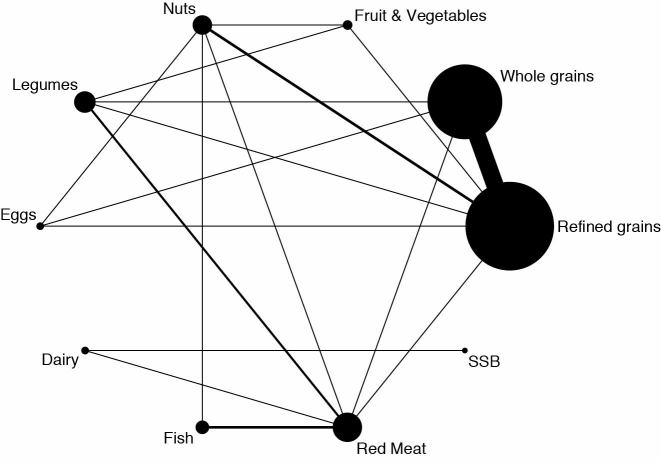
“We illustrated the available direct comparisons between different food groups using a network diagram for each outcome (19).”
MethodGakidou, E., Afshin, A., Abajobir, A. A., Abate, K. H., Abbafati, C., Abbas, K. M., Abd-Allah, F., Abdulle, A. M., Abera, S. F., Aboyans, V., et al. (2017) · The Lancet · doi:10.1016/s0140-6736(17)32366-8 · Cited by 2,406
Consistency and inconsistency in network meta-analysis: concepts and models for multi-arm studies
Higgins, J. P. T., Jackson, D., Barrett, J. K., Lu, G., Ades, A. E., & White, I. R. (2012) · Research Synthesis Methods · doi:10.1002/jrsm.1044 · Cited by 2,098 · cited 1×
“We used a design-by-treatment interaction model (26, 27) to investigate the presence of inconsistency jointly from all possible sources in the entire network simultaneously.”
Method
Research works printed but not linked: 2
- StataCorp. Stata Statistical Software: Release 14. College Station, TX: StataCorp LP; 2015.
- Johnston L, Reiss-Reynolds H, Hunninghake D, Schultz K, Westereng B Cholesterol-lowering benefits of a whole grain oat ready-to-eat cereal. Nutr Clin Care. 1998; 1: 6– 12.
Cited by
Gil-Martín, E., Forbes-Hernández, T., Romero, A., Cianciosi, D., Giampieri, F., & Battino, M. (2022) · Food Chemistry · doi:10.1016/j.foodchem.2021.131918 · Cited by 634
Springmann, M., Spajic, L., Clark, M. A., Poore, J., Herforth, A., Webb, P., Rayner, M., & Scarborough, P. (2020) · BMJ · doi:10.1136/bmj.m2322 · Cited by 520
“46-50 61-66 However, residual confounding with unaccounted risk factors cannot be ruled out in epidemiological studies.”
BackgroundThe EAT–Lancet Commission on healthy, sustainable, and just food systems
Rockström, J., Thilsted, S. H., Willett, W. C., Gordon, L. J., Herrero, M., Hicks, C. C., Mason-D'Croz, D., Rao, N., Springmann, M., Wright, E. C., et al. (2025) · The Lancet · doi:10.1016/s0140-6736(25)01201-2 · Cited by 475
Alae-Carew, C., Green, R., Stewart, C., Cook, B., Dangour, A. D., & Scheelbeek, P. F. D. (2022) · Science of The Total Environment · doi:10.1016/j.scitotenv.2021.151041 · Cited by 242
“In contrast to the paucity of evidence relating to plant-based alternative products, there is an abundance of studies, including meta-analyses, that demonstrate the positive effect of diets high in unprocessed plant-based foods on health outcomes such as lipids (Guasch-Ferré et al., 2019; Schwingshackl et al., 2018),…”
BackgroundResultKoelman, L., Egea Rodrigues, C., & Aleksandrova, K. (2022) · Advances in Nutrition · doi:10.1093/advances/nmab086 · Cited by 249
Red meat intake and risk of coronary heart disease among US men: prospective cohort study
Al-Shaar, L., Satija, A., Wang, D. D., Rimm, E. B., Smith-Warner, S. A., Stampfer, M. J., Hu, F. B., & Willett, W. C. (2020) · BMJ · doi:10.1136/bmj.m4141 · Cited by 202
Red and Processed Meats and Health Risks: How Strong Is the Evidence?
Qian, F., Riddle, M. C., Wylie‐Rosett, J., & Hu, F. B. (2020) · Diabetes Care · doi:10.2337/dci19-0063 · Cited by 191
“For example, in two meta-analyses of randomized feeding trials (10,12), replacement of red meat with nuts or legumes significantly reduced total and LDL cholesterol.”
MethodEstimating impact of food choices on life expectancy: A modeling study
Fadnes, L. T., Økland, J.-M., Haaland, Ø. A., & Johansson, K. A. (2022) · PLoS Medicine · doi:10.1371/journal.pmed.1003889 · Cited by 196
Nuts: Natural Pleiotropic Nutraceuticals
Ros, E., Singh, A., & O’Keefe, J. H. (2021) · Nutrients · doi:10.3390/nu13093269 · Cited by 170
“Importantly, there was a clear dose–response in LDL-cholesterol lowering.”
BackgroundInfluentialPotato Starch: a Review of Physicochemical, Functional and Nutritional Properties
Dupuis, J. H., & Liu, Q. (2019) · American Journal of Potato Research · doi:10.1007/s12230-018-09696-2 · Cited by 165
“However, a recent meta-analysis concluded that at the consumption of cooked potatoes was not associated with an increase in all-cause mortality, coronary heart disease, colorectal cancer, hypertension, or stroke risk (Schwingshackl et al. 2018).”
BackgroundNeuenschwander, M., Stadelmaier, J., Eble, J., Grummich, K., Szczerba, E., Kiesswetter, E., Schlesinger, S., & Schwingshackl, L. (2023) · BMC Medicine · doi:10.1186/s12916-023-03093-1 · Cited by 124
“…trials comparing different food groups and their effect on intermediate diseases markers, such as blood lipids, blood pressure, and glycaemic control parameters, also found that plant-based foods, such as nuts, legumes, and whole grains, were most beneficial for all outcomes combined [184].”
BackgroundSelf-citationChristensen, C., Knudsen, A. W., Arnesen, E., Hatlebakk, J. G., Sletten, I. S. K., & Fadnes, L. T. (2024) · Advances in Nutrition · doi:10.1016/j.advnut.2024.100219 · Cited by 139
“This corresponds well with associations from intakes of these food groups to a range of other health outcomes including cardiovascular disease, type 2 diabetes, and total mortality [62 – 64].”
Health and environmental impacts of plant-rich dietary patterns: a US prospective cohort study
Musicus, A. A., Wang, D. D., Janiszewski, M., Eshel, G., Blondin, S. A., Willett, W. C., & Stampfer, M. J. (2022) · The Lancet Planetary Health · doi:10.1016/s2542-5196(22)00243-1 · Cited by 136
Selinger, E., Neuenschwander, M., Koller, A., Gojda, J., Kühn, T., Schwingshackl, L., Barbaresko, J., & Schlesinger, S. (2023) · Critical Reviews in Food Science and Nutrition · doi:10.1080/10408398.2022.2075311 · Cited by 114
“…products, including whole-grain products, vegetables, and legumes, containing fiber, vitamins, minerals, and antioxidants, might lead to improvement of LDL-cholesterol, inflammatory markers, insulin sensitivity and improved glycemic outcomes (Marshall et al. 2020; Schwingshackl et al. 2018).”
BackgroundSelf-citationHeianza, Y., Zhou, T., Sun, D., Hu, F. B., & Qi, L. (2021) · Clinical Nutrition · doi:10.1016/j.clnu.2021.06.018 · Cited by 121
Kelly, J., Karlsen, M., & Steinke, G. (2020) · American Journal of Lifestyle Medicine · doi:10.1177/1559827620930962 · Cited by 97
Effect of Fruit and Vegetable Consumption on Human Health: An Update of the Literature
Devirgiliis, C., Guberti, E., Mistura, L., & Raffo, A. (2024) · Foods · doi:10.3390/foods13193149 · Cited by 117
Fadnes, L. T., Celis-Morales, C. A., Økland, J.-M., Parra-Soto, S. L., Livingstone, K. M., Ho, F. K. W., Pell, J. P., Balakrishna, R., Arjmand, E. J., Johansson, K. A., et al. (2023) · Nature Food · doi:10.1038/s43016-023-00868-w · Cited by 103
Rajestary, R., Landi, L., & Romanazzi, G. (2020) · Comprehensive Reviews in Food Science and Food Safety · doi:10.1111/1541-4337.12672 · Cited by 95
Schwingshackl, L., Knüppel, S., Michels, N., Schwedhelm, C., HOFFMANN, G. E., Iqbal, K., Henauw, S. D., Boeing, H., & Devleesschauwer, B. (2019) · European Journal of Epidemiology · doi:10.1007/s10654-019-00523-4 · Cited by 89
Self-citationConsumption of Dairy Foods and Cardiovascular Disease: A Systematic Review
Giosuè, A., Calabrese, I., Vitale, M., Riccardi, G., & Vaccaro, O. (2022) · Nutrients · doi:10.3390/nu14040831 · Cited by 95
“No significant effect was reported by a meta-analysis in which dairy consumption was evaluated in comparison with fish, red meat, or SSBs [51].”
BackgroundInfluentialHu, H., Zhao, Y., Feng, Y., Yang, X., Li, Y., Wu, Y., Yuan, L., Zhang, J., Li, T., Huang, H., et al. (2023) · The American Journal of Clinical Nutrition · doi:10.1016/j.ajcnut.2022.10.010 · Cited by 79
Argel, N. S., Ranalli, N., Califano, A. N., & Andrés, S. C. (2020) · Journal of the Science of Food and Agriculture · doi:10.1002/jsfa.10436 · Cited by 79
Aging Fits the Disease Criteria of the International Classification of Diseases
Khaltourina, D. A., Matveyev, Y., Alekseev, A., Cortese, F., & Ioviţă, A. (2020) · Mechanisms of Ageing and Development · doi:10.1016/j.mad.2020.111230 · Cited by 86
Bielefeld, D., Grafenauer, S., & Rangan, A. (2020) · Nutrients · doi:10.3390/nu12072123 · Cited by 69
“The health-promoting qualities elicited by legumes are well documented, including improved metabolic health [4], reduced risk of coronary heart disease [5], and reduced risk of all-cause mortality [6], and as such are featured in national healthy eating guidelines around the world [2,7–9].”
BackgroundIntake of legumes and cardiovascular disease: A systematic review and dose–response meta-analysis
Mendes, V., Niforou, A., Kasdagli, M., Ververis, E., & Naska, A. (2022) · Nutrition Metabolism and Cardiovascular Diseases · doi:10.1016/j.numecd.2022.10.006 · Cited by 74
Sun, D., Liu, C., Zhu, Y., Yu, C., Guo, Y., Sun, D., Pang, Y., Pei, P., Du, H., Yang, L., et al. (2023) · Gastroenterology · doi:10.1053/j.gastro.2023.03.233 · Cited by 72
Red meat consumption and risk of frailty in older women
Struijk, E. A., Fung, T. T., Sotos‐Prieto, M., Rodríguez‐Artalejo, F., Willett, W. C., Hu, F. B., & López‐García, E. (2021) · Journal of Cachexia Sarcopenia and Muscle · doi:10.1002/jcsm.12852 · Cited by 66
“A systematic review and network meta-analysis of randomized trials confirmed that red meat has a detrimental effect on LDL-cholesterol and fasting glucose levels that is stronger than other food groups.(33) The”
BackgroundHill, E. R., O’Connor, L. E., Wang, Y., Clark, C. M., McGowan, B. S., Forman, M. R., & Campbell, W. W. (2022) · Critical Reviews in Food Science and Nutrition · doi:10.1080/10408398.2022.2123778 · Cited by 59
“An additional systematic review of experimental studies (Schwingshackl et al. 2018) was identified in our search but lacked quantifiable analyses.”
BackgroundResultInfluentialLiu, K., Hui, S., Wang, B., Kaliannan, K., Guo, X., & Liang, L. (2019) · American Journal of Clinical Nutrition · doi:10.1093/ajcn/nqz280 · Cited by 56
Arnesen, E., Þórisdóttir, B., Bärebring, L., Söderlund, F., Nwaru, B. I., Spielau, U., Dierkes, J., Ramel, A., Lamberg-Allardt, C. J. E., & Åkesson, A. (2023) · Food & Nutrition Research · doi:10.29219/fnr.v67.8961 · Cited by 54
“ranked nuts highest of food groups for lowering total and LDL-C and other risk factors, such as blood pressure and glucose (24).”
BackgroundKiesswetter, E., Stadelmaier, J., Πετροπούλου, Μ., Morze, J., Grummich, K., Roux, I., Lay, R., Himmelsbach, L., Kussmann, M., Roeger, C., et al. (2023) · Advances in Nutrition · doi:10.1016/j.advnut.2023.03.004 · Cited by 51
Self-citationBardagjy, A. S., & Steinberg, F. M. (2019) · Nutrients · doi:10.3390/nu11061231 · Cited by 50
“The association between food groups and intermediate CVD risk biomarkers was investigated in a systematic review and network meta-analysis [100].”
BackgroundHidayat, K., Chen, J., Wang, H., Wang, T., Liu, Y., Zhang, X., Rao, C. H., Zhang, J., & Qin, L. (2022) · Nutrition Reviews · doi:10.1093/nutrit/nuac017 · Cited by 48
Lupins and Health Outcomes: A Systematic Literature Review
Bryant, L., Rangan, A., & Grafenauer, S. (2022) · Nutrients · doi:10.3390/nu14020327 · Cited by 44
“A 2017 review and meta-analyses investigating relationships between mortality and the intake of various food groups [36] found an inverse association between all-cause mortality and increased consumption of legumes, with no further dose response after 150 g/per day.”
BackgroundCrosby, L., Rembert, E., Levin, S., Green, A., Ali, Z., Jardine, M., Nguyen, M., Elliott, P., Goldstein, D., Freeman, A., et al. (2022) · Journal of the Academy of Nutrition and Dietetics · doi:10.1016/j.jand.2022.04.008 · Cited by 41
Phytochemicals in Legumes: A Qualitative Reviewed Analysis
Tor‐Roca, A., Garcia‐Aloy, M., Mattivi, F., Llorach, R., Andrés‐Lacueva, C., & Urpí-Sardà, M. (2020) · Journal of Agricultural and Food Chemistry · doi:10.1021/acs.jafc.0c04387 · Cited by 44
Schwingshackl, L., Schwarzer, G., Rücker, G., & Meerpohl, J. J. (2019) · Advances in Nutrition · doi:10.1093/advances/nmz036 · Cited by 37
Self-citationKim, Y., Keogh, J. B., & Clifton, P. M. (2019) · International Journal of Environmental Research and Public Health · doi:10.3390/ijerph16244957 · Cited by 34
“Nuts ranked highest for LDL-C, TG, TC, HDL-C, fasting blood glucose, HbA1c, SBP, DBP, and C-reactive protein (CRP), in comparison with other food groups, including legumes, whole grains, fish, fruits and vegetables, refined grains, red meat, eggs, dairy, and sugar-sweetened beverages [10].”
BackgroundMethodInfluentialNuts in the Prevention and Management of Type 2 Diabetes
Nishi, S. K., Viguiliouk, E., Kendall, C. W. C., Jenkins, D. J. A., Hu, F. B., Sievenpiper, J. L., Atzeni, A., Misra, A., & Salas‐Salvadó, J. (2023) · Nutrients · doi:10.3390/nu15040878 · Cited by 40
“This was supported by an SRMA of 102 RCTs, which showed replacing carbohydrates or SFAs with monounsaturated or polyunsaturated fatty acids (MUFAs or PUFAs, respectively) improved markers of glycemic control, including HbA1c and HOMA-IR [70,71].”
BackgroundInfluentialLegumes and pulses - a scoping review for Nordic Nutrition Recommendations 2023
Torheim, L. E., & Fadnes, L. T. (2024) · Food & Nutrition Research · doi:10.29219/fnr.v68.10484 · Cited by 31
“…from most to least beneficial for these biomarkers, ranked legumes as second in terms of most beneficial biomarker profile behind nuts and before grains, fruits and vegetables, eggs, dairy, and fish, with red meat, and sugar-sweetened beverages on the least beneficial part of the spectrum (36).”
BackgroundPlant- and Animal-Based Protein-Rich Foods and Cardiovascular Health
Wang, Y., Hill, E. R., Campbell, W. W., & O’Connor, L. E. (2022) · Current Atherosclerosis Reports · doi:10.1007/s11883-022-01003-z · Cited by 37
Meat and meat products – a scoping review for Nordic Nutrition Recommendations 2023
Meinilä, J. M., & Virtanen, J. K. (2024) · Food & Nutrition Research · doi:10.29219/fnr.v68.10538 · Cited by 31
“For low-density lipoprotein cholesterol (LDL), one meta-analysis of RCTs found no effect (67), whereas another found an adverse effect (68).”
BackgroundKjølbæk, L., Schmidt, J. M., Rouy, E., Jensen, K. J., Astrup, A. V., Bertram, H. C., Hammershøj, M., & Raben, A. (2021) · American Journal of Clinical Nutrition · doi:10.1093/ajcn/nqab220 · Cited by 26
Furulund, E., Bemanian, M., Berggren, N., Madebo, T., Rivedal, S. H., Lid, T. G., & Fadnes, L. T. (2021) · International Journal of COPD · doi:10.2147/copd.s323736 · Cited by 29
García-Chávez, C. G., Monterrubio‐Flores, E., Ramírez‐Silva, C. I., Aburto, T. C., Pedraza, L. S., & Rivera, J. Á. (2020) · Salud Pública de México · doi:10.21149/10636 · Cited by 30
Smiljanec, K., Mbakwe, A. U., Gonzalez, M. R., Mesbah, C., & Lennon, S. L. (2020) · Nutrients · doi:10.3390/nu12113229 · Cited by 27
Onni, A. T., Balakrishna, R., Perillo, M., Amato, M., Arjmand, E. J., Thomassen, L. M., Lorenzini, A., & Fadnes, L. T. (2025) · Advances in Nutrition · doi:10.1016/j.advnut.2025.100393 · Cited by 24
“This is also mirrored in decrease biomarkers such as C-reactive protein and IL-6, lipid levels, glucose and glycated hemoglobin, and enhanced gut health through the gut microbiome [5,78 – 86].”
Banjarnahor, R. L., Arjmand, E. J., Onni, A. T., Thomassen, L. M., Perillo, M., Balakrishna, R., Sletten, I. S. K., Lorenzini, A., Plastina, P., & Fadnes, L. T. (2025) · Journal of Nutrition · doi:10.1016/j.tjnut.2025.03.021 · Cited by 26
“However, a network meta-analysis of clinical trials has reported that a higher intake of nuts, legumes, and whole grains was linked to improved lipid pro fi le, suggesting a protective role in the prevention of cardiometabolic disorders [111,112].”
Abdollahi, S., Kazemi, A., de Souza, R. J., Clark, C. C. T., & Soltani, S. (2021) · Clinical Nutrition · doi:10.1016/j.clnu.2020.12.038 · Cited by 24
Golzarand, M., Toolabi, K., Delfan, S. E., & Mirmiran, P. (2021) · Critical Reviews in Food Science and Nutrition · doi:10.1080/10408398.2021.1914541 · Cited by 27
“…an inverse association among whole grains consumption and the risk of mortality, obesity, diabetes, CVD (McRae 2017, Schlesinger et al. 2019), inflammation (Hajihashemi and Haghighatdoost 2019) and metabolic risk factors (Kelly et al. 2017, MusaVeloso et al. 2018, Schwingshackl et al. 2018).”
BackgroundMaruyama, C., Shijo, Y., Kameyama, N., Umezawa, A., Sato, A., Nishitani, A., Ayaori, M., Ikewaki, K., Waki, M., & Teramoto, T. (2021) · Journal of Atherosclerosis and Thrombosis · doi:10.5551/jat.60376 · Cited by 23
Vingrys, K., Mathai, M. L., Ashton, J., Stojanovska, L., Vasiljevic, T., McAinch, A. J., & Donkor, O. N. (2022) · Journal of Food Science · doi:10.1111/1750-3841.16271 · Cited by 25
“Wholegrain consumption is associated with reduced risk of chronic diseases such as cardiovascular disease, coronary heart disease (Aune et al., 2016; Schwingshackl et al., 2018), and colorectal cancer (Aune et al., 2011; World Cancer Research Fund & American Institute for Cancer Research, 2017).”
BackgroundCereals and cereal products – a scoping review for Nordic Nutrition Recommendations 2023
Skeie, G., & Fadnes, L. T. (2024) · Food & Nutrition Research · doi:10.29219/fnr.v68.10457 · Cited by 22
“…both whole grains and refined grains generally indicate more beneficial associations for whole grains/whole grain products than for refined grains/refined grain products for most health outcomes, including cardiovascular disease and mortality, diabetes type 2, and overweight/obesity (38, 45–50).”
BackgroundHuang, Y. C., Li, X., Zhang, T., Zeng, X., Li, M., Li, H., Hu, Y., Zhang, C., Zhou, Z., Zhu, Y., et al. (2023) · European Journal of Nutrition · doi:10.1007/s00394-023-03170-4 · Cited by 24
Network meta-analysis reaches nutrition research
Schwingshackl, L., Buyken, A. E., & Chaimani, A. (2018) · European Journal of Nutrition · doi:10.1007/s00394-018-1849-0 · Cited by 21
Self-citationPlant Foods, Healthy Plant-Based Diets, and Type 2 Diabetes: A Review of the Evidence
del Carmen Fernández-Fígares Jiménez, M. (2024) · Nutrition Reviews · doi:10.1093/nutrit/nuad099 · Cited by 20
Dietary Mineral Intake from Nuts and Its Relationship to Hypertension Among Korean Adults
Bae, Y., Kim, M., & Choi, M. (2021) · Biological Trace Element Research · doi:10.1007/s12011-021-02952-3 · Cited by 21
Brame, J., Kohl, J., Wurst, R., Fuchs, R., Tinsel, I., Maiwald, P., Fichtner, U. A., Armbruster, C., Bischoff, M., Farin‐Glattacker, E., et al. (2022) · International Journal of Environmental Research and Public Health · doi:10.3390/ijerph19031393 · Cited by 18
“Furthermore, it has been shown that they induce positive effects on specific health outcomes associated with these diseases, including anthropometrics [29–31], blood pressure [32–34], blood glucose [31,35,36], blood lipids [31,36,37], and endothelial function [38–40].”
BackgroundRamatsetse, K. E., Ramashia, S. E., & Mashau, M. E. (2024) · Food Science & Nutrition · doi:10.1002/fsn3.4059 · Cited by 17
“There is significant information that the consumption of legumes, including Bambara groundnut (BGN) and other crop products, is good for human well-being and decreases the chances of being exposed to cardiovascular diseases (Schwingshackl et al., 2018 ; Ramatsetse et al., 2023 ).”
BackgroundMorel, S., Amre, D. K., Teasdale, E., Caru, M., Laverdière, C., Krajinović, M., Sinnett, D., Curnier, D. Y., Levy, E. H., & Marcil, V. (2019) · Nutrients · doi:10.3390/nu11122977 · Cited by 18
“A network meta-analysis ranked 10 major food groups (refined grains, whole grains, fruits and vegetables, nuts, legumes, eggs, dairy, red meat, fish, and sugar-sweetened beverages) according to their effects on cardiometabolic outcomes including HDL-C [73].”
BackgroundLópez-Portillo, M. L., Huidobro, A., Tobar-Calfucoy, E. A., Yáñez, C., Retamales-Ortega, R., Garrido‐Tapia, M., Acevedo, J., Paredes, F., Vicente Cid, O., Ferreccio, C., et al. (2021) · Nutrients · doi:10.3390/nu14010069 · Cited by 19
“However, majority of studies and a recent meta-analysis tended to support the unfavorable effect of these beverages on glycemic traits, including fasting glucose [7,8,36].”
Nuts and Metabolic Syndrome: Reducing the Burden of Metabolic Syndrome in Menopause
Bauset, C., Aspas, A. M., Smith-Ballester, S., García-Vigara, A., Monllor-Tormos, A., Kadi, F., Nilsson, A. E., & Cano, A. (2022) · Nutrients · doi:10.3390/nu14081677 · Cited by 18
Kohl, J., Hohberg, V., Hauff, P., Lang, C., Faude, O., Gollhofer, A., & König, D. (2022) · Frontiers in Nutrition · doi:10.3389/fnut.2022.952223 · Cited by 16
Associations of food groups and cardiometabolic and inflammatory biomarkers: does the meal matter?
Schwedhelm, C., Schwingshackl, L., Agogo, G. O., Sonestedt, E., Boeing, H., & Knüppel, S. (2019) · British Journal Of Nutrition · doi:10.1017/s000711451900151x · Cited by 16
“Furthermore, a diet rich in whole-grain foods has been shown to decrease LDL-cholesterol(10,11), and greater intake of red and unprocessed meats has been associated with higher plasma CRP and HbA1c(12).”
BackgroundSelf-citationFreund, F., & Springmann, M. (2021) · Nature Food · doi:10.1038/s43016-021-00306-9 · Cited by 20
Network Analysis of Demographics, Dietary Intake, and Comorbidity Interactions
Hoang, T., Lee, J., & Kim, J. (2021) · Nutrients · doi:10.3390/nu13103563 · Cited by 17
“Another network meta-analysis of 3595 participants showed a beneficial effect of nut intake on low-density lipoprotein cholesterol and triglycerides [12], supporting the negative association between nut intake and CVD risk [13].”
BackgroundNovel Lines of Research on the Environmental and Human Health Impacts of Nut Consumption
Tapsell, L. C., Sabaté, J., Martínez, R., Llavanera, M., Neale, E. P., & Salas‐Huetos, A. (2023) · Nutrients · doi:10.3390/nu15040955 · Cited by 17
“A network meta-analysis comparing the effects of consumption of foods and markers of disease in RCTs found that, of the food groups examined, increased consumption of nuts, legumes, and whole grains resulted in the greatest improvements in intermediate risk markers for CVD, nuts being particularly beneficial for reduc…”
Jensen, T. M. E., Braaten, T., Jacobsen, B. K., Ibsen, D. B., & Skeie, G. (2023) · British Journal Of Nutrition · doi:10.1017/s0007114523002040 · Cited by 14
“Lower intake of SFA or the replacement of SFA with unsaturated fatty acids may play a significant role in the strongest association observed between the substitution of processed meat with lean or fatty fish in relation to CVD mortality in high processed meat consumers(30,31).”
BackgroundTani, Y., Fujiwara, T., Isumi, A., & Doi, S. K. (2020) · Nutrients · doi:10.3390/nu12123845 · Cited by 16
“In Japan, compared with adolescents who skip breakfast, those who consume breakfast eat more eggs [41], a food that may increase HDL cholesterol [46].”
BackgroundThe Changing Landscape of Legume Products Available in Australian Supermarkets
Bielefeld, D., Hughes, J., & Grafenauer, S. (2021) · Nutrients · doi:10.3390/nu13093226 · Cited by 13
Dietary recommendations for persons with type 2 diabetes mellitus
Skurk, T., Bosy‐Westphal, A., Grünerbel, A., Kabisch, S., Keuthage, W., Kleinridders, A., Kronsbein, P., Müssig, K., Nussbaumer, H., Pfeiffer, A. F. H., et al. (2022) · Experimental and Clinical Endocrinology & Diabetes · doi:10.1055/a-1624-5095 · Cited by 13
Hosseinpour‐Niazi, S., Hadaegh, F., Mirmiran, P., DANESHPOUR, M. S., Mahdavi, M., & Azizi, F. (2022) · Diabetology & Metabolic Syndrome · doi:10.1186/s13098-022-00841-w · Cited by 13
“randomized controlled trials, which concluded that fruits and vegetables were more effective in reducing SBP [25, 28, 35] and this relationship was linear for vegetables and nonlinear for fruits [28].”
BackgroundBergeron, A., Labonté, M., Brassard, D., Bédard, A., Laramée, C., Robitaille, J., Desroches, S., Provencher, V., Couillard, C., Vohl, M., et al. (2019) · Nutrients · doi:10.3390/nu11102317 · Cited by 19
Bioactives in the Food Supply: Effects on CVD Health
Cao, S., & Weaver, C. M. (2022) · Current Atherosclerosis Reports · doi:10.1007/s11883-022-01040-8 · Cited by 13
Reyneke, G. L., Beck, E. J., Lambert, K., & Neale, E. P. (2023) · Advances in Nutrition · doi:10.1016/j.advnut.2023.04.002 · Cited by 14
“Indeed, nuts, legumes, and wholegrains are the food groups shown to be most effective in the primary prevention of metabolic disturbances and hypertension [77,78].”
BackgroundGhanavati, M., Parsa, S. A., & Nasrollahzadeh, J. (2021) · International Journal of Clinical Practice · doi:10.1111/ijcp.14431 · Cited by 14
Reis, D., Schwermer, M., Nowak, L., Naami, N., Zuzak, T. J., & Längler, A. (2025) · Nutrients · doi:10.3390/nu17132183 · Cited by 11
“Children on VG diets consistently consumed higher amounts of food groups considered to be healthy [78,79], such as fruits, whole grains, nuts, and legumes.”
Forte, J. C., Gannamani, R., Folkertsma, P., Kumaraswamy, S., Mount, S. W., van Dam, S., & Hoogsteen, J. (2022) · JMIR Cardio · doi:10.2196/34946 · Cited by 12
“Participants were assigned a classification between insufficient and excessive consumption for food groups seen as favorable or neutral for improving lipid profiles (pulses and beans, fatty fish, dark chocolate, coffee or tea, low fat dairy, whole grain foods, fruit, leafy greens, herbs, nuts and seeds, poultry, unsat…”
BackgroundAssociation of dietary patterns, circulating lipid profile, and risk of obesity
Pan, L., Shi, K., Lv, J., Pang, Y., Guo, Y., Pei, P., Du, H., Millwood, I. Y., Yang, L., Chen, Y., et al. (2023) · Obesity · doi:10.1002/oby.23720 · Cited by 11
“On the other hand, two metaanalyses based on 25 and 66 randomized controlled trials showed that whole grain intake reduced TC, TG, and LDL levels [31, 32].”
Alizadeh-Moghaddam, G., Nasr‐Esfahani, M., Esfahani, A. N., & Mohammadbagheri, L. (2024) · Australasian Plant Pathology · doi:10.1007/s13313-024-00968-6 · Cited by 12
“The fresh tomato markets are flavourful and widely used in the food industry (Schwingshackl et al. 2018).”
Lai, J. S., Colega, M., Godfrey, K. M., Tan, K. H., Yap, F. K. P., Chong, Y. S., Lee, Y. S., Eriksson, J. G., Chan, S., & Chong, M. F. (2023) · Nutrients · doi:10.3390/nu15081870 · Cited by 10
Rondanelli, M., Barrile, G. C., Cavioni, A., Donati, P., Genovese, E., Mansueto, F., Mazzola, G., Patelli, Z., Pirola, M., Razza, C., et al. (2023) · Nutrients · doi:10.3390/nu15234943 · Cited by 11
Empfehlungen zur Ernährung von Personen mit Typ-2-Diabetes mellitus
Skurk, T., Bosy‐Westphal, A., Grünerbel, A., Kabisch, S., Keuthage, W., Kronsbein, P., Müssig, K., Pfeiffer, A. F. H., Simon, M., Tombek, A., et al. (2021) · Diabetologie und Stoffwechsel · doi:10.1055/a-1543-1293 · Cited by 11
Intake biomarkers and the chronic disease nutritional epidemiology research agenda
Prentice, R. L. (2018) · American Journal of Clinical Nutrition · doi:10.1093/ajcn/nqy206 · Cited by 10
Kohl, J., Brame, J., Hauff, P., Wurst, R., Sehlbrede, M., Fichtner, U. A., Armbruster, C., Tinsel, I., Maiwald, P., Farin‐Glattacker, E., et al. (2022) · Nutrients · doi:10.3390/nu15010007 · Cited by 11
“A balanced diet according to the recommendations of the DGE [17], the Dietary Guidelines for Americans [18] or the Mediterranean diet [19] with sufficient intake of fruit, vegetables, protein dairy products, fish and whole grains as well as moderation in spreadable fats, alcohol and meat should prevent overweight and…”
MethodHosseinpour‐Niazi, S., Bakhshi, B., Mirmiran, P., & Azizi, F. (2021) · Clinical Nutrition · doi:10.1016/j.clnu.2021.02.013 · Cited by 9
Abdullah, M. M. H., Hughes, J., & Grafenauer, S. (2022) · Nutrients · doi:10.3390/nu14142912 · Cited by 11
The Cardioprotective Properties of Pulses and the Molecular Mechanisms of Their Action
Olas, B. (2025) · International Journal of Molecular Sciences · doi:10.3390/ijms26051820 · Cited by 8
“In addition, a high consumption of legumes and pulses has been shown to have beneficial effects on cardiometabolic risk factors, albeit when also associated with a lower intake of ultra-processed foods and animal saturated fat [99,100].”
Favari, E., Angelino, D., Cipollari, E., Adorni, M. P., Zimetti, F., Bernini, F., Ronda, N., & Pellegrini, N. (2020) · Nutrition Metabolism and Cardiovascular Diseases · doi:10.1016/j.numecd.2020.05.002 · Cited by 9
Goode, J. P., Smith, K. J., Breslin, M. C., Kilpatrick, M., Dwyer, T., Venn, A., & Magnussen, C. G. (2023) · British Journal Of Nutrition · doi:10.1017/s0007114523002659 · Cited by 11
“In contrast, intakes of legumes, nuts and seeds, and wholegrains generally improve markers of glucose homoeostasis (fasting glucose, glycated haemoglobin and insulin sensitivity) (83) .”
BackgroundNuts and seeds – a scoping review for Nordic Nutrition Recommendations 2023
Fadnes, L. T., & Balakrishna, R. (2024) · Food & Nutrition Research · doi:10.29219/fnr.v68.10483 · Cited by 8
Empfehlungen zur Ernährung von Personen mit Typ-2-Diabetes mellitus
Skurk, T., Bosy‐Westphal, A., Grünerbel, A., Kabisch, S., Keuthage, W., Kronsbein, P., Müssig, K., Nussbaumer, H., Pfeiffer, A. F. H., Simon, M., et al. (2023) · Die Diabetologie · doi:10.1007/s11428-023-01041-4 · Cited by 7
Plant-Based Diets: Nutritional Considerations and Public Health Implications
Goldman, D., Nagra, M., Warbeck, C. B., Winings, E., & Landry, M. J. (2025) · Springer eBooks · doi:10.1007/978-3-031-32047-7_163-1 · Cited by 10
Arjmand, E. J., Arnesen, E., Haaland, Ø. A., Økland, J.-M., Livingstone, K. M., Mathers, J. C., Celis-Morales, C. A., Johansson, K. A., & Fadnes, L. T. (2024) · Current Developments in Nutrition · doi:10.1016/j.cdnut.2024.104540 · Cited by 7
Pang, X., Cai, C., Dong, H., Lan, X., Zhang, Y., Bai, D., Hao, L., Sun, H., Li, F., & Zeng, G. (2022) · The Journal of Maternal-Fetal & Neonatal Medicine · doi:10.1080/14767058.2021.2017872 · Cited by 6
“In addition, soy foods are rich in phytochemicals, which can reduce oxidative stress, inflammatory markers, and insulin resistance as well as b cell damage and so incident GDM [14].”
BackgroundEmpfehlungen zur Ernährung von Personen mit Diabetes mellitus Typ 2
Skurk, T., Bosy‐Westphal, A., Grünerbel, A., Kabisch, S., Keuthage, W., Kronsbein, P., Müssig, K., Pfeiffer, A. F. H., Simon, M., Tombek, A., et al. (2022) · Die Diabetologie · doi:10.1007/s11428-022-00908-2 · Cited by 6
“Epidemiologisch bestehen zudem moderate Beziehungen mit Krebserkrankungen, KHK sowie T2Dm.”
BackgroundInfluentialNouri, F., Haghighatdoost, F., Mohammadifard, N., Mansourian, M., Sadeghi, M., Roohafza, H., Khani, A., & Sarrafzadegan, N. (2021) · British Food Journal · doi:10.1108/bfj-08-2020-0699 · Cited by 7
Gholami, F., Samadi, M., Rasaei, N., Yekaninejad, M. S., Keshavarz, S. A., Javdan, G., Shiraseb, F., Bahrampour, N., & Mirzaei, K. (2023) · Clinical Nutrition Research · doi:10.7762/cnr.2023.12.3.199 · Cited by 6
“199 controlling HDL cholesterol and lowering serum TC levels [24,52,64,65], whereas the results for TGs remain controversial [64].”
ResultDietary Recommendations for Persons with Type 2 Diabetes Mellitus
Skurk, T., Bosy‐Westphal, A., Grünerbel, A., Kabisch, S., Keuthage, W., Kronsbein, P., Müssig, K., Nussbaumer, H., Pfeiffer, A. F. H., Simon, M., et al. (2024) · Experimental and Clinical Endocrinology & Diabetes · doi:10.1055/a-2166-6772 · Cited by 5
Metadata
- Authors
- Schwingshackl, L., Hoffmann, G., Iqbal, K., Schwedhelm, C., & Boeing, H.
- Affiliations
- German Institute of Human Nutrition (DE)
- University of Vienna (AT)
- Corresponding author
- Schwingshackl, Lukas
- Venue
- The American Journal of Clinical Nutrition
- Publisher
- Elsevier BV
- Published
- 2018-09
- Volume
- 108
- Issue
- 3
- Pages
- 576-586
- ISSN
- 0002-9165 (ISSN-L)
- PMC
- PMC6134288
- OpenAlex
- W2889603857
- Cited by
- 147
- References
- 148
- Citations by year
- 2026: 11 · 2025: 14 · 2024: 20 · 2023: 24 · 2022: 29 · 2021: 23 · 2020: 14 · 2019: 10 · 2018: 2
- FWCI
- 2.22
- Type
- journal article
- Language
- en
- Open access
- hybrid
- doi.org
- Licence
- cc-by-nc
- www.elsevier.com/tdm/userlicense/1.0/ (tdm)
- creativecommons.org/licenses/by-nc/4.0/ (vor, 10 d)
- Locations
- American Journal of Clinical Nutrition (publishedVersion, cc-by-nc)
- Europe PMC (PubMed Central) (publishedVersion, cc-by-nc)
- PubMed Central (publishedVersion, cc-by-nc)
- PubMed (publishedVersion)
- Topics
- Health Sciences › Medicine › Public Health, Environmental and Occupational Health › Nutritional Studies and Diet
- Health Sciences › Nursing › Nutrition and Dietetics › Nuts composition and effects
- Health Sciences › Nursing › Nutrition and Dietetics › Fatty Acid Research and Health
- Keywords
- food groups, LDL cholesterol, triglycerides, nuts, Fabaceae, whole grains, fish, red meat, sugar-sweetened beverages, dietary intervention, metabolic health, insulin resistance, blood pressure, C-reactive protein, HbA1c
- MeSH terms
- Whole Grains, Network Meta-Analysis, Dietary Sugars, Animals, Beverages, Cholesterol, Chronic Disease, Diet, Fishes, Food, Fruit, Glycated Hemoglobin, Humans, Fabaceae, Cholesterol, HDL, Cholesterol, LDL, Meat, Nuts, Triglycerides, Biomarkers, Randomized Controlled Trials as Topic
About these checks
Registry, retraction, Cites and statistics results are computed, not judged, with one exception: a printed reference that no index lists is read once by a model before it counts as a citation error. Claims are extracted by a model and kept only when their quote appears verbatim in the text; each cited source is then checked, with a model’s help, for whether it says what the claim relies on. Those verdicts can be wrong — read the claim’s quote and the cited source before relying on one.
Statistics and arithmetic are recomputed, not judged.
Confidence bands are shown only for fields calibrated on our annotated test set. None is calibrated yet, so no band is shown.
What counts as a claim ›How we measure confidence ›How we check this ›
Are you an author, or do you see a problem with this page? Request a review
Data sources
Bibliographic data: Semantic Scholar, OpenAlex, Crossref.
Contains information from the Semantic Scholar Academic Graph Datasets, made available under the ODC Attribution License (ODC-BY 1.0).
Semantic Scholar’s data is described in: Kinney, R., et al. (2023). The Semantic Scholar Open Data Platform. arXiv:2301.10140.
