

The DOI matches its Crossref record; 53 of the 53 references it cites were found in a registry or an index.
High precision protein functional site detection using 3D convolutional neural networks
Open accessAbstract
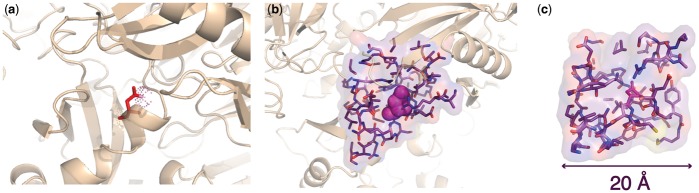
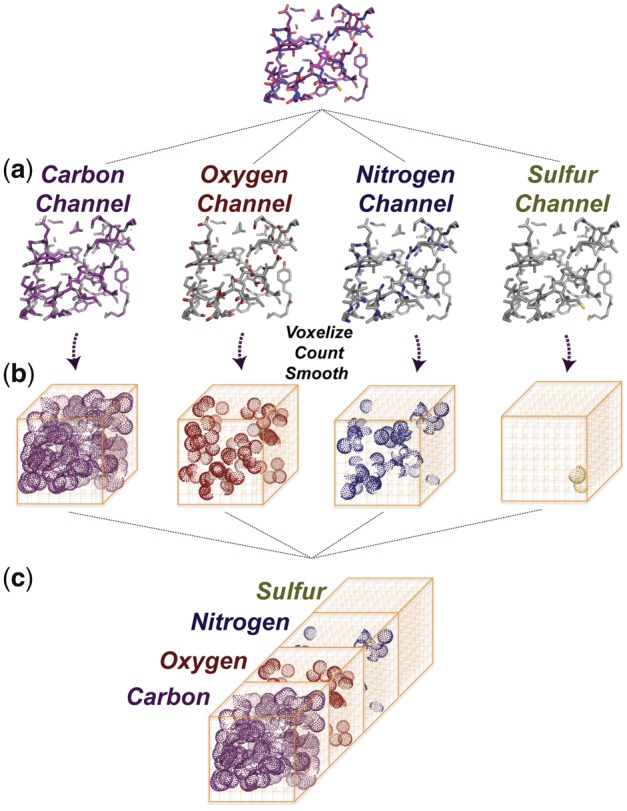
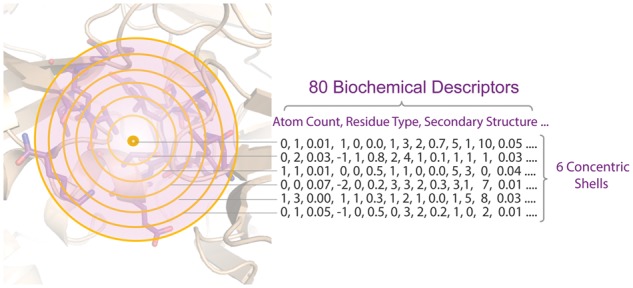
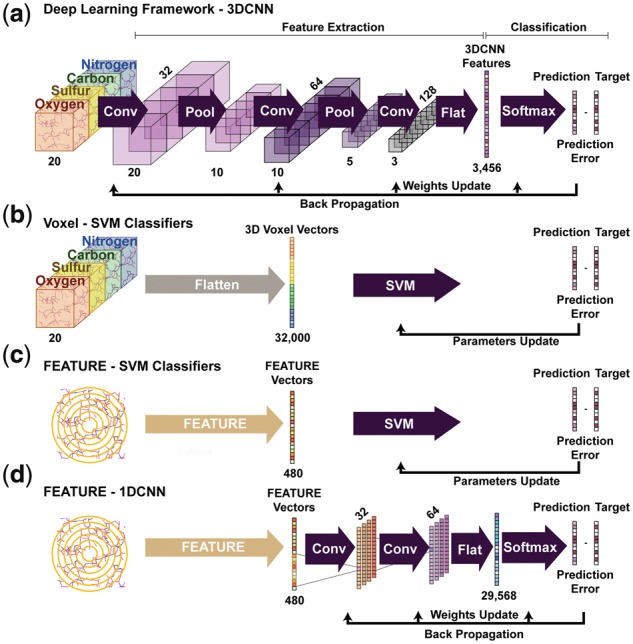
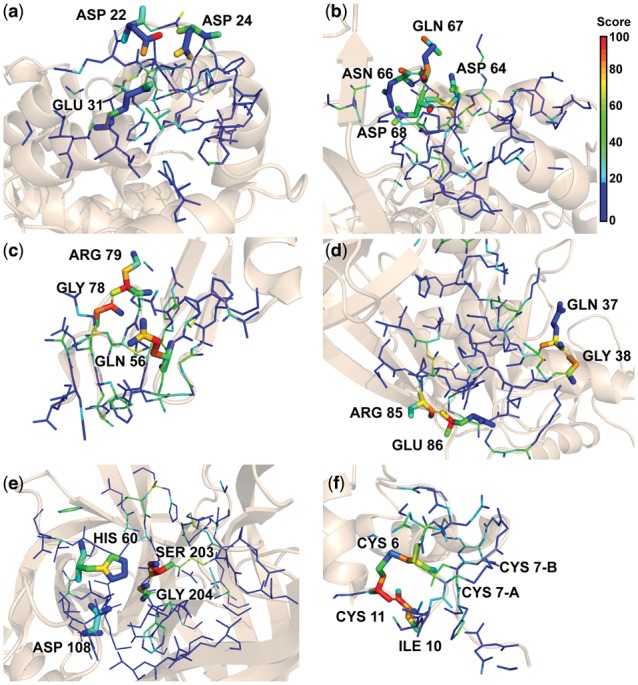
Motivation: Accurate annotation of protein functions is fundamental for understanding molecular and cellular physiology. Data-driven methods hold promise for systematically deriving rules underlying the relationship between protein structure and function. However, the choice of protein structural representation is critical. Pre-defined biochemical features emphasize certain aspects of protein properties while ignoring others, and therefore may fail to capture critical information in complex protein sites. Results: In this paper, we present a general framework that applies 3D convolutional neural networks (3DCNNs) to structure-based protein functional site detection. The framework can extract task-dependent features automatically from the raw atom distributions. We benchmarked our method against other methods and demonstrate better or comparable performance for site detection. Our deep 3DCNNs achieved an average recall of 0.955 at a precision threshold of 0.99 on PROSITE families, detected 98.89 and 92.88% of nitric oxide synthase and TRYPSIN-like enzyme sites in Catalytic Site Atlas, and showed good performance on challenging cases where sequence motifs are absent but a function is known to exist. Finally, we inspected the individual contributions of each atom to the classification decisions and show that our models successfully recapitulate known 3D features within protein functional sites. Availability and implementation: The 3DCNN models described in this paper are available at https://simtk.org/projects/fscnn. Supplementary information: Supplementary data are available at Bioinformatics online.
Overview
The claims and statistics of this paper haven’t been checked yet.
Free: it reads the open-access text and checks the first 5 claims that cite a source we can check. Create a free account to check every claim.
Integrity signals
Registry
Cites
Statistics
Figures
Verification
Claims the paper makes
The claims and statistics of this paper haven’t been checked yet.
Free: it reads the open-access text and checks the first 5 claims that cite a source we can check. Create a free account to check every claim.
Claims other papers make about this one
Each is checked against this paper’s own text: does it say what the citing paper says it does?
The cited source says what the claim attributes to it.
In the citing paper
“Such modeling paradigms have been used successfully in the biomolecular realm, for example, to predict three-dimensional (3D) molecular structures from sequences32–34 and interactions between different molecular components.35–38”
From How to build the virtual cell with artificial intelligence: Priorities and opportunities (2024) · cites this paper as [37]
Self-check
Percentages, sums and reported differences re-computed from the paper’s own numbers.
The self-check needs the paper’s full text.
Citations
Cites
LeCun, Y., Bengio, Y., & Hinton, G. (2015) · Nature · doi:10.1038/nature14539 · Cited by 84,126
Berman, H. M. (2000) · Nucleic Acids Research · doi:10.1093/nar/28.1.235 · Cited by 40,196
The use of ranks to avoid the assumption of normality implicit in the analysis of variance
Friedman, M. (1937) · Journal of the American Statistical Association · doi:10.1080/01621459.1937.10503522 · Cited by 7,005
UniProt: a hub for protein information
The UniProt Consortium (2015) · Nucleic Acids Research · doi:10.1093/nar/gku989 · Cited by 5,106
A Comparison of Alternative Tests of Significance for the Problem of $m$ Rankings
Friedman, M. (1940) · The Annals of Mathematical Statistics · doi:10.1214/aoms/1177731944 · Cited by 2,785 · cited 1×
“Specifically, we performed Friedman test (Friedman, 1937, 1940) followed by post-hoc two-tailed Nemenyi test (Nemenyi, 1963).”
MethodInterPro: the integrative protein signature database
Hunter, S., Apweiler, R., Attwood, T. K., Bairoch, A., Bateman, A., Binns, D., Bork, P., Das, U., Daugherty, L., Duquenne, L., et al. (2009) · Nucleic Acids Research · doi:10.1093/nar/gkn785 · Cited by 2,107
Molecular graph convolutions: moving beyond fingerprints
Kearnes, S., McCloskey, K., Berndl, M., Pande, V., & Riley, P. (2016) · Journal of Computer-Aided Molecular Design · doi:10.1007/s10822-016-9938-8 · Cited by 1,631
New and continuing developments at PROSITE
Sigrist, C. J. A., de Castro, E., Cerutti, L., Cuche, B. A., Hulo, N., Bridge, A., Bougueleret, L., & Xenarios, I. (2012) · Nucleic Acids Research · doi:10.1093/nar/gks1067 · Cited by 1,562
Statistical Comparisons of Classifiers over Multiple Data Sets
DemšarJanez (2006) · Journal of Machine Learning Research · doi:10.5555/1248547.1248548 · Cited by 1,074
Pagani, I., Liolios, K., Jansson, J., Chen, I.-M. A., Smirnova, T., Nosrat, B., Markowitz, V. M., & Kyrpides, N. C. (2012) · Nucleic Acids Research · doi:10.1093/nar/gkr1100 · Cited by 1,056
The PANTHER database of protein families, subfamilies, functions and pathways
Mi, H. (2004) · Nucleic Acids Research · doi:10.1093/nar/gki078 · Cited by 803
Protein–Ligand Scoring with Convolutional Neural Networks
Ragoza, M., Hochuli, J., Idrobo, E., Sunseri, J., & Koes, D. R. (2017) · Journal of Chemical Information and Modeling · doi:10.1021/acs.jcim.6b00740 · Cited by 774
Liolios, K., Mavromatis, K., Tavernarakis, N., & Kyrpides, N. C. (2007) · Nucleic Acids Research · doi:10.1093/nar/gkm884 · Cited by 634
[2] Families of serine peptidases
Rawlings, N. D., & Barrett, A. J. (1994) · Methods in Enzymology · doi:10.1016/0076-6879(94)44004-2 · Cited by 629
Evolution of EF-hand calcium-modulated proteins. I. Relationships based on amino acid sequences
Moncrief, N. D., Kretsinger, R. H., & Goodman, M. (1990) · Journal of Molecular Evolution · doi:10.1007/bf02101108 · Cited by 406
Hormone families: pancreatic hormones and homologous growth factors
Blundell, T. L., & Humbel, R. E. (1980) · Nature · doi:10.1038/287781a0 · Cited by 377
Wallace, A. C., Borkakoti, N., & Thornton, J. M. (1997) · Protein Science · doi:10.1002/pro.5560061104 · Cited by 329
The ATP-Binding Site of Type II Topoisomerases as a Target for Antibacterial Drugs
Maxwell, A., & Lawson, D. (2003) · Current Topics in Medicinal Chemistry · doi:10.2174/1568026033452500 · Cited by 277
Ikura, M., Osawa, M., Tokumitsu, H., Swindells, M. B., Kurihara, H., Orita, M., Shibanuma, T., & Furuya, T. (1999) · Nature Structural Biology · doi:10.1038/12271 · Cited by 238
Fetrow, J. S., & Skolnick, J. (1998) · Journal of Molecular Biology · doi:10.1006/jmbi.1998.1993 · Cited by 208
Xiong, J. (2006) · Cambridge University Press eBooks · doi:10.1017/cbo9780511806087 · Cited by 197
The Catalytic Site Atlas 2.0: cataloging catalytic sites and residues identified in enzymes
Furnham, N., Holliday, G. L., de Beer, T. A. P., Jacobsen, J. O. B., Pearson, W. R., & Thornton, J. M. (2014) · Nucleic Acids Research · doi:10.1093/nar/gkt1243 · Cited by 181
Improved Contact Predictions Using the Recognition of Protein Like Contact Patterns
Skwark, M. J., Raimondi, D., Michel, M., & Elofsson, A. (2014) · PLoS Computational Biology · doi:10.1371/journal.pcbi.1003889 · Cited by 160
Atomic convolutional networks for predicting protein-ligand binding affinity
Gomes, J., Ramsundar, B., Feinberg, E. N., & Pande, V. S. (2017) · arXiv · doi:10.48550/arxiv.1703.10603 · Cited by 150
3D deep convolutional neural networks for amino acid environment similarity analysis
Torng, W., & Altman, R. B. (2017) · BMC Bioinformatics · doi:10.1186/s12859-017-1702-0 · Cited by 142
Self-citationCharacterizing the microenvironment surrounding protein sites
Bagley, S. C., & Altman, R. B. (1995) · Protein Science · doi:10.1002/pro.5560040404 · Cited by 134
Self-citationThe PRINTS database: A resource for identification of protein families
Attwood, T. K. (2002) · Briefings in Bioinformatics · doi:10.1093/bib/3.3.252 · Cited by 120
Dong, R., Pan, S., Peng, Z., Zhang, Y., & Yang, J. (2018) · Nucleic Acids Research · doi:10.1093/nar/gky430 · Cited by 102
Chandonia, J., Fox, N. K., & Brenner, S. E. (2016) · Journal of Molecular Biology · doi:10.1016/j.jmb.2016.11.023 · Cited by 99
Hu, J. S., Li, Y., Zhang, Y., & Yu, D. (2018) · Journal of Chemical Information and Modeling · doi:10.1021/acs.jcim.7b00397 · Cited by 85
Automated discovery of 3D motifs for protein function annotation
Polacco, B. J., & Babbitt, P. C. (2006) · Bioinformatics · doi:10.1093/bioinformatics/btk038 · Cited by 75
Liu, T., & Altman, R. B. (2011) · PLoS Computational Biology · doi:10.1371/journal.pcbi.1002326 · Cited by 67
Self-citationEssential Bioinformatics: MOLECULAR PHYLOGENETICS
Xiong, J. (2006) · Cited by 65
Essential Bioinformatics: SEQUENCE ALIGNMENT
Xiong, J. (2006) · Cited by 65
Blocks-based methods for detecting protein homology
Henikoff, J. G., Pietrokovski, S., McCallum, C. M., & Henikoff, S. (2000) · Electrophoresis · Cited by 65
Engler, D. A., Montelione, G. T., & Niyogi, S. K. (1990) · FEBS Letters · doi:10.1016/0014-5793(90)80368-s · Cited by 61
Somarowthu, S., Yang, H., Hildebrand, D. G. C., & Ondrechen, M. J. (2011) · Biopolymers · doi:10.1002/bip.21589 · Cited by 60
Structural basis for broad specificity in .alpha.-lytic protease mutants
Bone, R. F., Fujishige, A., Kettner, C. A., et al. (1991) · Biochemistry · doi:10.1021/bi00107a005 · Cited by 54
Vitagliano, L., Adinolfi, S., Sica, F., et al. (1999) · Journal of Molecular Biology · doi:10.1006/jmbi.1999.3158 · Cited by 47
GASS-WEB: a web server for identifying enzyme active sites based on genetic algorithms
Moraes, J. P., Pappa, G. L., Pires, D. E. V., et al. (2017) · Nucleic Acids Research · doi:10.1093/nar/gkx337 · Cited by 45
Knowledge-based Fragment Binding Prediction
Tang, G. W., & Altman, R. B. (2014) · PLoS Computational Biology · doi:10.1371/journal.pcbi.1003589 · Cited by 38
Self-citationOlsen, H. B., Ludvigsen, S., & Kaarsholm, N. C. (1998) · Journal of Molecular Biology · doi:10.1006/jmbi.1998.2175 · Cited by 34
GASS: identifying enzyme active sites with genetic algorithms
Izidoro, S. C., de Melo-Minardi, R. C., & Pappa, G. L. (2014) · Bioinformatics · doi:10.1093/bioinformatics/btu746 · Cited by 32
Interaction of S100A13 with C2 domain of receptor for advanced glycation end products (RAGE)
Rani, S. G., Sepuru, K. M., & Yu, C. (2014) · Biochimica et Biophysica Acta (BBA) - Proteins and Proteomics · doi:10.1016/j.bbapap.2014.06.017 · Cited by 31
Benefits of Structural Genomics for Drug Discovery Research
Grabowski, M., Chruszcz, M., Zimmerman, M. D., Kirillova, O., & Minor, W. (2009) · Infectious Disorders - Drug Targets · doi:10.2174/187152609789105704 · Cited by 31
Protein function annotation with Structurally Aligned Local Sites of Activity (SALSAs)
Wang, Z., Yin, P., Lee, J. S., et al. (2013) · BMC Bioinformatics · doi:10.1186/1471-2105-14-s3-s13 · Cited by 29
Mattos, C., Giammona, D. A., Petsko, G. A., et al. (1995) · Biochemistry · doi:10.1021/bi00010a008 · Cited by 28
Solution Structure of the N-Terminal EGF-like Domain from Human Factor VII,
Muranyi, A., Finn, B. E., Gippert, G. P., et al. (1998) · Biochemistry · doi:10.1021/bi980522f · Cited by 22
Minowa, T., Ohtsuka, S., Sasai, H., & Kamada, M. (2000) · Electrophoresis · doi:10.1002/(sici)1522-2683(20000501)21:9<1755::aid-elps1755>3.0.co;2-s · Cited by 19
Conserved features in the active site of nonhomologous serine proteases
Bagley, S. C., & Altman, R. B. (1996) · Folding and Design · doi:10.1016/s1359-0278(96)00052-1 · Cited by 17
Self-citationHigh Precision Prediction of Functional Sites in Protein Structures
Buturović, L. J., Wong, M., Tang, G. W., Altman, R. B., & Petković, D. (2014) · PLoS ONE · doi:10.1371/journal.pone.0091240 · Cited by 16
Self-citationGaur, D., Seth, D., & Batra, J. K. (2002) · Biochemical and Biophysical Research Communications · doi:10.1016/s0006-291x(02)02216-7 · Cited by 7
Liolios, K., Chen, I.-M. A., Mavromatis, K., et al. (2009) · Nucleic Acids Research · doi:10.1093/nar/gkp848 · Cited by 2
Cited by
Structure-based protein function prediction using graph convolutional networks
Gligorijević, V., Renfrew, P. D., Kosciolek, T., Leman, J. K., Berenberg, D., Vatanen, T., Chandler, C., Taylor, B. C., Fisk, I. M., Vlamakis, H., et al. (2021) · Nature Communications · doi:10.1038/s41467-021-23303-9 · Cited by 906
How to build the virtual cell with artificial intelligence: Priorities and opportunities
Bunne, C., Roohani, Y., Rosen, Y., Gupta, A., Zhang, X., Roed, M., Alexandrov, T., AlQuraishi, M., Brennan, P., Burkhardt, D. B., et al. (2024) · Cell · doi:10.1016/j.cell.2024.11.015 · Cited by 393
Graph Convolutional Neural Networks for Predicting Drug-Target Interactions
Torng, W., & Altman, R. B. (2019) · Journal of Chemical Information and Modeling · doi:10.1021/acs.jcim.9b00628 · Cited by 371
Self-citationAlQuraishi, M., & Sorger, P. K. (2021) · Nature Methods · doi:10.1038/s41592-021-01283-4 · Cited by 96
Metal3D: a general deep learning framework for accurate metal ion location prediction in proteins
Dürr, S. L., Levy, A., & Rothlisberger, U. (2023) · Nature Communications · doi:10.1038/s41467-023-37870-6 · Cited by 88
Metadata
- Authors
- Torng, W., & Altman, R. B.
- Affiliations
- Stanford University (US)
- Corresponding author
- Altman, Russ B
- Venue
- Bioinformatics
- Publisher
- Oxford University Press (OUP)
- Published
- 2018-09-20
- Volume
- 35
- Issue
- 9
- Pages
- 1503-1512
- ISSN
- 1367-4803 (ISSN-L)
- 1367-4811
- PMC
- PMC6499237
- OpenAlex
- W2891927397
- Cited by
- 69
- References
- 53
- Citations by year
- 2026: 4 · 2025: 6 · 2024: 16 · 2023: 13 · 2022: 8 · 2021: 16 · 2020: 3 · 2019: 3
- FWCI
- 1.96
- Type
- journal article
- Language
- en
- Open access
- hybrid
- doi.org
- Licence
- Locations
- Bioinformatics (publishedVersion, cc-by-nc)
- PubMed Central (publishedVersion, cc-by-nc)
- PubMed (publishedVersion)
- Funders
- National Institutes of Health (GM102365, LM05652, HL117798)
- Topics
- Life Sciences › Biochemistry, Genetics and Molecular Biology › Molecular Biology › Protein Structure and Dynamics
- Life Sciences › Biochemistry, Genetics and Molecular Biology › Molecular Biology › Machine Learning in Bioinformatics
- Life Sciences › Biochemistry, Genetics and Molecular Biology › Structural Biology › Enzyme Structure and Function
- Keywords
- 3D convolutional neural networks, nitric oxide synthase, trypsin-like enzymes, feature attribution, protein structure-function relationship
- MeSH terms
- Proteins, Neural Networks, Computer
About these checks
Registry, retraction, Cites and statistics results are computed, not judged, with one exception: a printed reference that no index lists is read once by a model before it counts as a citation error. Claims are extracted by a model and kept only when their quote appears verbatim in the text; each cited source is then checked, with a model’s help, for whether it says what the claim relies on. Those verdicts can be wrong — read the claim’s quote and the cited source before relying on one.
Statistics and arithmetic are recomputed, not judged.
Confidence bands are shown only for fields calibrated on our annotated test set. None is calibrated yet, so no band is shown.
What counts as a claim ›How we measure confidence ›How we check this ›
Are you an author, or do you see a problem with this page? Request a review
Data sources
Bibliographic data: Semantic Scholar, OpenAlex, Crossref.
Contains information from the Semantic Scholar Academic Graph Datasets, made available under the ODC Attribution License (ODC-BY 1.0).
Semantic Scholar’s data is described in: Kinney, R., et al. (2023). The Semantic Scholar Open Data Platform. arXiv:2301.10140.
