

Anemia and iron deficiency among chronic kidney disease Stages 3–5ND patients in the Chronic Kidney Disease Outcomes and Practice Patterns Study: often unmeasured, variably treated
Open accessThe DOI matches its Crossref record; 49 of the 49 references it cites were found in a registry or an index.
Abstract
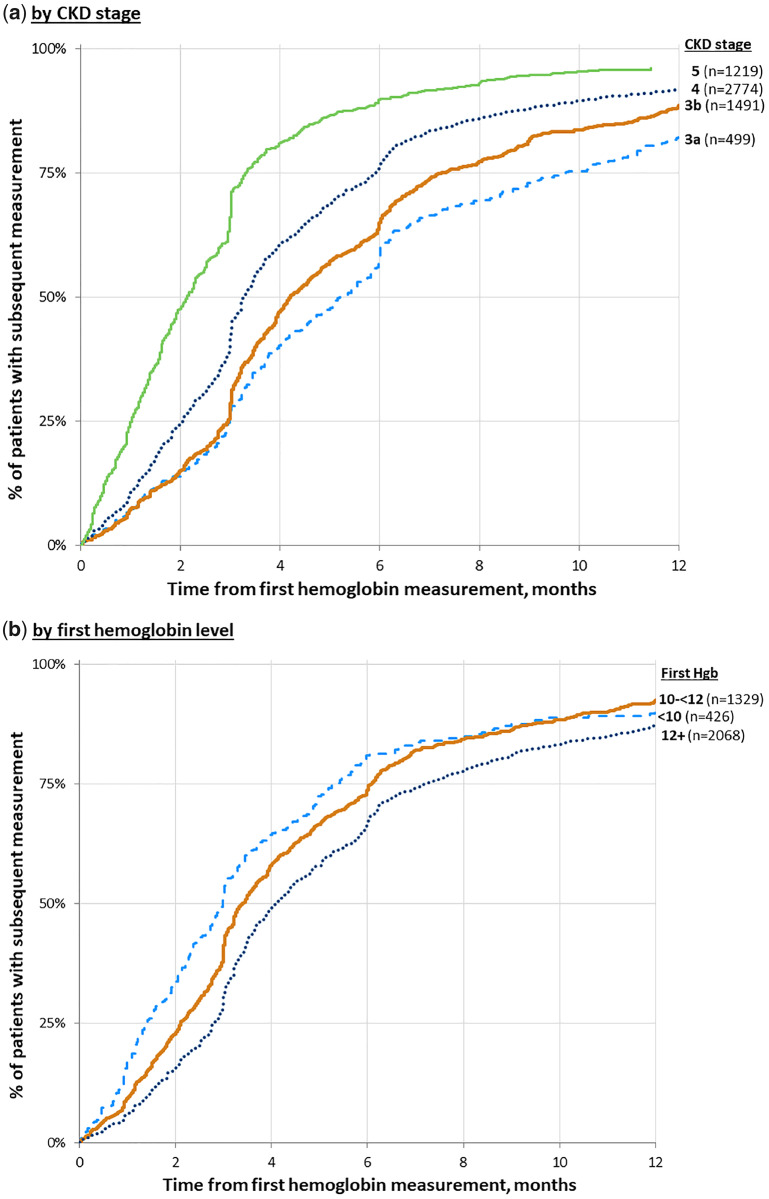
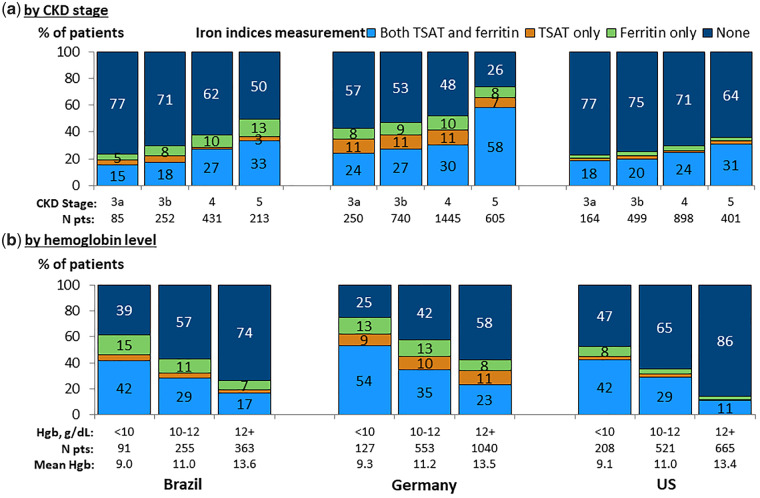
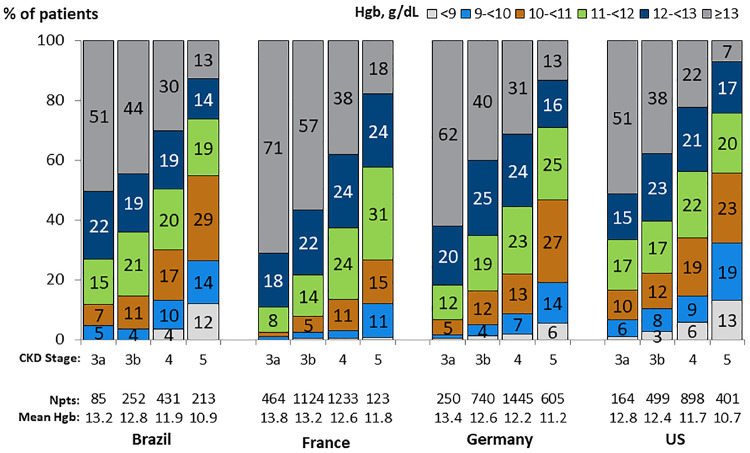
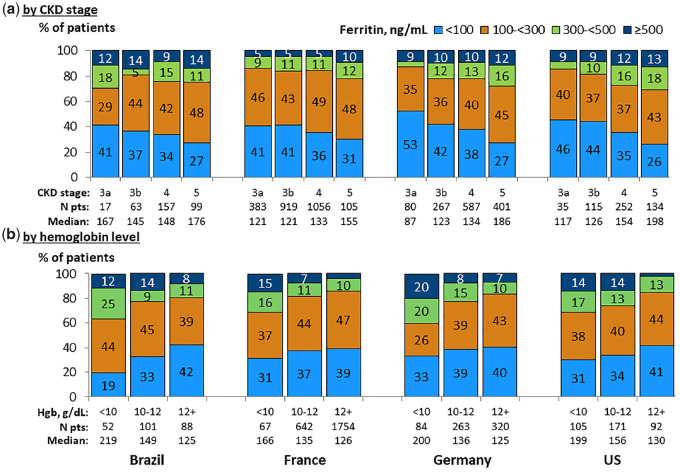
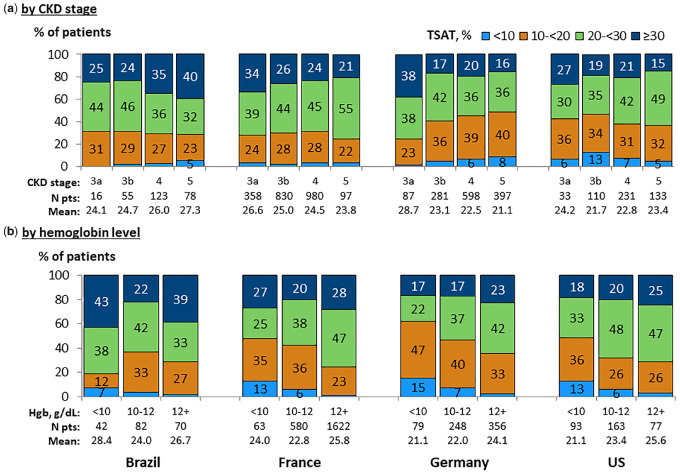
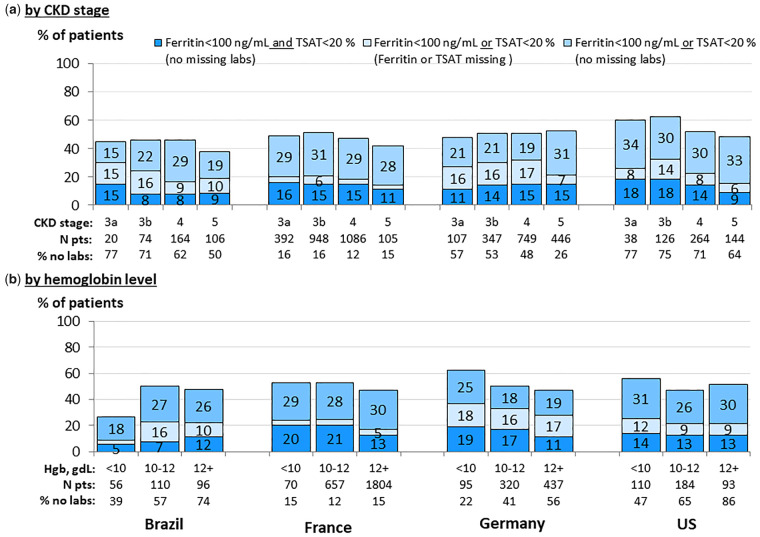
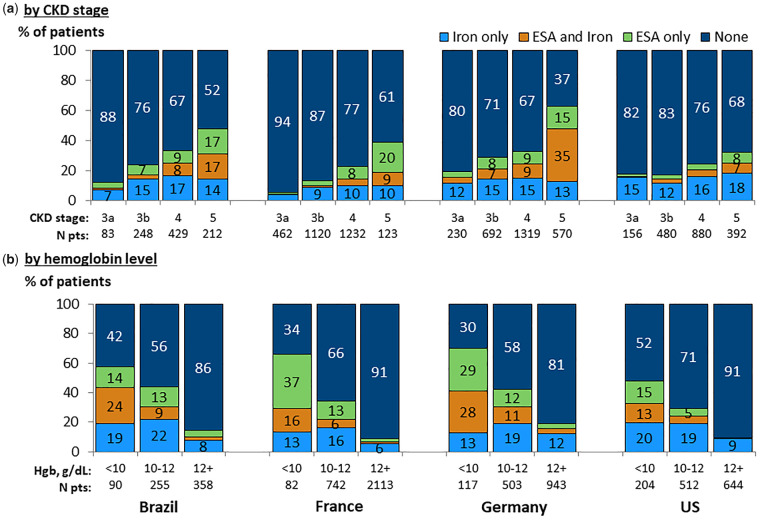
Background: International variation in anemia assessment and management practices in chronic kidney disease (CKD) is poorly understood. Methods: We performed a cross-sectional analysis of anemia laboratory monitoring, prevalence and management in the prospective Chronic Kidney Disease Outcomes and Practice Patterns Study (CKDopps). A total of 6766 participants with CKD Stages 3a–5ND from nephrology clinics in Brazil, France, Germany and the USA were included. Results: Among patients with anemia (hemoglobin <12 g/dL), 36–58% in Brazil, the USA and Germany had repeat hemoglobin measured and 40–61% had iron indices measured within 3 months of the index hemoglobin measurement. Anemia was more common in the USA and Brazil than in France and Germany across CKD stages. Higher ferritin and lower iron saturation (TSAT) levels were observed with lower hemoglobin levels, and higher ferritin with more advanced CKD. The proportion of anemic patients with ferritin <100 ng/mL or TSAT <20% ranged from 42% in Brazil to 53% in France and Germany, and of these patients, over 40% in Brazil, Germany and the USA, compared with 27% in France, were treated with oral or intravenous iron within 3 months after hemoglobin measurement. The proportion of patients with hemoglobin <10 g/dL treated with erythropoiesis-stimulating agents ranged from 28% in the USA to 57% in Germany. Conclusions: Hemoglobin and iron stores are measured less frequently than per guidelines. Among all regions, there was a substantial proportion of anemic patients with iron deficiency who were not treated with iron, highlighting an area for practice improvement in CKD care.
Overview
The claims and statistics of this paper haven’t been checked yet.
Free: it reads the open-access text and checks the first 5 claims that cite a source we can check. Create a free account to check every claim.
Integrity signals
Registry
Cites
Statistics
Figures
Verification
Claims the paper makes
The claims and statistics of this paper haven’t been checked yet.
Free: it reads the open-access text and checks the first 5 claims that cite a source we can check. Create a free account to check every claim.
Claims other papers make about this one
Each is checked against this paper’s own text: does it say what the citing paper says it does?
The source backs part of the claim, not all of it — or backs it for a different population, condition or comparison.
In the citing paper
“The presence of anemia has been linked to an unfavorable clinical course of many diseases, including infections or inflammatory disorders [12,13,14,15,16].”
From Prevalence and Predictive Value of Anemia and Dysregulated Iron Homeostasis in Patients with COVID-19 Infection (2020) · cites this paper as [16]
Experimental — accuracy not yet measured
Self-check
Percentages, sums and reported differences re-computed from the paper’s own numbers.
The self-check needs the paper’s full text.
Citations
Cites
Targeting Hypoxia-Inducible Factors for the Treatment of Anemia in Chronic Kidney Disease Patients
Locatelli, F., Fishbane, S., Block, G. A., & Macdougall, I. C. (2017) · American Journal of Nephrology · doi:10.1159/000455166 · Cited by 4,813
Correction of anemia with epoetin alfa in chronic kidney disease
Singh, A. K., Szczech, L., Tang, K. L., Barnhart, H., Sapp, S., Wolfson, M., & Reddan, D. (2006) · New England Journal of Medicine · doi:10.1056/nejmoa065485 · Cited by 2,762 · cited 1×
“With respect to patient-reported outcomes (PROs), improved quality of life and fatigue scores were observed in the higher hemoglobin target group in the Cardiovascular Risk Reduction by Early Anemia Treatment with Epoetin Beta Trial (CREATE) [44] and Trial to Reduce Cardiovascular Events with Aranesp Therapy (TREAT) t…”
Normalization of Hemoglobin Level in Patients with Chronic Kidney Disease and Anemia
Drüeke, T. B., Locatelli, F., Clyne, N., Eckardt, K.-U., Macdougall, I. C., Tsakiris, D., Burger, H.-U., & Scherhag, A. (2006) · New England Journal of Medicine · doi:10.1056/nejmoa062276 · Cited by 2,104
A trial of darbepoetin alfa in type 2 diabetes and chronic kidney disease
Pfeffer, M. A., Burdmann, E. A., Chen, C.-Y., Cooper, M. E., de Zeeuw, D., Eckardt, K.-U., Feyzi, J. M., Ivanovich, P., Kewalramani, R., Levey, A. S., et al. (2009) · New England Journal of Medicine · doi:10.1056/nejmoa0907845 · Cited by 2,096 · cited 1×
“With respect to patient-reported outcomes (PROs), improved quality of life and fatigue scores were observed in the higher hemoglobin target group in the Cardiovascular Risk Reduction by Early Anemia Treatment with Epoetin Beta Trial (CREATE) [44] and Trial to Reduce Cardiovascular Events with Aranesp Therapy (TREAT) t…”
Kalantar-Zadeh, K. (2017) · American Journal of Nephrology · doi:10.1159/000455387 · Cited by 1,148
Babitt, J. L., & Lin, H. Y. (2012) · Journal of the American Society of Nephrology · doi:10.1681/asn.2011111078 · Cited by 1,041 · cited 1×
“Several mechanisms of CKD-related anemia have been implicated [5], including relative erythropoietin deficiency [7], decreased red cell life span [8], abnormal iron metabolism [9], chronic inflammation [10], metabolic abnormalities [11–16] and effects of medications such as renin angiotensin system (RAS) inhibitors [1…”
BackgroundAstor, B. C., Muntner, P., Levin, A., Eustace, J. A., & Coresh, J. (2002) · Archives of Internal Medicine · doi:10.1001/archinte.162.12.1401 · Cited by 716
Jones, M., Ibels, L., Schenkel, B., & Zagari, M. (2004) · Kidney International · doi:10.1111/j.1523-1755.2004.00450.x · Cited by 665
Macdougall, I. C., Bircher, A. J., Eckardt, K.-U., Obrador, G. T., Pollock, C. A., Stenvinkel, P., Swinkels, D. W., Wanner, C., Weiss, G., Chertow, G. M., et al. (2016) · Kidney International · doi:10.1016/j.kint.2015.10.002 · Cited by 482 · cited 1×
“tion to its gastrointestinal side effects, oral iron may not be effectively absorbed in the setting of high hepcidin levels, which are associated with inflammation [35].”
BackgroundSelf-citationTiming of Onset of CKD-Related Metabolic Complications
Moranne, O., Froissart, M., Rossert, J., Gauci, C., Boffa, J.-J., Haymann, J. P., M’rad, M. B., Jacquot, C., Houillier, P., Stengel, B., et al. (2009) · Journal of the American Society of Nephrology · doi:10.1681/asn.2008020159 · Cited by 478
Self-citation
Research works printed but not linked: 2
- Kidney Disease: Improving Global Outcomes (KDIGO) Anemia Work Group. KDIGO clinical practice guideline for anemia in chronic kidney disease. Kidney Int Suppl 2012; 2: 279– 335
- World Health Organization. Worldwide prevalence of anaemia 1993–2005: WHO global database on anaemia. In: de Benoist B, McLean E, Egli Iet al (eds). Geneva: WHO Press, World Health Organization, 2008
Cited by
Anemia in Chronic Kidney Disease: From Pathophysiology and Current Treatments, to Future Agents
Portolés, J., Martín, L., Broseta, J. J., & Cases, A. (2021) · Frontiers in Medicine · doi:10.3389/fmed.2021.642296 · Cited by 369
Bellmann-Weiler, R., Lanser, L., Barket, R., Rangger, L., Schapfl, A., Schaber, M., Fritsche, G., Wöll, E., & Weiss, G. (2020) · Journal of Clinical Medicine · doi:10.3390/jcm9082429 · Cited by 244
Babitt, J. L., Eisenga, M. F., Haase, V. H., Kshirsagar, A. V., Levin, A., Locatelli, F., Małyszko, J., Swinkels, D. W., Tarng, D.-C., Cheung, M., et al. (2021) · Kidney International · doi:10.1016/j.kint.2021.03.020 · Cited by 215
Self-citationFishbane, S., El-Shahawy, M. A., Pecoits-Filho, R., Van, B. P., Houser, M. T., Frison, L., Little, D. J., Guzman, N. J., & Pergola, P. E. (2021) · Journal of the American Society of Nephrology · doi:10.1681/asn.2020081150 · Cited by 184
Self-citationBarratt, J., Andrić, B., Tataradze, A., Schömig, M., Reusch, M., Valluri, U., & Mariat, C. (2021) · Nephrology Dialysis Transplantation · doi:10.1093/ndt/gfab191 · Cited by 157
Guedes, M. H., Muenz, D. G., Zee, J., Bieber, B. A., Stengel, B., Massy, Z. A., Mansencal, N., Wong, M., Charytan, D. M., Reichel, H., et al. (2021) · Journal of the American Society of Nephrology · doi:10.1681/asn.2020101531 · Cited by 102
Self-citationKDIGO 2026 Clinical Practice Guideline for the Management of Anemia in Chronic Kidney Disease (CKD)
Tonelli, M. A., Berns, J. B., Bozkurt, B., Cheung, R. S., Cuevas, Y., Effa, E. E., Eisenga, M. F., Fishbane, S., Ginzburg, Y. Z., Haase, V. H., et al. (2026) · Kidney International · doi:10.1016/j.kint.2025.06.006 · Cited by 147
Iron-Deficiency Anemia in CKD: A Narrative Review for the Kidney Care Team
Hain, D. J., Bednarski, D., Cahill, M. L., Dix, A., Foote, B. S., Haras, M. S., Pace, R. C., & Gutiérrez, O. M. (2023) · Kidney Medicine · doi:10.1016/j.xkme.2023.100677 · Cited by 126
“A more recent analysis from the CKDopps study reported that the hemoglobin levels and iron stores are measured less frequently than the guideline recommendations across France, the United Kingdom, Brazil, and the United States, with measurement occurring more frequently in those with more advanced stages of CKD and lo…”
BackgroundMethodInfluentialHoshino, J., Muenz, D. G., Zee, J., Sukul, N., Speyer, É., Guedes, M. H., Lopes, A. A., Asahi, K., van Haalen, H., James, G., et al. (2020) · Journal of Renal Nutrition · doi:10.1053/j.jrn.2019.11.003 · Cited by 86
Self-citationGadelha, A. B., Cesari, M., Corrêa, H. D. L., Neves, R. V. P., Sousa, C. V., Deus, L. A., Souza, M. K., Reis, A. L., Moraes, M. R., Prestes, J., et al. (2021) · International Urology and Nephrology · doi:10.1007/s11255-021-02799-6 · Cited by 68
“In general, older subjects with CKD present low iron availability [23, 44], which has been linked to an increased risk of anemia [25].”
BackgroundStoumpos, S., Crowe, K., Sarafidis, P. A., Barratt, J., Bolignano, D., Vecchio, L. D., Małyszko, J., Więcek, A., Ortíz, A., & Cozzolino, M. G. (2024) · Nephrology Dialysis Transplantation · doi:10.1093/ndt/gfae075 · Cited by 75
“It is twice as prevalent in patients with CKD compared with the general population [1 ] and is a substantial healthcare burden associated with increased healthcare resource utilization [4 –6 ].”
BackgroundHuijben, J. A., Kramer, A., Kerschbaum, J., Meester, J. D., Collart, F., Arévalo, O. L. R., Helve, J., Lassalle, M., Pálsson, R., ten Dam, M. A. G. J., et al. (2022) · Nephrology Dialysis Transplantation · doi:10.1093/ndt/gfac165 · Cited by 62
“In nephrology, changes in practice patterns may have influenced the levels of estimated glomerular filtration rate and the degree of uremic symptoms at the onset of KRT [24, 25], the use of supportive therapies [26, 27] or the choice for conservative care.”
BackgroundZsom, L., Zsom, M., Salim, S. A., & Fülöp, T. (2022) · Toxins · doi:10.3390/toxins14020127 · Cited by 76
“Even the prevalence of anemia [91] and patterns of metabolic bone [92] disease have been found to be variable at any given eGFR and there is little doubt that both anemia [93] and hyperphosphatemia [94] are important independent predictors of cardiovascular morbidity and mortality.”
BackgroundKovesdy, C. P., Davis, J. R., Duling, I., & Little, D. J. (2022) · Clinical Kidney Journal · doi:10.1093/ckj/sfac240 · Cited by 57
“Consistent with previous studies [13, 19, 20], our analysis showed that the prevalences of anaemia and Hb <10 g/dL increased as the CKD stage increased, with anaemia observed in >50% of study participants with stage 4 or 5 CKD.”
ResultMinutolo, R., Liberti, M. E., Simeon, V., Sasso, F. C., Borrelli, S., Nicola, L. D., & Garofalo, C. (2023) · Clinical Kidney Journal · doi:10.1093/ckj/sfad143 · Cited by 51
Guedes, M. H., Muenz, D. G., Zee, J., Lopes, M. B., Waechter, S., Stengel, B., Massy, Z. A., Speyer, É., Ayav, C., Finkelstein, F. O., et al. (2021) · Nephrology Dialysis Transplantation · doi:10.1093/ndt/gfab050 · Cited by 43
Self-citationIron Deficiency and Nephrotoxic Heavy Metals: A Dangerous Interplay?
Rawee, P., Kremer, D., Nolte, I. M., Leuvenink, H. G. D., Touw, D. J., de Borst, M. H., Bakker, S. J. L., Hanudel, M. R., & Eisenga, M. F. (2023) · International Journal of Molecular Sciences · doi:10.3390/ijms24065315 · Cited by 45
Lopes, M. B., Tu, C., Zee, J., Guedes, M. H., Pisoni, R. L., Robinson, B. M., Foote, B. S., Hedman, K., James, G., Lopes, A. A., et al. (2021) · Scientific Reports · doi:10.1038/s41598-020-79254-6 · Cited by 46
Self-citationLamerato, L. E., James, G., van Haalen, H., Hedman, K., Sloand, J. A., Tang, A., Wittbrodt, E. T., & Yee, J. (2022) · BMC Nephrology · doi:10.1186/s12882-022-02778-8 · Cited by 44
“Studies have also highlighted substantial differences in anemia treatment practices, both between countries and also at the clinic level within individual countries [11, 28].”
BackgroundIron Deficiency in CKD Without Concomitant Anemia
Wish, J. B., Anker, S. D., Butler, J., Cases, A., Stack, A. G., & Macdougall, I. C. (2021) · Kidney International Reports · doi:10.1016/j.ekir.2021.07.032 · Cited by 36
“In a cohort of 700 kidney transplant recipients with a mean (SD) estimated glomerular filtration rate (eGFR) of 52.3 (20.2) ml/min per 1.73 m2, 30% of the patients had ID (transferrin saturation [TSAT] 20% and ferritin 300 ng/ml) without anemia (World Health Organization criteria: Hgb 13.0 g/dl for men and 12.0 g/dl f…”
BackgroundInfluentialImproving the safety of intravenous iron treatments for patients with chronic kidney disease
Kassianides, X., Hazara, A. M., & Bhandari, S. (2020) · Expert Opinion on Drug Safety · doi:10.1080/14740338.2021.1853098 · Cited by 33
“intravenous) depending on the geographic region [3].”
Iron and Chronic Kidney Disease: Still a Challenge
Wojtaszek, E., Głogowski, T., & Małyszko, J. (2020) · Frontiers in Medicine · doi:10.3389/fmed.2020.565135 · Cited by 39
Guedes, M. H., Guetter, C. R., Erbano, L. H. O., Palone, A. G., Zee, J., Robinson, B. M., Pisoni, R. L., de Moraes, T. P., Pecoits‐Filho, R., & Baena, C. P. (2020) · BMC Nephrology · doi:10.1186/s12882-020-01912-8 · Cited by 38
“Anemia is found in up to 40% of patients with advanced ND-CKD and has been associated to higher mortality and morbidity [7, 8].”
BackgroundSelf-citationBiomarkers of iron metabolism in chronic kidney disease
Głogowski, T., Wojtaszek, E., & Małyszko, J. (2020) · International Urology and Nephrology · doi:10.1007/s11255-020-02663-z · Cited by 40
Methods and rationale of the DISCOVER CKD global observational study
Pecoits‐Filho, R., James, G., Carrero, J. J., Wittbrodt, E. T., Fishbane, S. N., Sultan, A. A., Heerspink, H. J. L., Hedman, K., Kanda, E., Chen, H., et al. (2021) · Clinical Kidney Journal · doi:10.1093/ckj/sfab046 · Cited by 27
“Similar to what has been observed in the treatment of CKD progression, best practices recommended by guidelines and new therapies to manage these CKD complications are vastly underutilized in the real-world clinical scenario [19, 24].”
ResultSelf-citationFouad, S. H., Allam, M. F., Taha, S., Okba, A. A., Hosny, A., Moneer, M., & Roman, S. W. (2021) · Journal of International Medical Research · doi:10.1177/03000605211030124 · Cited by 31
Minutolo, R., Provenzano, M., Chiodini, P., Borrelli, S., Garofalo, C., Andreucci, M., Liberti, M. E., Bellizzi, V., Conte, G., Nicola, L. D., et al. (2022) · Clinical Kidney Journal · doi:10.1093/ckj/sfac004 · Cited by 32
Alagöz, S., Dinçer, M. T., Eren, N., Bakır, A., Pekpak, M., Trabulus, S., & Seyahi, N. (2020) · PLoS ONE · doi:10.1371/journal.pone.0230980 · Cited by 29
“Country-specific differences were previously reported [12].”
BackgroundBabitt, J. L., Berns, J. S., Bozkurt, B., Khedairy, R. S. C., Cuevas, Y., Effa, E. E., Eisenga, M. F., Fishbane, S., Ginzburg, Y. Z., Haase, V. H., et al. (2026) · Kidney International · doi:10.1016/j.kint.2025.06.005 · Cited by 47
Narita, I., Hayashi, T., Maruyama, S., Masaki, T., Nangaku, M., Nishino, T., Satō, H., Sofue, T., Wada, T., Imai, E., et al. (2022) · PLoS ONE · doi:10.1371/journal.pone.0277921 · Cited by 23
Self-citationGuedes, M. H., Robinson, B. M., Obrador, G. T., Tong, A., Pisoni, R. L., & Pecoits‐Filho, R. (2020) · Kidney360 · doi:10.34067/kid.0001442020 · Cited by 26
Self-citationMoura, S. R. G., Corrêa, H. D. L., Neves, R. V. P., Santos, C. A. R., Neto, L. S. S., Silva, V. L., Souza, M. K., Deus, L. A., Reis, A. L., Simões, H. G., et al. (2020) · Experimental Gerontology · doi:10.1016/j.exger.2020.111017 · Cited by 23
Iron Therapy in Chronic Kidney Disease: Days of Future Past
Lee, K., Ho, Y., & Tarng, D. (2021) · International Journal of Molecular Sciences · doi:10.3390/ijms22031008 · Cited by 28
“By contrast, in patients with CKD, EPO concentrations are inappropriately low for the degree of anemia [19].”
BackgroundDiagnosis Patterns of CKD and Anemia in the Japanese Population
Kimura, T., Snijder, R. J., & Nozaki, K. (2020) · Kidney International Reports · doi:10.1016/j.ekir.2020.03.006 · Cited by 22
Hasegawa, T., Imaizumi, T., Hamano, T., Murotani, K., Fujii, N., Komaba, H., Ando, M., Maruyama, S., Nangaku, M., Nitta, K., et al. (2023) · Nephrology Dialysis Transplantation · doi:10.1093/ndt/gfad096 · Cited by 20
“Iron deficiency can be corrected by iron supplementation; however, patients with pre-dialysis CKD are often inade-quately treated for iron deficiency [ 10 ].”
BackgroundBartnicki, P. (2024) · Biomedicines · doi:10.3390/biomedicines12081884 · Cited by 28
Association between iron status markers and kidney outcome in patients with chronic kidney disease
Fujisawa, H., Nakayama, M., Haruyama, N., Fukui, A., Yoshitomi, R., Tsuruya, K., Nakano, T., & Kitazono, T. (2023) · Scientific Reports · doi:10.1038/s41598-023-45580-8 · Cited by 23
Anemia Management in the Cardiorenal Patient: A Nephrological Perspective
Marqués, M., Portolés, J. M., Marcos, M. C., Gorriz, J. L., Núñez, J. E., & Cases, A. (2025) · Journal of the American Heart Association · doi:10.1161/jaha.124.037363 · Cited by 23
Minutolo, R., Grandaliano, G., Rienzo, P. D., Snijder, R. J., Esposti, L. D., Perrone, V., & Todorova, L. (2022) · Journal of Nephrology · doi:10.1007/s40620-022-01475-x · Cited by 20
“A study using data from the CKDopps found that IV iron was received by 12%, 9%, 33%, and 8% of patients with anaemia of CKD stages 3a–5 in Brazil, France, Germany, and the USA, respectively [9].”
MethodKassianides, X., Allgar, V. L., Macdougall, I. C., Kalra, P. A., & Bhandari, S. (2022) · Scientific Reports · doi:10.1038/s41598-022-10717-8 · Cited by 18
Al-Suhiemat, A. A., Shudifat, R., & Obeidat, H. M. (2020) · Journal of Pediatric Nursing · doi:10.1016/j.pedn.2020.08.019 · Cited by 16
Portolés, J. M., Salazar, M. L. S., Peña, O. G., Domínguez, S. G., Vera, M., Caro, J., García, A. H., Vila, M. A. M., Huete, M. J. E., Barrios, R. H. S., et al. (2023) · Clinical Kidney Journal · doi:10.1093/ckj/sfad152 · Cited by 15
“In contrast, iron deficiency appears earlier in CKD and remains constant from CKD stages 3 to 5 at around 50% [ 4 ].”
BackgroundIron deficiency, anemia, and patient-reported outcomes in kidney transplant recipients
Kremer, D., Knobbe, T. J., Vinke, J. S. J., Groothof, D., Post, A., Annema, C., Abrahams, A. C., van Jaarsveld, B. C., de Borst, M. H., Berger, S. P., et al. (2024) · American Journal of Transplantation · doi:10.1016/j.ajt.2024.03.017 · Cited by 20
Cases, A., Puchades, M. J., de Sequera, P., Quiroga, B., Martín-Rodriguez, L., Górriz, J. L., & Portolés, J. M. (2021) · Nefrología · doi:10.1016/j.nefro.2020.11.003 · Cited by 26
Winkelmayer, W. C., Arnold, S., Burke, S. K., Chertow, G. M., Eckardt, K., Jardine, A. G., Lewis, E. F., Luo, W. F., Matsushita, K., McCullough, P. A., et al. (2023) · Kidney Medicine · doi:10.1016/j.xkme.2023.100666 · Cited by 15
“treatment in a study of more than 6,500 patients across 4 countries.(9) Regional variations in treatment practices have previously been associated with discordant results among geographic regions for major adverse cardiovascular event”
BackgroundKuragano, T., Okami, S., Tanaka‐Mizuno, S., Uenaka, H., Kimura, T., Ishida, Y., Yoshikawa‐Ryan, K., James, G., & Hayasaki, T. (2023) · Kidney360 · doi:10.34067/kid.0000000000000204 · Cited by 15
da Silva, V., Corrêa, H. D. L., Neves, R. V. P., Deus, L. A., Reis, A. L., Souza, M. K., dos Santos, C., de Castro, D., Honorato, F. S., Simões, H. G., et al. (2021) · Frontiers in Physiology · doi:10.3389/fphys.2021.619054 · Cited by 17
“Furthermore, these patients often develop anemia due to the lower production of erythropoietin to stabilize the production of hemoglobin, and maintenance of iron homeostasis (Astor et al., 2002; Collister et al., 2017; Gafter-Gvili et al., 2019; Wong et al., 2019).”
BackgroundXiong, L., Zhang, H., Guo, Y., Song, Y., & Tao, Y. (2022) · Frontiers in Pharmacology · doi:10.3389/fphar.2021.795214 · Cited by 17
“Anemia is prevalent in patients with chronic kidney disease (CKD) (St Peter et al., 2018; Vestergaard et al., 2020; Wong et al., 2020; Hanna et al., 2021) and associated with an increased risk of progression of CKD, cardiovascular disease and mortality (Thorp et al., 2009; Fishbane and Spinowitz,…”
BackgroundChan, B., Varghese, A., Badve, S. V., Pecoits‐Filho, R., Guedes, M. H., Arnott, C. G., Kozor, R., O’Lone, E., Jun, M., Kotwal, S. S., et al. (2025) · Kidney International Reports · doi:10.1016/j.ekir.2025.01.029 · Cited by 16
Self-citationMarouf, B. H., Yusif, I. A., & Najim, R. H. (2020) · Journal of Young Pharmacists · doi:10.5530/jyp.2020.12.33 · Cited by 13
Anemia in cardiorenal disease: From pathogenesis to treatment
Heng, J., Li, Z.-T., Yao, D., Li, X., Cui, M., & Li, Z.-L. (2025) · European Journal of Internal Medicine · doi:10.1016/j.ejim.2025.106506 · Cited by 12
Alexandre, A. F., Morga, A., Thomas, C., Krucien, N., Tervonen, T., Jiletcovici, A., & Marsh, K. (2022) · Advances in Therapy · doi:10.1007/s12325-022-02367-z · Cited by 11
Gong, W., Huang, J., Zhu, T., Lin, S., Hao, C., & Zhang, M. (2023) · Renal Failure · doi:10.1080/0886022x.2023.2290926 · Cited by 12
“Wong et al. [17] found that the prevalence of iron deficiency anemia among patients with CKD varied across countries, but not appreciably across stages of CKD.”
BackgroundLocatelli, F., Ravera, M., Esposito, C., Grandaliano, G., Gesualdo, L., & Minutolo, R. (2024) · Journal of Nephrology · doi:10.1007/s40620-023-01849-9 · Cited by 11
“This phenomenon, together with adherence issues, possibly explains the high discontinuation rates of anemia treatment within 12 months of erythropoiesis-stimulating agent/iron supplementation initiation [1, 6, 8–10, 29, 30].”
Yu, H., Shao, X., Guo, Z., Pang, M., Chen, S., She, C., Cao, L., Luo, F., Chen, R., Zhou, S., et al. (2025) · Nutrition Journal · doi:10.1186/s12937-025-01072-1 · Cited by 11
“Recent studies have highlighted that many CKD patients may have iron deficiency even in the absence of anemia [5–9].”
Kim, D., Lee, J. Y., Toyama, T., Liyanage, T., Woodward, M., Matsushita, K., Hooi, L. S., Lin, M., Iseki, K., Jha, V., et al. (2025) · Nephrology · doi:10.1111/nep.70002 · Cited by 16
Self-citationParfrey, P. S., Burke, S. K., Chertow, G. M., Eckardt, K., Jardine, A. G., Lewis, E. F., Luo, W. F., Matsushita, K., McCullough, P. A., Minga, T. E., et al. (2023) · Kidney Medicine · doi:10.1016/j.xkme.2023.100667 · Cited by 10
“These differences stem at least in part from the ambiguity of clinical practice guidelines and differences in reimbursement models.(5) Regional differences in treatment behaviors and algorithms have influenced cardiovascular outcomes in clinical trials.”
BackgroundHaemoglobin trajectories in chronic kidney disease and risk of major adverse cardiovascular events
Gall, L. L., Harambat, J., Combe, C., Philipps, V., Proust‐Lima, C., Dussartre, M., Drüeke, T. B., Choukroun, G. J., Fouque, D. P., Frimat, L., et al. (2023) · Nephrology Dialysis Transplantation · doi:10.1093/ndt/gfad235 · Cited by 11
Self-citationChoukroun, G. J., Kazes, I., Dantal, J., Vabret, E., Couzi, L., Meur, Y. L., Trochu, J., & Cacoub, P. (2022) · Néphrologie & Thérapeutique · doi:10.1016/j.nephro.2021.12.003 · Cited by 10
Hao, C., Wittbrodt, E. T., Palaka, E., Guzman, N. J., Dunn, A., & Grandy, S. (2021) · International Journal of Nephrology and Renovascular Disease · doi:10.2147/ijnrd.s291393 · Cited by 11
Kassianides, X., & Bhandari, S. (2024) · BMC Nephrology · doi:10.1186/s12882-023-03440-7 · Cited by 10
Miura, T., Sato, T., Yano, T., Takaguri, A., Miki, T., Tohse, N., & Nishizawa, K. (2022) · Cardiovascular Drugs and Therapy · doi:10.1007/s10557-022-07321-3 · Cited by 10
“[119].”
Onozawa, S., Kimura, T., Ito, Y., & Akizawa, T. (2021) · Clinical and Experimental Nephrology · doi:10.1007/s10157-021-02137-1 · Cited by 7
Locatelli, F., Vecchio, L. D., Esposito, C., Gesualdo, L., Grandaliano, G., Ravera, M., on behalf of the Collaborative Study Group on the Conservative Treatment of CKD of the Italian Society of Nephrology, & Minutolo, R. (2024) · Journal of Nephrology · doi:10.1007/s40620-024-01937-4 · Cited by 10
Post-transplant renal anemia: a call to action from a national study in routine clinical practice
Portolés, J. M., Crespo, M., Martínez-Belotto, M., Morales, E. M., Aristoy, E. C., Lopez, P. M., Garcia, S. C. G., Oliveras, L., Colina, J., Singh, A., et al. (2024) · Clinical Kidney Journal · doi:10.1093/ckj/sfae269 · Cited by 6
“The Dialysis Outcomes and Practice Patterns Study ( DOPPS) in hemodialysis ( HD) [12 ] and CKD-DOPPS in NDD patients [13 ] are global initiatives that include analysis of anemia management and its clinical impact.”
BackgroundAnemia and iron deficiency in post-kidney transplantation: an unsolved challenge
Portolés, J. M., Oberbauer, R. W., Eisenga, M. F., Cases, A., Małyszko, J., Choukroun, G. J., Crespo, M., Eckardt, K., & Minutolo, R. (2025) · Clinical Kidney Journal · doi:10.1093/ckj/sfaf252 · Cited by 7
“As expected, ID has also been associated with ESA resistance in anemic KTRs [4 ], as in CKD patients [33 ].”
Endrias, E. E., Geta, T., Israel, E., Belayneh, M., Ahmed, B., & Moloro, A. H. (2025) · Frontiers in Medicine · doi:10.3389/fmed.2025.1529280 · Cited by 7
Cases, A., Puchades, M. J., de Sequera, P., Quiroga, B., Martín-Rodriguez, L., Górriz, J. L., & Portolés, J. M. (2021) · Nefrología (English Edition) · doi:10.1016/j.nefroe.2020.11.011 · Cited by 10
Miyamoto, Y., Okada, A., Sasabuchi, Y., Nangaku, M., & Yasunaga, H. (2025) · Clinical and Experimental Nephrology · doi:10.1007/s10157-025-02761-1 · Cited by 4
“While decreased erythropoietin production is the hallmark pathophysiology of anemia in CKD, iron deficiency is a critical modifiable contributor, affecting both erythropoietic response and treatment outcomes [5–7].”
Okamura, K., Tanaka, S., Kitamura, H., Hiyamuta, H., Tsuruya, K., Nakano, T., & Kitazono, T. (2024) · Journal of Atherosclerosis and Thrombosis · doi:10.5551/jat.64571 · Cited by 6
Zhou, J., Shi, W., Wu, D., Wang, S., Wang, X., Min, J., & Wang, F. (2024) · Nutrients · doi:10.3390/nu16131978 · Cited by 5
“Renin–angiotensin-converting enzyme inhibitors are also used to treat CKD patients because they may disrupt red blood cell production and inhibit dietary iron absorption [78].”
BackgroundLi, P., Sun, X., Zhang, L., Lin, H., Wang, N., Li, Y., Zhao, S., Fu, P., Cheng, H., Guo, Z., et al. (2025) · Kidney International Reports · doi:10.1016/j.ekir.2025.01.027 · Cited by 4
Self-citationDardim, K., Fernandes, J., Panes, A., Beisel, J., Schmidt, A., Wolfram, J., Todorova, L., Dubel, L., & Lobbedez, T. (2023) · PLoS ONE · doi:10.1371/journal.pone.0287859 · Cited by 5
Zahr, S. B., Allata, Y., Mansoury, M. E., Chouhani, B. A., Kabbali, N., Bardai, G. E., & Houssaïni, T. S. (2024) · Cureus · doi:10.7759/cureus.70114 · Cited by 3
“Additionally, by bypassing the gastrointestinal tract, IV iron reduces the risk of adverse gastrointestinal symptoms associated with oral iron supplementation, enhancing patient tolerance and compliance [10,11].”
BackgroundIsraeli, R., Gabay, G., Tikva, S. S., Exman, M., Levi, I. M.-Y., Radiano, R., Alon, R., Lerman, Y., & Zelker, R. (2025) · Healthcare · doi:10.3390/healthcare13111317 · Cited by 4
“In the advanced stages of kidney disease, the condition is associated with increased hospitalization rates, higher mortality, and a reduced quality of life [17]; however, CKD and its associated symptoms may be undertreated among those who do not depend on dialysis [7,12].”
Conventional and complementary alternative medicine therapies for renal anemia: a literature review
Lu, C.-M., Hsu, Y.-H., Lin, I.-H., Kuo, K., Liao, J.-F., Huang, H.-F., & Lu, P. (2025) · Frontiers in Endocrinology · doi:10.3389/fendo.2024.1342873 · Cited by 5
Hussien, F. M., & Hassen, H. Y. (2020) · International Journal of Nephrology and Renovascular Disease · doi:10.2147/ijnrd.s248075 · Cited by 6
Vera‐Aviles, M., Moreno‐Fernández, J., Kose, T., Hider, R. C., & Latunde-Dada, G. O. (2025) · Amino Acids · doi:10.1007/s00726-025-03451-8 · Cited by 3
“The current treatment for iron deficiency anaemia in CKD is based on erythropoiesis-stimulating agents (ESAs) along with iron supplementation (Wong et al. 2019; Batch-elor et al. 2020).”
Impact of Iron Deficiency and Erythropoiesis‐Stimulating Agents on Anemia in CKD Progression
Ogolla, C. O., Karani, L. W., Musyoki, S., & Maruti, P. (2025) · International Journal of Nephrology · doi:10.1155/ijne/2567637 · Cited by 4
“Te latest KDIGO 2021 guidelines state that iron status evaluation using serum ferritin and transferrin saturation (TSAT) is a must, both before and during treatment with ESAs [8].”
Laras, H., HADDOUM, F., Baghdali, F. Y., Gagi, N., Koceir, E.-A., & Bitam, A. (2022) · Néphrologie & Thérapeutique · doi:10.1016/j.nephro.2022.03.001 · Cited by 2
Perrone, V., Veronesi, C., Dovizio, M., Ancona, D. D., Bartolini, F., Ferrante, F., Lupi, A., Palcic, S., Re, D., Terlizzi, A. P., et al. (2022) · Journal of Clinical Medicine · doi:10.3390/jcm11195820 · Cited by 3
“Disease Outcomes and Practice Patterns Study (CKDopps) [29], where the prevalence of ESA prescriptions for individuals with Hb < 10 g/dL was 28% in the USA, 39% in Brazil,”
BackgroundResultInfluentialFliser, D., Lorenzo, M. M., Houghton, K., Ainsworth, C., Blogg, M., Sánchez, E. G. D. A., & Portolés, J. M. (2023) · International Journal of Nephrology and Renovascular Disease · doi:10.2147/ijnrd.s401598 · Cited by 2
“…study, 26–77% of patients with NDD-CKD stages 3a–5, depending on country and CKD stage, had no TSAT or ferritin measurements within 3 months of their index Hb measurement, 9 and only 29–43% of patients with Hb 10 g/dL received iron therapy in the 3 months following their index Hb measurement.”
Zhang, J., Diwan, V., Wang, Z., Healy, H. G., Venuthurupalli, S. K., Abeysekera, R. A., & Hoy, W. E. (2023) · International Journal of Nephrology · doi:10.1155/2023/8720293 · Cited by 2
“CKDopps showed that overall only 48% of patients in the US were treated within 3 months of detecting a Hb 10 g/dL whilst proportions with any treatment for anaemia in stage 4 and stage 5 NDD-CKD were 24% and 32%, respectively [12].”
Okubo, R., Ohigashi, T., Kondo, M., Tsunoda, R., Kai, H., Saito, C., Hoshino, J., Okada, H., Narita, I., Maruyama, S., et al. (2024) · BMC Nephrology · doi:10.1186/s12882-024-03849-8 · Cited by 2
Self-citationJeloka, T. K., Sanwaria, P., & Khiste, S. D. (2025) · Seminars in Dialysis · doi:10.1111/sdi.13249 · Cited by 2
“This corresponds with poor clinical practice of iron status evaluation and replacement in CKD patients [8].”
Beverina, I., Aloni, A., Gatti, F., Varalli, L., & Brando, B. (2021) · Transfusion and Apheresis Science · doi:10.1016/j.transci.2021.103139 · Cited by 1
Anwar, S., Ahmed, M., Anwar, Z., Rehman, A.-U., Akram, M., & Mazhar, S. (2022) · Pakistan Journal of Medical and Health Sciences · doi:10.53350/pjmhs22161119 · Cited by 1
Portolés, J. M., Martín‐Malo, A., Martín-Rodriguez, L., Fernández‐Fresnedo, G., de Sequera, P., Sánchez-Álvarez, J. E., Ortíz, A., & Cases, A. (2022) · Nefrología · doi:10.1016/j.nefro.2022.11.009 · Cited by 1
Arıcı, M., Al-Ghamdi, S., Assounga, A. G. H., El‐Koraie, A. F., McMillan, A., Camidge, L. J., Sumarsono, B., Blogg, M., Ng, D., & Lansang, E. Z. (2025) · International Journal of Nephrology and Renovascular Disease · doi:10.2147/ijnrd.s474716 · Cited by 1
Puchades, M. J., Todolí, J. C., Núñez, J. E., Giménez-Civera, E., Gonzales, B., Montomoli, M., de la Espriella, R., González-Rico, M., Torregrosa, I., Peña, C. J., et al. (2025) · Nefrología · doi:10.1016/j.nefro.2025.501418 · Cited by 1
Indoxyl sulfate: clinical implications for anemia management in chronic kidney disease
Rattanasompattikul, M., Srithongkul, T., Tantisattamo, E., Kalantar-Zadeh, K., & Noppakun, K. (2025) · Current Opinion in Nephrology & Hypertension · doi:10.1097/mnh.0000000000001145 · Cited by 1
Therapeutic potential of sweet potato (Ipomoea batatas) leaf against anemia of chronic disease
Abdulwaliyu, I., Arekemase, S. O., Udom, I. E., Oluwasanmi, S. H., Nganjiwa, S., Hassan, U., Mustapha, R. A., & Iyeh, F. (2026) · Discover Food · doi:10.1007/s44187-025-00802-y · Cited by 2
The roles of free-fatty acid receptors in the pathophysiology of renal disorders
Karmokar, P. F., Murphy, A. J., & Moniri, N. H. (2026) · Journal of Pharmacology and Experimental Therapeutics · doi:10.1016/j.jpet.2026.104889 · Cited by 1
Management of anemia in chronic kidney disease
Kushnirenko, S. V. (2021) · KIDNEYS · doi:10.22141/2307-1257.10.2.2021.234324 · Cited by 1
de Pinho, N. A., Metzger, M., Hamroun, A., Laville, S. M., Prezelin‐Reydit, M., Combe, C., Fouque, D. P., Laville, M., Massy, Z. A., Herpe, Y.-É., et al. (2023) · Néphrologie & Thérapeutique · doi:10.1684/ndt.2023.35 · Cited by 1
Self-citationChen, H.-C., Liao, M.-T., Wang, J., Tsai, K., Wu, C., & Lu, K. (2025) · Journal of Clinical Medicine · doi:10.3390/jcm14155575 · Cited by 1
“Clinical judgment and individual patient factors are emphasized in the guidelines, but the absence of clear recommendations for non-anemic patients complicates decision-making, particularly in female CKD patients [14].”
Farewell from the CKJ Editor-in-Chief: key kidney topics from 2014 to 2021
Ortíz, A., & Vinck, C. (2022) · Clinical Kidney Journal · doi:10.1093/ckj/sfac023 · Cited by 1
Anaemia epidemiology in the era of “big data”. Are we aware that the revolution is already going on?
Vecchio, L. D. (2020) · Journal of Nephrology · doi:10.1007/s40620-020-00699-z · Cited by 1
Daniella, D., Marianto, M., & Sunaka, W. (2020) · Asian Journal of Pharmaceutical and Clinical Research · doi:10.22159/ajpcr.2020.v13i8.37983
“Anemia, one of the most frequent complications of CKD, found increases in number as the disease progresses [9].”
BackgroundSchricker, S., Schanz, M., & Ketteler, M. (2020) · Dialyse aktuell · doi:10.1055/a-1240-7579
Metadata
- Authors
- Wong, M. M. Y., Tu, C., Li, Y., Perlman, R. L., Pecoits-Filho, R., Lopes, A. A., Narita, I., Reichel, H., Port, F. K., Sukul, N., Stengel, B., Robinson, B. M., Massy, Z. A., Pisoni, R. L., the CKDopps Investigators, Combe, C., Jacquelinet, C., Ayav, C., Briançon, S., Fouque, D., Frimat, L., Laville, M., Pascal, C., Herpe, Y.-E., Lange, C., Legrans, K., Liabeuf, S., Metzger, M., Speyer, E., Combe, C., Jacquelinet, C., Ayav, C., Briançon, S., Fouque, D., Frimat, L., Laville, M., Pascal, C., Herpe, Y.-E., Lange, C., Legrans, K., Liabeuf, S., Metzger, M., & Speyer, E.
- Affiliations
- University of British Columbia (CA)
- Arbor Research Collaborative for Health (US)
- University of Michigan (US)
- Department of Medicine, University of British Columbia, Vancouver, BC, Canada
- Universidade Federal da Bahia (BR)
- Niigata University (JP)
- Nephrologisches Zentrum Villingen-Schwenningen (DE)
- CESP, Center for Research in Epidemiology and Population Health, Univ Paris-Saclay, Univ Paris-Sud, UVSQ, Inserm UMRS 1018, Villejuif, France
- Inserm (FR)
- Corresponding author
- Wong, Michelle M Y
- Venue
- Clinical Kidney Journal
- Publisher
- Oxford University Press (OUP)
- Published
- 2019-08-03
- Volume
- 13
- Issue
- 4
- Pages
- 613-624
- ISSN
- 2048-8505 (ISSN-L)
- 2048-8513
- PMC
- PMC7467578
- OpenAlex
- W2964863420
- Cited by
- 140
- References
- 49
- Citations by year
- 2026: 20 · 2025: 24 · 2024: 18 · 2023: 19 · 2022: 20 · 2021: 22 · 2020: 16 · 2019: 1
- FWCI
- 10.43
- Type
- journal article
- Language
- en
- Open access
- gold
- doi.org
- Licence
- Locations
- Clinical Kidney Journal (publishedVersion, cc-by-nc)
- PubMed Central (publishedVersion, cc-by-nc)
- PubMed (publishedVersion)
- Funders
- DOPPS Programs
- Topics
- Health Sciences › Medicine › Hematology › Erythropoietin and Anemia Treatment
- Health Sciences › Medicine › Hematology › Iron Metabolism and Disorders
- Health Sciences › Medicine › Nephrology › Dialysis and Renal Disease Management
- Keywords
- anemia of chronic kidney disease, iron deficiency, hemoglobin monitoring, ferritin, transferrin saturation, iron supplementation, erythropoiesis-stimulating agents
About these checks
Registry, retraction, Cites and statistics results are computed, not judged, with one exception: a printed reference that no index lists is read once by a model before it counts as a citation error. Claims are extracted by a model and kept only when their quote appears verbatim in the text; each cited source is then checked, with a model’s help, for whether it says what the claim relies on. Those verdicts can be wrong — read the claim’s quote and the cited source before relying on one.
Statistics and arithmetic are recomputed, not judged.
Confidence bands are shown only for fields calibrated on our annotated test set. None is calibrated yet, so no band is shown.
What counts as a claim ›How we measure confidence ›How we check this ›
Are you an author, or do you see a problem with this page? Request a review
Data sources
Bibliographic data: Semantic Scholar, OpenAlex, Crossref.
Contains information from the Semantic Scholar Academic Graph Datasets, made available under the ODC Attribution License (ODC-BY 1.0).
Semantic Scholar’s data is described in: Kinney, R., et al. (2023). The Semantic Scholar Open Data Platform. arXiv:2301.10140.
