

Anemia and iron deficiency among chronic kidney disease Stages 3–5ND patients in the Chronic Kidney Disease Outcomes and Practice Patterns Study: often unmeasured, variably treated
Open accessThe DOI matches its Crossref record; 49 of the 49 references it cites were found in a registry or an index.
Abstract
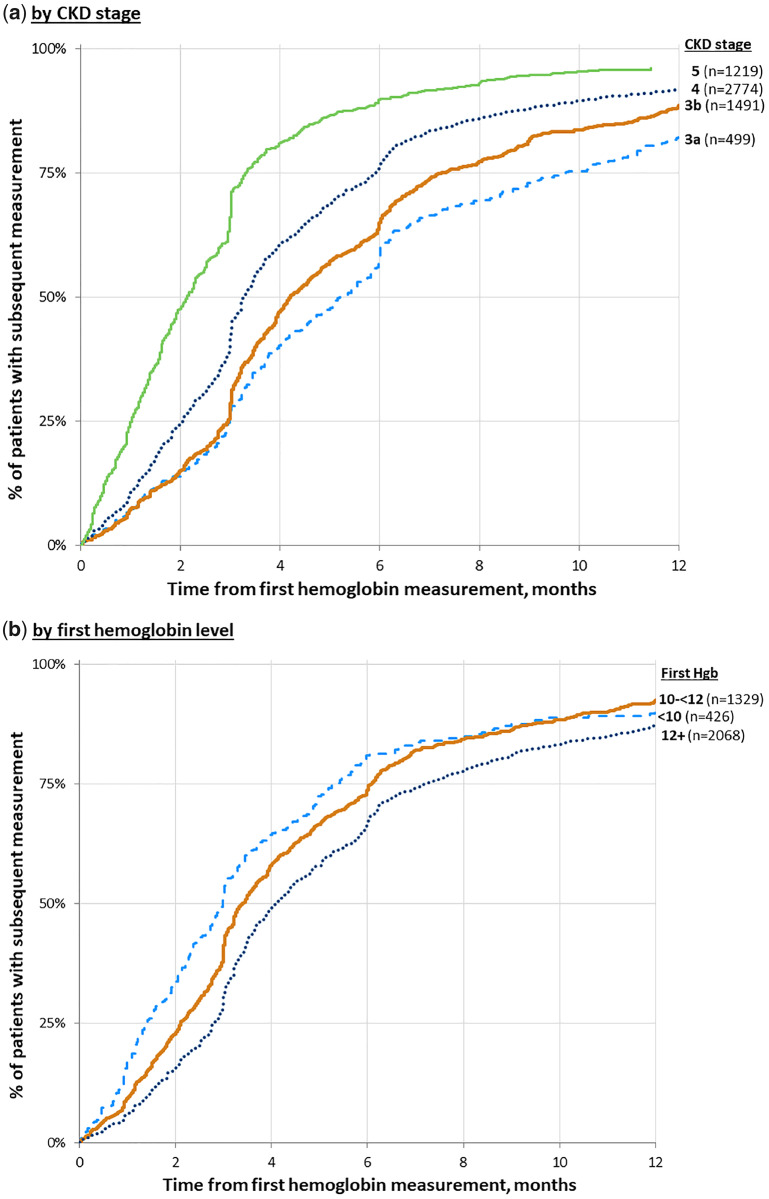
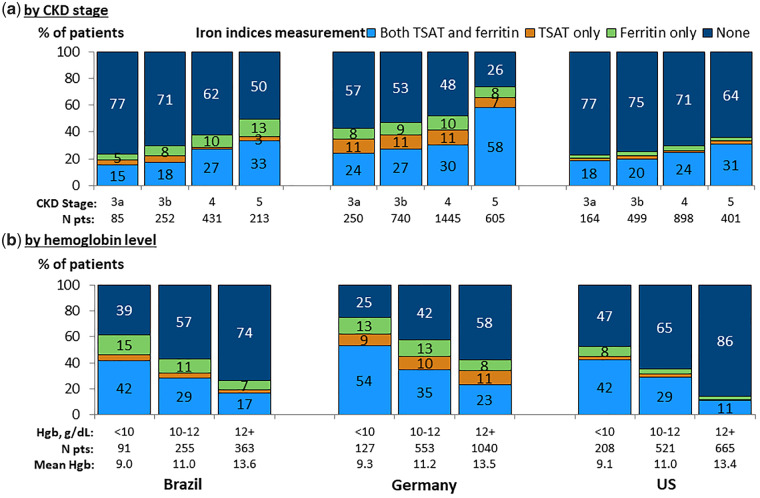
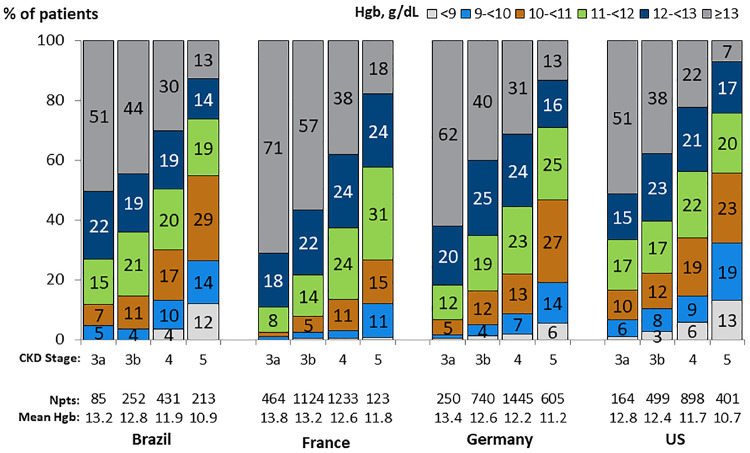
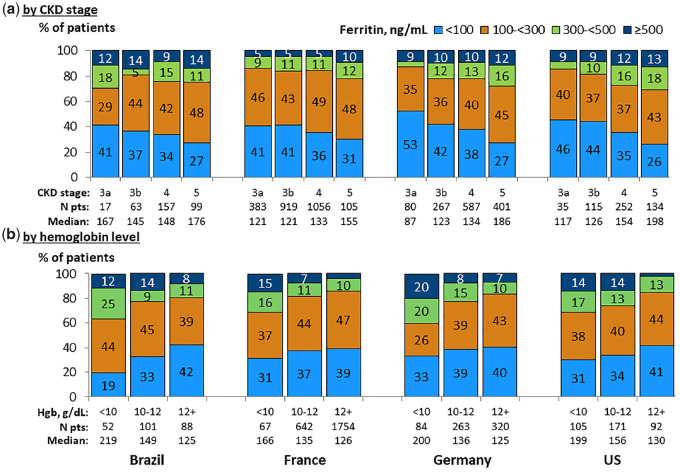
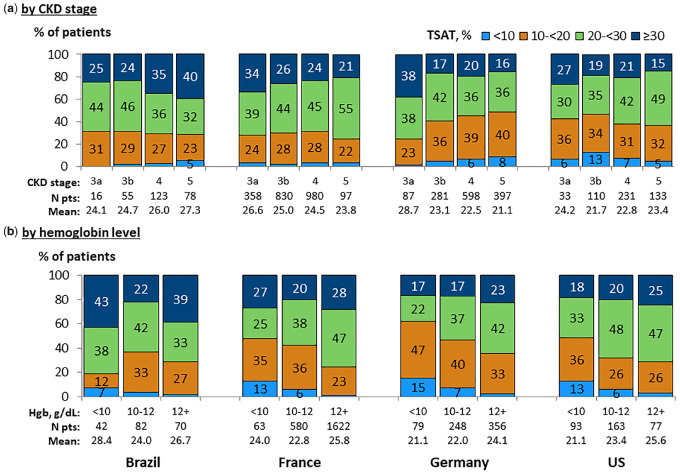
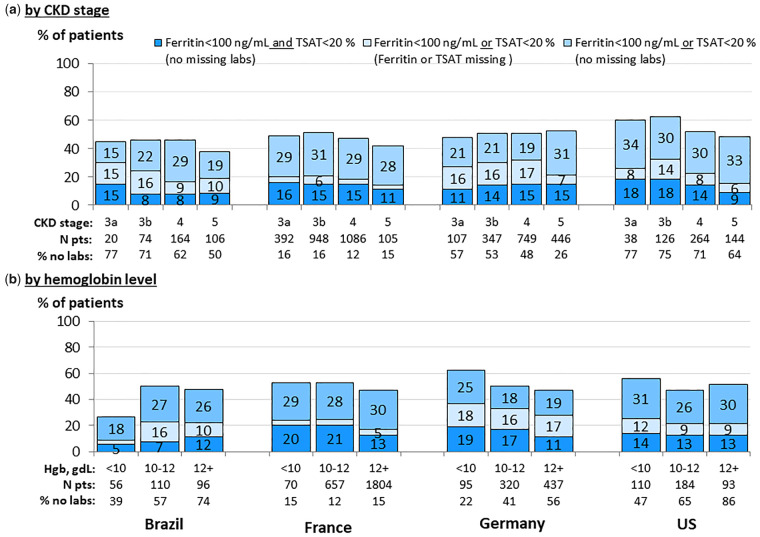
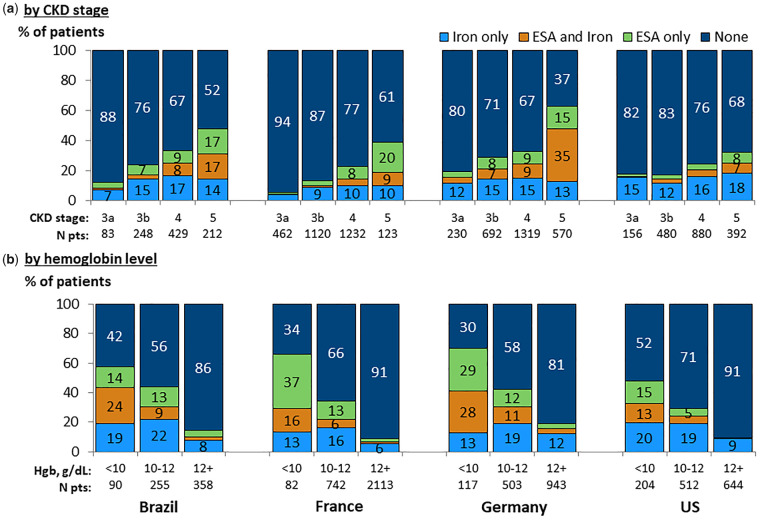
Background: International variation in anemia assessment and management practices in chronic kidney disease (CKD) is poorly understood. Methods: We performed a cross-sectional analysis of anemia laboratory monitoring, prevalence and management in the prospective Chronic Kidney Disease Outcomes and Practice Patterns Study (CKDopps). A total of 6766 participants with CKD Stages 3a–5ND from nephrology clinics in Brazil, France, Germany and the USA were included. Results: Among patients with anemia (hemoglobin <12 g/dL), 36–58% in Brazil, the USA and Germany had repeat hemoglobin measured and 40–61% had iron indices measured within 3 months of the index hemoglobin measurement. Anemia was more common in the USA and Brazil than in France and Germany across CKD stages. Higher ferritin and lower iron saturation (TSAT) levels were observed with lower hemoglobin levels, and higher ferritin with more advanced CKD. The proportion of anemic patients with ferritin <100 ng/mL or TSAT <20% ranged from 42% in Brazil to 53% in France and Germany, and of these patients, over 40% in Brazil, Germany and the USA, compared with 27% in France, were treated with oral or intravenous iron within 3 months after hemoglobin measurement. The proportion of patients with hemoglobin <10 g/dL treated with erythropoiesis-stimulating agents ranged from 28% in the USA to 57% in Germany. Conclusions: Hemoglobin and iron stores are measured less frequently than per guidelines. Among all regions, there was a substantial proportion of anemic patients with iron deficiency who were not treated with iron, highlighting an area for practice improvement in CKD care.
Overview
The claims and statistics of this paper haven’t been checked yet.
Free: it reads the open-access text and checks the first 5 claims that cite a source we can check. Create a free account to check every claim.
Integrity signals
Registry
Cites
Statistics
Figures
Verification
Claims the paper makes
The claims and statistics of this paper haven’t been checked yet.
Free: it reads the open-access text and checks the first 5 claims that cite a source we can check. Create a free account to check every claim.
Claims other papers make about this one
Each is checked against this paper’s own text: does it say what the citing paper says it does?
The source backs part of the claim, not all of it — or backs it for a different population, condition or comparison.
In the citing paper
“The presence of anemia has been linked to an unfavorable clinical course of many diseases, including infections or inflammatory disorders [12,13,14,15,16].”
From Prevalence and Predictive Value of Anemia and Dysregulated Iron Homeostasis in Patients with COVID-19 Infection (2020) · cites this paper as [16]
Experimental — accuracy not yet measured
Self-check
Percentages, sums and reported differences re-computed from the paper’s own numbers.
The self-check needs the paper’s full text.
Citations
Cites
Targeting Hypoxia-Inducible Factors for the Treatment of Anemia in Chronic Kidney Disease Patients
Locatelli, F., Fishbane, S., Block, G. A., & Macdougall, I. C. (2017) · American Journal of Nephrology · doi:10.1159/000455166 · Cited by 4,813
Correction of anemia with epoetin alfa in chronic kidney disease
Singh, A. K., Szczech, L., Tang, K. L., Barnhart, H., Sapp, S., Wolfson, M., & Reddan, D. (2006) · New England Journal of Medicine · doi:10.1056/nejmoa065485 · Cited by 2,762 · cited 1×
“With respect to patient-reported outcomes (PROs), improved quality of life and fatigue scores were observed in the higher hemoglobin target group in the Cardiovascular Risk Reduction by Early Anemia Treatment with Epoetin Beta Trial (CREATE) [44] and Trial to Reduce Cardiovascular Events with Aranesp Therapy (TREAT) t…”
Normalization of Hemoglobin Level in Patients with Chronic Kidney Disease and Anemia
Drüeke, T. B., Locatelli, F., Clyne, N., Eckardt, K.-U., Macdougall, I. C., Tsakiris, D., Burger, H.-U., & Scherhag, A. (2006) · New England Journal of Medicine · doi:10.1056/nejmoa062276 · Cited by 2,104
A trial of darbepoetin alfa in type 2 diabetes and chronic kidney disease
Pfeffer, M. A., Burdmann, E. A., Chen, C.-Y., Cooper, M. E., de Zeeuw, D., Eckardt, K.-U., Feyzi, J. M., Ivanovich, P., Kewalramani, R., Levey, A. S., et al. (2009) · New England Journal of Medicine · doi:10.1056/nejmoa0907845 · Cited by 2,096 · cited 1×
“With respect to patient-reported outcomes (PROs), improved quality of life and fatigue scores were observed in the higher hemoglobin target group in the Cardiovascular Risk Reduction by Early Anemia Treatment with Epoetin Beta Trial (CREATE) [44] and Trial to Reduce Cardiovascular Events with Aranesp Therapy (TREAT) t…”
Kalantar-Zadeh, K. (2017) · American Journal of Nephrology · doi:10.1159/000455387 · Cited by 1,148
Babitt, J. L., & Lin, H. Y. (2012) · Journal of the American Society of Nephrology · doi:10.1681/asn.2011111078 · Cited by 1,041 · cited 1×
“Several mechanisms of CKD-related anemia have been implicated [5], including relative erythropoietin deficiency [7], decreased red cell life span [8], abnormal iron metabolism [9], chronic inflammation [10], metabolic abnormalities [11–16] and effects of medications such as renin angiotensin system (RAS) inhibitors [1…”
BackgroundAstor, B. C., Muntner, P., Levin, A., Eustace, J. A., & Coresh, J. (2002) · Archives of Internal Medicine · doi:10.1001/archinte.162.12.1401 · Cited by 716
Jones, M., Ibels, L., Schenkel, B., & Zagari, M. (2004) · Kidney International · doi:10.1111/j.1523-1755.2004.00450.x · Cited by 665
Macdougall, I. C., Bircher, A. J., Eckardt, K.-U., Obrador, G. T., Pollock, C. A., Stenvinkel, P., Swinkels, D. W., Wanner, C., Weiss, G., Chertow, G. M., et al. (2016) · Kidney International · doi:10.1016/j.kint.2015.10.002 · Cited by 482 · cited 1×
“tion to its gastrointestinal side effects, oral iron may not be effectively absorbed in the setting of high hepcidin levels, which are associated with inflammation [35].”
BackgroundSelf-citationTiming of Onset of CKD-Related Metabolic Complications
Moranne, O., Froissart, M., Rossert, J., Gauci, C., Boffa, J.-J., Haymann, J. P., M’rad, M. B., Jacquot, C., Houillier, P., Stengel, B., et al. (2009) · Journal of the American Society of Nephrology · doi:10.1681/asn.2008020159 · Cited by 478
Self-citation
Research works printed but not linked: 2
- Kidney Disease: Improving Global Outcomes (KDIGO) Anemia Work Group. KDIGO clinical practice guideline for anemia in chronic kidney disease. Kidney Int Suppl 2012; 2: 279– 335
- World Health Organization. Worldwide prevalence of anaemia 1993–2005: WHO global database on anaemia. In: de Benoist B, McLean E, Egli Iet al (eds). Geneva: WHO Press, World Health Organization, 2008
Cited by
Items 101–140 of 140
Vu, K., Zhou, J., Everhart, A. O., Desai, N. R., Herrin, J. S., Jena, A. B., Ross, J. S., Shah, N. D., & Karaca‐Mandic, P. (2021) · BMC Nephrology · doi:10.1186/s12882-021-02491-y
“These findings have implications for the treatment of CKD both inside and outside of the US, as ESA continues to be the most common therapy to treat anemia among CKD patients [7].”
BackgroundPapini, A. B., Manns, B., & Elliott, M. J. (2021) · Canadian Journal of Kidney Health and Disease · doi:10.1177/20543581211063984
COVID-19 and Anemia in Children with Nephrotic Syndrome
Qader, M. A., Sultana, A., Quader, M. M. U., Rumana, J., Khondaker, T., Kanon, N., & Hanif, M. (2022) · Asian Journal of Pediatric Nephrology · doi:10.4103/ajpn.ajpn_30_21 · Cited by 1
Guibergia, C., Brazier, F., & Choukroun, G. J. (2022) · Néphrologie & Thérapeutique · doi:10.1016/j.nephro.2022.10.003 · Cited by 2
Haemoglobin and Iron Studies in Chronic Kidney Disease Stage-5 Patients yet Not On Dialysis
Anum, S., Khan, J., Siddiqi, F. A., & Asmat, F. (2023) · Pakistan Armed Forces Medical Journal · doi:10.51253/pafmj.v72i6.9079
Portolés, J. M., Martín‐Malo, A., Martín-Rodriguez, L., Fernández‐Fresnedo, G., de Sequera, P., Sánchez, J. E., Ortíz, A., & Cases, A. (2023) · Nefrología (English Edition) · doi:10.1016/j.nefroe.2023.10.005
Valencia, C. A. R., Cardona, J., & Restrepo-Duque, C. H. (2023) · Acta Médica Colombiana · doi:10.36104/amc.2023.2861 · Cited by 3
HIF-Stabilisatoren: aktueller Stellenwert bei der Therapie der renalen Anämie
Strutz, F. M. (2024) · Nephrologie aktuell · doi:10.1055/a-2193-0467
“Im Folgenden sollen die Grundlagen der Therapie die Vor-und Nachteile sowie die bisherigen Erfahrungen”
BackgroundChan, B., Varghese, A., Badve, S. V., Pecoits‐Filho, R., Guedes, M. H., Arnott, C. G., Kozor, R., O’Lone, E., Jun, M., Kotwal, S. S., et al. (2024) · medRxiv · doi:10.1101/2024.03.28.24305010
Self-citationMontesa, M. J. P., Todolí, J. C., Villota, J. N., Giménez-Civera, E., Gonzales, B., Montomoli, M., de la Espriella, R., Rico, M. G., Torregrosa, I., Peña, C. J., et al. (2024) · Research Square · doi:10.21203/rs.3.rs-4187917/v1
Chan, G. C., Choy, A. S.-M., & Li, P. K. (2023) · Nephrology Self-Assessment Program · doi:10.58483/nsap.00382022
Chow, K., Trollinger, B. L., Blum, M. F., Alasfar, S., Trujillo, J. M. M., & Brown, D. (2024) · Hospital Pharmacy · doi:10.1177/00185787241267730
Bini, C., Marcellusi, A., Rienzo, P. D., & Vecchio, L. D. (2024) · Global & Regional Health Technology Assessment · doi:10.33393/grhta.2024.3062
Michon-Colin, A., Lombardi, Y., Séret, G., Lavainne, F., Testa, A., Ayari, H., Rostoker, G., Ureña, P., & Touzot, M. (2024) · Journal of Nephrology · doi:10.1007/s40620-024-02162-9
“This suggests that adherence to guidelines is suboptimal in real world clinical practice, as has also been observed with anemia and iron deficiency in non-hemodialysis chronic kidney disease patients in CKDOPPS [8].”
Eisen in der Therapie der Anämie bei Nierenkrankheit
Reimer, K. C., & Fleig, S. V. (2025) · Nephrologie aktuell · doi:10.1055/a-2511-0543
Anayat, H. M. S., Javaid, B., Nabi, I., Mehmood, S., Rauf, M., Gulnaz, S., & Haider, T. (2025) · Indus journal of bioscience research. · doi:10.70749/ijbr.v3i6.1839
Development and validation of a robust RP-HPLC method for the quantitative analysis of roxadustat
Faiza, F., Saeed, M. A., Zaman, M., Siddique, W., Salawi, A., Almoshari, Y., & Alamoudi, J. A. (2025) · Acta Chromatographica · doi:10.1556/1326.2025.01371
Jin, H., Lu, R., Cao, J., Li, H., Wang, X., Qi, Y., Li, Q., Cai, X., Song, B., Li, N., et al. (2025) · American Journal of Nephrology · doi:10.1159/000548166
“Anemia is a highly prevalent complication in patients undergoing maintenance hemodialysis (MHD), affecting approximately 90% of this population [1–4].”
Almeida, A. F., Kher, V., Sakhuja, V., Aghor, N., Chandrasekaran, V., Gang, S. D., Gumber, M. R., Guptha, V., Jha, R., Kedlaya, P. G., et al. (2025) · Indian Journal of Nephrology · doi:10.25259/ijn_698_2024
Kassianides, X., & Bhandari, S. (2024) · Figshare · doi:10.6084/m9.figshare.25210580
Vu, K., Zhou, J., Everhart, A., Desai, N., Herrin, J. S., Jena, A. B., Ross, J. S., Shah, N. D., & Karaca‐Mandic, P. (2021) · Figshare · doi:10.6084/m9.figshare.16305408
Lamerato, L., James, G., van Haalen, H., Hedman, K., Sloand, J. A., Tang, A., Wittbrodt, E. T., & Yee, J. (2022) · Figshare · doi:10.6084/m9.figshare.19688400
Anemia in Chronic Hemodialysis at the Fousseyni Daou Hospital in Kaye, Mali: Management Challenges
Fofana, A. S., Samaké, M., Sy, S., Coulibaly, M., Djiguiba, Y. S. O., Konaré, S., Diakité, N., Tounkara, P., SIDIBE, M., Maiga, D., et al. (2025) · Open Journal of Nephrology · doi:10.4236/ojneph.2025.154052
Siao, W.-Z., Wang, W.-Y., Huang, J., Wei, J. C., Yang, T., & Jong, G. (2026) · Heliyon · doi:10.1016/j.heliyon.2026.e44509
Puchades, M. J., Todolí, J. C., Núñez, J. E., Giménez-Civera, E., Gonzales, B., Montomoli, M., de la Espriella, R., González-Rico, M., Torregrosa, I., Peña, C. J., et al. (2026) · Nefrología (English Edition) · doi:10.1016/j.nefroe.2026.501418 · Cited by 1
Du, Y., Liang, Y., Lv, J., Wang, Z., Li, X., Chen, Z., & Zhou, J. (2026) · BMC Cardiovascular Disorders · doi:10.1186/s12872-026-05672-5
Tarweel, M. A. J., & Alammar, H. (2026) · European Journal of Clinical and Experimental Medicine · doi:10.15584/ejcem.2026.1.4
“18 However, emerging evidence has challenged the reliability of these biomarkers.”
Cases, A., Puchades, M., Casas-Todoli, J., Núñez, J., Peña, C., & Górriz, J. L. (2026) · Renal Failure · doi:10.1080/0886022x.2026.2644786
Diao, X., Zheng, Z., Lin, J., Mo, X., Wu, H., Xin, Y., Guo, J., Zhan, C., Chen, W., & Yang, X. (2026) · Journal of Renal Nutrition · doi:10.1053/j.jrn.2026.04.003
Cebeci, E., Turgutalp, K., Öztürk, S., Özlük, Y., Bek, S. G., Şumnu, A., Seyahi, N., Yavuz, M., Pişkinpaşa, S., Akçay, Ö. F., et al. (2026) · Medicina · doi:10.3390/medicina62050820
“Previous studies have reported that 21–62% of non-dialysis-dependent CKD patients have anemia, with prevalence increasing progressively as kidney function declines [1–3].”
Berhe, T., Negash, Z., Tegegne, G. T., & Berha, A. B. (2026) · Biomedicine Hub · doi:10.1159/000552255
“In contrast to our findings in Chronic Kidney Disease Outcomes and Practice Patterns Study (CKDopps) in different countries, ESA was prescribed for 48%, 58%, 66%, and 70% of patients with anemia in the USA, Brazil, France, and Germany, respectively [28].”
ANEMIA EM PACIENTES RENAIS CRÔNICOS NO BRASIL
Júnior, D. W. F. É., & Cunhafontenelle, P. (2026) · RECIMA21 - Revista Científica Multidisciplinar · doi:10.47820/recima21.v7i6.8376
Neuen, B. L., & Levin, A. (2026) · NEJM Evidence · doi:10.1056/evidtt2600064
Contemporary pharmacological management of anemia associated with chronic kidney disease
Saito, T., Nangaku, M., & Mimura, I. (2026) · Expert Opinion on Pharmacotherapy · doi:10.1080/14656566.2026.2726516
Iron, ESA, and HIF-Inhibitors: Are There Other Opportunities to Improve Anemia of CKD?
Bonomini, M., Vecchio, L. D., Minutolo, R., Sirolli, V., & Locatelli, F. (2026) · Journal of Clinical Medicine · doi:10.3390/jcm15187070
“…standard therapy, clinical practice data on the management of anemia in patients with non-dialysis-dependent CKD under nephrologist care highlight that anemia monitoring is suboptimal, and treatment is frequently omitted due to a high rate of therapeutic inertia in initiating anemia drugs [1,2,14].”
Sarkar, P., Sen, D., Banerjee, A., Datta, A., & Debbarma, R. K. (2026) · Indian Journal of Hematology and Blood Transfusion · doi:10.1007/s12288-026-02588-0
Silva, V. T. C. E., Kanduri, S. R., Doren, L. V., Lee, A. I., Anand, S., Amarapurkar, P. D., Benoit, S. W., Klomjit, N., Barbir, E.-B., Shirali, A. C., et al. (2026) · Kidney International · doi:10.1016/j.kint.2026.09.007
Editorial, A. (2026) · Nephrology and Dialysis · doi:10.28996/2618-9801-2026-3suppl-1-111
Anemia and Red-Cell Size Across Estimated Glomerular Filtration Rate in a Hospital Laboratory Cohort
Madkhali, Y. (2026) · Journal of Clinical Medicine · doi:10.3390/jcm15208120
“Incomplete iron-status testing has also been reported in multinational nephrology cohorts [22].”
Metadata
- Authors
- Wong, M. M. Y., Tu, C., Li, Y., Perlman, R. L., Pecoits-Filho, R., Lopes, A. A., Narita, I., Reichel, H., Port, F. K., Sukul, N., Stengel, B., Robinson, B. M., Massy, Z. A., Pisoni, R. L., the CKDopps Investigators, Combe, C., Jacquelinet, C., Ayav, C., Briançon, S., Fouque, D., Frimat, L., Laville, M., Pascal, C., Herpe, Y.-E., Lange, C., Legrans, K., Liabeuf, S., Metzger, M., Speyer, E., Combe, C., Jacquelinet, C., Ayav, C., Briançon, S., Fouque, D., Frimat, L., Laville, M., Pascal, C., Herpe, Y.-E., Lange, C., Legrans, K., Liabeuf, S., Metzger, M., & Speyer, E.
- Affiliations
- University of British Columbia (CA)
- Arbor Research Collaborative for Health (US)
- University of Michigan (US)
- Department of Medicine, University of British Columbia, Vancouver, BC, Canada
- Universidade Federal da Bahia (BR)
- Niigata University (JP)
- Nephrologisches Zentrum Villingen-Schwenningen (DE)
- CESP, Center for Research in Epidemiology and Population Health, Univ Paris-Saclay, Univ Paris-Sud, UVSQ, Inserm UMRS 1018, Villejuif, France
- Inserm (FR)
- Corresponding author
- Wong, Michelle M Y
- Venue
- Clinical Kidney Journal
- Publisher
- Oxford University Press (OUP)
- Published
- 2019-08-03
- Volume
- 13
- Issue
- 4
- Pages
- 613-624
- ISSN
- 2048-8505 (ISSN-L)
- 2048-8513
- PMC
- PMC7467578
- OpenAlex
- W2964863420
- Cited by
- 140
- References
- 49
- Citations by year
- 2026: 20 · 2025: 24 · 2024: 18 · 2023: 19 · 2022: 20 · 2021: 22 · 2020: 16 · 2019: 1
- FWCI
- 10.43
- Type
- journal article
- Language
- en
- Open access
- gold
- doi.org
- Licence
- Locations
- Clinical Kidney Journal (publishedVersion, cc-by-nc)
- PubMed Central (publishedVersion, cc-by-nc)
- PubMed (publishedVersion)
- Funders
- DOPPS Programs
- Topics
- Health Sciences › Medicine › Hematology › Erythropoietin and Anemia Treatment
- Health Sciences › Medicine › Hematology › Iron Metabolism and Disorders
- Health Sciences › Medicine › Nephrology › Dialysis and Renal Disease Management
- Keywords
- anemia of chronic kidney disease, iron deficiency, hemoglobin monitoring, ferritin, transferrin saturation, iron supplementation, erythropoiesis-stimulating agents
About these checks
Registry, retraction, Cites and statistics results are computed, not judged, with one exception: a printed reference that no index lists is read once by a model before it counts as a citation error. Claims are extracted by a model and kept only when their quote appears verbatim in the text; each cited source is then checked, with a model’s help, for whether it says what the claim relies on. Those verdicts can be wrong — read the claim’s quote and the cited source before relying on one.
Statistics and arithmetic are recomputed, not judged.
Confidence bands are shown only for fields calibrated on our annotated test set. None is calibrated yet, so no band is shown.
What counts as a claim ›How we measure confidence ›How we check this ›
Are you an author, or do you see a problem with this page? Request a review
Data sources
Bibliographic data: Semantic Scholar, OpenAlex, Crossref.
Contains information from the Semantic Scholar Academic Graph Datasets, made available under the ODC Attribution License (ODC-BY 1.0).
Semantic Scholar’s data is described in: Kinney, R., et al. (2023). The Semantic Scholar Open Data Platform. arXiv:2301.10140.
