

Targeting the apelin system for the treatment of cardiovascular diseases
Open accessThe DOI matches its Crossref record; 181 of the 182 references it cites were found in a registry or an index.
Abstract
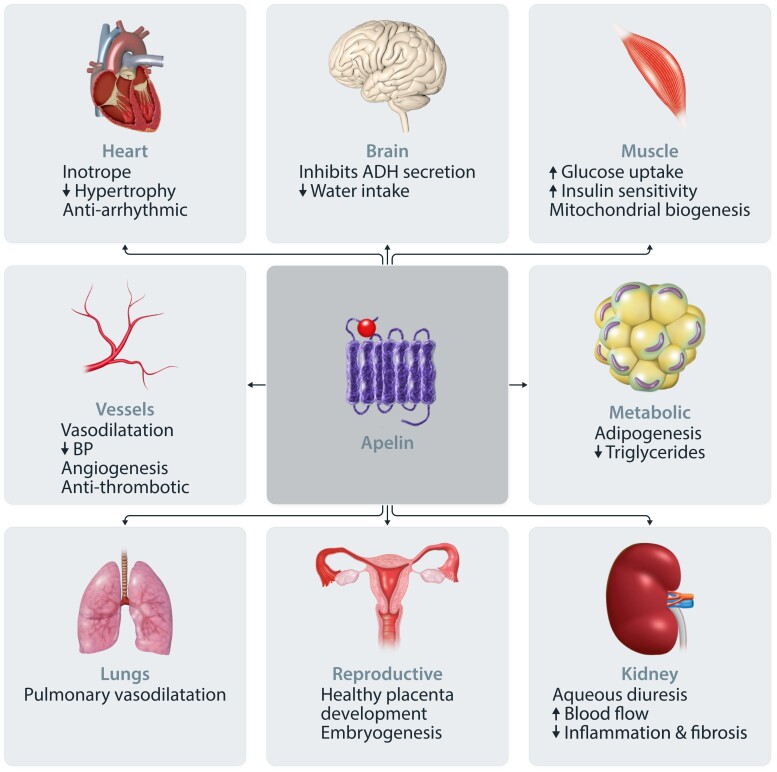
Cardiovascular disease is the leading cause of death worldwide. Its prevalence is rising due to ageing populations and the increasing incidence of diseases such as chronic kidney disease, obesity, and diabetes that are associated with elevated cardiovascular risk. Despite currently available treatments, there remains a huge burden of cardiovascular disease-associated morbidity for patients and healthcare systems, and newer treatments are needed. The apelin system, comprising the apelin receptor and its two endogenous ligands apelin and elabela, is a broad regulator of physiology that opposes the actions of the renin-angiotensin and vasopressin systems. Activation of the apelin receptor promotes endothelium-dependent vasodilatation and inotropy, lowers blood pressure, and promotes angiogenesis. The apelin system appears to protect against arrhythmias, inhibits thrombosis, and has broad anti-inflammatory and anti-fibrotic actions. It also promotes aqueous diuresis through direct and indirect (central) effects in the kidney. Thus, the apelin system offers therapeutic promise for a range of cardiovascular, kidney, and metabolic diseases. This review will discuss current cardiovascular disease targets of the apelin system and future clinical utility of apelin receptor agonism.
Overview
The claims and statistics of this paper haven’t been checked yet.
Free: it reads the open-access text and checks the first 5 claims that cite a source we can check. Create a free account to check every claim.
Integrity signals
Registry
Cites
Statistics
Figures
Verification
Claims the paper makes
The claims and statistics of this paper haven’t been checked yet.
Free: it reads the open-access text and checks the first 5 claims that cite a source we can check. Create a free account to check every claim.
Claims other papers make about this one
Each is checked against this paper’s own text: does it say what the citing paper says it does?
The source backs part of the claim, not all of it — or backs it for a different population, condition or comparison.
In the citing paper
“the bioactive peptide Apelin (produced and secreted by the AT) provides an alternate potential therapeutic means of maintaining SM mass in the context of NEB.”
From Optimised Skeletal Muscle Mass as a Key Strategy for Obesity Management (2025) · cites this paper as [118]
Experimental — accuracy not yet measured
Self-check
Percentages, sums and reported differences re-computed from the paper’s own numbers.
The self-check needs the paper’s full text.
Citations
Cites
Global Burden of Cardiovascular Diseases and Risk Factors, 1990–2019
Roth, G. A., Mensah, G. A., Johnson, C. O., Addolorato, G., Ammirati, E., Baddour, L. M., Barengo, N. C., Beaton, A. Z., Benjamin, E. J., Benziger, C. P., et al. (2020) · Journal of the American College of Cardiology · doi:10.1016/j.jacc.2020.11.010 · Cited by 11,449
Global burden of hypertension: analysis of worldwide data
Kearney, P. M., Whelton, M., Reynolds, K., Muntner, P., Whelton, P. K., & He, J. (2005) · The Lancet · doi:10.1016/s0140-6736(05)17741-1 · Cited by 8,594
Whelton, P. K., Carey, R. M., Aronow, W. S., Casey, D. E., Collins, K. J., Dennison Himmelfarb, C., DePalma, S. M., Gidding, S., Jamerson, K. A., Jones, D. W., et al. (2018) · Hypertension · doi:10.1161/hyp.0000000000000065 · Cited by 7,391
Angiotensin-neprilysin inhibition versus enalapril in heart failure
McMurray, J. J. V., Packer, M., Desai, A. S., Gong, J., Lefkowitz, M. P., Rizkala, A. R., Rouleau, J. L., Shi, V. C., Solomon, S. D., Swedberg, K., et al. (2014) · New England Journal of Medicine · doi:10.1056/nejmoa1409077 · Cited by 6,957 · cited 1×
“108 As neprilysin fully inactivates apelin peptides, the success of these agents might be partly due to an increase in apelin peptide levels and this warrants further investigation in clinical studies.”
BackgroundGo, A. S., Hylek, E. M., Phillips, K. A., Chang, Y., Henault, L. E., Selby, J. V., & Singer, D. E. (2001) · JAMA · doi:10.1001/jama.285.18.2370 · Cited by 6,205 · cited 1×
“111 Apelin is involved in regulation of cardiomyocyte electrophysiology, acting on several ion channels to shorten the action potential and increase conduction velocity.”
BackgroundWhelton, P. K., Carey, R. M., Aronow, W. S., Casey, D. E., Collins, K. J., Dennison Himmelfarb, C., DePalma, S. M., Gidding, S., Jamerson, K. A., Jones, D. W., et al. (2018) · Hypertension · doi:10.1161/hyp.0000000000000066 · Cited by 4,347
Webster, A. C., Nagler, E. V., Morton, R. L., & Masson, P. (2017) · The Lancet · doi:10.1016/s0140-6736(16)32064-5 · Cited by 3,842
Isolation and Characterization of a Novel Endogenous Peptide Ligand for the Human APJ Receptor
Tatemoto, K., Hosoya, M., Habata, Y., Fujii, R., Kakegawa, T., Zou, M.-X., Kawamata, Y., Fukusumi, S., Hinuma, S., Kitada, C., et al. (1998) · Biochemical and Biophysical Research Communications · doi:10.1006/bbrc.1998.9489 · Cited by 1,685
Global and regional estimates of preeclampsia and eclampsia: a systematic review
Abalos, E., Cuesta, C., Grosso, A. L., Chou, D., & Say, L. (2013) · European Journal of Obstetrics & Gynecology and Reproductive Biology · doi:10.1016/j.ejogrb.2013.05.005 · Cited by 1,574 · cited 1×
“132 It is characterized by the development of gestational hypertension with additional evidence of end-organ dysfunction, such as proteinuria.”
BackgroundPleiotropic Effects of Statins on the Cardiovascular System
Oesterle, A., Laufs, U., & Liao, J. K. (2017) · Circulation Research · doi:10.1161/circresaha.116.308537 · Cited by 1,247 · cited 1×
“78 Statins induce kruppel-like factor 2, an important regulator of endothelial cell homeostasis, and subsequently production of endothelial nitric oxide synthase and thrombomodulin.”
Background
Cited by
Ru, Q., Li, Y., Zhang, F., Chen, L., Wu, Y., Min, J., & Wang, F. (2025) · Bone Research · doi:10.1038/s41413-024-00398-6 · Cited by 69
Li, Y., Li, H., Chen, X., & Liang, X. (2024) · Frontiers in Endocrinology · doi:10.3389/fendo.2024.1483468 · Cited by 49
“Despite signi fi cant progress in the prevention, diagnosis, and treatment of CVD in recent years, its global incidence continues to rise globally (5).”
Alotaiq, N., & Dermawan, D. (2025) · International Journal of Molecular Sciences · doi:10.3390/ijms26020462 · Cited by 36
Microparticle Mediated Delivery of Apelin Improves Heart Function in Post Myocardial Infarction Mice
Tang, L. F. P., Qiu, H., Xu, B., Su, Y., Nyarige, V., Li, P., Chen, H., Killham, B., Liao, J., Adám, H., et al. (2024) · Circulation Research · doi:10.1161/circresaha.124.324608 · Cited by 38
“14 Treatment with apelin analogs with a longer half-life showed greater recovery of heart function following induced ischemic injury.”
Qi, R.-Q., Chen, Y., Cheng, J., Song, J.-W., Chen, Y.-H., Wang, S., Liu, Y., Yan, K., Liu, X.-Y., Li, J., et al. (2024) · Molecular Medicine · doi:10.1186/s10020-024-00997-3 · Cited by 37
Optimised Skeletal Muscle Mass as a Key Strategy for Obesity Management
Barber, T. M., Kabisch, S., Pfeiffer, A. F. H., & Weickert, M. O. (2025) · Metabolites · doi:10.3390/metabo15020085 · Cited by 19
“Such a scenario should prompt a redoubling of management strategies to reduce the AMR, thereby improving cardiometabolic risk, and these types of cases should be prioritised.”
Wang, W.-T., Wang, Q., Li, W.-M., Xu, H., Liang, X.-L., Wang, W., Li, N., Yang, H., Xu, Y.-Z., Bai, J., et al. (2024) · Journal of Advanced Research · doi:10.1016/j.jare.2024.12.033 · Cited by 21
“[32–34] Nonetheless, prior research has just primarily identified this phenomenon without thoroughly investigating the precise mechanisms through which APLN/APJ modulates macrophage activity.”
Guo, Q., Liu, Q., Zhou, S., Lin, Y., Lv, A., Zhang, L., Li, L., & Huang, F. (2024) · Neurochemistry International · doi:10.1016/j.neuint.2024.105885 · Cited by 16
“Endogenous repair is mainly through the regulation of the body ’ s inherent Apelin (encoded by the APLN gene) is an endogenous ligand of the G protein-coupled receptor APJ.”
InfluentialYue, Y., Xu, C., Wu, L., Na, M., Xu, K., Chen, X., Song, Y., Weng, S., Xu, L., Li, F., et al. (2025) · Nature Communications · doi:10.1038/s41467-025-62870-z · Cited by 15
Han, R., Huang, H., Zhu, J., Jin, X., Wang, Y., Xu, Y., & Xia, Z. (2024) · Lipids in Health and Disease · doi:10.1186/s12944-024-02357-w · Cited by 19
“Various studies have been undertaken to investigate potential small molecule apelin agonists, yet only a few have been progressed to further evaluation [217].”
Gaydarski, L., Petrova, K., Stanchev, S., Pelinkov, D., Iliev, A. A., Dimitrova, I. N., Kirkov, V., Landzhov, B. V., & Stamenov, N. (2025) · International Journal of Molecular Sciences · doi:10.3390/ijms26094022 · Cited by 22
Exerkines: Potential regulators of diabetic cardiomyopathy
Yu, F., Zong, B., Tian, Z., Jia, D., & Wang, R. (2025) · Ageing Research Reviews · doi:10.1016/j.arr.2025.102816 · Cited by 15
The maternal lifestyle in pregnancy: Implications for foetal skeletal muscle development
Sun, H., Chen, M., Liao, J., He, L., Wan, B., Yin, J., & Zhang, X. (2024) · Journal of Cachexia Sarcopenia and Muscle · doi:10.1002/jcsm.13556 · Cited by 13
Activation of the apelin/APJ system by vitamin D attenuates age-related muscle atrophy
Lee, Y. J., Kim, G. H., Lee, D. S., Jeong, H., & Lim, J. H. (2024) · Life Sciences · doi:10.1016/j.lfs.2024.123205 · Cited by 16
Li, T., Zhao, Y., Cao, Z. W., Shen, Y., Chen, J., Huang, X., Shao, Z., Zeng, Y., Chen, Q., Yan, X., et al. (2025) · International Journal of Nanomedicine · doi:10.2147/ijn.s498770 · Cited by 12
“13,14 Apelin is known to function as a potent inotropic agent and peripheral vasodilator, and may also contribute to fluid balance, making it a promising candidate for therapeutic strategies in heart failure.”
Mechanosensitive PIEZO2 channels shape coronary artery development
Pampols-Perez, M., Fürst, C., Sánchez-Carranza, O., Cano, E., García-Contreras, J. A., Mais, L., Luo, W., Raimundo, S., Lindberg, E. L., Taube, M., et al. (2025) · Nature Cardiovascular Research · doi:10.1038/s44161-025-00677-3 · Cited by 15
“We found tdTomato + cells in the SV and the nascent coronary plexus (CP), and we identified them as endothelial cells positive for endomucin (EMCN) and vascular endothelial cadherin (VE-cadherin) (Fig.”
The Impact of the Apelinergic System on the Cardiovascular System
Wyderka, R., Osuch, Ł., Ołpińska, B., Łoboz-Rudnicka, M., Diakowska, D., Leśków, A., & Jaroch, J. (2025) · International Journal of Molecular Sciences · doi:10.3390/ijms262010087 · Cited by 16
“Accumulating evidence indicates that dysregulation of this axis contributes to the development and progression of cardiovascular diseases, including atherosclerosis, hypertension, and heart failure [2].”
Advances in the therapeutic potentials of ligands of the apelin receptor APJ
Wagenaar, G. T. M., & Moll, G. N. (2025) · European Journal of Pharmacology · doi:10.1016/j.ejphar.2025.177302 · Cited by 12
Discovery of peptides as key regulators of metabolic and cardiovascular crosstalk
Zhang, Z., & Svensson, K. J. (2025) · Cell Reports · doi:10.1016/j.celrep.2025.115836 · Cited by 11
“99 However, the mechanisms underlying this interaction remain speculative, with some studies reporting a modulatory role for APJ in angiotensin II signaling, while others suggest independent and distinct signaling pathways.”
Fu, X., Zhao, Y., Cui, X., Huang, S., Lv, Y., Li, C., Gong, F., Yang, Z., Yang, X., & Xiao, R. (2025) · Angiogenesis · doi:10.1007/s10456-025-09970-y · Cited by 9
Modulating the Secretome of Fat to Treat Heart Failure
Salyer, L. G., Wang, Y., Ma, X., Foryst‐Ludwig, A., Kintscher, U., Chennappan, S., Kontaridis, M. I., & McKinsey, T. A. (2025) · Circulation Research · doi:10.1161/circresaha.125.325593 · Cited by 8
Clinical significance of intervention in the renin-angiotensin-aldosterone-apelinergic system
Wagenaar, G. T. M., & Moll, G. N. (2025) · European Journal of Pharmacology · doi:10.1016/j.ejphar.2025.177866 · Cited by 7
Apelin and Copeptin Levels in Patients With Chronic SIAD Treated With Empagliflozin
Monnerat, S., Drivakos, N., Chapman, F. A., Dhaun, N., Refardt, J. C., & Christ‐Crain, M. (2024) · Journal of the Endocrine Society · doi:10.1210/jendso/bvae106 · Cited by 7
“…currently being investigated as a possible treatment target for CKD and its associated cardiovascular diseases (ClinicalTrials.gov: NCT03956576) as it counteracts the renin-angiotensin-aldosterone system (RAAS), reduces blood pressure, and has an anti-inflammatory and antifibrotic effect [10, 42].”
BackgroundSelf-citationHan, W., Xiong, N., Zhong, R., & Pan, Z. (2024) · International Journal of General Medicine · doi:10.2147/ijgm.s489235 · Cited by 9
Apelinergic system in acute kidney injury: Mechanistic insights and therapeutic potential
Patil, N. S., Shelke, V., & Gaikwad, A. B. (2024) · Life Sciences · doi:10.1016/j.lfs.2024.123032 · Cited by 6
Cristallini, C., Rossin, D., Vanni, R., Barbani, N., Bulgheresi, C., Labardi, M., Perveen, S., Burchielli, S., Terlizzi, D., Kusmic, C., et al. (2025) · Bioactive Materials · doi:10.1016/j.bioactmat.2025.04.008 · Cited by 7
Davenport, A. P., Williams, T. L., Nyimanu, D., Macrae, R. G. C., Kuc, R. E., Chapman, F. A., Yang, P. B., Dhaun, N., & Maguire, J. J. (2026) · Pharmacological Reviews · doi:10.1016/j.pharmr.2026.100130 · Cited by 5
Self-citationGene expression profiles, potential targets and treatments of cardiac remodeling
Dong, F., Feng, H., Song, M., & Tan, P. (2024) · Molecular and Cellular Biochemistry · doi:10.1007/s11010-024-05126-6 · Cited by 6
Unveiling novel molecules and therapeutic targets in hypertension – A narrative review
Jefry Winner, G., Jain, S., & Gupta, D. (2024) · European Journal of Pharmacology · doi:10.1016/j.ejphar.2024.177053 · Cited by 6
Couvineau, P., & Llorens‐Cortés, C. (2025) · Clinical Science · doi:10.1042/cs20240955 · Cited by 5
Feng, Y., Wang, Y., Deng, Y., Li, P., Fang, P., & Zhang, Z. (2025) · Cardiovascular Diabetology · doi:10.1186/s12933-025-02863-w · Cited by 5
“This process is crucial for maintaining cardiac health, particularly in patients with diabetes [79, 80].”
Huo, Z., Gu, J., & He, T. (2024) · Experimental and Therapeutic Medicine · doi:10.3892/etm.2024.12515 · Cited by 5
“Apelins act in an autocrine/paracrine manner (10).”
Effectiveness of Vasopressin Against Cardiac Arrest: A Systematic Review of Systematic Reviews
Ho, J. K.-M., Tam, H. L., & Leung, L. Y. L. (2024) · Cardiovascular Drugs and Therapy · doi:10.1007/s10557-024-07571-3 · Cited by 4
“The administration of vasopressin increases plasma osmolality and subsequently activates the apelin system, which causes systemic vasodilation and decreased blood pressure, thus reducing coronary perfusion pressure and coronary blood flow [62–64].”
Karimi, M., Shirsalimi, N., & Sedighi, E. (2024) · International Journal of Emergency Medicine · doi:10.1186/s12245-024-00774-3 · Cited by 4
Zheng, X., Jin, Y., Fan, M., Cui, H., & Zhu, S. (2025) · Journal of Atherosclerosis and Thrombosis · doi:10.5551/jat.65624 · Cited by 4
“Cardiovascular disease (CVD) is the most significant chronic non communicable disease, leading to 48% of the causes of mortality in China 1) and it is becoming one of the most important causes of death worldwide 2) .”
Karmazyn, M., & Gan, X. T. (2025) · International Journal of Molecular Sciences · doi:10.3390/ijms27010003 · Cited by 7
“Thus, targeting the apelin system is considered a potentially effective approach towards mitigating a number of cardiovascular disorders, including cardiac hypertrophy [151,152].”
PMAIP1 regulates the progression of follicular thyroid carcinoma through the Wnt3/FOSL1 pathway
Wang, H., Shang, F., Wang, Y., Pang, B., Kang, L., Zhou, C., Li, D., Li, Z., Jiang, X., Liu, B., et al. (2025) · Frontiers in Oncology · doi:10.3389/fonc.2025.1502391 · Cited by 4
Hou, J., Wu, H., Li, S.-M., Li, X., Yang, S., Chen, X., Zhou, C., Long, H., Wu, H., Fu, J., et al. (2025) · Frontiers in Pharmacology · doi:10.3389/fphar.2025.1541869 · Cited by 4
Rachwalik, M., Leśków, A., Matusiewicz, M., Jama−Kmiecik, A., & Diakowska, D. (2025) · Biomedicines · doi:10.3390/biomedicines13040809 · Cited by 5
“Inversely, the infusing of angiotensin II down-regulates the expression of cardiac apelin mRNA, which induces myocardial remodelling and the development of aortic aneurysm [2,5,6].”
InfluentialExercise modulates redox homeostasis in cardiovascular and metabolic diseases: from bench to clinic
Wang, J., Zhang, J., Zhang, H., Yu, F., Tian, Z., & Jia, D. (2026) · Cardiovascular Diabetology · doi:10.1186/s12933-026-03131-1 · Cited by 7
“It is secreted by adipose tissue, known as “adipokines”, exhibiting broad tissue distribution [157].”
Sridhar, A., Palmer, E. S., Craig, S. L., Krason‐Kidzinska, E., Irwin, N., & O'Harte, F. P. M. (2026) · Diabetes Obesity and Metabolism · doi:10.1111/dom.70647 · Cited by 3
Park, H., Adams, R. H., & Kim, K.-P. (2026) · Experimental & Molecular Medicine · doi:10.1038/s12276-026-01760-w · Cited by 7
“In particular, G protein-biased APLNR agonists preferentially enhance PI3K-Akt – eNOS signaling and NO-mediated vasodilation, whereas increased β -arrestin recruitment may limit these effects or promote receptor desensitization 98 .”
Kagota, S., Maruyama‐Fumoto, K., Futokoro, R., & Shinozuka, K. (2024) · Journal of Vascular Diseases · doi:10.3390/jvd3040030 · Cited by 3
“At present, we cannot explain why serum TG levels are positively correlated with eGFR and negatively correlated with urine protein levels.”
Zhao, Y., Liang, X., Li, T., Shao, Z., Cao, Z., Zeng, Y., Yan, X., Chen, Q., Zhou, H., Li, W., et al. (2024) · Free Radical Research · doi:10.1080/10715762.2024.2443606 · Cited by 3
Agarwala, Y., & Sharma, R. (2025) · Frontiers in Oncology · doi:10.3389/fonc.2025.1683865 · Cited by 3
“Receptors of apelin and angiotensin are co-expressed and may have regulatory effects on each other (16).”
Chen, W., Liu, Y., Deng, X., Li, B., Wang, H., Wei, G., Chen, K., & Wang, S. (2024) · International Journal of General Medicine · doi:10.2147/ijgm.s486187 · Cited by 4
ELABELA: a polypeptide with therapeutic potential in cardiovascular diseases
Yan, P., Meng, C., Yang, S., Huang, W., & Wang, T. (2025) · Frontiers in Cardiovascular Medicine · doi:10.3389/fcvm.2025.1623215 · Cited by 2
“ELA reduces ACE expression, indirectly limiting production of Ang II (54).”
Effects of apelin on age-associated neovascularization impairment in peripheral artery disease
Chen, J., Chen, M., Liu, Y., Wang, X., Yao, M., Chen, J., Zhang, J., & Peng, Q. (2025) · Life Sciences · doi:10.1016/j.lfs.2025.123980 · Cited by 3
Guo, P., Li, J., Zhang, X., Wang, Q., Liu, Y., Zhou, H., Chen, Y., Yong, V. W., & Xue, M. (2025) · Experimental Neurology · doi:10.1016/j.expneurol.2025.115633 · Cited by 2
Natural vasodilators: mechanisms and therapeutic potential in cardiovascular diseases
Sun, A., Francis, O. B., Yan, S., Wang, J., Zhao, H., Leng, L., Li, R., Liu, H., Tian, X. L., Qi, D. A. K. E., et al. (2026) · Acupuncture and Herbal Medicine · doi:10.1097/hm9.0000000000000200 · Cited by 2
Stanek, M., Leśków, A., & Diakowska, D. (2024) · Biomedicines · doi:10.3390/biomedicines12112583 · Cited by 2
Zhang, L., Peng, Y., Qie, Y., Guo, J., Kong, Y., Zhang, X., Li, Z., & Jia, H. (2025) · Applied Physiology, Nutrition, and Metabolism · doi:10.1139/apnm-2024-0473 · Cited by 4
Can apelins guide the diagnosis of coronary artery disease in COPD patients?
Aksakal, A., Kerget, B., Gülbahar, B. N., Laloğlu, E., & Sağlam, L. (2025) · Heart & Lung · doi:10.1016/j.hrtlng.2025.03.003 · Cited by 2
Wyderka, R., Ołpińska, B., Diakowska, D., Leśków, A., Osuch, Ł., Borger, M., Brzezińska, B., Łoboz-Rudnicka, M., & Jaroch, J. (2025) · Vascular Health and Risk Management · doi:10.2147/vhrm.s507783 · Cited by 2
Alfonso, D. I. (2026) · Cardiac failure review · doi:10.15420/cfr.2025.54 · Cited by 2
Umamoto, K., Bouchi, R., Soeda, K., Satake, S., Hosoyama, T., Ohsugi, M., Ueki, K., & Kajio, H. (2024) · Journal of Diabetes Investigation · doi:10.1111/jdi.14286 · Cited by 3
“In relation to the cardiovascular system, apelin receptor activation prevents arrhythmia, inhibits thrombosis, has anti-in fl ammatory and anti-fi brotic effects, and promotes water diuresis 12 .”
BackgroundDing, B., Wang, Y., Li, J., Zhang, X., Wan, Z., & Wang, H. (2025) · Frontiers in Genetics · doi:10.3389/fgene.2025.1567951 · Cited by 1
Zhu, Q., Liu, Y., Di, Y., Chen, X., & Yang, C. (2025) · International Journal of Peptide Research and Therapeutics · doi:10.1007/s10989-025-10794-z · Cited by 1
“…vasculoprotective, and cardioprotective actions, positioning the apelinergic system as a promising therapeutic axis for 1 3 BMS-986224, have also been developed and evaluated as potential heart failure therapies, although clinical development so far has remained limited (Chapman et al. 2023).”
The Apelinergic System in Kidney Disease: Novel Perspectives
Saladich-Cavallé, S., Núñez-Delgado, S., Huo, L., Pons-Pellicer, F., Martínez-Díaz, I., Jacobs-Cachá, C., Bermejo, S., Vilardell, J., & Soler, M. J. (2025) · International Journal of Molecular Sciences · doi:10.3390/ijms27010111 · Cited by 1
“However, it is predominantly found in endocardial and vascular endothelial cells, suggesting that circulating apelin originates from these tissues [38].”
Renal Aspects of the Apelinergic System: Therapeutic Potential and Mechanisms
Wang, M., Yu, J., & Xu, C. (2026) · Biomolecules · doi:10.3390/biom16020184 · Cited by 1
“…of embryonic rodents and limited expression only in the kidneys of adult rats and mice [17,20] and humans [21], mounting evidence indicates that the AS has a broad distribution (Figure 1) and plays a pleiotropic yet essential role in various physiological and pathological processes [22] (Table 2).”
Li, Q., Song, Y., Liu, Q., Lin, Z., Lin, W., Huang, F., & Zhu, P. (2026) · The Journal of Physiological Sciences · doi:10.1016/j.jphyss.2026.100061 · Cited by 2
Fibroblast Activation Protein-Based Radio-Theranostics Attenuates Postinfarction Myocardial Fibrosis
Liu, S. M., Li, L., Wang, Z. J., Xi, X.-Y., Wang, Y., Li, S., Yang, Q., Zhang, X., & Yang, M.-F. (2026) · ACS Applied Materials & Interfaces · doi:10.1021/acsami.5c25237 · Cited by 1
Alfonso, D. I. (2026) · Medical Hypotheses · doi:10.1016/j.mehy.2026.111971 · Cited by 1
Lin, Y.-N., Xu, J., Wu, Y.-H., Jin, M.-X., Wang, Y.-T., Wu, Y.-Q., Zhan, H.-H., Qian, X.-G., Wang, Z.-N., Lei-Wang, et al. (2026) · JACC Basic to Translational Science · doi:10.1016/j.jacbts.2026.101537 · Cited by 1
Exercise Intensity and Circulating Exerkine Responses: A Narrative Review of Selected Molecules
Zhao, Y., Wang, T., Zhang, X., Wang, W., Fu, Y., Laher, I., & Li, S. (2026) · Biomolecules · doi:10.3390/biom16060852 · Cited by 1
“In the cardiovascular system, it participates in vascular relaxation, angiogenesis, cardiac contractility, and blood pressure regulation [101,103].”
Alfonso, D., Sy, J. C. Y., & Palabrica, M. (2026) · Cardiovascular Drugs and Therapy · doi:10.1007/s10557-026-07913-3 · Cited by 2
Zhang, J., Dong, E., Zhang, Y., & Zhang, Y. (2024) · Clinical and Translational Medicine · doi:10.1002/ctm2.70116 · Cited by 1
“8 It is implicated in various cardiovascular diseases, including heart failure and pulmonary arterial hypertension.”
Influence of Serum Apelin and CD40L Expression Levels on Adverse Cardiovascular Events after PCI
Zhang, J., Liu, Y., & Liu, N. (2024) · The Heart Surgery Forum · doi:10.59958/hsf.7385
“Expression levels are closely related to various diseases such as heart failure, atrial fibrillation, and myocardial infarction [14,15].”
BackgroundHow hormones acting on their receptors influence mature erythrocytes
Kojić, Z., Hotic, S., & Ristić, S. (2024) · Srpski arhiv za celokupno lekarstvo · doi:10.2298/sarh241008091k
Chen, H., Adam, A., & Oudit, G. Y. (2025) · Canadian Journal of Cardiology · doi:10.1016/j.cjca.2025.01.001
Insights into the function and research status of membrane protein APJ
Ai, Z., Dong, B., & Chen, J. (2025) · Gene · doi:10.1016/j.gene.2025.149591
Myokines as biological markers in disorders of carbohydrate metabolism and atherosclerosis
Alieva, A. M., Baykova, I. E., Фатхуллаевна, А. М., Алмардонович, М. А., Булатовна, С. А., Rakhaev, A. M., Asanov, A. O., Алимович, М. А., & Nikitin, I. G. (2025) · Meditsinskiy sovet = Medical Council · doi:10.21518/ms2025-015
Reddy, S., & Oroszi, T. L. (2025) · World Journal of Cardiovascular Diseases · doi:10.4236/wjcd.2025.157033
Kuna, J., Chmielewski, G., Jaśkiewicz, Ł., Knapik, M., & Krajewska–Włodarczyk, M. (2025) · International Journal of Molecular Sciences · doi:10.3390/ijms26178194 · Cited by 5
“Systemic administering of apelin has been shown to reduce peripheral vascular resistance and blood pressure in both healthy subjects and in those with heart failure, even while the renin–angiotensin system is activated [78,84–86].”
InfluentialWarren, C. M., Ryba, D. M., Geist, G. E., Coronado, A. C., Wolska, B. M., Goldspink, P. H., & Solaro, R. J. (2025) · Journal of Molecular and Cellular Cardiology Plus · doi:10.1016/j.jmccpl.2025.100495 · Cited by 1
“In relation to our identification of ER signaling in the porcine HCM model, it is of interest that the signaling pathway involves modulation of apelin signaling via its GPCR, apelin receptor, which is druggable, as reviewed by Chapman et al. [86].”
Qiu, S., Chen, Y., Guo, S., Liu, X., Zhang, Q., Zheng, H., Cui, K., Wang, Y., Chen, G., Chen, Y., et al. (2025) · medRxiv · doi:10.1101/2025.11.14.25340283
Öztürk, Ö., Aslankoç, R., Saygın, M., Özmen, Ö., SİRİN, Y. S., & Kavrık, O. (2025) · Clinical and Experimental Pharmacology and Physiology · doi:10.1111/1440-1681.70094
Erduhan, S., Bakan, E., Baygutalp, N. K., & Hakan, H. (2025) · Revista da Associação Médica Brasileira · doi:10.1590/1806-9282.20250751
Predictive Value of Apelin-36 for No-Reflow Phenomenon in STEMI Patients
Krasniqi, X., Jakupi, X., Vincelj, J., Gojani, G., Çuni, P., Shahini, L., Berisha, A., Jashari, K., Berisha, B., & Bakalli, A. (2026) · Life · doi:10.3390/life16010094 · Cited by 1
“In addition, Apelin (AP) and Elabela (Ela), components of the apelinergic system, are assumed to modulate endothelial function and contribute to atherosclerosis [26,27].”
Su, Y., Qi, X., & Jin, T. (2025) · International Symposium on Artificial Intelligence for Medicine Sciences (ISAIMS) · doi:10.1145/3777577.3777686
Transcriptome Data Reveals Hypoxic Adaptability on Embryonic Cardiac Development in Tibetan Chickens
Chen, X., Fan, H., Zhang, H., Peng, D., & Zhang, B. (2026) · Agriculture · doi:10.3390/agriculture16020244
Szymańczyk, S., Osiak-Wicha, C., Kras, K., Kapica, M., Puzio, I., Antushevich, H., Kuwahara, A., Kato, I., Łuszczewska‐Sierakowska, I., & Arciszewski, M. B. (2026) · Animals · doi:10.3390/ani16030497
“Apelin/APJ signaling is present in multiple physiological systems and has been investigated as a therapeutic target in cardiovascular diseases [5], respiratory disorders [6], neurological conditions [7], kidney diseases [8], metabolic disorders [9], musculoskeletal diseases [10], cancer [11], and…”
The bidirectional link between sleep disorders and cardio-cerebrovascular diseases
Ren, S., Shou, Y.-L., & Liao, Y.-F. (2026) · New discovery. · doi:10.61958/ndwc5472
Targeting the Apelin–APJ Axis: A Promising Strategy to Mitigate Anthracycline-Induced Cardiotoxicity
Desai, V. G. (2026) · Cardiovascular Toxicology · doi:10.1007/s12012-026-10107-w
“…the APJ receptor shares approximately 50% sequence homology with the angiotensin II-type 1 receptor (AT1R), it is not activated by angiotensin II [ 79], highlighting distinct ligand specificity and signal - ling that differentiate it from the angiotensin II–dependent renin-angiotensin system.”
Xu, X.-J., Shen, K., Ma, Y., Zhang, X.-L., Wang, Q., Liu, P., He, Q.-F., Wang, X., Xu, Y.-N., Fu, H.-L., et al. (2026) · International Immunopharmacology · doi:10.1016/j.intimp.2026.116666 · Cited by 2
Mechanisms and treatments of lymphedema
Ren, H., Gong, Y., Zhang, S., Liu, J., Shen, J., Gizinger, O., Aripova, T., & Liu, J. (2026) · Frontiers in Immunology · doi:10.3389/fimmu.2026.1827439
“Apelin (APLN), a vascular regulatory peptide acting through the APJ receptor (93), has been evaluated as an adjunct to VEGF-C therapy.”
Koffi, G., Niamké, G., Gauze-Gnagne, C., Dere, L., Yapo, B., Badia, É., Raynaud, F., Jover, B. F., Djohan, Y. F., Cristol, J., et al. (2026) · Advances in Biochemistry · doi:10.11648/j.ab.20261402.12
Abd-Alkareem, M. H., Shibli, H. E. M., & Alquobaili, F. A. (2026) · Current Medical Research and Opinion · doi:10.1080/03007995.2026.2668774
“The apelin/ APJ system is a key regulator of cardiovascular homeostasis, with apelin acting as a potent vasodilator, anti-inflammatory agent, and pro-angiogenic factor 26,27 .”
Therapeutic development for hypertension by targeting the peptide-mediated blood pressure control
Akira, S. A. T. O., & Ogita, H. (2026) · Biochemical Pharmacology · doi:10.1016/j.bcp.2026.118115
Apelin-driven metabolic ratios reflect post-stroke recovery in mice
Pétrault, M., Gelé, P., Bérézowski, V., Devos, D., Ouk, T., Pétrault, O., & Bastide, M. (2026) · Experimental Neurology · doi:10.1016/j.expneurol.2026.115889
Apelin, Cortisol, and Doxorubicin-Induced Cardiotoxicity: A Triangle of Actions
Dziobiak, K., Owe-Larsson, M., Chwil, M., & Janiuk, I. R. (2026) · Cells · doi:10.3390/cells15131187
“Simultaneously, apelin exerts a hypotensive effect, favorably influencing systemic hemodynamics [130–132].”
High-altitude exposure and ischemic stroke: pathophysiological mechanisms and current perspectives
Qiao, Y., Luo, Y., Hu, Y., Duan, C., Li, J., Luo, X., & Wang, J. (2026) · Frontiers in Neurology · doi:10.3389/fneur.2026.1830751
“Positive inotropic influences include hypoxia-driven sympathetic activation (113, 114) and engagement of the HIF-mediated apelin-APJ signaling xis (115–117).”
Qiu, S., Yu, C., Guo, S., Liu, X., Zhang, Q., Zheng, H., Cui, K., Wang, Y., Chen, M., Chen, Y., et al. (2026) · BMC Cardiovascular Disorders · doi:10.1186/s12872-026-06280-z
“Despite progress in prevention, diagnosis, and treatment, CVD rates continue to rise [5].”
Wu, Q., Yan, R., Li, P., & Zhai, G. (2026) · Research Square · doi:10.21203/rs.3.rs-10544703/v1
Lu, H., Liu, B., Ji, J., Shuai, L., & Cao, J. (2026) · Frontiers in Physiology · doi:10.3389/fphys.2026.1886745
Zeng, Y., Li, Y., Yin, J., Ban, H., Yuan, X., Wei, L., Zha, J., Guo, J., Yan, M., Yuan, C., et al. (2026) · Microchemical Journal · doi:10.1016/j.microc.2026.119408
Basith, S., & Lee, G. (2026) · Medicinal Research Reviews · doi:10.1002/med.70087
Cai, J., Zhang, X., Sun, L., Li, B., Tian, M., & Li, H. (2026) · Cells Tissues Organs · doi:10.1159/cto/acbag002
Atsumi, K., Hoshikawa, N., Saito, D., Arakawa, R., Majima, T., Hirao, M., & Sakai, A. (2026) · Osteoarthritis and Cartilage · doi:10.1016/j.joca.2026.08.009
Pisarenko, O. I., & Studneva, I. M. (2026) · Studies in natural products chemistry · doi:10.1016/b978-0-443-51072-4.00014-4
Metadata
- Authors
- Chapman, F. A., Maguire, J. J., Newby, D. E., Davenport, A. P., & Dhaun, N.
- Affiliations
- Edinburgh Royal Infirmary (GB)
- University of Cambridge (GB)
- The Queen's Medical Research Institute (GB)
- Corresponding author
- Dhaun, Neeraj
- Venue
- Cardiovascular Research
- Publisher
- Oxford University Press (OUP)
- Published
- 2023-11-13
- Volume
- 119
- Issue
- 17
- Pages
- 2683-2696
- ISSN
- 0008-6363 (ISSN-L)
- 1755-3245
- PMC
- PMC10757586
- OpenAlex
- W4388625241
- Cited by
- 104
- References
- 182
- Citations by year
- 2026: 38 · 2025: 42 · 2024: 24
- FWCI
- 3.78
- Type
- journal article
- Language
- en
- Open access
- hybrid
- doi.org
- Licence
- Locations
- Cardiovascular Research (publishedVersion, cc-by)
- PubMed Central (publishedVersion, cc-by)
- PubMed (publishedVersion)
- Edinburgh Research Explorer (University of Edinburgh) (submittedVersion, cc-by)
- Apollo (University of Cambridge) (submittedVersion, cc-by)
- Apollo (cc-by)
- Funders
- Kidney Research UK (TF_006_20171124)
- British Heart Foundation (TG/18/4/33770, FS/06/064, FS/09/019, CH09/002, RG/16/10/32375, RE/18/5/34216)
- National Institute for Health and Care Research Cambridge Biomedical Research Centre Biomedical Resources
- Wellcome Trust (WT103782AIA)
- Chief Scientist Office (SCAF/19/02)
- National Institute for Health and Care Research
- Department of Health and Social Care
- Topics
- Health Sciences › Medicine › Pharmacology (medical) › Apelin-related biomedical research
- Life Sciences › Neuroscience › Cellular and Molecular Neuroscience › Neuropeptides and Animal Physiology
- Health Sciences › Medicine › Surgery › Cardiovascular, Neuropeptides, and Oxidative Stress Research
- Keywords
- apelin receptor, apelin, Elabela, cardiovascular disease, renin-angiotensin system, vasodilation, angiogenesis, cardiac arrhythmias, thrombosis, anti-inflammatory activity, antifibrotic effect, diuresis, chronic kidney disease, obesity, diabetes mellitus
- MeSH terms
- Apelin, Apelin Receptors, Cardiovascular Diseases, Cardiovascular System, Heart, Humans
About these checks
Registry, retraction, Cites and statistics results are computed, not judged, with one exception: a printed reference that no index lists is read once by a model before it counts as a citation error. Claims are extracted by a model and kept only when their quote appears verbatim in the text; each cited source is then checked, with a model’s help, for whether it says what the claim relies on. Those verdicts can be wrong — read the claim’s quote and the cited source before relying on one.
Statistics and arithmetic are recomputed, not judged.
Confidence bands are shown only for fields calibrated on our annotated test set. None is calibrated yet, so no band is shown.
What counts as a claim ›How we measure confidence ›How we check this ›
Are you an author, or do you see a problem with this page? Request a review
Data sources
Bibliographic data: Semantic Scholar, OpenAlex, Crossref.
Contains information from the Semantic Scholar Academic Graph Datasets, made available under the ODC Attribution License (ODC-BY 1.0).
Semantic Scholar’s data is described in: Kinney, R., et al. (2023). The Semantic Scholar Open Data Platform. arXiv:2301.10140.
