

Targeting the apelin system for the treatment of cardiovascular diseases
Open accessThe DOI matches its Crossref record; 181 of the 182 references it cites were found in a registry or an index.
Abstract
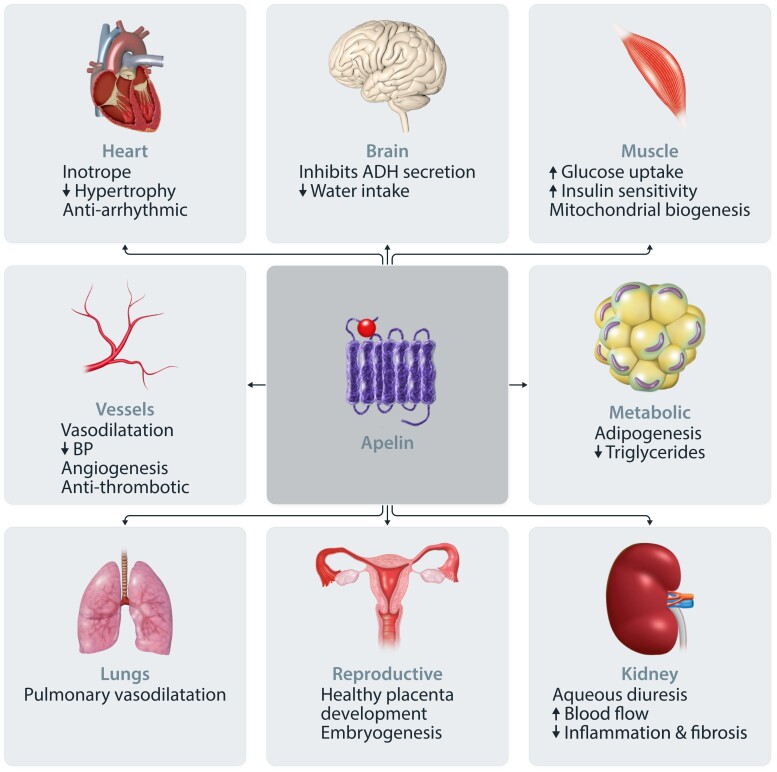
Cardiovascular disease is the leading cause of death worldwide. Its prevalence is rising due to ageing populations and the increasing incidence of diseases such as chronic kidney disease, obesity, and diabetes that are associated with elevated cardiovascular risk. Despite currently available treatments, there remains a huge burden of cardiovascular disease-associated morbidity for patients and healthcare systems, and newer treatments are needed. The apelin system, comprising the apelin receptor and its two endogenous ligands apelin and elabela, is a broad regulator of physiology that opposes the actions of the renin-angiotensin and vasopressin systems. Activation of the apelin receptor promotes endothelium-dependent vasodilatation and inotropy, lowers blood pressure, and promotes angiogenesis. The apelin system appears to protect against arrhythmias, inhibits thrombosis, and has broad anti-inflammatory and anti-fibrotic actions. It also promotes aqueous diuresis through direct and indirect (central) effects in the kidney. Thus, the apelin system offers therapeutic promise for a range of cardiovascular, kidney, and metabolic diseases. This review will discuss current cardiovascular disease targets of the apelin system and future clinical utility of apelin receptor agonism.
Overview
The claims and statistics of this paper haven’t been checked yet.
Free: it reads the open-access text and checks the first 5 claims that cite a source we can check. Create a free account to check every claim.
Integrity signals
Registry
Cites
Statistics
Figures
Verification
Claims the paper makes
The claims and statistics of this paper haven’t been checked yet.
Free: it reads the open-access text and checks the first 5 claims that cite a source we can check. Create a free account to check every claim.
Claims other papers make about this one
Each is checked against this paper’s own text: does it say what the citing paper says it does?
The source backs part of the claim, not all of it — or backs it for a different population, condition or comparison.
In the citing paper
“the bioactive peptide Apelin (produced and secreted by the AT) provides an alternate potential therapeutic means of maintaining SM mass in the context of NEB.”
From Optimised Skeletal Muscle Mass as a Key Strategy for Obesity Management (2025) · cites this paper as [118]
Experimental — accuracy not yet measured
Self-check
Percentages, sums and reported differences re-computed from the paper’s own numbers.
The self-check needs the paper’s full text.
Citations
Cites
Global Burden of Cardiovascular Diseases and Risk Factors, 1990–2019
Roth, G. A., Mensah, G. A., Johnson, C. O., Addolorato, G., Ammirati, E., Baddour, L. M., Barengo, N. C., Beaton, A. Z., Benjamin, E. J., Benziger, C. P., et al. (2020) · Journal of the American College of Cardiology · doi:10.1016/j.jacc.2020.11.010 · Cited by 11,449
Global burden of hypertension: analysis of worldwide data
Kearney, P. M., Whelton, M., Reynolds, K., Muntner, P., Whelton, P. K., & He, J. (2005) · The Lancet · doi:10.1016/s0140-6736(05)17741-1 · Cited by 8,594
Whelton, P. K., Carey, R. M., Aronow, W. S., Casey, D. E., Collins, K. J., Dennison Himmelfarb, C., DePalma, S. M., Gidding, S., Jamerson, K. A., Jones, D. W., et al. (2018) · Hypertension · doi:10.1161/hyp.0000000000000065 · Cited by 7,391
Angiotensin-neprilysin inhibition versus enalapril in heart failure
McMurray, J. J. V., Packer, M., Desai, A. S., Gong, J., Lefkowitz, M. P., Rizkala, A. R., Rouleau, J. L., Shi, V. C., Solomon, S. D., Swedberg, K., et al. (2014) · New England Journal of Medicine · doi:10.1056/nejmoa1409077 · Cited by 6,957 · cited 1×
“108 As neprilysin fully inactivates apelin peptides, the success of these agents might be partly due to an increase in apelin peptide levels and this warrants further investigation in clinical studies.”
BackgroundGo, A. S., Hylek, E. M., Phillips, K. A., Chang, Y., Henault, L. E., Selby, J. V., & Singer, D. E. (2001) · JAMA · doi:10.1001/jama.285.18.2370 · Cited by 6,205 · cited 1×
“111 Apelin is involved in regulation of cardiomyocyte electrophysiology, acting on several ion channels to shorten the action potential and increase conduction velocity.”
BackgroundWhelton, P. K., Carey, R. M., Aronow, W. S., Casey, D. E., Collins, K. J., Dennison Himmelfarb, C., DePalma, S. M., Gidding, S., Jamerson, K. A., Jones, D. W., et al. (2018) · Hypertension · doi:10.1161/hyp.0000000000000066 · Cited by 4,347
Webster, A. C., Nagler, E. V., Morton, R. L., & Masson, P. (2017) · The Lancet · doi:10.1016/s0140-6736(16)32064-5 · Cited by 3,842
Isolation and Characterization of a Novel Endogenous Peptide Ligand for the Human APJ Receptor
Tatemoto, K., Hosoya, M., Habata, Y., Fujii, R., Kakegawa, T., Zou, M.-X., Kawamata, Y., Fukusumi, S., Hinuma, S., Kitada, C., et al. (1998) · Biochemical and Biophysical Research Communications · doi:10.1006/bbrc.1998.9489 · Cited by 1,685
Global and regional estimates of preeclampsia and eclampsia: a systematic review
Abalos, E., Cuesta, C., Grosso, A. L., Chou, D., & Say, L. (2013) · European Journal of Obstetrics & Gynecology and Reproductive Biology · doi:10.1016/j.ejogrb.2013.05.005 · Cited by 1,574 · cited 1×
“132 It is characterized by the development of gestational hypertension with additional evidence of end-organ dysfunction, such as proteinuria.”
BackgroundPleiotropic Effects of Statins on the Cardiovascular System
Oesterle, A., Laufs, U., & Liao, J. K. (2017) · Circulation Research · doi:10.1161/circresaha.116.308537 · Cited by 1,247 · cited 1×
“78 Statins induce kruppel-like factor 2, an important regulator of endothelial cell homeostasis, and subsequently production of endothelial nitric oxide synthase and thrombomodulin.”
BackgroundEndemann, D. H., & Schiffrin, E. L. (2004) · Journal of the American Society of Nephrology · doi:10.1097/01.asn.0000132474.50966.da · Cited by 1,198
Trends in Blood Pressure Control Among US Adults With Hypertension, 1999-2000 to 2017-2018
Muntner, P., Hardy, S. T., Fine, L. J., Jaeger, B. C., Wozniak, G., Levitan, E. B., & Colantonio, L. D. (2020) · JAMA · doi:10.1001/jama.2020.14545 · Cited by 964 · cited 1×
“58 The apelin system regulates vascular tone in vitro , ex vivo , and in vivo .”
BackgroundEpidemiology of Heart Failure: A Contemporary Perspective
Roger, V. L. (2021) · Circulation Research · doi:10.1161/circresaha.121.318172 · Cited by 946
Chappell, L. C., Cluver, C. A., Kingdom, J., & Tong, S. (2021) · The Lancet · doi:10.1016/s0140-6736(20)32335-7 · Cited by 925
Apelin, a Newly Identified Adipokine Up-Regulated by Insulin and Obesity
Boucher, J., Masri, B., Daviaud, D., Gesta, S., Guigné, C., Mazzucotelli, A., Castan-Laurell, I., Tack, I., Knibiehler, B., Carpéné, C., et al. (2005) · Endocrinology · doi:10.1210/en.2004-1427 · Cited by 910 · cited 1×
“150,151 Apelin also has a biphasic effect on insulin, with lower concentrations inhibiting and higher concentrations stimulating insulin secretion.”
BackgroundO'Dowd, B. F., Heiber, M., Chan, A., Heng, H. H. Q., Tsui, L.-C., Kennedy, J. L., Shi, X., Petronis, A., George, S. R., & Nguyen, T. (1993) · Gene · doi:10.1016/0378-1119(93)90495-o · Cited by 851 · cited 1×
“36 It is a G-protein coupled receptor that shares ∼ 50% homology with the angiotensin II-type 1 receptor (AT 1 ) but is not activated by angiotensin II.”
BackgroundApelin, the Novel Endogenous Ligand of the Orphan Receptor APJ, Regulates Cardiac Contractility
Szokodi, I., Tavi, P., Földes, G., Voutilainen-Myllylä, S., Ilves, M., Tokola, H., Pikkarainen, S., Piuhola, J., Rysä, J., Tóth, M., et al. (2002) · Circulation Research · doi:10.1161/01.res.0000033522.37861.69 · Cited by 625 · cited 1×
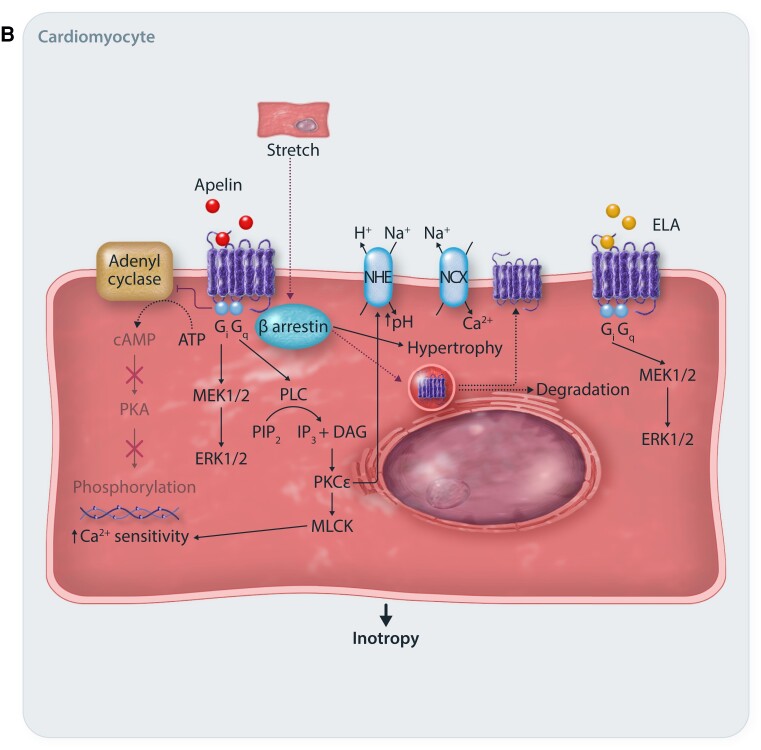
“46,47 It promotes downstream activation of myosin light chain kinase and inhibits protein kinase A-induced phosphorylation of troponin I, both of which enhance myofilament calcium sensitivity ( Figure 2B ).”
BackgroundToddler: An Embryonic Signal That Promotes Cell Movement via Apelin Receptors
Pauli, A., Norris, M. L., Valen, E., Chew, G.-L., Gagnon, J. A., Zimmerman, S., Mitchell, A., Ma, J., Dubrulle, J., Reyon, D., et al. (2014) · Science · doi:10.1126/science.1248636 · Cited by 619 · cited 2×
“25,26 Whilst animals lacking apelin develop normally, 27 those lacking the apelin receptor show significant cardiovascular developmental defects and many do not survive to birth.”
BackgroundApelin Stimulates Glucose Utilization in Normal and Obese Insulin-Resistant Mice
Dray, C., Knauf, C., Daviaud, D., Waget, A., Boucher, J., Buléon, M., Cani, P. D., Attané, C., Guigné, C., Carpéné, C., et al. (2008) · Cell Metabolism · doi:10.1016/j.cmet.2008.10.003 · Cited by 522 · cited 1×
“This glucose-lowering effect is also seen in obese and insulin-resistant mice, 154 and is maintained with chronic apelin treatment where these animals showed reduced fat mass, triglycerides, and lower insulin levels than controls.”
BackgroundEpidemiology and treatment of pulmonary arterial hypertension
Lau, E. M. T., Giannoulatou, E., Celermajer, D. S., & Humbert, M. (2017) · Nature Reviews Cardiology · doi:10.1038/nrcardio.2017.84 · Cited by 507 · cited 2×
“122 Pulmonary arterial hypertension may be idiopathic, genetic, or secondary to a variety of causes including drugs (e.g. the appetite suppressant aminorex), infection (e.g. schistosomiasis), or multi-system disease (e.g. connective tissue diseases).”
BackgroundELABELA: A Hormone Essential for Heart Development Signals via the Apelin Receptor
Chng, S. C., Ho, L., Tian, J., & Reversade, B. (2013) · Developmental Cell · doi:10.1016/j.devcel.2013.11.002 · Cited by 506 · cited 3×
“25,26 Whilst animals lacking apelin develop normally, 27 those lacking the apelin receptor show significant cardiovascular developmental defects and many do not survive to birth.”
BackgroundMedhurst, A. D., Jennings, C. A., Robbins, M. J., Davis, R. P., Ellis, C., Winborn, K. Y., Lawrie, K. W. M., Hervieu, G., Riley, G., Bolaky, J. E., et al. (2003) · Journal of Neurochemistry · doi:10.1046/j.1471-4159.2003.01587.x · Cited by 448 · cited 1×
“26,135 Apelin and pre-proapelin are abundantly expressed in the healthy human placenta, 136 with [Pyr 1 ]apelin-13 the commonest isoform.”
BackgroundIshida, J., Hashimoto, T., Hashimoto, Y., Nishiwaki, S., Iguchi, T., Harada, S., Sugaya, T., Matsuzaki, H., Yamamoto, R., Shiota, N., et al. (2004) · Journal of Biological Chemistry · doi:10.1074/jbc.m404149200 · Cited by 411 · cited 3×
“10,37 This occurs in healthy and diseased vessels although vasodilatation may occur via prostanoids rather than nitric oxide in diseased states.”
BackgroundDe Mota, N., Reaux-Le Goazigo, A., El Messari, S., Chartrel, N., Roesch, D., Dujardin, C., Kordon, C., Vaudry, H., Moos, F., & Llorens-Cortes, C. (2004) · Proceedings of the National Academy of Sciences · doi:10.1073/pnas.0403518101 · Cited by 366 · cited 1×
“52 166 Within the central nervous system, apelin and the apelin receptor colocalize with vasopressin and the vasopressin 1 receptor within the magnocellular neurons of the hypothalamus.”
BackgroundKim, J., Kang, Y., Kojima, Y., Lighthouse, J. K., Hu, X., Aldred, M. A., McLean, D. L., Park, H., Comhair, S. A., Greif, D. M., et al. (2013) · Nature Medicine · doi:10.1038/nm.3040 · Cited by 356
Kruppel-Like Factor 2 as a Novel Mediator of Statin Effects in Endothelial Cells
Sen-Banerjee, S., Mir, S., Lin, Z., Hamik, A., Atkins, G. B., Das, H., Banerjee, P., Kumar, A., & Jain, M. K. (2005) · Circulation · doi:10.1161/circulationaha.104.525774 · Cited by 354 · cited 1×
“79 This promotes vasorelaxation alongside anti-inflammatory and antithrombotic effects, and is dependent on an intact apelin signalling pathway.”
BackgroundNovel Role for the Potent Endogenous Inotrope Apelin in Human Cardiac Dysfunction
Chen, M. M., Ashley, E. A., Deng, D. X. F., Tsalenko, A., Deng, A., Tabibiazar, R., Ben-Dor, A., Fenster, B., Yang, E., King, J. Y., et al. (2003) · Circulation · doi:10.1161/01.cir.0000091235.94914.75 · Cited by 348 · cited 2×
“103 Plasma apelin concentration increases in early heart failure, falls with disease progression, and is restored by cardiac re-synchronization therapy.”
BackgroundASHLEY, E., POWERS, J., CHEN, M., KUNDU, R., FINSTERBACH, T., CAFFARELLI, A., DENG, A., EICHHORN, J., MAHAJAN, R., & AGRAWAL, R. (2005) · Cardiovascular Research · doi:10.1016/j.cardiores.2004.08.018 · Cited by 345 · cited 1×
“101 Similarly, clinical studies show that intracoronary apelin-36 increased left ventricular contractility, and both short and prolonged systemic infusions of [Pyr 1 ]apelin-13 increased cardiac index whilst lowering blood pressure and peripheral vascular resistance.”
BackgroundThe apelin receptor APJ: journey from an orphan to a multifaceted regulator of homeostasis
O'Carroll, A.-M., Lolait, S. J., Harris, L. E., & Pope, G. R. (2013) · Journal of Endocrinology · doi:10.1530/joe-13-0227 · Cited by 344 · cited 2×
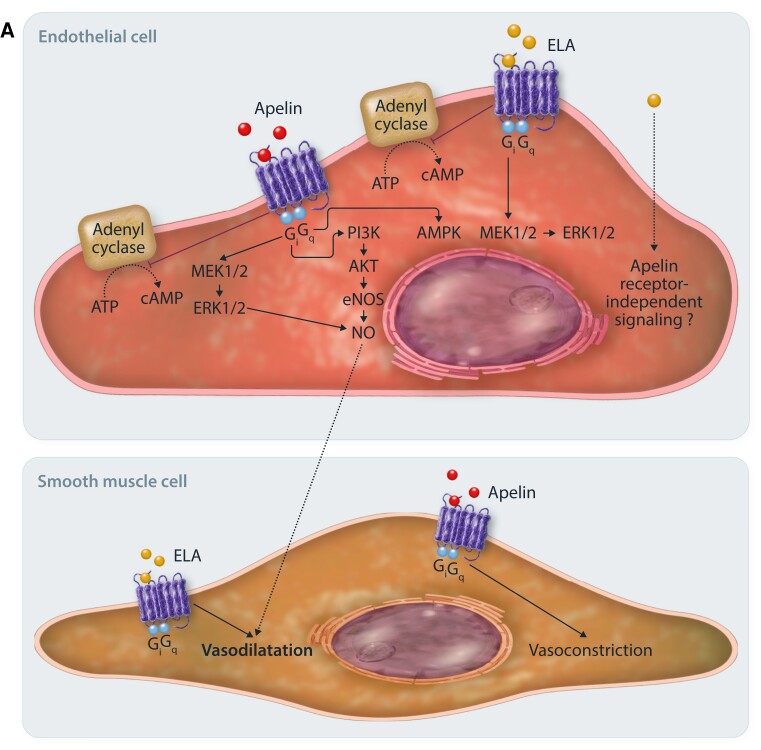
“5,44 The resulting physiological action is dependent on the cell type activated.”
BackgroundApelin signaling antagonizes Ang II effects in mouse models of atherosclerosis
Chun, H. J., Ali, Z. A., Kojima, Y., Kundu, R. K., Sheikh, A. Y., Agrawal, R., Zheng, L., Leeper, N. J., Pearl, N. E., Patterson, A. J., et al. (2008) · Journal of Clinical Investigation · doi:10.1172/jci34871 · Cited by 329 · cited 3×
“43 The apelin receptor couples to pertussis toxin-sensitive G i proteins, and binding of either apelin or elabela results in inhibition of adenylyl cyclase and a reduction in intracellular cyclic adenosine monophosphate.”
BackgroundJapp, A. G., Cruden, N. L., Barnes, G., van Gemeren, N., Mathews, J., Adamson, J., Johnston, N. R., Denvir, M. A., Megson, I. L., Flapan, A. D., et al. (2010) · Circulation · doi:10.1161/circulationaha.109.911339 · Cited by 328 · cited 4×
“39,67 68–70 There is no clinical evidence of apelin-induced vasoconstriction in health or disease.”
BackgroundInfluentialSelf-citationVascular Effects of Apelin In Vivo in Man
Japp, A. G., Cruden, N. L., Amer, D. A. B., Li, V. K. Y., Goudie, E. B., Johnston, N. R., Sharma, S., Neilson, I., Webb, D. J., Megson, I. L., et al. (2008) · Journal of the American College of Cardiology · doi:10.1016/j.jacc.2008.06.013 · Cited by 326 · cited 1×
“17,39,67,71,72 Overall, the apelin system is altered in hypertension and is a potential therapeutic target.”
BackgroundSelf-citationMaguire, J. J., Kleinz, M. J., Pitkin, S. L., & Davenport, A. P. (2009) · Hypertension · doi:10.1161/hypertensionaha.109.134619 · Cited by 323 · cited 2×
“59,60 In contrast, several studies do report a vasoconstrictor action of both central and peripherally administered apelin in vitro and in vivo however these involve different animal species and different vascular beds.”
BackgroundSelf-citationKuba, K., Zhang, L., Imai, Y., Arab, S., Chen, M., Maekawa, Y., Leschnik, M., Leibbrandt, A., Markovic, M., Schwaighofer, J., et al. (2007) · Circulation Research · doi:10.1161/circresaha.107.158659 · Cited by 308 · cited 1×
“27,96 Traditional inotropes increase intracellular calcium concentrations and subsequently myocardial oxygen demand, promote hypertrophy and arrhythmias, and are associated with increased mortality.”
BackgroundKleinz, M. J., & Davenport, A. P. (2004) · Regulatory Peptides · doi:10.1016/j.regpep.2003.11.002 · Cited by 288 · cited 1×
“23 Centrally derived apelin (e.g. from magnocellular neurons) may also contribute to circulating apelin.”
BackgroundSelf-citationApelin Has In Vivo Inotropic Effects on Normal and Failing Hearts
Berry, M. F., Pirolli, T. J., Jayasankar, V., Burdick, J., Morine, K. J., Gardner, T. J., & Woo, Y. J. (2004) · Circulation · doi:10.1161/01.cir.0000138382.57325.5c · Cited by 278 · cited 1×
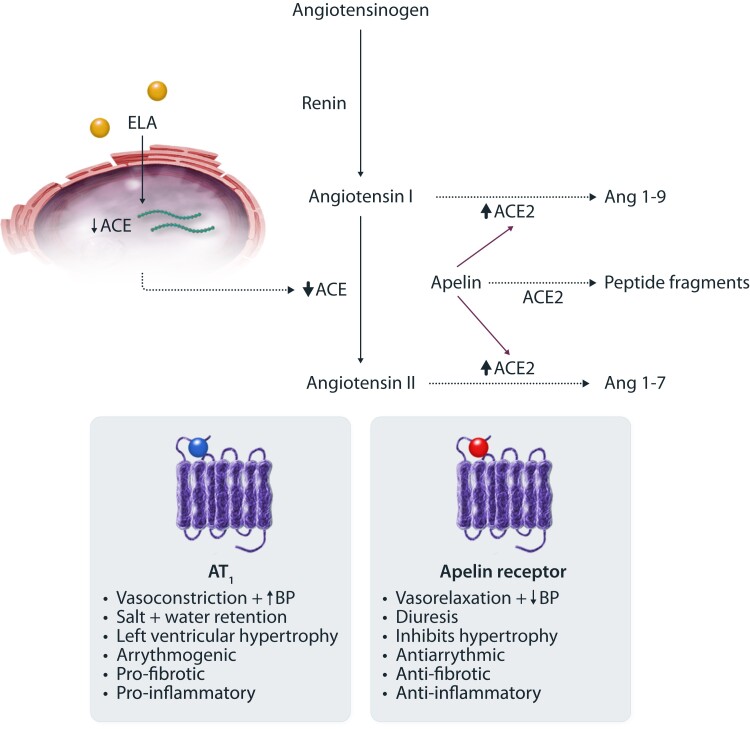
“41,89,106,107 Their actions may be mediated through regulation of the renin-angiotensin system.”
BackgroundApelin is necessary for the maintenance of insulin sensitivity
Yue, P., Jin, H., Aillaud, M., Deng, A. C., Azuma, J., Asagami, T., Kundu, R. K., Reaven, G. M., Quertermous, T., & Tsao, P. S. (2010) · American Journal of Physiology-Endocrinology and Metabolism · doi:10.1152/ajpendo.00385.2009 · Cited by 277
Eyries, M., Siegfried, G., Ciumas, M., Montagne, K., Agrapart, M., Lebrin, F., & Soubrier, F. (2008) · Circulation Research · doi:10.1161/circresaha.108.179333 · Cited by 268
Földes, G., Horkay, F., Szokodi, I., Vuolteenaho, O., Ilves, M., Lindstedt, K. A., Mäyränpää, M., Sármán, B., Seres, L., Skoumal, R., et al. (2003) · Biochemical and Biophysical Research Communications · doi:10.1016/s0006-291x(03)01424-4 · Cited by 260 · cited 1×
“39,67 104 Apelin protein has been detected in myocardial cells from patients with severe heart failure, yet is not found in these cells in health.”
BackgroundFeener, E. P., Northrup, J. M., Aiello, L. P., & King, G. L. (1995) · Journal of Clinical Investigation · doi:10.1172/jci117786 · Cited by 255 · cited 1×
“PAI-1 expression is induced by angiotensin II 83 but inhibited by apelin.”
BackgroundAlastalo, T.-P., Li, M., de Jesus Perez, V., Pham, D., Sawada, H., Wang, J. K., Koskenvuo, M., Wang, L., Freeman, B. A., Chang, H. Y., et al. (2011) · Journal of Clinical Investigation · doi:10.1172/jci43382 · Cited by 254 · cited 2×
“30,124,128 Plasma apelin concentrations are reduced in patients with pulmonary arterial hypertension, 126 and short infusions of [Pyr 1 ]apelin-13 led to additional favourable changes in pulmonary haemo-dynamics, with a fall in pulmonary vascular resistance and a rise in cardiac output.”
BackgroundAPJ acts as a dual receptor in cardiac hypertrophy
Scimia, M. C., Hurtado, C., Ray, S., Metzler, S., Wei, K., Wang, J., Woods, C. E., Purcell, N. H., Catalucci, D., Akasaka, T., et al. (2012) · Nature · doi:10.1038/nature11263 · Cited by 250 · cited 1×
“50 Thus, when not bound by ligand, the inactivated apelin receptor may act as a mechanosensor that promotes hypertrophy through β -arrestin signalling.”
BackgroundYang, P., Read, C., Kuc, R. E., Buonincontri, G., Southwood, M., Torella, R., Upton, P. D., Crosby, A., Sawiak, S. J., Carpenter, T. A., et al. (2017) · Circulation · doi:10.1161/circulationaha.116.023218 · Cited by 240 · cited 6×
“5,30,33,48 Receptor internalization and recycling appear to be dependent on the activating ligand.”
BackgroundInfluentialSelf-citationHiguchi, K., Masaki, T., Gotoh, K., Chiba, S., Katsuragi, I., Tanaka, K., Kakuma, T., & Yoshimatsu, H. (2007) · Endocrinology · doi:10.1210/en.2006-1270 · Cited by 235 · cited 1×
“155,156 Chronic apelin treatment also inhibits hepatic steatosis.”
BackgroundZhong, J., Guo, D., Chen, C. B., Wang, W., Schuster, M., Loibner, H., Penninger, J. M., Scholey, J. W., Kassiri, Z., & Oudit, G. Y. (2011) · Hypertension · doi:10.1161/hypertensionaha.110.164244 · Cited by 233 · cited 1×
“54,55 ACE2 also cleaves apelin peptides to generally less active compounds, and its production is enhanced by them.”
BackgroundAttané, C., Foussal, C., Le Gonidec, S., Benani, A., Daviaud, D., Wanecq, E., Guzmán-Ruiz, R., Dray, C., Bezaire, V., Rancoule, C., et al. (2012) · Diabetes · doi:10.2337/db11-0100 · Cited by 228 · cited 1×
“155,156 Chronic apelin treatment also inhibits hepatic steatosis.”
BackgroundELABELA deficiency promotes preeclampsia and cardiovascular malformations in mice
Ho, L., van Dijk, M., Chye, S. T. J., Messerschmidt, D. M., Chng, S. C., Ong, S., Yi, L. K., Boussata, S., Goh, G. H.-Y., Afink, G. B., et al. (2017) · Science · doi:10.1126/science.aam6607 · Cited by 219 · cited 1×
“141 144 Published data describing plasma concentrations of apelin and elabela in pre-eclampsia are conflicting and derive from studies with heterogeneous designs and populations that are difficult to compare.”
BackgroundWang, W., McKinnie, S. M. K., Patel, V. B., Haddad, G., Wang, Z., Zhabyeyev, P., Das, S. K., Basu, R., McLean, B., Kandalam, V., et al. (2013) · Journal of the American Heart Association · doi:10.1161/jaha.113.000249 · Cited by 218 · cited 4×
“86,89,90 89–93 Following myocardial infarction, the renin-angiotensin system is activated, and this propagates myocardial injury.”
BackgroundInfluentialApelin-13 and apelin-36 exhibit direct cardioprotective activity against ischemiareperfusion injury
Simpkin, J. C., Yellon, D. M., Davidson, S. M., Lim, S. Y., Wynne, A. M., & Smith, C. C. T. (2007) · Basic Research in Cardiology · doi:10.1007/s00395-007-0671-2 · Cited by 217
Determinants of myocardial conduction velocity: implications for arrhythmogenesis
King, J. H., Huang, C. L.-H., & Fraser, J. A. (2013) · Frontiers in Physiology · doi:10.3389/fphys.2013.00154 · Cited by 208
Elabela-Apelin Receptor Signaling Pathway is Functional in Mammalian Systems
Wang, Z., Yu, D., Wang, M., Wang, Q., Kouznetsova, J., Yang, R., Qian, K., Wu, W., Shuldiner, A., Sztalryd, C., et al. (2015) · Scientific Reports · doi:10.1038/srep08170 · Cited by 205 · cited 3×
“30,31 Of note, the half-life of elabela-32 in human plasma ex vivo is 10 times longer than that of apelin.”
BackgroundEndogenous regulation of cardiovascular function by apelin-APJ
Charo, D. N., Ho, M., Fajardo, G., Kawana, M., Kundu, R. K., Sheikh, A. Y., Finsterbach, T. P., Leeper, N. J., Ernst, K. V., Chen, M. M., et al. (2009) · American Journal of Physiology-Heart and Circulatory Physiology · doi:10.1152/ajpheart.00686.2009 · Cited by 205 · cited 3×
“27,28 Similarly, mice lacking elabela show cardiovascular defects and embryologic lethality.”
BackgroundWang, W., McKinnie, S. M. K., Farhan, M., Paul, M., McDonald, T., McLean, B., Llorens-Cortes, C., Hazra, S., Murray, A. G., Vederas, J. C., et al. (2016) · Hypertension · doi:10.1161/hypertensionaha.115.06892 · Cited by 190 · cited 1×
“10,22,56 Elabela does not affect ACE2 but down-regulates ACE expression.”
BackgroundDisruption of the Apelin-APJ System Worsens Hypoxia-Induced Pulmonary Hypertension
Chandra, S. M., Razavi, H., Kim, J., Agrawal, R., Kundu, R. K., de Jesus Perez, V., Zamanian, R. T., Quertermous, T., & Chun, H. J. (2011) · Arteriosclerosis, Thrombosis, and Vascular Biology · doi:10.1161/atvbaha.110.219980 · Cited by 187 · cited 2×
“30,124,128 Plasma apelin concentrations are reduced in patients with pulmonary arterial hypertension, 126 and short infusions of [Pyr 1 ]apelin-13 led to additional favourable changes in pulmonary haemo-dynamics, with a fall in pulmonary vascular resistance and a rise in cardiac output.”
BackgroundApelin is a positive regulator of ACE2 in failing hearts
Sato, T., Suzuki, T., Watanabe, H., Kadowaki, A., Fukamizu, A., Liu, P. P., Kimura, A., Ito, H., Penninger, J. M., Imai, Y., et al. (2013) · Journal of Clinical Investigation · doi:10.1172/jci69608 · Cited by 186 · cited 1×
“10,22,56 Elabela does not affect ACE2 but down-regulates ACE expression.”
BackgroundThe apelin–APJ system in heart failure
Japp, A. G., & Newby, D. E. (2008) · Biochemical Pharmacology · doi:10.1016/j.bcp.2007.12.015 · Cited by 170 · cited 1×
“102,105 Overall, it may be that early on in disease, the apelin system is attempting to support the failing heart but is less able to do so as cardiac function deteriorates.”
BackgroundSelf-citationApelin protects heart against ischemia/reperfusion injury in rat
Zeng, X. J., Zhang, L. K., Wang, H. X., Lu, L. Q., Ma, L. Q., & Tang, C. S. (2009) · Peptides · doi:10.1016/j.peptides.2009.02.010 · Cited by 170 · cited 1×
“86,89,90 89–93 Following myocardial infarction, the renin-angiotensin system is activated, and this propagates myocardial injury.”
BackgroundHypoxia inducible factor regulates the cardiac expression and secretion of apelin
Ronkainen, V., Ronkainen, J. J., Hänninen, S. L., Leskinen, H., Ruas, J. L., Pereira, T., Poellinger, L., Vuolteenaho, O., & Tavi, P. (2007) · The FASEB Journal · doi:10.1096/fj.06-7294com · Cited by 168
Pyroglutamyl apelin-13 identified as the major apelin isoform in human plasma
Zhen, Y., Higgs, R. E., & Gutierrez, J. A. (2013) · Analytical Biochemistry · doi:10.1016/j.ab.2013.07.006 · Cited by 162
Kang, Y., Kim, J., Anderson, J. P., Wu, J., Gleim, S. R., Kundu, R. K., McLean, D. L., Kim, J.-D., Park, H., Jin, S.-W., et al. (2013) · Circulation Research · doi:10.1161/circresaha.113.301324 · Cited by 161 · cited 1×
“27,28 Similarly, mice lacking elabela show cardiovascular defects and embryologic lethality.”
BackgroundBrame, A. L., Maguire, J. J., Yang, P., Dyson, A., Torella, R., Cheriyan, J., Singer, M., Glen, R. C., Wilkinson, I. B., & Davenport, A. P. (2015) · Hypertension · doi:10.1161/hypertensionaha.114.05099 · Cited by 161 · cited 2×
“71,127 The small molecule compound CMF-019 also offers biased agonism at the ape-lin receptor, which is preserved in vivo .”
BackgroundSelf-citationDirect effects of apelin on cardiomyocyte contractility and electrophysiology
Farkasfalvi, K., Stagg, M. A., Coppen, S. R., Siedlecka, U., Lee, J., Soppa, G. K., Marczin, N., Szokodi, I., Yacoub, M. H., & Terracciano, C. M. N. (2007) · Biochemical and Biophysical Research Communications · doi:10.1016/j.bbrc.2007.04.017 · Cited by 161 · cited 1×
“99,112 Slowed myocardial conduction velocity is associated with an increased risk of arrhythmia, 113 and apelin knockout mice have reduced atrial conduction velocities.”
BackgroundELABELA and an ELABELA Fragment Protect against AKI
Chen, H., Wang, L., Wang, W., Cheng, C., Zhang, Y., Zhou, Y., Wang, C., Miao, X., Wang, J., Wang, C., et al. (2017) · Journal of the American Society of Nephrology · doi:10.1681/asn.2016111210 · Cited by 158 · cited 2×
“171 At present, there are no published data on the renal actions of the apelin system in humans, but studies are underway (see clni-caltrials.gov: NCT03956576).”
BackgroundEffect of apelin on glomerular hemodynamic function in the rat kidney
Hus-Citharel, A., Bouby, N., Frugière, A., Bodineau, L., Gasc, J., & Llorens‐Cortés, C. (2008) · Kidney International · doi:10.1038/ki.2008.199 · Cited by 156 · cited 2×
“52 In an animal model of heart failure, down-regulation of cardiac apelin and apelin receptor mRNA is restored by AT 1 blockade.”
BackgroundIwanaga, Y., Kihara, Y., Takenaka, H., & Kita, T. (2006) · Journal of Molecular and Cellular Cardiology · doi:10.1016/j.yjmcc.2006.07.004 · Cited by 154 · cited 2×
“38 Elabela also prevents the pressure overload-induced increase in ACE mRNA and protein, restoring the balance of ACE and ACE2.”
BackgroundInitial dual oral combination therapy in pulmonary arterial hypertension
Sitbon, O., Sattler, C., Bertoletti, L., Savale, L., Cottin, V., Jaïs, X., de Groote, P., Chaouat, A., Chabannes, C., Bergot, E., et al. (2016) · European Respiratory Journal · doi:10.1183/13993003.02043-2015 · Cited by 150
Falcão‐Pires, I., Gonçalves, N., Henriques‐Coelho, T., Moreira‐Gonçalves, D., Roncon‐Albuquerque, R., & Leite-Moreira, A. F. (2009) · American Journal of Physiology-Heart and Circulatory Physiology · doi:10.1152/ajpheart.00089.2009 · Cited by 149 · cited 1×
“30,124,125,127 Patients with pulmonary arterial hypertension have dysfunctional pulmonary artery endothelial cells, and these exhibit reduced apelin and ela-bela expression.”
BackgroundRequirement of Apelin-Apelin Receptor System for Oxidative Stress-Linked Atherosclerosis
Hashimoto, T., Kihara, M., Imai, N., Yoshida, S., Shimoyamada, H., Yasuzaki, H., Ishida, J., Toya, Y., Kiuchi, Y., Hirawa, N., et al. (2007) · American Journal Of Pathology · doi:10.2353/ajpath.2007.070471 · Cited by 147 · cited 1×
“74 However, loss of apelin promotes atherosclerosis in this model and apelin treatment reduces angiotensin II-induced atherosclerosis 43 and enhances atherosclerotic plaque stability.”
BackgroundReciprocal Regulation of Plasma Apelin and Vasopressin by Osmotic Stimuli
Azizi, M., Iturrioz, X., Blanchard, A., Peyrard, S. A. A., De Mota, N., Chartrel, N., Vaudry, H., Corvol, P., & Llorens-Cortes, C. (2008) · Journal of the American Society of Nephrology · doi:10.1681/asn.2007070816 · Cited by 146 · cited 1×
“165,167,168 Changes in plasma osmolality cause opposing effects on the regulation of vasopressin and apelin release, 16 and the apelin system may therefore represent a target in disorders of water balance such as syndrome of inappropriate antidiuretic hormone.”
BackgroundCardiac Calcitropes, Myotropes, and Mitotropes
Psotka, M. A., Gottlieb, S. S., Francis, G. S., Allen, L. A., Teerlink, J. R., Adams, K. F., Rosano, G. M. C., & Lancellotti, P. (2019) · Journal of the American College of Cardiology · doi:10.1016/j.jacc.2019.02.051 · Cited by 146
Sato, T., Sato, C., Kadowaki, A., Watanabe, H., Ho, L., Ishida, J., Yamaguchi, T., Kimura, A., Fukamizu, A., Penninger, J. M., et al. (2017) · Cardiovascular Research · doi:10.1093/cvr/cvx061 · Cited by 143 · cited 3×
“41 Both brief and prolonged infusions of [Pyr 1 ]apelin-13 lead to a sustained ∼ 10% increase in cardiac index, with increased ejection fraction seen on echocardiography, and a reduction in systemic vascular resistance and blood pressure in patients with chronic heart failure.”
BackgroundRead, C., Nyimanu, D., Williams, T. L., Huggins, D. J., Šulentić, P., Macrae, R. G. C., Yang, P. B., Glen, R. C., Maguire, J. J., & Davenport, A. P. (2019) · Pharmacological Reviews · doi:10.1124/pr.119.017533 · Cited by 140 · cited 3×
“5,44 The resulting physiological action is dependent on the cell type activated.”
BackgroundSelf-citationBarnes, G. D., Alam, S. R., Carter, G., Pedersen, C. M., Lee, K. M., Hubbard, T. J. E., Veitch, S., Jeong, H., White, A. C., Cruden, N. L. M., et al. (2013) · Circulation Heart Failure · doi:10.1161/circheartfailure.111.000077 · Cited by 140 · cited 4×
“39,67 68–70 There is no clinical evidence of apelin-induced vasoconstriction in health or disease.”
BackgroundInfluentialSelf-citationMurza, A., Sainsily, X., Coquerel, D., Côté, J., Marx, P., Besserer‐Offroy, É., Longpré, J., Lainé, J., Reversade, B., Salvail, D., et al. (2016) · Journal of Medicinal Chemistry · doi:10.1021/acs.jmedchem.5b01549 · Cited by 138 · cited 2×
“34,45 In vivo , chronic apelin infusion increased cardiac output without causing myocardial hypertrophy.”
BackgroundGoazigo, A. R.-L., Morinville, A., Burlet, A. J., Llorens‐Cortés, C., & Beaudet, A. (2004) · Endocrinology · doi:10.1210/en.2004-0384 · Cited by 137 · cited 1×
“24 However, plasma apelin concentrations are low so it does not appear to be a major circulating hormone and it may function in an autocrine/paracrine manner.”
BackgroundEndothelial dysfunction in conduit arteries and in microcirculation. Novel therapeutic approaches
Tousoulis, D., Simopoulou, C., Παπαγεωργίου, Ν., Oikonomou, E. K., Hatzis, G., Siasos, G., Tsiamis, E. G., & Stefanadis, C. (2014) · Pharmacology & Therapeutics · doi:10.1016/j.pharmthera.2014.06.003 · Cited by 134
He, L., Zhou, Q., Huang, Z., Xu, J., Zhou, H., Lv, D., Lu, L., Huang, S., Tang, M., Zhong, J., et al. (2019) · Journal of Cellular Physiology · doi:10.1002/jcp.27527 · Cited by 134 · cited 1×
“It promotes vascular smooth muscle cell proliferation, 73 and loss of the apelin receptor protects against the development of atherosclerosis in the apolipoprotein E knockout mouse.”
BackgroundApela Regulates Fluid Homeostasis by Binding to the APJ Receptor to Activate Gi Signaling
Deng, C., Chen, H., Yang, N., Feng, Y., & Hsueh, A. J. W. (2015) · Journal of Biological Chemistry · doi:10.1074/jbc.m115.648238 · Cited by 132 · cited 1×
“34,164 Both apelin and elabela are protective in models of acute kidney injury, with anti-inflammatory, anti-apoptotic, and anti-fibrotic effects, 169–171 that may be synergistic.”
BackgroundSelective BMP-9 Inhibition Partially Protects Against Experimental Pulmonary Hypertension
Tu, L., Desroches-Castan, A., Mallet, C., Guyon, L., Cumont, A., Phan, C., Robert, F., Thuillet, R., Bordenave, J., Sekine, A., et al. (2019) · Circulation Research · doi:10.1161/circresaha.118.313356 · Cited by 130 · cited 2×
“130 Notably, a pre-clinical model has recently shown that oestradiol is protective against right ventricular failure by up-regulating apelin via oestrogen receptor alpha/BMPR2 signalling.”
BackgroundCharacterization of apela, a novel endogenous ligand of apelin receptor, in the adult heart
Perjés, Á., Kilpiö, T., Ulvila, J., Magga, J. M., Alakoski, T., Szabó, Z., Vainio, L., Halmetoja, E., Vuolteenaho, O. J., Petäjä‐Repo, U. E., et al. (2015) · Basic Research in Cardiology · doi:10.1007/s00395-015-0521-6 · Cited by 123 · cited 2×
“31,45 In vivo studies find that elabela attenuates angiotensin II-induced increases in blood pressure.”
BackgroundBMP type II receptor as a therapeutic target in pulmonary arterial hypertension
Orriols, M., Gomez‐Puerto, M. C., & ten Dijke, P. (2017) · Cellular and Molecular Life Sciences · doi:10.1007/s00018-017-2510-4 · Cited by 121 · cited 1×
“129 This may be partly due to regulation of the apelin system.”
BackgroundSharma, B., Ho, L., Ford, G. H., Chen, H. I., Goldstone, A. B., Woo, Y.-P. J., Quertermous, T., Reversade, B., & Red‐Horse, K. (2017) · Developmental Cell · doi:10.1016/j.devcel.2017.08.008 · Cited by 121
Kadoglou, N. P. E., Lampropoulos, S., Kapelouzou, A., Gkontopoulos, A., Theofilogiannakos, E. K., Fotiadis, G., & Kottas, G. (2010) · Translational research · doi:10.1016/j.trsl.2010.01.004 · Cited by 118 · cited 1×
“77 The relationship between statin use and apelin is intriguing.”
BackgroundThe therapeutic potential of apelin in kidney disease
Chapman, F. A., Nyimanu, D., Maguire, J. J., Davenport, A. P., Newby, D. E., & Dhaun, N. (2021) · Nature Reviews Nephrology · doi:10.1038/s41581-021-00461-z · Cited by 114 · cited 2×
“163”
BackgroundSelf-citationFrump, A. L., Albrecht, M. E., Yakubov, B., Breuils‐Bonnet, S., Nadeau, V., Tremblay, È., Potus, F., Omura, J., Cook, T. G., Fisher, A. J., et al. (2021) · Journal of Clinical Investigation · doi:10.1172/jci129433 · Cited by 110 · cited 1×
“131 Taken together, these data suggest that loss of apelin may contribute to the pathogenesis of pulmonary arterial hypertension and apelin treatment may provide additional benefits on top of standard of care.”
BackgroundModulation of the apelin/APJ system in heart failure and atherosclerosis in man
Pitkin, S. L., Maguire, J. J., Kuc, R. E., & Davenport, A. P. (2010) · British Journal of Pharmacology · doi:10.1111/j.1476-5381.2010.00821.x · Cited by 109 · cited 1×
“76 It is unclear whether this is protective—perhaps through through several mechanisms.”
BackgroundSelf-citationSiddiquee, K., Hampton, J. P., Khan, S., Zadory, D., Gleaves, L. A., Vaughan, D. E., & Smith, L. H. (2011) · Journal of Hypertension · doi:10.1097/hjh.0b013e32834347de · Cited by 108 · cited 1×
“40 No clinical studies have explored whether apelin has antithrombotic actions in humans.”
BackgroundZhang, Z.-Z., Wang, W., Jin, H.-Y., Chen, X., Cheng, Y.-W., Xu, Y.-L., Song, B., Penninger, J. M., Oudit, G. Y., & Zhong, J.-C. (2017) · Hypertension · doi:10.1161/hypertensionaha.117.10156 · Cited by 107 · cited 1×
“18,42,43,53 Angiotensin-converting enzyme 2 (ACE2) is a major negative regulator of angiotensin II, converting it to angiotensin 1–7 that promotes vasodilatation.”
BackgroundApelin protects against acute renal injury by inhibiting TGF-β1
Chen, H., Wan, D., Wang, L., Peng, A., Xiao, H., Petersen, R. B., Liu, C., Zheng, L., & Huang, K. (2015) · Biochimica et Biophysica Acta (BBA) - Molecular Basis of Disease · doi:10.1016/j.bbadis.2015.02.013 · Cited by 105 · cited 1×
“34,164 Both apelin and elabela are protective in models of acute kidney injury, with anti-inflammatory, anti-apoptotic, and anti-fibrotic effects, 169–171 that may be synergistic.”
BackgroundThe Role of Apelin–APJ System in Diabetes and Obesity
Li, C., Cheng, H., Adhikari, B. K., Wang, S., Yang, N., Liu, W., Sun, J., & Wang, Y. (2022) · Frontiers in Endocrinology · doi:10.3389/fendo.2022.820002 · Cited by 104
Reduced apelin levels in lone atrial fibrillation
Ellinor, P. T., Low, A. F.-H., & MacRae, C. A. (2005) · European Heart Journal · doi:10.1093/eurheartj/ehi648 · Cited by 100
Patel, V. B., Zhong, J.-C., Fan, D., Basu, R., Morton, J. S., Parajuli, N., McMurtry, M. S., Davidge, S. T., Kassiri, Z., & Oudit, G. Y. (2014) · Hypertension · doi:10.1161/hypertensionaha.114.03388 · Cited by 97 · cited 1×
“54,55 ACE2 also cleaves apelin peptides to generally less active compounds, and its production is enhanced by them.”
BackgroundPlasma Apelin and ADMA Levels in Patients with Essential Hypertension
Sönmez, A., Çelebi, G., Erdem, G., Tapan, S., Genç, H., Taşçı, İ., Erçin, C. N., Doğru, T., Kılıç, S., Üçkaya, G., et al. (2010) · Clinical and Experimental Hypertension · doi:10.3109/10641960903254505 · Cited by 97
Guo, L., Li, Q., Wang, W., Yü, P., Pan, H., Li, P., Sun, Y., & Zhang, J. (2009) · Endocrine Research · doi:10.3109/07435800903287079 · Cited by 97
Perjés, Á., Skoumal, R., Tenhunen, O., Kónyi, A., Simon, M., Horváth, I., Kerkelä, R., Ruskoaho, H. J., & Szokodi, I. (2014) · PLoS ONE · doi:10.1371/journal.pone.0093473 · Cited by 96
Azizi, Y., Faghihi, M., Imani, A., Roghani, M., & Nazari, A. (2013) · Peptides · doi:10.1016/j.peptides.2013.05.006 · Cited by 95
Apelin Is a Crucial Factor for Hypoxia-Induced Retinal Angiogenesis
Kasai, A., Ishimaru, Y., Kinjo, T., Satooka, T., Matsumoto, N., Yoshioka, Y., Yamamuro, A., Gomi, F., Shintani, N., Baba, A., et al. (2010) · Arteriosclerosis Thrombosis and Vascular Biology · doi:10.1161/atvbaha.110.209775 · Cited by 94
Apelin effects in human splanchnic arteries. Role of nitric oxide and prostanoids
Salcedo, A., Garijo, J., Monge, L., Fernández, N., Garcı́a-Villalón, Á. L., Turrión, V. S., Cuervas‐Mons, V., & Diéguez, G. (2007) · Regulatory Peptides · doi:10.1016/j.regpep.2007.06.005 · Cited by 92 · cited 1×
“59,60 In contrast, several studies do report a vasoconstrictor action of both central and peripherally administered apelin in vitro and in vivo however these involve different animal species and different vascular beds.”
BackgroundLee, D. K., Ferguson, S. S. G., George, S. R., & O’Dowd, B. F. (2010) · Biochemical and Biophysical Research Communications · doi:10.1016/j.bbrc.2010.03.151 · Cited by 89 · cited 1×
“48,49 β -Arrestins are also implicated in ligand-independent signalling at the apelin receptor ( Figure 2B ).”
BackgroundApelin is a novel islet peptide
Ringström, C., Nitert, M. D., Bennet, H., Fex, M., Valet, P., Rehfeld, J. F., Friis-Hansen, L. J., & Wierup, N. (2010) · Regulatory Peptides · doi:10.1016/j.regpep.2010.03.005 · Cited by 86 · cited 2×
“150,152 Animals lacking apelin are hyperinsuli-naemic and show reduced insulin sensitivity.”
BackgroundReview: Systemic and uteroplacental renin—angiotensin system in normal and pre-eclamptic pregnancies
Anton, L., & Brosnihan, K. B. (2008) · Therapeutic Advances in Cardiovascular Disease · doi:10.1177/1753944708094529 · Cited by 84 · cited 1×
“140 Angiotensin II reduces apelin release from healthy human chorionic villus explants, but this is prevented and apelin release is in fact enhanced by the AT 1 receptor blocker, losartan.”
Cardiac Resynchronization Therapy Increases Plasma Levels of the Endogenous Inotrope Apelin
Francia, P., Salvati, A., Balla, C., Paolis, P. D., Pagannone, E., Borro, M., Gentile, G., Simmaco, M., Biase, L. D., & Volpe, M. (2006) · European Journal of Heart Failure · doi:10.1016/j.ejheart.2006.06.005 · Cited by 84 · cited 1×
“102,105 Overall, it may be that early on in disease, the apelin system is attempting to support the failing heart but is less able to do so as cardiac function deteriorates.”
BackgroundMurza, A., Parent, A. J., Besserer‐Offroy, É., Tremblay, H., Karadereye, F., Beaudet, N., Leduc, R., Sarret, P., & Marsault, É. (2011) · ChemMedChem · doi:10.1002/cmdc.201100492 · Cited by 82
The Metalloprotease Neprilysin Degrades and Inactivates Apelin Peptides
McKinnie, S. M. K., Fischer, C., Tran, K. M. H., Wang, W., Mosquera, F., Oudit, G. Y., & Vederas, J. C. (2016) · ChemBioChem · doi:10.1002/cbic.201600244 · Cited by 78 · cited 1×
“19 In humans, apelin mRNA is expressed throughout the vasculature, the central nervous system and in many organs including the heart, lungs, and kidney.”
BackgroundGourdy, P., Cazals, L., Thalamas, C., Sommet, A., Calvas, F., Galitzky, M., Vinel, C., Dray, C., Hanaire, H. P., Castan‐Laurell, I., et al. (2017) · Diabetes Obesity and Metabolism · doi:10.1111/dom.13055 · Cited by 77 · cited 1×
“160 Studies exploring the ability of apelin to influence glycaemia and vascular health in subjects with increased weight and type 2 diabetes mellitus are in progress (see clinicaltrials.gov: NCT03449251).”
BackgroundReduced circulating apelin in essential hypertension and its association with cardiac dysfunction
Przewlocka-Kosmala, M., Kotwica, T., Mysiak, A., & Kosmala, W. (2011) · Journal of Hypertension · doi:10.1097/hjh.0b013e328344da76 · Cited by 76 · cited 1×
“39,67 68–70 There is no clinical evidence of apelin-induced vasoconstriction in health or disease.”
BackgroundWang, C., Du, J., Wu, F. Y., & Wang, H. (2008) · American Journal of Physiology-Heart and Circulatory Physiology · doi:10.1152/ajpheart.00046.2008 · Cited by 76 · cited 1×
“There is evidence both for and against apelin increasing intracellular calcium transients, 98–100 although apelin’s inotropic effect may be mediated by enhanced calcium sensitivity rather than a change in total intracellular calcium.”
BackgroundGerbier, R., Alvear‐Perez, R., Margathe, J., Flahault, A., Couvineau, P., Gao, J., Mota, N. D., Dabiré, H., Li, B., Ceraudo, E., et al. (2016) · The FASEB Journal · doi:10.1096/fj.201600784r · Cited by 76 · cited 1×
“10,11 –176 Several have shown beneficial effects in disease models.”
BackgroundHus-Citharel, A., Bodineau, L., Frugière, A., Joubert, F., Bouby, N., & Llorens‐Cortés, C. (2014) · Endocrinology · doi:10.1210/en.2014-1257 · Cited by 75 · cited 1×
“165,167,168 Changes in plasma osmolality cause opposing effects on the regulation of vasopressin and apelin release, 16 and the apelin system may therefore represent a target in disorders of water balance such as syndrome of inappropriate antidiuretic hormone.”
BackgroundMurza, A., Belleville, K., Longpré, J., Sarret, P., & Marsault, É. (2014) · Biopolymers · doi:10.1002/bip.22498 · Cited by 72 · cited 1×
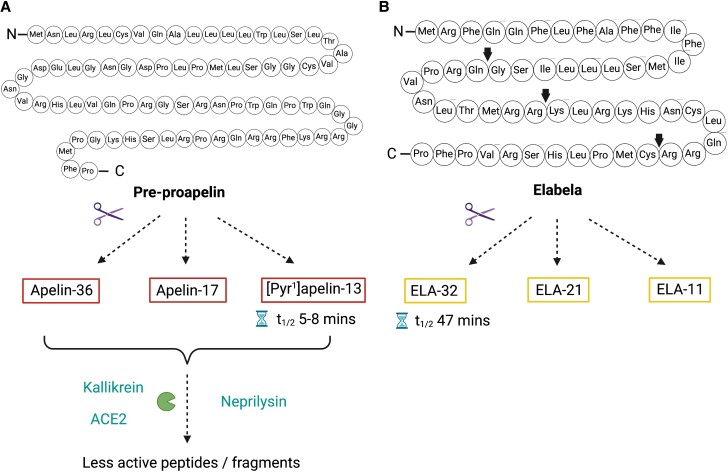
“There are several predicted mature isoforms of elabela peptides, elabela-32, elabela-21, and elabela-11 ( Table 1 ).”
BackgroundApelin: an antithrombotic factor that inhibits platelet function
Adam, F., Khatib, A., López, J. J., Vatier, C., Turpin, S., Muscat, A., Soulet, F., Aries, A., Jardín, I., Bobe, R., et al. (2015) · Blood · doi:10.1182/blood-2014-05-578781 · Cited by 71 · cited 2×
“82 Apelin can also influence thrombosis by regulating plasminogen activator inhibitor-1 (PAI-1) that inactivates the endothelium-derived fibrinolytic factor, tissue plasminogen activator.”
BackgroundCell–cell fusion and internalization of the CNS-based, HIV-1 co-receptor, APJ
Zhou, N., Fan, X., Mukhtār, M., Fang, J., Patel, C. A., DuBois, G. C., & Pomerantz, R. J. (2003) · Virology · doi:10.1016/s0042-6822(02)00021-1 · Cited by 70 · cited 2×
“48,49 β -Arrestins are also implicated in ligand-independent signalling at the apelin receptor ( Figure 2B ).”
BackgroundMarsault, É., Llorens‐Cortés, C., Iturrioz, X., Chun, H. J., Lesur, O., Oudit, G. Y., & Auger‐Messier, M. (2019) · Annals of the New York Academy of Sciences · doi:10.1111/nyas.14123 · Cited by 69 · cited 4×
“10,37 This occurs in healthy and diseased vessels although vasodilatation may occur via prostanoids rather than nitric oxide in diseased states.”
BackgroundInfluentialFreyer, L., Hsu, C.-W., Nowotschin, S., Pauli, A., Ishida, J., Kuba, K., Fukamizu, A., Schier, A., Hoodless, P., Dickinson, M., et al. (2017) · Cell Reports · doi:10.1016/j.celrep.2017.08.014 · Cited by 69 · cited 1×
“29 Embryos lacking the apelin receptor also show abnormal tail bending.”
BackgroundDownregulation of apelin in the human placental chorionic villi from preeclamptic pregnancies
Yamaleyeva, L. M., Chappell, M. C., Brosnihan, K. B., Anton, L., Caudell, D. L., Shi, S., McGee, C. M., Pirro, N. T., Gallagher, P. E., Taylor, R. N., et al. (2015) · American Journal of Physiology-Endocrinology and Metabolism · doi:10.1152/ajpendo.00272.2015 · Cited by 68 · cited 2×
“137 Changes in the placental expression of the apelin system in humans with pre-eclampsia are not fully defined.”
BackgroundApelin as a novel drug for treating preeclampsia
Wang, C., Liu, X., Kong, D., Qin, X., Li, Y., Teng, X., & Huang, X. (2017) · Experimental and Therapeutic Medicine · doi:10.3892/etm.2017.5304 · Cited by 67
Yu, P., Ma, S., Dai, X., & Cao, F. (2020) · PubMed · Cited by 66
Chen, Z., Wu, C.-Y., Liu, Y., Li, H., Zhu, Y., Huang, C., Lin, H., Qiao, Q., Huang, M., Zhu, Q., et al. (2020) · Cell Death and Disease · doi:10.1038/s41419-020-02912-0 · Cited by 65 · cited 2×
“30,41 64 The development of hypertension is accelerated by elabela deficiency, and both apelin and elabela are protective against it.”
BackgroundDecreased expression of apelin in placentas from severe pre-eclampsia patients
Inuzuka, H., Nishizawa, H., Inagaki, A., Suzuki, M., Ota, S., Miyamura, H., Miyazaki, J., Sekiya, T., Kurahashi, H., & Udagawa, Y. (2013) · Hypertension in Pregnancy · doi:10.3109/10641955.2013.813535 · Cited by 64 · cited 2×
“138,139 The relationship with the renin-angiotensin system is again implicated.”
BackgroundApelin directs endothelial cell differentiation and vascular repair following immune-mediated injury
Masoud, A. G., Lin, J., Azad, A. K., Farhan, M., Fischer, C., Zhu, L. F., Zhang, H., Sis, B., Kassiri, Z., Moore, R. B., et al. (2019) · Journal of Clinical Investigation · doi:10.1172/jci128469 · Cited by 64 · cited 1×
“109 Overall, this may be an attempt to reduce vascular injury and apelin treatment may offer therapeutic promise in the transplant setting.”
BackgroundWang, W., Shen, M., Fischer, C., Basu, R., Hazra, S., Couvineau, P., Paul, M., Wang, F., Toth, S., Mix, D. S., et al. (2019) · Proceedings of the National Academy of Sciences · doi:10.1073/pnas.1900152116 · Cited by 63 · cited 1×
“18,42,43,53 Angiotensin-converting enzyme 2 (ACE2) is a major negative regulator of angiotensin II, converting it to angiotensin 1–7 that promotes vasodilatation.”
BackgroundZhou, L., Sun, H., Cheng, R., Fan, X., Lai, S., & Deng, C. (2019) · American Journal of Physiology-Endocrinology and Metabolism · doi:10.1152/ajpendo.00383.2018 · Cited by 62 · cited 1×
“148 Overall, further studies are required to develop understanding of the apelin system in pre-eclampsia and establish whether it could be a therapeutic target for this disease.”
Backgroundde Oliveira, A. A., Vergara, A., Wang, X., Vederas, J. C., & Oudit, G. Y. (2021) · Peptides · doi:10.1016/j.peptides.2021.170697 · Cited by 62 · cited 1×
“10,11 –176 Several have shown beneficial effects in disease models.”
BackgroundPritchard, N., Kaitu’u‐Lino, T. J., Gong, S., Dopierala, J., Smith, G. C. S., Charnock‐Jones, D. S., & Tong, S. (2018) · American Journal Of Pathology · doi:10.1016/j.ajpath.2018.04.008 · Cited by 59
Loss of Apelin Augments Angiotensin II-Induced Cardiac Dysfunction and Pathological Remodeling
Sato, T., Kadowaki, A., SUZUKI, T. A., Ito, H., Watanabe, H., Imai, Y., & Kuba, K. (2019) · International Journal of Molecular Sciences · doi:10.3390/ijms20020239 · Cited by 59 · cited 2×
“53 Additionally, treatment with ACE inhibitors restores cardiac function in the apelin knockout mouse, 53 and in a rodent model of chronic heart failure treat-ment with an AT 1 blocker restored cardiac apelin and apelin receptor expression.”
BackgroundSustained ELABELA Gene Therapy in High-salt Diet-induced Hypertensive Rats
Schreiber, C. A., Holditch, S. J., Generous, A. R., & Ikeda, Y. (2017) · Current Gene Therapy · doi:10.2174/1566523217666161121111906 · Cited by 59 · cited 2×
“65 In the hypertensive DOCA-salt rat, the long-acting apelin analogue LIT01-196 significantly reduced blood pressure with once-daily dosing, without inducing any undesirable change in kidney function or sodium concentration.”
BackgroundCardiovascular effects of a PEGylated apelin
Jia, Z. Q., Hou, L., Leger, A., Wu, I., Kudej, A. B., Stefano, J. E., Jiang, C., Pan, C. Q., & Akita, G. Y. (2012) · Peptides · doi:10.1016/j.peptides.2012.09.003 · Cited by 58
ELABELA plasma concentrations are increased in women with late-onset preeclampsia
Panaitescu, B., Romero, R. J., Gomez‐Lopez, N., Pacora, P., Erez, O., Vadillo‐Ortega, F., Yeo, L., Hassan, S. S., & Hsu, C. (2018) · The Journal of Maternal-Fetal & Neonatal Medicine · doi:10.1080/14767058.2018.1484089 · Cited by 58
The apelin/APJ system as a therapeutic target in metabolic diseases
Castan-Laurell, I., Masri, B., & Valet, P. (2019) · Expert Opinion on Therapeutic Targets · doi:10.1080/14728222.2019.1561871 · Cited by 54 · cited 1×
“A full review of apelin’s metabolic effects has been described recently (see tan-Laurell et al. 149 ).”
BackgroundYang, P. B., Read, C., Kuc, R. E., Nyimanu, D., Williams, T., Crosby, A., Buonincontri, G., Southwood, M. R., Sawiak, S. J., Glen, R. C., et al. (2019) · British Journal of Pharmacology · doi:10.1111/bph.14603 · Cited by 51 · cited 1×
“71,127 The small molecule compound CMF-019 also offers biased agonism at the ape-lin receptor, which is preserved in vivo .”
BackgroundSelf-citationElabela and Apelin actions in healthy and pathological pregnancies
Eberlé, D., Marousez, L., Hanssens, S., Knauf, C., Breton, C., Deruelle, P., & Lesage, J. (2019) · Cytokine & Growth Factor Reviews · doi:10.1016/j.cytogfr.2019.03.003 · Cited by 50
Fischer, C., Lamer, T., Wang, W., McKinnie, S. M. K., Iturrioz, X., Llorens‐Cortés, C., Oudit, G. Y., & Vederas, J. C. (2019) · European Journal of Medicinal Chemistry · doi:10.1016/j.ejmech.2019.01.040 · Cited by 50
Narayanan, S., Harris, D. L., Maitra, R., & Runyon, S. P. (2015) · Journal of Medicinal Chemistry · doi:10.1021/acs.jmedchem.5b00527 · Cited by 49
Opposing cardiovascular roles for the angiotensin and apelin signaling pathways
Ashley, E. A., Chun, H. J., & Quertermous, T. (2006) · Journal of Molecular and Cellular Cardiology · doi:10.1016/j.yjmcc.2006.08.013 · Cited by 48 · cited 1×
“10,37,51 The systems may also reciprocally regulate each other.”
BackgroundShort-Term Hemodynamic Effects of Apelin in Patients With Pulmonary Arterial Hypertension
Brash, L., Barnes, G. D., Brewis, M. J., Church, C., Gibbs, S., Howard, L., Jayasekera, G., Johnson, M., McGlinchey, N., Onorato, J. M., et al. (2018) · JACC Basic to Translational Science · doi:10.1016/j.jacbts.2018.01.013 · Cited by 48 · cited 2×
“72 Interestingly, although this study was not designed to explore this effect, patients on phosphodiesterase-5 inhibitors with more severe disease showed a greater improvement in pulmonary vascular resistance, stroke volume, and cardiac output than those patients not on this treatment.”
BackgroundSelf-citationParikh, V. N., Liu, J., Shang, C., Woods, C. E., Chang, A. C. Y., Zhao, M., Charo, D. N., Grunwald, Z., Huang, Y., Seo, K., et al. (2018) · American Journal of Physiology-Heart and Circulatory Physiology · doi:10.1152/ajpheart.00693.2017 · Cited by 46 · cited 2×
“There is evidence both for and against apelin increasing intracellular calcium transients, 98–100 although apelin’s inotropic effect may be mediated by enhanced calcium sensitivity rather than a change in total intracellular calcium.”
BackgroundLv, W., Zhang, L., Cheng, X., Wang, H., Qin, W., Zhou, X., & Tang, B. (2020) · Frontiers in Physiology · doi:10.3389/fphys.2020.583570 · Cited by 46
O'Harte, F. P. M., Parthsarathy, V., Hogg, C., & Flatt, P. R. (2018) · PLoS ONE · doi:10.1371/journal.pone.0202350 · Cited by 44 · cited 2×
“177 Given the current understanding of apelin receptor signalling, the ideal agent would be a biased agonist that promotes signalling through G-protein pathways and limits β -arrestin signalling.”
BackgroundGargalovic, P. S., Wong, P. C., Onorato, J. M., Finlay, H. J., Wang, T., Yan, M., Crain, E. J., St-Onge, S., Héroux, M., Bouvier, M., et al. (2021) · Circulation Heart Failure · doi:10.1161/circheartfailure.120.007351 · Cited by 44 · cited 1×
“–181 Whilst data are as yet unpublished regarding BMS-986224, AMG 986 was shown to be safe and well tolerated in healthy humans and those with heart failure, although data were inconsistent regarding its clinical efficacy.”
BackgroundApelin and Vasopressin: The Yin and Yang of Water Balance
Girault-Sotias, P.-E., Gerbier, R., Flahault, A., Mota, N. D., & Llorens‐Cortés, C. (2021) · Frontiers in Endocrinology · doi:10.3389/fendo.2021.735515 · Cited by 41 · cited 2×
“6 Apelin promotes aquar-esis both by central actions and by directly inhibiting vasopressin-induced insertion of aquaporin 2 channels in the principal cells of the collecting duct.”
BackgroundNajafipour, H., Hekmat, A. S., Nekooeian, A. A., & Esmaeili‐Mahani, S. (2012) · Regulatory Peptides · doi:10.1016/j.regpep.2012.06.006 · Cited by 41
Maternal serum apelin and YKL-40 levels in early and late-onset pre-eclampsia
Kücür, M., Tüten, A., Öncül, M., Açıkgöz, A. S., Yüksel, M. A., İmamoğlu, M., Ekmekçi, Ö. B., Yılmaz, N., & Madazlı, R. (2014) · Hypertension in Pregnancy · doi:10.3109/10641955.2014.944709 · Cited by 41 · cited 1×
“138,139,145 However, the placenta may not be the source of circulating apelin, so any rise in plasma concentrations may reflect a compensatory increase in production from other tissues due to hypertension.”
BackgroundSoulet, F., Bodineau, C., Hooks, K. B., Descarpentrie, J., Alves, I. D., Dubreuil, M., Mouchard, A., Eugenie, M., Hoepffner, J., López, J. J., et al. (2020) · JCI Insight · doi:10.1172/jci.insight.129070 · Cited by 41
Winkle, P. J., Goldsmith, S. R., Koren, M. J., Lepage, S., Hellawell, J. L., Trivedi, A., Tsirtsonis, K., Abbasi, S. A., Kaufman, A., Troughton, R. W., et al. (2022) · Cardiovascular Drugs and Therapy · doi:10.1007/s10557-022-07328-w · Cited by 40 · cited 1×
“179,182 So far, neither agent has progressed to further studies.”
BackgroundKadoglou, N. P. E., Sailer, N., Kapelouzou, A., Lampropoulos, S., Vitta, I., Kostakis, A. I., & Liapis, C. D. (2011) · Acta Diabetologica · doi:10.1007/s00592-011-0310-0 · Cited by 40 · cited 1×
“81 There is, therefore, potential for synergistic vascular benefit from combined statin and apelin therapy in patients with atherosclerotic disease.”
BackgroundA metabolically stable apelin-17 analog decreases AVP-induced antidiuresis and improves hyponatremia
Flahault, A., Girault-Sotias, P.-E., Keck, M., Alvear‐Perez, R., Mota, N. D., Estéoulle, L., Ramanoudjame, S. M., Iturrioz, X., Bonnet, D., & Llorens‐Cortés, C. (2021) · Nature Communications · doi:10.1038/s41467-020-20560-y · Cited by 40 · cited 2×
“165,167,168 Changes in plasma osmolality cause opposing effects on the regulation of vasopressin and apelin release, 16 and the apelin system may therefore represent a target in disorders of water balance such as syndrome of inappropriate antidiuretic hormone.”
BackgroundApelin Plasma Levels Predict Arrhythmia Recurrence in Patients with Persistent Atrial Fibrillation
Falcone, C., Buzzi, M. P., D’Angelo, A., Schirinzi, S., Falcone, R., Rordorf, R., Capettini, A. C., Landolina, M., Storti, C., & Pelissero, G. (2010) · International Journal of Immunopathology and Pharmacology · doi:10.1177/039463201002300328 · Cited by 39
Chagnon, F., Coquerel, D., Salvail, D., Marsault, É., Dumaine, R., Auger‐Messier, M., Sarret, P., & Lesur, O. (2016) · Critical Care Medicine · doi:10.1097/ccm.0000000000002097 · Cited by 39 · cited 1×
“41,89,106,107 Their actions may be mediated through regulation of the renin-angiotensin system.”
BackgroundSağıroğlu, T., Torun, N., Yağcı, M. A., Yalta, T. D., Sağıroğlu, G., & Oğuz, S. (2012) · Experimental and Therapeutic Medicine · doi:10.3892/etm.2012.499 · Cited by 35
Apelin-13 analogues show potent in vitro and in vivo insulinotropic and glucose lowering actions
O'Harte, F. P. M., Parthsarathy, V., Hogg, C., & Flatt, P. R. (2018) · Peptides · doi:10.1016/j.peptides.2017.12.004 · Cited by 35 · cited 2×
“158,177 As discussed, long-term treatment of diabetic db/db mice with two the apelin analogues ((pGlu)apelin-13 amide or pGlu(Lys 8 GluPAL)apelin-13 amide) was in some respects more effective than established incretin therapies at improving metabolic dysfunction.”
BackgroundBoulkeroua, C., Ayari, H., Khalfaoui, T., Lafrance, M., Besserer‐Offroy, É., Ekindi‐Ndongo, N., Sabbagh, R., Dumaine, R., Lesur, O., Sarret, P., et al. (2019) · Cellular Physiology and Biochemistry · doi:10.33594/000000165 · Cited by 35 · cited 1×
“165,167,168 Changes in plasma osmolality cause opposing effects on the regulation of vasopressin and apelin release, 16 and the apelin system may therefore represent a target in disorders of water balance such as syndrome of inappropriate antidiuretic hormone.”
BackgroundMcLean, D. L., Kim, J., Kang, Y., Shi, H., Atkins, G. B., Jain, M. K., & Chun, H. J. (2012) · Arteriosclerosis, Thrombosis, and Vascular Biology · doi:10.1161/atvbaha.112.300317 · Cited by 33 · cited 2×
“80 Statins also reduce monocyte adhesion to endothelial cells, and this is impaired by loss of apelin.”
BackgroundThe therapeutic potentials of apelin in obesity-associated diseases
Castan‐Laurell, I., Dray, C., & Valet, P. (2021) · Molecular and Cellular Endocrinology · doi:10.1016/j.mce.2021.111278 · Cited by 32
Elabela/Toddler and apelin bind differently to the apelin receptor
Couvineau, P., Llorens‐Cortés, C., & Iturrioz, X. (2020) · The FASEB Journal · doi:10.1096/fj.201903029r · Cited by 31 · cited 1×
“5,30,33,48 Receptor internalization and recycling appear to be dependent on the activating ligand.”
BackgroundPotential Therapeutic Role for Apelin and Related Peptides in Diabetes: An Update
Palmer, E. S., Irwin, N., & O'Harte, F. P. M. (2022) · Clinical Medicine Insights Endocrinology and Diabetes · doi:10.1177/11795514221074679 · Cited by 31 · cited 1×
“18,42,43,53 Angiotensin-converting enzyme 2 (ACE2) is a major negative regulator of angiotensin II, converting it to angiotensin 1–7 that promotes vasodilatation.”
BackgroundApelin‐13 treatment enhances the stability of atherosclerotic plaques
Fraga‐Silva, R. A., Seeman, H., Montecucco, F., da Silva, A. R., Burger, F., Costa‐Fraga, F. P., Anguenot, L., Mach, F., dos Santos, R. A. S., Stergiopulos, N., et al. (2018) · European Journal of Clinical Investigation · doi:10.1111/eci.12891 · Cited by 30 · cited 1×
“75 The reasons for these discrepancies are unclear, and to date, there is no evidence for ligand-independent signalling at the apelin receptor in this setting.”
BackgroundBertrand, C., Pradère, J., Geoffre, N., Deleruyelle, S., Masri, B., Personnaz, J., Gonidec, S. L., Batut, A., Louche, K., Moro, C., et al. (2018) · Endocrine · doi:10.1007/s12020-018-1536-1 · Cited by 30 · cited 1×
“157 Apelin analogues also promote glucose uptake and inhibit food intake in healthy and obese mice.”
BackgroundGeorgiadou, D., Boussata, S., Ranzijn, W. H. M., Root, L. E. A., Hillenius, S., de Weg, J. M. B., Abheiden, C. N. H., de Boer, M. A., de Vries, J. I. P., Vrijkotte, T. G. M., et al. (2019) · Scientific Reports · doi:10.1038/s41598-019-55650-5 · Cited by 30 · cited 1×
“26,135 Apelin and pre-proapelin are abundantly expressed in the healthy human placenta, 136 with [Pyr 1 ]apelin-13 the commonest isoform.”
BackgroundBiochemical and genetic role of apelin in essential hypertension and acute coronary syndrome
Gupta, M. D., Girish, M. P., Shah, D., Rain, M., Mehta, V., Tyagi, S., Trehan, V. K., & Pasha, Q. (2016) · International Journal of Cardiology · doi:10.1016/j.ijcard.2016.07.242 · Cited by 29 · cited 1×
“39,67 68–70 There is no clinical evidence of apelin-induced vasoconstriction in health or disease.”
BackgroundApela improves cardiac and renal function in mice with acute myocardial infarction
Pan, Y., Li, Q., Yan, H., Huang, J., & Wang, Z. (2020) · Journal of Cellular and Molecular Medicine · doi:10.1111/jcmm.15651 · Cited by 29 · cited 1×
“86,89,90 89–93 Following myocardial infarction, the renin-angiotensin system is activated, and this propagates myocardial injury.”
BackgroundNajafipour, H., Vakili, A., Shahouzehi, B., Hekmat, A. S., Masoomi, Y., Yeganeh‐Hajahmadi, M., & Esmaeili‐Mahani, S. (2015) · Journal of Physiology and Biochemistry · doi:10.1007/s13105-015-0394-z · Cited by 28
A patent review of apelin receptor (APJR) modulators (2014-2019)
Fischer, C. (2020) · Expert Opinion on Therapeutic Patents · doi:10.1080/13543776.2020.1731473 · Cited by 28
Yamaleyeva, L. M., Brosnihan, K. B., Elsangeedy, E., McGee, C. M., Shi, S., Caudell, D. L., Miller, C., Varagić, J., Bäder, M., Dechend, R., et al. (2019) · Scientific Reports · doi:10.1038/s41598-019-44971-0 · Cited by 27
Flahault, A., Keck, M., Girault-Sotias, P.-E., Estéoulle, L., Mota, N. D., Bonnet, D., & Llorens‐Cortés, C. (2021) · Frontiers in Pharmacology · doi:10.3389/fphar.2021.715095 · Cited by 25 · cited 1×
“66 Clinical studies in healthy volunteers confirm apelin-induced vasodilatation to be dependent on nitric oxide.”
BackgroundApelin regulates the electrophysiological characteristics of atrial myocytes
Cheng, C., Weerateerangkul, P., Lu, Y., Chen, Y., Lin, Y., Chen, S., & Chen, Y. (2012) · European Journal of Clinical Investigation · doi:10.1111/eci.12012 · Cited by 24 · cited 1×
“99,112 Slowed myocardial conduction velocity is associated with an increased risk of arrhythmia, 113 and apelin knockout mice have reduced atrial conduction velocities.”
BackgroundRead, C., Nyimanu, D., Yang, P. B., Kuc, R. E., Williams, T., Fitzpatrick, C. M., Foster, R., Glen, R. C., Maguire, J. J., & Davenport, A. P. (2021) · Frontiers in Pharmacology · doi:10.3389/fphar.2020.588669 · Cited by 23 · cited 2×
“178 Significant effort has been devoted to developing alternative oral small molecule apelin agonists.”
BackgroundResultSelf-citationKim, Y. M., Lakin, R., Zhang, H., Liu, J., Sachedina, A. K., Singh, M. H., Wilson, E., Perez, M. V., Verma, S., Quertermous, T., et al. (2020) · JCI Insight · doi:10.1172/jci.insight.126525 · Cited by 23 · cited 2×
“114,115 The apelin system may also contribute to thrombotic risk.”
BackgroundThe apelin/APJ system in the regulation of vascular tone: friend or foe?
Rikitake, Y. (2020) · The Journal of Biochemistry · doi:10.1093/jb/mvaa129 · Cited by 23
Abbasloo, E., Najafipour, H., & Vakili, A. (2019) · Clinical and Experimental Pharmacology and Physiology · doi:10.1111/1440-1681.13195 · Cited by 22 · cited 1×
“94 No clinical studies have examined the apelin system around the time of myocardial infarction.”
BackgroundRead, C., Yang, P. B., Kuc, R. E., Nyimanu, D., Williams, T., Glen, R. C., Holt, L. J., Arulanantham, H., Smart, A., Davenport, A. P., et al. (2019) · Basic & Clinical Pharmacology & Toxicology · doi:10.1111/bcpt.13227 · Cited by 21
Self-citationHamza, R. Z., Diab, A. A. A., Zahra, M. H., Asalah, A. K., Moursi, S. M. M., Albaqami, N. M., Al‐Salmi, F. A., & Attia, M. S. (2021) · International Journal of Endocrinology · doi:10.1155/2021/5017362 · Cited by 20 · cited 1×
“141 144 Published data describing plasma concentrations of apelin and elabela in pre-eclampsia are conflicting and derive from studies with heterogeneous designs and populations that are difficult to compare.”
BackgroundThe apelinergic-axis in human preeclamptic pregnancies: A systematic review
Georgiadou, D., Afink, G., & van Dijk, M. (2019) · Pregnancy Hypertension · doi:10.1016/j.preghy.2019.06.002 · Cited by 19 · cited 3×
“138,139 The relationship with the renin-angiotensin system is again implicated.”
BackgroundO'Harte, F. P. M., Parthsarathy, V., & Flatt, P. R. (2020) · Molecular and Cellular Endocrinology · doi:10.1016/j.mce.2019.110695 · Cited by 17 · cited 1×
“159 Clinical studies in healthy overweight men also find that apelin enhances insulin sensitivity.”
BackgroundNyimanu, D., Kay, R. G., Kuc, R. E., Brown, A., Gribble, F. M., Maguire, J. J., & Davenport, A. P. (2021) · Peptides · doi:10.1016/j.peptides.2021.170642 · Cited by 17 · cited 2×
“30,31 Of note, the half-life of elabela-32 in human plasma ex vivo is 10 times longer than that of apelin.”
BackgroundSelf-citationMa, Z., Zhao, L., Zhang, Y.-P., Zhong, J., & Yang, X.-C. (2021) · BMC Cardiovascular Disorders · doi:10.1186/s12872-021-02197-x · Cited by 14
Wang, Y. Z., Fan, J., Zhong, B., & Xu, Q. (2018) · Medicine · doi:10.1097/md.0000000000012580 · Cited by 10
Association Between Apelin and Atrial Fibrillation in Patients With High Risk of Ischemic Stroke
Böhm, A., Snopek, P., Tóthová, Ľ., Bezák, B., Jajcay, N., Vachalcová, M., Uher, T., Kurečko, M., Kissova, V., Daňová, K., et al. (2021) · Frontiers in Cardiovascular Medicine · doi:10.3389/fcvm.2021.742601 · Cited by 10
Trivedi, A., Mather, O., Vega, S., Hutton, S., Hellawell, J., & Lee, E. (2022) · Drugs in R&D · doi:10.1007/s40268-022-00386-3 · Cited by 10 · cited 1×
“179,182 So far, neither agent has progressed to further studies.”
BackgroundNarayanan, S., Dai, D., Devambatla, R. K. V., Albert, V., Bruneau‐Latour, N., Vasukuttan, V., Ciblat, S., Rehder, K. S., Runyon, S. P., & Maitra, R. (2022) · Bioorganic & Medicinal Chemistry · doi:10.1016/j.bmc.2022.116789 · Cited by 9
Cheng, H., Chen, Y., Li, X., Chen, F., Zhao, J., Hu, J., Shan, A., Qiao, S., Wei, Z., He, G., et al. (2018) · International Heart Journal · doi:10.1536/ihj.18-166 · Cited by 6 · cited 1×
“116 121 Taken together, the apelin system protects against the development of atrial fibrillation by influencing electrical conduction and there is further evidence of its potential antithrombotic actions.”
BackgroundModulation of Inotropic Therapy by Venodilation in Acute Heart Failure
Verma, S., Silke, B., Reynolds, G. W., Richmond, A., & Taylor, S. H. (1992) · Journal of Cardiovascular Pharmacology · doi:10.1097/00005344-199201000-00004 · Cited by 5 · cited 1×
“Overall, a combination of inotropy and vasodilatation has been shown to improve haemodynamics in acute heart failure, 110 and targeting the apelin system in heart failure could therefore offer benefit over and above that from currently available treatments.”
Background
Cited by
Ru, Q., Li, Y., Zhang, F., Chen, L., Wu, Y., Min, J., & Wang, F. (2025) · Bone Research · doi:10.1038/s41413-024-00398-6 · Cited by 69
Li, Y., Li, H., Chen, X., & Liang, X. (2024) · Frontiers in Endocrinology · doi:10.3389/fendo.2024.1483468 · Cited by 49
“Despite signi fi cant progress in the prevention, diagnosis, and treatment of CVD in recent years, its global incidence continues to rise globally (5).”
Alotaiq, N., & Dermawan, D. (2025) · International Journal of Molecular Sciences · doi:10.3390/ijms26020462 · Cited by 36
Microparticle Mediated Delivery of Apelin Improves Heart Function in Post Myocardial Infarction Mice
Tang, L. F. P., Qiu, H., Xu, B., Su, Y., Nyarige, V., Li, P., Chen, H., Killham, B., Liao, J., Adám, H., et al. (2024) · Circulation Research · doi:10.1161/circresaha.124.324608 · Cited by 38
“14 Treatment with apelin analogs with a longer half-life showed greater recovery of heart function following induced ischemic injury.”
Qi, R.-Q., Chen, Y., Cheng, J., Song, J.-W., Chen, Y.-H., Wang, S., Liu, Y., Yan, K., Liu, X.-Y., Li, J., et al. (2024) · Molecular Medicine · doi:10.1186/s10020-024-00997-3 · Cited by 37
Metadata
- Authors
- Chapman, F. A., Maguire, J. J., Newby, D. E., Davenport, A. P., & Dhaun, N.
- Affiliations
- Edinburgh Royal Infirmary (GB)
- University of Cambridge (GB)
- The Queen's Medical Research Institute (GB)
- Corresponding author
- Dhaun, Neeraj
- Venue
- Cardiovascular Research
- Publisher
- Oxford University Press (OUP)
- Published
- 2023-11-13
- Volume
- 119
- Issue
- 17
- Pages
- 2683-2696
- ISSN
- 0008-6363 (ISSN-L)
- 1755-3245
- PMC
- PMC10757586
- OpenAlex
- W4388625241
- Cited by
- 104
- References
- 182
- Citations by year
- 2026: 38 · 2025: 42 · 2024: 24
- FWCI
- 3.78
- Type
- journal article
- Language
- en
- Open access
- hybrid
- doi.org
- Licence
- Locations
- Cardiovascular Research (publishedVersion, cc-by)
- PubMed Central (publishedVersion, cc-by)
- PubMed (publishedVersion)
- Edinburgh Research Explorer (University of Edinburgh) (submittedVersion, cc-by)
- Apollo (University of Cambridge) (submittedVersion, cc-by)
- Apollo (cc-by)
- Funders
- Kidney Research UK (TF_006_20171124)
- British Heart Foundation (TG/18/4/33770, FS/06/064, FS/09/019, CH09/002, RG/16/10/32375, RE/18/5/34216)
- National Institute for Health and Care Research Cambridge Biomedical Research Centre Biomedical Resources
- Wellcome Trust (WT103782AIA)
- Chief Scientist Office (SCAF/19/02)
- National Institute for Health and Care Research
- Department of Health and Social Care
- Topics
- Health Sciences › Medicine › Pharmacology (medical) › Apelin-related biomedical research
- Life Sciences › Neuroscience › Cellular and Molecular Neuroscience › Neuropeptides and Animal Physiology
- Health Sciences › Medicine › Surgery › Cardiovascular, Neuropeptides, and Oxidative Stress Research
- Keywords
- apelin receptor, apelin, Elabela, cardiovascular disease, renin-angiotensin system, vasodilation, angiogenesis, cardiac arrhythmias, thrombosis, anti-inflammatory activity, antifibrotic effect, diuresis, chronic kidney disease, obesity, diabetes mellitus
- MeSH terms
- Apelin, Apelin Receptors, Cardiovascular Diseases, Cardiovascular System, Heart, Humans
About these checks
Registry, retraction, Cites and statistics results are computed, not judged, with one exception: a printed reference that no index lists is read once by a model before it counts as a citation error. Claims are extracted by a model and kept only when their quote appears verbatim in the text; each cited source is then checked, with a model’s help, for whether it says what the claim relies on. Those verdicts can be wrong — read the claim’s quote and the cited source before relying on one.
Statistics and arithmetic are recomputed, not judged.
Confidence bands are shown only for fields calibrated on our annotated test set. None is calibrated yet, so no band is shown.
What counts as a claim ›How we measure confidence ›How we check this ›
Are you an author, or do you see a problem with this page? Request a review
Data sources
Bibliographic data: Semantic Scholar, OpenAlex, Crossref.
Contains information from the Semantic Scholar Academic Graph Datasets, made available under the ODC Attribution License (ODC-BY 1.0).
Semantic Scholar’s data is described in: Kinney, R., et al. (2023). The Semantic Scholar Open Data Platform. arXiv:2301.10140.
