

Artificial intelligence with multi-functional machine learning platform development for better healthcare and precision medicine
Open accessThe DOI matches its Crossref record; 257 of the 259 references it cites were found in a registry or an index.
Abstract
Precision medicine is one of the recent and powerful developments in medical care, which has the potential to improve the traditional symptom-driven practice of medicine, allowing earlier interventions using advanced diagnostics and tailoring better and economically personalized treatments. Identifying the best pathway to personalized and population medicine involves the ability to analyze comprehensive patient information together with broader aspects to monitor and distinguish between sick and relatively healthy people, which will lead to a better understanding of biological indicators that can signal shifts in health. While the complexities of disease at the individual level have made it difficult to utilize healthcare information in clinical decision-making, some of the existing constraints have been greatly minimized by technological advancements. To implement effective precision medicine with enhanced ability to positively impact patient outcomes and provide real-time decision support, it is important to harness the power of electronic health records by integrating disparate data sources and discovering patient-specific patterns of disease progression. Useful analytic tools, technologies, databases, and approaches are required to augment networking and interoperability of clinical, laboratory and public health systems, as well as addressing ethical and social issues related to the privacy and protection of healthcare data with effective balance. Developing multifunctional machine learning platforms for clinical data extraction, aggregation, management and analysis can support clinicians by efficiently stratifying subjects to understand specific scenarios and optimize decision-making. Implementation of artificial intelligence in healthcare is a compelling vision that has the potential in leading to the significant improvements for achieving the goals of providing real-time, better personalized and population medicine at lower costs. In this study, we focused on analyzing and discussing various published artificial intelligence and machine learning solutions, approaches and perspectives, aiming to advance academic solutions in paving the way for a new data-centric era of discovery in healthcare.
Overview
The claims and statistics of this paper haven’t been checked yet.
Free: it reads the open-access text and checks the first 5 claims that cite a source we can check. Create a free account to check every claim.
Integrity signals
Registry
Cites
Statistics
Figures
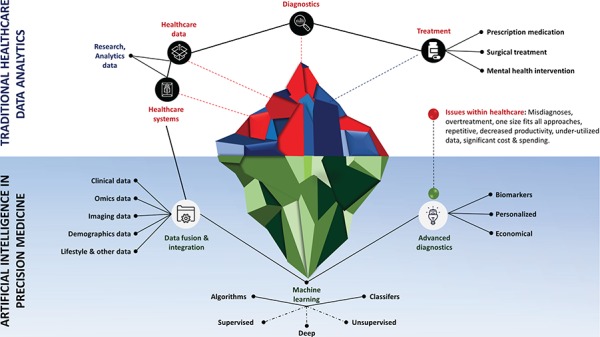
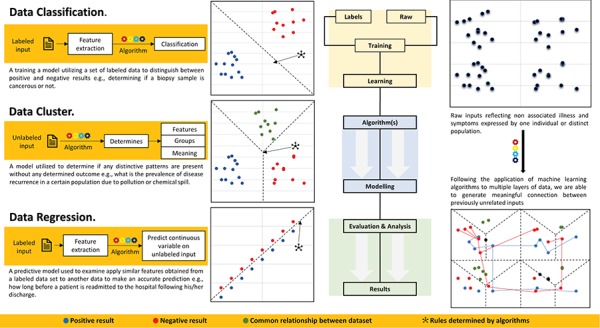
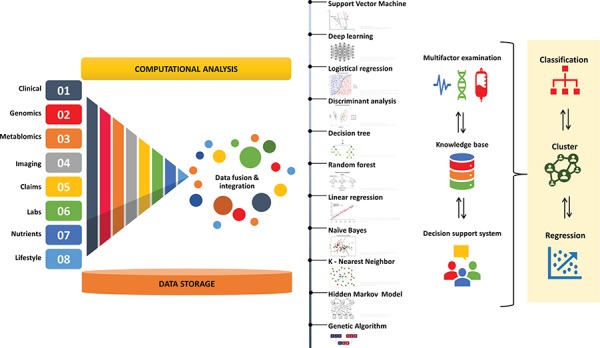
Verification
Claims the paper makes
The claims and statistics of this paper haven’t been checked yet.
Free: it reads the open-access text and checks the first 5 claims that cite a source we can check. Create a free account to check every claim.
Claims other papers make about this one
Each is checked against this paper’s own text: does it say what the citing paper says it does?
The source backs part of the claim, not all of it — or backs it for a different population, condition or comparison.
In the citing paper
“This integration enhances the ability of clinicians to detect early signs of complications, offering the potential for more precise and personalized interventions (87).”
From Generative artificial intelligence in predictive analysis of diabetes and its complications: a narrative review (2025) · cites this paper as [87]
Experimental — accuracy not yet measuredIn the citing paper
“There is growing concern that breaches of confidentiality may lead to an erosion of public confidence in the healthcare system”
From SHIFTing artificial intelligence to be responsible in healthcare: a systematic review (2022) · cites this paper as Ahmed et al., 2020
Self-check
Percentages, sums and reported differences re-computed from the paper’s own numbers.
The self-check needs the paper’s full text.
Citations
Cites
Items 201–257 of 257
Ritchie, M. D., de Andrade, M., & Kuivaniemi, H. (2015) · Frontiers in Genetics · doi:10.3389/fgene.2015.00104 · Cited by 35
Moon, M., & Lee, S. (2017) · Healthcare Informatics Research · doi:10.4258/hir.2017.23.1.43 · Cited by 35
Xu, R., & Wang, Q. (2015) · Journal of Biomedical Informatics · doi:10.1016/j.jbi.2015.06.027 · Cited by 34
Computerized system for recognition of autism on the basis of gene expression microarray data
Latkowski, T., & Osowski, S. (2014) · Computers in Biology and Medicine · doi:10.1016/j.compbiomed.2014.11.004 · Cited by 33
Yu, Y., Schell, M. C., & Zhang, J. Y. (1997) · Medical Physics · doi:10.1118/1.597951 · Cited by 33
Rajkomar, A., Yim, J. W. L., Grumbach, K., & Parekh, A. (2016) · JMIR Medical Informatics · doi:10.2196/medinform.6530 · Cited by 31
On Educating about Medical Data Management
Knaup, P., Leiner, F., & Haux, R. (2007) · Methods of Information in Medicine · doi:10.1055/s-0038-1628137 · Cited by 30
Kaushal, R., Shojania, K. G., & Bates, D. W. (2003) · Archives of Internal Medicine · doi:10.1001/archinte.163.12.1409 · Cited by 30
Multiple indicator hidden Markov model with an application to medical utilization data
Wall, M. M., & Li, R. (2008) · Statistics in Medicine · doi:10.1002/sim.3463 · Cited by 30
Combi, C. (2017) · Artificial Intelligence in Medicine · doi:10.1016/j.artmed.2017.01.003 · Cited by 30
Ehsani‐Moghaddam, B., Queenan, J. A., MacKenzie, J. J., & Birtwhistle, R. (2018) · PLoS ONE · doi:10.1371/journal.pone.0209018 · Cited by 30
Park, S. H., Kim, Y.-H., Lee, J. Y., Yoo, S., & Kim, C. J. (2019) · Science Editing · doi:10.6087/kcse.164 · Cited by 30
Real-Time Automated Sampling of Electronic Medical Records Predicts Hospital Mortality
Khurana, H. S., Groves, R. H., Simons, M. P., Martin, M. J., Stoffer, B., Kou, S., Gerkin, R. D., Reiman, E. M., & Parthasarathy, S. (2016) · The American Journal of Medicine · doi:10.1016/j.amjmed.2016.02.037 · Cited by 29
Medical Inpatient Journey Modeling and Clustering: A Bayesian Hidden Markov Model Based Approach.
Huang, Z., Dong, W., Wang, F., & Duan, H. (2015) · PubMed · Cited by 29
Ethical challenges of machine learning and deep learning algorithms
Prabhu, S. P. (2019) · The Lancet Oncology · doi:10.1016/s1470-2045(19)30230-x · Cited by 29
Nguyen, L. B., Nguyen, A. V., Ling, S. H., & Nguyen, H. T. (2013) · Annual International Conference of the IEEE Engineering in Medicine and Biology Society (EMBC) · doi:10.1109/embc.2013.6610766 · Cited by 27
Grover, D., Bauhoff, S., & Friedman, J. A. (2019) · PLoS ONE · doi:10.1371/journal.pone.0211262 · Cited by 27
PROBABILISTIC FUNCTIONS OF FINITE-STATE MARKOV CHAINS
Petrie, T. (1967) · Proceedings of the National Academy of Sciences · doi:10.1073/pnas.57.3.580 · Cited by 25
Logistic Regression Analysis of Potential Prognostic Factors for Pulmonary Thromboembolisma
Yoo, H. H. B., de Paiva, S. A. R., Silveira, L. V. D. A., & Queluz, T. T. (2003) · CHEST Journal · doi:10.1378/chest.123.3.813 · Cited by 24
Panagopoulos, G. P., Angelopoulou, D., Tzirtzilakis, E. E., & Giannoulopoulos, P. (2016) · Environmental Monitoring and Assessment · doi:10.1007/s10661-016-5590-y · Cited by 24
Byeon, H. (2019) · Technology and Health Care · doi:10.3233/thc-191738 · Cited by 24
Genetic algorithm for analysis of mutations in Parkinson's disease
Smigrodzki, R. M., Goertzel, B., Pennachin, C. L., Coelho, L. D. S., Prosdocimi, F., & Parker, W. D. (2005) · Artificial Intelligence in Medicine · doi:10.1016/j.artmed.2004.11.006 · Cited by 23
Discriminant analysis: a technique for adding value to patient satisfaction surveys.
Dansky, K. H., & Brannon, D. (1996) · PubMed · Cited by 22
MAV-clic: management, analysis, and visualization of clinical data
Ahmed, Z., Kim, M., & Liang, B. T. (2018) · JAMIA Open · doi:10.1093/jamiaopen/ooy052 · Cited by 22
Self-citationShayan, Z., Mezerji, N. M. G., Shayan, L., & Naseri, P. (2015) · Global Journal of Health Science · doi:10.5539/gjhs.v8n7p41 · Cited by 21
Fast Convolutional Method for Automatic Sleep Stage Classification
Yulita, I. N., Fanany, M. I., & Arymurthy, A. M. (2018) · Healthcare Informatics Research · doi:10.4258/hir.2018.24.3.170 · Cited by 21
A cloud-based framework for large-scale traditional Chinese medical record retrieval
Liu, L., Liu, L., Fu, X., Huang, Q., Zhang, X., & Zhang, Y. (2017) · Journal of Biomedical Informatics · doi:10.1016/j.jbi.2017.11.013 · Cited by 20
Xu, W., Zhao, Y., Nian, S., Feng, L., Bai, X., Luo, X., & Luo, F. M. (2018) · Journal of International Medical Research · doi:10.1177/0300060518777173 · Cited by 19
Patient decision aids: a content analysis based on a decision tree structure
Gheondea‐Eladi, A. (2019) · BMC Medical Informatics and Decision Making · doi:10.1186/s12911-019-0840-x · Cited by 19
Artificial Intelligence and the Softer Side of Medicine.
Craft, J. A. (2018) · Europe PMC (PubMed Central) · Cited by 19
Hidden Markov Model for Analyzing Time-Series Health Checkup Data
Kawamoto, R., Nazir, A., Kameyama, A., Ichinomiya, T., Keiko, Y., Tamura, S., Yamamoto, M., Hayamizu, S., & Kinosada, Y. (2013) · Studies in health technology and informatics · doi:10.3233/978-1-61499-289-9-491 · Cited by 17
Madigan, E. A., Curet, O. L., & Zrinyi, M. (2008) · Human Resources for Health · doi:10.1186/1478-4491-6-2 · Cited by 17
Artificial intelligence—Developments in medicine in the last two years
Galimova, R. M., Buzaev, I. V., Kireev, A. R., Yuldybaev, L. K., & Shaykhulova, A. F. (2019) · Chronic Diseases and Translational Medicine · doi:10.1016/j.cdtm.2018.11.004 · Cited by 17
Estimating time to full uterine cervical dilation using genetic algorithm
Hoh, J., Cha, K., Park, M., Lee, M. T., & Park, Y. (2012) · The Kaohsiung Journal of Medical Sciences · doi:10.1016/j.kjms.2012.02.012 · Cited by 16
Baum, K. G., Schmidt, E., Rafferty, K., Król, A., & Helguera, M. (2011) · Journal of Imaging Informatics in Medicine · doi:10.1007/s10278-011-9382-1 · Cited by 16
Robust discriminant analysis and its application to identify protein coding regions of rice genes
Jin, J., & An, J. (2011) · Mathematical Biosciences · doi:10.1016/j.mbs.2011.04.007 · Cited by 16
Fuzzy naive bayesian model for medical diagnostic decision support
Wagholikar, K. B., Vijayraghavan, S., & Deshpande, A. (2009) · Annual International Conference of the IEEE Engineering in Medicine and Biology Society (EMBC) · doi:10.1109/iembs.2009.5332468 · Cited by 16
Trajectory planning of a robot for lower limb rehabilitation
Pei, Y., Kim, Y., Obinata, G., Kazunori, H. A. S. E., & Stefanov, D. (2011) · Annual International Conference of the IEEE Engineering in Medicine and Biology Society (EMBC) · doi:10.1109/iembs.2011.6090296 · Cited by 15
Precision medicine with electronic medical records: from the patients and for the patients
Nayak, L., Ray, I., & De, R. K. (2016) · Annals of Translational Medicine · doi:10.21037/atm.2016.10.40 · Cited by 14
Quantile Regression and its Key Role in Promoting Medical Research.
Madadizadeh, F., Asar, M. E., & Bahrampour, A. (2016) · PubMed Central · Cited by 13
Monitoring prescribing patterns using regression and electronic health records
Backenroth, D., Chase, H. S., Wei, Y., & Friedman, C. (2017) · BMC Medical Informatics and Decision Making · doi:10.1186/s12911-017-0575-5 · Cited by 13
Mining biomedical images towards valuable information retrieval in biomedical and life sciences
Ahmed, Z., Zeeshan, S., & Dandekar, T. (2016) · Database · doi:10.1093/database/baw134 · Cited by 13
Self-citation(2018) · Advanced Therapeutics · doi:10.1002/(issn)2366-3987 · Cited by 13
A new approach to detect QRS complexes based on a histogram and genetic algorithm
Tu, C., Zeng, Y., & Yang, X. (2005) · Journal of Medical Engineering & Technology · doi:10.1080/0309190042000274513 · Cited by 12
Mamiya, H., Schwartzman, K., Verma, A. D., Jauvin, C., Behr, M. A., & Buckeridge, D. L. (2014) · Journal of Biomedical Informatics · doi:10.1016/j.jbi.2014.11.006 · Cited by 12
Solutions to Challenges Facing a University Digital Library and Press
D’Alessandro, M. P., Galvin, J. R., Colbert, S. I., D’Alessandro, D. M., Choi, T. A., Aker, B. D., Carlson, W. S., & Pelzer, G. D. (2000) · Journal of the American Medical Informatics Association · doi:10.1136/jamia.2000.0070246 · Cited by 12
Zhou, X., Wang, H., Wang, J., Wang, Y., Hoehn, G., Azok, J. T., Brennan, M., Hazen, S. L., Li, K. C., Chang, S., et al. (2009) · PROTEOMICS · doi:10.1002/pmic.200700867 · Cited by 11
A modified classification tree method for personalized medicine decisions
Tsai, W., Heping Zhang, D., Buta, E., O’Malley, S. S., & Gueorguieva, R. V. (2015) · Statistics and Its Interface · doi:10.4310/sii.2016.v9.n2.a11 · Cited by 11
Esmaili, N., Piccardi, M., Kruger, B., & Girosi, F. (2019) · PLoS ONE · doi:10.1371/journal.pone.0214973 · Cited by 11
Murata, C., Ramírez, A. B., Cruz, A., Morales, J. L., & Reyes, S. O. L. (2015) · Revista Alergia México · doi:10.29262/ram.v62i2.66 · Cited by 9
Tan, C., Chen, H., Wu, T., & Xia, C. (2010) · Biological Trace Element Research · doi:10.1007/s12011-010-8678-1 · Cited by 8
Roysden, N., & Wright, A. T. (2015) · PubMed Central · Cited by 8
Ainscough, K. M., Lindsay, K. L., O’Sullivan, E. J., Gibney, E. R., & McAuliffe, F. M. (2017) · Public Health Nutrition · doi:10.1017/s136898001700129x · Cited by 8
Differential Laboratory Diagnosis of Hypercalcemia
Johnson, K. R., Mascall, G. C., Howarth, A. T., & Heath, D. A. (1984) · CRC Critical Reviews in Clinical Laboratory Sciences · doi:10.3109/10408368409165805 · Cited by 7
Redekop, K., Bakker, L. J., & Aarts, J. E. C. M. (2018) · Health Policy and Technology · doi:10.1016/j.hlpt.2018.01.006 · Cited by 7
Amorim, F. F., & Santana, A. N. C. (2017) · Annals of Translational Medicine · doi:10.21037/atm.2016.11.38 · Cited by 5
(2018) · PubMed · Cited by 2
Research works printed but not linked: 8
- Ahmed, 2019, Lecture Notes in Networks and Systems 69 Springer Nature
- Raghupathi, 2014, Big data analytics in healthcare: promise and potential, Health Inform. Sci. Syst., 2, 3, 10.1186/2047-2501-2-3 · DOI · Paper page
- Somashekhar, 2018, Watson for oncology and breast cancer treatment recommendations: agreement with an expert multidisciplinary tumor board, Ann. Oncol., 29
- Mesko, 2017, The role of artificial intelligence in precision medicine, Expert Rev. Precis. Med. Drug Dev., 2, 239, 10.1080/23808993.2017.1380516 · DOI · Paper page
- Mesko, 2019, Artificial intelligence is the stethoscope of the 21st century, The Medical Futurist
- Kaura, 2018, Big data and machine learning based secure healthcare framework, Procedia Comput. Sci., 132, 1049, 10.1016/j.procs.2018.05.020 · DOI · Paper page
- Boser, 1992, 5th Annual ACM Workshop on COLT, 144
- Langley, 1992, An analysis of Bayesian classifiers. Proceedings of the Tenth National Conference on, Artif. Intell., 223
Cited by
Artificial Intelligence in Pharmaceutical Technology and Drug Delivery Design
Vora, L. K., Gholap, A. D., Jetha, K., Thakur, R. R. S., Solanki, H. K., & Chavda, V. P. (2023) · Pharmaceutics · doi:10.3390/pharmaceutics15071916 · Cited by 1,061
Rasmy, L., Xiang, Y., Xie, Z., Tao, C., & Zhi, D. (2021) · npj Digital Medicine · doi:10.1038/s41746-021-00455-y · Cited by 886
“At present, it can improve the precision of diagnosis, enable disease prevention by early warning, streamline clinical decision making, and reduce healthcare costs [4-7].”
BackgroundDeGroat, W., Abdelhalim, H., Patel, K., Mendhe, D., Zeeshan, S., & Ahmed, Z. (2024) · Scientific Reports · doi:10.1038/s41598-023-50600-8 · Cited by 845
Self-citationSignificance of machine learning in healthcare: Features, pillars and applications
Javaid, M., Haleem, A., Pratap Singh, R., Suman, R., & Rab, S. (2022) · International Journal of Intelligent Networks · doi:10.1016/j.ijin.2022.05.002 · Cited by 641
Artificial Intelligence in Health Care: Bibliometric Analysis
Guo, Y., Hao, Z., Zhao, S., Gong, J., & Yang, F. (2020) · Journal of Medical Internet Research · doi:10.2196/18228 · Cited by 461
Metadata
- Authors
- Ahmed, Z., Mohamed, K., Zeeshan, S., & Dong, X.
- Affiliations
- Rutgers, The State University of New Jersey (US)
- UConn Health (US)
- The Jackson Laboratory for Genomic Medicine (US)
- Corresponding author
- Ahmed, Zeeshan
- Venue
- Database
- Publisher
- Oxford University Press (OUP)
- Published
- 2020-01-01
- Volume
- 2020
- ISSN
- 1758-0463 (ISSN-L)
- PMC
- PMC7078068
- OpenAlex
- W3011742849
- Cited by
- 1,035
- References
- 259
- Citations by year
- 2026: 149 · 2025: 295 · 2024: 264 · 2023: 135 · 2022: 92 · 2021: 84 · 2020: 16
- FWCI
- 24.06
- Type
- journal article
- Language
- en
- Open access
- gold
- doi.org
- Licence
- Locations
- Database (publishedVersion, cc-by)
- PubMed Central (publishedVersion, cc-by)
- PubMed (publishedVersion)
- Rutgers University Community Repository (Rutgers University) (submittedVersion)
- The Mouseion at the JAXlibrary (Jackson Laboratory) (submittedVersion)
- Topics
- Health Sciences › Medicine › Health Informatics › Artificial Intelligence in Healthcare and Education
- Physical Sciences › Computer Science › Artificial Intelligence › Machine Learning in Healthcare
- Health Sciences › Health Professions › Health Information Management › Artificial Intelligence in Healthcare
- Keywords
- artificial intelligence in healthcare, precision medicine, machine learning platform, electronic health records, clinical decision support, data interoperability, healthcare data privacy, clinical information extraction, disease progression patterns, personalized medicine
- MeSH terms
- Machine Learning, Artificial Intelligence, Delivery of Health Care, Humans, Data Mining, Precision Medicine, Data Curation
About these checks
Registry, retraction, Cites and statistics results are computed, not judged, with one exception: a printed reference that no index lists is read once by a model before it counts as a citation error. Claims are extracted by a model and kept only when their quote appears verbatim in the text; each cited source is then checked, with a model’s help, for whether it says what the claim relies on. Those verdicts can be wrong — read the claim’s quote and the cited source before relying on one.
Statistics and arithmetic are recomputed, not judged.
Confidence bands are shown only for fields calibrated on our annotated test set. None is calibrated yet, so no band is shown.
What counts as a claim ›How we measure confidence ›How we check this ›
Are you an author, or do you see a problem with this page? Request a review
Data sources
Bibliographic data: Semantic Scholar, OpenAlex, Crossref.
Contains information from the Semantic Scholar Academic Graph Datasets, made available under the ODC Attribution License (ODC-BY 1.0).
Semantic Scholar’s data is described in: Kinney, R., et al. (2023). The Semantic Scholar Open Data Platform. arXiv:2301.10140.
