

MicroRNA and Gut Microbiota: Tiny but Mighty—Novel Insights into Their Cross-talk in Inflammatory Bowel Disease Pathogenesis and Therapeutics
Open accessThe DOI matches its Crossref record; 158 of the 162 references it cites were found in a registry or an index.
Abstract
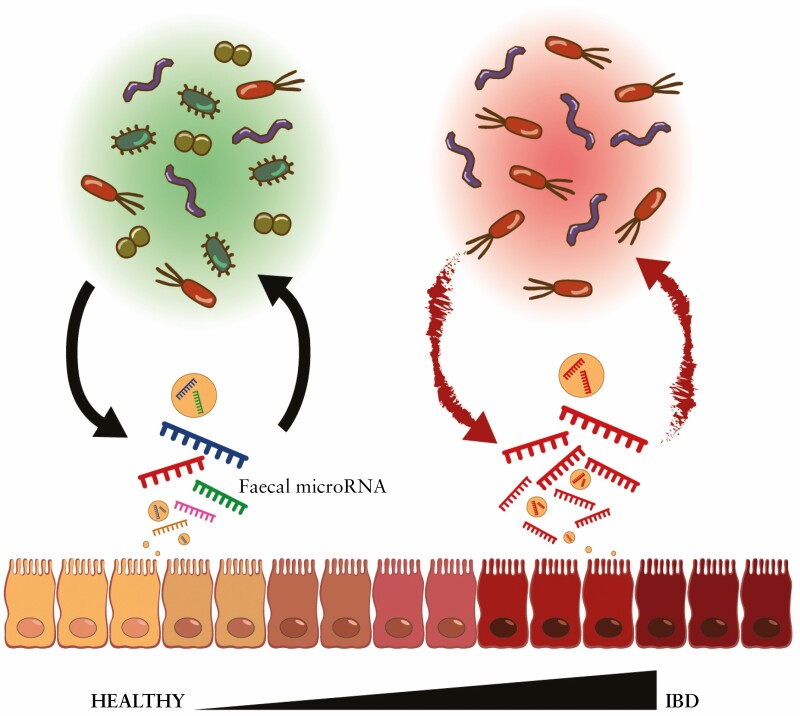
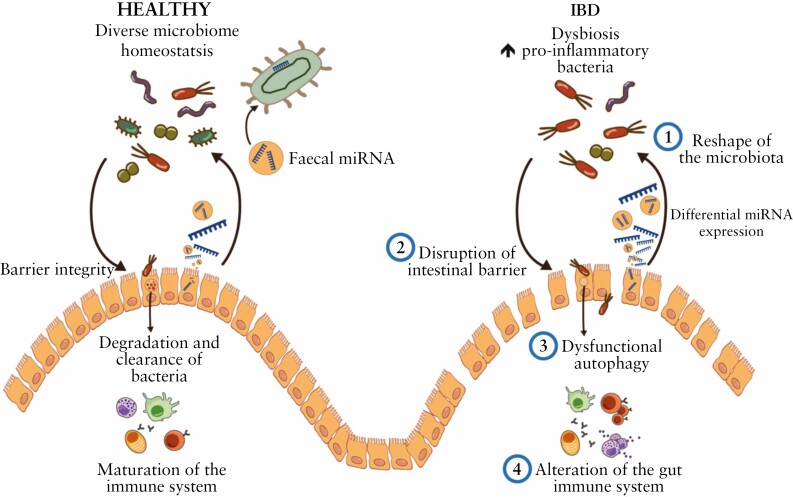
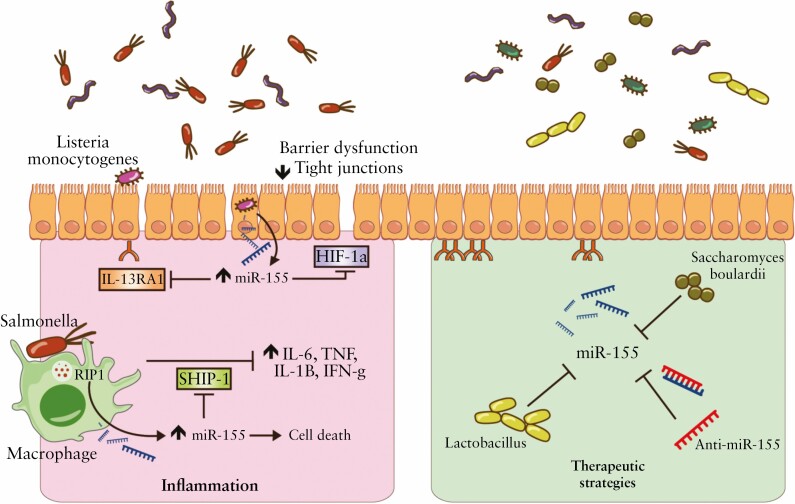
MicroRNAs [miRNAs], small non-coding RNAs, have recently been described as crucial contributors to intestinal homeostasis. They can interact with the gut microbiota in a reciprocal manner and deeply affect host health status, leading to several disorders when unbalanced. Inflammatory bowel disease [IBD] is a chronic inflammation of the gastrointestinal tract that co-occurs with alterations of the gut microbiota, and whose aetiology remains largely unclear. On one hand, host miRNA could be playing a relevant role in IBD pathophysiology by shaping the gut microbiota. The gut microbiome, on the other hand, may regulate the expression of host miRNAs, resulting in intestinal epithelial dysfunction, altered autophagy, and immune hyperactivation. Interestingly, it has been hypothesised that their reciprocal impact may be used for therapeutic goals. This review describes the latest research and suggests mechanisms through which miRNA and intestinal microbiota, as joint actors, may participate specifically in IBD pathophysiology. Furthermore, we discuss the diagnostic power and therapeutic potential resulting from their bidirectional communication after faecal transplantation, probiotics intake, or anti-miRNAs or miRNA mimics administration. The current literature is summarised in the present work in a comprehensive manner, hoping to provide a better understanding of the miRNA-microbiota cross-talk and to facilitate their application in IBD.
Overview
The claims and statistics of this paper haven’t been checked yet.
Free: it reads the open-access text and checks the first 5 claims that cite a source we can check. Create a free account to check every claim.
Integrity signals
Registry
Cites
Statistics
Figures
Verification
Claims the paper makes
The claims and statistics of this paper haven’t been checked yet.
Free: it reads the open-access text and checks the first 5 claims that cite a source we can check. Create a free account to check every claim.
Claims other papers make about this one
Each is checked against this paper’s own text: does it say what the citing paper says it does?
The cited source says what the claim attributes to it.
In the citing paper
“The gut can shed host miRNAs into the stool, and recent studies indicate that they might reflect the state of the gut mucosa and microbiome.131”
From Gut dysbiosis in oncology: a risk factor for immunoresistance (2026) · doi:10.1038/s41422-025-01212-6 · cites this paper as [131]
Self-check
Percentages, sums and reported differences re-computed from the paper’s own numbers.
The self-check needs the paper’s full text.
Citations
Cites
A human gut microbial gene catalogue established by metagenomic sequencing
MetaHIT Consortium, Qin, J., Li, R., Raes, J., Arumugam, M., Burgdorf, K. S., Manichanh, C., Nielsen, T., Pons, N., Levenez, F., et al. (2010) · Nature · doi:10.1038/nature08821 · Cited by 11,624
Hill (2014) · doi:10.1038/nrgastro.2014.66 · Cited by 9,592
Most mammalian mRNAs are conserved targets of microRNAs
Friedman, R. C., Farh, K. K.-H., Burge, C. B., & Bartel, D. P. (2009) · Genome Research · doi:10.1101/gr.082701.108 · Cited by 8,462
Linking long-term dietary patterns with gut microbial enterotypes
Wu, G. D., Chen, J., Hoffmann, C., Bittinger, K., Chen, Y.-Y., Keilbaugh, S. A., Bewtra, M., Knights, D., Walters, W. A., Knight, R., et al. (2011) · Science · doi:10.1126/science.1208344 · Cited by 6,513
Unravelling the pathogenesis of inflammatory bowel disease
Xavier, R. J., & Podolsky, D. K. (2007) · Nature · doi:10.1038/nature06005 · Cited by 4,364
Interaction between microbiota and immunity in health and disease
Zheng, D., Liwinski, T., & Elinav, E. (2020) · Cell Research · doi:10.1038/s41422-020-0332-7 · Cited by 3,947
The gut microbiota--masters of host development and physiology
Sommer, F., & Bäckhed, F. (2013) · Nature Reviews Microbiology · doi:10.1038/nrmicro2974 · Cited by 3,681
The Treatment-Naive Microbiome in New-Onset Crohn’s Disease
Gevers, D., Kugathasan, S., Denson, L. A., Vázquez-Baeza, Y., Van Treuren, W., Ren, B., Schwager, E., Knights, D., Song, S. J., Yassour, M., et al. (2014) · Cell Host & Microbe · doi:10.1016/j.chom.2014.02.005 · Cited by 3,220
The risk of colorectal cancer in ulcerative colitis: a meta-analysis
Eaden, J. A., Abrams, K. R., & Mayberry, J. F. (2001) · Gut · doi:10.1136/gut.48.4.526 · Cited by 2,959
The gut microbiota influences blood-brain barrier permeability in mice
Braniste, V., Al-Asmakh, M., Kowal, C., Anuar, F., Abbaspour, A., Tóth, M., Korecka, A., Bakocevic, N., Ng, L. G., Kundu, P., et al. (2014) · Science Translational Medicine · doi:10.1126/scitranslmed.3009759 · Cited by 2,530
Cited by
Masanetz, R. K., Winkler, J., Winner, B., Günther, C., & Süß, P. (2022) · International Journal of Molecular Sciences · doi:10.3390/ijms231911111 · Cited by 82
Lipopolysaccharides (LPSs) as Potent Neurotoxic Glycolipids in Alzheimer’s Disease (AD)
Zhao, Y., Jaber, V. R., Pogue, A. I., Sharfman, N. M., Taylor, C., & Lukiw, W. J. (2022) · International Journal of Molecular Sciences · doi:10.3390/ijms232012671 · Cited by 66
Wang, Z., Peters, B. A., Bryant, M., Hanna, D. B., Schwartz, T., Wang, T., Sollecito, C. C., Usyk, M., Grassi, E., Wiek, F., et al. (2023) · Microbiome · doi:10.1186/s40168-023-01566-2 · Cited by 58
Mukherjee, S., Chopra, A., Karmakar, S., & Bhat, G. S. (2024) · Critical Reviews in Microbiology · doi:10.1080/1040841x.2024.2339260 · Cited by 57
Rewiring the Brain Through the Gut: Insights into Microbiota–Nervous System Interactions
Săvulescu-Fiedler, I., Benea, S. N., Căruntu, C., Nancoff, A.-S., Homentcovschi, C., & Bucurica, S. (2025) · Current Issues in Molecular Biology · doi:10.3390/cimb47070489 · Cited by 52
MicroRNAs in Inflammatory Bowel Disease and Its Complications
Krishnachaitanya, S. S., Liu, M., Fujise, K., & Li, Q. (2022) · International Journal of Molecular Sciences · doi:10.3390/ijms23158751 · Cited by 51
Agraib, L. M., Yamani, M. I., Tayyem, R., Sneineh, A. T. A., & Rayyan, Y. M. (2022) · Clinical Nutrition ESPEN · doi:10.1016/j.clnesp.2022.08.020 · Cited by 54
Nag, S., Mitra, O., Tripathi, G., Samanta, S., Bhattacharya, B., Chandane, P., Mohanto, S., Sundararajan, V., Malik, S., Rustagi, S., et al. (2023) · Immunity Inflammation and Disease · doi:10.1002/iid3.1121 · Cited by 49
Plant-microbiome interactions under drought—insights from the molecular machinist’s toolbox
Ait-El-Mokhtar, M., Meddich, A., & Baslam, M. (2023) · Frontiers in Sustainable Food Systems · doi:10.3389/fsufs.2023.1253735 · Cited by 46
Modulation of the immunity and inflammation by autophagy
Gan, T., Qu, S., Zhang, H., & Zhou, S. (2023) · MedComm · doi:10.1002/mco2.311 · Cited by 47
MicroRNA signatures in the pathogenesis and therapy of inflammatory bowel disease
Ramadan, Y. N., Kamel, A. M., Medhat, M. A., & Hetta, H. F. (2024) · Clinical and Experimental Medicine · doi:10.1007/s10238-024-01476-z · Cited by 41
“Conversely, the gut microbiota may influence the expression of host miRNAs, leading to intestinal epithelial disruption, impaired autophagy, and immunological hyperactivation [20, 95, 96].”
BackgroundOliveira, E. C. S. D., Quaglio, A. E. V., Magro, D. O., Stasi, L. C. D., & Sassaki, L. Y. (2023) · International Journal of Molecular Sciences · doi:10.3390/ijms24087176 · Cited by 41
Fecal let-7b and miR-21 directly modulate the intestinal microbiota, driving chronic inflammation
Casado‐Bedmar, M., Roy, M., Berthet, L., Hugot, J., Yang, C., Manceau, H., Peoc’h, K., Chassaing, B., Merlin, D., & Viennois, É. (2024) · Gut Microbes · doi:10.1080/19490976.2024.2394249 · Cited by 33
“72,73 Here, the long-term administration of either anti-miR-21 or anti-let-7b to IL-10 –/– mice provided a protective effect with increased survival.”
BackgroundSelf-citationmiRNA Molecules—Late Breaking Treatment for Inflammatory Bowel Diseases?
Aggeletopoulou, I., Mouzaki, Α., Thomopoulos, K., & Triantos, C. K. (2023) · International Journal of Molecular Sciences · doi:10.3390/ijms24032233 · Cited by 35
“However, treatment with miRNA mimics is also associated with difficulties related to the required dosage and incorporation of miRNA into the fully functional RISC complex [35].”
MicroRNAs in the Diagnosis of Digestive Diseases: A Comprehensive Review
Popa, M. L., Ichim, C., Anderco, P., Todor, S. B., & Pop-Lodromanean, D. (2025) · Journal of Clinical Medicine · doi:10.3390/jcm14062054 · Cited by 29
Deep Dive Into MicroRNAs in Inflammatory Bowel Disease
Alfaifi, J. A., Germain, A., Heba, A.-C., Arnone, D., Gailly, L., Ndiaye, N. C., Viennois, É., Caron, B., Peyrin‐Biroulet, L., & Dreumont, N. (2022) · Inflammatory Bowel Diseases · doi:10.1093/ibd/izac250 · Cited by 26
Jin, F., Jin, L., Wei, B., Li, X., Li, R., Liu, W., Guo, S., Fan, H., & Duan, C. (2024) · Experimental Neurology · doi:10.1016/j.expneurol.2024.114676 · Cited by 27
Gut dysbiosis in oncology: a risk factor for immunoresistance
(2026) · doi:10.1038/s41422-025-01212-6 · Cited by 24
The Role of microRNAs in Inflammatory Bowel Disease
Sokal-Dembowska, A., Jarmakiewicz-Czaja, S., Helma, K., & Filip, R. (2025) · International Journal of Molecular Sciences · doi:10.3390/ijms26104750 · Cited by 22
“The majority of miRNAs suppress target mRNA expression by binding to specific sequence motifs in the 3 ′ -untranslated region (3 ′ -UTR). miRNA can also interact with other regions, such as the 5 ′ -untranslated region (5 ′ -UTR), gene promoters, and coding sequences [8,29].”
Global trends in research on miRNA–microbiome interaction from 2011 to 2021: A bibliometric analysis
Yan, X., Yao, J., Li, Y., Zhang, W., Xi, M., Chen, M., & Li, Y. (2022) · Frontiers in Pharmacology · doi:10.3389/fphar.2022.974741 · Cited by 24
“Dysregulation of the symbiosis between the miRNA and the microbiota is linked with a range of diseaseas, which include inflammatory bowel disease (IBD), colon cancer, and neurological disorders (Ragusa et al., 2020; Cao et al., 2021; Casado-Bedmar and Viennois, 2021).”
BackgroundmiR-136–5p: A key player in human cancers with diagnostic, prognostic and therapeutic implications
Hsu, C., Allela, O. Q. B., Mahdi, S. A.-H., Doshi, O. P., Adil, M., Ali, M. S., & Saadh, M. J. (2023) · Pathology - Research and Practice · doi:10.1016/j.prp.2023.154794 · Cited by 21
The Effect of Sex-Specific Differences on IL-10−/− Mouse Colitis Phenotype and Microbiota
Casado‐Bedmar, M., Roy, M., & Viennois, É. (2023) · International Journal of Molecular Sciences · doi:10.3390/ijms241210364 · Cited by 21
Self-citationFlanagan, K., Gassner, K., Lang, M., Ozelyte, J., Hausmann, B., Crepaz, D., Pjevac, P., Gasché, C., Berry, D., Vesely, C., et al. (2025) · mBio · doi:10.1128/mbio.03928-24 · Cited by 18
He, T., Ma, J., Liu, S., Ma, B., You, J., Wang, J., Li, M., Wang, W., Wang, Y., Li, S., et al. (2025) · iMetaOmics. · doi:10.1002/imo2.57 · Cited by 19
“Existing literature suggests that the interplay between miRNAs and the intestinal microbiota may play a critical role in preserving the integrity and function of the intestinal barrier, thus contributing to the overall health of the host [12].”
InfluentialJu, Z., Pan, H., Qu, C., Xiao, L., Zhou, M., Wang, Y., Luo, J., Shen, L., Zhou, P., & Huang, R. (2023) · Biology Direct · doi:10.1186/s13062-023-00357-x · Cited by 17
“A recent review showed the crosstalk between miRNA and probiotics may influence the development of inflammatory bowel disease pathogenesis and therapeutics [29].”
BackgroundTaïbi, A., Lofft, Z., Imbriaco, B. L., & Comelli, E. M. (2023) · Frontiers in Nutrition · doi:10.3389/fnut.2023.1092342 · Cited by 18
“Moreover, fecal miRNA signatures correlate with disease activity (74), and recent studies suggest that they may play a role in IBD pathology by shaping the intestinal microbiota [reviewed in Casado-Bedmar and Viennois (75)].”
Interaction between diet and genetics in patients with inflammatory bowel disease
Magro, D. O., Sassaki, L. Y., & Chebli, J. M. F. (2024) · World Journal of Gastroenterology · doi:10.3748/wjg.v30.i12.1644 · Cited by 17
Li, M., Chen, K., Chen, Y., Zhang, L., Cui, Y., Xiao, F., Liu, Z., Zhang, W., Jiang, J., Zhou, Q., et al. (2024) · Journal of Translational Medicine · doi:10.1186/s12967-024-05876-3 · Cited by 17
Profiles and interactions of gut microbiome and intestinal microRNAs in pediatric Crohn’s disease
Lv, Y., Zhen, C., Liu, A., Hu, Y., Yang, G., Xu, C., Lou, Y., Cheng, Q., Luo, Y., Yu, J., et al. (2024) · mSystems · doi:10.1128/msystems.00783-24 · Cited by 16
“The intestinal microbiota can both be affected by both intrinsic host factors such as microRNAs (miRNAs) and mucus barrier and external factors including diet (7).”
Gut Immunobiosis and Biomodulators
Miniello, V. L., Miniello, A., Ficele, L., Skublewska-D’Elia, A., Dargenio, V. N., Cristofori, F., & Francavilla, R. (2023) · Nutrients · doi:10.3390/nu15092114 · Cited by 15
Ma, L., Hou, C., Yang, H., Chen, Q., Lyu, W., Wang, Z., Wang, J., & Xiao, Y. (2023) · Annals of Medicine · doi:10.1080/07853890.2023.2261477 · Cited by 15
“…can shape the intestinal microbiota, and conversely, the gut microbiota can regulate miRNa expression, potentially leading to imbalances and diseases [15,44]. these results suggest that intestinal miRNa-microbiota interactions may be associated with inflammatory bowel disease pathophysiology.”
BackgroundYang, Y., Huang, Y., Wang, F., Tsai, M., Chen, C., & Lian, W. (2023) · Molecular Nutrition & Food Research · doi:10.1002/mnfr.202200348 · Cited by 15
Gut–brain axis in health and brain disease
Olasunkanmi, O. I., Zheng, L., & Zheng, P. (2026) · Chinese Medical Journal · doi:10.1097/cm9.0000000000003920 · Cited by 14
“[213] Also, evidence from both animal and human studies continues to support the role of the gut microbiota in epigenetic modifications associated with AD.”
Updated immunomodulatory roles of gut flora and microRNAs in inflammatory bowel diseases
Cheng, T., Chen, X., & Shao, J. (2022) · Clinical and Experimental Medicine · doi:10.1007/s10238-022-00935-9 · Cited by 14
“For example, miR155 and miR-223 could impair TJ proteins to promote intestinal epithelial damages [72, 73], while miR-21-5p, miR-423-5p, miR-320, and miR-126 appeared to protect or improve TJ barrier and intestinal permeability in IBD [74–77].”
BackgroundRole of MicroRNAs in Dietary Interventions for Obesity and Obesity-Related Diseases
Zhang, J.-Y., Ren, C., Cao, Y.-N., Ren, Y., Zou, L., Zhou, C., & Peng, L. (2023) · Journal of Agricultural and Food Chemistry · doi:10.1021/acs.jafc.3c03042 · Cited by 13
Integrated omics analysis reveals the epigenetic mechanism of visceral hypersensitivity in IBS-D
Lu, Y., Chai, Y., Qiu, J., Zhang, J., Wu, M., Fu, Z., Wang, Y., & Qin, C.-Z. (2023) · Frontiers in Pharmacology · doi:10.3389/fphar.2023.1062630 · Cited by 15
“MiRNA-gut microbiota interaction had been reported in IBD (Casado-Bedmar and Viennois, 2022).”
BackgroundThe Association between Infant Colic and the Multi-Omic Composition of Human Milk
Chandran, D., Warren, K., McKeone, D. J., & Hicks, S. D. (2023) · Biomolecules · doi:10.3390/biom13030559 · Cited by 12
Zeng, Y., Yin, Y., & Zhou, X. (2024) · International Journal of Molecular Sciences · doi:10.3390/ijms252313001 · Cited by 11
Tuning gut microbiota by advanced nanotechnology
Qi, Y., Wang, Y., Wang, X., Zheng, H., & Lu, Y. (2025) · Materials Futures · doi:10.1088/2752-5724/ada62b · Cited by 16
“Some studies have shown that miRNAs can modulate gut microbiota and ameliorate inflammation, with potential applications in treating diseases such as enteritis, systemic lupus erythematosus, and neurological disorders [100–102].”
Host-dependent alteration of the gut microbiota: the role of luminal microRNAs
Cuinat, C., Pan, J., & Comelli, E. M. (2025) · Microbiome Research Reports · doi:10.20517/mrr.2024.46 · Cited by 12
Dietary and orally-delivered miRNAs: are they functional and ready to modulate immunity?
Cieślik, M., Bryniarski, K., & Nazimek, K. (2023) · AIMS Allergy and Immunology · doi:10.3934/allergy.2023008 · Cited by 11
Nie, Y., Lin, T., Yang, Y., Liu, W., Hu, Q., Chen, G., Huang, L., Wu, H., Kong, C., Lei, Z., et al. (2024) · Frontiers in Molecular Biosciences · doi:10.3389/fmolb.2024.1442611 · Cited by 10
Nor, W., Kwong, S. C., Fuzi, A. A. M., Said, N. A. B. M., Jamil, A. H. A., Lee, Y. Y., Lee, S. C., Lim, Y. A. L., & Chung, I. (2025) · International Journal of Molecular Medicine · doi:10.3892/ijmm.2025.5487 · Cited by 11
Bonazzi, E., Barba, C. D., Lorenzon, G., Maniero, D., Bertin, L., Barberio, B., Facciotti, F., Caprioli, F., Scaldaferri, F., Zingone, F., et al. (2025) · Expert Review of Gastroenterology & Hepatology · doi:10.1080/17474124.2025.2495087 · Cited by 9
“In IBD, miRNAs represent an interesting tool to differentiate between UC and CD and, similarly to the microbiota, they could be used to make out disease activity and treatment response [121].”
MicroRNA-155 in neurodegeneration
Liu, Q., & Siadat, S. D. (2025) · Clinica Chimica Acta · doi:10.1016/j.cca.2025.120506 · Cited by 9
Ichim, C., Boicean, A., Todor, S. B., Boeraș, I., Anderco, P., & Bîrluțiu, V. (2026) · Diagnostics · doi:10.3390/diagnostics16060846 · Cited by 7
“22.”
Qin, N., Liu, H., Wang, X., Liu, Y., Chang, H., & Xia, X. (2025) · International Journal of Biological Macromolecules · doi:10.1016/j.ijbiomac.2025.140271 · Cited by 6
A Review on miRNAs in Enteric Bacteria‐mediated Host Pathophysiology: Mechanisms and Implications
Doghish, A. S., Elazazy, O. E., Mohamed, H. H., Mansour, R. M., Ghanem, A., Faraag, A. H. I., Elballal, M. S., Elrebehy, M. A., Elesawy, A. E., Mageed, S. S. A., et al. (2025) · Journal of Biochemical and Molecular Toxicology · doi:10.1002/jbt.70160 · Cited by 6
The Emerging Role of MicroRNAs in Nasal Inflammatory Diseases and Tumors: From Bench to Bedside
Loperfido, A., Cavaliere, C., Fionda, B., Masieri, S., Bellocchi, G., Re, M., & Tomasetti, M. (2025) · Genes · doi:10.3390/genes16030295 · Cited by 6
Examining miR-196a, miR-196b and NF-κBIα gene expression in colitis mice model
Rafiezadeh, Z., Aboutalebian, S., Baradaran, A., Hoveida, L., & Hejazi, S. H. (2025) · AMB Express · doi:10.1186/s13568-025-01869-7 · Cited by 5
Liang, L., Liu, X., Li, B., Lei, H., Tang, Z., Mai, S., Yang, C., Zhou, Y., Zhang, S., & Liu, L. (2026) · International Journal of Molecular Medicine · doi:10.3892/ijmm.2026.5745 · Cited by 5
“Perturbing complex regulatory networks generates consequences beyond conventional off‑target effects (195,271).”
Fu, H., & Liu, Y. (2024) · Regenerative medicine reports . · doi:10.4103/regenmed.regenmed-d-24-00006 · Cited by 10
Microbiome knowledge graph as a tool to understand bacteria-host associations
Pudavar, A. E., Baksi, K. D., Pokhrel, V., & Kuntal, B. K. (2025) · Archives of Microbiology · doi:10.1007/s00203-025-04413-0 · Cited by 4
An overview of the role of the gut microbiota in rheumatoid arthritis
Poznyak, A. V., Vatlin, A. A., Pavshintsev, V. V., Mitkin, N. A., Maltseva, O. N., Utkina, A. S., & Orekhov, A. N. (2026) · Microbiome Research Reports · doi:10.20517/mrr.2025.69 · Cited by 4
Moustafa, H. A. M., Elsakka, E. G. E., Abulsoud, A. I., Elshaer, S. S., Rashad, A. A., El‐Dakroury, W. A., Sallam, A.-A. M., Rizk, N. I., Zaki, M. B., Gomaa, R. M., et al. (2024) · Experimental Cell Research · doi:10.1016/j.yexcr.2024.114234 · Cited by 3
Sharma, H., Noman, A. A., Ahmad, I., Tonni, S. D., Mim, T. J., Afrose, F., Sharma, P., Parvez, A., Tamanna, S., Azad, M. A., et al. (2025) · Current Gene Therapy · doi:10.2174/0115665232361169250617192348 · Cited by 3
Szilágyi-Tolnai, E., Racz, A., Kadenczki, O., Balajthy, A., Dávid, P., Fidler, G., Fauszt, P., Gál, K., Remenyik, J., Palatka, K., et al. (2025) · International Journal of Molecular Sciences · doi:10.3390/ijms262412042 · Cited by 2
“Inflammatory bowel diseases (IBD), such as Crohn’s disease (CD) and ulcerative colitis (UC), are complex disorders marked by persistent inflammation of the gastrointestinal tract [1–3].”
Chen, B., Gg, C., Leng, X., Li, Q., Wu, W., Wu, W., Liu, Z., Zhong, Z., Zheng, X., Kang, W., et al. (2026) · Advanced Science · doi:10.1002/advs.202519949 · Cited by 2
Ceccarelli, F., Pascucci, B., Bartolucci, C., Altomare, A., Guarino, M. P. L., & Rea, G. (2026) · Annual Review of Nutrition · doi:10.1146/annurev-nutr-100225-084130 · Cited by 2
Ji, C., Huang, Y., Xie, W., Zhu, Y., Qin, J., Guo, S., Xiao, H., Fan, W., & Tang, Z. (2024) · Food Frontiers · doi:10.1002/fft2.400 · Cited by 2
Yi, L., Mo, A., Yang, H., Yang, Y., Xu, Q., & Yuan, Y. (2025) · Frontiers in Immunology · doi:10.3389/fimmu.2024.1475195 · Cited by 1
The Microbiome and Epigenetic Regulation in Bone Metabolism: Implications for Osteoporosis
Celoch, K., Porczyński, A., Cegielski, J., Kruk, K., Bulanda, J., Bukowczan, E., Ślęzak, J., Wojciech, D., & Jabrzyk, M. (2025) · Journal of Education Health and Sport · doi:10.12775/jehs.2025.82.60458 · Cited by 1
Maternal nutrition and epigenetic consequences for offspring cognition
Freitas, H. R., Reis, R. A. D. M., Andrade‐da‐Costa, B. L. D. S., & Trevenzoli, I. H. (2026) · Elsevier eBooks · doi:10.1016/b978-0-443-33841-0.00007-5 · Cited by 1
Lee, J. G., Kang, I. H., Lee, A.-R., Oh, E. H., Park, C. H., Han, D. S., & Eun, C. S. (2026) · Journal of Translational Medicine · doi:10.1186/s12967-026-07802-1 · Cited by 1
“Some studies have explored correlations between specific microbial taxa and specific miRNAs in the context of IBD [16].”
The Role of miRNAs and memiRNAs in Gut–Brain Communication and Their Therapeutic Potential
Bednarska, N. G., & Kisiel, M. A. (2026) · Applied Microbiology · doi:10.3390/applmicrobiol6020031 · Cited by 1
“In contrast, in colorectal cancer, miR-21, miR-598, and miR-494 are implicated in modulating tumor progression, apoptosis, and cellular proliferation [23,24].”
Penton, C. R., & Vadakattu, G. (2026) · PNAS Nexus · doi:10.1093/pnasnexus/pgag132 · Cited by 1
“Within the gut microbiome, members of the microbial community can influence host microRNA expression, while the host can also influence taxa, including pathogens, through microRNA production (132 – 134).”
Lv, Y., Yang, Q., Cai, X., Chen, G., & Wang, S. (2026) · Autoimmunity Reviews · doi:10.1016/j.autrev.2026.104170 · Cited by 1
Microbiote et miARN intestinaux: Un couple d’acteurs star dans l’arthrite juvénile idiopathique ?
Labouret, M., Meinzer, U., & Viennois, É. (2023) · médecine/sciences · doi:10.1051/medsci/2023065 · Cited by 1
Bowiea volubilis: From “Climbing Onion” to Therapeutic Treasure—Exploring Human Health Applications
Gwanya, H. Y., Cawe, S., Egbichi, I. M., Gxaba, N., Mbuyiswa, A.-A. N., Zonyane, S., Mbolekwa, B., & Manganyi, M. C. (2023) · Life · doi:10.3390/life13102081 · Cited by 2
“Investigating its potential impact on inflammation, gut motility, and microbial balance could provide insights into its suitability as a complementary or alternative therapeutic option [97].”
Caractérisation fonctionnelle du complexe ribonucléoprotéique TRBP/RPAP3
Rederstorff, M. (2024) · HAL
Martinez, A. C. (2024) · Digital Library of Theses and Dissertations (Universidade de São Paulo) · doi:10.11606/t.5.2024.tde-19062024-150955
Microbiome and Brain-Gut Microbiota's Influence on Autism Pathogenesis
Upaganlawar, A. B., Wankhede, N. L., Kale, M. B., Rahangdale, S. R., Aglawe, M. M., Taksande, B. G., & Umekar, M. J. (2025) · IGI Global eBooks · doi:10.4018/979-8-3693-8176-2.ch004
Duquesnoy, M., Peyrin‐Biroulet, L., Viennois, É., & Chassaing, B. (2025) · Bulletin de l Académie Nationale de Médecine · doi:10.1016/j.banm.2025.01.001 · Cited by 1
Ju, Z., Pan, H., Qu, C., Xiao, L., Zhou, M., Wang, Y., Luo, J., Shen, L., Zhou, P., & Huang, R. (2024) · Figshare · doi:10.6084/m9.figshare.26560898
Wang, Z., Peters, B. A., Bryant, M., Hanna, D. B., Schwartz, T., Wang, T., Sollecito, C. C., Usyk, M., Grassi, E., Wiek, F., et al. (2024) · Figshare · doi:10.6084/m9.figshare.26592359
МикроРНК в оториноларингологии: обзор литературы
Щаюк, А. Н., Макарина-Кибак, Л. Э., & Кильчевский, А. В. (2025) · Евразийская оториноларингология и аудиология · doi:10.34883/pi.2025.15.3.035
Dinu, L.-D., Vamanu, E., & Avram, I. (2025) · Interdisciplinary biotechnological advances · doi:10.1007/978-981-95-2104-3_7
Epigenetic influences of the gut microbiome: a new frontier in medicine
Naseer, F., Khan, H., Rehman, B., Ahmad, P., Tariq, F., & Rauf, M. (2026) · Elsevier eBooks · doi:10.1016/b978-0-443-40483-2.00011-x
Zhaoxie, Y. U., Yao, R., Li, Y., Li, H., Shen, F., Wang, Y., & Wang, Y. (2026) · Frontiers in Aging Neuroscience · doi:10.3389/fnagi.2026.1765016
MicroRNAs: Small molecules with big therapeutic potential
Krishnan, H., Chhikara, N., Tomar, A. K., & Yadav, S. (2026) · Journal of Reproductive Healthcare and Medicine · doi:10.25259/jrhm_2_2026
Wen, Y., Yi, X., Zhu, X., Wang, H., Tian, D., & Wang, G. (2026) · Molecular Therapy — Nucleic Acids · doi:10.1016/j.omtn.2026.103120
Metadata
- Authors
- Casado-Bedmar, M., & Viennois, E.
- Affiliations
- INSERM, U1149, Center for Research on Inflammation, Université de Paris , Paris , France
- Venue
- Journal of Crohn's and Colitis
- Publisher
- Oxford University Press (OUP)
- Published
- 2021-12-16
- Volume
- 16
- Issue
- 6
- Pages
- 992-1005
- ISSN
- 1873-9946 (ISSN-L)
- 1876-4479
- PMC
- PMC9282881
- OpenAlex
- W4200190300
- Cited by
- 77
- References
- 162
- Citations by year
- 2026: 14 · 2025: 22 · 2024: 16 · 2023: 18 · 2022: 7
- FWCI
- 1.08
- Type
- journal article
- Language
- en
- Open access
- hybrid
- doi.org
- Licence
- Locations
- Journal of Crohn s and Colitis (publishedVersion, cc-by-nc)
- PubMed Central (publishedVersion, cc-by-nc)
- PubMed (publishedVersion)
- HAL (submittedVersion)
- Funders
- INFLAMEX (ANR-11-IDEX-0005-02)
- European Research Executive Agency
- Topics
- Life Sciences › Biochemistry, Genetics and Molecular Biology › Molecular Biology › Gut microbiota and health
- Health Sciences › Medicine › Gastroenterology › Inflammatory Bowel Disease
- Life Sciences › Biochemistry, Genetics and Molecular Biology › Cancer Research › MicroRNA in disease regulation
- Keywords
- microRNA, gut microbiota
- MeSH terms
- Gastrointestinal Microbiome, Fecal Microbiota Transplantation, Gastrointestinal Diseases, Humans, Inflammatory Bowel Diseases, Probiotics, MicroRNAs
About these checks
Registry, retraction, Cites and statistics results are computed, not judged, with one exception: a printed reference that no index lists is read once by a model before it counts as a citation error. Claims are extracted by a model and kept only when their quote appears verbatim in the text; each cited source is then checked, with a model’s help, for whether it says what the claim relies on. Those verdicts can be wrong — read the claim’s quote and the cited source before relying on one.
Statistics and arithmetic are recomputed, not judged.
Confidence bands are shown only for fields calibrated on our annotated test set. None is calibrated yet, so no band is shown.
What counts as a claim ›How we measure confidence ›How we check this ›
Are you an author, or do you see a problem with this page? Request a review
Data sources
Bibliographic data: Semantic Scholar, OpenAlex, Crossref.
Contains information from the Semantic Scholar Academic Graph Datasets, made available under the ODC Attribution License (ODC-BY 1.0).
Semantic Scholar’s data is described in: Kinney, R., et al. (2023). The Semantic Scholar Open Data Platform. arXiv:2301.10140.
