

Empagliflozin in acute myocardial infarction: the EMMY trial
Open accessThe DOI matches its Crossref record; 50 of the 51 references it cites were found in a registry or an index.
Abstract
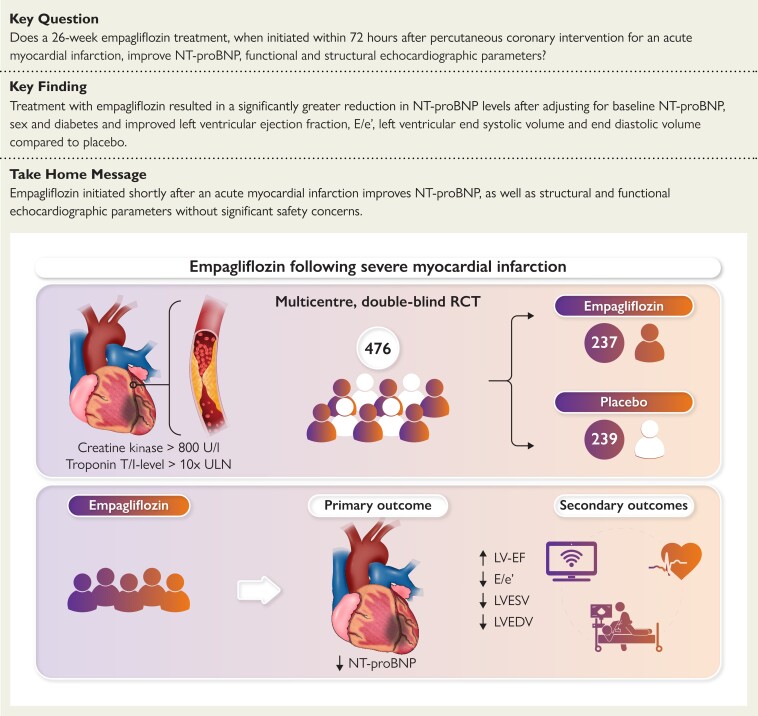
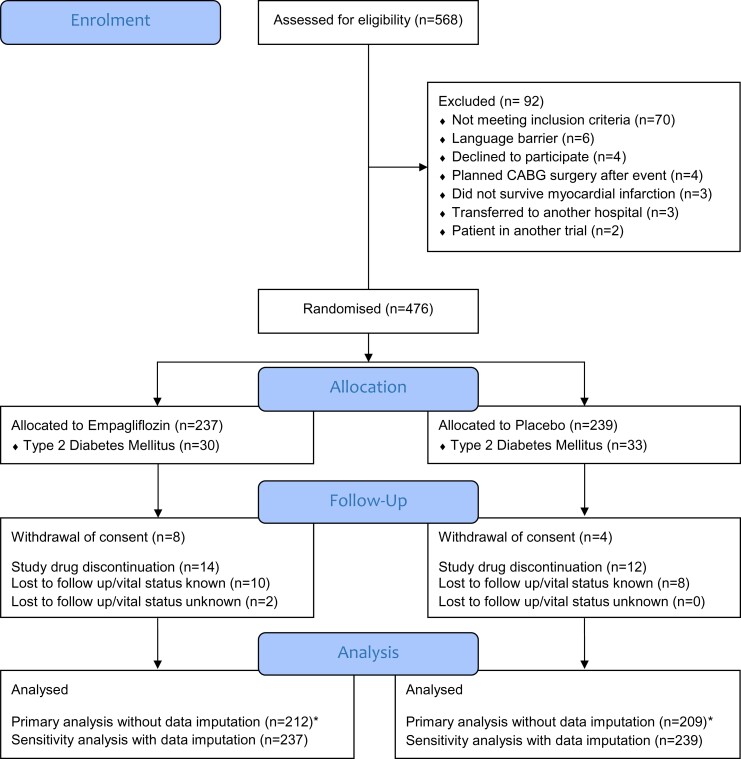
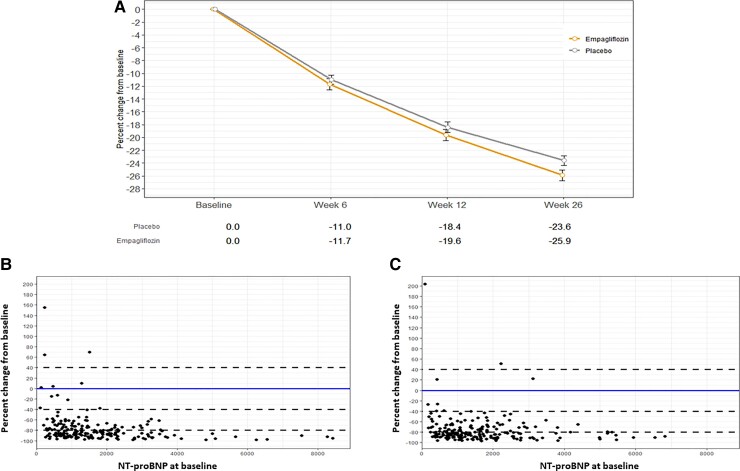
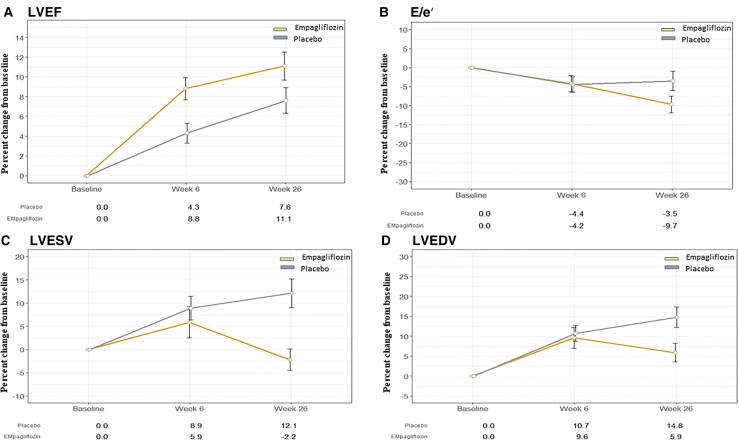
Aims: Sodium–glucose co-transporter 2 inhibition reduces the risk of hospitalization for heart failure and for death in patients with symptomatic heart failure. However, trials investigating the effects of this drug class in patients following acute myocardial infarction are lacking. Methods and results: In this academic, multicentre, double-blind trial, patients (n = 476) with acute myocardial infarction accompanied by a large creatine kinase elevation (>800 IU/L) were randomly assigned to empagliflozin 10 mg or matching placebo once daily within 72 h of percutaneous coronary intervention. The primary outcome was the N-terminal pro-hormone of brain natriuretic peptide (NT-proBNP) change over 26 weeks. Secondary outcomes included changes in echocardiographic parameters. Baseline median (interquartile range) NT-proBNP was 1294 (757–2246) pg/mL. NT-proBNP reduction was significantly greater in the empagliflozin group, compared with placebo, being 15% lower [95% confidence interval (CI) −4.4% to −23.6%] after adjusting for baseline NT-proBNP, sex, and diabetes status (P = 0.026). Absolute left-ventricular ejection fraction improvement was significantly greater (1.5%, 95% CI 0.2–2.9%, P = 0.029), mean E/e′ reduction was 6.8% (95% CI 1.3–11.3%, P = 0.015) greater, and left-ventricular end-systolic and end-diastolic volumes were lower by 7.5 mL (95% CI 3.4–11.5 mL, P = 0.0003) and 9.7 mL (95% CI 3.7–15.7 mL, P = 0.0015), respectively, in the empagliflozin group, compared with placebo. Seven patients were hospitalized for heart failure (three in the empagliflozin group). Other predefined serious adverse events were rare and did not differ significantly between groups. Conclusion: In patients with a recent myocardial infarction, empagliflozin was associated with a significantly greater NT-proBNP reduction over 26 weeks, accompanied by a significant improvement in echocardiographic functional and structural parameters. ClinicalTrials.gov registration: NCT03087773.
Overview
The claims and statistics of this paper haven’t been checked yet.
Free: it reads the open-access text and checks the first 5 claims that cite a source we can check. Create a free account to check every claim.
Integrity signals
Registry
Cites
Statistics
Figures
Verification
Claims the paper makes
The claims and statistics of this paper haven’t been checked yet.
Free: it reads the open-access text and checks the first 5 claims that cite a source we can check. Create a free account to check every claim.
Claims other papers make about this one
Each is checked against this paper’s own text: does it say what the citing paper says it does?
In the citing paper
“Since patients with diabetes are more likely to present with atypical symptoms, reperfusion is often undertaken late.431”
From 2023 ESC guidelines for the management of cardiovascular disease in patients with diabetes. (2023) · cites this paper as [431]
Self-check
Percentages, sums and reported differences re-computed from the paper’s own numbers.
The self-check needs the paper’s full text.
Citations
Cites
2021 ESC guidelines for the diagnosis and treatment of acute and chronic heart failure
McDonagh, T. A., Metra, M., Adamo, M., Gardner, R. S., Baumbach, A., Böhm, M., Burri, H., Butler, J., Čelutkienė, J., Chioncel, O., et al. (2021) · European Heart Journal · doi:10.1093/eurheartj/ehab368 · Cited by 13,344
Lang, R. M., Badano, L. P., Mor-Avi, V., Afilalo, J., Armstrong, A., Ernande, L., Flachskampf, F. A., Foster, E., Goldstein, S. A., Kuznetsova, T., et al. (2015) · Journal of the American Society of Echocardiography · doi:10.1016/j.echo.2014.10.003 · Cited by 12,362
Ibanez, B., James, S., Agewall, S., Antunes, M. J., Bucciarelli-Ducci, C., Bueno, H., Caforio, A. L. P., Crea, F., Goudevenos, J. A., Halvorsen, S., et al. (2018) · European Heart Journal · doi:10.1093/eurheartj/ehx393 · Cited by 9,728
Heart Disease and Stroke Statistics—2019 Update: A Report From the American Heart Association
Benjamin, E. J., Muntner, P., Alonso, A., Bittencourt, M. S., Callaway, C. W., Carson, A. P., Chamberlain, A. M., Chang, A. R., Cheng, S., Das, S. R., et al. (2019) · Circulation · doi:10.1161/cir.0000000000000659 · Cited by 9,036
Dapagliflozin in Patients with Heart Failure and Reduced Ejection Fraction
McMurray, J. J. V., Solomon, S. D., Inzucchi, S. E., Køber, L., Kosiborod, M. N., Martinez, F. A., Ponikowski, P., Sabatine, M. S., Anand, I. S., Bělohlávek, J., et al. (2019) · New England Journal of Medicine · doi:10.1056/nejmoa1911303 · Cited by 7,140 · cited 2×
“Genital fungal infection 9 (9) 7 (7) 2 (2)”
BackgroundAngiotensin-neprilysin inhibition versus enalapril in heart failure
McMurray, J. J. V., Packer, M., Desai, A. S., Gong, J., Lefkowitz, M. P., Rizkala, A. R., Rouleau, J. L., Shi, V. C., Solomon, S. D., Swedberg, K., et al. (2014) · New England Journal of Medicine · doi:10.1056/nejmoa1409077 · Cited by 6,957
Cardiovascular and renal outcomes with empagliflozin in heart failure
Packer, M., Anker, S. D., Butler, J., Filippatos, G., Pocock, S. J., Carson, P., Januzzi, J., Verma, S., Tsutsui, H., Brueckmann, M., et al. (2020) · New England Journal of Medicine · doi:10.1056/nejmoa2022190 · Cited by 5,206
Empagliflozin in heart failure with a preserved ejection fraction
Anker, S. D., Butler, J., Filippatos, G., Ferreira, J. P., Bocchi, E., Böhm, M., Brunner–La Rocca, H.-P., Choi, D.-J., Chopra, V., Chuquiure-Valenzuela, E., et al. (2021) · New England Journal of Medicine · doi:10.1056/nejmoa2107038 · Cited by 4,874 · cited 1×
“Hospitalization due to heart failure 7 (10) 3 (6) 4 (4)”
Background2022 AHA/ACC/HFSA Guideline for the Management of Heart Failure
Heidenreich, P. A., Bozkurt, B., Aguilar, D., Allen, L. A., Byun, J. J., Colvin, M. M., Deswal, A., Drazner, M. H., Dunlay, S. M., Evers, L. R., et al. (2022) · Journal of the American College of Cardiology · doi:10.1016/j.jacc.2021.12.012 · Cited by 2,862
The ketone metabolite β-hydroxybutyrate blocks NLRP3 inflammasome-mediated inflammatory disease
Youm, Y.-H., Nguyen, K. Y., Grant, R. W., Goldberg, E. L., Bodogai, M., Kim, D., D'Agostino, D., Planavsky, N., Lupfer, C., Kanneganti, T. D., et al. (2015) · Nature Medicine · doi:10.1038/nm.3804 · Cited by 2,172
Cited by
Items 101–200 of 303
Laborante, R., Savarese, G., Patti, G., & D’Amario, D. (2024) · European Heart Journal - Cardiovascular Pharmacotherapy · doi:10.1093/ehjcvp/pvae047 · Cited by 9
Erdem, S., Titus, A., Patel, D., Patel, N. N., Sattar, Y., Glazier, J., & Alraies, C. M. (2023) · Cureus · doi:10.7759/cureus.37310 · Cited by 11
Exogenous Ketones in Cardiovascular Disease and Diabetes: From Bench to Bedside
Kansakar, U., Garcia, C. N., Santulli, G., Gambardella, J., Mone, P., Jankauskas, S. S., & Lombardi, A. (2024) · Journal of Clinical Medicine · doi:10.3390/jcm13237391 · Cited by 9
“The EMMY study evaluated the effect of EMPA on acute MI, and a significant amelioration of cardiac function parameters was observed [133].”
Zhao, Z., Zheng, N., Zhang, T., Zhang, C., Li, Y., Lan, M., Zhang, N., Li, H., Ai, H., & Liu, D. (2025) · Cardiovascular Diabetology · doi:10.1186/s12933-025-02678-9 · Cited by 11
“The results revealed that in patients with a recent MI, SGLT2 inhibitors were associated with substantially increased NT-proBNP levels [22].”
Sodium-glucose cotransporter 2 inhibitors and atherosclerosis
Ceasovschih, A., Balta, A., Aldeen, E. S., Bianconi, V., Barkas, F., Şener, Y. Z., Jakubová, M., Yılmaz, M. B., Banach, M., Șorodoc, L., et al. (2025) · American Journal of Preventive Cardiology · doi:10.1016/j.ajpc.2025.101061 · Cited by 12
“…patients within 14 days of AMI, HF-related mortality and hospitalizations were reduced in T2DM patients, while the EMMY trial including patients as soon as 72 h after percutaneous coronary intervention, noted 15 % reduction in NT-proBNP and improved cardiac function with empagliflozin [75,84].”
Kanaoka, K., Iwanaga, Y., Nakai, M., Nishioka, Y., Myojin, T., Kubo, S., Okada, K., Noda, T., Sakata, Y., Miyamoto, Y., et al. (2023) · European Heart Journal - Cardiovascular Pharmacotherapy · doi:10.1093/ehjcvp/pvad035 · Cited by 8
Prosperi, S., D’Amato, A., Francia, A. L., Monosilio, S., Cestiè, C., Marek‐Iannucci, S., Netti, L., Angotti, D., Filomena, D., Mariani, M. V., et al. (2024) · International Journal of Molecular Sciences · doi:10.3390/ijms252111458 · Cited by 8
Schwegel, N., Strohhofer, C., Kolesnik, E., Oltean, S., Hüttmair, A., Pipp, C., Benedikt, M., Verheyen, N., Gollmer, J., Ablasser, K., et al. (2024) · Clinical Research in Cardiology · doi:10.1007/s00392-024-02523-1 · Cited by 10
“Like in the field of heart failure, accumulating evidence points to beneficial effects of SGLT2i in patients with coronary artery disease and acute coronary syndromes, beyond their glucose-lowering properties [3, 7, 21–24].”
InfluentialSelf-citationMazzotta, R., Garofalo, M., Salvi, S., Orlandi, M., Marcaccini, G., Susini, P., Checchi, L., Palazzuoli, A., Mario, C. D., Pieroni, M., et al. (2025) · ESC Heart Failure · doi:10.1002/ehf2.15293 · Cited by 14
Semirani-Nezhad, D., Soleimani, H., Taebi, M., Roozbehi, K., Jahangiri, S., Sattartabar, B., Takaloo, F., Parastooei, B., Asfa, E., Salabat, D., et al. (2025) · BMC Cardiovascular Disorders · doi:10.1186/s12872-025-04992-2 · Cited by 10
“…the reduction in the risk of hospitalization for heart failure (HHF), all-cause mortality, and the impact of these drugs on the first recurrence of HF events post-MI during the hospitalization period or shortly after discharge due to size of study or small number of clinical events [11, 13, 14].”
Novel cardiovascular metabolic risk factor mechanisms and therapeutic opportunities
Evans, P. C., Vilahur, G., Kleinbongard, P., Osto, E., Remme, C. A., Madonna, R., Aksentijević, D., Sourij, H., Davidson, S. M., Santovito, D., et al. (2026) · European Heart Journal · doi:10.1093/eurheartj/ehag116 · Cited by 10
Self-citationHua, T., Chu, Y., Wang, M., Zhang, Y., Shi, W., Huang, Q., Zhang, L., & Yang, M. (2023) · Intensive Care Medicine Experimental · doi:10.1186/s40635-023-00562-y · Cited by 8
Prognostic Impact of Heart Failure Admission in Survivors of Acute Myocardial Infarction
Takeuchi, S., Honda, S., Nishihira, K., Kojima, S., Takegami, M., Asaumi, Y., Saji, M., Yamashita, J., Hibi, K., Takahashi, J. A., et al. (2024) · ESC Heart Failure · doi:10.1002/ehf2.14790 · Cited by 8
Banjar, S., Alharbi, S., Omer, I., Zaid, N. A., Alghamdi, A., Abuthiyab, N., & Alzahrani, A. (2024) · International Journal of Cardiology · doi:10.1016/j.ijcard.2024.132239 · Cited by 7
Ju, F., Abbott, G. W., Li, J., Wang, Q., Liu, T., Liu, Q., & Hu, Z. (2023) · Cardiovascular Drugs and Therapy · doi:10.1007/s10557-022-07419-8 · Cited by 9
SGLT2 Inhibition in Acute Myocardial Infarction—A Comprehensive Review
Benedikt, M., Kolesnik, E., Sourij, H., & von Lewinski, D. (2023) · Reviews in Cardiovascular Medicine · doi:10.31083/j.rcm2402032 · Cited by 10
“The recently published EMMY-trial [21] now filled that gap being the first trial showing a significant reduction in the primary endpoint NT-proBNP as well as functional and structural echo parameters using the SGLT2-inhibitor empagliflozin compared to placebo and thus represents a new treatment…”
BackgroundMethodSelf-citationFerrannini, G., Benson, L., Lautsch, D., Dahlström, U., Lund, L. H., Savarese, G., & Carrero, J. J. (2023) · ESC Heart Failure · doi:10.1002/ehf2.14613 · Cited by 7
Effect of sodium-glucose Co-transporter 2 inhibitors on coronary microcirculation
Chen, S., Ou, W., Gan, S., Chen, L., Liu, B., & Zhang, Z. (2025) · Frontiers in Pharmacology · doi:10.3389/fphar.2025.1523727 · Cited by 8
Early in-hospital use of SGLT2i in heart failure patients with ischemic etiology
Severino, P., D’Amato, A., Myftari, V., Prosperi, S., Mariani, M. V., Colombo, L., Germanò, R., Marek‐Iannucci, S., Cestiè, C., Ferranti, F. F. F., et al. (2025) · Cardiovascular Drugs and Therapy · doi:10.1007/s10557-025-07714-0 · Cited by 6
“Chen et al. [31] demonstrated the CV protective effect of the early initiation of SGLT2i in patients with a known history of type 2 diabetes and new-onset ACS.”
Peng, L., He, Y., Zhang, Z., Yin, J., & Fan, J. (2025) · Annals of Medicine · doi:10.1080/07853890.2025.2514078 · Cited by 6
“Three studies [7,14,19] reported the results of a categorical meta-analysis on ACM in patients with AMI.”
InfluentialHu, C., Ernst, M., Snelling, R., Ye, Q., Paneni, F., Zelniker, T. A., Szabo, G. T., Pokreisz, P., Kiss, A., & Podesser, B. K. (2026) · Cardiovascular Diabetology · doi:10.1186/s12933-026-03207-y · Cited by 7
“Large-scale randomized controlled trials have consistently demonstrated that SGLT2i significantly reduce the risk of heart failure (HF) hospitalization and CV death across diverse patient populations, including those with and without diabetes [11, 12].”
Pathophysiology, prevention, and management of coronary microvascular obstruction
Cenko, E., Badimón, L., Vadalà, G., Merkus, D., Antoniades, C. A., Collet, C. A., Maria, G. L. D., Đorđević-Dikić, A., Drenjancevic, I., Escaned, J., et al. (2026) · European Heart Journal · doi:10.1093/eurheartj/ehag334 · Cited by 10
Protective Mechanisms of SGLTi in Ischemic Heart Disease
Liao, L., Wang, T., Zhang, L., Yan, W., & Fan, X. (2024) · Journal of Cardiovascular Translational Research · doi:10.1007/s12265-024-10513-x · Cited by 6
“To date, only the EMMY trial [10] and DAPA-MI [17] were completed, and the EMPACT-MI trial [18] is still in progress.”
InfluentialMeine, M. C., Santo, P. A. D. E., de Oliveira, F. D., Marques, G. L., & Barboza, J. S. (2024) · Heart Failure Reviews · doi:10.1007/s10741-024-10457-z · Cited by 7
“One RCT included only patients with anterior STEMI [14], while the others included patients either with STEMI or NSTEMI [15–18].”
InfluentialWan, J., Xu, F., Zuo, H., Jiang, X., Wang, Y., Jiang, Y., Chen, C., Yin, C., Cheng, J., & Li, H. (2024) · Journal of Cardiovascular Pharmacology and Therapeutics · doi:10.1177/10742484241301191 · Cited by 7
“27 The potential mechanisms by which SGLT2-I mitigates LVR include the suppression of in fl ammation, attenuation of sympathetic activation, and anti fi brotic effects.”
Oriot, P., Hermans, M. P., Beauloye, C., Rogghe, P.-A., Noel, S., & Paternotte, E. (2023) · European Heart Journal - Case Reports · doi:10.1093/ehjcr/ytad336 · Cited by 8
“Yet no eu-DKA was reported.(18) Unfortunately, EMMY included a small subgroup of diabetics (13%), and all patients were already randomized at the time of AMI presentation.”
BackgroundHuang, X., Estau, D., Liu, X., Yu, Y., Tian, P., & Li, Z. (2023) · Diabetes Obesity and Metabolism · doi:10.1111/dom.15405 · Cited by 7
“15,16 Nonetheless, the influence of SGLT2 inhibitors on MI incidence remains ambiguous.”
BackgroundSinha, T., Khilji, F., Laraib, F., Fatima, F., Kaur, M., Chaudhari, S. S., Agbor, D. B. A., & Khan, A. A. (2024) · Cureus · doi:10.7759/cureus.58019 · Cited by 10
Prognostic Assessment of HLM Score in Heart Failure Due to Ischemic Heart Disease: A Pilot Study
D’Amato, A., Severino, P., Mancone, M., Mariani, M. V., Prosperi, S., Colombo, L., Myftari, V., Cestiè, C., Francia, A. L., Germanò, R., et al. (2024) · Journal of Clinical Medicine · doi:10.3390/jcm13113322 · Cited by 6
“A pathophysiological-based prognostic stratification may also be helpful to guide HF treatment, both in terms of intensity and choice of drugs, in light of the metabolic and multisystemic effects of new HF drugs [15,16].”
BackgroundHermel, M., Pelter, M. N., Jordan, T., Latif, A., Gad, M. M., Slipczuk, L. N., Kalra, D. K., & Virani, S. S. (2022) · Current Atherosclerosis Reports · doi:10.1007/s11883-022-01072-0 · Cited by 6
Early prescription of SGLT2i for acute patient care: from current evidence to future directions
Ricci, F., Saraullo, S., Boccatonda, A., Sorella, A., Cipollone, A., Simeone, P., Gallina, S., Santilli, F., Cipollone, F., & D’Ardes, D. (2025) · Current Problems in Cardiology · doi:10.1016/j.cpcardiol.2025.103081 · Cited by 6
SGLT2 Inhibitors After Myocardial Infarction: Evidence, Mechanisms and Gaps in Knowledge
Buonpane, A., Ciardetti, M., Trimarchi, G., Scalone, G., Coceani, M. A., Pastormerlo, L. E., Marchi, F., Paradossi, U., Berti, S., Passino, C., et al. (2026) · Journal of Clinical Medicine · doi:10.3390/jcm15062260 · Cited by 6
“This paradigm was further supported by EMMY [4], in which early empagliflozin initiation within days of reperfused MI resulted in greater reductions in NT-proBNP and improvements in left ventricular volumes and function over follow-up, yet the trial was explicitly not powered to assess mortality or…”
Kobayashi, S., Sakakura, K., Jinnouchi, H., Taniguchi, Y., Tsukui, T., Hatori, M., Watanabe, Y., Yamamoto, K., Seguchi, M., Wada, H., et al. (2023) · Journal of Cardiology · doi:10.1016/j.jjcc.2023.09.013 · Cited by 5
Tavecchia, G., Gualini, E., Sacco, A., & Oliva, F. G. (2024) · European Heart Journal Supplements · doi:10.1093/eurheartjsupp/suae008 · Cited by 5
Eljadid, G. Y., Rakab, M. S., Mansour, A., Almosilhy, N. A., Abbas, A. W., Abdrabou, N., Alarab, A. S., Mohamed, Y. A., Khaled, A., Goufa, E., et al. (2024) · Cureus · doi:10.7759/cureus.69229 · Cited by 7
“This finding is also consistent with the results of von Lewinski et al. [22].”
ResultInfluentialLi, Y., Shen, N., Xie, E., Guo, Z., Ye, Z., Yang, K., Li, X., Gao, Y., & Zheng, J. (2024) · Journal of Diabetes and its Complications · doi:10.1016/j.jdiacomp.2024.108895 · Cited by 6
Xiong, B., He, L.-M., Zhang, A., & Ling, Z. (2024) · Scientific Reports · doi:10.1038/s41598-024-81954-2 · Cited by 7
Dutta, D., Nagendra, L., Kamrul-Hasan, A. B. M., & Mahajan, K. (2025) · touchREVIEWS in Endocrinology · doi:10.17925/ee.2025.21.1.1 · Cited by 6
“2,3 In addition, SGLT2i have established themselves as the preferred agents for reducing hospitalization for heart failure (HHF) 6–9 Traditionally, the use of SGLT2i, in general, has been avoided during acute illness (infections, surgery or acute events such as AMI) due to safety concerns primarily…”
SGLT2 inhibition could potentially impact inflammation in acute myocardial infarction
Sourij, H., Aziz, F., Mangge, H., & von Lewinski, D. (2023) · European Heart Journal · doi:10.1093/eurheartj/ehad404 · Cited by 5
Self-citationBoutsikos, I., Beltsios, E. T., Schmack, B., Pantazopoulos, I. N., & Chatzis, D. (2023) · Heart International · doi:10.17925/hi.2023.17.2.12 · Cited by 5
“79 SGLT2i have been shown to reduce the amount of epicardial adipose tissue, located between the myocardium and the visceral layer of the pericardium, which is known to be metabolically active and related to athersclerosis.”
Cardiovascular Outcomes With Empagliflozin and Dapagliflozin in Patients Without Diabetes
Singh, S. T., Garg, A., Tantry, U. S., Bliden, K. P., Gurbel, P. A., & Gulati, M. (2024) · The American Journal of Cardiology · doi:10.1016/j.amjcard.2024.02.039 · Cited by 6
Makortoff, L., Then, K. L., Dutchak, M., Lin, M., Youngson, E. R. E., & Harten, C. (2024) · Pharmacotherapy The Journal of Human Pharmacology and Drug Therapy · doi:10.1002/phar.4620 · Cited by 6
“32 At 26 weeks, rates of death, hospitalizations for cardiovascular events, and HHF were similar between those on empagli-flozin and placebo, demonstrating that it is reasonable to initiate these agents acutely following ACS.”
InfluentialThe Emerging Role of Sodium-glucose Cotransporter 2 Inhibitors in Heart Failure
Gitto, M., Villaschi, A., Federici, M., Condorelli, G., & Stefanini, G. G. (2023) · Current Pharmaceutical Design · doi:10.2174/1381612829666230217143324 · Cited by 6
Zhang, B., Gang, S., Li, Z., Gao, W., Tan, W., Liu, J., Zhang, B., Wu, J., Chen, R., Li, X. J., et al. (2024) · Journal of Cardiovascular Pharmacology · doi:10.1097/fjc.0000000000001576 · Cited by 5
“13 The recently published DAPA-MI trial (Dapagli fl ozin in Myocardial Infarction without Diabetes or Heart Failure) demonstrated that dapagli fl ozin exhibited ben-e fi cial effects with regard to the improvement of cardiometabolic outcomes, while the composite of cardiovascular death or…”
BackgroundMethodResultDecreasing the Risk of Heart Failure in a Changing Post–Myocardial Infarction Environment
Rouleau, J. L. (2024) · New England Journal of Medicine · doi:10.1056/nejme2402719 · Cited by 5
Erlinge, D., James, S. K., Deanfield, J. E., Eriksson, N., de Belder, M., Alchay, M., Austin, D., Jones, D. A., Ravn‐Fischer, A., Lawesson, S. S., et al. (2025) · ESC Heart Failure · doi:10.1002/ehf2.15420 · Cited by 9
“The present re-sults are also in agreement with results from the EMMY trial (NCT03087773), in which empagli fl ozin was associated with a greater reduction in N-terminal pro-hormone of brain natriuretic peptide and improvement in echocardiographic functional and structural parameters post-MI.”
Nowak-Szwed, A., Eyileten, C., Wicik, Z., Ahmadova, S., Palatini, J., Siller-Matula, J. M., von Lewinski, D., Sourij, H., & Postula, M. A. (2025) · Cardiovascular Diabetology · doi:10.1186/s12933-025-03013-y · Cited by 7
“The detailed inclusion and exclusion criteria and demographic table for the whole cohort were previously published [29].”
Self-citationKikuchi, S., Tsukahara, K., Ichikawa, S., Abe, T., Nakahashi, H., Minamimoto, Y., Kimura, Y., Akiyama, E., Okada, K., Matsuzawa, Y., et al. (2024) · Journal of Atherosclerosis and Thrombosis · doi:10.5551/jat.64395 · Cited by 5
“The EMMY trial also showed that early treatment with empagliflozin for acute myocardial infarction was associated with a reduction in the N-terminal pro-hormone of brain natriuretic peptide, and the improvement in echocardiographic functional and structural parameters 45) .”
MethodErlikh, A. D., Zilov, A. V., Shchekochikhin, D., Sb, S., Bublik, E. V., Игоревна, В. О., Grishkovets, A. I., Гамидович, Ф. А., & Ryzhkova, E. G. (2024) · Problems of Endocrinology · doi:10.14341/probl13414 · Cited by 8
Jering, K., Claggett, B. L., D, E. B. M., Granger, C. B., Køber, L., Landmesser, U., Lewis, E. F., Maggioni, A. P., Mann, D. L., McMurray, J. J. V., et al. (2025) · Journal of Cardiac Failure · doi:10.1016/j.cardfail.2025.03.018 · Cited by 4
Xu, M., Wang, H., Ouyang, D., Qi, H., & Li, X. H. (2025) · Frontiers in Pharmacology · doi:10.3389/fphar.2025.1699066 · Cited by 4
“Two studies (Khani et al., 2024; Carberry et al., 2025) employed permuted block randomization, while two studies (Dayem et al., 2023; von Lewinski et al., 2022) employed computer-generated randomization.”
InfluentialSodium‐glucose cotransporter 2 inhibitors: A comprehensive review from cells to bedside
Bagheri, B., Yaribeygi, H., Taherifard, E., Talasaz, A. H., Bagheri, H., Darban, M., Tabrizi, R., Najafi, S., Khodadost, M., & Akbari, M. (2022) · Fundamental and Clinical Pharmacology · doi:10.1111/fcp.12852 · Cited by 4
“9%).(66) These studies demonstrated that SGLT2is could exert beneficial effects in patients with HF.”
BackgroundEMMY: The continued expansion of clinical applications of SGLT2 inhibitors
Kotit, S. (2023) · Global Cardiology Science and Practice · doi:10.21542/gcsp.2023.5 · Cited by 5
The Unique Challenge of Coronary Artery Disease in Adult Patients with Congenital Heart Disease
Borrelli, N., Merola, A., Barracano, R., Palma, M., Altobelli, I., Abbate, M., Papaccioli, G., Ciriello, G. D., Liguori, C., Sorice, D., et al. (2024) · Journal of Clinical Medicine · doi:10.3390/jcm13226839 · Cited by 4
Jia, Q., Zuo, A., Song, H., Zhang, C., Fu, X., Hu, K., & An, F. (2024) · Diabetes Obesity and Metabolism · doi:10.1111/dom.16122 · Cited by 4
“Seven studies 12,13,17,19,23,24,26 involving 19 020 patients reported HHF outcomes.”
Pagel, P. S., Hang, D., Freed, J. K., & Crystal, G. J. (2025) · Journal of Cardiothoracic and Vascular Anesthesia · doi:10.1053/j.jvca.2025.05.010 · Cited by 7
Ortega‐Paz, L., Laudani, C., Sionís, A., Vidal-Calés, P., Arévalos, V., Andrea, R., Morr, C. I., Diego, O. D., Ortega, E., Jimenez‐Trinidad, F. R., et al. (2025) · Journal of Cardiovascular Development and Disease · doi:10.3390/jcdd12060220 · Cited by 4
“In post-MI patients, SGLT2is could provide cardiovascular benefits through mechanisms observed in patients with reduced LVEF, including reduced adverse remodeling, preserved ventricular function, and enhanced myocardial energetics via ketone body utilization [18–21].”
A Comprehensive Guide to Sodium Glucose Cotransport Inhibitors
Cunningham, C., Jabri, A., Alhuneafat, L., & Aneja, A. (2023) · Current Problems in Cardiology · doi:10.1016/j.cpcardiol.2023.101817 · Cited by 7
Management of Type 2 Diabetes in Acute Coronary Syndromes: Current State and Future Perspectives
Kotsa, K., Koufakis, T., Karangelis, D., Androutsopoulou, V. A., & Mikroulis, D. A. (2023) · Current Pharmaceutical Design · doi:10.2174/1381612829666230210161306 · Cited by 4
SGLT2 Inhibitors: Emerging Opportunities for the Treatment of Myocardial Infarction
Nandave, M. (2024) · Springer eBooks · doi:10.1007/978-981-97-7568-2_4 · Cited by 4
Zaman, M. A., & Kalsoom, S. (2024) · Expert Review of Clinical Pharmacology · doi:10.1080/17512433.2024.2390921 · Cited by 5
Lei, M., Wang, J., Wang, X., Sue, X., Li, C., Yang, Y., Li, Y., Zhao, Z., & Xue, Z. (2025) · Frontiers in Cardiovascular Medicine · doi:10.3389/fcvm.2025.1639213 · Cited by 3
Deng, M., Ni, X., Chen, S., Zhang, Y., Feng, X., & Wang, Z. (2025) · Cardiology Plus · doi:10.1097/cp9.0000000000000132 · Cited by 5
Solis‐Jiménez, F., Garaygordobil, D. A., Masso-Bueso, J. S., Villalobos-Ordaz, A., Arellano‐Juvera, F., Arredondo-Aragon, F., Melendez-Ramirez, G., Valdez-Ortiz, R., Alday-Ramirez, S. M., Rodriguez-Zanella, H. G., et al. (2025) · European Heart Journal Open · doi:10.1093/ehjopen/oeaf128 · Cited by 4
The Use of Empagliflozin Post Myocardial Infarction
Ravendran, K., Madouros, N., Yoztyurk, E., Wilson, A., Jeejo, M. J., Camelio, M. E., Sinha, A., George, A., Rai, M., & Malik, H. K. (2023) · Cureus · doi:10.7759/cureus.40602 · Cited by 3
Boxhammer, E., Hammerer, M., Schernthaner, C., Prinz, E., Brandt, M. C., Lichtenauer, M., Berezin, A. Е., Wintersteller, W., Hoppe, U. C., & Kopp, K. (2024) · Biomedicines · doi:10.3390/biomedicines12102223 · Cited by 7
Self-citationSodium glucose cotransporter 2 inhibitors in the management of heart failure: Veni, Vidi, and Vici
Bhandari, M., Pradhan, A. K., Vishwakarma, P., Singh, A., & Sethi, R. (2024) · World Journal of Cardiology · doi:10.4330/wjc.v16.i10.550 · Cited by 4
Asham, H., Ghaffari, S., Sadeghi, M. T., & Entezari‐Maleki, T. (2024) · The Journal of Clinical Pharmacology · doi:10.1002/jcph.6149 · Cited by 3
“The systematic review provided a set of studies that were exported to the EndNote Reference Library software version 21, and then duplicates were eliminated.”
InfluentialHariyanto, T. I., Vatvani, A. D., & Yanto, T. A. (2025) · Journal of Lipid and Atherosclerosis · doi:10.12997/jla.2025.14.3.326 · Cited by 3
Peppa, Μ., Manta, A., Mavroeidi, I., Asimakopoulou, A., Syrigos, A., Nastos, C., Pikoulis, E. A., & Κόλλιας, Α. (2023) · Pharmaceutics · doi:10.3390/pharmaceutics15112526 · Cited by 5
Sourij, C., Oulhaj, A., Aziz, F., Tripolt, N. J., Aberer, F., Pferschy, P. N., Postula, M. A., Drexel, H., Benedikt, M., Kolesnik, E., et al. (2024) · Diabetes Obesity and Metabolism · doi:10.1111/dom.15477 · Cited by 3
Self-citationKim, E.-S., Park, S., Cho, D., Youn, J., Lee, H. S., Lee, H., Cho, H., Choi, J., Jeon, E., Lee, S. E., et al. (2024) · American Journal of Cardiovascular Drugs · doi:10.1007/s40256-024-00632-w · Cited by 6
Efficacy of Sodium-Glucose Cotransporter 2 Inhibitors in Patients with Acute Coronary Syndrome
Song, J., Liu, Y., Xu, Y., & Hao, P. (2024) · ACS Pharmacology & Translational Science · doi:10.1021/acsptsci.4c00076 · Cited by 3
Asada, K., Saito, Y., Goto, H., Yaginuma, H., Sato, T., Hashimoto, O., Kitahara, H., & Kobayashi, Y. (2024) · Journal of Clinical Medicine · doi:10.3390/jcm13092501 · Cited by 4
“…and a higher NP level at short-term follow-up, was useful to stratify the risk of cardiovascular death and HF rehospitalization after discharge, although the addition of the presence of previous HF as a part of the scoring model did not provide incremental improvement in the prognostic impact.”
BackgroundWENGER, N. K. (2024) · Clinical Cardiology · doi:10.1002/clc.24329 · Cited by 4
“C below 55 mg/dL, and a HgbA1c less than 7% [26, 27].”
BackgroundAnsar, F., Azzam, A., Zafar, U., Ahmed, S., Ghauri, F. K., Khan, A. M., Khan, A. R. M., Khalil, M. U., Iftikhar, H., Faiz, A. R., et al. (2025) · Cureus · doi:10.7759/cureus.90150 · Cited by 10
Editorial: Clinical prospective of SGLT2 inhibitors in atherosclerosis
Capuano, A., Clementi, E., & Paolisso, G. (2022) · Frontiers in Cardiovascular Medicine · doi:10.3389/fcvm.2022.1040649 · Cited by 4
Karakasis, P., Patoulias, D., Giannakoulas, G. A., & Fragakis, N. (2024) · Journal of Cardiovascular Pharmacology · doi:10.1097/fjc.0000000000001587 · Cited by 3
Liu, D., Dong, X., & Long, W. (2024) · World Journal of Clinical Cases · doi:10.12998/wjcc.v12.i36.6935 · Cited by 3
Zheng, W., Guo, Q., Guo, R., Guo, Y., Wang, H., Xu, L., Huo, Y., Ai, H., Que, B., Wang, X. D., et al. (2024) · iScience · doi:10.1016/j.isci.2024.109513 · Cited by 2
Small, A. M., & Wiviott, S. D. (2024) · Minerva Cardiology and Angiology · doi:10.23736/s2724-5683.24.06600-6 · Cited by 3
SGLT2 inhibitors across the acute cardiac care spectrum: insights and perspectives
Bertaina, M., Galluzzo, A., Carbonaro, C., Marzulli, A., Calcagnile, C., Sbarra, P., Franchin, L., Boccuzzi, G. G., & Iannaccone, M. (2025) · Future Cardiology · doi:10.1080/14796678.2025.2503666 · Cited by 3
Ntelis, S., Singh, L. G., Hernandez, R., & Spanakis, E. K. (2025) · HORMONES · doi:10.1007/s42000-025-00702-x · Cited by 3
Elgazzar, R. A., & Ramadan, M. M. (2026) · Cureus · doi:10.7759/cureus.105114 · Cited by 4
Tan, C., Zhou, J., Li, J., Zhang, X., & Yuan, W. (2026) · Frontiers in Immunology · doi:10.3389/fimmu.2026.1848067 · Cited by 6
“In EMMY, empagli fl ozin initiated within 72 hours after PCI was associated with a greater decline in NT-proBNP and favorable changes in ventricular structure and function (128).”
InfluentialSGLT2 Inhibitor on Infarct Size and LV Remodeling by CMR in Patients With AMI
Choi, K. H., Lee, S. H., Kim, S. M., Hong, D., Lee, S. Y., Lee, J. M., Park, T. K., Yang, J. H., Ahn, J. H., Lim, Y., et al. (2026) · JACC: Cardiovascular Interventions · doi:10.1016/j.jcin.2026.04.017 · Cited by 2
Aziri, B., Begić, E., Stanetić, B., Mladenović, Z., & Kovačević-Preradović, T. (2023) · Minerva Cardiology and Angiology · doi:10.23736/s2724-5683.22.06200-7 · Cited by 3
Zafrir, B., Ovdat, T., Akel, M. A., Bahouth, F., Orvin, K., Beigel, R., Amir, O., & Elbaz‐Greener, G. (2023) · Journal of Personalized Medicine · doi:10.3390/jpm13061015 · Cited by 2
Nall, S., Rawat, A., Gill, F. S., Saleem, R., Saeed, S., Ahmed, S., Wei, C. R., & Allahwala, D. (2024) · Cureus · doi:10.7759/cureus.62978 · Cited by 3
Rui, F. U., Zhu, Y., Cui, K., Yang, J., Xu, H., Yin, D., Song, W., Wang, H., Zhu, C., Feng, L., et al. (2024) · 老年心脏病学杂志:英文版 · doi:10.26599/1671-5411.2024.05.008 · Cited by 2
Benedikt, M., Aziz, F., Fröschl, T., Strohhofer, C., Kolesnik, E., Tripolt, N. J., Pferschy, P. N., Wallner, M., Bugger, H., Zirlik, A., et al. (2024) · Scientific Reports · doi:10.1038/s41598-024-64175-5 · Cited by 3
“The administration of 10 mg Empagliflozin has beneficial cardiac effects including reduction in NTproBNP levels as well as improvements in structural (LVESV and LVEDV) and functional cardiac parameters (LVEF, E/e ʹ ) compared to placebo after AMI if administered early after PCI 20 .”
BackgroundResultSelf-citationLin, N., Ho, J. S. Y., Leow, A. S., Teo, Y. H., Yeo, B. S. Y., Zhang, A. A. Y., Goh, F. Q., Yeo, T., Wong, R. C.-C., Chai, P., et al. (2024) · American Journal of Cardiovascular Drugs · doi:10.1007/s40256-024-00680-2 · Cited by 2
Henry, P., Jacqueminet, S., Lemesle, G., Prévost, G., Boccara, Cosson, E., Puymirat, É., Angoulvant, D., Roubille, F., Kownator, S., et al. (2025) · Archives of cardiovascular diseases · doi:10.1016/j.acvd.2025.02.012 · Cited by 2
Addressing unmet needs in the use of SGLT2 inhibitors in critical and acute care setting
D’Ardes, D., Ricci, F., Simeone, P., Boccatonda, A., & Santilli, F. (2025) · European Journal of Internal Medicine · doi:10.1016/j.ejim.2025.06.003 · Cited by 2
Trimaille, A., Marchandot, B., & Morel, O. (2023) · European Heart Journal · doi:10.1093/eurheartj/ehad257 · Cited by 2
Khiali, S., Sadeghi, M. T., Sarbakhsh, P., Khezerlouy‐Aghdam, N., Namdar, H., Salehi, R., Rezagholizadeh, A., & Entezari‐Maleki, T. (2023) · Trials · doi:10.1186/s13063-023-07682-6 · Cited by 2
Putting the puzzle together: SGLT2 inhibitors from prevention to treatment of heart failure
Harrington, J., Anker, S. D., & Butler, J. (2022) · European Heart Journal · doi:10.1093/eurheartj/ehac483 · Cited by 3
Liuzzo, G., & Patrono, C. (2024) · European Heart Journal · doi:10.1093/eurheartj/ehae304 · Cited by 1
Holman, R. R. (2025) · Diabetes · doi:10.2337/db24-0719 · Cited by 1
Self-citationSodium–Glucose Cotransporter-2 Inhibitors After Acute Myocardial Infarction
Profili, N. I., Castelli, R., Manetti, R., Sircana, M. C., Pagni, M., Sechi, G. L., Gidaro, A., Cossu, C., Bella, F., & Delitala, A. (2025) · Biomedicines · doi:10.3390/biomedicines13030720 · Cited by 4
Metadata
- Authors
- von Lewinski, D., Kolesnik, E., Tripolt, N. J., Pferschy, P. N., Benedikt, M., Wallner, M., Alber, H., Berger, R., Lichtenauer, M., Saely, C. H., Moertl, D., Auersperg, P., Reiter, C., Rieder, T., Siller-Matula, J. M., Gager, G. M., Hasun, M., Weidinger, F., Pieber, T. R., Zechner, P. M., Herrmann, M., Zirlik, A., Holman, R. R., Oulhaj, A., & Sourij, H.
- Affiliations
- Department of Internal Medicine, Division of Cardiology, Medical University of Graz , Auenbruggerplatz 15, 8036 Graz , Austria
- Medical University of Graz (AT)
- Klinikum Klagenfurt (AT)
- Department of Internal Medicine, Brothers of Saint John of God Eisenstadt , Eisenstadt , Austria
- Paracelsus Medical University (AT)
- Vorarlberg Institute for Vascular Investigation and Treatment (AT)
- Universitätsklinikum St. Pölten (AT)
- Kepler Universitätsklinikum (AT)
- Department of Medicine, Kardinal Schwarzenberg Hospital Schwarzach , Schwarzach , Austria
- Medical University of Vienna (AT)
- 2nd Medical Department with Cardiology and Intensive Care Medicine, Hospital Landstrasse , Vienna , Austria
- Department of Cardiology and Intensive Care Medicine, Hospital Graz South West, West Location , Graz , Austria
- University of Oxford (GB)
- Khalifa University of Science and Technology (AE)
- Corresponding author
- Sourij, Harald
- ORCID
- von Lewinski, Dirk
- Kolesnik, Ewald
- Tripolt, Norbert J
- Pferschy, Peter N
- Benedikt, Martin
- Wallner, Markus
- Alber, Hannes
- Berger, Rudolf
- Lichtenauer, Michael
- Saely, Christoph H
- Moertl, Deddo
- Reiter, Christian
- Siller-Matula, Jolanta M
- Gager, Gloria M
- Weidinger, Franz
- Pieber, Thomas R
- Zechner, Peter M
- Herrmann, Markus
- Zirlik, Andreas
- Holman, Rury R
- Oulhaj, Abderrahim
- Sourij, Harald
- Venue
- European Heart Journal
- Publisher
- Oxford University Press (OUP)
- Published
- 2022-08-29
- Volume
- 43
- Issue
- 41
- Pages
- 4421-4432
- ISSN
- 0195-668X (ISSN-L)
- 1522-9645
- PMC
- PMC9622301
- OpenAlex
- W4293447102
- Cited by
- 303
- References
- 51
- Citations by year
- 2026: 46 · 2025: 68 · 2024: 104 · 2023: 74 · 2022: 10
- FWCI
- 47.45
- Type
- journal article
- Language
- en
- Open access
- hybrid
- doi.org
- Licence
- Locations
- European Heart Journal (publishedVersion, cc-by-nc)
- PubMed Central (publishedVersion, cc-by-nc)
- PubMed (publishedVersion)
- Funders
- Boehringer Ingelheim (1245.151)
- Roche Diagnostics Austria
- Topics
- Health Sciences › Medicine › Endocrinology, Diabetes and Metabolism › Diabetes Treatment and Management
- Health Sciences › Medicine › Cardiology and Cardiovascular Medicine › Heart Failure Treatment and Management
- Health Sciences › Medicine › Cardiology and Cardiovascular Medicine › Acute Myocardial Infarction Research
- Keywords
- empagliflozin, acute myocardial infarction, SGLT2 inhibitors, NT-proBNP, left ventricular ejection fraction, left ventricular remodeling, heart failure, percutaneous coronary intervention, creatine kinase elevation, echocardiographic parameters, myocardial stunning, myocardial stunning recovery, myocardial stunning duration
- MeSH terms
- Benzhydryl Compounds, Glucosides, Heart Failure, Humans, Myocardial Infarction, Peptide Fragments, Stroke Volume, Biomarkers, Ventricular Function, Left, Natriuretic Peptide, Brain
About these checks
Registry, retraction, Cites and statistics results are computed, not judged, with one exception: a printed reference that no index lists is read once by a model before it counts as a citation error. Claims are extracted by a model and kept only when their quote appears verbatim in the text; each cited source is then checked, with a model’s help, for whether it says what the claim relies on. Those verdicts can be wrong — read the claim’s quote and the cited source before relying on one.
Statistics and arithmetic are recomputed, not judged.
Confidence bands are shown only for fields calibrated on our annotated test set. None is calibrated yet, so no band is shown.
What counts as a claim ›How we measure confidence ›How we check this ›
Are you an author, or do you see a problem with this page? Request a review
Data sources
Bibliographic data: Semantic Scholar, OpenAlex, Crossref.
Contains information from the Semantic Scholar Academic Graph Datasets, made available under the ODC Attribution License (ODC-BY 1.0).
Semantic Scholar’s data is described in: Kinney, R., et al. (2023). The Semantic Scholar Open Data Platform. arXiv:2301.10140.
