

Empagliflozin in acute myocardial infarction: the EMMY trial
Open accessThe DOI matches its Crossref record; 50 of the 51 references it cites were found in a registry or an index.
Abstract
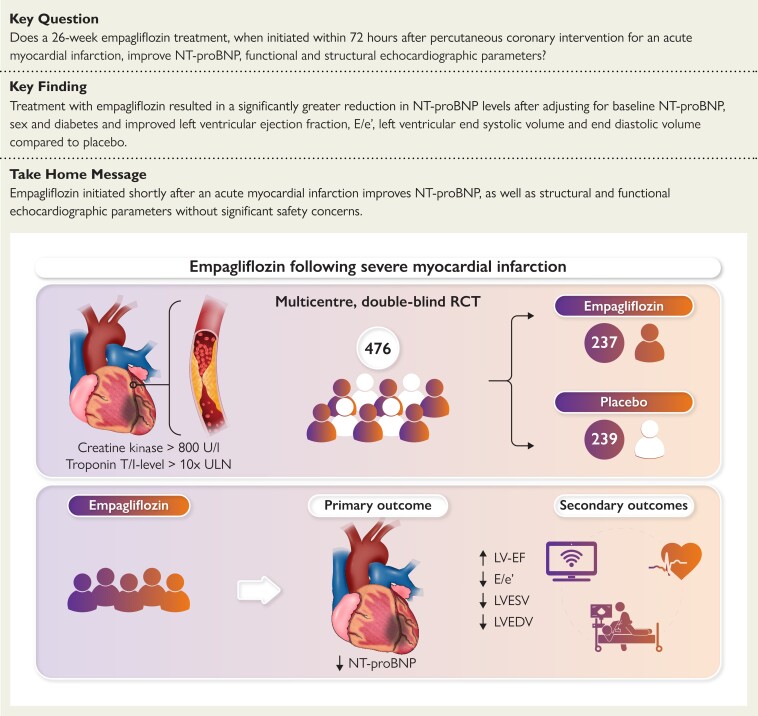
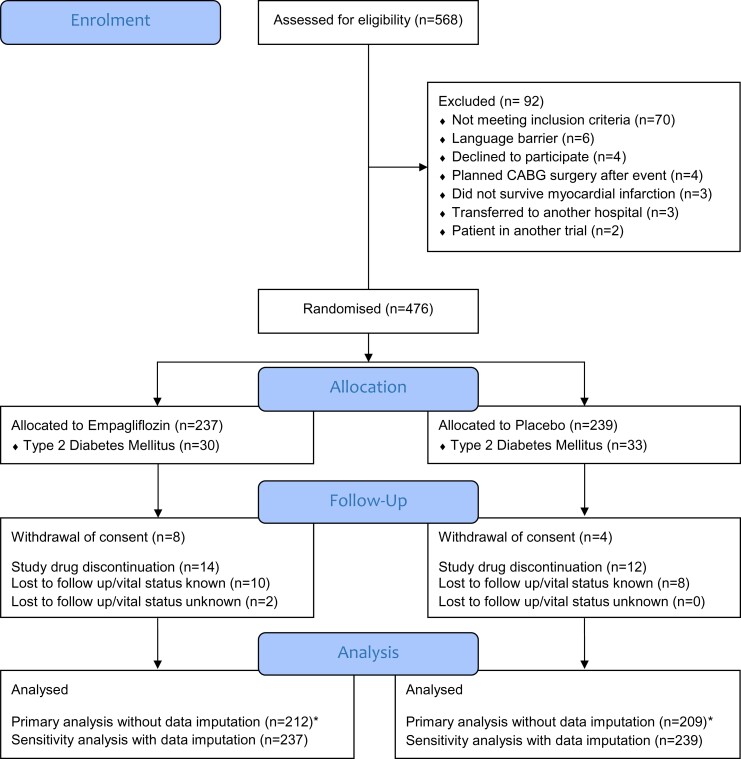
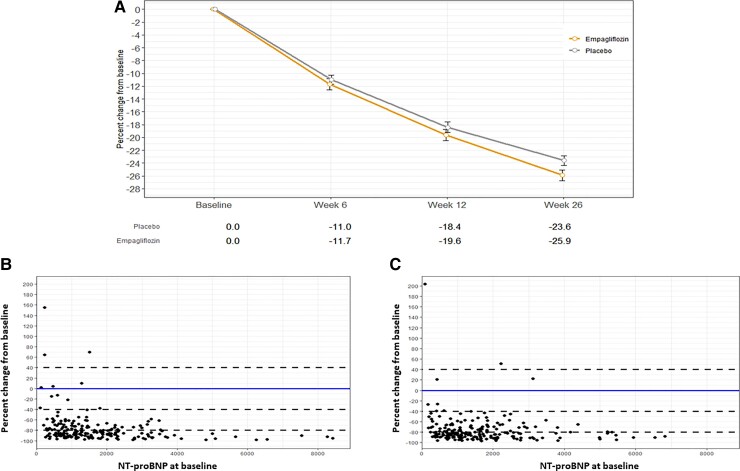
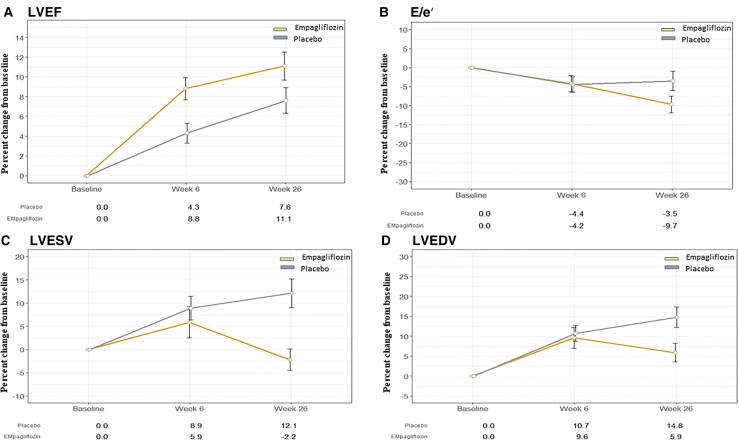
Aims: Sodium–glucose co-transporter 2 inhibition reduces the risk of hospitalization for heart failure and for death in patients with symptomatic heart failure. However, trials investigating the effects of this drug class in patients following acute myocardial infarction are lacking. Methods and results: In this academic, multicentre, double-blind trial, patients (n = 476) with acute myocardial infarction accompanied by a large creatine kinase elevation (>800 IU/L) were randomly assigned to empagliflozin 10 mg or matching placebo once daily within 72 h of percutaneous coronary intervention. The primary outcome was the N-terminal pro-hormone of brain natriuretic peptide (NT-proBNP) change over 26 weeks. Secondary outcomes included changes in echocardiographic parameters. Baseline median (interquartile range) NT-proBNP was 1294 (757–2246) pg/mL. NT-proBNP reduction was significantly greater in the empagliflozin group, compared with placebo, being 15% lower [95% confidence interval (CI) −4.4% to −23.6%] after adjusting for baseline NT-proBNP, sex, and diabetes status (P = 0.026). Absolute left-ventricular ejection fraction improvement was significantly greater (1.5%, 95% CI 0.2–2.9%, P = 0.029), mean E/e′ reduction was 6.8% (95% CI 1.3–11.3%, P = 0.015) greater, and left-ventricular end-systolic and end-diastolic volumes were lower by 7.5 mL (95% CI 3.4–11.5 mL, P = 0.0003) and 9.7 mL (95% CI 3.7–15.7 mL, P = 0.0015), respectively, in the empagliflozin group, compared with placebo. Seven patients were hospitalized for heart failure (three in the empagliflozin group). Other predefined serious adverse events were rare and did not differ significantly between groups. Conclusion: In patients with a recent myocardial infarction, empagliflozin was associated with a significantly greater NT-proBNP reduction over 26 weeks, accompanied by a significant improvement in echocardiographic functional and structural parameters. ClinicalTrials.gov registration: NCT03087773.
Overview
The claims and statistics of this paper haven’t been checked yet.
Free: it reads the open-access text and checks the first 5 claims that cite a source we can check. Create a free account to check every claim.
Integrity signals
Registry
Cites
Statistics
Figures
Verification
Claims the paper makes
The claims and statistics of this paper haven’t been checked yet.
Free: it reads the open-access text and checks the first 5 claims that cite a source we can check. Create a free account to check every claim.
Claims other papers make about this one
Each is checked against this paper’s own text: does it say what the citing paper says it does?
In the citing paper
“Since patients with diabetes are more likely to present with atypical symptoms, reperfusion is often undertaken late.431”
From 2023 ESC guidelines for the management of cardiovascular disease in patients with diabetes. (2023) · cites this paper as [431]
Self-check
Percentages, sums and reported differences re-computed from the paper’s own numbers.
The self-check needs the paper’s full text.
Citations
Cites
2021 ESC guidelines for the diagnosis and treatment of acute and chronic heart failure
McDonagh, T. A., Metra, M., Adamo, M., Gardner, R. S., Baumbach, A., Böhm, M., Burri, H., Butler, J., Čelutkienė, J., Chioncel, O., et al. (2021) · European Heart Journal · doi:10.1093/eurheartj/ehab368 · Cited by 13,344
Lang, R. M., Badano, L. P., Mor-Avi, V., Afilalo, J., Armstrong, A., Ernande, L., Flachskampf, F. A., Foster, E., Goldstein, S. A., Kuznetsova, T., et al. (2015) · Journal of the American Society of Echocardiography · doi:10.1016/j.echo.2014.10.003 · Cited by 12,362
Ibanez, B., James, S., Agewall, S., Antunes, M. J., Bucciarelli-Ducci, C., Bueno, H., Caforio, A. L. P., Crea, F., Goudevenos, J. A., Halvorsen, S., et al. (2018) · European Heart Journal · doi:10.1093/eurheartj/ehx393 · Cited by 9,728
Heart Disease and Stroke Statistics—2019 Update: A Report From the American Heart Association
Benjamin, E. J., Muntner, P., Alonso, A., Bittencourt, M. S., Callaway, C. W., Carson, A. P., Chamberlain, A. M., Chang, A. R., Cheng, S., Das, S. R., et al. (2019) · Circulation · doi:10.1161/cir.0000000000000659 · Cited by 9,036
Dapagliflozin in Patients with Heart Failure and Reduced Ejection Fraction
McMurray, J. J. V., Solomon, S. D., Inzucchi, S. E., Køber, L., Kosiborod, M. N., Martinez, F. A., Ponikowski, P., Sabatine, M. S., Anand, I. S., Bělohlávek, J., et al. (2019) · New England Journal of Medicine · doi:10.1056/nejmoa1911303 · Cited by 7,140 · cited 2×
“Genital fungal infection 9 (9) 7 (7) 2 (2)”
BackgroundAngiotensin-neprilysin inhibition versus enalapril in heart failure
McMurray, J. J. V., Packer, M., Desai, A. S., Gong, J., Lefkowitz, M. P., Rizkala, A. R., Rouleau, J. L., Shi, V. C., Solomon, S. D., Swedberg, K., et al. (2014) · New England Journal of Medicine · doi:10.1056/nejmoa1409077 · Cited by 6,957
Cardiovascular and renal outcomes with empagliflozin in heart failure
Packer, M., Anker, S. D., Butler, J., Filippatos, G., Pocock, S. J., Carson, P., Januzzi, J., Verma, S., Tsutsui, H., Brueckmann, M., et al. (2020) · New England Journal of Medicine · doi:10.1056/nejmoa2022190 · Cited by 5,206
Empagliflozin in heart failure with a preserved ejection fraction
Anker, S. D., Butler, J., Filippatos, G., Ferreira, J. P., Bocchi, E., Böhm, M., Brunner–La Rocca, H.-P., Choi, D.-J., Chopra, V., Chuquiure-Valenzuela, E., et al. (2021) · New England Journal of Medicine · doi:10.1056/nejmoa2107038 · Cited by 4,874 · cited 1×
“Hospitalization due to heart failure 7 (10) 3 (6) 4 (4)”
Background2022 AHA/ACC/HFSA Guideline for the Management of Heart Failure
Heidenreich, P. A., Bozkurt, B., Aguilar, D., Allen, L. A., Byun, J. J., Colvin, M. M., Deswal, A., Drazner, M. H., Dunlay, S. M., Evers, L. R., et al. (2022) · Journal of the American College of Cardiology · doi:10.1016/j.jacc.2021.12.012 · Cited by 2,862
The ketone metabolite β-hydroxybutyrate blocks NLRP3 inflammasome-mediated inflammatory disease
Youm, Y.-H., Nguyen, K. Y., Grant, R. W., Goldberg, E. L., Bodogai, M., Kim, D., D'Agostino, D., Planavsky, N., Lupfer, C., Kanneganti, T. D., et al. (2015) · Nature Medicine · doi:10.1038/nm.3804 · Cited by 2,172
Cited by
Items 201–300 of 303
Henry, P., Jacqueminet, S., Lemesle, G., Prévost, G., Boccara, F., Cosson, E., Puymirat, É., Angoulvant, D., Roubille, F., Kownator, S., et al. (2025) · Diabetes & Metabolism · doi:10.1016/j.diabet.2025.101645 · Cited by 1
Akkawi, M., Upreti, P., Damlakhy, A., Kidess, G. G., Hamza, M., Rajak, K., Turkmani, M. M., Harmouch, K. M., Bahar, Y., & Alraies, M. C. (2025) · The American Journal of the Medical Sciences · doi:10.1016/j.amjms.2025.04.013 · Cited by 1
Luo, S., Liu, H., Li, Z., Zhou, Y., He, S., Zhang, D., Qin, S., & Wen, X. (2025) · Cardiovascular Drugs and Therapy · doi:10.1007/s10557-025-07716-y · Cited by 1
Bojti, I., Bojti, F., Hartikainen, T. S., Breibart, P., Löffelhardt, N., Valina, C. M., Franke, K., Kaier, K., Wolf, D., Westermann, D., et al. (2025) · BMC Cardiovascular Disorders · doi:10.1186/s12872-025-04981-5 · Cited by 2
“This may seem contradictory to previous studies, where an SGLT2-i use did improve the LVEF after MI or heart failure with reduced ejection fraction [4, 37].”
Heshmat, A., Wakeel, L. M. E., Khorshid, H. M., & Fahmy, S. (2025) · Future Journal of Pharmaceutical Sciences · doi:10.1186/s43094-025-00864-w · Cited by 3
Yu, X., Zhao, L. Y., Liu, H., Zhou, X., Zhao, G., Zhang, Z., Qian, X., Sun, B., Fang, S., Yang, Q., et al. (2025) · American Journal of Cardiovascular Drugs · doi:10.1007/s40256-025-00759-4 · Cited by 1
Zhang, Q., Wu, Z., Jiang, X., Wang, Y., Yu, X., Guo, X., & Guo, C. (2025) · Frontiers in Cardiovascular Medicine · doi:10.3389/fcvm.2025.1651251 · Cited by 2
Guo, C., Dou, J., Guo, F.-S., Zhao, S., Wu, R.-Y., Hu, Y.-W., Su, L., & Wei, J. J. (2025) · European journal of medical research · doi:10.1186/s40001-025-03759-x · Cited by 1
“The landmark EMMY [1] and DACAMI [2] trials found that early administration of SGLT2 inhibitors significantly reduced N-terminal pro-brain natriuretic peptide and improved left ventricular remodeling in patients with myocardial infarction.”
Omrani, M. A., Baskaran, B. S., Sadeghi, H., Ahmadi, F., Eddin, L. E., Jafari, A., & Muanda, F. T. (2026) · Expert Opinion on Drug Safety · doi:10.1080/14740338.2026.2641874 · Cited by 3
Kozan, I. I., Fedorov, S. V., Kozan, N. M., & Herashchenko, A. S. (2026) · Reports of Morphology · doi:10.31393/morphology-journal-2026-32(1)-04 · Cited by 1
An overview of the role of platelets in vascular disease associated with diabetes mellitus
Panou, T., Popovic, D. S., Mikhailidis, D. P., & Παπάνας, Ν. (2026) · HORMONES · doi:10.1007/s42000-026-00760-9 · Cited by 1
Molecular Mechanisms and Clinical Applications of SGLT2 Inhibitors in Cardiovascular Diseases
Ma, C., Yang, P., Du, R., Yang, S., & Xu, Z. (2026) · Journal of Cardiovascular Translational Research · doi:10.1007/s12265-026-10794-4 · Cited by 1
Fernández–Calle, P., Díaz–Garzón, J., Bartlett, W. A., Coşkun, A., Carobene, A., Lao, E. G., Marqués-García, F., Sufrate-Vergara, B., Moreno-Parro, I., Galior, K. D., et al. (2026) · Clinical Chemistry · doi:10.1093/clinchem/hvag051 · Cited by 2
Biologics for cardiovascular diseases: from bench to bedside
Sun, X., Wang, X., Jia, R., Tang, J., Zeng, X. Y., Zhao, F., Zeng, F., Huang, N., Li, J., & Cui, K. (2026) · Signal Transduction and Targeted Therapy · doi:10.1038/s41392-026-02673-w · Cited by 4
Jiang, Y., Jia, S., tian, D., Qiang, H., Zhao, H., Chen, X., Su, X., & Jia, X. (2026) · Cardiovascular Drugs and Therapy · doi:10.1007/s10557-026-07904-4 · Cited by 3
Begić, E., & Aziri, B. (2023) · Galen medical journal · doi:10.5937/galmed2305081b · Cited by 1
Cao, M.-J., Shi, F., Yu, B., Ma, X.-C., Zhang, C., Xu, L., Jiang, Y., Ge, H., Shen, L., & Pu, J. (2023) · Frontiers in Endocrinology · doi:10.3389/fendo.2023.1199960 · Cited by 1
“Notably, three studies, specifically the EMMY study (41), SGLT2-I AMI PROTECT (39, 40), and”
BackgroundResultel-Andari, R., Fialka, N., Kang, J. J. H., Bozso, S., Nagendran, J., & Nagendran, J. (2023) · American Journal of Cardiovascular Drugs · doi:10.1007/s40256-023-00618-0 · Cited by 1
Ghanbari, S., Gohari, S., Reshadmanesh, T., Mahjani, M., Arsang‐Jang, S., Ismail‐Beigi, F., Dadashi, M., Chiti, H., Asgari, A., Taheri, H., et al. (2024) · Journal of Diabetes & Metabolic Disorders · doi:10.1007/s40200-024-01393-8 · Cited by 1
“This aligns with the results of EMMY-trial, which demonstrated echocardiographic and structural benefits of empagliflozin in patients with acute MI and T2DM [9].”
O USO DE FÁRMACOS QUE REDUZEM A MORTALIDADE NO MANEJO DO INFARTO AGUDO DO MIOCÁRDIO
Motta, G. M. H., Novelli, L. P., Oliveira, M. E. M., Rocha, S. C. P., Sousa, K. S. D. P., da Silva, S. L., Pinheiro, B. S., Furtado, L. C., de Carvalho, L. C. B., Capuzzo, S. B. Q., et al. (2024) · Revista Contemporânea · doi:10.56083/rcv4n5-168 · Cited by 1
Expanding Clinical Use of Sodium-glucose Cotransporter-2 Inhibitors?
Dhawan, R., & Chaney, M. A. (2024) · Journal of Cardiothoracic and Vascular Anesthesia · doi:10.1053/j.jvca.2024.06.039 · Cited by 1
Mouffokes, A., Soliman, Y. Y., Amer, B. E., Umar, T. P., Gonnah, A. R., Ellabban, M. H., & Abdelazeem, B. (2024) · Irish Journal of Medical Science (1971 -) · doi:10.1007/s11845-024-03744-z · Cited by 4
庞, 樱. (2024) · Advances in Clinical Medicine · doi:10.12677/acm.2024.1472081 · Cited by 1
Perioperative management in patients treated with gliflozins
Šitina, M., & Šrámek, V. (2024) · Anesteziologie a intenzivní medicína · doi:10.36290/aim.2024.021 · Cited by 1
Meta-Analysis of Sodium–Glucose Cotransporter-2 Inhibitors in Patients With Acute Coronary Syndrome
Singh, S. T., Bliden, K. P., Tantry, U. S., Gurbel, P. A., & Lundgren, S. W. (2024) · American Journal of Therapeutics · doi:10.1097/mjt.0000000000001775 · Cited by 1
Air Pollution and Myocardial Infarction—A New Smoker’s Paradox?
von Lewinski, F., Quehenberger, F., Sacherer, M., Taucher, V., Strohhofer, C., Ablasser, K., Verheyen, N., Sourij, C., Kainz, A., Wünsch, G., et al. (2024) · Journal of Clinical Medicine · doi:10.3390/jcm13237324 · Cited by 1
Self-citationWaseem, R., Sultan, S. M. M. B., Hussain, M. S., Shah, H. H., & Haque, M. A. (2025) · Annals of Medicine and Surgery · doi:10.1097/ms9.0000000000002903 · Cited by 1
“EMMY was not liable as the drug was administered in patients following acute myocardial infarction [ 12 ] .”
Nunes, J. T., & Udell, J. A. (2023) · Journal of the American Heart Association · doi:10.1161/jaha.123.030495 · Cited by 1
Badimón, J. J., & Santos‐Gallego, C. G. (2023) · Hellenic Journal of Cardiology · doi:10.1016/j.hjc.2023.09.015 · Cited by 1
A Parameter-based Dynamic Scheduling System for J2EE Server Clusters.
Jan Mikšátko, A., & Andresen, D. (2005)
Sodium–glucose co-transporter 2 inhibition: the saga continues
Crea, F. (2022) · European Heart Journal · doi:10.1093/eurheartj/ehac590
Brunori, G. (2022) · The Journal of AMD · doi:10.36171/lamd22.25.3.3
The controversial control of glycemic levels in the acute state of the disease
Arévalo‐Lorido, J. C., & Carretero‐Gómez, J. (2022) · International Journal of Cardiology · doi:10.1016/j.ijcard.2022.11.053
‘Outside-the-box’ therapeutic solutions for ischaemia–reperfusion myocardial protection
Bochaton, T., & Mewton, N. (2023) · European Heart Journal Acute Cardiovascular Care · doi:10.1093/ehjacc/zuad010
Die neuen Wunderdrogen - eine Einordnung aus kardiologischer Sicht
Schirmer, S. H. (2023) · Info Diabetologie · doi:10.1007/s15034-023-4512-7
Toward Parsing the Heterogeneity in Post-MI LV Remodeling
Shah, A. M. (2023) · JACC. Cardiovascular imaging · doi:10.1016/j.jcmg.2023.03.026
Batista, P. E. M., Monges, A. E. A., & Baldissera, P. M. (2023) · Research Society and Development · doi:10.33448/rsd-v12i9.41542
Terapéutica no insulínica para los pacientes hospitalizados con diabetes tipo 2
Gracia‐Ramos, A. E. (2023) · Salud Jalisco · doi:10.35366/113697
Moreno, A., Rodriguez-Granillo, A. M., & de la Hoz, R. P. (2023) · Revista Argentina de Cardiología · doi:10.7775/rac.es.v91.i5.20669
Use of Sodium-Glucose Co-transporter-2 Inhibitors after Acute Myocardial Infarction
Mikhail, N. E. (2024) · Journal of Diabetes and Clinical Research · doi:10.33696/diabetes.6.058
Early Initiation of SGLT2 Inhibitor is Important Irrespective of Ejection Fraction
Ganguly, K. (2024) · Journal of Medical Science And clinical Research · doi:10.18535/jmscr/v12i04.06
Crea, F. (2024) · European Heart Journal · doi:10.1093/eurheartj/ehae261
Wang, X., Lei, M., Wang, J., Sun, X., Li, C., Li, Y., Zhao, Z., & Xue, Z. (2024) · Research Square · doi:10.21203/rs.3.rs-4341948/v1
Patient Selection Is the Key to EMPACTing Development of Heart Failure After Myocardial Infarction
Kochar, A., Gattani, R., & Vaduganathan, M. (2024) · Journal of the American College of Cardiology · doi:10.1016/j.jacc.2024.04.027
Tao, S., Lu, X., Ye, Z., & Tong, N. (2024) · World Journal of Diabetes · doi:10.4239/wjd.v15.i7.1461
Zhang, M., Wu, L., Shen, Y., Zhang, J., Xie, B., Wu, X., & Wei, D. (2024) · Research Square · doi:10.21203/rs.3.rs-4653038/v1
EMPULSE trial: Time to use SGLT-2 inhibitors in acute heart failure?
Roy, S., Saxena, M., & Pradhan, A. K. (2024) · The National Medical Journal of India · doi:10.25259/nmji_1190_2023
Effects of SGLT2 inhibitors on acute myocardial infarction: A systematic review and meta-analysisPreprint
Hu, C., Ou, S., Zheng, X., & Tan, X. (2024) · Research Square · doi:10.21203/rs.3.rs-4901338/v1
Šaler, F., Poljak, T. B. D., Manola, Š., & Jurin, I. (2024) · Cardiologia Croatica · doi:10.15836/ccar2024.528
Gao, F. M., Ali, A. S., Bellomo, R., Gaca, M., Lecamwasam, A., Churilov, L. P., & Ekinci, E. I. (2024) · doi:10.2337/figshare.26940682.v1
Pereverzeva, K. G., Yаkushin, S. S., Евгеньевна, Т. И., Nikiforov, A. A., Nikiforova, L. V., & Laut, M. V. (2024) · Kardiologiia · doi:10.18087/cardio.2024.12.n2729
Alharbi, H. A., Albasri, R. A. N., Jan, R. A., Hamood, N. A., Alqahtani, F. M. M., Alsuwaylih, M. A., Alanazi, Y. A., & Mohaini, M. A. (2024) · Journal of Advanced Trends in Medical Research · doi:10.4103/atmr.atmr_164_24
Tournas, G., Papadopoulou, A., Manifava, P., Tselegkidi, M.-E., Dimoula, A., Nastatos, P., Tsagalou, E. P., Briasoulis, Α., & Stamatelopoulos, K. S. (2025) · American Journal of Therapeutics · doi:10.1097/mjt.0000000000001907
Early initiation of SGLT2 inhibitors after acute myocardial infarction
Hammer, A., Sossalla, S. T., & Sulzgruber, P. (2025) · European Heart Journal - Cardiovascular Pharmacotherapy · doi:10.1093/ehjcvp/pvaf020
Pivotal Trials in Heart Failure in 2024—Putting Evidence into Clinical Practice!
Thandi, P., Pradhan, A. K., & Behera, S. K. (2025) · International Journal of Angiology · doi:10.1055/a-2624-5735
Mejia, C. A. U., Valdes, J. R. F., Corletto, D. A., Asturias, M. A. T., Mendoza, A. I. R., Razo, P., Castillo, J. L., Flores, D. R. A., Garcia-Vasquez, E. A., & Hernández, L. F. L. (2025) · Cureus · doi:10.7759/cureus.87354
“Lewinsky reported three deaths in the empagliflozin group, while no deaths were reported in the placebo group [20].”
InfluentialSanyaolu, S. E., Lawal, O. J., Okundare, A. O., & Ogundele, O. I. (2025) · Premier Journal of Biomedical Science · doi:10.70389/pjbs.100009
“As highlighted by von Lewinski et al. 50 in the EMMY trial, empagliflozin was shown to significantly reduce serum N-terminal pro-B-type natriuretic peptide levels over 26 weeks when compared with placebo among post–percutaneous coronary intervention patients.”
Niemiec, R., Niemiec, M., Nowak, M., Gurba, B., Bujak, M., Chowaniec-Rybka, K., Sowier, M., Nowotarska, A., Gruchlik, B., Pytlewski, A., et al. (2025) · Biomedicines · doi:10.3390/biomedicines13092265 · Cited by 2
Biswas, S. K., Krishnan, E., Srivastava, Y., Jain, M. K., Bodar, Y. P., Singh, M. H., Zaman, B. M. A., Giri, M. K., Das, M. D. K., Ayaanuddin, S. K., et al. (2025) · Research Square · doi:10.21203/rs.3.rs-7613283/v1
Baadu, F. A., Arif, M. A., Riaz, Z., Argariya, M., rani, K., & Iqbal, M. (2025) · Cureus · doi:10.7759/cureus.92680
“Empagliflozin consistently improved LVEF across trials by von Lewinski et al. [24] and Sourij et al. [31], with gains between 1.5-5.7%.”
InfluentialKaribova, M., Кручинова, С. В., & Kosmacheva, E. D. (2025) · South Russian Journal of Therapeutic Practice · doi:10.21886/2712-8156-2025-6-3-42-51
Paulino-González, D., Pardiño-Vega, M. A., Andrade-Arbaiza, E., Xiloj, S., Juárez-Aldana, K. V., Cruz-Hernandez, S. E., Amezcua-Guerra, L. M., & Navarro-Martínez, D. A. (2025) · American Journal of Therapeutics · doi:10.1097/mjt.0000000000002039 · Cited by 2
Santner, V., Kolesnik, E., Benedikt, M., Oulhaj, A., Rohrer, U., Manninger, M., Tripolt, N. J., Pferschy, P. N., Aziz, F., Wallner, M., et al. (2025) · Journal of Clinical Medicine · doi:10.3390/jcm14238294
“…infarction (EMMY) trial underlines the potential effect of SGLT2is on cardiac remodeling, showing a significant effect on left ventricular volumes after treatment with empagliflozin for 26 weeks after myocardial infarction compared to placebo in the post hoc echocardiography sub-analysis [12,13].”
Self-citationTackling the Problem of Adverse Ventricular Remodeling After Myocardial Infarction
Abbate, A., & Buono, M. G. D. (2025) · Elsevier eBooks · doi:10.1016/b978-0-443-11869-2.00030-8
Wang, S., Chan, T., Lee, Y., Wang, Y., Chou, C., Chang, Y., Tsai, H., Lee, H., Lip, G. Y. H., Chiang, C., et al. (2025) · British Journal of Clinical Pharmacology · doi:10.1002/bcp.70416
Guo, Q., Guo, Y., Shi, S., Wang, H., Que, B., Xu, L., Liu, H., Nie, S., Long, D., & Wang, X. (2025) · Revista Española de Cardiología (English Edition) · doi:10.1016/j.rec.2025.12.007 · Cited by 1
Aziz, F., Tripolt, N. J., Pferschy, P. N., Kolesnik, E., Mangge, H., Curcic, P., Hermann, M., Meinitzer, A., von Lewinski, D., & Sourij, H. (2023) · Figshare · doi:10.6084/m9.figshare.23722344
Self-citationAdditional file 1 of Impact of SGLT2 inhibitors on patient outcomes: a network meta-analysis
Chen, J.-Y., Pan, H.-C., Shiao, C.-C., Chuang, M.-H., See, C. Y., Yeh, T.-H., Yang, Y., Chu, W.-K., & Wu, V. (2024) · Figshare · doi:10.6084/m9.figshare.26633337
Carluccio, E., Biagioli, P., Reboldi, G., Mengoni, A., Lauciello, R., Zuchi, C., D’Addario, S., Bardelli, G., & Ambrosio, G. (2024) · Figshare · doi:10.6084/m9.figshare.26614570
Chen, J., Chang, J., Shi, Q., Li, X., Wang, L., & Zhao, H. (2023) · Figshare · doi:10.6084/m9.figshare.24266039
Hassan, A. M., Aziz, F., Tripolt, N. J., Herrmann, M., Sourij, H., & von Lewinski, D. (2025) · Scientific Reports · doi:10.1038/s41598-025-32913-y
Self-citationGuo, Q., Guo, Y., Shi, S., Wang, H., Que, B., Xu, L., Liu, H., Nie, S., 龙德勇, & Wang, X. (2026) · Revista Española de Cardiología · doi:10.1016/j.recesp.2025.11.020
Afsharirad, H., Ghaffari, S., Javanshir, E., Allord, S., Khani, E., & Entezari‐Maleki, T. (2026) · American Journal of Therapeutics · doi:10.1097/mjt.0000000000002077
Kim, E. Y., & Feinstein, M. J. (2026) · Canadian Journal of Cardiology · doi:10.1016/j.cjca.2026.02.024 · Cited by 5
Mohod, B. A., Mayabhate, M. M., & D., S. A. (2026) · International Journal of Health Sciences and Research · doi:10.52403/ijhsr.20260247
Movila, D. E., Motofelea, A. C., Dragan, S. R., Schiller, A., Ionac, A., Motofelea, N., & Căruntu, F. R. (2026) · International Journal of Molecular Sciences · doi:10.3390/ijms27073168
Vyalkina, Y. A., Михайлович, М. Е., Safiullina, Z. M., Kozlova, K. S., & Шалаев, С. В. (2026) · Rational Pharmacotherapy in Cardiology · doi:10.20996/1819-6446-2026-3261
Jarosz-Popek, J., Eyileten, C., Wicik, Z., Ahmadova, S., Siller-Matula, J. M., von Lewinski, D., Sourij, H., & Postula, M. A. (2026) · European journal of medical research · doi:10.1186/s40001-026-04486-7
Self-citationXu, Z., Dai, X., Jia, T., Li, X., Zhang, X., Zhang, P., Niu, H., & Li, J. (2026) · Frontiers in Cardiovascular Medicine · doi:10.3389/fcvm.2026.1797628
Novel treatment strategies in cardiogenic shock: an update on ongoing clinical trials
Lopez, M. P., Manicone, F., Holle, S. L. D., Wenzl, F. A., Kimmoun, A., Mebazaa, A., & Sionís, A. (2026) · Heart Failure Reviews · doi:10.1007/s10741-026-10637-z
CSC Guidelines for Percutaneous Coronary Intervention (2025)
Fu, X., Chinese Medical Association Chinese Society of Cardiology, & Editorial Board of Chinese Journal of Cardiology (2026) · Cardiology Discovery · doi:10.1097/cd9.0000000000000194
Crisóstomo, V., Báez-Díaz, C., Sánchez‐Peralta, L. F., Vázquez-López, F., Torrescusa, A., Gálvez‐Montón, C., & Sanchez-Margallo, F. M. (2026) · European journal of medical research · doi:10.1186/s40001-026-04557-9
“So far, among large RCTs, only the EMMY trial [19] has reported empagliflozin’s impact on LVEF.”
Li, J., Dai, W., Alavi, R., Carreño, J. E., Arakaki, X., Pahlevan, N. M., & Kloner, R. A. (2026) · Journal of the American Heart Association · doi:10.1161/jaha.125.047087
Wang, Z., Wang, Y., Shangguan, W., & Li, T. (2026) · Frontiers in Cardiovascular Medicine · doi:10.3389/fcvm.2026.1776906 · Cited by 1
Benedikt, M., Herrmann, M., Aziz, F., Tripolt, N. J., Pferschy, P. N., Manninger, M., Wallner, M., Planka, R. M., Zirlik, A., Sourij, H., et al. (2026) · Journal of Clinical Medicine · doi:10.3390/jcm15124681
Self-citationWu, J., Cai, Y., Chen, J., Zang, Q., Zhu, P., & Ding, Y. (2026) · Frontiers in Pharmacology · doi:10.3389/fphar.2026.1860779 · Cited by 1
“At the same time, translational and clinical data increasingly suggest that SGLT2is may influence outcomes in selected acute settings, especially AHF and early post-MI remodeling (post-MI) (Voors et al., 2022; Song et al., 2025; Von et al., 2022).”
InfluentialKozan, I. I., & Fedorov, S. V. (2026) · Art of Medicine · doi:10.21802/artm.2026.2.38.34
Ahmed, M., Shuja, M. H., Shakil, S., Ansari, H. U. H., Shakil, F., Naveed, M. A., Rehman, S. A. U., Shaikh, N., Ali, S. H., Ansari, H. W., et al. (2026) · Clinical Medicine Insights Cardiology · doi:10.1177/11795468261469143
Baharvand, F., Mehran, R., Muro, F. M. D., Mohammadi, A., Aghajankhah, M., Parvaneh, S., Parsa, N. A., Hassanipour, S., Aboutaleb, E., Jenab, Y., et al. (2026) · American Journal of Cardiovascular Drugs · doi:10.1007/s40256-026-00814-8 · Cited by 1
“Larger-scale trials with extended follow-up are needed to determine whether empagliflozin’s benefits in post-MI patients translate into meaningful reductions in long-term cardiovascular events [4].”
InfluentialDapagliflozin in acute myocardial infarction with type 2 diabetes: a randomized clinical trial
Macías-Cervantes, H. E., Guardado‐Mendoza, R., González, L. J., Bautista-López, G. R., Hernández-Tizapa, K., Carrillo-Torres, M. Á., Fernández-Yáñez, G., Hinojosa-Gutiérrez, L. R., Ruiz, E. A. B., Cárdenas-Muñoz, M. E., et al. (2026) · Current Problems in Cardiology · doi:10.1016/j.cpcardiol.2026.103401 · Cited by 1
Mohamed, A., Badr, S. F., Hussien, M. N., & El-Saied, S. B. (2026) · Tanta Medical Journal · doi:10.4103/tmj.tmj_27_25
Cardioprotective properties of empagliflozin and other SGLT2 inhibitors
Zelniker, T. A., & Braunwald, E. (2026) · Nature Reviews Cardiology · doi:10.1038/s41569-026-01325-4
Why Post-MI CMR Needs a New Toolkit
Zaha, V. G., Kang, Y. M., & McGuire, D. K. (2026) · JACC: Cardiovascular Interventions · doi:10.1016/j.jcin.2026.05.002
Dakhil, Z. A. (2026) · Cardiovascular Medicine · doi:10.3390/cardiovascmed29030029
Lee, S. Y., Kim, S. M., & Song, Y. B. (2026) · Journal of Cardiovascular Intervention · doi:10.54912/jci.2026.0011
Research Directions After the DAPA-STEMI Trial
Ali, N., Khawaja, A. M., Sohaib, M., Khan, M., Ali, A., & Wali, D. (2026) · American Journal of Therapeutics · doi:10.1097/mjt.0000000000002205
Catao, M., Mamede, I., Filho, R. B. S., Carvalhal, G., Arêa, L., & Pinto, M. (2026) · Journal of Diabetes and its Complications · doi:10.1016/j.jdiacomp.2026.109393 · Cited by 1
Bi, S., Li, D., Du, J., Li, W., Yang, X., Yao, Z., Zhang, Y., Zhang, W., & Yao, Z. (2026) · Reviews in Cardiovascular Medicine · doi:10.31083/rcm48719
Ma, Y., Hu, X., Cao, Y., Yang, X., Zhao, Y., Tian, Y., & Liang, H. (2026) · Tissue and Cell · doi:10.1016/j.tice.2026.103991
Metadata
- Authors
- von Lewinski, D., Kolesnik, E., Tripolt, N. J., Pferschy, P. N., Benedikt, M., Wallner, M., Alber, H., Berger, R., Lichtenauer, M., Saely, C. H., Moertl, D., Auersperg, P., Reiter, C., Rieder, T., Siller-Matula, J. M., Gager, G. M., Hasun, M., Weidinger, F., Pieber, T. R., Zechner, P. M., Herrmann, M., Zirlik, A., Holman, R. R., Oulhaj, A., & Sourij, H.
- Affiliations
- Department of Internal Medicine, Division of Cardiology, Medical University of Graz , Auenbruggerplatz 15, 8036 Graz , Austria
- Medical University of Graz (AT)
- Klinikum Klagenfurt (AT)
- Department of Internal Medicine, Brothers of Saint John of God Eisenstadt , Eisenstadt , Austria
- Paracelsus Medical University (AT)
- Vorarlberg Institute for Vascular Investigation and Treatment (AT)
- Universitätsklinikum St. Pölten (AT)
- Kepler Universitätsklinikum (AT)
- Department of Medicine, Kardinal Schwarzenberg Hospital Schwarzach , Schwarzach , Austria
- Medical University of Vienna (AT)
- 2nd Medical Department with Cardiology and Intensive Care Medicine, Hospital Landstrasse , Vienna , Austria
- Department of Cardiology and Intensive Care Medicine, Hospital Graz South West, West Location , Graz , Austria
- University of Oxford (GB)
- Khalifa University of Science and Technology (AE)
- Corresponding author
- Sourij, Harald
- ORCID
- von Lewinski, Dirk
- Kolesnik, Ewald
- Tripolt, Norbert J
- Pferschy, Peter N
- Benedikt, Martin
- Wallner, Markus
- Alber, Hannes
- Berger, Rudolf
- Lichtenauer, Michael
- Saely, Christoph H
- Moertl, Deddo
- Reiter, Christian
- Siller-Matula, Jolanta M
- Gager, Gloria M
- Weidinger, Franz
- Pieber, Thomas R
- Zechner, Peter M
- Herrmann, Markus
- Zirlik, Andreas
- Holman, Rury R
- Oulhaj, Abderrahim
- Sourij, Harald
- Venue
- European Heart Journal
- Publisher
- Oxford University Press (OUP)
- Published
- 2022-08-29
- Volume
- 43
- Issue
- 41
- Pages
- 4421-4432
- ISSN
- 0195-668X (ISSN-L)
- 1522-9645
- PMC
- PMC9622301
- OpenAlex
- W4293447102
- Cited by
- 303
- References
- 51
- Citations by year
- 2026: 46 · 2025: 68 · 2024: 104 · 2023: 74 · 2022: 10
- FWCI
- 47.45
- Type
- journal article
- Language
- en
- Open access
- hybrid
- doi.org
- Licence
- Locations
- European Heart Journal (publishedVersion, cc-by-nc)
- PubMed Central (publishedVersion, cc-by-nc)
- PubMed (publishedVersion)
- Funders
- Boehringer Ingelheim (1245.151)
- Roche Diagnostics Austria
- Topics
- Health Sciences › Medicine › Endocrinology, Diabetes and Metabolism › Diabetes Treatment and Management
- Health Sciences › Medicine › Cardiology and Cardiovascular Medicine › Heart Failure Treatment and Management
- Health Sciences › Medicine › Cardiology and Cardiovascular Medicine › Acute Myocardial Infarction Research
- Keywords
- empagliflozin, acute myocardial infarction, SGLT2 inhibitors, NT-proBNP, left ventricular ejection fraction, left ventricular remodeling, heart failure, percutaneous coronary intervention, creatine kinase elevation, echocardiographic parameters, myocardial stunning, myocardial stunning recovery, myocardial stunning duration
- MeSH terms
- Benzhydryl Compounds, Glucosides, Heart Failure, Humans, Myocardial Infarction, Peptide Fragments, Stroke Volume, Biomarkers, Ventricular Function, Left, Natriuretic Peptide, Brain
About these checks
Registry, retraction, Cites and statistics results are computed, not judged, with one exception: a printed reference that no index lists is read once by a model before it counts as a citation error. Claims are extracted by a model and kept only when their quote appears verbatim in the text; each cited source is then checked, with a model’s help, for whether it says what the claim relies on. Those verdicts can be wrong — read the claim’s quote and the cited source before relying on one.
Statistics and arithmetic are recomputed, not judged.
Confidence bands are shown only for fields calibrated on our annotated test set. None is calibrated yet, so no band is shown.
What counts as a claim ›How we measure confidence ›How we check this ›
Are you an author, or do you see a problem with this page? Request a review
Data sources
Bibliographic data: Semantic Scholar, OpenAlex, Crossref.
Contains information from the Semantic Scholar Academic Graph Datasets, made available under the ODC Attribution License (ODC-BY 1.0).
Semantic Scholar’s data is described in: Kinney, R., et al. (2023). The Semantic Scholar Open Data Platform. arXiv:2301.10140.
