

The DOI matches its Crossref record; 2 of the 2 references it cites were found in a registry or an index.
Long-term effect of mavacamten in obstructive hypertrophic cardiomyopathy
Abstract
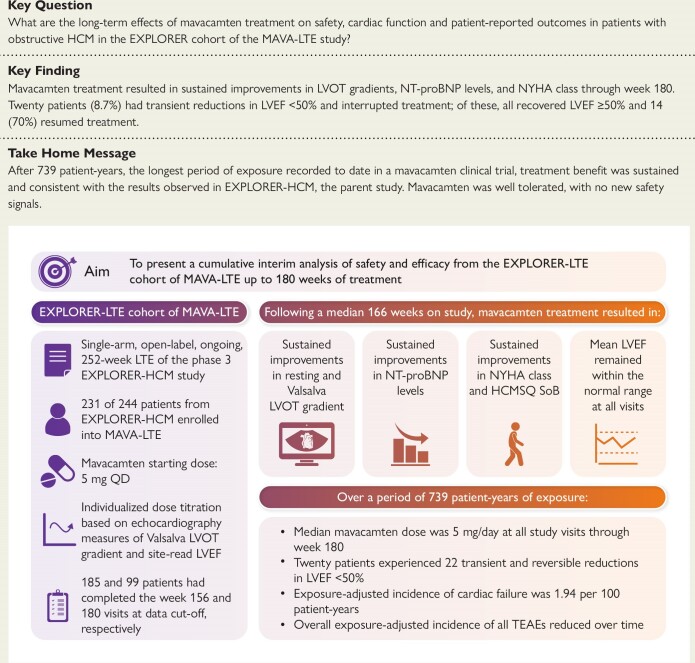
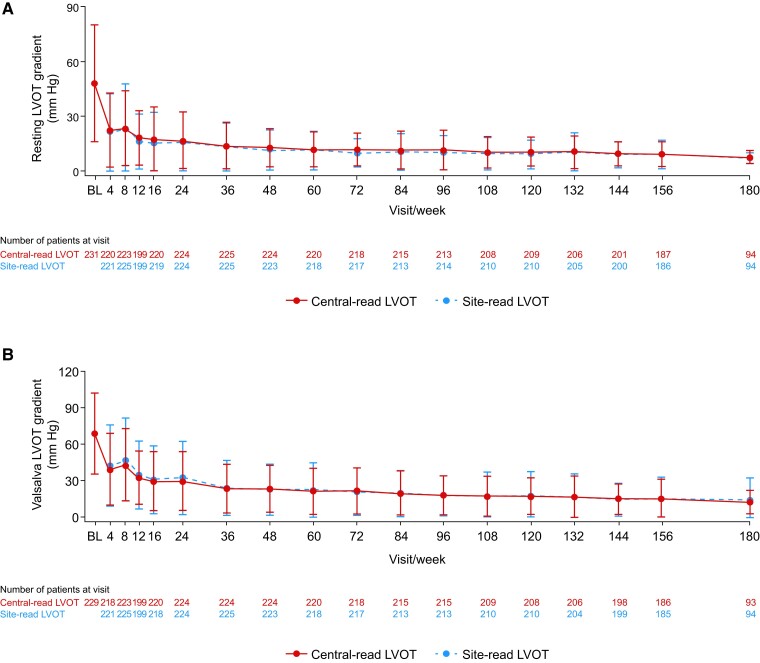
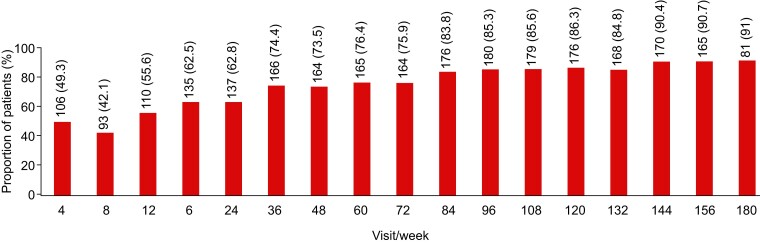
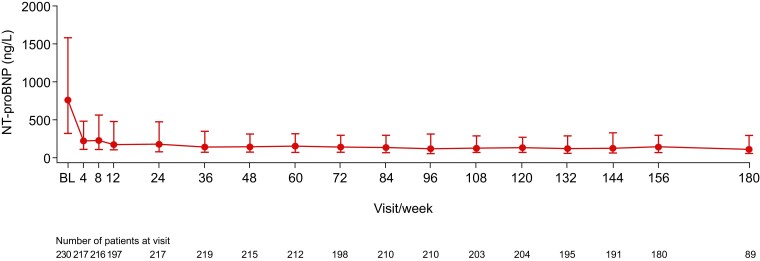
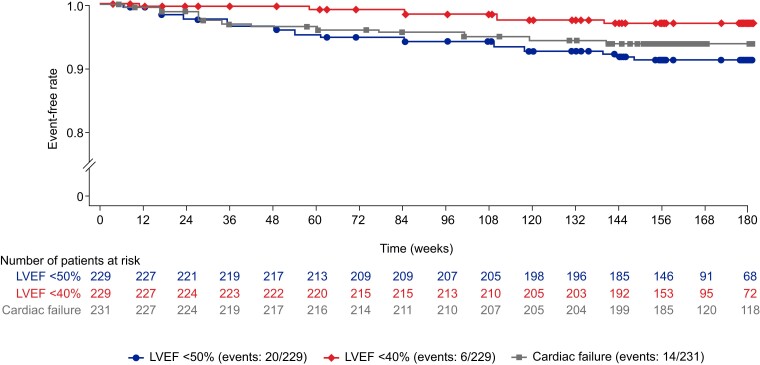
Background and Aims: Long-term safety and efficacy of mavacamten in patients with obstructive hypertrophic cardiomyopathy (HCM) are unknown. MAVA-LTE (NCT03723655) is an ongoing, 5-year, open-label extension study designed to evaluate the long-term effects of mavacamten. Methods: Participants from EXPLORER-HCM (NCT03470545) could enrol in MAVA-LTE upon study completion. Results: At the latest data cut-off, 211 (91.3%) of the 231 patients originally enrolled in MAVA-LTE still received mavacamten. Median (range) time on study was 166.1 (6.0–228.1) weeks; 185 (80.1%) and 99 (42.9%) patients had completed the Week 156 and 180 visits, respectively. Sustained reductions from baseline to Week 180 occurred in left ventricular outflow tract gradients [mean (standard deviation): resting, −40.3 (32.7) mmHg; Valsalva, −55.3 (33.7) mmHg], N-terminal pro B-type natriuretic peptide [median (interquartile range): −562 (−1162.5, −209) ng/L], and EQ-5D-5L score [mean (standard deviation): 0.09 (0.17)]. Mean left ventricular ejection fraction (LVEF) decreased from 73.9% (baseline) to 66.6% (Week 24) and 63.9% (Week 180). At Week 180, 74 (77.9%) of the 95 patients improved by at least one New York Heart Association class from baseline. Over 739 patient-years exposure, 20 patients (8.7%; exposure-adjusted incidence: 2.77/100 patient-years) experienced 22 transient reductions in LVEF to <50% resulting in temporary treatment interruption (all recovered LVEF of ≥50%). Five (2.2%) patients died (all considered unrelated to mavacamten). Conclusions: Long-term mavacamten treatment resulted in sustained improvements in cardiac function and symptoms in patients with obstructive HCM, with no new safety concerns identified. Transient, reversible reductions in LVEF were observed in a small proportion of patients during long-term follow-up.
Overview
The claims and statistics of this paper haven’t been checked yet.
Run the check — free, no account needed. It reads the open-access text and checks the sources it cites.
Integrity signals
Registry
Cites
Statistics
Figures
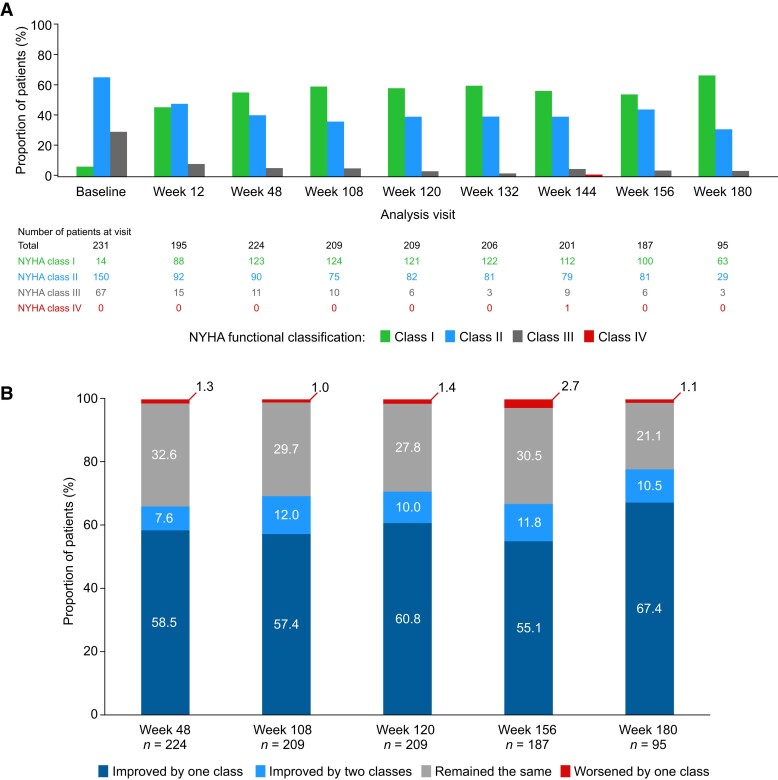
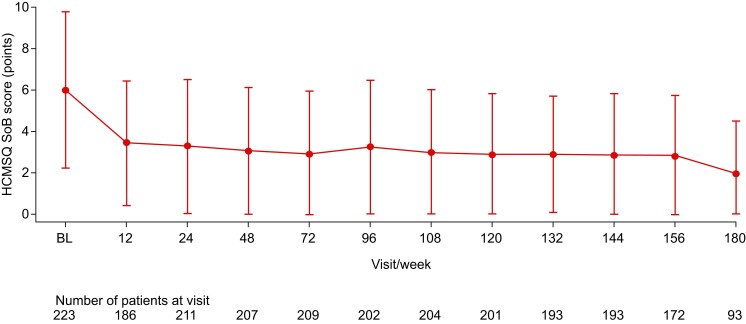
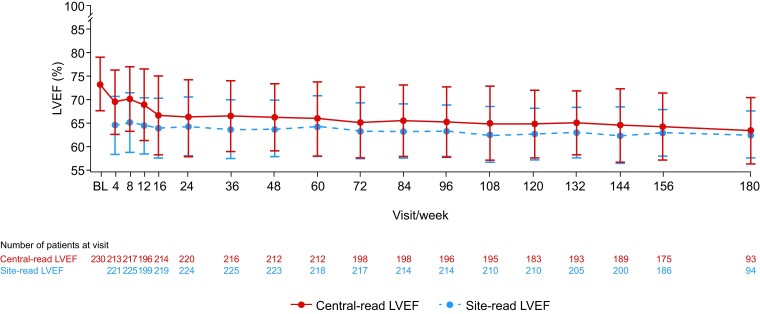
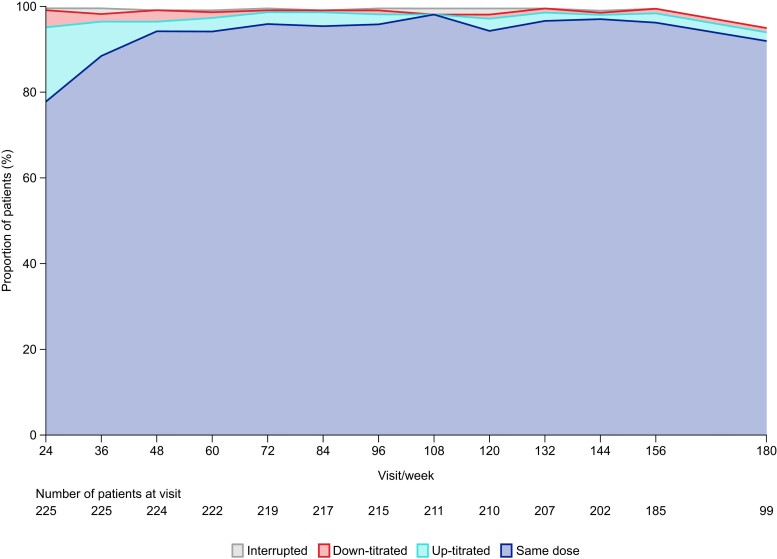
Verification
Claims the paper makes
The claims and statistics of this paper haven’t been checked yet.
Run the check — free, no account needed. It reads the open-access text and checks the sources it cites.
Claims other papers make about this one
Each is checked against this paper’s own text: does it say what the citing paper says it does?
The source backs part of the claim, not all of it — or backs it for a different population, condition or comparison.
In the citing paper
“In the long term follow-up MAVA_ LTE, 49 the incidence of atrial fibrillation adjusted for exposure was 4.5%.”
From Current management of hypertrophic cardiomyopathy (2025) · cites this paper as [49]
Experimental — accuracy not yet measuredThe cited source says what the claim attributes to it.
In the citing paper
“In EXPLORER-LTE, the number of patients with drop in ejection fraction to <50% was 8.7%, 49 and in VALOR-LTE it was 15.7%, 50 although clinical heart failure was much less common.”
From Current management of hypertrophic cardiomyopathy (2025) · cites this paper as [49]
Self-check
Percentages, sums and reported differences re-computed from the paper’s own numbers.
The self-check needs the paper’s full text.
Citations
Cites
Empagliflozin in heart failure with a preserved ejection fraction
Anker, S. D., Butler, J., Filippatos, G., Ferreira, J. P., Bocchi, E., Böhm, M., Brunner–La Rocca, H.-P., Choi, D.-J., Chopra, V., Chuquiure-Valenzuela, E., et al. (2021) · New England Journal of Medicine · doi:10.1056/nejmoa2107038 · Cited by 4,874
Hypertrophic Cardiomyopathy: Genetics, Pathogenesis, Clinical Manifestations, Diagnosis, and Therapy
Marian, A. J., & Braunwald, E. (2017) · Circulation Research · doi:10.1161/circresaha.117.311059 · Cited by 1,403
Research works printed but not linked: 16
- Alamo, 2017, Effects of myosin variants on interacting-heads motif explain distinct hypertrophic and dilated cardiomyopathy phenotypes, eLife, 6, e24634, 10.7554/eLife.24634 · DOI
- Arbelo, 2023, 2023 ESC guidelines for the management of cardiomyopathies: developed by the task force on the management of cardiomyopathies of the European Society of Cardiology (ESC), Eur Heart J, 44, 3503, 10.1093/eurheartj/ehad194 · DOI · Paper page
- Garfinkel, 2018, Genetic pathogenesis of hypertrophic and dilated cardiomyopathy, Heart Fail Clin, 14, 139, 10.1016/j.hfc.2017.12.004 · DOI
- Ommen, 2024, 2024 AHA/ACC/AMSSM/HRS/PACES/SCMR guideline for the management of hypertrophic cardiomyopathy: a report of the American Heart Association/American College of Cardiology Joint Committee on Clinical Practice guidelines, J Am Coll Cardiol, 83, 2324, 10.1016/j.jacc.2024.02.014 · DOI
- Schultze, 2022, Population estimates of obstructive and non-obstructive hypertrophic cardiomyopathy in the UK and Germany, Eur Heart J, 43, ehac544.1747, 10.1093/eurheartj/ehac544.1747 · DOI
- Maron, 2006, Hypertrophic cardiomyopathy is predominantly a disease of left ventricular outflow tract obstruction, Circulation, 114, 2232, 10.1161/CIRCULATIONAHA.106.644682 · DOI
- Zaiser, 2020, Patient experiences with hypertrophic cardiomyopathy: a conceptual model of symptoms and impacts on quality of life, J Patient Rep Outcomes, 4, 102, 10.1186/s41687-020-00269-8 · DOI
- Olivotto, 2020, Mavacamten for treatment of symptomatic obstructive hypertrophic cardiomyopathy (EXPLORER-HCM): a randomised, double-blind, placebo-controlled, phase 3 trial, Lancet, 396, 759, 10.1016/S0140-6736(20)31792-X · DOI · Paper page
- Rader, 2024, Mavacamten treatment for symptomatic obstructive hypertrophic cardiomyopathy: interim results from the MAVA-LTE study, EXPLORER-LTE cohort, JACC Heart Fail, 12, 164, 10.1016/j.jchf.2023.09.028 · DOI
- Ho, 2020, Study design and rationale of EXPLORER-HCM: evaluation of mavacamten in adults with symptomatic obstructive hypertrophic cardiomyopathy, Circ Heart Fail, 13, e006853, 10.1161/CIRCHEARTFAILURE.120.006853 · DOI
- Reaney, 2022, Development of the hypertrophic cardiomyopathy symptom questionnaire (HCMSQ): a new patient-reported outcome (PRO) instrument, Pharmacoecon Open, 6, 563, 10.1007/s41669-022-00335-5 · DOI
- Siontis, 2014, Atrial fibrillation in hypertrophic cardiomyopathy: prevalence, clinical correlations, and mortality in a large high-risk population, J Am Heart Assoc, 3, e001002, 10.1161/JAHA.114.001002 · DOI · Paper page
- Filippatos, 2023, Empagliflozin in heart failure with preserved ejection fraction with and without atrial fibrillation, Eur J Heart Fail, 25, 970, 10.1002/ejhf.2861 · DOI
- Dybro, 2021, Randomized trial of metoprolol in patients with obstructive hypertrophic cardiomyopathy, J Am Coll Cardiol, 78, 2505, 10.1016/j.jacc.2021.07.065 · DOI
- Welsh, 2022, Reference ranges for NT-proBNP (N-terminal pro-B-type natriuretic peptide) and risk factors for higher NT-proBNP concentrations in a large general population cohort, Circ Heart Fail, 15, e009427, 10.1161/CIRCHEARTFAILURE.121.009427 · DOI
- Grillo, 2019, In vitro and in vivo pharmacokinetic characterization of mavacamten, a first-in-class small molecule allosteric modulator of beta cardiac myosin, Xenobiotica, 49, 718, 10.1080/00498254.2018.1495856 · DOI
Cited by
Sorted by citations
Current management of hypertrophic cardiomyopathy
Sikand, N., Stendahl, J., Sen, S., Lampert, R., & Day, S. (2025) · BMJ · doi:10.1136/bmj-2023-077274 · Cited by 26
Metadata
- Authors
- Garcia-Pavia, P., Oręziak, A., Masri, A., Barriales-Villa, R., Abraham, T. P., Owens, A. T., Jensen, M. K., Wojakowski, W., Seidler, T., Hagege, A., Lakdawala, N. K., Wang, A., Wheeler, M. T., Choudhury, L., Balaratnam, G., Shah, A., Fox, S., Hegde, S. M., & Olivotto, I.
- Venue
- European Heart Journal
- Publisher
- Oxford University Press (OUP)
- Published
- 2024-09-01
- Volume
- 45
- Issue
- 47
- Pages
- 5071-5083
- ISSN
- 0195-668X
- 1522-9645
- PMC
- PMC11646600
- Cited by
- 114
- References
- 2
- Language
- en
- Funders
- Bristol Myers Squibb
About these checks
Registry, retraction, Cites and statistics results are computed, not judged, with one exception: a printed reference that no index lists is read once by a model before it counts as a citation error. Claims are extracted by a model and kept only when their quote appears verbatim in the text; each cited source is then checked, with a model’s help, for whether it says what the claim relies on. Those verdicts can be wrong — read the claim’s quote and the cited source before relying on one.
Statistics and arithmetic are recomputed, not judged.
Confidence bands are shown only for fields calibrated on our annotated test set. None is calibrated yet, so no band is shown.
What counts as a claim ›How we measure confidence ›How we check this ›
Are you an author, or do you see a problem with this page? Request a review
