

Association between systolic blood pressure and dementia in the Whitehall II cohort study: role of age, duration, and threshold used to define hypertension
Open accessThe DOI matches its Crossref record; 31 of the 32 references it cites were found in a registry or an index.
Abstract
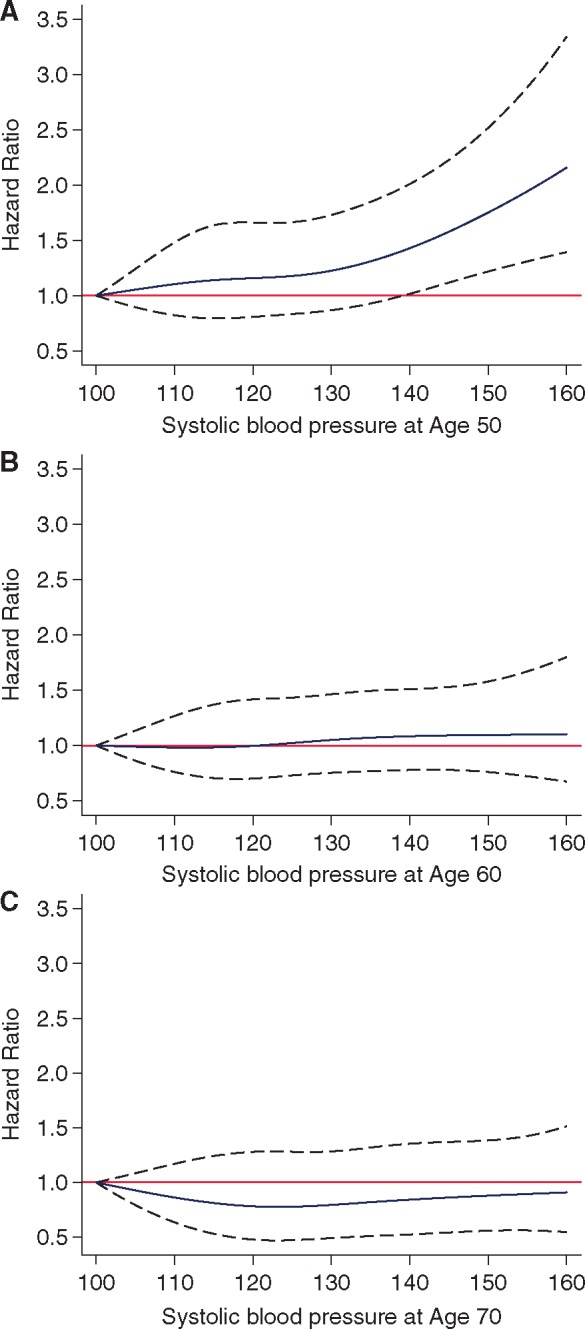
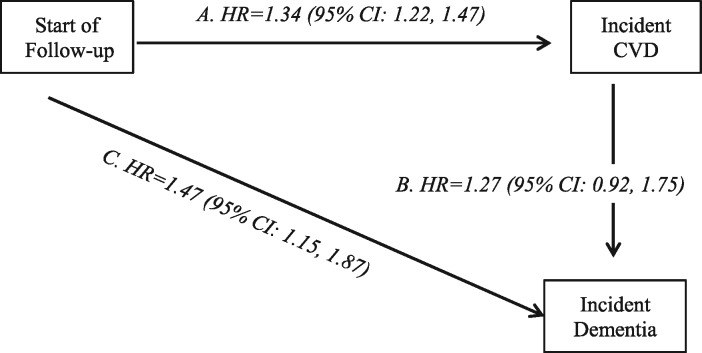
Aims: To examine associations of diastolic and systolic blood pressure (SBP) at age 50, 60, and 70 years with incidence of dementia, and whether cardiovascular disease (CVD) over the follow-up mediates this association. Methods and results: Systolic and diastolic blood pressure were measured on 8639 persons (32.5% women) from the Whitehall II cohort study in 1985, 1991, 1997, and 2003. Incidence of dementia (n dementia/n total = 385/8639) was ascertained from electronic health records followed-up until 2017. Cubic splines using continuous blood pressure measures suggested SBP ≥130 mmHg at age 50 but not at age 60 or 70 was associated with increased risk of dementia, confirmed in Cox regression analyses adjusted for sociodemographic factors, health behaviours, and time varying chronic conditions [hazard ratio (HR) 1.38; 95% confidence interval (95% CI) 1.11, 1.70]. Diastolic blood pressure was not associated with dementia. Participants with longer exposure to hypertension (SBP ≥ 130 mmHg) between mean ages of 45 and 61 years had an increased risk of dementia compared to those with no or low exposure to hypertension (HR 1.29, 95% CI 1.00, 1.66). In multi-state models, SBP ≥ 130 mmHg at 50 years of age was associated with greater risk of dementia in those free of CVD over the follow-up (HR 1.47, 95% CI 1.15, 1.87). Conclusion: Systolic blood pressure ≥130 mmHg at age 50, below the conventional ≥140 mmHg threshold used to define hypertension, is associated with increased risk of dementia; in these persons this excess risk is independent of CVD.
Overview
The claims and statistics of this paper haven’t been checked yet.
Free: it reads the open-access text and checks the first 5 claims that cite a source we can check. Create a free account to check every claim.
Integrity signals
Registry
Cites
Statistics
Figures
Verification
Claims the paper makes
The claims and statistics of this paper haven’t been checked yet.
Free: it reads the open-access text and checks the first 5 claims that cite a source we can check. Create a free account to check every claim.
Claims other papers make about this one
Each is checked against this paper’s own text: does it say what the citing paper says it does?
The source backs part of the claim, not all of it — or backs it for a different population, condition or comparison.
In the citing paper
“In those with persistent systolic blood pressure of 130 mm Hg or higher, from mean age 45 to 61 years, dementia risk is increased even if free of cardiovascular disease relative to those without hypertension (1·3, 1·0–1·7).”
From Dementia prevention, intervention, and care: 2020 report of the Lancet Commission (2020) · cites this paper as [13]
Experimental — accuracy not yet measuredThe source backs part of the claim, not all of it — or backs it for a different population, condition or comparison.
In the citing paper
“For example, midlife obesity, 105,111,112 hypertension, 85,[105][106][107] prehypertension (systolic blood pressure from 120 to 139 mm Hg or diastolic pressure from 80 to 89 mm Hg) 85 and high cholesterol 113 are associated with an increased risk of dementia in later life.”
From 2023 Alzheimer's disease facts and figures (2023) · cites this paper as [106]
Experimental — accuracy not yet measuredThe cited source says what the claim attributes to it.
In the citing paper
“In a UK cohort study of 8639 civil servants, a single measure of systolic blood pressure of 130 mm Hg or higher at age 50 years but not at age 60 or 70 years was associated with increased risk of dementia (1·4, 1·1–1·7).”
From Dementia prevention, intervention, and care: 2020 report of the Lancet Commission (2020) · cites this paper as [13]
The cited source says what the claim attributes to it.
In the citing paper
“These factors include hypertension 85,[105][106][107] and diabetes.[108][109][110]”
From 2023 Alzheimer's disease facts and figures (2023) · cites this paper as [106]
The check wasn’t confident either way, so it gives no verdict — never disputed.
In the citing paper
“Of note, blood pressure declines in later life and this decline is associated with and, potentially caused by, dementia development (HR 2·4, 95% CI 1·4–4·2).”
From Dementia prevention, intervention, and care: 2020 report of the Lancet Commission (2020) · cites this paper as [13]
Experimental — accuracy not yet measured
Self-check
Percentages, sums and reported differences re-computed from the paper’s own numbers.
The self-check needs the paper’s full text.
Citations
Cites
(2013) · European Heart Journal · doi:10.1093/eurheartj/eht151 · Cited by 13,655
Harrell, F. E. (2001) · Springer Series in Statistics · doi:10.1007/978-1-4757-3462-1 · Cited by 9,195
Rao, S. J. (2003) · Journal of the American Statistical Association · doi:10.1198/jasa.2003.s263 · Cited by 1,941
15-year longitudinal study of blood pressure and dementia
Skoog, I., Nilsson, L., Persson, G., Lernfelt, B., Landahl, S., Palmertz, B., Andreasson, L.-A., Odén, A., & Svanborg, A. (1996) · The Lancet · doi:10.1016/s0140-6736(96)90608-x · Cited by 1,726
Defeating Alzheimer's disease and other dementias: a priority for European science and society
Winblad, B., Amouyel, P., Andrieu, S., Ballard, C., Brayne, C., Brodaty, H., Cedazo-Minguez, A., Dubois, B., Edvardsson, D., Feldman, H., et al. (2016) · The Lancet Neurology · doi:10.1016/s1474-4422(16)00062-4 · Cited by 1,676 · cited 2×
“Poor characterization of the age when hypertension carries a risk is also reflected in dementia guidelines as they only use the generic term ‘mid-life’.(10) Our data show considerable differences in dementia risk over the two decade age-span, elevated SBP at age 50 but not at age 60 increased risk of dementia.”
BackgroundMidlife cardiovascular risk factors and risk of dementia in late life
Whitmer, R. A., Sidney, S., Selby, J., Johnston, S. C., & Yaffe, K. (2005) · Neurology · doi:10.1212/01.wnl.0000149519.47454.f2 · Cited by 1,238
The age-dependent relation of blood pressure to cognitive function and dementia
Qiu, C., Winblad, B., & Fratiglioni, L. (2005) · The Lancet Neurology · doi:10.1016/s1474-4422(05)70141-1 · Cited by 1,138 · cited 2×
“The findings of this longitudinal observational study of over 8000 men and women support the hypothesis that hypertension in mid-life but not late life is associated with increased risk of dementia.(3,5) We show that high SBP at age 50 was associated with increased risk of dementia, much under the conventional 140 mmH…”
BackgroundMethodMidlife blood pressure and dementia: the Honolulu–Asia aging study☆
Launer, L. J., Ross, G. W., Petrovitch, H., Masaki, K., Foley, D., White, L. R., & Havlik, R. J. (2000) · Neurobiology of Aging · doi:10.1016/s0197-4580(00)00096-8 · Cited by 1,008
(2003) · Archives of Internal Medicine · doi:10.1001/archinte.163.9.1069 · Cited by 988 · cited 1×
“Randomized trials on older adults show no effect of lowering of blood pressure on the risk of dementia.(1,2) Age is known to modify the association between hypertension and dementia.”
BackgroundWeber, M. A., Schiffrin, E. L., White, W. B., Mann, S., Lindholm, L. H., Kenerson, J. G., Flack, J. M., Carter, B. L., Materson, B. J., Ram, C. V. S., et al. (2014) · The Journal of Clinical Hypertension · doi:10.1111/jch.12237 · Cited by 986 · cited 1×
“Three, it is unclear whether the 140 mmHg systolic blood pressure (SBP) threshold to define hypertension(14) in mid-life is appropriate for dementia risk, given age-specific treatment targets recommended in recent reports aimed at reducing cardiovascular disease (CVD).(15,16) To address some of these limitations, we e…”
Background
Cited by
Items 101–200 of 250
Palmer, J. C., Tayler, H. M., Dyer, L., Kehoe, P. G., Paton, J. F. R., & Love, S. (2020) · Journal of Alzheimer s Disease · doi:10.3233/jad-190630 · Cited by 14
“A recent study of 8,000 participants showed that systolic BP (SBP) above normal but below the conventional treatment threshold, at 50 years (but not 60 or 70 years), is associated with an increased risk of dementia [32].”
BackgroundImpact of metabolic dysfunction on cognition in humans
Rasmussen, I. J., Thomassen, J. Q., & Frikke‐Schmidt, R. (2020) · Current Opinion in Lipidology · doi:10.1097/mol.0000000000000723 · Cited by 15
The oldest old: does hypertension become essential again?
Messerli, F. H., Streit, S., & Grodzicki, T. K. (2018) · European Heart Journal · doi:10.1093/eurheartj/ehy525 · Cited by 14
“Indeed, Abell et al.(5) most recently showed that a systolic BP >_130 mmHg at age 50, which is below the traditional >_140 mmHg threshold used to define hypertension, was associated with increased risk of dementia and that in these patients the excess risk was independent of cardiovascular disease.”
Backgroundden Brok, M. G. H. E., Hoevenaar‐Blom, M. P., Coley, N., Andrieu, S., van Dalen, J. W., Meiller, Y., Guillemont, J., Brayne, C., van Gool, W. A., van Charante, E. P. M., et al. (2021) · The Journal of Prevention of Alzheimer s Disease · doi:10.14283/jpad.2021.53 · Cited by 15
Brain, J., Tully, P. J., Turnbull, D. A., Tang, E. Y. H., Greene, L., Beach, S., Siervo, M., & Stephan, B. C. M. (2022) · PLoS ONE · doi:10.1371/journal.pone.0271611 · Cited by 16
Blood pressure, frailty and dementia
Masoli, J. A. H., & Delgado, J. (2021) · Experimental Gerontology · doi:10.1016/j.exger.2021.111557 · Cited by 13
Kühne, M., Krisai, P., Conen, D., & Osswald, S. (2019) · European Heart Journal · doi:10.1093/eurheartj/ehz483 · Cited by 13
Blood pressure and dementia risk by physical frailty in the elderly: a nationwide cohort study
Cho, M. H., Han, K., Lee, S. W., Jeong, S., Yoo, J. E., Kim, S., Lee, J., Chun, S., & Shin, D. W. (2023) · Alzheimer s Research & Therapy · doi:10.1186/s13195-023-01211-y · Cited by 13
“However, the risks of late-life hypertension for dementia incidence have been inconsistent in previous researches [3, 4, 7, 27].”
ResultCould Management of Blood Pressure Prevent Dementia in the elderly?
Mogi, M. (2019) · Clinical Hypertension · doi:10.1186/s40885-019-0135-7 · Cited by 14
Jung, Y., Choi, D., Park, S., Jang, S., & Park, E. (2020) · International Journal of Environmental Research and Public Health · doi:10.3390/ijerph17051657 · Cited by 12
“The Whitehall II cohort study found that 130 mmHg or above systolic blood pressure at age 50 is related to increased risk for dementia in individuals free of cardiovascular disease [10].”
BackgroundZuo, L., Dong, Y., Liao, X., Pan, Y., Xiang, X., Meng, X., Li, H., Zhao, X., Wang, Y., Shi, J., et al. (2022) · Journal of Clinical Hypertension · doi:10.1111/jch.14453 · Cited by 14
Boulares, A., Jdidi, H., & Bragazzi, N. L. (2025) · International Dental Journal · doi:10.1016/j.identj.2024.07.005 · Cited by 11
Lee, S. S., McGrattan, A., Soh, Y. C., Alawad, M., Su, T. T., Palanisamy, U. D., Hussin, A. M., Kassim, Z., Ghazali, A. N. B. M., Stephan, B. C. M., et al. (2022) · Nutrients · doi:10.3390/nu14030430 · Cited by 15
Hypertension and cognitive function: a review of life-course factors and disparities
Anda‐Duran, I. D., Woltz, S. G., Bell, C. N., & Bazzano, L. (2022) · Current Opinion in Cardiology · doi:10.1097/hco.0000000000000975 · Cited by 14
Wang, F., & Wang, X. (2021) · Environmental Science and Pollution Research · doi:10.1007/s11356-021-12698-z · Cited by 13
Liu, J., Amin, N., Sproviero, W., Arnold, M., Batra, R., Bonnechère, B., Chiou, Y., Fernandes, M., Krumsiek, J., Newby, D., et al. (2022) · medRxiv · doi:10.1101/2022.02.25.22271530 · Cited by 10
Zhu, Y., Li, C., Gao, D., Huang, X., Zhang, Y., Ji, M., Zheng, F., & Xie, W. (2024) · The Journal of Prevention of Alzheimer s Disease · doi:10.14283/jpad.2024.91 · Cited by 12
“Furthermore, there is inconsistent evidence regarding the independent relevance of DBP and its long-term trajectories to incident dementia and mortality (11-13).”
Cerebral Small Vessel Disease: Current and Emerging Therapeutic Strategies
Sun, Y., Song, X., Jin, C. J., Peng, Y., Zhou, J., & Zheng, X. (2025) · Aging and Disease · doi:10.14336/ad.2024.1515 · Cited by 17
“Epidemiological studies further support that treatment of hypertension in midlife is more beneficial in preventing dementia than treatment in later life [16].”
Blood pressure and cognitive decline – the impact of hypertension over one decade
Hoffmann, S. S., Winkler, A., Weimar, C., Gerards, D., Abramowski, J., Moebus, S., Jöckel, K., Erbel, R., & Jokisch, M. (2020) · Aging Neuropsychology and Cognition · doi:10.1080/13825585.2020.1792403 · Cited by 10
“Most observational studies report reduced risk for dementia or better cognitive function with medication (Abell et al., 2018; N. C. N.-C. Li et al., 2010; Tzourio et al., 1999; Yasar et al., 2013).”
BackgroundHestad, K. A., Engedal, K., Horndalsveen, P. O., & Strand, B. H. (2020) · Frontiers in Aging Neuroscience · doi:10.3389/fnagi.2020.00257 · Cited by 11
“In another study, midlife SBP as low as 130 mmHg was associated with increased risk of dementia, whereas no such association was found for SBP with late-life onset (Livingston et al., 2017; Abell et al., 2018).”
BackgroundResultTjandra, D., Migrino, R. Q., Giordani, B., & Wiens, J. (2022) · Alzheimer s & Dementia · doi:10.1002/alz.12676 · Cited by 11
Polygenic coronary artery disease association with brain atrophy in the cognitively impaired
de Silva, E., Sudre, C. H., Barnes, J., Scelsi, M. A., Altmann, A., & Initiative, A. D. N. (2022) · Brain Communications · doi:10.1093/braincomms/fcac314 · Cited by 9
“If so, and if such risk is driven in part by cardiac health, it may be that this risk can be reduced through wellness and behaviour changes in, early to mid-life.(58) Of course, this does depend on whether healthy individuals with such brain changes go on to develop dementia, something only larger longitudinal studies…”
BackgroundDu, J., Pan, Y., Jiang, J., Liu, Y., Lam, B. C. P., Schutte, A. E., Tsang, I. W.-H., Sachdev, P. S., & Wen, W. X. (2024) · Hypertension · doi:10.1161/hypertensionaha.123.22176 · Cited by 10
“41,42 This finding suggested that BP management should be concentrated based on specific age groups; aggressive BP control might not be beneficial to individuals with older age.”
BackgroundPflanz, C. P., Egle, M. S., O'Brien, J. T., Morris, R. G., Barrick, T. R., Blamire, A. M., Ford, G. A., Tozer, D. J., Markus, H. S., & on behalf of the PRESERVE study group (2022) · Neurology · doi:10.1212/wnl.0000000000201018 · Cited by 11
“This supports the use of intensive BP targets even in patients with severe SVD. Diffusion network metrics may be a more sensitive surrogate marker for multicenter clinical trials in patients with SVD than conventional DTI analyses and other MRI measures.”
BackgroundInfluentialCurrent Issues in Chronic Diseases: A Focus on Dementia and Hypertension in Rural West Texans
Khan, H. M. R., Rafiq, A., Shabaneh, O., Gittner, L. S., & Reddy, P. H. (2019) · Journal of Alzheimer s Disease · doi:10.3233/jad-190893 · Cited by 9
Varga, T. V., Xu, T., Kivimäki, M., Mehta, A. J., Rugulies, R., & Rod, N. H. (2021) · The Journal of Clinical Endocrinology & Metabolism · doi:10.1210/clinem/dgab704 · Cited by 8
Multisystem failure, tipping points, and risk of Alzheimer's disease
Merlini, S., Bedrick, E. J., Brinton, R. D., & Vitali, F. (2025) · Alzheimer s & Dementia · doi:10.1002/alz.70249 · Cited by 11
Correlation between cardiovascular risk factors and cognitive decline
Desideri, G., & Bocale, R. (2021) · European Heart Journal Supplements · doi:10.1093/eurheartj/suab095 · Cited by 9
“7).(6) Numerous observational and intervention studies over the last few years have led to the hypothesis that antihypertensive treatment may represent a valuable tool to prevent the onset of cognitive impairment and dementia.”
BackgroundKushkestani, M. (2020) · Biomedical Journal of Scientific & Technical Research · doi:10.26717/bjstr.2020.29.004800 · Cited by 12
Effect of the duration of hypertension on white matter structure and its link with cognition
Li, Z.-L., Sang, F., Zhang, Z., & Li, X. (2023) · Journal of Cerebral Blood Flow & Metabolism · doi:10.1177/0271678x231214073 · Cited by 9
Ponjoan, A., Blanch, J., Fages, E., Martí‐Lluch, R., Alves‐Cabratosa, L., García-Gil, M., Domínguez‐Armengol, G., Ribas‐Aulinas, F., Zacarías‐Pons, L., & Ramos, R. (2024) · Alzheimer s Research & Therapy · doi:10.1186/s13195-024-01406-x · Cited by 9
Fi, B., Sumin, A. N., Garganeeva, N. P., Ларева, Н. В., Петрова, М. М., Петрунько, О. В., Попонина, Т. М., Repin, A. N., & Собенников, В. С. (2024) · Complex Issues of Cardiovascular Diseases · doi:10.17802/2306-1278-2024-13-3s-222-253 · Cited by 9
El impacto cognitivo-conductual de la hipertensión
Vicario, A., & Cerezo, G. H. (2020) · Hipertensión y Riesgo Vascular · doi:10.1016/j.hipert.2020.04.003 · Cited by 11
Alzheimers's disease: Epidemiological characteristics and its prevention
Grujičić, J., & Nikolić, A. (2021) · Zdravstvena zastita · doi:10.5937/zdravzast50-32931 · Cited by 8
The Janus-like Association between Proton Pump Inhibitors and Dementia
Papazoglou, A., Arshaad, M. I., Henseler, C., Daubner, J., Broich, K., Haenisch, B., & Weiergräber, M. (2021) · Current Alzheimer Research · doi:10.2174/1567205018666210929144740 · Cited by 8
The heart and the brain: cardiovascular risk factors, atrial fibrillation, and dementia
Lüscher, T. F. (2019) · European Heart Journal · doi:10.1093/eurheartj/ehz508 · Cited by 8
Oral diadochokinesis performance correlates with mild cognitive impairment: a cross-sectional study
Ishihara, Y., Taguchi, A., Yunoue, S., Mugiyama, M., Hosokubo, K., Ido, M., Nohara, K., Shinmei, M., Oniki, T., Uchiyama, A., et al. (2025) · BMC Oral Health · doi:10.1186/s12903-025-06289-4 · Cited by 8
Lerfald, M., Allore, H. G., Nilsen, T. I. L., Eldholm, R. S., Martínez‐Velilla, N., Selbæk, G., & Ernstsen, L. (2024) · The Journals of Gerontology Series A · doi:10.1093/gerona/glae161 · Cited by 5
“The threshold of 130 mm Hg in SBP in midlife (at the age of 50) for increased dementia risk is supported by prospective findings from the Whitehall II cohort study (44).”
BackgroundFan, J., Bai, J., Liu, W., & Cai, J. (2023) · Frontiers in Neurology · doi:10.3389/fneur.2023.1042637 · Cited by 10
CNN-SVM for prediction Alzheimer disease in early step
Rabeh, A. B., Benzarti, F., & Amiri, H. (2023) · International Conference on Control, Automation and Diagnosis (ICCAD) · doi:10.1109/iccad57653.2023.10152440 · Cited by 9
“In order to anticipate and preserve the quality of life and the autonomy of the people as long as possible [18-23].”
BackgroundUnderstanding Cognitive Deficits in People with High Blood Pressure
Kang, W., & Hernández, S. P. (2023) · Journal of Personalized Medicine · doi:10.3390/jpm13111592 · Cited by 6
Xu, X., Catts, V. S., Harris, K., Wang, N., Numbers, K. T., Trollor, J. N., Brodaty, H., Sachdev, P. S., & Schutte, A. E. (2024) · Journal of Hypertension · doi:10.1097/hjh.0000000000003808 · Cited by 7
Dangers of Overly Aggressive Blood Pressure Control
Rahman, F., & McEvoy, J. W. (2018) · Current Cardiology Reports · doi:10.1007/s11886-018-1063-y · Cited by 6
Raised blood pressure and risk of dementia
Gregson, J., Qizilbash, N., & Pocock, S. (2019) · European Heart Journal · doi:10.1093/eurheartj/ehy912 · Cited by 6
Alfie, J., & Cuffaro, P. E. (2019) · Elsevier eBooks · doi:10.1016/b978-0-12-801238-3.62166-9 · Cited by 11
Gao, Y., Zhang, P., Yang, H., Li, S., Su, H., & Zhang, Q. (2025) · BMC Geriatrics · doi:10.1186/s12877-025-06465-9 · Cited by 7
“Meanwhile, a UK cohort study reported that civil servants aged between 45 and 61 years with sustained high systolic blood pressure (SBP) (≥ 130 mm Hg) were at an elevated risk of dementia compared with those without hypertension, even in the absence of cardiovascular disease [11].”
Cohen, A., Levine, S. Z., Vainstein, G., Beeri, M. S., & Weinstein, G. (2025) · The Journal of Prevention of Alzheimer s Disease · doi:10.1016/j.tjpad.2025.100199 · Cited by 8
Chen, C., Zhao, Y., Su, B., Wu, Y., Zhong, P., & Zheng, X. (2023) · Frontiers in Public Health · doi:10.3389/fpubh.2023.1115207 · Cited by 9
Lerfald, M., Lydersen, S., Zotcheva, E., Nilsen, T. I. L., Eldholm, R. S., Martínez‐Velilla, N., Selbæk, G., & Ernstsen, L. (2023) · European Review of Aging and Physical Activity · doi:10.1186/s11556-023-00328-1 · Cited by 6
“Our finding that having a persistent SBP below 130 mm Hg was most beneficial for dementia prevention is in line with recent results from the Whitehall II cohort study where a SBP ≥ 130 mm Hg at age 50 was associated with increased risk of dementia [43].”
ResultThe common carotid artery provides significant pressure wave dampening in the young adult sheep
James, N. L., Milijasevic, Z., Ujhazy, A., Edwards, G. A., Jermyn, K., Mynard, J. P., & Celermajer, D. S. (2019) · IJC Heart & Vasculature · doi:10.1016/j.ijcha.2019.03.003 · Cited by 5
Karaduran, K., Aydoğdu, A., Gelişin, Ö., & Günpınar, S. (2025) · Current Alzheimer Research · doi:10.2174/0115672050388220250511174043 · Cited by 6
Fluorescent method for acetylcholinesterase activity detection and its inhibitors screening
Xiao, M., Tang, Y., Liu, A., Zhang, X., Wang, C., & Wei, W. (2025) · Microchemical Journal · doi:10.1016/j.microc.2025.114147 · Cited by 4
McEligot, A. J., Xiao, C., & Quynh, T. (2025) · Alzheimer s & Dementia · doi:10.1002/alz.70650 · Cited by 4
“43 A recent pooled analysis from five cohorts ( n = 34,349) on the relationship between hypertension and various cognitive domains showed that higher blood pressure levels in Black individuals were related to a steeper decline compared with White individuals for global cognition and memory, but not…”
Kang, M.-I., Ang, T. F. A., Devine, S., Sherva, R., Mukherjee, S., Trittschuh, E. H., Gibbons, L. E., Scollard, P., Lee, M., Choi, S.-E., et al. (2025) · Alzheimer s & Dementia · doi:10.1002/alz.70681 · Cited by 5
Chinese herbal medicine for hypertension complicated with hyperlipidemia
Liu, Y., Liu, Y., Yang, J. Y., Wang, X., Xiu, C., Hu, Y. J., Wu, D., Wu, Y., & Yan, L. (2021) · Medicine · doi:10.1097/md.0000000000024345 · Cited by 4
“Hypertension is associated with increases in the risks of myocardial infarction, heart failure, ischemic or hemorrhagic stroke, and end-stage renal disease.([7,8]) Hyperlipidemia is a lipid metabolism disorder characterized by decreased serum high-density lipoprotein (HDL-C) or elevated serum total cholesterol (TC), t…”
The 2017 ACC/AHA stage 1 hypertension is associated with arterial stiffness: a prospective analysis
Liu, S., Wu, S., Niu, J., Zheng, R., Bie, L., Xin, Z., Wang, S., Lin, H., Zhao, Z., Li, M., et al. (2021) · Aging · doi:10.18632/aging.202764 · Cited by 5
Vidil, S., Singh‐Manoux, A., Landré, B., Fayossé, A., Sabia, S., & Machado‐Fragua, M. D. (2025) · Alzheimer s Research & Therapy · doi:10.1186/s13195-025-01732-8 · Cited by 4
“Previous research suggests alternative thresholds for midlife cardiometabolic risk factors in relation to cognitive outcomes [15, 16].”
Self-citationBaseline cognition and demographic, lifestyle, and cardiovascular risk factors in US POINTER
Papp, K. V., Farias, S. T., Howard, M. J., Thro, A. A., Ngandu, T., Caudle, B. A., Sachs, B. C., Chan, M., Krueger, K. R., Hartman, E. R. T., et al. (2025) · Alzheimer s & Dementia · doi:10.1002/alz.70216 · Cited by 5
Commenges, D. (2018) · Lifetime Data Analysis · doi:10.1007/s10985-018-9454-3 · Cited by 4
Yan, X., Meng, T., Liu, H., Liu, J., Du, J., & Chang, C. (2022) · Neuropsychiatric Disease and Treatment · doi:10.2147/ndt.s353164 · Cited by 7
“dementia,(10) there remains some controversy regarding hypertension control and MCI incidence, especially in the elderly.(11) The current study assessed cognitive function of hypertension patients between 50 and 75 years of age in Nanjing, China.”
BackgroundIntensive control of hypertension and risk of Alzheimer's dementia in older adults with depression
Yeung, A., Kiss, A., & Gallagher, D. (2020) · International Journal of Geriatric Psychiatry · doi:10.1002/gps.5309 · Cited by 5
“Our finding of lower systolic BP and increased risk of AD in the comorbid depression group is also consistent with previous findings by Abell et al in a general population where a systolic BP of <130 mmHg was associated with a greater risk of dementia compared to <140 mmHg.(39) It has also previously been reported tha…”
ResultThan, S., & Srikanth, V. K. (2018) · Cardiovascular Research · doi:10.1093/cvr/cvy170 · Cited by 4
The Prediction of Hypertension RiskPreprint
Massaro, A. S., Giardinelli, V. O. M., Cosoli, G., Magaletti, N., & Leogrande, A. (2022) · SSRN Electronic Journal · doi:10.2139/ssrn.4123352 · Cited by 5
“Early hypertension increases the risk of cognitive decline [12].”
BackgroundMcEligot, A. J., Pang, K., Moran-Gomez, S., Mitra, S., Santos, M., Tahmasebi, Z., & Kazemi, S. (2024) · The International Journal of Aging and Human Development · doi:10.1177/00914150241231186 · Cited by 3
“Our fi ndings of the association between high blood pressure and cognitive decline in NHPI have been reported in other ethnic/racial groups (Abell et al., 2018; Gottesman, Albert et al., 2017; Skoog et al., 1996).”
InfluentialHarris, K., Gong, J., MacMahon, S. W., Xu, Y. H., Shajahan, S., Harrap, S. B., Poulter, N. R., Marre, M., Hamet, P., Mancia, G., et al. (2024) · Cerebral Circulation - Cognition and Behavior · doi:10.1016/j.cccb.2024.100372 · Cited by 6
“For example, the Whitehall II cohort study suggests that BP lowering may not prevent cognitive outcomes in older adults, as the positive associations of systolic BP ≥ 130 mmHg and risk of dementia at age 50 declined in those older than 60 years [6].”
Regional differences in the incidence of Alzheimer’s disease and related dementias in South Carolina
Amoatika, D. A., Miller, M. C., Adams, R. J., & Milano, N. J. (2025) · Frontiers in Neurology · doi:10.3389/fneur.2025.1584127 · Cited by 3
Alateeq, K., Walsh, E., & Cherbuin, N. (2024) · International Journal of Molecular Sciences · doi:10.3390/ijms252211859 · Cited by 5
PAULA, T. C. M. D. (2022) · International Journal of Development Research · doi:10.37118/ijdr.25051.08.2022 · Cited by 3
King, N. S., & Coates, A. (2021) · Brain Injury · doi:10.1080/02699052.2021.1890216 · Cited by 6
Luo, W., Wen, H., Ge, S., Tang, C., Liu, X., & Lu, L. (2022) · Frontiers in Aging Neuroscience · doi:10.3389/fnagi.2021.774804 · Cited by 4
“Risk factors were selected as described in previous reports (Stewart et al., 2009; Debette et al., 2011; Rönnemaa et al., 2011; Yang et al., 2011; Joas et al., 2012; Loy et al., 2014; Ben Bouallègue et al., 2017; Donohue et al., 2017; Gottesman et al., 2017; Abell et al., 2018; Alzheimer’s disease facts and figures, 2…”
MethodRole of Hypertension and Hyperlipidemia in the Pathogenesis of Dementia
Kaira, M., Walia, V., & Garg, M. (2022) · Springer eBooks · doi:10.1007/978-981-16-7606-2_10 · Cited by 4
A life course approach to neurodegeneration
James, S., Schott, J. M., & Ben‐Shlomo, Y. (2025) · Oxford University Press eBooks · doi:10.1093/oso/9780198895961.003.0011 · Cited by 2
Trajectories of Cognitive Decline Before and After New‐Onset Hypertension
Chen, Q., Dong, J., Chen, G., Li, H., Shen, Y., & Hua, J. (2025) · Journal of the American Heart Association · doi:10.1161/jaha.124.039849 · Cited by 2
“47 Conversely, some literature supported that older age at hypertension onset was associated with worse cognitive performance or a higher risk of dementia.”
InfluentialKučera, M., Šeblová, D., Bosmans, J. E., Broulíková, H. M., & Kearns, P. B. (2025) · European Journal of Public Health · doi:10.1093/eurpub/ckaf112 · Cited by 2
“It is a mid-life high blood pressure, which is consistently associated with an increased risk of a late-life dementia, but when blood pressure is measured later in life, the results are inconsistent [38].”
Palmer, J. C., Hart, E. C., Anderson, E. L., Love, S., & Lawlor, D. A. (2025) · BMC Medicine · doi:10.1186/s12916-025-04295-5 · Cited by 3
Ishida, S., Kawazoe, M., Fujii, T., Inoue, Y., Yamamoto, K., Sakima, A., Inoue, T., Komori, T., Ninomiya, T., Nozato, Y., et al. (2026) · Hypertension Research · doi:10.1038/s41440-026-02619-3 · Cited by 2
Ofori, M. A., Langat, A. K., Bouzir, Y., & Ishag, M. A. S. (2023) · Universal Journal of Public Health · doi:10.13189/ujph.2023.110102 · Cited by 4
Chintapalli, R., Myint, P. K., Brayne, C., Hayat, S. A., & Keevil, V. L. (2023) · European Journal of Epidemiology · doi:10.1007/s10654-023-01064-7 · Cited by 3
Libby, T., Ilango, S. D., Leary, C. S., Semmens, E. O., Adam, C. E., Fitzpatrick, A. L., Kaufman, J. D., & Hajat, A. (2024) · Environmental Epidemiology · doi:10.1097/ee9.0000000000000306 · Cited by 2
“…assuming that the development of hypertension after study enrollment (i.e., after age 75) would not present the same increased risk of dementia as hypertension earlier in life 18 and that any effect of air pollution exposure on hypertension risk would have occurred before study enrollment.”
Cui, C., Yu, T., Zhai, Y., Zhang, S., & Su, Z. (2024) · Medicine · doi:10.1097/md.0000000000039587 · Cited by 2
Tang, L., Ma, L., Cheng-Kun, S., Guo, R., Tan, L., & Tan, M. (2024) · Current Alzheimer Research · doi:10.2174/0115672050349431241014064036 · Cited by 2
Floud, S., Hermon, C., Whiteley, W. N., Fitzpatrick, K. E., & REEVES, G. K. (2025) · Alzheimer s & Dementia · doi:10.1002/alz.70595 · Cited by 1
“8,20 The Whitehall II study modeled trajectories of exposure to hypertension from age 45 to 61 in 8313 participants and reported a HR of 1.29 (95% CI: 1.00 to 1.66) for dementia for those with longer exposure to hypertension compared to those with low or no exposure to hypertension.”
InfluentialChen, Y., Shipley, M. J., Anand, A., Kimenai, D. M., Ebmeier, K. P., Sabia, S., Singh‐Manoux, A., Deanfield, J. E., Kivimäki, M., Livingston, G., et al. (2025) · European Heart Journal · doi:10.1093/eurheartj/ehaf834 · Cited by 5
“35 These risk factors may contribute to the heart–brain connection by causing damage to vessels in both organs.”
Self-citationFacteurs de risque de la maladie d’Alzheimer et des maladies apparentées : approche parcours de vie
Singh‐Manoux, A., & Sabia, S. (2020) · Bulletin de l Académie Nationale de Médecine · doi:10.1016/j.banm.2020.01.015 · Cited by 5
Self-citationDementia in elderly patients as a consequence of arterial hypertension (literature review)
Mikhailov, S. S., Kozlov, K. L., Шишкевич, А. Н., Bessonov, E. Y., Lukjanov, N. G., & Puhal'skaja, A. E. (2021) · Pharmacy Formulas · doi:10.17816/phf49978 · Cited by 2
Preventing dementia beyond treating hypertension
Diener, H. (2018) · European Heart Journal · doi:10.1093/eurheartj/ehy409 · Cited by 2
[Incidence of structural chromosomal abnormalities in spermatogenesis in man].
Jm, L., & Guichaoua, M.-R. (1990) · PubMed · Cited by 2
The Prediction of Hypertension RiskPreprint
Massaro, A. S., Giardinelli, V. O. M., Cosoli, G., Magaletti, N., & Leogrande, A. (2022) · Research Square · doi:10.21203/rs.3.rs-1708299/v1 · Cited by 4
Antihypertensive medications and dementia in older adults with hypertensionPreprint
Orchard, S. G., Zhou, Z., Fravel, M. A., Ryan, J. L., Woods, R. L., Wolfe, R. S., Shah, R. C., Murray, A. M., Sood, A., Reid, C. M., et al. (2024) · medRxiv · doi:10.1101/2024.08.28.24312754 · Cited by 3
Desai, R., Heller, J., Wada, R., Afnan, M. A. M., Cheong, C., Zhang, S., Deo, F., Tam, M., Anderson, E. L., Stott, J. C. H., et al. (2025) · medRxiv · doi:10.1101/2025.03.12.25323830 · Cited by 2
Ma, J., Chen, H., Zou, C., & Yang, G. (2023) · Progress in Neuro-Psychopharmacology and Biological Psychiatry · doi:10.1016/j.pnpbp.2023.110929 · Cited by 1
Balanthiren, N., Ali, M. F., & Aziz, A. F. A. (2024) · BMC Geriatrics · doi:10.1186/s12877-024-05505-0 · Cited by 1
“The Whitehall II cohort study revealed that a systolic blood pressure more or equal to 130 mmHg at age 50 and above is associated with an increased risk of dementia independent of CVD [36].”
BackgroundSong, X., Wang, Y., Guo, W. Q., Liu, M., Deng, Y., & Liu, M. (2025) · Neurological Sciences · doi:10.1007/s10072-025-08147-1 · Cited by 1
“We used restricted cubic splines (RCS) analysis [14] to evaluate the dose-response relationship between BP and MBE.”
Diagnosis and therapy of cognitive impairment in chronic cerebral ischemia
Хабиров, Ф. А., Фагимовна, Р. Э., Сергеевна, К. О., & Хайбуллина, Д. Х. (2025) · Meditsinskiy sovet = Medical Council · doi:10.21518/ms2025-102 · Cited by 2
Huang, X., Li, C., Tao, G., Zhong, Y., Li, J., Chen, T., & Shen, J. (2025) · Frontiers in Public Health · doi:10.3389/fpubh.2025.1640089 · Cited by 1
“Some studies propose that age, stroke, hypertension, diabetes, and genetics as independent risk factors for dementia, while other factors show potential associations with dementia, their causal relationships require validation through population-based studies (7, 12, 13).”
Jafari, E. A., Alshahawey, M., Zaman, M. A., Smith, S. M., Gong, Y., Smith, G. E., & McDonough, C. W. (2025) · Clinical Pharmacology & Therapeutics · doi:10.1002/cpt.70150 · Cited by 2
“Hypertension (HTN) is one of the significant, modifiable risk factors for ADRD 7–9 .”
Skolariki, K., Rosenberg, P. B., Yaşar, S., Oh, E. S., Leoutsakos, J., Lyketsos, C. G., & Adams, R. (2025) · Journal of Alzheimer s Disease · doi:10.1177/13872877251407126 · Cited by 2
“Consistent with multiple prior studies, 37,38 our results suggest that excessively tight blood pressure control in older adults may be detrimental for cognitive outcomes.”
Cheema, A. A. A., Ibrahim, M. A., Zia, A., Iqbal, U., Hasan, A., Babar, R., Moghis, M., Akbar, H., Shahiq, T., & Rizwan, A. (2025) · Medicine · doi:10.1097/md.0000000000046611 · Cited by 1
“[36] Geographic variation in AAMR was also notable, with states in the South and Midwest, especially those within the Stroke Belt, reporting the highest rates.”
Food and nutrition in the prevention of dementia–A mini-review
Lange, K. W., NAKAMURA, Y., & Lange, K. M. (2026) · Journal of Food Bioactives · doi:10.26599/jfb.2026.95033435 · Cited by 1
Raised blood pressure and risk of dementia: our response
Abell, J. G., Sabia, S., & Singh‐Manoux, A. (2019) · European Heart Journal · doi:10.1093/eurheartj/ehy917 · Cited by 1
Self-citation
Metadata
- Authors
- Abell, J. G., Kivimäki, M., Dugravot, A., Tabak, A. G., Fayosse, A., Shipley, M., Sabia, S., & Singh-Manoux, A.
- Affiliations
- Inserm (FR)
- Department of Epidemiology and Public Health, University College London, London, UK
- INSERM, U1018, Centre for Research in Epidemiology and Population Health, Université Paris-Saclay, Hôpital Paul Brousse, Bât 15/16, 16 Avenue Paul Vaillant Couturier, 94807 Villejuif Cedex, France
- University College London (GB)
- Venue
- European Heart Journal
- Publisher
- Oxford University Press (OUP)
- Published
- 2018-06-12
- Volume
- 39
- Issue
- 33
- Pages
- 3119-3125
- ISSN
- 0195-668X (ISSN-L)
- 1522-9645
- PMC
- PMC6122131
- OpenAlex
- W2808600489
- Semantic Scholar
- 2ec9d9f7a707d92c216e8f6c1ea1170d0a565473
- Cited by
- 252
- References
- 32
- Citations by year
- 2026: 13 · 2025: 36 · 2024: 31 · 2023: 32 · 2022: 37 · 2021: 34 · 2020: 32 · 2019: 25 · 2018: 11
- FWCI
- 19.75
- Type
- journal article
- Language
- en
- Open access
- hybrid
- doi.org
- Licence
- Locations
- European Heart Journal (publishedVersion, cc-by)
- Europe PMC (PubMed Central) (publishedVersion, cc-by)
- PubMed Central (publishedVersion, cc-by)
- PubMed (publishedVersion)
- UCL Discovery (University College London) (submittedVersion)
- Semmelweis University Repository (Semmelweis University) (submittedVersion)
- Funders
- National Institutes of Health
- NIH (R01AG013196, R01AG034454)
- UK Medical Research Council
- MRC (K013351)
- The British Heart Foundation
- BHF (RG/13/2/30098)
- Horizon2020 (643576)
- EC Horizon2020 (LIFEPATH 633666)
- NordForsk
- Academy of Finland (311492)
- Topics
- Health Sciences › Medicine › Psychiatry and Mental health › Dementia and Cognitive Impairment Research
- Health Sciences › Medicine › Cardiology and Cardiovascular Medicine › Blood Pressure and Hypertension Studies
- Health Sciences › Medicine › Cardiology and Cardiovascular Medicine › Cardiovascular Health and Disease Prevention
- Keywords
- systolic blood pressure, dementia, hypertension, hypertension threshold, cardiovascular disease, diastolic blood pressure, dementia incidence, Whitehall II cohort, middle-aged adults
- MeSH terms
- Age Factors, Blood Pressure, Cardiovascular Diseases, Dementia, England, Female, Follow-Up Studies, Humans, Hypertension, Male, Middle Aged, Risk Factors, Systole, Cohort Studies, Health Behavior, Incidence
About these checks
Registry, retraction, Cites and statistics results are computed, not judged, with one exception: a printed reference that no index lists is read once by a model before it counts as a citation error. Claims are extracted by a model and kept only when their quote appears verbatim in the text; each cited source is then checked, with a model’s help, for whether it says what the claim relies on. Those verdicts can be wrong — read the claim’s quote and the cited source before relying on one.
Statistics and arithmetic are recomputed, not judged.
Confidence bands are shown only for fields calibrated on our annotated test set. None is calibrated yet, so no band is shown.
What counts as a claim ›How we measure confidence ›How we check this ›
Are you an author, or do you see a problem with this page? Request a review
Data sources
Bibliographic data: Semantic Scholar, OpenAlex, Crossref.
Contains information from the Semantic Scholar Academic Graph Datasets, made available under the ODC Attribution License (ODC-BY 1.0).
Semantic Scholar’s data is described in: Kinney, R., et al. (2023). The Semantic Scholar Open Data Platform. arXiv:2301.10140.
