

N-acetyl galactosamine-conjugated antisense drug to APOC3 mRNA, triglycerides and atherogenic lipoprotein levels
Open accessThe DOI matches its Crossref record; 28 of the 28 references it cites were found in a registry or an index.
Abstract
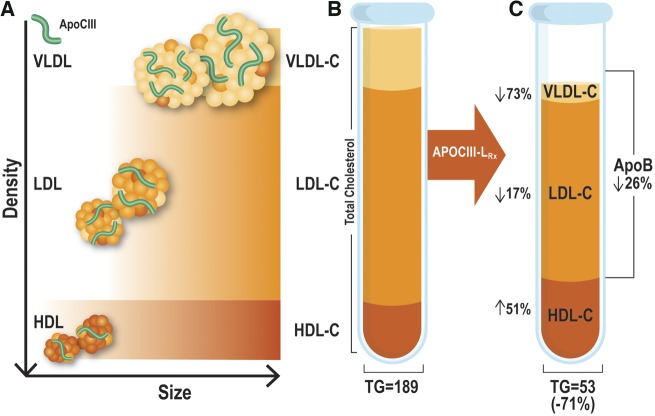
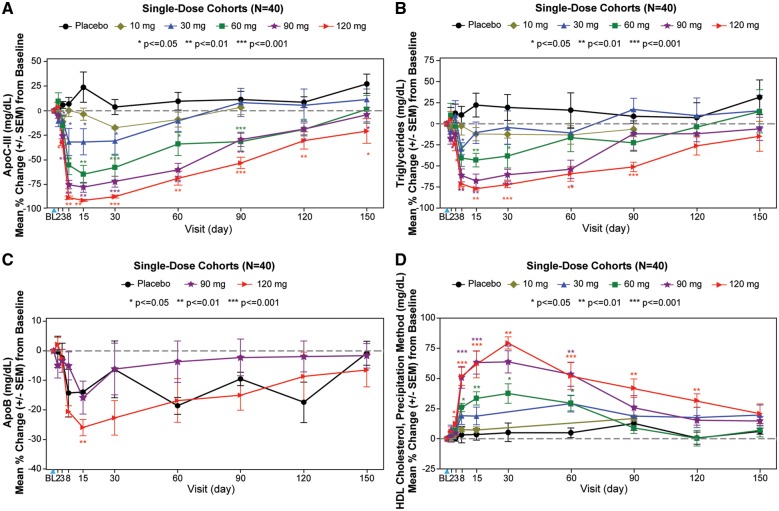
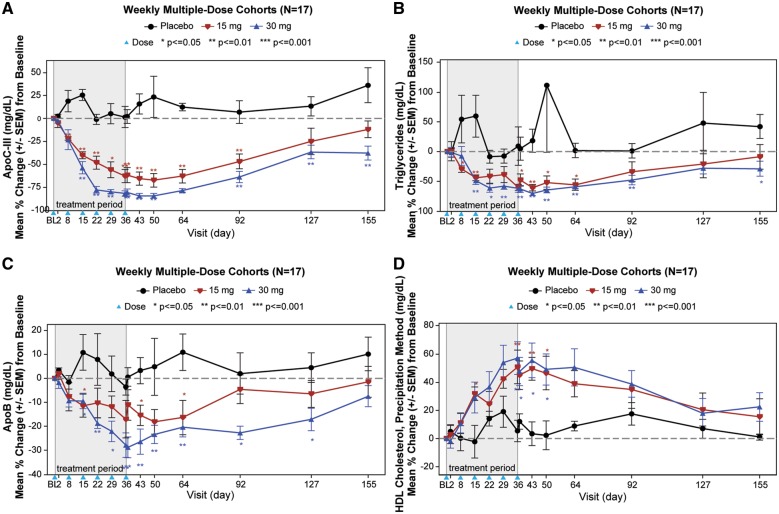
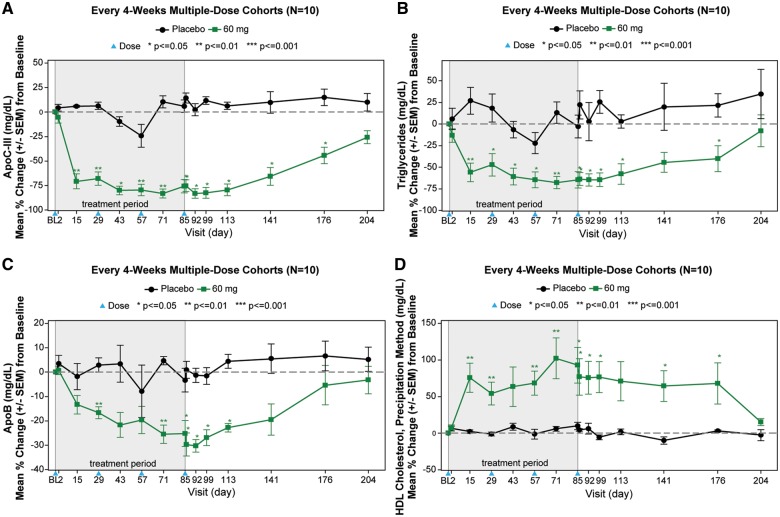
Aims: Elevated apolipoprotein C-III (apoC-III) levels are associated with hypertriglyceridaemia and coronary heart disease. AKCEA-APOCIII-LRx is an N-acetyl galactosamine-conjugated antisense oligonucleotide targeted to the liver that selectively inhibits apoC-III protein synthesis. Methods and results: The safety, tolerability, and efficacy of AKCEA-APOCIII-LRx was assessed in a double-blind, placebo-controlled, dose-escalation Phase 1/2a study in healthy volunteers (ages 18–65) with triglyceride levels ≥90 or ≥200 mg/dL. Single-dose cohorts were treated with 10, 30, 60, 90, and 120 mg subcutaneously (sc) and multiple-dose cohorts were treated with 15 and 30 mg weekly sc for 6 weeks or 60 mg every 4 weeks sc for 3 months. In the single-dose cohorts treated with 10, 30, 60, 90, or 120 mg of AKCEA-APOCIII-LRx, median reductions of 0, −42%, −73%, −81%, and −92% in apoC-III, and −12%, −7%, −42%, −73%, and −77% in triglycerides were observed 14 days after dosing. In multiple-dose cohorts of 15 and 30 mg weekly and 60 mg every 4 weeks, median reductions of −66%, −84%, and −89% in apoC-III, and −59%, −73%, and −66% in triglycerides were observed 1 week after the last dose. Significant reductions in total cholesterol, apolipoprotein B, non-high-density lipoprotein cholesterol (HDL-C), very low-density lipoprotein cholesterol, and increases in HDL-C were also observed. AKCEA-APOCIII-LRx was well tolerated with one injection site reaction of mild erythema, and no flu-like reactions, platelet count reductions, liver, or renal safety signals. Conclusion: Treatment of hypertriglyceridaemic subjects with AKCEA-APOCIII-LRx results in a broad improvement in the atherogenic lipid profile with a favourable safety and tolerability profile. ClinicalTrials.gov Identifier: NCT02900027.
Overview
The claims and statistics of this paper haven’t been checked yet.
Free: it reads the open-access text and checks the first 5 claims that cite a source we can check. Create a free account to check every claim.
Integrity signals
Registry
Cites
Statistics
Figures
Verification
Claims the paper makes
The claims and statistics of this paper haven’t been checked yet.
Free: it reads the open-access text and checks the first 5 claims that cite a source we can check. Create a free account to check every claim.
Claims other papers make about this one
Each is checked against this paper’s own text: does it say what the citing paper says it does?
The source backs part of the claim, not all of it — or backs it for a different population, condition or comparison.
In the citing paper
“In a phase 1/2a trial enrolling 40 healthy volunteers, olezarsen reduced ApoC-III by up to − 92% and triglycerides by − 77%, whilst only 1 participant (2.5%) suffered from an injection site reaction [206]”
From Established and Emerging Lipid-Lowering Drugs for Primary and Secondary Cardiovascular Prevention (2023) · cites this paper as [206]
Experimental — accuracy not yet measuredThe source backs part of the claim, not all of it — or backs it for a different population, condition or comparison.
In the citing paper
“Olezarsen is an investigational GalNAc 3 -conjugated antisense oligonucleotide that reduces apolipoprotein C-III production by binding to APOC3 mRNA and inducing its degradation through ribonuclease H1-mediated cleavage of the sense strand. 26,28,29”
From Olezarsen, Acute Pancreatitis, and Familial Chylomicronemia Syndrome (2024) · cites this paper as [28]
Experimental — accuracy not yet measuredThe source backs part of the claim, not all of it — or backs it for a different population, condition or comparison.
In the citing paper
“The data on the reduction in apolipoprotein C-III levels that were obtained in the Balance trial are consistent with those of studies in which healthy participants or patients with coronary artery disease with normal LPL activity had reductions of 74.0 to 85.5% with olezarsen doses between 50 and 60 mg every 4 weeks. 28,29”
From Olezarsen, Acute Pancreatitis, and Familial Chylomicronemia Syndrome (2024) · cites this paper as [28]
Experimental — accuracy not yet measuredThe cited source says what the claim attributes to it.
In the citing paper
“Olezarsen reduces the plasma triglyceride level by reducing hepatic synthesis of apolipoprotein C-III.”
From Olezarsen, Acute Pancreatitis, and Familial Chylomicronemia Syndrome (2024) · cites this paper as [28]
In the citing paper
“An antisense oligonucleotide targeting apolipoprotein C3, for example, has shown reductions in triglycerides up to 77% and in ApoB up to 30% in healthy volunteers without major safety concerns, 22 although the reductions in ApoB seen in patients with hypertriglyceridemia have been of lower magnitude.23”
From Effect of Vupanorsen on Non–High-Density Lipoprotein Cholesterol Levels in Statin-Treated Patients With Elevated Cholesterol: TRANSLATE-TIMI 70 (2022) · cites this paper as [22]
Self-check
Percentages, sums and reported differences re-computed from the paper’s own numbers.
The self-check needs the paper’s full text.
Citations
Cites
Cardiovascular Risk Reduction with Icosapent Ethyl for Hypertriglyceridemia
Bhatt, D. L., Steg, P. G., Miller, M., Brinton, E. A., Jacobson, T. A., Ketchum, S. B., Doyle, R. T., Juliano, R. A., Jiao, L., Granowitz, C., et al. (2019) · New England Journal of Medicine · doi:10.1056/nejmoa1812792 · Cited by 3,317 · cited 1×
“Pure preparations of omega-3 fatty acids containing only eicosapentaenoic acid tend to be LDL-C neutral.(22,23) In contrast, inhibiting APOC3 mRNA in this study was associated not only with a more potent triglyceride reduction compared with fish oils/omega-3 fatty acids, but also had a significant reduction in all apo…”
Result2016 ESC/EAS Guidelines for the Management of Dyslipidaemias
Catapano, A. L., Graham, I., De Backer, G., Wiklund, O., Chapman, M. J., Drexel, H., Hoes, A. W., Jennings, C. S., Landmesser, U., Pedersen, T. R., et al. (2016) · European Heart Journal · doi:10.1093/eurheartj/ehw272 · Cited by 3,162
2016 ESC/EAS Guidelines for the Management of Dyslipidaemias
Catapano, A. L., Graham, I., De Backer, G., Wiklund, O., Chapman, M. J., Drexel, H., Hoes, A. W., Jennings, C. S., Landmesser, U., Pedersen, T. R., et al. (2016) · Atherosclerosis · doi:10.1016/j.atherosclerosis.2016.08.018 · Cited by 1,582
Triglycerides and cardiovascular disease
Nordestgaard, B. G., & Varbo, A. (2014) · The Lancet · doi:10.1016/s0140-6736(14)61177-6 · Cited by 1,419 · cited 1×
“Such elevations of triglycerides are accompanied by elevations of remnant cholesterol that promote atherogenesis and cardiovascular events.(2,3) A smaller subset of patients with hypertriglyceridaemia have fasting chylomicronemia and triglyceride levels >10 mmol/L(4) and are categorized as having familial chylomicrone…”
BackgroundRemnant Cholesterol as a Causal Risk Factor for Ischemic Heart Disease
Varbo, A., Benn, M., Tybjærg-Hansen, A., Jørgensen, A. B., Frikke-Schmidt, R., & Nordestgaard, B. G. (2013) · Journal of the American College of Cardiology · doi:10.1016/j.jacc.2012.08.1026 · Cited by 1,115
Loss-of-Function Mutations in APOC3 and Risk of Ischemic Vascular Disease
Jørgensen, A. B., Frikke-Schmidt, R., Nordestgaard, B. G., & Tybjærg-Hansen, A. (2014) · New England Journal of Medicine · doi:10.1056/nejmoa1308027 · Cited by 919 · cited 1×
“The evidence for APOC3 as a target for cardiovascular disease (CVD) risk reduction was suggested by genome-wide significance studies showing that individuals with loss of function mutations exhibited reduced plasma triglyceride levels, reduced coronary heart disease, and increased longevity.(19,20) In aggregate, these…”
BackgroundCrooke, S. T., Witztum, J. L., Bennett, C. F., & Baker, B. F. (2018) · Cell Metabolism · doi:10.1016/j.cmet.2018.03.004 · Cited by 841
Self-citationViney, N. J., van Capelleveen, J. C., Geary, R. S., Xia, S., Tami, J. A., Yu, R. Z., Marcovina, S. M., Hughes, S. G., Graham, M. J., Crooke, R. M., et al. (2016) · The Lancet · doi:10.1016/s0140-6736(16)31009-1 · Cited by 754
Self-citationPollin, T. I., Damcott, C. M., Shen, H., Ott, S. H., Shelton, J., Horenstein, R. B., Post, W., McLenithan, J. C., Bielak, L. F., Peyser, P. A., et al. (2008) · Science · doi:10.1126/science.1161524 · Cited by 688 · cited 1×
“The evidence for APOC3 as a target for cardiovascular disease (CVD) risk reduction was suggested by genome-wide significance studies showing that individuals with loss of function mutations exhibited reduced plasma triglyceride levels, reduced coronary heart disease, and increased longevity.(19,20) In aggregate, these…”
BackgroundVolanesorsen and Triglyceride Levels in Familial Chylomicronemia Syndrome
Witztum, J. L., Gaudet, D., Freedman, S. D., Alexander, V. J., Digenio, A., Williams, K. R., Yang, Q., Hughes, S. G., Geary, R. S., Arca, M., et al. (2019) · New England Journal of Medicine · doi:10.1056/nejmoa1715944 · Cited by 669 · cited 1×
“However, the incidence of thrombocytopenia in FCS subjects was higher in those treated with volanesorsen compared with those on placebo.(26) In the current relatively small, short-term study using AKCEA-APOCIII-LRx in patients without FCS, no significant declines in platelet count were noted.”
ResultSelf-citation
Cited by
Items 201–244 of 244
Hepatic Lipoprotein Production, Cardiometabolic Phenotypes, and Subtypes of Steatotic Liver Disease
Davidson, N. O. (2026) · Circulation Research · doi:10.1161/circresaha.126.327269 · Cited by 2
Lin, L., Brush, M. N., Nelson, C. B., Alexander, V. J., Xia, S., Gordts, P. L. S. M., & Tsimikas, S. (2026) · JACC Basic to Translational Science · doi:10.1016/j.jacbts.2026.101699 · Cited by 2
Self-citationAppraisal of Olezarsen for Treatment of Hypertriglyceridemia
Mikhail, N. (2024) · International Journal of Endovascular Treatment and Innovative Techniques · doi:10.61797/ijetit.v5i1.334 · Cited by 2
Exploring emerging pharmacotherapies for type 2 diabetes patients with hypertriglyceridemia
Tomlinson, B., & Chan, P. (2025) · Expert Opinion on Pharmacotherapy · doi:10.1080/14656566.2025.2451752 · Cited by 2
J-shaped association between circulating apoC-III and cardiovascular mortality
Silbernagel, G., Scharnagl, H., Kleber, M. E., Hoffmann, M. M., Delgado, G. E., Stojaković, T., Gary, T., Zeng, L., Ritsch, A., Zewinger, S., et al. (2021) · European Journal of Preventive Cardiology · doi:10.1093/eurjpc/zwaa169 · Cited by 2
Biologic therapy for dyslipidemia
Karásek, D. (2021) · Vnitřní lékařství · doi:10.36290/vnl.2021.054 · Cited by 2
Working towards full eradication of lipid-driven cardiovascular risk?
Nurmohamed, N. S., & Stroes, E. S. G. (2021) · Netherlands Heart Journal · doi:10.1007/s12471-021-01600-8 · Cited by 2
RNA therapies for cardiovascular disease
Laina, A., Vlachogiannis, N. I., Stamatelopoulos, K. S., & Stellos, K. (2022) · Elsevier eBooks · doi:10.1016/b978-0-12-822546-2.00003-4 · Cited by 2
Gaudet, D. (2023) · Elsevier eBooks · doi:10.1016/b978-0-323-88286-6.00035-2 · Cited by 2
Lipids, Lipoproteins, and Cardiovascular Outcomes
Sakers, A. P., Mszar, R., & Soffer, D. E. (2024) · Contemporary cardiology · doi:10.1007/978-3-031-54960-1_9 · Cited by 1
Peletier, M. C., Kraaijenhof, J. M., Versloot, M., Koppejan, H., Dzobo, K. E., Alexander, V. J., Tsimikas, S., Stroes, E. S. G., & Kroon, J. (2026) · European Heart Journal Open · doi:10.1093/ehjopen/oeag025 · Cited by 1
Self-citationRNA-Targeted Therapeutics for Lipid Metabolic Disorders: From Bench to Bedside
Ali, I., Qiu, J., Cheang, W. S., Wang, G., & Xu, S. (2026) · Research · doi:10.34133/research.1288 · Cited by 1
A compass for navigating the perils of hypertriglyceridaemia
Watts, G. F., & Ward, N. C. (2021) · The Lancet Diabetes & Endocrinology · doi:10.1016/s2213-8587(21)00077-2 · Cited by 1
Hou, G., Alissa, M., Alsuwat, M. A., Alarjany, H. M. A., Alzahrani, K. J., Althobaiti, F. M., Mujalli, H. M., Alotaiby, M. M., Al-Doaiss, A. A., & Anthony, S. (2024) · Current Problems in Cardiology · doi:10.1016/j.cpcardiol.2024.102627 · Cited by 1
Etitiological Relationship between Hyperlipidemia and Acute Pancreatitis
Li, H., Li, J., Tan, X., & Zhang, Q. (2024) · Journal of Biosciences and Medicines · doi:10.4236/jbm.2024.125005 · Cited by 1
Hypertriglyceridemia: diagnostic issues, therapeutic strategies
Bakaleiko, V. V., Reutova, O. V., Алиева, М. С., Baratashvili, G. G., Kostareva, A. A., & Alieva, A. S. (2024) · Russian Journal for Personalized Medicine · doi:10.18705/2782-3806-20244-3-194-205 · Cited by 1
Fuad, F. A. A., Azizi, N. A. H., Abdul‐Wahab, M. F., Shaarani, S. H. N., & Rashid, T. R. T. A. (2025) · Molekul · doi:10.20884/1.jm.2025.20.1.12649 · Cited by 1
Corbin, L. J., Hughes, D. A., Chetwynd, A. J., Taylor, A. E., Southam, A. D., Jankevics, A., Weber, R. J. M., Groom, A., Dunn, W. B., & Timpson, N. J. (2021) · Metabolomics · doi:10.1007/s11306-020-01765-0 · Cited by 1
Familial hypercholesterolemia: Closing the loop between molecular genetics and personalized medicine
Reeskamp, L. F. (2021) · UvA-DARE (University of Amsterdam) · Cited by 1
Widjaja, J. S., Adji, A. S., Baraja, A., Dharmasaputra, A., Rosyadi, R. N., Komalasari, I., Mustofa, A., Multazam, C. E. C. Z., Alkaff, F. F., & Saputra, P. B. T. (2026) · European Journal of Pharmacology · doi:10.1016/j.ejphar.2026.179420
Emerging New Lipid-Lowering Therapies in the Statin Era
Jang, A. Y., Jo, S., & Koh, K. K. (2021) · CardioMetabolic Syndrome Journal · doi:10.51789/cmsj.2021.1.e5
Windler, E. E. T., Zyriax, B., & Augustin, M. (2021) · Gynäkologische Endokrinologie · doi:10.1007/s10304-021-00418-2
New Agents for Treatment of Dyslipidemia
Simha, V. (2021) · Wiley eBooks · doi:10.1002/9781119603207.ch17
Anderson, J. L. C. (2021) · University of Groningen research database (University of Groningen / Centre for Information Technology) · doi:10.33612/diss.192996734
Windler, E. E. T., Zyriax, B., & Augustin, M. (2022) · Journal für Gynäkologische Endokrinologie/Schweiz · doi:10.1007/s41975-022-00231-5
Is apoCIII-Lowering A Double-Edged Sword?
Tang, X., Zhou, H., Yan, H., Niimi, M., & Fan, J. (2022) · Journal of Atherosclerosis and Thrombosis · doi:10.5551/jat.le002
Cardiovascular Diseases and their Novel Therapeutic Interventions: A Literature Review
Prajapati, K. B. (2022) · Undergraduate Research in Natural and Clinical Science and Technology (URNCST) Journal · doi:10.26685/urncst.408
Hussain, A., & Ballantyne, C. M. (2023) · Elsevier eBooks · doi:10.1016/b978-0-323-88286-6.00028-5
Emerging Lipoprotein-Related Therapeutics for Patients with Diabetes
Bobik, A., Cohen, N. D., Jenkins, A. J., Kyaw, T. S., SULLIVAN, D. R., Wu, X., Yu, X.-Y., & Little, P. J. (2023) · Contemporary diabetes · doi:10.1007/978-3-031-26681-2_30
Minimizing biological risk for novel inhibitory drug targets: One knockout is all you needPreprint
Dimitriev, A., Postovit, L.-M. M., Simpson, A. L., & Wong, G. K. (2024) · medRxiv · doi:10.1101/2024.06.19.24309116
Etude du lien entre la MASLD et l'athérosclérose : implication du récepteur nucléaire PPARα
Henry, D. (2024) · theses.fr (ABES) · doi:10.70675/573969cdz9f43z407fz8775zbacc66020c5a
A review of Eplontersen use in hereditary transthyretin amyloidosis
Sama, J. N., Khatri, W., Markus, N., & Dasgupta, N. R. (2025) · Neurodegenerative Disease Management · doi:10.1080/17582024.2025.2554385
"Engineering heart health: Biotechnology’s innovation in cardiovascular disease management"
Das, D., Bhowmick, T., Saha, T., & Banik, R. D. (2025) · doi:10.65525/svup.9788198471956.2025.146-169
Cost-Effectiveness of Lipid-Lowering Therapies for Cardiovascular Prevention
Michaeli, D. T. (2024) · heiDOK (Heidelberg University) · doi:10.11588/heidok.00035637
Feroz, K., Parvez, A., Ramzan, N. U. H., Asghar, T., Cheema, A. H., Malik, A. P., Fatima, T., Iqbal, J., & Sathian, B. (2026) · Cardiovascular Therapeutics · doi:10.1155/cdr/9984822
Patel, Z. V., Kumari, V., Paras, Bethineedi, L. D., Prajjwal, P., Deep, K. N., Bai, R., John, S. S., & Hussin, O. A. (2026) · Health Science Reports · doi:10.1002/hsr2.72004
Burhan, M., Ibrahim, T., Naveed, M. A., Ansari, Z., Ansab, M., Fatima, K., Ashraf, S., Shahid, Z. U. A., Raza, A., & Raza, S. H. A. (2026) · The American Journal of Cardiology · doi:10.1016/j.amjcard.2026.03.052
Atherogenic apolipoprotein C-III may not be as bad as we thought
Smith, A. N., Zhang, Z., & Zheng, Z. (2026) · Journal of Thrombosis and Haemostasis · doi:10.1016/j.jtha.2026.02.023
Olezarsen for Hypertriglyceridemia: A New Therapy Update with Systematic Review and Meta-Analysis
Khan, N., Shahid, H., Choudhry, H. H. A., Irshad, M., Shaikh, H. A., Shahid, S., Afridi, F. N., Mian, S. M., Mateen, L., Khan, H., et al. (2026) · Cardiology in Review · doi:10.1097/crd.0000000000001341
Nanomaterials in Cardiovascular Applications
Singh, S. R., Thokchom, B., Bhavi, S. M., Abbigeri, M. B., Kulkarni, S. R., Padti, A. C., & Yarajarla, R. B. (2026) · Advanced structured materials · doi:10.1007/978-981-92-1034-3_11
Tsimikas, S., Morgan, E. S., Sharma, J., Lin, T., Mullick, A. E., Prakash, T. P., Swayze, E. E., & Prohaska, T. A. (2026) · Journal of clinical lipidology · doi:10.1016/j.jacl.2026.08.012
Self-citationDevelopment of Antisense Oligonucleotide Gapmers for the Treatment of Dyslipidemia and Lipodystrophy
Aslesh, T., & Yokota, T. (2026) · Methods in molecular biology · doi:10.1007/978-1-0716-5476-7_5
Olezarsen for the Treatment of Hypertriglyceridemia
Rodriguez, A. S. H., & Yokota, T. (2026) · Methods in molecular biology · doi:10.1007/978-1-0716-5476-7_6
Jasim, S. (n.d.) · Murdoch University Research Portal
Metadata
- Authors
- Alexander, V. J., Xia, S., Hurh, E., Hughes, S. G., O’Dea, L., Geary, R. S., Witztum, J. L., & Tsimikas, S.
- Affiliations
- Ionis Pharmaceuticals (United States) (US)
- Akcea Therapeutics, 22 Boston Wharf Road, 9th Floor, Boston, MA, USA
- University of California San Diego (US)
- Corresponding author
- Tsimikas, Sotirios
- ORCID
- Venue
- European Heart Journal
- Publisher
- Oxford University Press (OUP)
- Published
- 2019-04-24
- Volume
- 40
- Issue
- 33
- Pages
- 2785-2796
- ISSN
- 0195-668X (ISSN-L)
- 1522-9645
- PMC
- PMC6736334
- OpenAlex
- W2941139188
- Semantic Scholar
- 9bb65451774fb180f55ce50e6b6fa554c38c8147
- Cited by
- 231
- References
- 28
- Citations by year
- 2026: 15 · 2025: 26 · 2024: 37 · 2023: 30 · 2022: 37 · 2021: 44 · 2020: 35 · 2019: 7
- FWCI
- 22.21
- Type
- journal article
- Language
- en
- Open access
- hybrid
- doi.org
- Licence
- Locations
- European Heart Journal (publishedVersion, cc-by-nc)
- PubMed Central (publishedVersion, cc-by-nc)
- PubMed (publishedVersion)
- eScholarship (California Digital Library) (submittedVersion, cc-by-nc)
- Funders
- Ionis Pharmaceuticals
- Topics
- Health Sciences › Medicine › Cardiology and Cardiovascular Medicine › Lipid metabolism and disorders
- Health Sciences › Medicine › Cardiology and Cardiovascular Medicine › Lipoproteins and Cardiovascular Health
- Life Sciences › Biochemistry, Genetics and Molecular Biology › Molecular Biology › RNA Interference and Gene Delivery
- Keywords
- apolipoprotein C-III, antisense oligonucleotides, hypertriglyceridemia, triglycerides, atherogenic lipoproteins, lipid profile, safety and tolerability, dose escalation, HDL cholesterol
- MeSH terms
- Adolescent, Adult, Aged, Apolipoproteins B, Cholesterol, Double-Blind Method, Drug Administration Schedule, Female, Humans, Male, Middle Aged, Oligonucleotides, RNA, Messenger, Hypertriglyceridemia, Treatment Outcome, Atherosclerosis, Apolipoprotein C-III, Young Adult
About these checks
Registry, retraction, Cites and statistics results are computed, not judged, with one exception: a printed reference that no index lists is read once by a model before it counts as a citation error. Claims are extracted by a model and kept only when their quote appears verbatim in the text; each cited source is then checked, with a model’s help, for whether it says what the claim relies on. Those verdicts can be wrong — read the claim’s quote and the cited source before relying on one.
Statistics and arithmetic are recomputed, not judged.
Confidence bands are shown only for fields calibrated on our annotated test set. None is calibrated yet, so no band is shown.
What counts as a claim ›How we measure confidence ›How we check this ›
Are you an author, or do you see a problem with this page? Request a review
Data sources
Bibliographic data: Semantic Scholar, OpenAlex, Crossref.
Contains information from the Semantic Scholar Academic Graph Datasets, made available under the ODC Attribution License (ODC-BY 1.0).
Semantic Scholar’s data is described in: Kinney, R., et al. (2023). The Semantic Scholar Open Data Platform. arXiv:2301.10140.
