

The DOI matches its Crossref record; 54 of the 54 references it cites were found in a registry or an index.
Repetitive element transcripts are elevated in the brain of C9orf72 ALS/FTLD patients
Open accessAbstract
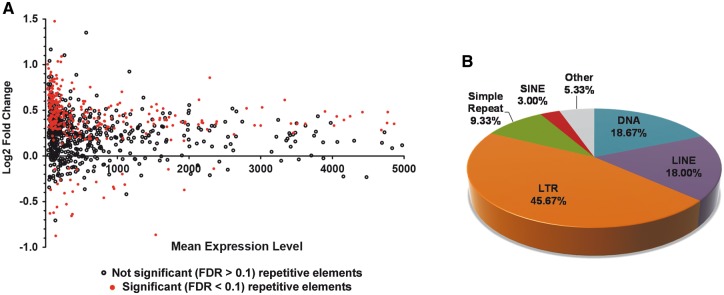
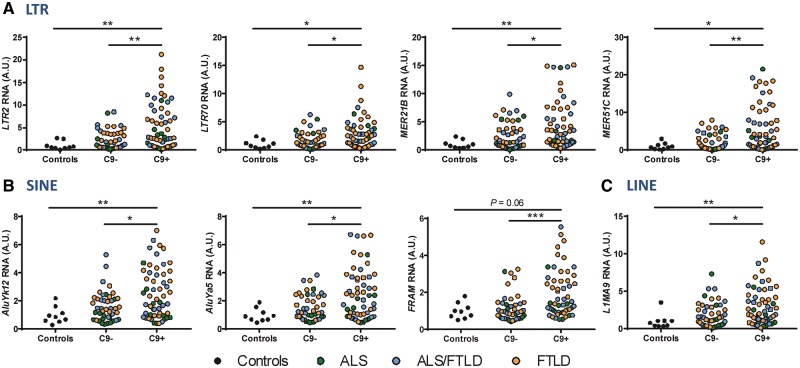
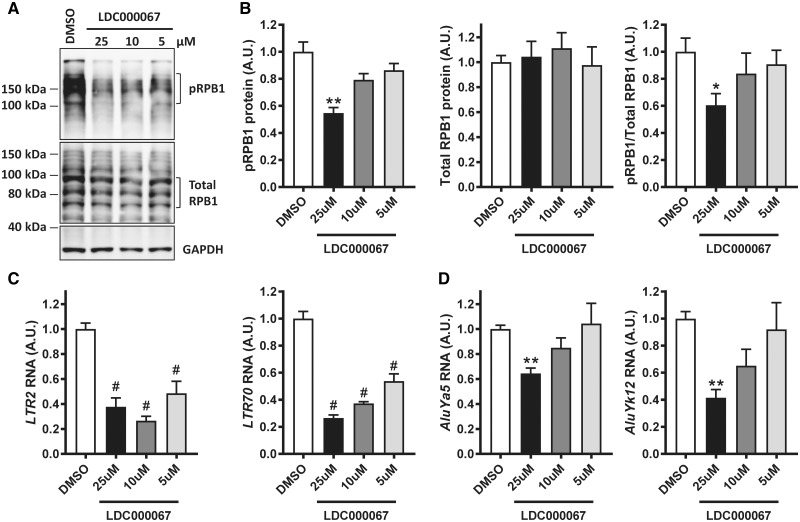
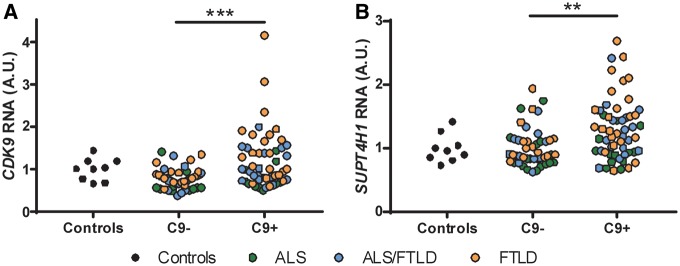
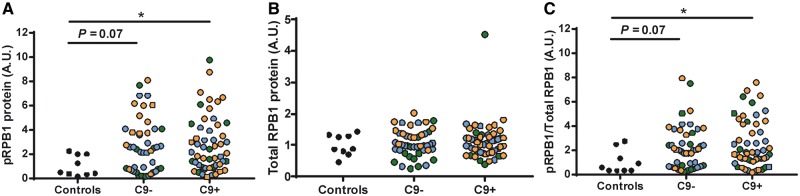
Significant transcriptome alterations are detected in the brain of patients with amyotrophic lateral sclerosis (ALS), including carriers of the C9orf72 repeat expansion and C9orf72-negative sporadic cases. Recently, the expression of repetitive element transcripts has been associated with toxicity and, while increased repetitive element expression has been observed in several neurodegenerative diseases, little is known about their contribution to ALS. To assess whether aberrant expression of repetitive element sequences are observed in ALS, we analysed RNA sequencing data from C9orf72-positive and sporadic ALS cases, as well as healthy controls. Transcripts from multiple classes and subclasses of repetitive elements (LINEs, endogenous retroviruses, DNA transposons, simple repeats, etc.) were significantly increased in the frontal cortex of C9orf72 ALS patients. A large collection of patient samples, representing both C9orf72 positive and negative ALS, ALS/FTLD, and FTLD cases, was used to validate the levels of several repetitive element transcripts. These analyses confirmed that repetitive element expression was significantly increased in C9orf72-positive compared to C9orf72-negative or control cases. While previous studies suggest an important link between TDP-43 and repetitive element biology, our data indicate that TDP-43 pathology alone is insufficient to account for the observed changes in repetitive elements in ALS/FTLD. Instead, we found that repetitive element expression positively correlated with RNA polymerase II activity in postmortem brain, and pharmacologic modulation of RNA polymerase II activity altered repetitive element expression in vitro. We conclude that increased RNA polymerase II activity in ALS/FTLD may lead to increased repetitive element transcript expression, a novel pathological feature of ALS/FTLD.
Overview
The claims and statistics of this paper haven’t been checked yet.
Run the check — free, no account needed. It reads the open-access text and checks the sources it cites.
Integrity signals
Registry
Cites
Statistics
Figures
Verification
Claims the paper makes
The claims and statistics of this paper haven’t been checked yet.
Run the check — free, no account needed. It reads the open-access text and checks the sources it cites.
Claims other papers make about this one
Each is checked against this paper’s own text: does it say what the citing paper says it does?
The cited source doesn’t support the claim as written.
In the citing paper
“Prudencio et al. (2017) did not, however, detect a positive correlation between TDP-43 protein pathology burden and retrotransposon expression.”
From The Role of Retrotransposons and Endogenous Retroviruses in Age-Dependent Neurodegenerative Disorders (2024) · cites this paper as Prudencio et al. 2017
Checked by a reasoning model — may be wrong.
Experimental — accuracy not yet measuredThe source backs part of the claim, not all of it — or backs it for a different population, condition or comparison.
In the citing paper
“Several substantially larger studies have since confirmed the broad upregulation of retrotransposon sequences in subjects with ALS or FTD”
From The Role of Retrotransposons and Endogenous Retroviruses in Age-Dependent Neurodegenerative Disorders (2024) · cites this paper as Prudencio et al. 2017
Experimental — accuracy not yet measuredThe cited source says what the claim attributes to it.
In the citing paper
“a study from the Petrucelli and Link labs (Prudencio et al. 2017) reported the enrichment of retrotransposon transcripts in a subset of ALS samples from C9orf72 familial disease”
From The Role of Retrotransposons and Endogenous Retroviruses in Age-Dependent Neurodegenerative Disorders (2024) · cites this paper as Prudencio et al. 2017
The cited source says what the claim attributes to it.
In the citing paper
“In each case, retrotransposon expression was found to be elevated in ALS or FTD samples.”
From The Role of Retrotransposons and Endogenous Retroviruses in Age-Dependent Neurodegenerative Disorders (2024) · cites this paper as Prudencio et al. 2017
Self-check
Percentages, sums and reported differences re-computed from the paper’s own numbers.
The self-check needs the paper’s full text.
Citations
Cites
Differential expression analysis for sequence count data
Anders, S., & Huber, W. (2010) · Genome Biology · doi:10.1186/gb-2010-11-10-r106 · Cited by 15,581
Heinz, S., Benner, C., Spann, N., Bertolino, E., Lin, Y. C., Laslo, P., Cheng, J. X., Murre, C., Singh, H., & Glass, C. K. (2010) · Molecular Cell · doi:10.1016/j.molcel.2010.05.004 · Cited by 13,382
Kim, D., Pertea, G., Trapnell, C., Pimentel, H., Kelley, R., & Salzberg, S. L. (2013) · Genome Biology · doi:10.1186/gb-2013-14-4-r36 · Cited by 12,668
Ubiquitinated TDP-43 in Frontotemporal Lobar Degeneration and Amyotrophic Lateral Sclerosis
Neumann, M., Sampathu, D. M., Kwong, L. K., Truax, A. C., Micsenyi, M. C., Chou, T. T., Bruce, J., Schuck, T., Grossman, M., Clark, C. M., et al. (2006) · Science · doi:10.1126/science.1134108 · Cited by 6,576
DeJesus-Hernandez, M., Mackenzie, I. R., Boeve, B. F., Boxer, A. L., Baker, M., Rutherford, N. J., Nicholson, A. M., Finch, N. A., Flynn, H., Adamson, J., et al. (2011) · Neuron · doi:10.1016/j.neuron.2011.09.011 · Cited by 4,936
Self-citationA Hexanucleotide Repeat Expansion in C9ORF72 Is the Cause of Chromosome 9p21-Linked ALS-FTD
Renton, A. E., Majounie, E., Waite, A., Simón-Sánchez, J., Rollinson, S., Gibbs, J. R., Schymick, J. C., Laaksovirta, H., van Swieten, J. C., Myllykangas, L., et al. (2011) · Neuron · doi:10.1016/j.neuron.2011.09.010 · Cited by 4,409
Arai, T., Hasegawa, M., Akiyama, H., Ikeda, K., Nonaka, T., Mori, H., Mann, D., Tsuchiya, K., Yoshida, M., Hashizume, Y., et al. (2006) · Biochemical and Biophysical Research Communications · doi:10.1016/j.bbrc.2006.10.093 · Cited by 2,732
Transposable elements and the epigenetic regulation of the genome
Slotkin, R. K., & Martienssen, R. (2007) · Nature Reviews Genetics · doi:10.1038/nrg2072 · Cited by 2,044
The impact of retrotransposons on human genome evolution
Cordaux, R., & Batzer, M. A. (2009) · Nature Reviews Genetics · doi:10.1038/nrg2640 · Cited by 1,692
The C9orf72 GGGGCC Repeat Is Translated into Aggregating Dipeptide-Repeat Proteins in FTLD/ALS
Mori, K., Weng, S., Arzberger, T., May, S., Rentzsch, K., Kremmer, E., Schmid, B., Kretzschmar, H. A., Cruts, M., Broeckhoven, C. V., et al. (2013) · Science · doi:10.1126/science.1232927 · Cited by 1,248
Cited by
Sorted by citations
TDP-43 represses cryptic exon inclusion in the FTD-ALS gene UNC13A
Ma, X. R., Prudencio, M., Koike, Y., Vatsavayai, S. C., Kim, G., Harbinski, F., Briner, A., Rodriguez, C. M., Guo, C., Akiyama, T., et al. (2022) · Nature · doi:10.1038/s41586-022-04424-7 · Cited by 574
Self-citationThe role of retrotransposable elements in ageing and age-associated diseases
Gorbunova, V., Seluanov, A., Mita, P., McKerrow, W., Fenyö, D., Boeke, J. D., Linker, S. B., Gage, F. H., Kreiling, J. A., Petrashen, A. P., et al. (2021) · Nature · doi:10.1038/s41586-021-03542-y · Cited by 446
Tam, O. H., Rozhkov, N. V., Shaw, R., Kim, D., Hubbard, I., Fennessey, S., Propp, N., Phatnani, H., Kwan, J., Sareen, D., et al. (2019) · Cell Reports · doi:10.1016/j.celrep.2019.09.066 · Cited by 327
Tau Activates Transposable Elements in Alzheimer’s Disease
Guo, C., Jeong, H.-H., Hsieh, Y.-C., Klein, H.-U., Bennett, D. A., De Jager, P. L., Liu, Z., & Shulman, J. M. (2018) · Cell Reports · doi:10.1016/j.celrep.2018.05.004 · Cited by 315
Kong, Y., Rose, C. M., Cass, A. A., Williams, A. G., Darwish, M., Lianoglou, S., Haverty, P. M., Tong, A.-J., Blanchette, C., Albert, M. L., et al. (2019) · Nature Communications · doi:10.1038/s41467-019-13035-2 · Cited by 285
Metadata
- Authors
- Prudencio, M., Gonzales, P. K., Cook, C. N., Gendron, T. F., Daughrity, L. M., Song, Y., Ebbert, M. T. W., van Blitterswijk, M., Zhang, Y.-J., Jansen-West, K., Baker, M. C., DeTure, M., Rademakers, R., Boylan, K. B., Dickson, D. W., Petrucelli, L., & Link, C. D.
- Affiliations
- Mayo Clinic (US)
- Integrative Physiology, Institute for Behavioral Genetics University of Colorado, CO 80309, USA
- Department of Neuroscience, Mayo Clinic, Jacksonville, FL 32224, USA
- Department of Neurology, Mayo Clinic, Jacksonville, FL 32224, USA
- Corresponding author
- Petrucelli, Leonard
- ORCID
- Venue
- Human Molecular Genetics
- Publisher
- Oxford University Press (OUP)
- Published
- 2017-06-16
- Volume
- 26
- Issue
- 17
- Pages
- 3421-3431
- ISSN
- 0964-6906 (ISSN-L)
- 1460-2083
- PMC
- PMC5886204
- OpenAlex
- W2626250818
- Cited by
- 122
- References
- 54
- Citations by year
- 2026: 12 · 2025: 14 · 2024: 11 · 2023: 14 · 2022: 13 · 2021: 13 · 2020: 11 · 2019: 18 · 2018: 13 · 2017: 3
- FWCI
- 8.57
- Type
- journal article
- Language
- en
- Open access
- hybrid
- doi.org
- Licence
- Locations
- Human Molecular Genetics (publishedVersion, cc-by-nc)
- Europe PMC (PubMed Central) (publishedVersion, cc-by-nc)
- PubMed Central (publishedVersion, cc-by-nc)
- PubMed (publishedVersion)
- Funders
- National Institutes of Health
- NIH
- National Institute of Neurological Disorders and Stroke
- NINDS (R01NS063964, R21NS089979, R35NS097273, R21NS084528, P01NS084974, P01NS099114, R01NS088689, R01NS093865, R35NS097261, R01NS080882)
- Department of Defense (AL130125)
- Amyotrophic Lateral Sclerosis Association
- Association for Frontotemporal Degeneration
- Muscular Dystrophy Association (#416137)
- National Center for Advancing Translational Sciences
- NCATS
- Topics
- Health Sciences › Medicine › Clinical Neurology › Amyotrophic Lateral Sclerosis Research
- Life Sciences › Neuroscience › Cellular and Molecular Neuroscience › Genetic Neurodegenerative Diseases
- Life Sciences › Neuroscience › Cellular and Molecular Neuroscience › Alzheimer's disease research and treatments
- Keywords
- amyotrophic lateral sclerosis, frontotemporal lobar degeneration, C9orf72 repeat expansion, TDP-43, lines, endogenous retroviruses, DNA transposons, simple repeats, frontal cortex, neurodegeneration, pharmacological modulation
- MeSH terms
- C9orf72 Protein, Aged, Amyotrophic Lateral Sclerosis, Autopsy, Brain, Female, Frontal Lobe, Heterozygote, Humans, Male, Middle Aged, Mutation, Repetitive Sequences, Nucleic Acid, RNA Polymerase II, Transcriptional Activation, Case-Control Studies, Sequence Analysis, RNA, Neurodegenerative Diseases, DNA Repeat Expansion, Frontotemporal Lobar Degeneration
About these checks
Registry, retraction, Cites and statistics results are computed, not judged, with one exception: a printed reference that no index lists is read once by a model before it counts as a citation error. Claims are extracted by a model and kept only when their quote appears verbatim in the text; each cited source is then checked, with a model’s help, for whether it says what the claim relies on. Those verdicts can be wrong — read the claim’s quote and the cited source before relying on one.
Statistics and arithmetic are recomputed, not judged.
Confidence bands are shown only for fields calibrated on our annotated test set. None is calibrated yet, so no band is shown.
What counts as a claim ›How we measure confidence ›How we check this ›
Are you an author, or do you see a problem with this page? Request a review
