

Anogenital distance in adult women is a strong marker of endometriosis: results of a prospective study with laparoscopic and histological findings
Open accessThe DOI matches its Crossref record; 28 of the 28 references it cites were found in a registry or an index.
Abstract
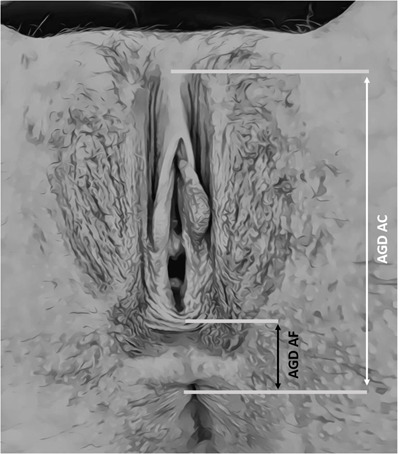
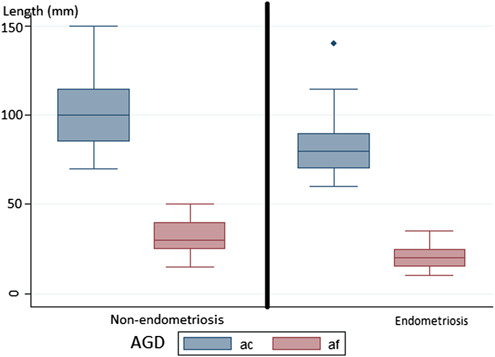
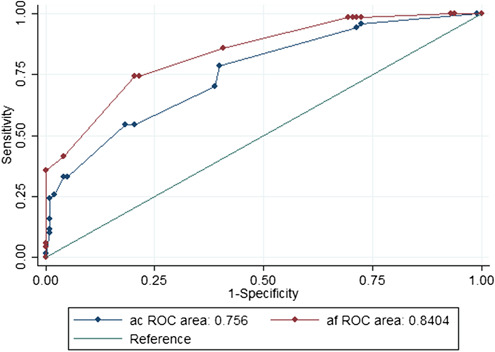
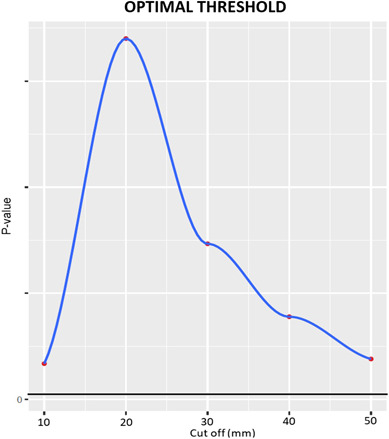
STUDY QUESTION: Could anogenital distance (AGD) be a non-invasive marker of endometriosis and correlated to the American Society for Reproductive Medicine revised score (r-ASRM) and ENZIAN classifications? SUMMARY ANSWER: Surgically and histologically proven endometriosis is associated with a short AGD in women of reproductive age but not correlated either to the severity or to the location of the disease. WHAT IS KNOWN ALREADY: AGD is a marker of intrauterine androgen exposure and exposure to oestrogen-like chemicals such as phthalates. Moreover, exposure to endocrine disruptors, such as organochlorine chemicals, is associated with endometriosis. It has been suggested that a short AGD in women is associated with an increased risk of endometriosis based on clinical and ultrasound exams. STUDY DESIGN, SIZE, DURATION: A prospective cohort study was conducted from January 2018 to June 2019 in a tertiary-care centre including 168 adult women undergoing pelvic surgery. PARTICIPANTS/MATERIALS, SETTING, METHODS: Of the 168 women included, 98 patients had endometriosis (endometriosis group) and 70 did not (non-endometriosis group). An operator (not the surgeon) measured the distance from the clitoral surface to the anus (AGD-AC) and from the posterior fourchette to the anus (AGD-AF) before surgery using a millimetre accuracy ruler. Endometriosis was diagnosed on exploration of the abdominopelvic cavity, and the r-ASRM and ENZIAN scores were calculated. All removed tissues underwent pathological examination. MAIN RESULTS AND THE ROLE OF CHANCE: Mean (±SD) AGD-AF measurements were 21.5 mm (±6.4) and 32.3 mm (±8.1), and average AGD-AC measurements were 100.9 mm (±20.6) and 83.8 mm (±12.9) in the endometriosis and non-endometriosis groups (P < 0.001), respectively. Mean AGD-AF and AGD-AC measurements were not related to r-ASRM stage (P = 0.73 and 0.80, respectively) or ENZIAN score (P = 0.62 and 0.21, respectively). AGD-AF had a better predictive value than AGD-AC for discriminating the presence of endometriosis (AUC = 0.840 (95% CI 0.782–0.898) and 0.756 (95% CI 0.684–0.828)), respectively. For AGD-AF, an optimal cut-off of 20 mm had a specificity of 0.986 (95% CI 0.923–0.999), sensitivity of 0.306 (95% CI 26.1–31.6) and positive predictive value of 0.969 (95% CI 0.826–0.998). In multivariable analysis, the diagnosis of endometriosis was the only variable independently associated with the AGD-AF (β = −9.66 mm 95% CI −12.20–−7.12), P < 0.001). LIMITATIONS, REASONS FOR CAUTION: The sample size was relatively small with a high proportion of patients with colorectal endometriosis reflecting the activity of an expert centre. Furthermore, we did not include adolescents and the AGD-AF measurement could be particularly relevant in this population. WIDER IMPLICATIONS OF THE FINDINGS: The measurement of AGD could be a useful non-invasive tool to predict endometriosis. This could be especially relevant for adolescents and virgin women to avoid diagnostic laparoscopy and empiric treatment. STUDY FUNDING/COMPETING INTEREST(S): None.
Overview
The claims and statistics of this paper haven’t been checked yet.
Free: it reads the open-access text and checks the first 5 claims that cite a source we can check. Create a free account to check every claim.
Integrity signals
Registry
Cites
Statistics
Figures
Verification
Claims the paper makes
The claims and statistics of this paper haven’t been checked yet.
Free: it reads the open-access text and checks the first 5 claims that cite a source we can check. Create a free account to check every claim.
Claims other papers make about this one
Each is checked against this paper’s own text: does it say what the citing paper says it does?
The source backs part of the claim, not all of it — or backs it for a different population, condition or comparison.
In the citing paper
“In humans across several study populations, AGD-AC, AGD-AF, or both were significantly shorter among women with endometriosis than among matched controls.14–19”
From Prenatal Origins of Endometriosis Pathology and Pain: Reviewing the Evidence of a Role for Low Testosterone (2023) · cites this paper as [18]
Experimental — accuracy not yet measuredThe source backs part of the claim, not all of it — or backs it for a different population, condition or comparison.
In the citing paper
“Crestani et al18 reported, for endometriosis as a whole, a diagnostic specificity of 0.98 and a positive predictive value of 0.97, for an MRI-measured AGD-AF length of less than 20-mm.”
From Prenatal Origins of Endometriosis Pathology and Pain: Reviewing the Evidence of a Role for Low Testosterone (2023) · cites this paper as [18]
Experimental — accuracy not yet measuredThe source backs part of the claim, not all of it — or backs it for a different population, condition or comparison.
In the citing paper
“First, recent findings of short anogenital distances (AGDs) in women with endometriosis compared with controls (Crestani et al., 2020; Mendiola et al., 2016; Peters et al., 2020) implicate low prenatal testosterone in this disorder, although these results have yet to be considered or synthesized in the context of how and why endometriosis develops.”
From Endometriosis and polycystic ovary syndrome are diametric disorders (2021) · cites this paper as Crestani et al., 2020
Experimental — accuracy not yet measuredThe source backs part of the claim, not all of it — or backs it for a different population, condition or comparison.
In the citing paper
“For example, recent replicated findings of short AGD in women with endometriosis (Crestani et al., 2020; Mendiola et al., 2016; Peters et al., 2020) were, in each article, interpreted as indicative of an overly estrogenic prenatal environment.”
From Endometriosis and polycystic ovary syndrome are diametric disorders (2021) · cites this paper as Crestani et al., 2020
Experimental — accuracy not yet measuredThe cited source says what the claim attributes to it.
In the citing paper
“Short AGD also predicts endometriosis with high specificity (91.4% in Mendiola et al., 2016; 98.6% in Crestani et al., 2020).”
From Endometriosis and polycystic ovary syndrome are diametric disorders (2021) · cites this paper as Crestani et al., 2020
1 more claim about this paper
Create a free account to see every claim other papers make about this one.
Self-check
Percentages, sums and reported differences re-computed from the paper’s own numbers.
The self-check needs the paper’s full text.
Citations
Cites
ESHRE guideline: management of women with endometriosis
Dunselman, G. A. J., Vermeulen, N., Becker, C., Calhaz-Jorge, C., D'Hooghe, T., De Bie, B., Heikinheimo, O., Horne, A. W., Kiesel, L., Nap, A., et al. (2014) · Human Reproduction · doi:10.1093/humrep/det457 · Cited by 2,211 · cited 1×
“was proved surgically and confirmed by histology as recommended by gynaecological societies (‘Practice bulletin no. 114’, 2010; Dunselman et al., 2014; Collinet et al., 2018).”
MethodGiudice, L. C. (2010) · New England Journal of Medicine · doi:10.1056/nejmcp1000274 · Cited by 1,924 · cited 2×
“Endometriosis is a chronic disease characterised by the presence of glands and endometrial stroma outside the uterus (Giudice, 2010).”
BackgroundEskenazi, B., & Warner, M. L. (1997) · Obstetrics and Gynecology Clinics of North America · doi:10.1016/s0889-8545(05)70302-8 · Cited by 1,617
Nisolle, M., & Donnez, J. (1997) · Fertility and Sterility · doi:10.1016/s0015-0282(97)00191-x · Cited by 1,279 · cited 1×
“endometrioma and deep endometriosis (DE) defined by the infiltration of anatomical structures and organs (Nisolle and Donnez, 1997).”
BackgroundWorld Endometriosis Society consensus on the classification of endometriosis
Johnson, N. P., Hummelshoj, L., Adamson, G. D., Keckstein, J., Taylor, H. S., Abrao, M. S., Bush, D., Kiesel, L., Tamimi, R., Sharpe-Timms, K. L., et al. (2017) · Human Reproduction · doi:10.1093/humrep/dew293 · Cited by 664 · cited 1×
“Surgery consisted of exploring the abdominopelvic cavity to evaluate the diagnosis of endometriosis and to calculate the r-ASRM and surgical Enzian scores (Johnson et al., 2017).”
MethodConsensus on current management of endometriosis
Johnson, N. P., Hummelshoj, L., for the World Endometriosis Society Montpellier Consortium, Abrao, M. S., Adamson, G. D., Allaire, C., Amelung, V., Andersson, E., Becker, C., Birna Árdal, K. B., et al. (2013) · Human Reproduction · doi:10.1093/humrep/det050 · Cited by 558 · cited 1×
“However, neither clinical nor imaging examinations can accurately diagnose peritoneal endometriosis, which is confirmed on biopsy following laparoscopy (Johnson and Hummelshoj, 2013).”
BackgroundInfluentialImaging modalities for the non-invasive diagnosis of endometriosis
Nisenblat, V., Bossuyt, P. M., Farquhar, C., Johnson, N., & Hull, M. L. (2016) · Cochrane Database of Systematic Reviews · doi:10.1002/14651858.cd009591.pub2 · Cited by 538
Bazot, M., Lafont, C., Rouzier, R., Roseau, G., Thomassin-Naggara, I., & Daraï, E. (2009) · Fertility and Sterility · doi:10.1016/j.fertnstert.2008.09.005 · Cited by 434 · cited 2×
“Clinical and imaging techniques also have low accuracy for diagnosing DE (Bazot et al., 2009; Nisenblat et al., 2016a; Bazot and Daraï, 2017).”
BackgroundMethodPractice Bulletin No. 114: Management of Endometriosis
(2010) · Obstetrics & Gynecology · doi:10.1097/aog.0b013e3181e8b073 · Cited by 382
Blood biomarkers for the non-invasive diagnosis of endometriosis
Nisenblat, V., Bossuyt, P. M., Shaikh, R., Farquhar, C., Jordan, V., Scheffers, C. S., Mol, B. W. J., Johnson, N., & Hull, M. L. (2016) · Cochrane Database of Systematic Reviews · doi:10.1002/14651858.cd012179 · Cited by 376
Cited by
Endometriosis and polycystic ovary syndrome are diametric disorders
Dinsdale, N. L., & Crespi, B. J. (2021) · Evolutionary Applications · doi:10.1111/eva.13244 · Cited by 90
“…associated with early prenatal testosterone exposure (Thankamony et al., 2016) Shorter AGD in women with endometriosis relative to unaffected women (Crestani et al., 2020; Mendiola et al., 2016; Peters et al., 2020; Sánchez- Ferrer, Mendiola, Jiménez- Velázquez, et al., 2017) Longer AGD in women…”
BackgroundResultInfluentialThe evolutionary biology of endometriosis
Dinsdale, N., Nepomnaschy, P., & Crespi, B. (2021) · Evolution, Medicine, and Public Health · doi:10.1093/emph/eoab008 · Cited by 53
“Most notably, women with endometriosis exhibit, relative to controls: (1) shorter AGDs, indicative of lower prenatal testosterone [40, 41], (2) lower LH relative to FSH, (3) higher SHBG, (4) higher serum oxytocin, (5) lower ovarian and serum testosterone, (6) lower AMH, (7) lower WHR and BMI, (8) lower b-endorphin and…”
BackgroundPan, Z., Zhu, F., & Zhou, K. (2021) · Frontiers in Endocrinology · doi:10.3389/fendo.2021.696879 · Cited by 34
Are Adenomyosis and Endometriosis Phenotypes of the Same Disease Process?
Habiba, M. A., Guo, S., & Benagiano, G. (2023) · Biomolecules · doi:10.3390/biom14010032 · Cited by 37
“In addition, it has been documented that shorter anogenital distance (AGD), a proxy marker for in utero exposure to lower androgen levels, is associated with a higher risk of endometriosis [63–66] and adenomyosis [67].”
BackgroundVariation among human populations in endometriosis and PCOS A test of the inverse comorbidity model
Crespi, B. J. (2021) · Evolution Medicine and Public Health · doi:10.1093/emph/eoab029 · Cited by 27
“France [21] 98 women with endometriosis and 70 control women AGD-AF and AGD-AC were highly significantly shorter in the endometriosis group in univariate analyses.”
BackgroundZamani, P., Hemati, Z., Kelishadi, R., Kolahdozan, S., Dianatinasab, M., & Keikha, M. (2023) · International Journal of Reproductive BioMedicine (IJRM) · doi:10.18502/ijrm.v21i8.14016 · Cited by 24
“A prospective cohort study among 168 women over 18 yr old showed that the diagnosis of endometriosis was negatively associated with both the AGDAF and the AGDAC, and the AGDAF had a better predictive value than the AGDAC for discriminating the presence of endometriosis (38).”
BackgroundUnveiling the Pathogenesis of Adenomyosis through Animal Models
Wang, X., Benagiano, G., Liu, X., & Guo, S. (2022) · Journal of Clinical Medicine · doi:10.3390/jcm11061744 · Cited by 19
Crespi, B. J., & Evans, S. F. (2023) · Journal of Pain Research · doi:10.2147/jpr.s389166 · Cited by 17
Testosterone mediates life‐history trade‐offs in female mammals
Crespi, B. J., Bushell, A., & Dinsdale, N. L. (2024) · Biological reviews/Biological reviews of the Cambridge Philosophical Society · doi:10.1111/brv.13166 · Cited by 16
A short anogenital distance on MRI is a marker of endometriosis
Crestani, A., Abdel Wahab, C., Arfi, A., Ploteau, S., Kolanska, K., Breban, M., Bendifallah, S., Ferrier, C., & Darai, E. (2021) · Human Reproduction Open · doi:10.1093/hropen/hoab003 · Cited by 15
“The initial cohort, which included 98 patients with surgically and histologically proven endometriosis and 70 patients without endometriosis, has been described in a previous study (Crestani et al., 2020).”
BackgroundMethodResultInfluentialSelf-citationAndrogens, Endometriosis and Pain
Evans, S. F., Hull, M. L., Hutchinson, M. R., & Rolan, P. E. (2021) · Frontiers in Reproductive Health · doi:10.3389/frph.2021.792920 · Cited by 14
Hlisníková, H., Petrovičová, I., Kolena, B., Šidlovská, M., & Mlynček, M. (2021) · Reproductive Toxicology · doi:10.1016/j.reprotox.2021.04.001 · Cited by 11
Liu, X., Ding, D., Shen, M., Yan, D., & Guo, S. (2023) · Biomedicines · doi:10.3390/biomedicines11102618 · Cited by 13
Kliber, M., Kulczyńska-Figurny, K., Jagodziński, P. P., & Pławski, A. (2025) · Journal of Applied Genetics · doi:10.1007/s13353-025-01021-y · Cited by 13
Anogenital Distance and Endometriosis: Results of a Case–Control Study
Buggio, L., Somigliana, E., Sergenti, G., Ottolini, F., Dridi, D., & Vercellini, P. (2022) · Reproductive Sciences · doi:10.1007/s43032-022-01009-7 · Cited by 8
Endometriosis risk is associated with shorter anogenital distance by meta-analysis
Crespi, B. J. (2024) · Journal of Endometriosis and Uterine Disorders · doi:10.1016/j.jeud.2024.100083 · Cited by 6
Anogenital Distance as a Predictor of Dysmenorrhea
Saputra, N. P. K., Noviardi, Sonia, N., sartika, D., & Nadisa, S. (2022) · Nusantara Science and Technology Proceedings · doi:10.11594/nstp.2022.2826 · Cited by 4
In Memory of Ivo Brosens: Reflections on the Pathophysiology of Neonatal Uterine Bleeding
Habiba, M. A., Guo, S., & Benagiano, G. (2023) · Gynecologic and Obstetric Investigation · doi:10.1159/000533123 · Cited by 4
The relationship between anogenital distance and female sexual life
Kulaksız, D., & Toprak, T. (2022) · Minerva Obstetrics and Gynecology · doi:10.23736/s2724-606x.22.05023-0 · Cited by 3
Buggio, L., Reschini, M., Viganò, P., Dridi, D., Galati, G., Chinè, A., Giola, F., Somigliana, E., & Benaglia, L. (2023) · Journal of Clinical Medicine · doi:10.3390/jcm12052040 · Cited by 3
Alabiad, M. A., Elhasadi, I., Aljafil, R., Shalaby, A. M., Alshaikh, A. B. A., Edris, F., Heraiz, A. I., Alorini, M., Aboregela, A. M., & Mohamed, A. H. (2024) · International Journal of Gynecology & Obstetrics · doi:10.1002/ijgo.15412 · Cited by 2
“Also, Mendiola et al. 34 and Crestani et al. 36,37 found that short AGD was strongly associated with endometrioma.”
BackgroundKhan, K. N., Fujishita, A., Hiraki, K., Ogawa, K., Horiguchi, G., Teramukai, S., Fujieda, M., & Mori, T. (2024) · Journal of obstetrics and gynaecology research · doi:10.1111/jog.16129 · Cited by 1
“3,4”
Harth, S., Metze, L., Leufkens, D., Roller, F. C., Brose, A., Zeppernick, F. A., Meinhold-Heerlein, I. M., & Krombach, G. A. (2024) · Scientific Reports · doi:10.1038/s41598-024-82407-6 · Cited by 1
Associations of endocrine disrupting chemicals with anogenital distance across infancy
Cinzori, M. E., Ryva, B. A., Murphy, A., Gardiner, J. C., Schantz, S. L., & Strakovsky, R. S. (2026) · The Journal of Clinical Endocrinology & Metabolism · doi:10.1210/clinem/dgag135 · Cited by 1
The correlation between Anogenital Distance (AGD) and Endometriosis
Nalley, R. R., Abdullah, N., Madya, F., Asni, S. N., Sriwijaya, S., & Susiawaty, S. (2023) · Bali Medical Journal · doi:10.15562/bmj.v12i3.4707 · Cited by 1
“4 Based on the explanation above, this study aims to determine the relationship between ABG and the incidence of endometriosis in Dr. Wahidin Sudirohusodo General Hospital, Makassar, Indonesia.”
BackgroundMorphology and Anthropometric Measurements of Scrotum
Fahmy, M., & Springer, A. (2021) · Springer eBooks · doi:10.1007/978-3-030-83305-3_9
Contribution des modèles mathématiques
Puchar, A., Ferrier, C., Dabi, Y., Touboul, C., Bendifallah, S., & Daraï, É. (2022) · Elsevier eBooks · doi:10.1016/b978-2-294-77427-0.00011-4
Self-citationGüzelbağ, B., Bestel, A., Katran, S. E., Averbek, B., & Çelik, H. G. (2026) · Journal of Clinical Medicine · doi:10.3390/jcm15041319
“These values are lower than those reported for endometriosis by Crestani et [16,23,39].”
InfluentialBushell, A. (n.d.) · Summit (Simon Fraser University)
Bushell, A., Chen, M., Liu, J., & Crespi, B. J. (2026) · Research Square · doi:10.21203/rs.3.rs-9558856/v1
Epidemiology of endometriosis and adenomyosis
Upson, K., Missmer, S. A., Tellum, T., Harris, H. R., & As‐Sanie, S. (2026) · Elsevier eBooks · doi:10.1016/b978-0-443-45863-7.00031-7
Shim, J. Y., Scatoni, A., Cramer, D. W., Staffa, S. J., Laufer, M. R., & Boskey, E. R. (2026) · Frontiers in Reproductive Health · doi:10.3389/frph.2026.1951393
“Likewise, Crestani et al. (5) confirmed a shorter AGD in women with surgically confirmed endometriosis.”
Metadata
- Authors
- Crestani, A., Arfi, A., Ploteau, S., Breban, M., Boudy, A.-S., Bendifallah, S., Ferrier, C., & Darai, E.
- Affiliations
- Assistance Publique – Hôpitaux de Paris (FR)
- Centre Hospitalier Universitaire de Nantes (FR)
- Inserm (FR)
- Department of Gynaecology and Obstetrics, Tenon University Hospital, Assistance Publique des Hôpitaux de Paris (AP-HP) University Pierre and Marie Curie, Paris 75020, France
- Corresponding author
- Crestani, A
- Venue
- Human Reproduction Open
- Publisher
- Oxford University Press (OUP)
- Published
- 2020
- Volume
- 2020
- Issue
- 3
- Pages
- hoaa023-hoaa023
- ISSN
- 2399-3529 (ISSN-L)
- PMC
- PMC7275635
- OpenAlex
- W3033695870
- Cited by
- 28
- References
- 28
- Citations by year
- 2026: 3 · 2025: 1 · 2024: 5 · 2023: 7 · 2022: 5 · 2021: 7
- FWCI
- 4.19
- Type
- journal article
- Language
- en
- Open access
- gold
- doi.org
- Licence
- Locations
- Human Reproduction Open (publishedVersion, cc-by-nc)
- PubMed Central (publishedVersion, cc-by-nc)
- PubMed (publishedVersion)
- HAL (submittedVersion, other-oa)
- Topics
- Health Sciences › Medicine › Reproductive Medicine › Endometriosis Research and Treatment
- Physical Sciences › Environmental Science › Health, Toxicology and Mutagenesis › Effects and risks of endocrine disrupting chemicals
- Health Sciences › Medicine › Obstetrics and Gynecology › Ectopic Pregnancy Diagnosis and Management
- Keywords
- anogenital distance, endometriosis, non-invasive biomarkers, endometriosis severity, Enzian classification, endocrine disruptors, phthalates, pelvic surgery, histopathology, women of reproductive age, body mass index, body fat percentage
About these checks
Registry, retraction, Cites and statistics results are computed, not judged, with one exception: a printed reference that no index lists is read once by a model before it counts as a citation error. Claims are extracted by a model and kept only when their quote appears verbatim in the text; each cited source is then checked, with a model’s help, for whether it says what the claim relies on. Those verdicts can be wrong — read the claim’s quote and the cited source before relying on one.
Statistics and arithmetic are recomputed, not judged.
Confidence bands are shown only for fields calibrated on our annotated test set. None is calibrated yet, so no band is shown.
What counts as a claim ›How we measure confidence ›How we check this ›
Are you an author, or do you see a problem with this page? Request a review
Data sources
Bibliographic data: Semantic Scholar, OpenAlex, Crossref.
Contains information from the Semantic Scholar Academic Graph Datasets, made available under the ODC Attribution License (ODC-BY 1.0).
Semantic Scholar’s data is described in: Kinney, R., et al. (2023). The Semantic Scholar Open Data Platform. arXiv:2301.10140.
