

Anti-TNF- treatment for deep endometriosis-associated pain: a randomized placebo-controlled trial
Open accessThe DOI matches its Crossref record; 58 of the 58 references it cites were found in a registry or an index.
Abstract
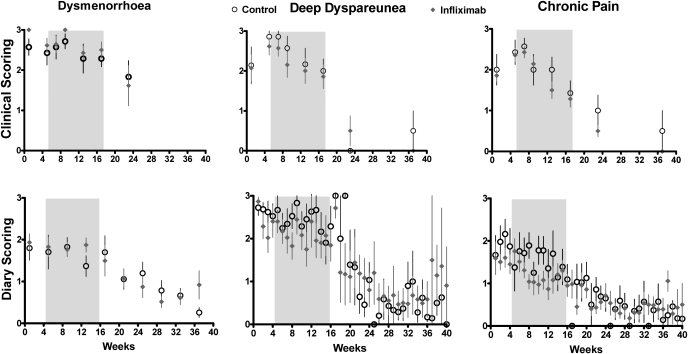
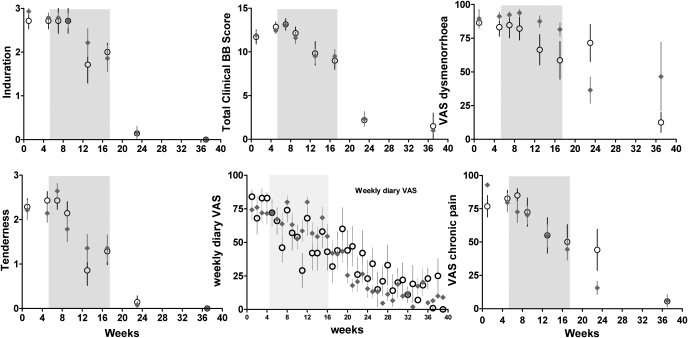
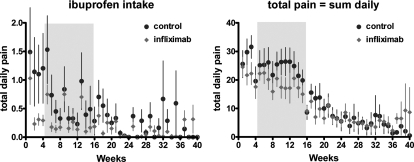
BACKGROUND: Endometriosis is associated with an inflammatory response. Hence infliximab, an anti-TNF-alpha monoclonal antibody, might relieve pain. METHODS: A randomized placebo-controlled trial was designed with 21 women with severe pain and a rectovaginal nodule of at least 1 cm. After 1 month of observation, three infusions of infliximab (5 mg/kg) or placebo were given. Surgery was performed 3 months later and follow-up continued for 6 months. The primary end-point was pain (dysmenorrhea, deep dyspareunia and non-menstrual pain) rated at each visit by the clinician and on a daily basis by the patient who in addition scored pain by visual analog pain scale and analgesia intake. Secondary end-points included the volume of the endometriotic nodule, pelvic tenderness and the visual appearance of endometriotic lesions at laparoscopy. RESULTS: Pain severity decreased during the treatment by 30% in both the placebo (P < 0.001) and infliximab groups (P < 0.001). However, no effect of infliximab was observed for any of the outcome measures. After surgery, pain scores decreased in both groups to less than 20% of the initial value. CONCLUSIONS: Infliximab appears not to affect pain associated with deep endometriosis. Treatment is associated with an important placebo effect. After surgery, pain decreases to less than 20%. Trials registration number ClinicalTrials.gov: NCT00604864.
Overview
The claims and statistics of this paper haven’t been checked yet.
Free: it reads the open-access text and checks the first 5 claims that cite a source we can check. Create a free account to check every claim.
Integrity signals
Registry
Cites
Statistics
Figures
Verification
Claims the paper makes
The claims and statistics of this paper haven’t been checked yet.
Free: it reads the open-access text and checks the first 5 claims that cite a source we can check. Create a free account to check every claim.
Claims other papers make about this one
Each is checked against this paper’s own text: does it say what the citing paper says it does?
The source backs part of the claim, not all of it — or backs it for a different population, condition or comparison.
In the citing paper
“Of those studied in clinical trials, TNF-alpha antagonists have not been shown to be effective”
From Chronic pelvic pain and endometriosis: translational evidence of the relationship and implications (2011) · cites this paper as Koninckx et al., 2008
Experimental — accuracy not yet measuredThe source backs part of the claim, not all of it — or backs it for a different population, condition or comparison.
In the citing paper
“However, these treatments have not been effective for endometriosis-associated pain”
From Chronic pelvic pain and endometriosis: translational evidence of the relationship and implications (2011) · cites this paper as Koninckx et al., 2008
Experimental — accuracy not yet measured
Self-check
Percentages, sums and reported differences re-computed from the paper’s own numbers.
The self-check needs the paper’s full text.
Citations
Cites
1 retracted
Laparoscopic surgery for pelvic pain associated with endometriosis
Jacobson, T. Z., Duffy, J. M., Barlow, D. H., Koninckx, P. R., & Garry, R. (2009) · Cochrane Database of Systematic Reviews · doi:10.1002/14651858.cd001300.pub2 · Cited by 219 · cited 2×
“Sur- gical ablation of typical endometriosis has been reported to decrease pain in several observational studies and in a randomized controlled trial (Sutton et al., 1994, 1997; Jacobson et al., 2001).”
BackgroundMethodSelf-citationRetractedKoninckx, P. R., Meuleman, C., Demeyere, S., Lesaffre, E., & Cornillie, F. J. (1991) · Fertility and Sterility · doi:10.1016/s0015-0282(16)54244-7 · Cited by 849 · cited 1×
“Anti-TNF-a treatment for deep endometriosis-associated pain: a randomized placebo-controlled trial”
Self-citationVercellini, P., Fedele, L., Aimi, G., Pietropaolo, G., Consonni, D., & Crosignani, P. G. (2007) · Human Reproduction · doi:10.1093/humrep/del339 · Cited by 547 · cited 3×
“Natural menopause and all medical treatments, which inactivate the endometrium (Vercellini et al., 1997, 2007a), prevent menstruation or decrease menstrual blood loss, including GnRH agonists (Shaw, 1991) and oral contra- ceptives decrease pain.”
BackgroundSutton, C. J. G., Ewen, S. P., Whitelaw, N., & Haines, P. (1994) · Fertility and Sterility · doi:10.1016/s0015-0282(16)56990-8 · Cited by 525 · cited 3×
“Anti-TNF-a treatment for deep endometriosis-associated pain: a randomized placebo-controlled trial”
BackgroundResultPrediction of endometriosis with serum and peritoneal fluid markers: a prospective controlled trial
Bedaiwy, M. A. (2002) · Human Reproduction · doi:10.1093/humrep/17.2.426 · Cited by 485 · cited 2×
“TNF-a levels are increased in peritoneal fluid of women with endometriosis (Bedaiwy et al., 2002), and the levels correlate with severity of disease (Richter et al., 2005).”
BackgroundEndometriosis and pelvic pain: relation to disease stage and localization
Vercellini, P., Trespidi, L., De Giorgi, O., Cortesi, I., Parazzini, F., & Crosignani, P. G. (1996) · Fertility and Sterility · doi:10.1016/s0015-0282(16)58089-3 · Cited by 457 · cited 2×
“The strong association between cystic ovarian and deep endometriosis with severe pelvic pain was invariably noted in observational studies, and logistic regression showed deep and cystic endometriosis to be the strongest predictors of pelvic pain (Koninckx and Martin, 1994; Vercellini et al., 1996).”
BackgroundColombel, J. F., Loftus, E. V., Tremaine, W. J., Pemberton, J. H., Wolff, B. G., Young-Fadok, T., Harmsen, W. S., Schleck, C. D., & Sandborn, W. J. (2004) · The American Journal of Gastroenterology · doi:10.1111/j.1572-0241.2004.04148.x · Cited by 381 · cited 2×
“Since then, two retrospective studies in patients with Crohn’s disease have similarly concluded that the use of infliximab, as well as steroids or immunomodulators, before abdominal surgery does not increase the risk for post-operative complications (Colombel et al., 2004; Marchal et al., 2004).”
BackgroundRelationship between endometriotic foci and nerves in rectovaginal endometriotic nodules
Anaf, V. (2000) · Human Reproduction · doi:10.1093/humrep/15.8.1744 · Cited by 333 · cited 3×
“Anti-TNF-a treatment for deep endometriosis-associated pain: a randomized placebo-controlled trial”
BackgroundAnaf, V., Simon, P., El Nakadi, I., Fayt, I., Simonart, T., Buxant, F., & Noel, J.-C. (2002) · Human Reproduction · doi:10.1093/humrep/17.7.1895 · Cited by 317
Anatomic basis of chronic perineal pain: role of the pudendal nerve
Robert, R., Prat-Pradal, D., Labat, J. J., Bensignor, M., Raoul, S., Rebai, R., Leborgne, J., Lardoux, M. C., & Thiodet, J. (1998) · Surgical and Radiologic Anatomy · doi:10.1007/bf01628908 · Cited by 306 · cited 2×
“, 2004; Possover and Chiantera, 2007) or the pudendal nerve in cases of menstrual sciatalgia or Alcock syndrome (Robert et al., 1998; Possover and Chiantera, 2007).”
Background
Research works printed but not linked: 11
- Anaf V El Nakadi I Simon P Van de Stadt J Fayt I Simonart T Noel JC Preferential infiltration of large bowel endometriosis along the nerves of the colon Hum Reprod 2004 19 996 1002 15016784
- Barrier BF Bates GW Leland MM Leach DA Robinson RD Propst AM Efficacy of anti-tumor necrosis factor therapy in the treatment of spontaneous endometriosis in baboons Fertil Steril 2004 81 Suppl 1 775 779 15019808
- Koninckx PR Meuleman C Demeyere S Lesaffre E Cornillie FJ Suggestive evidence that pelvic endometriosis is a progressive disease, whereas deeply infiltrating endometriosis is associated with pelvic pain Fertil Steril 1991 b 55 759 765 2010001
- 1991, Fertility and sterility, 55, 759, 10.1016/S0015-0282(16)54244-7 · DOI · Paper page
- Koninckx PR Meuleman C Oosterlynck D Cornillie FJ Diagnosis of deep endometriosis by clinical examination during menstruation and plasma CA-125 concentration Fertil Steril 1996 b 65 280 287 8566249
- Koninckx PR Kennedy SH Barlow DH Pathogenesis of endometriosis: the role of peritoneal fluid Gynecol Obstet Invest 1999 47 Suppl 1 23 33 10087425
- 1996, Fertility and sterility, 65, 280, 10.1016/S0015-0282(16)58086-8 · DOI · Paper page
- Olshansky B Placebo and nocebo in cardiovascular health: implications for healthcare, research, and the doctor-patient relationship J Am Coll Cardiol 2007 49 415 421 17258086
- 2007, Fertility and sterility, 87, 417
- Shakiba K Falcone T Tumour necrosis factor-alpha blockers: potential limitations in the management of advanced endometriosis? A case report Hum Reprod 2006 21 2417 2420 16785259
- Vercellini P Fedele L Aimi G Pietropaolo G Consonni D Crosignani PG Association between endometriosis stage, lesion type, patient characteristics and severity of pelvic pain symptoms: a multivariate analysis of over 1000 patients Hum Reprod 2007 b 22 266 271 16936305
Cited by
Items 101–165 of 165
An Update on Pathophysiology and Medical Management of Endometriosis
Kaur, K. K., & Allahbadia, G. (2016) · Advances in Reproductive Sciences · doi:10.4236/arsci.2016.42008 · Cited by 13
“[101] Koninckx, P.”
BackgroundAn overview of early drug development for endometriosis
Maggiore, U. L. R., & Ferrero, S. (2015) · Expert Opinion on Investigational Drugs · doi:10.1517/13543784.2016.1126579 · Cited by 11
Miyamoto, A., Taniguchi, F., Tagashira, Y., Watanabe, A., Harada, T., & Terakawa, N. (2009) · American Journal of Reproductive Immunology · doi:10.1111/j.1600-0897.2009.00691.x · Cited by 10
“Centers of excellence in endometriosis surgery” or “centers of excellence in endometriosis”
Koninckx, P. R., & Ussia, A. (2010) · Gynecological Surgery · doi:10.1007/s10397-009-0549-4 · Cited by 12
“Finally, an important placebo effect exists for all pain symptoms; even for very severe deep endometriosisassociated pain [3] (women that had 13 to 15/15 on a Biberoglu–Behrman scale), an overall 30% placebo effect exists.”
BackgroundSelf-citationKoninckx, P. R., Ussia, A., Zupi, E., & Gomel, V. (2017) · Journal of Minimally Invasive Gynecology · doi:10.1016/j.jmig.2017.04.019 · Cited by 9
Self-citationExperimental Treatments of Endometriosis
Attar, R., & Attar, E. (2015) · Women s Health · doi:10.2217/whe.15.51 · Cited by 9
Capraș, R.-D., Urdă-Cîmpean, A. E., & Bolboaca, S. D. (2019) · Medicina · doi:10.3390/medicina55070372 · Cited by 9
“Only seven articles [26,34,37,39,41,44,51] gained an overall score ≥23 points (approximatively 88% of the maximum possible total score).”
BackgroundResultThe latest advances in the pharmacological management of endometriosis
Hartner, G., Husslein, H., Kuessel, L., Gstoettner, M., Tiringer, D., Wenzl, R. J., & Perricos, A. (2022) · Expert Opinion on Pharmacotherapy · doi:10.1080/14656566.2022.2045274 · Cited by 9
Medical treatments of endometriosis: a review
Elbasueny, B., Geerts, M., Yang, E. C., Allaire, C., Yong, P. J., & Bedaiwy, M. A. (2022) · Reproductive and Developmental Medicine · doi:10.1097/rd9.0000000000000053 · Cited by 12
Imbalance of Th1 and Th2 Cytokines and Stem Cell Therapy in Pathological Pain
Yu, Y., & Wang, H. (2022) · CNS & Neurological Disorders - Drug Targets · doi:10.2174/1871527322666221226145828 · Cited by 7
Kalliomäki, M., Sandblom, G., Hallberg, M., Grönbladh, A., Gunnarsson, U., Gordh, T., Ginya, H., & Nyberg, F. (2016) · Scandinavian Journal of Pain · doi:10.1016/j.sjpain.2015.12.006 · Cited by 8
Pinkerton, J. V., Bushmakin, A. G., Abraham, L., Cappelleri, J. C., & Komm, B. S. (2016) · Menopause The Journal of The North American Menopause Society · doi:10.1097/gme.0000000000000679 · Cited by 10
Efeito do anti-TNF-α em implantes endometriais no peritônio de ratas
Kondo, W., Lago, E. A. D., de Noronha, L., Olandoski, M., Kotze, P. G., & do Amaral, V. F. (2011) · Revista do Colégio Brasileiro de Cirurgiões · doi:10.1590/s0100-69912011000400011 · Cited by 8
“Rev bras ginecol obstet 2007; 29(8):408-14.”
Anti-TNF-α treatment for pelvic pain associated with endometriosis
Lu, D., Song, H., & Shi, G. (2010) · Cochrane Database of Systematic Reviews · doi:10.1002/14651858.cd008088.pub2 · Cited by 22
Guo, S., He, W., Zhao, T., Liu, X., & Zhang, T. (2010) · Expert Review of Obstetrics & Gynecology · doi:10.1586/eog.10.40 · Cited by 6
Barra, F., Desideri, L. F., Maggiore, U. L. R., Vellone, V. G., Maramai, M., Scala, C., & Ferrero, S. (2020) · Europe PMC (PubMed Central) · doi:10.22074/ijfs.2020.5876 · Cited by 7
Geoffron, S., Legendre, G., Daraï, É., & Chabbert‐Buffet, N. (2017) · La Presse Médicale · doi:10.1016/j.lpm.2017.10.005 · Cited by 7
Wang, L., Li, T., Cao, W., Zhao, J., Xu, X., Chai, J., Zhang, J., Liu, J., & Wang, F. (2024) · Frontiers in Endocrinology · doi:10.3389/fendo.2024.1397402 · Cited by 6
Non‐hormonal targets underlying endometriosis: A focus on molecular mechanisms
Che, X., Chen, Y., Chen, C., Ye, X., & Zhu, H. (2015) · Molecular Reproduction and Development · doi:10.1002/mrd.22493 · Cited by 7
“…trial with 21 participants suffering from deep infiltrating endometriosis revealed no evidence of a therapeutic effect from Infliximab, a known anti-TNFA (Koninckx et al., 2008); this disappointing result may be partly associated with the small cohort and inappropriate patient selection studied.”
BackgroundIntegration of systems biology with organs-on-chips to humanize therapeutic development
Edington, C., Cirit, M., Chen, W. L. K., Clark, A. M., Wells, A. H., Trumper, D. L., & Griffith, L. G. (2017) · Proceedings of SPIE, the International Society for Optical Engineering/Proceedings of SPIE · doi:10.1117/12.2256078 · Cited by 5
Malinauskiene, V., Zuzo, A., Liakina, V., Kazėnaitė, E., & Stundienė, I. (2023) · World Journal of Clinical Cases · doi:10.12998/wjcc.v11.i21.4989 · Cited by 6
Ferreira, M. B. C., Mitidieri, A. M. D. S., Silva, J. C. R. E., Poli‐Neto, O. B., Nogueira, A. A., & dos Reis, F. J. C. (2015) · Journal of Evaluation in Clinical Practice · doi:10.1111/jep.12340 · Cited by 5
Kotlyar, A. M., Shue, S., Liu, X., & Falcone, T. (2018) · International Journal of Gynecology & Obstetrics · doi:10.1002/ijgo.12416 · Cited by 5
Medikamentöse Behandlung der Endometriose
Janschek, E., Wölfler, M. M., Zeppernick, M. M., & Meinhold-Heerlein, I. M. (2020) · Der Gynäkologe · doi:10.1007/s00129-020-04663-7 · Cited by 4
Anti-TNF-α treatment for pelvic pain associated with endometriosis
Lv, D., Song, H., & Shi, G. (2009) · Cochrane Database of Systematic Reviews · doi:10.1002/14651858.cd008088 · Cited by 8
Perimenstrual Epistaxis Caused by Nasal Septal Endometriosis: Very Rare Case Report
Aliyeva, A., & Safarova, V. (2022) · Journal of rhinology · doi:10.18787/jr.2022.00425 · Cited by 3
Nasab, F. S., Sadati, E., Shabani, F., Babaei, H., Maftoohi, M., Tajrishi, S., Jafari, N., & Etezadi, A. (2025) · Tissue and Cell · doi:10.1016/j.tice.2025.103211 · Cited by 3
Bonanni, R., Ratano, P., Cariati, I., Tancredi, V., & Cifelli, P. (2024) · Biomolecules · doi:10.3390/biom14121627 · Cited by 4
“In addition, positive results have been obtained in the treatment of lesions in randomized controlled trials evaluating the efficacy of aromatase inhibitors [117,118], selective estrogen receptor modulators [119], anti-inflammatory agents [120], and immunomodulators [121].”
Endometriosis and autoimmunity
Abisror, N., Kolańska, K., Cheloufi, M., Selleret, L., d’Argent, E. M., Kayem, G., & MEKINIAN, A. (2022) · Exploration of Immunology · doi:10.37349/ei.2022.00034 · Cited by 3
An opinion on H1-antihistamines as a potential avenue for endometriosis management
Mantha, K. B. (2023) · AJOG Global Reports · doi:10.1016/j.xagr.2023.100274 · Cited by 6
Immunologic Aspects of Endometriosis
Young, A. N., Maghsoudlou, P., King, L. P., Rogers, M. S., & Hornstein, M. D. (2024) · Current Obstetrics and Gynecology Reports · doi:10.1007/s13669-024-00373-2 · Cited by 3
Endometriosis: Current and Emerging Therapies
Hansen, K. A., & Eyster, K. M. (2011) · Clinical Medicine Reviews in Women s Health · doi:10.4137/cmrwh.s3269 · Cited by 2
Tratamientos farmacológicos de la endometriosis (a excepción de la adenomiosis)
Azoulay, C., Bardy, C., Lasserre, M., & Brun, J.-L. (2018) · EMC - Ginecología-Obstetricia · doi:10.1016/s1283-081x(18)88083-3 · Cited by 5
Medikamentöse Therapie der Endometriose
Burghaus, S., & Beckmann, M. W. (2024) · Die Gynäkologie · doi:10.1007/s00129-024-05198-x · Cited by 1
Khatun, M. S., Islam, M. A., Islam, T., Islam, M. A., Ishrat, S., Deeba, F., Jahan, N., & Banu, J. (2025) · International Journal of Reproduction Contraception Obstetrics and Gynecology · doi:10.18203/2320-1770.ijrcog20252709 · Cited by 1
Hosseini, R., Yazdi, Z., Asgari, Z., Farhoodi, S., & Parizan, S. (2025) · Journal of Endometriosis and Pelvic Pain Disorders · doi:10.1177/22840265251379649 · Cited by 1
Sutrisno, S., Ratsamanda, H. B., Wıyasa, I. W. A., Susianto, S. C., & Kusuma, B. M. (2022) · Asian Journal of Health Research · doi:10.55561/ajhr.v1i2.3 · Cited by 1
“TNF-α levels in peritoneal fluid increase with the severity of endometriosis and play a role in facilitating the attachment of ectopic endometrial tissue to the peritoneum [15,16].”
BackgroundPharmacological treatment of endometriosis: review of current and new options for treatment
Jakič, M., Vogler, A., & Rižner, T. L. (2016) · DOAJ (DOAJ: Directory of Open Access Journals) · Cited by 1
Medical and Surgical Management of Endometriosis
Zupi, E., Lazzeri, L., & Exacoustós, C. (2018) · Springer eBooks · doi:10.1007/978-3-319-71138-6_2 · Cited by 1
Barra, F., Evangelisti, G., Scala, C., & Ferrero, S. (2021) · Elsevier eBooks · doi:10.1016/b978-0-12-820661-4.00010-8 · Cited by 1
Medikamentöse Therapie der Endometriose
Schäfer, S. D. (2013) · Der Gynäkologe · doi:10.1007/s00129-013-3218-7 · Cited by 1
Medikamentöse Therapie der chronischen Endometriose
Schäfer, S. D., & Kiesel, L. (2011) · Gynäkologische Endokrinologie · doi:10.1007/s10304-011-0441-y
Neuroendocrine Aspects of Endometriosis‐Associated Pain
Stratton, P., & Berkley, K. J. (2011) · Wiley eBooks · doi:10.1002/9781444398519.ch22 · Cited by 2
Arango-Martínez, A. M. (2009) · CES Medicina
Fragmentary progress in endometriosis
Haas, M. J. (2012) · Science-Business eXchange · doi:10.1038/scibx.2012.670
Chronische Endometriose: medikamentöse Therapie
Schäfer, S. D., & Kiesel, L. (2010) · Der Gynäkologe · doi:10.1007/s00129-010-2591-8
Pharmacological treatment of endometriosis: update from recent clinical trials
Ferrero, S., Remorgida, V., & Venturini, P. L. (2011) · Clinical Investigation · doi:10.4155/cli.10.4
Endometriosis infiltrante: revisión de tema Deep endometriosis: a review
Arango-Martínez, A. M. (2009) · CES Medicina · Cited by 1
Endometriosis in pre- and perimenopausal age – how to treat?
Robert, Z. O., & Mitkowska, A. (2011) · Menopause Review/Przegląd Menopauzalny
Консенсус по ведению эндометриоза
Johnson, N. P., & Hummelshøj, L. (2013) · The Scientific Issues of Ternopil Volodymyr Hnatiuk National Pedagogical University Series pedagogy · doi:10.18370/2309-4117.2013.12.66-88 · Cited by 1
Immunosuppression and immunotherapy in endometriosis
He, Y., Hung, S. W., Xu, H., & Wang, C. C. (2021) · Elsevier eBooks · doi:10.1016/b978-0-12-820661-4.00001-7 · Cited by 1
Auto-immunity and endometriosis
Zhang, T., Li, T. C., & Wang, C. C. (2021) · Elsevier eBooks · doi:10.1016/b978-0-12-820661-4.00018-2
Endometriosis Research: From Bench to Bedside
Laganà, A. S., & Rosa, V. L. L. (2022) · MDPI eBooks · doi:10.3390/books978-3-0365-2798-7
(2009) · Current Opinion in Obstetrics & Gynecology · doi:10.1097/gco.0b013e32832f731f
Medikamentöse Therapie der Endometriose
Schäfer, S. D. (2014) · Springer eBooks · doi:10.1007/978-3-662-44424-5_10
Pharmacotherapy is a viable option in the treatment of women with endometriosis
&NA; (2009) · Drugs & Therapy Perspectives · doi:10.2165/11204040-000000000-00000 · Cited by 1
Endometriosis: A Comprehensive and Concise Review of Potential Biomarkers and Treatment Therapies
Aziz, N., Wal, P., Pyne, C., Singh, S. K., Borkar, S. N., Pandey, S., & Sharma, M. C. (2024) · Current Drug Therapy · doi:10.2174/0115748855310120240819062459
Neuroimmunology of Endometriosis-Associated Pain and Its Psychological Aspects
Lin, Y., & Wang, C. C. (2024) · Integrated science · doi:10.1007/978-3-031-72079-6_30
Hao, M., Liu, X., & Guo, S.-W. (2022) · Figshare · doi:10.6084/m9.figshare.20001068
Prise en charge ostéopathique des douleurs pelviennes chroniques de la femme. Série de cas traités
Malexieux, A., Saujot, J., Contreras, S., & Crépin, A. (2025) · La Revue de l Ostéopathie · doi:10.65071/rev.osteo2025.01.31.31
Monthly bleeding nasal endometriosis: a case report
Fenta, B. D., Bekele, M., & Geremew, T. T. (2026) · International Journal of Surgery Case Reports · doi:10.1097/rc9.0000000000000486
“However, extrapelvic nasal endometriosis should certainly be considered in females of reproductive age who have concurrent nasal bleeding with the menstrual cycle, nasal pain, the feeling of fullness, and nasal lesions [ 13 ] .”
Endometriosis: Epidemiology, Risk Factors, Molecular Mechanisms, Diagnosis, and Management
Wang, K., He, D., Wang, Y., Liu, X., & Liu, L. (2026) · MedComm · doi:10.1002/mco2.70852 · Cited by 2
“For example, infliximab reduced pain and lesion size in women with severe endometriosis [ 178 ].”
Riaz, M. A., Zeppernick, F. A., Zeppernick, M. M., Meinhold-Heerlein, I. M., & Konrad, L. (2026) · International Journal of Molecular Sciences · doi:10.3390/ijms27167440
“In our opinion it is important to limit immunotherapy to the early stages of endometriosis, as the first immunotherapy for deep-infiltrating lesions using a TNF-alpha inhibitor reduced neither the lesions nor the pain compared to a placebo [54].”
Wang, Y., Xia, W., Su, X., & Fang, L. (2026) · Frontiers in Immunology · doi:10.3389/fimmu.2026.1940736
Metadata
- Authors
- Koninckx, P. R., Craessaerts, M., Timmerman, D., Cornillie, F., & Kennedy, S.
- Affiliations
- Universitair Ziekenhuis Leuven (BE)
- John Radcliffe Hospital (GB)
- Venue
- Human Reproduction
- Publisher
- Oxford University Press (OUP)
- Published
- 2008-06-20
- Volume
- 23
- Issue
- 9
- Pages
- 2017-2023
- ISSN
- 0268-1161 (ISSN-L)
- 1460-2350
- PMC
- PMC2517154
- OpenAlex
- W2096980318
- Semantic Scholar
- 369f09cc4ab6ecda0d54f048dcf3e9ef2e218287
- Cited by
- 165
- References
- 58
- Citations by year
- 2026: 4 · 2025: 9 · 2024: 8 · 2023: 5 · 2022: 12 · 2021: 7 · 2020: 8 · 2019: 8 · 2018: 12 · 2017: 11 · 2016: 5 · 2015: 12 · 2014: 7 · 2013: 14 · 2012: 7
- FWCI
- 13.94
- Type
- journal article
- Language
- en
- Open access
- hybrid
- doi.org
- Licence
- other-oa
- Locations
- Human Reproduction (publishedVersion, other-oa)
- Europe PMC (PubMed Central) (publishedVersion)
- PubMed Central (publishedVersion)
- PubMed (publishedVersion)
- Topics
- Health Sciences › Medicine › Reproductive Medicine › Endometriosis Research and Treatment
- Health Sciences › Medicine › Obstetrics and Gynecology › Ectopic Pregnancy Diagnosis and Management
- Health Sciences › Medicine › Obstetrics and Gynecology › Gynecological conditions and treatments
- Keywords
- deep infiltrating endometriosis, infliximab, anti-TNF therapy, endometriosis-associated pain, dysmenorrhea, dyspareunia, placebo effect, endometriosis surgery
- MeSH terms
- Infliximab, Adolescent, Adult, Anti-Inflammatory Agents, Antibodies, Monoclonal, Double-Blind Method, Endometriosis, Female, Humans, Ibuprofen, Middle Aged, Pain, Pain Measurement, Pilot Projects, Tumor Necrosis Factor-alpha, Treatment Outcome
About these checks
Registry, retraction, Cites and statistics results are computed, not judged, with one exception: a printed reference that no index lists is read once by a model before it counts as a citation error. Claims are extracted by a model and kept only when their quote appears verbatim in the text; each cited source is then checked, with a model’s help, for whether it says what the claim relies on. Those verdicts can be wrong — read the claim’s quote and the cited source before relying on one.
Statistics and arithmetic are recomputed, not judged.
Confidence bands are shown only for fields calibrated on our annotated test set. None is calibrated yet, so no band is shown.
What counts as a claim ›How we measure confidence ›How we check this ›
Are you an author, or do you see a problem with this page? Request a review
Data sources
Bibliographic data: Semantic Scholar, OpenAlex, Crossref.
Contains information from the Semantic Scholar Academic Graph Datasets, made available under the ODC Attribution License (ODC-BY 1.0).
Semantic Scholar’s data is described in: Kinney, R., et al. (2023). The Semantic Scholar Open Data Platform. arXiv:2301.10140.
