

The prevalence of congenital uterine anomalies in unselected and high-risk populations: a systematic review
Open accessThe DOI matches its Crossref record; 141 of the 143 references it cites were found in a registry or an index.
Abstract
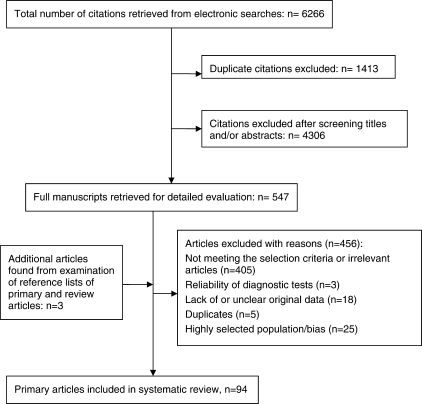
BACKGROUND: The prevalence of congenital uterine anomalies in high-risk women is unclear, as several different diagnostic approaches have been applied to different groups of patients. This review aims to evaluate the prevalence of such anomalies in unselected populations and in women with infertility, including those undergoing IVF treatment, women with a history of miscarriage, women with infertility and recurrent miscarriage combined, and women with a history of preterm delivery. METHODS: Searches of MEDLINE, EMBASE, Web of Science and the Cochrane register were performed. Study selection and data extraction were conducted independently by two reviewers. Studies were grouped into those that used 'optimal' and 'suboptimal' tests for uterine anomalies. Meta-analyses were performed to establish the prevalence of uterine anomalies and their subtypes within the various populations. RESULTS: We identified 94 observational studies comprising 89 861 women. The prevalence of uterine anomalies diagnosed by optimal tests was 5.5% [95% confidence interval (CI), 3.5-8.5] in the unselected population, 8.0% (95% CI, 5.3-12) in infertile women, 13.3% (95% CI, 8.9-20.0) in those with a history of miscarriage and 24.5% (95% CI, 18.3-32.8) in those with miscarriage and infertility. Arcuate uterus is most common in the unselected population (3.9%; 95% CI, 2.1-7.1), and its prevalence is not increased in high-risk groups. In contrast, septate uterus is the most common anomaly in high-risk populations. CONCLUSIONS: Women with a history of miscarriage or miscarriage and infertility have higher prevalence of congenital uterine anomalies compared with the unselected population.
Overview
The claims and statistics of this paper haven’t been checked yet.
Free: it reads the open-access text and checks the first 5 claims that cite a source we can check. Create a free account to check every claim.
Integrity signals
Registry
Cites
Statistics
Figures
Verification
Claims the paper makes
The claims and statistics of this paper haven’t been checked yet.
Free: it reads the open-access text and checks the first 5 claims that cite a source we can check. Create a free account to check every claim.
Claims other papers make about this one
Each is checked against this paper’s own text: does it say what the citing paper says it does?
The source backs part of the claim, not all of it — or backs it for a different population, condition or comparison.
In the citing paper
“The commonest anomalies across all populations appear to be the canalisation defects (i.e. the septate variety) followed by the unification defects (i.e. the bicornuate and unicornuate variety).61”
From Recurrent MiscarriageGreen‐top Guideline No. 17 (2023) · cites this paper as [61]
Experimental — accuracy not yet measuredThe source backs part of the claim, not all of it — or backs it for a different population, condition or comparison.
In the citing paper
“A systematic review and meta-analysis has estimated the prevalence to be 5.5% (95% CI 3.5-8.5%) in unselected women, 8.0% (95% CI 5.3-12%) in infertile women, 13.3% (95% CI 8.9-20.0%) in women with recurrent miscarriage and 24.5% (95% CI 18.3-32.8)in women with infertility and miscarriage.”
From Recurrent MiscarriageGreen‐top Guideline No. 17 (2023) · cites this paper as [61]
Experimental — accuracy not yet measured
Self-check
Percentages, sums and reported differences re-computed from the paper’s own numbers.
The self-check needs the paper’s full text.
Citations
Cites
1 retracted
Shokeir, T. A., & Abdelshaheed, M. (2008) · Fertility and Sterility · doi:10.1016/j.fertnstert.2008.02.135 · Cited by 14
RetractedFertil, S. A. (1988) · Fertility and Sterility · Cited by 994
Clinical implications of uterine malformations and hysteroscopic treatment results
Grimbizis, G. F. (2001) · Human Reproduction Update · doi:10.1093/humupd/7.2.161 · Cited by 949
The septate uterus: a review of management and reproductive outcome
Homer, H. A., Li, T.-C., & Cooke, I. D. (2000) · Fertility and Sterility · doi:10.1016/s0015-0282(99)00480-x · Cited by 715
Reproductive impact of congenital Mullerian anomalies
Raga, F., Bauset, C., Remohi, J., Bonilla-Musoles, F., Simon, C., & Pellicer, A. (1997) · Human Reproduction · doi:10.1093/humrep/12.10.2277 · Cited by 692
Saravelos, S. H., Cocksedge, K. A., & Li, T.-C. (2008) · Human Reproduction Update · doi:10.1093/humupd/dmn018 · Cited by 683
Müllerian Duct Anomalies: Imaging and Clinical Issues
Troiano, R. N., & McCarthy, S. M. (2004) · Radiology · doi:10.1148/radiol.2331020777 · Cited by 622
Müllerian Anomalies: A Proposed Classification (An Analysis of 144 Cases)
Buttram, V. C., & Gibbons, W. E. (1979) · Fertility and Sterility · doi:10.1016/s0015-0282(16)44114-2 · Cited by 591
Pellerito, J. S., McCarthy, S. M., Doyle, M. B., Glickman, M. G., & DeCherney, A. H. (1992) · Radiology · doi:10.1148/radiology.183.3.1584936 · Cited by 459
Research works printed but not linked: 5
- Acien, 1996, Uterine anomalies and recurrent miscarriage, Infertil Reprod Med Clin North Am, 7, 689
- Carrascosa, 2010, Diagnosis of uterine malformations. Performance of CT virtual hysterosalpingography, Journal fur Reproduktionsmedizin und Endokrinologie, 7, 340
- Ebrashi, 1998, Comparative study between hysterosonography, hysterography and hysteroscopy for evaluating the uterine cavity in recurrent aborters, Middle East Fertil Soc J, 3, 62
- Rossetti, 1999, Diagnostic hysteroscopy and endometrial pathology, Revue Medicale Libanaise, 11, 69
- Zupi, 1996, Uterine anomalies prevalence and reproductive outcome in women undergoing diagnostic hysteroscopy, Gynaecol Endosc, 5, 147
Cited by
ESHRE guideline: recurrent pregnancy loss
The ESHRE Guideline Group on RPL, Bender Atik, R., Christiansen, O. B., Elson, J., Kolte, A. M., Lewis, S., Middeldorp, S., Nelen, W., Peramo, B., Quenby, S., et al. (2018) · Human Reproduction Open · doi:10.1093/hropen/hoy004 · Cited by 1,002
The ESHRE/ESGE consensus on the classification of female genital tract congenital anomalies
Grimbizis, G. F., Gordts, S., Di Spiezio Sardo, A., Brucker, S., De Angelis, C., Gergolet, M., Li, T.-C., Tanos, V., Brolmann, H., Gianaroli, L., et al. (2013) · Human Reproduction · doi:10.1093/humrep/det098 · Cited by 884
“They represent a rather common benign condition with a prevalence of 4–7% (Grimbizis et al., 2001; Saravelos et al., 2008; Chan et al., 2011a).”
InfluentialDimitriadis, E., Menkhorst, E., Saito, S., Kutteh, W. H., & Brosens, J. J. (2020) · Nature Reviews Disease Primers · doi:10.1038/s41572-020-00228-z · Cited by 702
Pilarski, R., Burt, R., Kohlman, W., Pho, L., Shannon, K. M., & Swisher, E. (2013) · JNCI Journal of the National Cancer Institute · doi:10.1093/jnci/djt277 · Cited by 654
New insights into mechanisms behind miscarriage
Larsen, E. C., Christiansen, O. B., Kolte, A. M., & Macklon, N. (2013) · BMC Medicine · doi:10.1186/1741-7015-11-154 · Cited by 603
Clinical implications of congenital uterine anomalies: a meta-analysis of comparative studies
Venetis, C. A., Papadopoulos, S. P., Campo, R., Gordts, S., Tarlatzis, B. C., & Grimbizis, G. F. (2014) · Reproductive BioMedicine Online · doi:10.1016/j.rbmo.2014.09.006 · Cited by 332
Imaging of Müllerian Duct Anomalies
Behr, S. C., Courtier, J. L., & Qayyum, A. (2012) · Radiographics · doi:10.1148/rg.326125515 · Cited by 262
The ESHRE–ESGE consensus on the classification of female genital tract congenital anomalies
Grimbizis, G. F., Gordts, S., Di Spiezio Sardo, A., Brucker, S., De Angelis, C., Gergolet, M., Li, T.-C., Tanos, V., Brölmann, H., Gianaroli, L., et al. (2013) · Gynecological Surgery · doi:10.1007/s10397-013-0800-x · Cited by 248
The Thessaloniki ESHRE/ESGE consensus on diagnosis of female genital anomalies
Grimbizis, G. F., Di Spiezio Sardo, A., Saravelos, S. H., Gordts, S., Exacoustos, C., Van Schoubroeck, D., Bermejo, C., Amso, N. N., Nargund, G., Timmerman, D., et al. (2016) · Human Reproduction · doi:10.1093/humrep/dev264 · Cited by 232
The presentation and management of complex female genital malformations
Acién, P., & Acién, M. (2016) · Human Reproduction Update · doi:10.1093/humupd/dmv048 · Cited by 212
de Jong, P. G., Kaandorp, S., Di Nisio, M., Goddijn, M., & Middeldorp, S. (2014) · Cochrane Database of Systematic Reviews · doi:10.1002/14651858.cd004734.pub4 · Cited by 204
van Dijk, M. M., Kolte, A. M., Limpens, J., Kirk, E., Quenby, S., van Wely, M., & Goddijn, M. (2020) · Human Reproduction Update · doi:10.1093/humupd/dmz048 · Cited by 200
Office Operative Hysteroscopy: An Update
Salazar, C. A., & Isaacson, K. B. (2018) · Journal of Minimally Invasive Gynecology · doi:10.1016/j.jmig.2017.08.009 · Cited by 181
Ludwin, A., & Ludwin, I. (2015) · Human Reproduction · doi:10.1093/humrep/deu344 · Cited by 180
Current Concepts and New Trends in the Diagnosis and Management of Recurrent Miscarriage
Alijotas-Reig, J., & Garrido-Gimenez, C. (2013) · Obstetrical & Gynecological Survey · doi:10.1097/ogx.0b013e31828aca19 · Cited by 175
Type of congenital uterine anomaly and adverse pregnancy outcomes
Fox, N. S., Roman, A. S., Stern, E. M., Gerber, R. S., Saltzman, D. H., & Rebarber, A. (2013) · The Journal of Maternal-Fetal & Neonatal Medicine · doi:10.3109/14767058.2013.847082 · Cited by 165
Rikken, J. F. W., Kowalik, C. R., Emanuel, M. H., Bongers, M. Y., Spinder, T., Jansen, F. W., Mulders, A. G. M. G. J., Padmehr, R., Clark, T. J., van Vliet, H. A., et al. (2021) · Human Reproduction · doi:10.1093/humrep/deab037 · Cited by 161
Recurrent MiscarriageGreen‐top Guideline No. 17
Regan, L., Rai, R., Saravelos, S., Li, T., & the Royal College of Obstetricians and Gynaecologists (2023) · BJOG: An International Journal of Obstetrics & Gynaecology · doi:10.1111/1471-0528.17515 · Cited by 158
ART and uterine pathology: how relevant is the maternal side for implantation?
Galliano, D., Bellver, J., Díaz‐García, C., Simón, C., & Pellicer, A. (2014) · Human Reproduction Update · doi:10.1093/humupd/dmu047 · Cited by 157
The Thessaloniki ESHRE/ESGE consensus on diagnosis of female genital anomalies
Grimbizis, G., Sardo, A. D. S., Saravelos, S. H., Gordts, S., Exacoustós, C., Schoubroeck, D. V., Bermejo, C., Amso, N. N., Nargund, G., Timmerman, D., et al. (2015) · Gynecological Surgery · doi:10.1007/s10397-015-0909-1 · Cited by 156
Ludwin, A., Pityński, K., Ludwin, I., Banaś, T., & Knafel, A. (2013) · Journal of Minimally Invasive Gynecology · doi:10.1016/j.jmig.2012.09.011 · Cited by 155
Müllerian duct anomalies: Embryological development, classification, and MRI assessment
Robbins, J. B., Broadwell, C., Chow, L. C., Parry, J. P., & Sadowski, E. A. (2014) · Journal of Magnetic Resonance Imaging · doi:10.1002/jmri.24771 · Cited by 127
McNamee, K. M., Dawood, F., & Farquharson, R. G. (2014) · Obstetrics and Gynecology Clinics of North America · doi:10.1016/j.ogc.2013.10.007 · Cited by 125
Septum resection in women with a septate uterus: a cohort study
Rikken, J. F. W., Verhorstert, K. W. J., Emanuel, M. H., Bongers, M. Y., Spinder, T., Kuchenbecker, W. K. H., Jansen, F. W., van der Steeg, J. W., Janssen, C. A. H., Kapiteijn, K., et al. (2020) · Human Reproduction · doi:10.1093/humrep/dez284 · Cited by 122
Akhtar, M. A., Saravelos, S. H., Li, T. C., & Jayaprakasan, K. M. (2019) · BJOG An International Journal of Obstetrics & Gynaecology · doi:10.1111/1471-0528.15968 · Cited by 120
Self-citationGraupera, B., Pascual, M. A., Hereter, L., Browne, J. L., Úbeda, B., Rodríguez, I., & Pedrero, C. (2015) · Ultrasound in Obstetrics & Gynecology · doi:10.1002/uog.14825 · Cited by 109
Clinical approach for the classification of congenital uterine malformations
Grimbizis, G., & Campo, R. (2012) · Gynecological Surgery · doi:10.1007/s10397-011-0724-2 · Cited by 99
Kim, M., Kim, H. S., & Kim, Y. H. (2021) · Journal of Clinical Medicine · doi:10.3390/jcm10214797 · Cited by 85
Müllerian Duct Anomalies: Role in Fertility and Pregnancy
Sugi, M. D., Penna, R., Jha, P., Pōder, L., Behr, S. C., Courtier, J. L., Mok-Lin, E. Y., Rabban, J. T., & Choi, H. H. (2021) · Radiographics · doi:10.1148/rg.2021210022 · Cited by 83
Recurrent pregnancy loss and vitamin D: A review of the literature
Gonçalves, D. R., Braga, A. C., Braga, J. S., & Marinho, A. (2018) · American Journal of Reproductive Immunology · doi:10.1111/aji.13022 · Cited by 82
Diagnosis of Congenital Uterine Abnormalities: Practical Considerations
Jayaprakasan, K. M., & Ojha, K. (2022) · Journal of Clinical Medicine · doi:10.3390/jcm11051251 · Cited by 81
Self-citationPrior, M., Richardson, A., Asif, S., Polanski, L., Parris‐Larkin, M., Chandler, J., Fogg, L., Jassal, P., Thornton, J. G., & Raine‐Fenning, N. J. (2018) · Ultrasound in Obstetrics & Gynecology · doi:10.1002/uog.18935 · Cited by 80
Self-citationJaslow, C. R., & Kutteh, W. H. (2013) · Fertility and Sterility · doi:10.1016/j.fertnstert.2013.01.152 · Cited by 78
Carrera, M., Millán, F. P., Alcázar, J. L., Pacheco, L. A., Caballero, M., Carugno, J. A., Dominguez, J. A., & Moratalla, E. (2021) · Journal of Minimally Invasive Gynecology · doi:10.1016/j.jmig.2021.10.001 · Cited by 76
Etiologies of uterine malformations
Jacquinet, A., Millar, D. M., & Lehman, A. (2016) · American Journal of Medical Genetics Part A · doi:10.1002/ajmg.a.37775 · Cited by 76
Ludwin, A., Ludwin, I., Neto, M. A. C., Nastri, C. O., Bhagavath, B., Lindheim, S. R., & Martins, W. P. (2019) · Ultrasound in Obstetrics and Gynecology · doi:10.1002/uog.20291 · Cited by 75
Carneiro, M. M. (2014) · Surgery Research and Practice · doi:10.1155/2014/105412 · Cited by 72
Jaslow, C. R. (2014) · Obstetrics and Gynecology Clinics of North America · doi:10.1016/j.ogc.2013.10.002 · Cited by 69
Müllerian duct anomalies coincident with endometriosis: a review
Pitot, M. A., Bookwalter, C. A., & Dudiak, K. M. (2020) · Abdominal Radiology · doi:10.1007/s00261-020-02465-y · Cited by 69
Moini, A., Mohammadi, S., Hosseini, R., Eslami, B., & Ahmadi, F. (2013) · Journal of Ultrasound in Medicine · doi:10.7863/ultra.32.6.923 · Cited by 67
Imaging Unusual Pregnancy Implantations: Rare Ectopic Pregnancies and More
Dibble, E. H., & Lourenço, A. P. (2016) · American Journal of Roentgenology · doi:10.2214/ajr.15.15290 · Cited by 67
Jacquinet, A., Boujemla, B., Fasquelle, C., Thiry, J., Josse, C., Lumaka, A. Z., Brischoux‐Boucher, E., Dubourg, C., David, V., Pasquier, L., et al. (2020) · Clinical Genetics · doi:10.1111/cge.13769 · Cited by 66
Fertility and sexuality issues in congenital lifelong urology patients: male aspects
Spinoit, A., Waterschoot, M., Sinatti, C., Abbas, T. O., Callens, N., Cools, M., Hamid, R., Hanna, M. K., Joshi, P. M., Misseri, R., et al. (2020) · World Journal of Urology · doi:10.1007/s00345-020-03121-2 · Cited by 65
The association between Mullerian anomalies and short-term pregnancy outcome
Hiersch, L., Yeoshoua, E., Miremberg, H., Krissi, H., Aviram, A., Yogev, Y., & Ashwal, E. (2015) · The Journal of Maternal-Fetal & Neonatal Medicine · doi:10.3109/14767058.2015.1098613 · Cited by 64
Anatomy and physiology of genital organs – women
Graziottin, A., & Gambini, D. (2015) · Handbook of clinical neurology · doi:10.1016/b978-0-444-63247-0.00004-3 · Cited by 63
The Diagnostics and Treatment of Recurrent Pregnancy Loss
Tomkiewicz, J., & Darmochwał-Kolarz, D. (2023) · Journal of Clinical Medicine · doi:10.3390/jcm12144768 · Cited by 62
The randomised uterine septum transsection trial (TRUST): design and protocol
Rikken, J. F. W., Kowalik, C. R., Emanuel, M. H., Bongers, M. Y., Spinder, T., de Kruif, J. H., Bloemenkamp, K. W. M., Jansen, F. W., Veersema, S., Mulders, A. G. M. G. J., et al. (2018) · BMC Women s Health · doi:10.1186/s12905-018-0637-6 · Cited by 61
Diseases of the Abdomen and Pelvis 2018-2021
Hodler, J., Huch, R., & von Schulthess, G. K. (2018) · IDKD Springer series · doi:10.1007/978-3-319-75019-4 · Cited by 60
Müllerian Duct and Related Anomalies in Children and Adolescents
Epelman, M. S., Dinan, D., Gee, M. S., Servaes, S. E., Lee, E. Y., & Darge, K. (2013) · Magnetic Resonance Imaging Clinics of North America · doi:10.1016/j.mric.2013.04.011 · Cited by 59
Ludwin, A., Ludwin, I., Kudla, M. J., Pityński, K., Banaś, T., Jach, R., & Knafel, A. (2014) · Fertility and Sterility · doi:10.1016/j.fertnstert.2014.01.039 · Cited by 58
Dreisler, E., & Sørensen, S. S. (2014) · Fertility and Sterility · doi:10.1016/j.fertnstert.2014.04.043 · Cited by 56
Ludwin, A., Ludwin, I., Pity ski, K., Banas, T., & Jach, R. (2014) · Human Reproduction · doi:10.1093/humrep/deu110 · Cited by 55
Unexpected Gynecologic Findings During Abdominal Surgery
Boyd, C. A., & Riall, T. S. (2012) · Current Problems in Surgery · doi:10.1067/j.cpsurg.2011.12.002 · Cited by 55
Reproductive surgery for müllerian anomalies: a review of progress in the last decade
Ludwin, A., & Pfeifer, S. M. (2019) · Fertility and Sterility · doi:10.1016/j.fertnstert.2019.07.005 · Cited by 55
Definition, prevalence, clinical relevance and treatment of T‐shaped uterus: systematic review
Neto, M. A. C., Ludwin, A., Petraglia, F., & Martins, W. P. (2021) · Ultrasound in Obstetrics and Gynecology · doi:10.1002/uog.23108 · Cited by 55
Panagiotopoulos, M. G., Tseke, P., & Michala, L. (2021) · Obstetrics and Gynecology · doi:10.1097/aog.0000000000004627 · Cited by 54
Vaiarelli, A., Cimadomo, D., Patrizio, P., Venturella, R., Orlando, G., Soscia, D. M., Giancani, A., Capalbo, A., Rienzi, L. F., & Ubaldi, F. M. (2018) · Reproductive BioMedicine Online · doi:10.1016/j.rbmo.2018.05.019 · Cited by 54
Evaluation of Recurrent Pregnancy Loss
de Assis, V., Schenone, C. V., & Ros, S. T. (2024) · Obstetrics and Gynecology · doi:10.1097/aog.0000000000005498 · Cited by 51
Pacheco, L. A., Laganà, A. S., Garzon, S., Garrido, A. P., Gornés, A. F., & Ghezzi, F. (2019) · European Journal of Obstetrics & Gynecology and Reproductive Biology · doi:10.1016/j.ejogrb.2019.09.023 · Cited by 51
Mullerian anomalies: revisiting imaging and classification
Dixit, R., Duggireddy, C. S., & Pradhan, G. (2025) · Insights into Imaging · doi:10.1186/s13244-024-01879-2 · Cited by 51
Kougioumtsidou, A., Mikos, T., Grimbizis, G., Karavida, A., Theodoridis, T. D., Sotiriadis, A., Tarlatzis, B. C., & Athanasiadis, A. P. (2019) · Archives of Gynecology and Obstetrics · doi:10.1007/s00404-019-05050-x · Cited by 50
Sugiura‐Ogasawara, M., Lin, B. L., Aoki, K., Maruyama, T., Nakatsuka, M., Ozawa, N., Sugi, T., Takeshita, T., & Nishida, M. (2014) · Journal of Obstetrics and Gynaecology · doi:10.3109/01443615.2014.936839 · Cited by 49
Garzon, S., Laganà, A. S., Sardo, A. D. S., Pacheco, L. A., Haimovich, S., Carugno, J. A., Vitale, S. G., Casarin, J., Raffaelli, R., Andrisani, A., et al. (2020) · Obstetrical & Gynecological Survey · doi:10.1097/ogx.0000000000000807 · Cited by 47
Distribution of female genital tract anomalies in two classifications
Heinonen, P. K. (2016) · European Journal of Obstetrics & Gynecology and Reproductive Biology · doi:10.1016/j.ejogrb.2016.09.009 · Cited by 47
Hysteroscopy and female infertility: a fresh look to a busy corner
Stamenov, G., Vitale, S. G., Corte, L. D., Vilos, G. A., Parvanov, D. A., Nikolova, D. N., Ganeva, R., & Haimovich, S. (2020) · Human Fertility · doi:10.1080/14647273.2020.1851399 · Cited by 47
Vaginoscopic Incision of Oblique Vaginal Septum in Adolescents with OHVIRA Syndrome
Cheng, C., Subedi, J., Zhang, A., Johnson, G. J., Zhao, X., Xu, D., & Guan, X. (2019) · Scientific Reports · doi:10.1038/s41598-019-56471-2 · Cited by 47
Ünlü, C., Çelik, Ö., Çelik, N., & Otlu, B. (2016) · Reproductive Sciences · doi:10.1177/1933719115612929 · Cited by 44
Assessment of the uterus with three-dimensional ultrasound in women undergoing ART
Saravelos, S. H., Jayaprakasan, K., Ojha, K., & Li, T. C. (2016) · Human Reproduction Update · doi:10.1093/humupd/dmw040 · Cited by 44
Self-citationObstructive Reproductive Tract Anomalies: A Review of Surgical Management
Skinner, B. D., & Quint, E. H. (2017) · Journal of Minimally Invasive Gynecology · doi:10.1016/j.jmig.2017.04.020 · Cited by 44
Meuleman, T., Beelen, E., Kaaja, R., Lith, J. M. M. V., Claas, F. H. J., & Bloemenkamp, K. W. M. (2016) · Journal of Reproductive Immunology · doi:10.1016/j.jri.2016.03.003 · Cited by 44
Renal agenesis-related genes are associated with Herlyn-Werner-Wunderlich syndrome
Li, L., Chu, C., Li, S., Lü, D., Zheng, P., Sheng, J., Luo, L., Wu, X., Zhang, Y., Yin, C., et al. (2021) · Fertility and Sterility · doi:10.1016/j.fertnstert.2021.06.033 · Cited by 44
Role of the vaginal microbiome in miscarriage: exploring the relationship
Saadaoui, M., Singh, P., Ortashi, O., & Khodor, S. A. (2023) · Frontiers in Cellular and Infection Microbiology · doi:10.3389/fcimb.2023.1232825 · Cited by 43
St‐Jean, G., Boyer, A., Zamberlam, G., Godin, P., Paquet, M., & Boerboom, D. (2018) · Biology of Reproduction · doi:10.1093/biolre/ioy160 · Cited by 43
Pregnancy outcomes of women with a congenital unicornuate uterus after IVF–embryo transfer
Li, X., Ouyang, Y., Yi, Y., Lin, G., Lu, G., & Gong, F. (2017) · Reproductive BioMedicine Online · doi:10.1016/j.rbmo.2017.07.015 · Cited by 42
Smit, J. G., Kasius, J. C., Eijkemans, M. J. C., Veersema, S., Fatemi, H. M., van, E. J. P. S., Campo, R., & Broekmans, F. J. (2013) · Fertility and Sterility · doi:10.1016/j.fertnstert.2013.02.027 · Cited by 41
Ludwin, A., Ludwin, I., Kudla, M. J., & Kottner, J. (2015) · Fertility and Sterility · doi:10.1016/j.fertnstert.2015.06.019 · Cited by 41
The impact of congenital uterine abnormalities on pregnancy and fertility: a literature review
Hosseinirad, H., Yadegari, P., Falahieh, F. M., Shahrestanaki, J. K., Karimi, B., Afsharzadeh, N., & Sadeghi, Y. (2021) · JBRA · doi:10.5935/1518-0557.20210021 · Cited by 41
Chen, Y., Nisenblat, V., Yang, P., Zhang, X., & Ma, C. (2018) · Reproductive Biology and Endocrinology · doi:10.1186/s12958-018-0382-6 · Cited by 41
The evolving role of saline infusion sonography (SIS) in infertility
Seshadri, S., Khalil, M., Osman, A., Clough, A., Jayaprakasan, K. M., & Khalaf, Y. (2014) · European Journal of Obstetrics & Gynecology and Reproductive Biology · doi:10.1016/j.ejogrb.2014.11.037 · Cited by 41
Self-citationPregnancy and Childbirth in Uterus Didelphys: A Report of Three Cases
Slavchev, S. H., Kostov, S. G., & Yordanov, A. D. (2020) · Medicina · doi:10.3390/medicina56040198 · Cited by 41
Hysteroscopic septum resection and reproductive medicine: A SWOT analysis
Checa, M. Á., Bellver, J., Bosch, E., Espinós, J. J., Fábregues, F., Fontes, J., García-Velasco, J. A., & Requena, A. (2018) · Reproductive BioMedicine Online · doi:10.1016/j.rbmo.2018.09.013 · Cited by 40
Varlas, V. N., Rhazi, Y., Cloțea, E., Roxana Georgiana, B. O. R. S., Mirică, R., & Bacalbaşa, N. (2021) · Journal of Clinical Medicine · doi:10.3390/jcm10163749 · Cited by 39
Current management of recurrent pregnancy loss
Chester, M. R., Tirlapur, A. S., & Jayaprakasan, K. M. (2022) · The Obstetrician & Gynaecologist · doi:10.1111/tog.12832 · Cited by 38
Self-citationUterine didelphys: diagnosis, management and pregnancy outcome
Crowley, C. M., Botros, K., Hegazy, I. H., & O'Donnell, E. (2021) · BMJ Case Reports · doi:10.1136/bcr-2021-242233 · Cited by 38
The association between Müllerian anomalies and perinatal outcome
Cahen‐Peretz, A., Sheiner, E., Friger, M. D., & Walfisch, A. (2017) · The Journal of Maternal-Fetal & Neonatal Medicine · doi:10.1080/14767058.2017.1370703 · Cited by 38
Imaging evaluation of uterine perforation and rupture
Aboughalia, H., Basavalingu, D., Revzin, M. V., Sienas, L., Katz, D. S., & Moshiri, M. (2021) · Abdominal Radiology · doi:10.1007/s00261-021-03171-z · Cited by 38
Müllerian anomalies and recurrent miscarriage
Sugiura‐Ogasawara, M., Ozaki, Y., & Suzumori, N. (2013) · Current Opinion in Obstetrics & Gynecology · doi:10.1097/gco.0b013e3283632849 · Cited by 38
Renal tract malformations associated with Müllerian duct anomalies
Heinonen, P. K. (2018) · Clinical Obstetrics Gynecology and Reproductive Medicine · doi:10.15761/cogrm.1000207 · Cited by 37
Wildemeersch, D. A., Hasskamp, T., Nolte, K., Jandi, S., Pett, A., Linden, S., Santen, M. R. V., & Julen, O. (2016) · European Journal of Obstetrics & Gynecology and Reproductive Biology · doi:10.1016/j.ejogrb.2016.09.023 · Cited by 37
Recurrent Early Pregnancy Loss
Stephenson, M. D. (2011) · Seminars in Reproductive Medicine · doi:10.1055/s-0031-1293199 · Cited by 36
MR Imaging of Müllerian Fusion Anomalies
Olpin, J. D., Moeni, A., Willmore, R., & Heilbrun, M. E. (2017) · Magnetic Resonance Imaging Clinics of North America · doi:10.1016/j.mric.2017.03.008 · Cited by 36
Knez, J., Sarıdoğan, E., den Bosch, T. V., Mavrelos, D., Ambler, G., & Jurkovic, D. (2018) · Human Reproduction · doi:10.1093/humrep/dey043 · Cited by 36
The Endometrial Immune Profiling May Positively Affect the Management of Recurrent Pregnancy Loss
Cheloufi, M., Kazhalawi, A., Pinton, A., Rahmati, M., Chevrier, L., Prat-Ellenberg, L., Michel, A.-S., Dray, G., MEKINIAN, A., Kayem, G., et al. (2021) · Frontiers in Immunology · doi:10.3389/fimmu.2021.656701 · Cited by 36
MRI of Pregnancy-Related Issues: M??llerian Duct Anomalies
Robbins, J. B., Parry, J. P., Guite, K. M., Hanson, M. E., Chow, L. C., Kliewer, M. A., & Sadowski, E. A. (2012) · American Journal of Roentgenology · doi:10.2214/ajr.11.7789 · Cited by 36
Magnetic resonance imaging of Müllerian duct anomalies in children
Li, Y., Phelps, A. S., Zapala, M. A., MacKenzie, J. D., MacKenzie, T. C., & Courtier, J. L. (2016) · Pediatric Radiology · doi:10.1007/s00247-016-3583-1 · Cited by 36
Müllerian Anomalies: Presentation, Diagnosis, and Counseling
Bortoletto, P. E., Romanski, P. A., & Pfeifer, S. M. (2023) · Obstetrics and Gynecology · doi:10.1097/aog.0000000000005469 · Cited by 35
Şükür, Y. E., Yakıştıran, B., Özmen, B., Sönmezer, M., Berker, B., & Atabekoğlu, C. S. (2018) · Reproductive Sciences · doi:10.1177/1933719118756774 · Cited by 35
A Review of Mullerian Anomalies and Their Urologic Associations
Wu, C. Q., Childress, K. J., Traore, E. J., & Smith, E. A. (2020) · Urology · doi:10.1016/j.urology.2020.04.088 · Cited by 35
Fertility and sexuality issues in congenital lifelong urology patients: female aspects
Win, G. D., Dautricourt, S., Deans, R., Hamid, R., Hanna, M. K., Khavari, R., Misseri, R., Mueller, M. G., Roth, J. D., & Spinoit, A. (2020) · World Journal of Urology · doi:10.1007/s00345-020-03461-z · Cited by 34
Spontaneous Rupture of an Unscarred Gravid Uterus in a Primigravid Woman at 32 Weeks of Gestation
Mizutamari, E., Honda, T., Ohba, T., & Katabuchi, H. (2014) · Case Reports in Obstetrics and Gynecology · doi:10.1155/2014/209585 · Cited by 34
Metadata
- Authors
- Chan, Y. Y., Jayaprakasan, K., Zamora, J., Thornton, J. G., Raine-Fenning, N., & Coomarasamy, A.
- Affiliations
- Nottingham University Hospitals NHS Trust (GB)
- University of Nottingham (GB)
- Hospital Universitario Ramón y Cajal (ES)
- Birmingham Women's Hospital (GB)
- Corresponding author
- Chan, Y.Y.
- Venue
- Human Reproduction Update
- Publisher
- Oxford University Press (OUP)
- Published
- 2011-06-24
- Volume
- 17
- Issue
- 6
- Pages
- 761-771
- ISSN
- 1355-4786 (ISSN-L)
- 1460-2369
- PMC
- PMC3191936
- OpenAlex
- W2096460968
- Cited by
- 758
- References
- 143
- Citations by year
- 2026: 45 · 2025: 66 · 2024: 53 · 2023: 59 · 2022: 58 · 2021: 80 · 2020: 83 · 2019: 46 · 2018: 42 · 2017: 57 · 2016: 41 · 2015: 35 · 2014: 47 · 2013: 32 · 2012: 12
- FWCI
- 5.14
- Type
- journal article
- Language
- en
- Open access
- green
- www.ncbi.nlm.nih.gov
- Licence
- cc-by-nc
- Locations
- Human Reproduction Update (publishedVersion)
- PubMed Central (publishedVersion, cc-by-nc)
- PubMed (publishedVersion)
- University of Birmingham Research Portal (University of Birmingham) (submittedVersion)
- Funders
- University of Nottingham
- Topics
- Health Sciences › Medicine › Obstetrics and Gynecology › Gynecological conditions and treatments
- Health Sciences › Medicine › Endocrinology, Diabetes and Metabolism › Sexual Differentiation and Disorders
- Life Sciences › Immunology and Microbiology › Immunology › Reproductive System and Pregnancy
- Keywords
- congenital uterine anomalies, prevalence, infertility, recurrent pregnancy loss, preterm birth, arcuate uterus, septate uterus, high-risk women, in vitro fertilization
- MeSH terms
- Abortion, Spontaneous, Female, Humans, Infant, Newborn, Infertility, Female, Pregnancy, Risk Factors, Urogenital Abnormalities, Uterus, Prevalence, Premature Birth
About these checks
Registry, retraction, Cites and statistics results are computed, not judged, with one exception: a printed reference that no index lists is read once by a model before it counts as a citation error. Claims are extracted by a model and kept only when their quote appears verbatim in the text; each cited source is then checked, with a model’s help, for whether it says what the claim relies on. Those verdicts can be wrong — read the claim’s quote and the cited source before relying on one.
Statistics and arithmetic are recomputed, not judged.
Confidence bands are shown only for fields calibrated on our annotated test set. None is calibrated yet, so no band is shown.
What counts as a claim ›How we measure confidence ›How we check this ›
Are you an author, or do you see a problem with this page? Request a review
Data sources
Bibliographic data: Semantic Scholar, OpenAlex, Crossref.
Contains information from the Semantic Scholar Academic Graph Datasets, made available under the ODC Attribution License (ODC-BY 1.0).
Semantic Scholar’s data is described in: Kinney, R., et al. (2023). The Semantic Scholar Open Data Platform. arXiv:2301.10140.
