

The DOI matches its Crossref record; 40 of the 40 references it cites were found in a registry or an index.
Metabolic risk score and cancer risk: pooled analysis of seven cohorts
Open accessAbstract
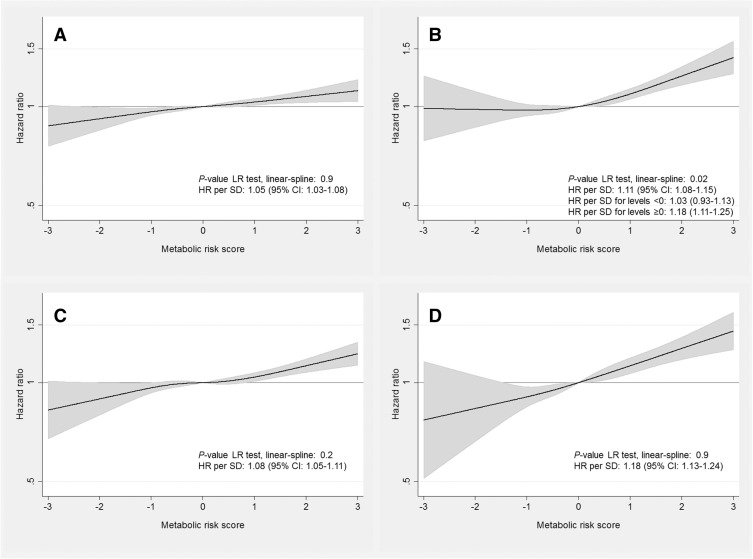
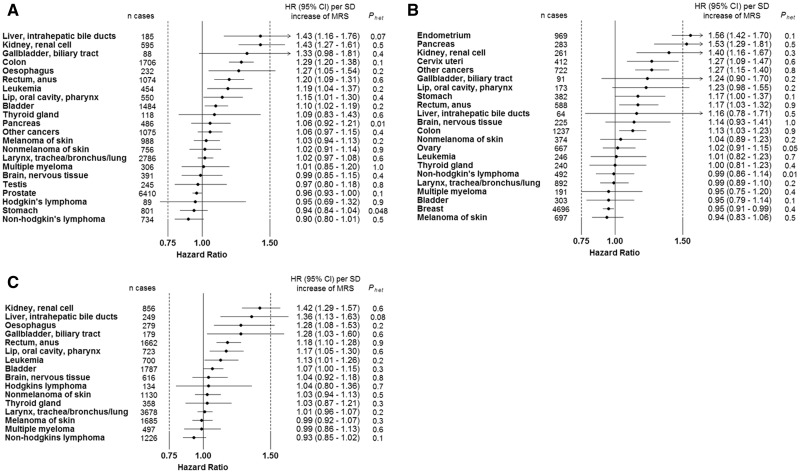
BACKGROUND: There are few data on the joint influence of metabolic factors on risk of separate cancers. METHODS: We analysed data on body mass index, blood pressure and plasma levels of glucose, total cholesterol and triglycerides from seven European cohorts comprising 564 596 men and women with a mean age of 44 years. We weighted those factors equally into a standardized metabolic risk score [MRS, mean = 0, standard deviation (SD) = 1], with an individual's level indicated as SDs from the sex- and cohort-specific means. Cancer hazard ratios were calculated by Cox regression with age as timescale and with relevant adjustments including smoking status. All statistical tests were two-sided. RESULTS: During a mean follow-up of 12 years, 21 593 men and 14 348 women were diagnosed with cancer. MRS was linearly and positively associated with incident cancer in total and at sites (P < 0.05). In men, risk per SD MRS was increased by 43% (95% confidence interval: 27-61) for renal cell cancer, 43% (16-76) for liver cancer, 29% (20-38) for colon cancer, 27% (5-54) for oesophageal cancer, 20% (9-31) for rectal cancer, 19% (4-37) for leukaemias, 15% (1-30) for oral cancer and 10% (2-19) for bladder cancer. In women, risk increases per SD MRS were 56% (42-70) for endometrial cancer, 53% (29-81) for pancreatic cancer, 40% (16-67) for renal cell cancer, 27% (9-47) for cervical cancer and 17% (3-32) for rectal cancer. CONCLUSION: This largest study to date on the joint influence of metabolic factors on risk of separate cancers showed increased risks for several cancers, in particular renal cell and liver cancer in men and endometrial and pancreatic cancer in women.
Overview
The claims and statistics of this paper haven’t been checked yet.
Run the check — free, no account needed. It reads the open-access text and checks the sources it cites.
Integrity signals
Registry
Cites
Statistics
Figures
Verification
Claims the paper makes
The claims and statistics of this paper haven’t been checked yet.
Run the check — free, no account needed. It reads the open-access text and checks the sources it cites.
Claims other papers make about this one
Each is checked against this paper’s own text: does it say what the citing paper says it does?
In the citing paper
“This may decrease the measurement precision, but would rather lead to underestimation than overestimation of the association (28) .”
From Irregular eating of meals in adolescence and the metabolic syndrome in adulthood: results from a 27-year prospective cohort (2016) · cites this paper as [28]
Self-check
Percentages, sums and reported differences re-computed from the paper’s own numbers.
The self-check needs the paper’s full text.
Citations
Cites
Alberti, K. G. M. M., Eckel, R. H., Grundy, S. M., Zimmet, P. Z., Cleeman, J. I., Donato, K. A., Fruchart, J.-C., James, W. P. T., Loria, C. M., & Smith, S. C. (2009) · Circulation · doi:10.1161/circulationaha.109.192644 · Cited by 14,860
Diagnosis and Classification of Diabetes Mellitus
American Diabetes Association (2010) · Diabetes Care · doi:10.2337/dc11-s062 · Cited by 14,094
(2000) · PubMed · Cited by 13,173
Obesity : Preventing and managing the global epidemic
Akram, D. S., Astrup, A. V., Atinmo, T., Boissin, J.-L., Bray, G. A., Carroll, K. N., Chitson, P., Chen, C., Dietz, W. H., Hill, J. O., et al. (2000) · Research at the University of Copenhagen (University of Copenhagen) · Cited by 12,945
Eckel, R. H., Alberti, K., Grundy, S. M., & Zimmet, P. (2010) · The Lancet · doi:10.1016/s0140-6736(09)61794-3 · Cited by 6,317
Renehan, A. G., Tyson, M., Egger, M., Heller, R. F., & Zwahlen, M. (2008) · The Lancet · doi:10.1016/s0140-6736(08)60269-x · Cited by 5,219
Flexible regression models with cubic splines
Durrleman, S., & Simon, R. M. (1989) · Statistics in Medicine · doi:10.1002/sim.4780080504 · Cited by 2,722
World Health Organization, I. S. O. H. W. G. (2003) · Journal of Hypertension · doi:10.1097/00004872-200311000-00002 · Cited by 2,667
The Metabolic Syndrome: Time for a Critical Appraisal
Kahn, R., Buse, J. B., Ferrannini, E., & Stern, M. P. (2005) · Diabetes Care · doi:10.2337/diacare.28.9.2289 · Cited by 2,400
Cited by
Sorted by citations
Moore, J. X., Chaudhary, N. S., & Akinyemiju, T. (2017) · Preventing Chronic Disease · doi:10.5888/pcd14.160287 · Cited by 940
Combining modifiable risk factors and risk of dementia: a systematic review and meta-analysis
Peters, R., Booth, A., Rockwood, K., Peters, J., D’Este, C., & Anstey, K. J. (2019) · BMJ Open · doi:10.1136/bmjopen-2018-022846 · Cited by 255
Boursi, B., Finkelman, B., Giantonio, B. J., Haynes, K., Rustgi, A. K., Rhim, A. D., Mamtani, R., & Yang, Y.-X. (2017) · Gastroenterology · doi:10.1053/j.gastro.2016.11.046 · Cited by 202
Non-Alcoholic Fatty Liver Disease and Extra-Hepatic Cancers
Sanna, C., Rosso, C., Marietti, M., & Bugianesi, E. (2016) · International Journal of Molecular Sciences · doi:10.3390/ijms17050717 · Cited by 194
Cancer risk associated with chronic diseases and disease markers: prospective cohort study
Tu, H., Wen, C. P., Tsai, S. P., Chow, W., Wen, C., Ye, Y., Zhao, H., Tsai, M. K., Huang, M., Dinney, C. P., et al. (2018) · BMJ · doi:10.1136/bmj.k134 · Cited by 192
Silva, F. D., & Alcorn, J. (2019) · Pharmaceuticals · doi:10.3390/ph12020068 · Cited by 168
Johnson, C. B., Davis, M. K., Law, A., & Sulpher, J. A. (2016) · Canadian Journal of Cardiology · doi:10.1016/j.cjca.2016.04.008 · Cited by 167
Tarantino, G., Crocetto, F., Vito, C. D., Creta, M., Martino, R., Pandolfo, S. D., Pesce, S., Napolitano, L., Capone, D., & Imbimbo, C. (2021) · Journal of Clinical Medicine · doi:10.3390/jcm10020346 · Cited by 127
Drake, I., Sonestedt, E., Ericson, U., Wallström, P., & Orho-Melander, M. (2018) · British Journal of Nutrition · doi:10.1017/s000711451800079x · Cited by 110
“Cardio-metabolic traits, including the components of the metabolic syndrome (MetS), are typically important predictors for CHD and type 2 diabetes, but have also been implicated in carcinogenesis (9,10) .”
Epidemiology and burden of pancreatic cancer
Maisonneuve, P. (2019) · La Presse Médicale · doi:10.1016/j.lpm.2019.02.030 · Cited by 124
Samidurai, A., Xi, L., Das, A., & Kukreja, R. C. (2022) · The Annual Review of Pharmacology and Toxicology · doi:10.1146/annurev-pharmtox-040122-034745 · Cited by 114
Mitogen-Activated Protein Kinase (MAPK) and Obesity-Related Cancer
Donohoe, F., Wilkinson, M., Baxter, E., & Brennan, D. J. (2020) · International Journal of Molecular Sciences · doi:10.3390/ijms21041241 · Cited by 83
“Within this cohort, the association between BMI and cancer incidence was much weaker than the association between serum glucose levels and cancer incidence [17].”
BackgroundWang, Y., Gao, C., Zhang, Y., Gao, J., Teng, F., Tian, W., Yang, W., Yan, Y., & Xue, F. (2016) · Gynecologic Oncology · doi:10.1016/j.ygyno.2016.07.109 · Cited by 74
Metformin as a Therapeutic Target in Endometrial Cancers
Lee, T. Y., Martinez‐Outschoorn, U., Schilder, R. J., Kim, C. H., Richard, S. D., Rosenblum, N. G., & Johnson, J. M. (2018) · Frontiers in Oncology · doi:10.3389/fonc.2018.00341 · Cited by 76
“Another meta-analysis of 7 European cohorts reported a 56% increase in endometrial cancer risk per increase of one standard deviation in a composite metabolic risk score derived from sex- and cohort-specific means in body mass index (BMI), blood pressure, plasma cholesterol, triglycerides, and glucose (18).”
BackgroundEpigenome-wide association study of metabolic syndrome in African-American adults
Akinyemiju, T., Do, A. N., Patki, A., Aslibekyan, S. W., Zhi, D., Hidalgo, B., Tiwari, H. K., Absher, D., Geng, X., Arnett, D. K., et al. (2018) · Clinical Epigenetics · doi:10.1186/s13148-018-0483-2 · Cited by 75
Metabolic syndrome and risk of endometrial cancer in postmenopausal women: a prospective study
Arthur, R., Kabat, G. C., Kim, M., Wild, R. A., Shadyab, A. H., Wactawski‐Wende, J., Ho, G. Y. F., Reeves, K. W., Kuller, L. H., Luo, J., et al. (2019) · Cancer Causes & Control · doi:10.1007/s10552-019-01139-5 · Cited by 71
Epigenetics of metabolic syndrome
Carson, C., & Lawson, H. A. (2018) · Physiological Genomics · doi:10.1152/physiolgenomics.00072.2018 · Cited by 71
Metabolic Risk Profile and Cancer in Korean Men and Women
Ko, S., Yoon, S., Kim, D., Kim, A., Kim, E. J., & Seo, H.-Y. (2016) · Journal of Preventive Medicine and Public Health · doi:10.3961/jpmph.16.021 · Cited by 64
“Interestingly, recent studies have shown associations between metabolic syndrome and the risk of several cancers, including liver, colorectal, bladder, and renal cancer in men [912], and endometrial, postmenopausal breast, pancreatic, and colorectal cancer in women [9,10,12,13].”
BackgroundSchlesinger, S., Lieb, W., Koch, M., Fedirko, V., Dahm, C. C., Pischon, T., Nöthlings, U., Boeing, H., & Aleksandrova, K. (2015) · Obesity Reviews · doi:10.1111/obr.12286 · Cited by 70
“Our results for cancer sites and sex are strikingly parallel those reported by a recent prospective cohort study on the association of a metabolic risk score, including BMI, blood pressure, plasma levels of glucose, total cholesterol and triglycerides and CRC risk (60).”
ResultMetabolic syndrome and the risk of urothelial carcinoma of the bladder: a case-control study
Montella, M., Maso, M. D., Crispo, A., Grimaldi, M., Bosetti, C., Turati, F., Giudice, A., Libra, M., Serraino, D., Vecchia, C. L., et al. (2015) · BMC Cancer · doi:10.1186/s12885-015-1769-9 · Cited by 58
“Among women, the strongest associations were reported for endometrial, breast (postmenopausal), pancreatic and colorectal cancers [6, 7, 9, 10].”
InfluentialGong, J., Sachdev, E., Robbins, L., Lin, E. M., Hendifar, A. E., & Mita, M. M. (2017) · Oncology Letters · doi:10.3892/ol.2017.5572 · Cited by 56
Metabolically (un)healthy obesity and risk of obesity-related cancers: a pooled study
Sun, M., Fritz, J., Häggström, C., Bjørge, T., Nagel, G., Manjer, J., Engeland, A., Zitt, E., Guelpen, B. R. V., Stattin, P. E., et al. (2023) · JNCI Journal of the National Cancer Institute · doi:10.1093/jnci/djad008 · Cited by 57
Self-citationKitson, S., Lindsay, J., Sivalingam, V. N., Lunt, M., Ryan, N. A. J., Edmondson, R. J., Rutter, M. K., & Crosbie, E. J. (2017) · Gynecologic Oncology · doi:10.1016/j.ygyno.2017.11.019 · Cited by 53
“This is not surprising given that endometrial cancer and cardiovascular disease share the common risk factors of obesity and diabetes [10].”
BackgroundWennberg, M., Gustafsson, P. E., Wennberg, P., & Hammarström, A. (2016) · Public Health Nutrition · doi:10.1017/s1368980015001445 · Cited by 53
“19 % in women) as well as in other European populations((19)), but not consistently so worldwide((20))); in model 2, model 1 plus BMI (pre-existing metabolic situation associated with meal regularity at age 16 years); and in model 3, model 2 plus high alcohol intake, smoking status, physical activity, daily consumptio…”
BackgroundVisceral Obesity, Metabolic Syndrome, and Esophageal Adenocarcinoma
Elliott, J. A., & Reynolds, J. V. (2021) · Frontiers in Oncology · doi:10.3389/fonc.2021.627270 · Cited by 49
“For EAC, with MetS defined using a standardized metabolic risk score, a significant association between the metabolic risk score and EAC was observed exclusively in male patients (33).”
MethodLafranconi, A., Micek, A., Galvano, F., Rossetti, S., Pup, L. D., Berretta, M., & Facchini, G. (2017) · Nutrients · doi:10.3390/nu9111223 · Cited by 49
“In recent epidemiological studies, such risk has been associated not only with insulin resistance and diabetes, but also with the metabolic syndrome that is characterized by the coexistence of various factors, such as abdominal obesity, low levels of high density lipoprotein, elevated levels of triglycerides and low l…”
BackgroundInsulin Resistance and Endometrial Cancer: Emerging Role for microRNA
Sidorkiewicz, I., Jóźwik, M., Niemira, M., & Kretowski, A. J. (2020) · Cancers · doi:10.3390/cancers12092559 · Cited by 51
“found direct linear relationships of body mass index (BMI), blood pressure, blood glucose, triglycerides, and total cholesterol concentrations with EC risk [39].”
BackgroundDrahos, J., Ricker, W., Pfeiffer, R. M., & Cook, M. B. (2016) · Cancer · doi:10.1002/cncr.30365 · Cited by 43
“MetS has been associated with increased risks of cardiovascular disease, total mortality,(12) and various malignancies.(13,14) In a prior study of Surveillance, Epidemiology, and End Results (SEER)-Medicare data, we demonstrated that MetS was associated with an increased risk of BE, the precursor lesion of EA.”
BackgroundProspective cohort study of metabolic syndrome and endometrial cancer survival
Kokts‐Porietis, R. L., McNeil, J., Nelson, G. S., Courneya, K. S., Cook, L. S., & Friedenreich, C. M. (2020) · Gynecologic Oncology · doi:10.1016/j.ygyno.2020.06.488 · Cited by 43
Endometrial cancer risk prediction including serum-based biomarkers: results from the EPIC cohort
Fortner, R. T., Hüsing, A., Kuhn, T. E., Konar, N. M., Overvad, K., Tjønneland, A. M., Hansen, L., Boutron‐Ruault, M., Severi, G., Fournier, A., et al. (2016) · International Journal of Cancer · doi:10.1002/ijc.30560 · Cited by 42
Guida, F., Tan, V. Y., Corbin, L. J., Smith-Byrne, K., Alcala, K., Langenberg, C., Stewart, I. D., Butterworth, A. S., Surendran, P., Achaintre, D., et al. (2021) · PLoS Medicine · doi:10.1371/journal.pmed.1003786 · Cited by 40
MASH as an emerging cause of hepatocellular carcinoma: current knowledge and future perspectives
Karin, M., & Kim, J. Y. (2024) · Molecular Oncology · doi:10.1002/1878-0261.13685 · Cited by 45
“Meta analysis found that obesity accompanies metabolic syndrome (MetS), such as hypertension, hyperinsulinemia, and hyperglycemia [15], of which prevalence raises HCC incidence by 1.8 fold among obese individuals [23 – 25].”
InfluentialAljahdali, A., Peterson, K. E., Cantoral, A., Ruiz-Narváez, E., Téllez‐Rojo, M. M., Kim, H. M., Hébert, J. R., Wirth, M. D., Torres-Olascoaga, L. A., Shivappa, N., et al. (2022) · Nutrients · doi:10.3390/nu14040896 · Cited by 41
“The cluster of cardiometabolic abnormalities is a risk factor for the incidence of cardiovascular disease (CVD), cardiovascular-related mortality, all-cause mortality [6,7], and other chronic conditions in adulthood [8,9].”
BackgroundDrahos, J., Li, L., Jick, S. S., & Cook, M. B. (2016) · Cancer Epidemiology · doi:10.1016/j.canep.2016.02.008 · Cited by 38
Increased oral inflammation, leukocytes, and leptin, and lower adiponectin in overweight or obesity
Thanakun, S., Pornprasertsuk‐Damrongsri, S., & Izumi, Y. (2017) · Oral Diseases · doi:10.1111/odi.12679 · Cited by 34
Stålberg, K., Kjølhede, P., Bjurberg, M., Borgfeldt, C., Dahm‐Kähler, P., Falconer, H., Holmberg, E. C., Staf, C., Tholander, B., Åvall‐Lundqvist, E., et al. (2017) · International Journal of Cancer · doi:10.1002/ijc.30707 · Cited by 33
“As the overall prognosis in early endometrial cancer is good, it is important to avoid overtreatment, especially in elderly women who often have increased comorbidity and an increased risk of complications.(8,9) Lymphedema is a well-known long-term complication after LA and the incidence and symtoms might increase ove…”
BackgroundPrevalence of metabolic syndrome in primary health settings in Qatar: a cross sectional study
Syed, M. A., Nuaimi, A. S. A., Zainel, A. A., & Qotba, H. A. A. (2020) · BMC Public Health · doi:10.1186/s12889-020-08609-5 · Cited by 33
Metabolic Syndrome and Risk of Cervical Human Papillomavirus Incident and Persistent Infection
Huang, X., Zhao, Q., Yang, P., Li, Y., Yuan, H., Wu, L., & Chen, Z. (2016) · Medicine · doi:10.1097/md.0000000000002905 · Cited by 29
“Growing epidemiological evidence indicates that the presence of MetS would not only increase the risk of cardiovascular disease(8) but also increase the risk of several different cancer diseases, such as colorectal cancer, breast cancer, lung cancer, prostate cancer, and bladder cancer.(9) The latest researches sugges…”
BackgroundMetabolic syndrome and gastric cancer risk: a systematic review and meta-analysis
Mariani, M., Sassano, M., & Boccia, S. (2020) · European Journal of Cancer Prevention · doi:10.1097/cej.0000000000000618 · Cited by 29
“Furthermore, most studies assessed GC risk through cancer registries (Russo et al., 2008; Inoue et al., 2009; Osaki et al., 2012; Lindkvist et al., 2013; van Kruijsdijk et al., 2013; Lin et al., 2015; Stocks et al., 2015), and OS or CSM by using physical or phone follow-up (Kim et al.”
BackgroundInfluentialAssociations among Metabolism, Circadian Rhythm and Age-Associated Diseases
Cao, Y., & Wang, R.-H. (2017) · Aging and Disease · doi:10.14336/ad.2016.1101 · Cited by 28
“Hyperglycemia Renal cell and liver cancer in men; Endometrial and pancreatic cancers in women are increased Europe; Taiwan [161, 162]”
BackgroundAshique, S., Upadhyay, A., Kumar, N., Chauhan, S., & Mishra, N. (2022) · Advances in Cancer Biology - Metastasis · doi:10.1016/j.adcanc.2022.100041 · Cited by 27
Bernardo, B. M., Orellana, R. C., Weisband, Y. L., Hammar, N., Walldius, G., Malmström, H., Ahlbom, A., Feychting, M., & Schwartzbaum, J. (2016) · British Journal of Cancer · doi:10.1038/bjc.2016.157 · Cited by 28
“…diabetes and glioma (Schwartzbaum et al, 2005; Edlinger et al, 2012) and prostate cancer (Van Hemelrijck et al, 2011; Haggstrom et al, 2014), associations between prediagnostic serum glucose and cholesterol levels and cancer incidence are generally positive (Bosco et al, 2015; Stocks et al, 2015).”
BackgroundAssociations between prediagnostic blood glucose levels, diabetes, and glioma
Schwartzbaum, J., Edlinger, M., Zigmont, V. A., Stattin, P. E., Rempała, G. A., Nagel, G., Hammar, N., Ulmer, H., Föger, B., Walldius, G., et al. (2017) · Scientific Reports · doi:10.1038/s41598-017-01553-2 · Cited by 29
Self-citationGómez-Rubio, P., Rosato, V., Márquez, M., Bosetti, C., Molina‐Montes, E., Rava, M., Piñero, J., Michalski, C., Farré, A., Molero, X., et al. (2017) · Annals of Oncology · doi:10.1093/annonc/mdx167 · Cited by 27
Huang, D., Shin, W., la Torre, K. D., Lee, H.-W., Min, S., Shin, A., Lee, J., & Kang, D. (2023) · Gastric Cancer · doi:10.1007/s10120-023-01382-5 · Cited by 29
“There is little evidence of the association between metabolic syndrome and the risk of gastric cancer performed in the western population [27, 28, 30].”
BackgroundResultFrancesco, S. D., Caruso, M., Robuffo, I., Militello, A., & Toniato, E. (2019) · Current Urology · doi:10.1159/000489420 · Cited by 25
Yu, Y., Gong, L., & Ye, J. (2020) · Frontiers in Oncology · doi:10.3389/fonc.2020.00942 · Cited by 26
Hailili, G., Chen, Z., Tian, T., Fu, W., Pei, H., Mahan, Y., Luò, T., Alimu, D., Wang, L., Zhang, G., et al. (2020) · British Journal Of Nutrition · doi:10.1017/s000711452000478x · Cited by 24
“Cardiometabolic traits, including the components of the MetS, are typically important predictors for CVD, but have also been implicated in carcinogenics(11).”
BackgroundPursnani, A. K., Massaro, J. M., D’Agostino, R. B., O’Donnell, C. J., & Hoffmann, U. (2017) · Journal of Clinical Oncology · doi:10.1200/jco.2016.71.3594 · Cited by 24
“(%) Hypertension 544 (25) 462 (24) 82 (33) .”
Peng, X., Meng, X., Cheng, W., Xing, Z., Huang, J., Fang, Z., Hu, X., Liu, Q., Zhu, Z., & Zhou, S. (2018) · Cancer Management and Research · doi:10.2147/cmar.s181178 · Cited by 24
Xia, B., Peng, J., Toni, E. N. D., Lu, K., Cheung, E. C., Kuo, Z., He, Q., Tang, Y., Liu, A., Fan, D., et al. (2021) · BMC Cancer · doi:10.1186/s12885-021-08760-1 · Cited by 23
The Impact of Diabetes on Gynecologic Cancer: Current Status and Future Directions
Lees, B. F., & Leath, C. A. (2015) · Current Obstetrics and Gynecology Reports · doi:10.1007/s13669-015-0127-x · Cited by 24
Li, M., Wu, S., Xie, Y., Zhang, X., Wang, Z., Zhu, Y., & Yan, S. (2019) · World Journal of Surgical Oncology · doi:10.1186/s12957-019-1733-2 · Cited by 22
“Due to good prognosis of primary endometrial cancer, it is possible and necessary to avoid over treatment, especially for elderly women on whom often increases the risk of complications [11].”
BackgroundKoka, S., Xi, L., & Kukreja, R. C. (2020) · Molecular and Cellular Biochemistry · doi:10.1007/s11010-020-03710-0 · Cited by 23
Fukunaga, S., Mukasa, M., Nakane, T., Nakano, D., Tsutsumi, T., Chou, T., Tanaka, H., Hayashi, D., Minami, S., Ohuchi, A., et al. (2023) · Hepatology Research · doi:10.1111/hepr.13973 · Cited by 24
“38 of patients with sarcopenia and NAFLD were non ‐ obese.”
BackgroundTabung, F. K., Fung, T. T., Chavarro, J. E., Smith‐Warner, S. A., Willett, W. C., & Giovannucci, E. L. (2016) · International Journal of Cancer · doi:10.1002/ijc.30494 · Cited by 24
“In a sample of 275 premenopausal women, adherence to the recommendations was associated with lower concentrations of biomarkers that indicate oxidative stress and inflammation,(7) while in a larger sample of 2,092 women diagnosed with invasive breast cancer, women who adhered to more dietary recommendations were less…”
ResultBilski, J., Pinkas, M., Wójcik-Grzybek, D., Magierowski, M., Korbut, E., Mazur-Biały, A. I., Krzysiek-Mączka, G., Kwiecień, S., Magierowska, K., & Brzozowski, T. (2022) · International Journal of Molecular Sciences · doi:10.3390/ijms23073942 · Cited by 23
“An association has also been demonstrated between the metabolic syndrome and BE and EAC, and interestingly, this relationship is stronger for men and, for them, these effects appear to be independent of previous GERD history [81,82].”
BackgroundVelasco, J. A. V.-R., García-Jiménez, E. S., García‐Zermeño, K. R., Morel-Cerda, E. C., Aldana-Ledesma, J. M., Castro‐Narro, G., Cerpa‐Cruz, S., Tapia-Calderón, D. K., Mercado-Jauregui, L. A., & Contreras-Omaña, R. (2019) · Revista de Gastroenterología de México · doi:10.1016/j.rgmx.2019.05.004 · Cited by 21
Jin, J., Dalwadi, S. M., Masand, R. P., Hall, T. R., Anderson, M. L., & Ludwig, M. S. (2020) · American Journal of Clinical Oncology · doi:10.1097/coc.0000000000000686 · Cited by 19
Zhang, Z., Pang, Y., Shen, J., Chen, W., Hao, C., & Lei, Z. (2025) · BMC Cardiovascular Disorders · doi:10.1186/s12872-025-04529-7 · Cited by 18
Non-Alcoholic Fatty Liver Disease and Extrahepatic Cancers: A Wolf in Sheep’s Clothing?
Mitsala, A., Tsalikidis, C., Romanidis, Κ., & Pitiakoudis, M. S. (2022) · Current Oncology · doi:10.3390/curroncol29070356 · Cited by 22
“Some authors also showed that high levels of a metabolic risk score composed of five features (blood pressure, BMI, total cholesterol, triglyceride and glucose levels) were associated with renal cell cancer development [241].”
BackgroundLenis, A. T., Asanad, K., Blaibel, M. F., Donin, N. M., & Chamie, K. (2017) · Urology Practice · doi:10.1016/j.urpr.2017.02.012 · Cited by 18
“This could minimize potential risks associated with BCG use, prevent delays in the use of more effective alternative treatments and help preserve BCG for those who are likely to benefit, which is particularly important in the setting of worldwide BCG shortages.4,5 Recent investigations have demonstrated an association…”
BackgroundInfluentialNagel, G., Bjørge, T., Jaensch, A., Peter, R. S., Häggström, C., Lang, A. H., Engeland, A., Teleka, S., Jirström, K., Lindquist, D., et al. (2021) · International Journal of Cancer · doi:10.1002/ijc.33530 · Cited by 17
“During the past years evidence was accumulating for an association between cancer and metabolic syndrome; a constellation of obesity and insulin resistance, hypertension and dyslipidemia,.(9,10) However, there are virtually no studies on the relationship between these factors and cancer of the small intestine altogeth…”
BackgroundSelf-citationChang, C., Lin, M., Chen, Y., Tu, L., Jane, S.-W., & Chen, M. (2015) · BMJ Open · doi:10.1136/bmjopen-2015-008788 · Cited by 17
“Recently, several studies reported that metabolic syndrome is associated with many types of cancers, such as liver cancer, oesophageal cancer, colon cancer and oral cancer.(17) 18 Investigations conducted in Germany(19) and India(13) found that occupation and educational inequality are significantly associated with or…”
BackgroundZhang, Q., Chen, P., Tian, R., He, J., Han, Q., & Fan, L. (2022) · International Journal of General Medicine · doi:10.2147/ijgm.s346972 · Cited by 17
“Studies by stocks and Otunctemur et al found that patients with invasive renal cell carcinoma complicated with MS or diabetes had larger tumors and lower grades.(35,36) Also in this study, we found that MS patients with ccRCC had higher pathological stage, lower grade and larger tumor diameter than non MS patients wit…”
ResultClinical profile and outcome of patients with chronic inflammatory arthritis and metabolic syndrome
Cioffi, G., Viapiana, O., Tarantini, L., Orsolini, G., Idolazzi, L., Ognibeni, F., Dalbeni, A., Gatti, D., Fassio, A., Rossini, M., et al. (2020) · Internal and Emergency Medicine · doi:10.1007/s11739-020-02520-y · Cited by 16
Bril, F., & Elbert, A. E. (2024) · Metabolism · doi:10.1016/j.metabol.2024.156066 · Cited by 17
Sha, H., Hu, D., Wu, S., Peng, F., Xu, G., Fan, G., Lin, X., Chen, G., Liang, B., Chen, Y., et al. (2018) · Journal of Cancer · doi:10.7150/jca.23631 · Cited by 16
“There are various modelling means in assessing the development of common complex diseases by synthesizing multivariate data for clinical use, such as the Framingham heart study ‘points’ system [19], survival-rate-based score system [37], standardized Z-score system [38] and so on.”
MethodWinn, M., Karra, P., Haaland, B. A., Doherty, J. A., Summers, S. A., Litchman, M. L., Gunter, M. J., Playdon, M. C., & Hardikar, S. S. (2022) · Cancer Medicine · doi:10.1002/cam4.4912 · Cited by 14
Metabolic syndrome: Nutri-epigenetic cause or consequence?
Ochoa, A. D. S., Velasteguí, E., Falconí, I. B., García-Solorzano, V. I., Rendón-Riofrio, A., Sanguña-Soliz, G. A., Berghe, W. V., & Orellana‐Manzano, A. (2023) · Heliyon · doi:10.1016/j.heliyon.2023.e21106 · Cited by 15
“…by insulin resistance, or abdominal obesity, hyper-glycemia, dyslipidemia, and arterial hypertension [1], which promotes chronic comorbidity diseases such as type II diabetes, cardiovascular diseases, and cancers or can elicit intergenerational epigenetic alterations in prenatal growth [2].”
Insulin resistance in NSCLC: unraveling the link between development, diagnosis, and treatment
Zhan, S., Wang, L., Wang, W., & Li, R. (2024) · Frontiers in Endocrinology · doi:10.3389/fendo.2024.1328960 · Cited by 14
“By achieving and sustaining a healthy weight, individuals can effectively mitigate the risk of both insulin resistance and lung cancer (78).”
BackgroundNagase, K., Tobu, S., Kusano, S., Takahara, K., Udo, K., & Noguchi, M. (2018) · Current Urology · doi:10.1159/000447229 · Cited by 14
Use of aspirin and bleeding-related complications after hepatic resection
Gelli, M., Allard, M., Farges, O., Paugam‐Burtz, C., Mabrut, J., Regimbeau, J., Vibert, É., Boleslawski, E., Adam, R. A., Aussilhou, B., et al. (2018) · British journal of surgery · doi:10.1002/bjs.10697 · Cited by 14
Shen, T., Zhao, J., Li, W., Wang, X., Gao, Y., Wang, Z., Hu, S., & Cai, J. (2023) · Frontiers in Endocrinology · doi:10.3389/fendo.2023.1280060 · Cited by 14
“Large prospective epidemiologic studies and retrospective analyses have found that metabolic abnormalities may increase the risk of cervical cancer (23, 24).”
BackgroundMetabolic Syndrome Resolved within Two Years is Still a Risk Factor for Kidney Cancer
Oh, T. R., Han, K., Choi, H. S., Kim, C. S., Bae, E. H., Kwon, S. S., & Kim, S. W. (2019) · Journal of Clinical Medicine · doi:10.3390/jcm8091329 · Cited by 15
Wieshammer, S., Dreyhaupt, J., Müller, D., Momm, F., & Jakob, A. (2016) · Oncology · doi:10.1159/000443505 · Cited by 13
Extrahepatic complications of non-alcoholic fatty liver disease
Velasco, J. A. V.-R., García-Jiménez, E. S., García‐Zermeño, K. R., Morel-Cerda, E. C., Aldana-Ledesma, J. M., Castro‐Narro, G., Cerpa‐Cruz, S., Tapia-Calderón, D. K., Mercado-Jauregui, L. A., & Contreras-Omaña, R. (2019) · Revista de Gastroenterología de México (English Edition) · doi:10.1016/j.rgmxen.2019.05.004 · Cited by 13
“A European study found a linear increase in the risk for developing kidney cancer in patients with components of metabolic syndrome, compared with controls (43% in men and 40% in women), even after making adjustments for the factors of smoking, diet, and heredity.(52) In another study conducted on 118 patients that un…”
BackgroundMetabolic disorders and the risk of nasopharyngeal carcinoma: a case–control study in Italy
Zucchetto, A., Taborelli, M., Bosetti, C., Montella, M., Vecchia, C. L., Franchin, G., Libra, M., Serraino, D., & Polesel, J. (2016) · European Journal of Cancer Prevention · doi:10.1097/cej.0000000000000286 · Cited by 12
Serum galectin-3BP as a novel marker of obesity and metabolic syndrome in Chinese adolescents
Zhen, S., Ma, Y., Han, Y., Zhao, Z., Yang, X., & Wen, D. (2021) · BMJ Open Diabetes Research & Care · doi:10.1136/bmjdrc-2020-001894 · Cited by 12
Metabolic Syndrome in Endometrial Cancer Patients: Systematic Review
Adambekov, S., Yi, Y., Fabio, A., Miljkovic, I., Edwards, R. P., Lopa, S., & Linkov, F. Y. (2019) · Metabolic Syndrome and Related Disorders · doi:10.1089/met.2018.0106 · Cited by 11
Siewchaisakul, P., Wang, S., Peng, S.-M., Sarakarn, P., Chen, L.-S., Chen, T. H.-H., Yeh, Y., & Yen, A. M. (2020) · BMJ Open · doi:10.1136/bmjopen-2020-041971 · Cited by 11
Li, B., Li, M., Qi, X., Tong, T., & zhang, G. (2024) · Human Genomics · doi:10.1186/s40246-024-00608-6 · Cited by 9
“There is a well-established correlation between metabolic syndrome and an elevated susceptibility to a wide range of malignancies, such as renal cell cancer, liver cancer, esophageal cancer, endometrial cancer, and pancreatic cancer, among others [10].”
BackgroundNutrition in Gynecologic Cancer
Cantrell, L., Saks, E., Grajales, V., & Duska, L. (2015) · Current Obstetrics and Gynecology Reports · doi:10.1007/s13669-015-0130-2 · Cited by 9
Association of a genetic variant in the angiopoietin-like protein 4 gene with metabolic syndrome
kharazmi-Khorassani, S., Khorassani, J. K., Rastgar‐Moghadam, A., Samadi, S., Ghazizadeh, H., Tayefi, M., Ferns, G. A., Ghayour‐Mobarhan, M., Avan, A., & Esmaily, H. (2019) · BMC Medical Genetics · doi:10.1186/s12881-019-0825-8 · Cited by 8
Lee, H., Tang, J.-H., Chen, Y., Wu, W., Juan, Y., Li, W., & Chan, T. (2020) · International Journal of Clinical Oncology · doi:10.1007/s10147-020-01834-3 · Cited by 8
Quagliarini, E., Caputo, D. D., Cammarata, R., Caracciolo, G., & Pozzi, D. (2023) · Cancer Nanotechnology · doi:10.1186/s12645-023-00170-1 · Cited by 8
Cázarez-García, D., Laclette, M. R. L., Markow, T. A., & Winkler, R. (2017) · Integrative Biology · doi:10.1039/c7ib00155j · Cited by 8
Links between oral diseases and metabolic syndrome: a narrative review
Syed, H., Sehra, S., Farzadi, S., & Niazi, S. A. (2025) · BDJ · doi:10.1038/s41415-025-8324-0 · Cited by 7
“31,32 It has been theorised that the biological mechanism occurring is through the effects of insulin resistance which cause a dysregulation in lipid signalling, thus altering the levels of inflammatory markers and cytokines.”
Aljahdali, A., Baylín, A., Ludwig-Borycz, E. F., & Guyer, H. (2021) · European Journal of Nutrition · doi:10.1007/s00394-021-02717-7 · Cited by 7
“MetS is considered a risk factor for the incidence of cardiovascular disease (CVD) [2–4], cardiovascular-related mortality, all-cause mortality [2, 4], diabetes [2], and other chronic diseases [5].”
BackgroundJun, S., Lee, S., Lee, J., & Kim, J. (2022) · Nutrition Metabolism and Cardiovascular Diseases · doi:10.1016/j.numecd.2022.01.017 · Cited by 8
Yang, Y., Bao, W., Sang, Z., Yang, Y., Meng, L., & Xi, X. (2017) · Oncology Letters · doi:10.3892/ol.2017.7489 · Cited by 7
“Another aim of the present study was to elucidate the mechanisms that mediate associated with tumor occurrence (15,16).”
Body mass index and other risk factors for kidney cancer in men: a cohort study in Lithuania
Everatt, R., Virvičiūtė, D., & Tamošiūnas, A. (2019) · Central European Journal of Public Health · doi:10.21101/cejph.a5080 · Cited by 7
“Metabolic factors (6, 10, 11), including overweight and obesity (9–17) or elevated blood pressure (9, 10, 14, 16) have been established as causes of kidney cancer.”
BackgroundAlves, S. I. P. M. D. N., Sonego, D. R. N., Fudimura, K. A., Hallack, M. L., Azzalis, L. A., Junqueira, V. B. C., Rocha, K. C., Fonseca, F. L. A., Figueiredo, F. W. D. S., & Fonseca, F. L. A. (2019) · Photodiagnosis and Photodynamic Therapy · doi:10.1016/j.pdpdt.2019.02.012 · Cited by 7
Ko, E. J., Kim, E. J., Cho, H. J., Oh, J., Park, H. S., Ryu, C. S., Kim, J. O., Jun, H. H., Chong, S. Y., Kim, J. W., et al. (2022) · Genes & Genomics · doi:10.1007/s13258-022-01246-9 · Cited by 6
“Furthermore, MetS is associated with an increased risk of several malignancies (Stocks et al. 2015), especially CRC (Moghaddam et al.”
BackgroundPotential adverse effects of botanical supplementation in high-fat-fed female mice
Fuller, S. E., Yu, Y., Mendoza, T. M., Ribnicky, D., Cefalu, W. T., & Floyd, Z. E. (2018) · Biology of Sex Differences · doi:10.1186/s13293-018-0199-1 · Cited by 6
Feng, D., Song, P., Yang, Y., Wei, W., & Li, L. (2021) · Translational Cancer Research · doi:10.21037/tcr-20-3350 · Cited by 6
“It is notable that MS has been demonstrated as a possible predisposing factor for the development and progression of various malignant tumors, including renal cell cancer, live cancer, oesophageal cancer, pancreatic cancer, prostate cancer and bladder cancer (7,12,13).”
BackgroundMetabolic syndrome-associated hepatocellular carcinoma: Questions still unanswered
Pawlik, T. M., & Soubrane, O. (2015) · Journal of Hepatology · doi:10.1016/j.jhep.2015.03.035 · Cited by 6
“MetS remains an important risk factor for both de novo and recurrent HCC, with an increased risk of HCC as high as 40–50% over baseline populations [15].”
BackgroundSevere fever with thrombocytopenia syndrome in China
Yan, M., & Niu, W. (2018) · The Lancet Infectious Diseases · doi:10.1016/s1473-3099(18)30569-3 · Cited by 6
Xiong, J., Luo, X., Liu, L., & Gong, X. (2024) · Complementary Therapies in Medicine · doi:10.1016/j.ctim.2024.103093 · Cited by 5
A 2-es típusú diabetes mellitus prevalenciájának változása szájüregi carcinomás betegek körében
Bányai, D., Végh, D., Vaszilkó, M., Végh, Á., Ács, L., Rózsa, N. K., Hermann, P., Németh, Z., & Ujpál, M. (2018) · Orvosi Hetilap · doi:10.1556/650.2018.31076 · Cited by 4
Metadata
- Authors
- Stocks, T., Bjørge, T., Ulmer, H., Manjer, J., Häggström, C., Nagel, G., Engeland, A., Johansen, D., Hallmans, G., Selmer, R., Concin, H., Tretli, S., Jonsson, H., & Stattin, P.
- Affiliations
- Lund University (SE)
- Cancer Registry of Norway (NO)
- Innsbruck Medical University (AT)
- Umeå University (SE)
- Universität Ulm (DE)
- Norwegian Institute of Public Health (NO)
- Corresponding author
- Stocks, Tanja
- ORCID
- Venue
- International Journal of Epidemiology
- Publisher
- Oxford University Press (OUP)
- Published
- 2015-02-03
- Volume
- 44
- Issue
- 4
- Pages
- 1353-1363
- ISSN
- 0300-5771 (ISSN-L)
- 1464-3685
- PMC
- PMC4588859
- OpenAlex
- W2132610504
- Cited by
- 146
- References
- 40
- Citations by year
- 2026: 5 · 2025: 9 · 2024: 10 · 2023: 15 · 2022: 11 · 2021: 12 · 2020: 15 · 2019: 16 · 2018: 14 · 2017: 13 · 2016: 16 · 2015: 8
- FWCI
- 7.42
- Type
- journal article
- Language
- en
- Open access
- hybrid
- doi.org
- Licence
- cc-by-nc
- Locations
- International Journal of Epidemiology (publishedVersion, cc-by-nc)
- Europe PMC (PubMed Central) (publishedVersion, cc-by-nc)
- PubMed Central (publishedVersion, cc-by-nc)
- PubMed (publishedVersion)
- KTH Publication Database DiVA (KTH Royal Institute of Technology) (submittedVersion, other-oa)
- NORA - Norwegian Open Research Archives (submittedVersion, cc-by-nc)
- BIBSYS Brage (BIBSYS (Norway)) (submittedVersion)
- NORA - Norwegian Open Research Archives (submittedVersion, other-oa)
- Lund University Publications (Lund University) (submittedVersion, other-oa)
- Funders
- Wereld Kanker Onderzoek Fonds
- World Cancer Research Fund (2007/09)
- Norwegian Institute of Public Health
- Topics
- Health Sciences › Medicine › Oncology › Cancer Risks and Factors
- Health Sciences › Medicine › Endocrinology, Diabetes and Metabolism › Diabetes, Cardiovascular Risks, and Lipoproteins
- Life Sciences › Biochemistry, Genetics and Molecular Biology › Molecular Biology › Metabolism, Diabetes, and Cancer
- Keywords
- metabolic risk score, cancer risk, body mass index, blood pressure, plasma glucose, total cholesterol, triglycerides, renal cell carcinoma, liver cancer, endometrial cancer, pancreatic cancer, colon cancer, esophageal cancer, rectal cancer, leukemia, oral cancer, bladder cancer, cervical cancer, sex differences
- MeSH terms
- Adult, Blood Glucose, Blood Pressure, Cholesterol, Europe, Female, Humans, Male, Middle Aged, Neoplasms, Risk Factors, Triglycerides, Cohort Studies, Body Mass Index, Proportional Hazards Models, Metabolic Syndrome
About these checks
Registry, retraction, Cites and statistics results are computed, not judged, with one exception: a printed reference that no index lists is read once by a model before it counts as a citation error. Claims are extracted by a model and kept only when their quote appears verbatim in the text; each cited source is then checked, with a model’s help, for whether it says what the claim relies on. Those verdicts can be wrong — read the claim’s quote and the cited source before relying on one.
Statistics and arithmetic are recomputed, not judged.
Confidence bands are shown only for fields calibrated on our annotated test set. None is calibrated yet, so no band is shown.
What counts as a claim ›How we measure confidence ›How we check this ›
Are you an author, or do you see a problem with this page? Request a review
