

The DOI matches its Crossref record; 73 of the 73 references it cites were found in a registry or an index.
Desiccant cooling systems: a review
Open accessAbstract
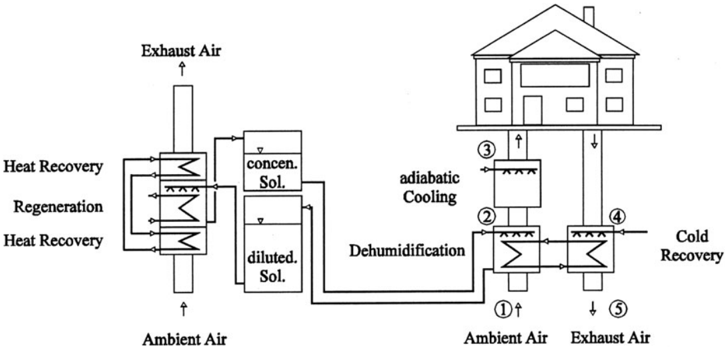
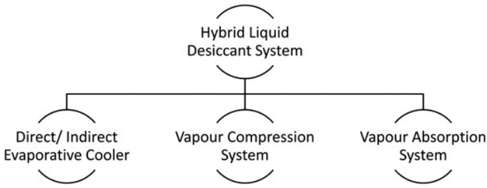
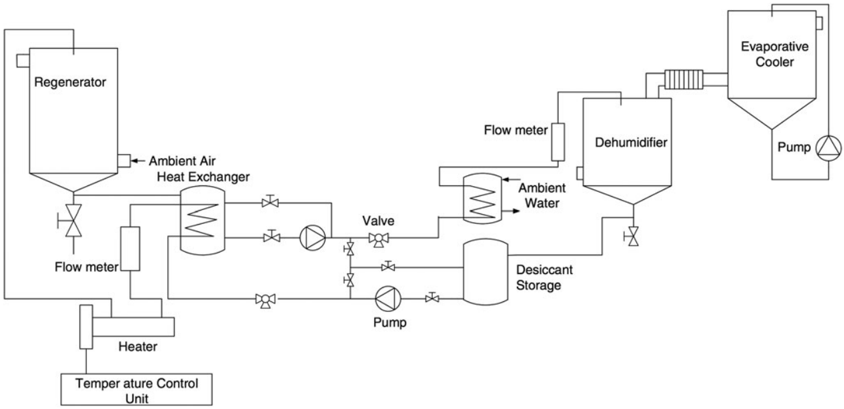
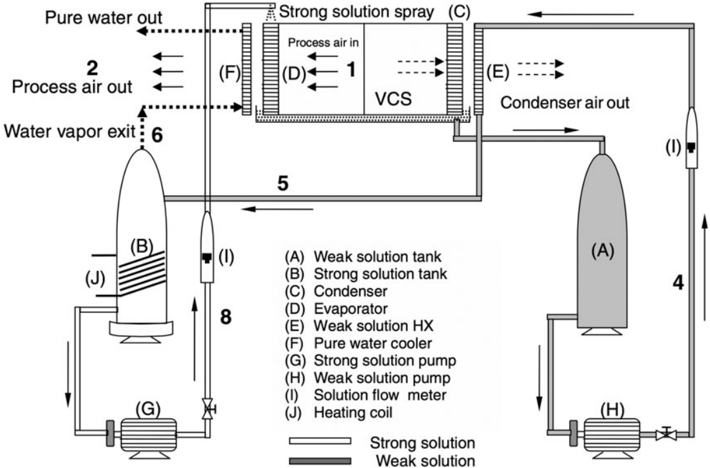
Desiccant cooling systems have been considered as an efficient method of controlling moisture content in supply air. They do not use any ozone-depleting coolants and consume less energy as compared with the vapour compression systems. This communication provides an extensive review of liquid desiccant systems (LDSs). All the components of an LDS such as dehumidifier, regenerator, packing material and liquid desiccant properties along with its energy storage capabilities have been discussed in detail. In addition, hybrid of LDSs with sensible cooling technologies has been studied. Various types of mathematical models to predict the outlet parameters of the desiccant system and current issues in liquid desiccants have been reviewed in detail. Moreover, solid and other advanced desiccants have also been discussed briefly. Finally, a summary of some successful case studies and economic evaluation of desiccant systems have been given.
Overview
The claims and statistics of this paper haven’t been checked yet.
Run the check — free, no account needed. It reads the open-access text and checks the sources it cites.
Integrity signals
Registry
Cites
Statistics
Figures
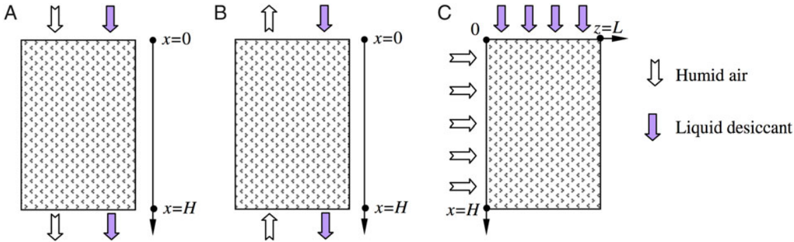
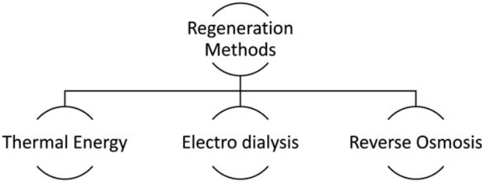
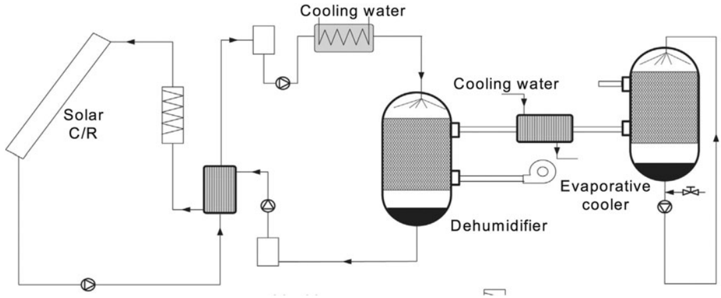
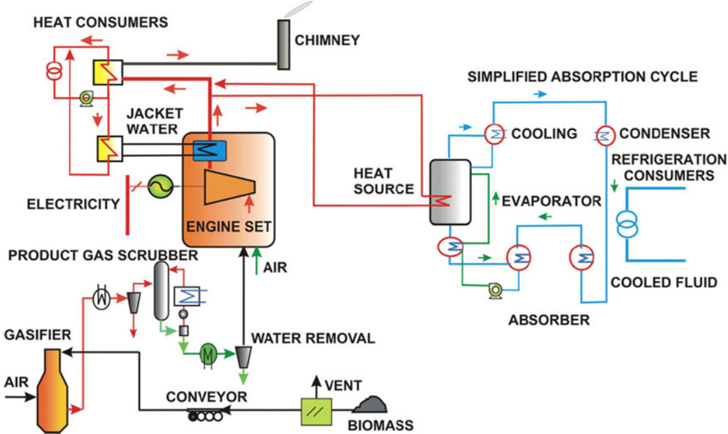
Verification
Claims the paper makes
The claims and statistics of this paper haven’t been checked yet.
Run the check — free, no account needed. It reads the open-access text and checks the sources it cites.
Claims other papers make about this one
Each is checked against this paper’s own text: does it say what the citing paper says it does?
In the citing paper
“Finally, the desiccant cooling system works near atmospheric pressure, which makes them easy to construct, install, preserve and maintain.”
From Resilient cooling strategies – A critical review and qualitative assessment (2021) · cites this paper as [203]
In the citing paper
“The required electrical energy can be less than 25 % of conventional refrigeration systems and this technique acts as an energy-efficient method, especially for hot dry and hot humid areas.”
From Resilient cooling strategies – A critical review and qualitative assessment (2021) · cites this paper as [203]
In the citing paper
“The system uses eco-friendly fluids including air and water, which have no negative impact on the environment.”
From Resilient cooling strategies – A critical review and qualitative assessment (2021) · cites this paper as [203]
Self-check
Percentages, sums and reported differences re-computed from the paper’s own numbers.
The self-check needs the paper’s full text.
Citations
Cites
Nanoporous materials with enhanced hydrophilicity and high water sorption capacity
Ng, E., & Mintova, S. (2008) · Microporous and Mesoporous Materials · doi:10.1016/j.micromeso.2007.12.022 · Cited by 513
Review of solar refrigeration and cooling systems
Sârbu, I., & Sebarchievici, C. (2013) · Energy and Buildings · doi:10.1016/j.enbuild.2013.08.022 · Cited by 303
A technical review on use of liquid-desiccant dehumidification for air-conditioning application
Mei, L., & Dai, Y. (2006) · Renewable and Sustainable Energy Reviews · doi:10.1016/j.rser.2006.10.006 · Cited by 266
Jradi, M., & Riffat, S. (2014) · Renewable and Sustainable Energy Reviews · doi:10.1016/j.rser.2014.01.039 · Cited by 258
Self-citationPatil, K. R., Tripathi, A. D., Pathak, G., & Katti, S. S. (1990) · Journal of Chemical & Engineering Data · doi:10.1021/je00060a020 · Cited by 214
Experimental investigation of a liquid desiccant system for solar cooling and dehumidification
Gommed, K., & Grossman, G. (2006) · Solar Energy · doi:10.1016/j.solener.2006.05.006 · Cited by 204
The potential of solar energy use in desiccant cooling cycles
Henning, H., Erpenbeck, T., Hindenburg, C., & Santamaria, I. S. (2001) · International Journal of Refrigeration · doi:10.1016/s0140-7007(00)00024-4 · Cited by 173
Liu, X. H., Yi, X., & Jiang, Y. (2010) · Energy Conversion and Management · doi:10.1016/j.enconman.2010.06.057 · Cited by 167
Use of compound desiccant to develop high performance desiccant cooling system
Jia, C. X., Dai, Y., Wu, J., & Wang, R. Z. (2006) · International Journal of Refrigeration · doi:10.1016/j.ijrefrig.2006.04.001 · Cited by 165
Yin, Y., Zhang, X., & Chen, Z. (2006) · Building and Environment · doi:10.1016/j.buildenv.2006.07.009 · Cited by 165
Research works printed but not linked: 1
- Cengel YA , Ghajar AJ . Heat and Mass Transfer: Fundamentals and Applications + EES DVD for Heat and Mass Transfer. 4 ed. United States: McGraw Hill Higher Education; 2010.
Cited by
Sorted by citations
Items 101–129 of 129
Iqbal, P., Lu, T., Zhang, Z., & Li, Y. (2019) · Industrial & Engineering Chemistry Research · doi:10.1021/acs.iecr.8b02782 · Cited by 3
Comparison of Liquid Desiccants for Air Cooling Systems Using Wetted Wall Column
al., S. S. P. E. A. S. S. P. E., & TJPRC (2019) · International journal of mechanical and production engineering research and development · doi:10.24247/ijmperdapr201969 · Cited by 3
Structural, Magnetic and Magnetocaloric Properties of High-Energy Ball-Milled Gd5Si2Ge2B0.05 Alloy
Kumar, N. P., Prabahar, K., Kumar, D., & Raja, M. M. (2018) · Journal of Superconductivity and Novel Magnetism · doi:10.1007/s10948-018-4714-8 · Cited by 3
Takalkar, G. D., Bhosale, R. R., Mali, N. A., & Bhagwat, S. S. (2019) · Journal of Chemical & Engineering Data · doi:10.1021/acs.jced.8b01078 · Cited by 3
Isetti, C., & Lazzari, S. (2023) · Applied Thermal Engineering · doi:10.1016/j.applthermaleng.2023.120413 · Cited by 3
Ajay, P. D., Ganesha, A., Girish, H., Kumar, N., Kumar, S., & Salins, S. S. (2026) · Cleaner Waste Systems · doi:10.1016/j.clwas.2026.100477 · Cited by 2
Chandkoti, I., Naikwadi, A. T., & Mali, M. (2024) · SAE technical papers on CD-ROM/SAE technical paper series · doi:10.4271/2024-26-0084 · Cited by 2
Application of Liquid Desiccant Cooling Technology in Built Environment: A Review
(2020) · International Journal of Modern Studies in Mechanical Engineering · doi:10.20431/2454-9711.0601002 · Cited by 2
A review of recent advances in liquid desiccant dehumidification and air-conditioning
Fahlovi, O., Putra, N. S. D., & Agustina, D. (2023) · AIP conference proceedings · doi:10.1063/5.0136657 · Cited by 2
Afrasiabian, E., Iliev, O., Shklyar, I., Lazzari, S., & Boero, F. (2019) · Energies · doi:10.3390/en12091660 · Cited by 2
Solar Desiccant Cooling System
Xu, M., & Li, H. (2017) · Springer eBooks · doi:10.1007/978-3-662-49088-4_30-1 · Cited by 2
Bagasse-Based Desiccant Wheel Dehumidifier
Ramchurreetoo, H., & Rajkumarsingh, B. (2019) · R&D Journal · doi:10.17159/2309-8988/2019/v35a4 · Cited by 1
Investigations on a Novel Internally Heated Bubble Column Liquid Desiccant Regenerator
Mehta, J. R., Shah, N. M., & Sharma, S. (2024) · Lecture notes in mechanical engineering · doi:10.1007/978-981-97-2481-9_37 · Cited by 1
Patel, A. R., & Modi, K. V. (2025) · Environmental Science and Pollution Research · doi:10.1007/s11356-025-37026-7 · Cited by 1
Zerouali, M., & Labed, N. (2020) · Energy Systems · doi:10.1007/s12667-020-00412-w · Cited by 1
Review on Performance Analysis of Desiccant-Assisted Hybrid Cooling Systems
Jani, D. B. (2022) · Global Journal of Energy Technology Research Updates · doi:10.15377/2409-5818.2022.09.5 · Cited by 1
Jon, C. K., Islam, M. R., Ng, K. C., & Shahzad, M. W. (2020) · Green energy and technology · doi:10.1007/978-981-15-8477-0_6 · Cited by 1
Bhowmik, M., Palanisamy, M., & Anandalakshmi, R. (2021) · Lecture notes in mechanical engineering · doi:10.1007/978-981-33-4165-4_29 · Cited by 1
Performance analysis of hybrid solid liquid desiccant material: Dehumidification and CO2 absorption
Sanjay, Mishra, S. K., Alam, T., & Shankar, R. (2022) · Environmental Progress & Sustainable Energy · doi:10.1002/ep.14006 · Cited by 1
Prieto, A. (2018) · Architecture and the Built Environment · doi:10.59490/abe.2018.29.2775 · Cited by 1
A numerable and experimental study of evaporative cooling systems using liquid desiccants
Bao, N. T. (2017) · Science and Technology Development Journal · doi:10.32508/stdj.v20ik1.406
The need for membrane dehumidification
Prabakaran, V., & Jon, C. K. (2023) · Elsevier eBooks · doi:10.1016/b978-0-323-95529-4.00006-x
Design of a cooling system for a hybrid-powered vehicle
Al-Amir, Q. R. (2024) · Al-Mustaqbal Journal of Sustainability in Engineering Sciences · doi:10.62723/2959-5932.1004
Investigation of a Wheel Liquid Desiccant Cooling System Performance via ANSYS CFX
Sabri, M. A. M., Qin, L. C., Khamis, N. K., Ahmad, M. I. M., & Ghopa, W. A. W. (2024) · Jurnal Kejuruteraan · doi:10.17576/jkukm-2024-36(2)-39
Iyengar, A. S., Bhat, P., Reddy, P. K., & Abhilash, N. (2024) · Journal of Physics Conference Series · doi:10.1088/1742-6596/2818/1/012011
Ekunseitan, T., Odufuwa, O. Y., Osekhoghene, D. J., & Kusakana, K. (2026) · Energy Sustainable Development/Energy for sustainable development · doi:10.1016/j.esd.2026.102091
Metadata
- Authors
- Sahlot, M., & Riffat, S. B.
- Affiliations
- University of Nottingham (GB)
- Corresponding author
- Sahlot, Minaal
- ORCID
- Riffat, Saffa B.
- Venue
- International Journal of Low-Carbon Technologies
- Publisher
- Oxford University Press (OUP)
- Published
- 2016-01-20
- Pages
- ctv032
- ISSN
- 1748-1317 (ISSN-L)
- 1748-1325
- OpenAlex
- W2318244275
- Cited by
- 129
- References
- 73
- Citations by year
- 2026: 4 · 2025: 6 · 2024: 15 · 2023: 16 · 2022: 14 · 2021: 17 · 2020: 11 · 2019: 19 · 2018: 13 · 2017: 13 · 2016: 1
- FWCI
- 13.64
- Type
- journal article
- Language
- en
- Open access
- gold
- doi.org
- Licence
- cc-by-nc
- Locations
- International Journal of Low-Carbon Technologies (publishedVersion, cc-by-nc)
- Repository@Nottingham (University of Nottingham) (publishedVersion, cc-by)
- Repository@Nottingham (University of Nottingham) (submittedVersion, cc-by)
- Topics
- Physical Sciences › Engineering › Mechanical Engineering › Adsorption and Cooling Systems
- Physical Sciences › Engineering › Mechanical Engineering › Refrigeration and Air Conditioning Technologies
- Physical Sciences › Engineering › Building and Construction › Building Energy and Comfort Optimization
- Keywords
- desiccant cooling systems, dehumidification, desiccant regeneration, solid desiccant, energy storage, economic evaluation
About these checks
Registry, retraction, Cites and statistics results are computed, not judged, with one exception: a printed reference that no index lists is read once by a model before it counts as a citation error. Claims are extracted by a model and kept only when their quote appears verbatim in the text; each cited source is then checked, with a model’s help, for whether it says what the claim relies on. Those verdicts can be wrong — read the claim’s quote and the cited source before relying on one.
Statistics and arithmetic are recomputed, not judged.
Confidence bands are shown only for fields calibrated on our annotated test set. None is calibrated yet, so no band is shown.
What counts as a claim ›How we measure confidence ›How we check this ›
Are you an author, or do you see a problem with this page? Request a review
