

Reproducibility and Rigor in Animal-Based Research
Open accessThe DOI matches its Crossref record; 49 of the 49 references it cites were found in a registry or an index.
Abstract
Increasing focus on issues of research reproducibility affords us the opportunity to review some of the key issues related in vivo research. First, we set out some key definitions, to guide the reader through the rest of the paper. Next we consider issues of epistemology, of how animal experiments lead to changes in our understanding of biomedicine and, potentially, to the development of new therapeutics. Here we consider the meaning of statistical significance; the importance of understanding whether findings have general truth; and the advances in knowledge which can result from ‘failed’ replication. Then, we consider weaknesses in the design, conduct and reporting of experiments, and review evidence for this from systematic reviews and from experimental studies addressing these issues. We consider the impact that these weaknesses have on the development of new treatments for human disease, and reflect on the response to these issues from the biomedical research community. Finally, we consider strategies for improvement including increased use of brief, pre-registered study protocols; pre-registration, open publication and open data; and the central importance of education in improving research performance.
Overview
The claims and statistics of this paper haven’t been checked yet.
Free: it reads the open-access text and checks the first 5 claims that cite a source we can check. Create a free account to check every claim.
Integrity signals
Registry
Cites
Statistics
Figures
Verification
Claims the paper makes
The claims and statistics of this paper haven’t been checked yet.
Free: it reads the open-access text and checks the first 5 claims that cite a source we can check. Create a free account to check every claim.
Claims other papers make about this one
Each is checked against this paper’s own text: does it say what the citing paper says it does?
The cited source says what the claim attributes to it.
In the citing paper
“Other factors have been identified that could improve replicability, such as blinding, randomization, and sample size planning (Landis et al., 2012; Macleod and Mohan, 2019).”
From Investigating the replicability of preclinical cancer biology (2021) · cites this paper as Macleod and Mohan, 2019
Self-check
Percentages, sums and reported differences re-computed from the paper’s own numbers.
The self-check needs the paper’s full text.
Citations
Cites
Michie, S., van Stralen, M. M., & West, R. (2011) · Implementation Science · doi:10.1186/1748-5908-6-42 · Cited by 13,697 · cited 1×
“Michie [50] has identified common themes in the behavioral change literature, articulated as a requirement that individuals have the capability, opportunity, and motivation to do things differently.”
BackgroundImproving Bioscience Research Reporting: The ARRIVE Guidelines for Reporting Animal Research
Kilkenny, C., Browne, W. J., Cuthill, I. C., Emerson, M., & Altman, D. G. (2010) · PLoS Biology · doi:10.1371/journal.pbio.1000412 · Cited by 7,300
Improving bioscience research reporting: The ARRIVE guidelines for reporting animal research
Kilkenny, C., Browne, W. J., Cuthill, I. C., Emerson, M., & Altman, D. G. (2010) · Journal of Pharmacology and Pharmacotherapeutics · doi:10.4103/0976-500x.72351 · Cited by 6,277
Can the pharmaceutical industry reduce attrition rates?
Kola, I., & Landis, J. (2004) · Nature Reviews Drug Discovery · doi:10.1038/nrd1470 · Cited by 4,167 · cited 1×
“greater challenges in translation, [45] perhaps because potential treatment effects are smaller or take longer to become manifest, but rigorous approaches to research are in our view important in increasing value across all research domains.”
BackgroundRaise standards for preclinical cancer research
Begley, C. G., & Ellis, L. M. (2012) · Nature · doi:10.1038/483531a · Cited by 2,979 · cited 1×
“This has been studied in retrospective observational [2,3] and prospective [4] studies.”
BackgroundMoving to a World Beyond “ p < 0.05”
Wasserstein, R. L., Schirm, A. L., & Lazar, N. A. (2019) · The American Statistician · doi:10.1080/00031305.2019.1583913 · Cited by 2,976
Avoidable waste in the production and reporting of research evidence
Chalmers, I., & Glasziou, P. (2009) · The Lancet · doi:10.1016/s0140-6736(09)60329-9 · Cited by 2,208
Fusobacterium nucleatum infection is prevalent in human colorectal carcinoma
Castellarin, M., Warren, R. L., Freeman, J. D., Dreolini, L., Krzywinski, M., Strauss, J., Barnes, R., Watson, P., Allen-Vercoe, E., Moore, R. A., et al. (2012) · Genome Research · doi:10.1101/gr.126516.111 · Cited by 2,043 · cited 1×
“was prevalent in human colonic carcinoma [6], in contrast to a highly cited previous report that it might be causally related to the development of cancer [7].”
ResultBelieve it or not: how much can we rely on published data on potential drug targets?
Prinz, F., Schlange, T., & Asadullah, K. (2011) · Nature Reviews Drug Discovery · doi:10.1038/nrd3439-c1 · Cited by 1,888 · cited 1×
“This has been studied in retrospective observational [2,3] and prospective [4] studies.”
BackgroundIncreasing value and reducing waste in research design, conduct, and analysis
Ioannidis, J. P. A., Greenland, S., Hlatky, M. A., Khoury, M. J., Macleod, M. R., Moher, D., Schulz, K. F., & Tibshirani, R. (2014) · The Lancet · doi:10.1016/s0140-6736(13)62227-8 · Cited by 1,597
Self-citation
Research works printed but not linked: 3
- Haywood JR Letter re: Principles and Guidelines for Reporting Preclinical Research 2015 Available at: http://www.faseb.org/Portals/2/PDFs/opa/2015/4.8.15%20FASEB%20Response%20to%20NIH%20Preclin%20Guidelines.pdf. Accessed January 7, 2019.
- Macleod MR, Lawson MA, Kyriakopoulou A et al. Risk of bias in reports of in vivo research: A focus for improvement. PLoS Biol. 2015; 13(10): e1002273. 26460723 PMC4603955 · DOI · Paper page
- Enhancing Research Reproducibility: Recommendations from the Federation of American Societies for Experimental Biology 2016 https://www.faseb.org/Portals/2/PDFs/opa/2016/FASEB_Enhancing%20Research%20Reproducibility.pdf. Accessed January 7, 2019.
Cited by
Investigating the replicability of preclinical cancer biology
Errington, T. M., Mathur, M., Soderberg, C. K., Denis, A., Perfito, N., Iorns, E., & Nosek, B. A. (2021) · eLife · doi:10.7554/elife.71601 · Cited by 462
What Research Institutions Can Do to Foster Research Integrity
Bouter, L. M. (2020) · Science and Engineering Ethics · doi:10.1007/s11948-020-00178-5 · Cited by 110
Kahnau, P., Mieske, P., Wilzopolski, J., Kalliokoski, O., Mandillo, S., Hölter, S. M., Võikar, V., Amfim, A., Badurek, S., Bartelik, A., et al. (2023) · BMC Biology · doi:10.1186/s12915-023-01751-7 · Cited by 91
Eckrich, J., Kugler, P., Buhr, C. R., Ernst, B. P., Mendler, S., Baumgart, J., Brieger, J., & Wiesmann, N. (2020) · Scientific Reports · doi:10.1038/s41598-020-75660-y · Cited by 79
Increasing the statistical power of animal experiments with historical control data
Bonapersona, V., Hoijtink, H., RELACS, Sarabdjitsingh, R. A., & Joëls, M. (2021) · Nature Neuroscience · doi:10.1038/s41593-020-00792-3 · Cited by 90
Reproducibility in research into metal-organic frameworks in nanomedicine
Forgan, R. S. (2024) · Communications Materials · doi:10.1038/s43246-024-00475-7 · Cited by 78
“Whilst this perspective has focussed on in vitro work, there are signi fi cant numbers of in vivo studies involving MOFs emerging in the literature; similar concerns around study design and reproducibility exist in animal research 13,57 .”
Systematic review of the potential respiratory carcinogenicity of metallic nickel in humans
Prueitt, R. L., Li, W., Chang, Y., Boffetta, P., & Goodman, J. E. (2020) · Critical Reviews in Toxicology · doi:10.1080/10408444.2020.1803792 · Cited by 71
“None of the studies reported that researchers were blinded to the exposure status of the animals; this can lead to false positive results, raising questions about the reproducibility of the study results (Begley and Ioannidis 2015; Macleod and Mohan 2019).”
BackgroundEggel, M., & Würbel, H. (2020) · Laboratory Animals · doi:10.1177/0023677220968583 · Cited by 67
Recommendations for robust and reproducible preclinical research in personalised medicine
Fosse, V., Oldoni, E., Biétrix, F., Budillon, A., Daskalopoulos, E. P., Fratelli, M., Gerlach, B., Groenen, P. M. A., Hölter, S. M., Menon, J. M. L., et al. (2023) · BMC Medicine · doi:10.1186/s12916-022-02719-0 · Cited by 63
Palmer, D. D., Dumont, J. R., Dexter, T. D., Prado, M. A. M., Finger, E. C., Bussey, T. J., & Saksida, L. M. (2021) · Neurobiology of Learning and Memory · doi:10.1016/j.nlm.2021.107443 · Cited by 58
von Mücke-Heim, I.-A., Urbina-Treviño, L., Bordes, J., Ries, C., Schmidt, M. V., & Deussing, J. M. (2022) · Molecular Psychiatry · doi:10.1038/s41380-022-01762-w · Cited by 61
Cooper, T. K., Meyerholz, D. K., Beck, A. P., Delaney, M. A., Piersigilli, A., Southard, T. L., & Brayton, C. F. (2021) · ILAR Journal · doi:10.1093/ilar/ilab022 · Cited by 58
Petkov, C. I., Flecknell, P. A., Murphy, K., Basso, M. A., Mitchell, A. S., Hartig, R., & Thompson-Iritani, S. A. (2022) · Current Research in Neurobiology · doi:10.1016/j.crneur.2022.100060 · Cited by 49
“Namely, when a small sample size is combined with the inherent variability in the sensitivity of the study measures and a specific significance threshold, this can lead to a lack of replication of published results and require many more animals (including humans) to be tested to adjudicate whether the original reporte…”
ResultSabir, H., Maes, E., Zweyer, M., Schleehuber, Y., Imam, F. B., Silverman, J. A., White, Y. N., Pang, R., Pașca, A. M., Robertson, N. J., et al. (2023) · Scientific Reports · doi:10.1038/s41598-023-36653-9 · Cited by 49
Tradition, not science, is the basis of animal model selection in translational and applied research
Veening-Griffioen, D. H., Ferreira, G. S., Boon, W. P. C., Wied, C. C. G.-D., Schellekens, H., Moors, E. H. M., & Meer, P. J. K. V. (2020) · ALTEX · doi:10.14573/altex.2003301 · Cited by 46
“This could be achieved by the mandatory use of study design protocols, preregistration tools and correct reporting (Smith et al., 2018; Macleod and Mohan, 2019).”
MethodBioethical, Reproducibility, and Translational Challenges of Animal Models
Landi, M. S., Everitt, J. I., & Berridge, B. R. (2021) · ILAR Journal · doi:10.1093/ilar/ilaa027 · Cited by 40
The Role of the Three Rs in Improving the Planning and Reproducibility of Animal Experiments
Smith, A. J., & Lilley, E. J. (2019) · Animals · doi:10.3390/ani9110975 · Cited by 38
“This requires changes in attitudes at many levels, including more time spent on testing the reproducibility of experimental findings in order to evaluate their robustness and generalizability [18], as well investigating the possibility of redirecting funds to non-animal methods.”
BackgroundWitjes, V. M., Boleij, A., & Halffman, W. (2020) · Animals · doi:10.3390/ani10122415 · Cited by 39
“False positive results can occur by chance or because measures to reduce the risk of bias were not sufficiently taken and the internal validity of the study was low [18,21].”
BackgroundMethodResultInfluentialRisk of bias assessment in preclinical literature using natural language processing
Wang, Q., Liao, J., Lapata, M., & Macleod, M. R. (2021) · Research Synthesis Methods · doi:10.1002/jrsm.1533 · Cited by 37
Self-citationSystematic review of the potential carcinogenicity of bisphenol A in humans
Prueitt, R. L., Hixon, M. L., Fan, T., Olgun, N. S., Piatos, P., Zhou, J., & Goodman, J. E. (2023) · Regulatory Toxicology and Pharmacology · doi:10.1016/j.yrtph.2023.105414 · Cited by 33
Dose-dependent progression of multiple low-dose streptozotocin-induced diabetes in mice
Bauer, B. M., Bhattacharya, S., Bloom‐Saldana, E., Irimia, J. M., & Fueger, P. T. (2023) · Physiological Genomics · doi:10.1152/physiolgenomics.00032.2023 · Cited by 32
(2024) · Acta Agraria Kaposváriensis · doi:10.31914/actaagrarkapos · Cited by 26
Interventions for Infection and Inflammation-Induced Preterm Birth: a Preclinical Systematic Review
Miller, F. A., Sacco, A., David, A. L., & Boyle, A. K. (2022) · Reproductive Sciences · doi:10.1007/s43032-022-00934-x · Cited by 28
“However, adherence to these guidelines is poor, contributing to the lack of reproducibility of experimental findings in animal research, delaying translation of these promising therapeutics into clinical use [38, 85].”
BackgroundBetween two stools: preclinical research, reproducibility, and statistical design of experiments
Reynolds, P. S. (2022) · BMC Research Notes · doi:10.1186/s13104-022-05965-w · Cited by 23
Lin, Y., Yang, F., Shang, B., Speich, J. E., Wan, Y.-J. Y., Hashida, H., Braun, T., Sadoughi, A., Puehler, T., Lue, T. F., et al. (2024) · Cardiovascular Diagnosis and Therapy · doi:10.21037/cdt-24-413 · Cited by 21
Wong, C., Gregory, J. M., Liao, J., Egan, K. J., Vesterinen, H. M., Khan, A. A., Anwar, M. M., Beagan, C., Brown, F. S., Cafferkey, J., et al. (2023) · BMJ Open · doi:10.1136/bmjopen-2022-064169 · Cited by 19
“For future selection, we will incorporate machine learning and text mining to our systematic reviews and data from our drug discovery platform.”
MethodSelf-citationDriscoll, M., Sedore, C. A., Onken, B., Coleman-Hulbert, A. L., Johnson, E., Phillips, P. C., & Lithgow, G. J. (2025) · GeroScience · doi:10.1007/s11357-025-01627-4 · Cited by 17
Davies, G. (2021) · Studies in history and philosophy of science · doi:10.1016/j.shpsa.2021.08.010 · Cited by 11
Dirnagl, U., Bannach‐Brown, A., & McCann, S. (2021) · EMBO Molecular Medicine · doi:10.15252/emmm.202114334 · Cited by 17
Bolden, C., Olson, S. D., & Cox, C. S. (2022) · Microvascular Research · doi:10.1016/j.mvr.2022.104453 · Cited by 16
Stakeholders’ views on an institutional dashboard with metrics for responsible research
Haven, T. L., Holst, M., & Strech, D. (2022) · PLoS ONE · doi:10.1371/journal.pone.0269492 · Cited by 15
“, randomization and blinding, see Macleod & Mohan [19]), and Open Science (including Open Access, Data, and Code, see Serghiou et al.”
BackgroundLaboratory animal ethics education improves medical students' awareness of laboratory animal ethics
Zhang, W., Xie, Z., Fang, X., Wang, Z., Li, Z., Shi, Y., Wang, X., Li, L., & Wang, X. (2024) · BMC Medical Education · doi:10.1186/s12909-024-05703-9 · Cited by 14
Kahrass, H., Pietschmann, I., & Mertz, M. (2024) · Animals · doi:10.3390/ani14040651 · Cited by 13
“Finding a clear answer to this question is not made any easier by the replication crisis (e.g., [35,36]) and biases in the risk assessment based on investigator brochures [37,38].”
BackgroundDing, F., Hu, K., Liu, X., Liu, C., Yang, J., Shi, X., Liu, B., Wu, M., Wang, Z., Feng, L., et al. (2022) · Regenerative Biomaterials · doi:10.1093/rb/rbac076 · Cited by 13
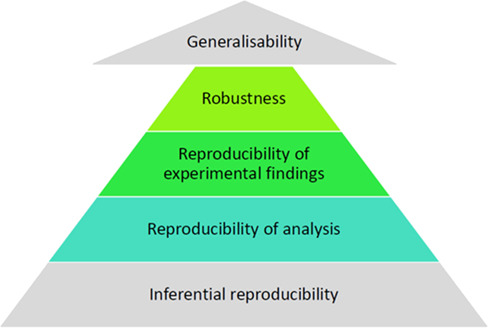
“‘Reproducibility’ encompasses three aspects: reanalysis of existing datasets (‘the reproducibility of analysis’); collection of a similar quantity of new data as the first experiment (‘the reproducibility of experimental results’); and, the deliberate alteration of the experimental conditions or analytical methods to…”
BackgroundClarifying the Ethics and Oversight of Chimeric Research
Johnston, J., Hyun, I., Neuhaus, C. P., Maschke, K. J., Marshall, P., Craig, K. P., Matthews, M. M., Drolet, K., Greely, H. T., Hill, L. R., et al. (2022) · The Hastings Center Report · doi:10.1002/hast.1427 · Cited by 18
Responsible Science and Research Animal Use
Turner, P. V., & Barbee, R. W. (2019) · ILAR Journal · doi:10.1093/ilar/ilz020 · Cited by 12
There is an epistemic problem in animal consciousness research
Roige, A. (2023) · Phenomenology and the Cognitive Sciences · doi:10.1007/s11097-023-09912-3 · Cited by 12
Cheng, Y., Kim, M., Chen, Y., & Zhao, Y. (2026) · Coordination Chemistry Reviews · doi:10.1016/j.ccr.2026.217574 · Cited by 11
In Vivo Animal Models Development and Their Limitations for Brain Research
Mangrulkar, S. V., Dabhekar, S. V., Neje, P., Parkarwar, N., Turankar, A., Taksande, B. G., Umekar, M. J., & Nakhate, K. T. (2024) · Springer eBooks · doi:10.1007/978-981-97-2859-6_12 · Cited by 17
Liu, H., Gielen, M. J. C. A. M., Bosmans, J. W. A. M., Winkens, B., & Bouvy, N. D. (2021) · Hernia · doi:10.1007/s10029-020-02351-y · Cited by 11
The culture of care to enhance laboratory animal personnel well-being: a scoping review
Morahan, H., Cohen, S., Bero, L. A., & Rooney, K. B. (2024) · Laboratory Animals · doi:10.1177/00236772241259089 · Cited by 10
Hankenson, F. C., Prager, E. M., & Berridge, B. R. (2024) · Annual Review of Animal Biosciences · doi:10.1146/annurev-animal-021022-043531 · Cited by 10
Research Relevant Background Lesions and Conditions: Ferrets, Dogs, Swine, Sheep, and Goats
Helke, K. L., Meyerholz, D. K., Beck, A. P., Burrough, E. R., Derscheid, R. J., Löhr, C. V., McInnes, E. F., Scudamore, C. L., & Brayton, C. F. (2021) · ILAR Journal · doi:10.1093/ilar/ilab005 · Cited by 13
Cannon, A. E., Zürrer, W. E., Zejlon, C., Kulcsár, Z., Lewandowski, S. A., Piehl, F., Granberg, T., & Ineichen, B. V. (2023) · Frontiers in Veterinary Science · doi:10.3389/fvets.2023.1135282 · Cited by 10
“, what is external validity of these animal models in the neuroimaging domain? Improved understanding of the external validity of these animal models would not only benefit researchers using these models to assess putative drug candidates for MND, but it would also help to implement refinement strategies from the 3R—r…”
BackgroundWilliams, J. L., Chu, H., Lown, M. K., Daniel, J., Meckl, R. D., Patel, D. A., & Ibrahim, R. (2022) · Cureus · doi:10.7759/cureus.21086 · Cited by 11
“Experimental irreproducibility of preclinical research usually can be attributed to weaknesses in study design, quality control, protocols, materials and reagents, data analysis, or reporting, and publication bias also appears to play a major role [2,3,27,28].”
BackgroundResultLegislative framework for animal research in the UK
Dennison, N., & Petrie, A. (2020) · In Practice · doi:10.1136/inp.m3920 · Cited by 9
Measuring the replicability of our own research
Brown, R. E. (2024) · Journal of Neuroscience Methods · doi:10.1016/j.jneumeth.2024.110111 · Cited by 5
“Much has been written on the "replicability problem" in animal research in general (Reckelhoff and Alexander, 2018 ; Macleod and Mohan, 2019 ; Voelkl et al., 2020 ) and in behavioural neuroscience in particular (Bespalov and Steckler, 2018 ; Kafkafi et al., 2018 ; Voikar, 2020).”
Zürrer, W. E., Cannon, A. E., Ewing, E., Brüschweiler, D., Bugajska, J., Hild, B. F., Rosso, M., Reich, D. S., & Ineichen, B. V. (2024) · PLoS ONE · doi:10.1371/journal.pone.0311358 · Cited by 7
“…is an acknowledged aid to implementing the reduction, replacement, and refinement of animal experiments [8], e.g., by gaining knowledge without the use of new animal experiments or by improving the ethical position of animal research by increasing the value and reliability of research findings [9].”
Jordan, C. Y., Romanò, N., & Menzies, J. R. W. (2025) · Experimental Physiology · doi:10.1113/ep092884 · Cited by 5
Statistics, statistical thinking, and the IACUC
Reynolds, P. S. (2021) · Lab Animal · doi:10.1038/s41684-021-00832-w · Cited by 6
What Research Institutions Can Do to Foster Research Integrity
Bouter, L. M. (2022) · Springer eBooks · doi:10.1007/978-3-030-99680-2_59 · Cited by 5
Still to ARRIVE at adequate reporting of orthodontic studies involving animal models
Flitti, D., Pandis, N., & Seehra, J. (2024) · European Journal of Orthodontics · doi:10.1093/ejo/cjae032 · Cited by 4
“These findings support the notion that reporting of key aspects in animal studies acts as one of the most common barriers against study reproducibility [19, 20].”
ResultHagen, C. W., Hoxha, M., Chitale, S., White, A. O., Ogállar, P. M., Expósito, A. N., Agüera, A. D. R., Torres, C., Papini, M. R., & Sabariego, M. (2024) · Hippocampus · doi:10.1002/hipo.23642 · Cited by 5
“Conducted across three institutions, our work addresses concerns about the replicability of scientific findings, which is crucial for validity, generalizability, and translation (Bell, Hankison, and Laskowski 2009; Kafkafi et al. 2018; Macleod and Mohan 2019; Voelkl et al. 2020).”
Ramage, F. J., Clewlow, A. S., Williams, L. M., Macleod, M. R., & Langston, R. F. (2020) · BMJ Open Science · doi:10.1136/bmjos-2020-100108 · Cited by 5
Self-citationDeutsch, S., Heider, M., Glage, S., Bleich, A., Tolba, R. H., Strech, D., & Wieschowski, S. (2021) · PLoS ONE · doi:10.1371/journal.pone.0250362 · Cited by 4
“, bioRxiv) or repositories such as Open Science Framework (OSF) and FigShare [16].”
BackgroundBASIC RESEARCH IN SHOCK AND SEPSIS
Remick, D. G., Szabó, A., Juffermans, N. P., & Osuchowski, M. F. (2022) · Shock · doi:10.1097/shk.0000000000001953 · Cited by 4
“In addition, all the abovemust be supported by best practices in avoiding experimental bias including blinding, randomization, allocation concealment, and proper power analyses (23)— the lack of these culminates in generation of useless findings and distortion of the scientific advance.”
BackgroundRowlands, D. K., & Guillén, J. (2025) · Laboratory Animals · doi:10.1177/00236772241309745 · Cited by 3
“38 Poorly designed animal experiments lacking in statistical power, blinding, randomisation and appropriate controls undermine scientific progress, whereas inadequate reporting of methods, housing conditions, genetics, disease status et cetera make true evaluation of the study impossible.”
Norecopa: A global knowledge base of resources for improving animal research and testing
Smith, A. J. (2023) · Frontiers in Veterinary Science · doi:10.3389/fvets.2023.1119923 · Cited by 3
“, (1, 2)], and that the standard of reporting could be significantly improved [e.”
BackgroundDrug discovery: Chaos can be your friend or your enemy
Miller, S. M., Moos, W. H., Munk, B. H., Munk, S. A., Hart, C. P., & Spellmeyer, D. C. (2023) · Elsevier eBooks · doi:10.1016/b978-0-12-824304-6.00012-2 · Cited by 4
Kratz, T., Ruff, R., Bernhardt, M., Katzer, D., Herberg, U., Asfour, B., Breuer, J., von Sochaczewski, C. O., & Bierbach, B. (2023) · Scientific Reports · doi:10.1038/s41598-023-39468-w · Cited by 3
“Among several other factors, word count limits have been identified to negatively impact reproducibility, because word count limits require research to be condensed in the shortest possible form 24 .”
BackgroundBittlinger, M., Schwietering, J., & Strech, D. (2021) · Drug Discovery Today · doi:10.1016/j.drudis.2021.06.007 · Cited by 3
Zürrer, W. E., Cannon, A. E., Ewing, E., Rosso, M., Reich, D. S., & Ineichen, B. V. (2023) · bioRxiv (Cold Spring Harbor Laboratory) · doi:10.1101/2023.02.24.529867 · Cited by 3
“, by gaining knowledge without the use of new animal experiments or by 67 improving the ethical position of animal research by increasing the value and reliability of research 68 findings (8).”
BackgroundPotschka, H., & Pérez‐Pérez, D. (2025) · Epilepsia · doi:10.1111/epi.18581 · Cited by 2
“154,155 In comparison with mouse models, zebrafish models can allow a higher throughput; however, they have even more pronounced limitations when it comes to interspecies differences concerning the entire syndromic spectrum of symptoms or the developmental time course.”
Developing more inclusive approaches to animal research and patient involvement
Azilagbetor, D. M., Davies, G. F., Geneviève, L. D., Shaw, D., & Elger, B. S. (2025) · Medicine Health Care and Philosophy · doi:10.1007/s11019-025-10288-1 · Cited by 2
“A significant argument in the scientific commu - nity, for instance, is one related to the lack of reproducibility of animal research results (MacLeod and Mohan 2019; Wilson et al. 2023 ).”
Lohse, S. (2026) · European Journal for Philosophy of Science · doi:10.1007/s13194-026-00727-y · Cited by 2
“As many preclinical studies make extensive use of animal experiments, some authors have argued that precisely this could be a significant part of the problem (Macleod & Mohan, 2019; Spanagel, 2022).”
Red blood cell transfusion in animal models of acute brain injuries: a systematic review protocol
Laflamme, M., Haghbayan, H., Lalu, M. M., Zarychanski, R., Lauzier, F., Boutin, A., Macleod, M. R., Fergusson, D. A., Moore, L., Costerousse, O., et al. (2021) · Systematic Reviews · doi:10.1186/s13643-021-01703-8 · Cited by 2
Self-citationA Brief Review of the European Directive on 3Rs and Facilitating Animal Experimentation
Ali, O. (2023) · Acta Agraria Kaposváriensis · doi:10.31914/aak.4191 · Cited by 2
“Reproducibility issues in experimentation can undermine the credibility and legitimacy of research in some disciplines ( Macleod & Mohan , 2019; Johnson , 2013; Richter et al., 2009).”
BackgroundBate, S. T., Stanford, S. C., & Page, L. (2025) · Journal of Psychopharmacology · doi:10.1177/02698811251319453 · Cited by 2
“Within laboratory-based scientific research there has been a growing awareness of poor reproducibility of experimental findings (Errington et al., 2021; Macleod and Mohan, 2019; Science Collaboration, 2015).”
Animal Research at a Crossroads: Strengths, Weaknesses, Opportunities, and Emerging Threats
Thompson-Iritani, S. A., & Newsome, J. T. (2025) · Journal of the American Association for Laboratory Animal Science · doi:10.30802/aalas-jaalas-25-020 · Cited by 1
Doctoral and professional programs
Miller, S. M., Moos, W. H., Munk, B. H., Munk, S. A., Hart, C. P., & Spellmeyer, D. C. (2023) · Elsevier eBooks · doi:10.1016/b978-0-12-824304-6.00013-4 · Cited by 1
Dolgorukova, A., Protsenko, E., Isaeva, J., Gagloeva, V., Verbitskaya, E. V., Berkovich, R., & Sokolov, A. Y. (2023) · European Journal of Neuroscience · doi:10.1111/ejn.16030 · Cited by 1
“Animal models serve as the backbone of drug research and development, but there is a growing concern about the low reliability and reproducibility of results from preclinical studies (Button et al., 2013; Macleod & Mohan, 2019).”
BackgroundDifferences in enteric neuronal density in the NSE-Noggin mouse model across institutes
Schonkeren, S. L., Thijssen, M. S., Idris, M., Wouters, K., de Vaan, J., Teubner, A., Gijbels, M. J., Boesmans, W., & Melotte, V. (2024) · Scientific Reports · doi:10.1038/s41598-024-54337-w · Cited by 1
“It has been estimated that over 50% of preclinical studies, i.e. animals studies, are irreproducible 19 due to weaknesses in study design, such as lack of blinding and randomization, or because of equipment or procedural differences between laboratories 20 .”
Neves, M. M., Klein, S. G., Silva, R. C., Bernardes, L. M. M., Malta, S. M., Vieira, T. N., Rosa, R. B., de Lima, I. L., Ferreira, F. B., & da Silva, M. V. (2024) · Frontiers in Veterinary Science · doi:10.3389/fvets.2024.1394113 · Cited by 1
“Thus, under firm convictions about the importance of these issues and supported by evidence from other areas of research, there is a current consensus that scientists should adopt these practices whenever possible to produce work with greater impact and applicability (16).”
BackgroundMethodKlein, B. D., Harte‐Hargrove, L. C., Mowrey, W. B., Galanopoulou, A. S., Metcalf, C. S., Coles, L. D., Forcelli, P. A., Katsarou, A., Köhling, R., Leclercq, K., et al. (2025) · Epilepsia Open · doi:10.1002/epi4.70053 · Cited by 1
A scoping review of ethical decisions and decision tools for experimental animal protocols
Azilagbetor, D. M., Shaw, D., Gaab, J., Morales, R. M. C., Elger, B. S., & Geneviève, L. D. (2025) · BMC Medical Ethics · doi:10.1186/s12910-025-01297-z · Cited by 1
“Some interpret this as a result of poor reporting, poor experimental designs and poor statistical analyses, and over-interpretation of results among other problems [9– 13].”
Veening-Griffioen, D. H. (2020) · ALTEX · doi:10.14573/altex.2003301s2
Red Blood Cell Transfusion in Animal Models of Acute Brain Injuries: A Systematic Review ProtocolPreprint
Laflamme, M., Haghbayan, H., Lalu, M. M., Zarychanski, R., Lauzier, F., Boutin, A., Macleod, M. R., Fergusson, D. A., Moore, L., Costerousse, O., et al. (2020) · doi:10.21203/rs.3.rs-97823/v1
Self-citationVeening-Griffioen, D. H. (2020) · ALTEX · doi:10.14573/altex.2003301s1
Seveljevic-Jaran, D., Antolić, M., Ognjenović, A., Kalliokoski, O., Abelson, K., & Hau, J. (2023) · In Vivo · doi:10.21873/invivo.13060 · Cited by 1
Selection of animal models for drug efficacy
Veening-Griffioen, D. H. (2023) · Utrecht University Repository (Utrecht University) · doi:10.33540/1605
Zürrer, W. E., Cannon, A. E., Ewing, E., Brüschweiler, D., Bugajska, J., Hild, B. F., Rosso, M., Reich, D. S., & Ineichen, B. V. (2023) · Research Square · doi:10.21203/rs.3.rs-2841635/v1
Animals in Research in the Pharmaceutical Industry
Landi, M. S. (2023) · Collaborative bioethics · doi:10.1007/978-3-031-29451-8_29
The Use of Animals in the Study of Human Disease: Key Roles of General Ethical Principles
Tannenbaum, J. (2023) · Collaborative bioethics · doi:10.1007/978-3-031-29451-8_26
Characterization of the rat Atg16l1 gene and its role in autophagy and disease
Chesney, K. L. (2020) · MOspace Institutional Repository (University of Missouri) · doi:10.32469/10355/88869
Davies, G. F., Greenhough, B., Hobson‐West, P., Kirk, R. G. W., & Palmer, A. (2024) · Manchester University Press eBooks · doi:10.7765/9781526165770.00006
Orhan, H. G., Teimoori, A., & Aydıngöz, S. E. (2024) · Journal of Laboratory Animal Science and Practices · doi:10.62425/jlasp.1457749
(2024) · Frontiers research topics · doi:10.3389/978-2-8325-5519-4
Marcolan, J. A., & Marino–Neto, J. (2024) · Medical & Biological Engineering & Computing · doi:10.1007/s11517-024-03212-x
“…about the reproducibility of scientific results, especially those arising from behavioral models that are common in preclinical research labs [2–4], have fostered the need for accessible and comprehensive tools for behavioral recording that could also allow for data quality assessment and good…”
Thøfner, I. C. N., Olsen, M., & Poulsen, L. L. (2025) · British Poultry Science · doi:10.1080/00071668.2025.2467948
Dingwall, R., May, C., McDonald, J. A., Hill, T., Brown, R. M., Lawrence, A. J., Hannan, A. J., & Burrows, E. L. (2025) · Genes Brain & Behavior · doi:10.1111/gbb.70032
Laflamme, M., Haghbayan, H., Lalu, M. M., Zarychanski, R., Lauzier, F., Boutin, A., Macleod, M. R., Fergusson, D. A., Moore, L., Costerousse, O., et al. (2021) · Figshare · doi:10.6084/m9.figshare.14782873
Self-citationKahnau, P., Mieske, P., Wilzopolski, J., Kalliokoski, O., Mandillo, S., Hölter, S. M., Võikar, V., Amfim, A., Badurek, S., Bartelik, A., et al. (2024) · Figshare · doi:10.6084/m9.figshare.26638902
Kahnau, P., Mieske, P., Wilzopolski, J., Kalliokoski, O., Mandillo, S., Hölter, S. M., Võikar, V., Amfim, A., Badurek, S., Bartelik, A., et al. (2024) · Figshare · doi:10.6084/m9.figshare.26638911
Laflamme, M., Haghbayan, H., Lalu, M. M., Zarychanski, R., Lauzier, F., Boutin, A., Macleod, M. R., Fergusson, D. A., Moore, L., Costerousse, O., et al. (2021) · Figshare · doi:10.6084/m9.figshare.14782867
Self-citationZhang, W., Xie, Z., Fang, X., Wang, Z., Li, Z., Shi, Y., Wang, X., Li, L., & Wang, X. (2024) · Figshare · doi:10.6084/m9.figshare.26143734
Kahnau, P., Mieske, P., Wilzopolski, J., Kalliokoski, O., Mandillo, S., Hölter, S. M., Võikar, V., Amfim, A., Badurek, S., Bartelik, A., et al. (2024) · Figshare · doi:10.6084/m9.figshare.26638905
Kahnau, P., Mieske, P., Wilzopolski, J., Kalliokoski, O., Mandillo, S., Hölter, S. M., Võikar, V., Amfim, A., Badurek, S., Bartelik, A., et al. (2024) · Figshare · doi:10.6084/m9.figshare.24550324
Kahnau, P., Mieske, P., Wilzopolski, J., Kalliokoski, O., Mandillo, S., Hölter, S. M., Võikar, V., Amfim, A., Badurek, S., Bartelik, A., et al. (2024) · Figshare · doi:10.6084/m9.figshare.26638908
Laflamme, M., Haghbayan, H., Lalu, M. M., Zarychanski, R., Lauzier, F., Boutin, A., Macleod, M. R., Fergusson, D. A., Moore, L., Costerousse, O., et al. (2021) · Figshare · doi:10.6084/m9.figshare.14782870
Self-citationKahnau, P., Mieske, P., Wilzopolski, J., Kalliokoski, O., Mandillo, S., Hölter, S. M., Võikar, V., Amfim, A., Badurek, S., Bartelik, A., et al. (2024) · Figshare · doi:10.6084/m9.figshare.26638899
Metadata
- Authors
- Macleod, M., & Mohan, S.
- Affiliations
- University of Edinburgh (GB)
- National Institutes of Health (US)
- Corresponding author
- Macleod, Malcolm
- ORCID
- Macleod, Malcolm
- Venue
- ILAR Journal
- Publisher
- Oxford University Press (OUP)
- Published
- 2019
- Volume
- 60
- Issue
- 1
- Pages
- 17-23
- ISSN
- 1084-2020 (ISSN-L)
- 1930-6180
- PMC
- PMC7275809
- OpenAlex
- W2983895890
- Cited by
- 104
- References
- 48
- Citations by year
- 2026: 5 · 2025: 10 · 2024: 23 · 2023: 21 · 2022: 14 · 2021: 17 · 2020: 12 · 2019: 2
- FWCI
- 14.83
- Type
- journal article
- Language
- en
- Open access
- hybrid
- doi.org
- Licence
- Locations
- ILAR Journal (publishedVersion, cc-by-nc)
- PubMed Central (publishedVersion, cc-by-nc)
- PubMed (publishedVersion)
- Edinburgh Research Explorer (University of Edinburgh) (submittedVersion, other-oa)
- Funders
- National Institutes of Health
- Topics
- Health Sciences › Veterinary › Small Animals › Animal testing and alternatives
- Social Sciences › Library and Information Sciences › Academic Publishing and Open Access
- Social Sciences › Decision Sciences › Statistics, Probability and Uncertainty › Meta-analysis and systematic reviews
- Keywords
- research reproducibility, animal experimentation, in vivo research, statistical significance, generalizability of findings, replication study, study design flaws, reporting quality, preregistration, open data, open science, research training, translational research
- MeSH terms
- Animals, Research Design, Animal Experimentation, Biomedical Research
About these checks
Registry, retraction, Cites and statistics results are computed, not judged, with one exception: a printed reference that no index lists is read once by a model before it counts as a citation error. Claims are extracted by a model and kept only when their quote appears verbatim in the text; each cited source is then checked, with a model’s help, for whether it says what the claim relies on. Those verdicts can be wrong — read the claim’s quote and the cited source before relying on one.
Statistics and arithmetic are recomputed, not judged.
Confidence bands are shown only for fields calibrated on our annotated test set. None is calibrated yet, so no band is shown.
What counts as a claim ›How we measure confidence ›How we check this ›
Are you an author, or do you see a problem with this page? Request a review
Data sources
Bibliographic data: Semantic Scholar, OpenAlex, Crossref.
Contains information from the Semantic Scholar Academic Graph Datasets, made available under the ODC Attribution License (ODC-BY 1.0).
Semantic Scholar’s data is described in: Kinney, R., et al. (2023). The Semantic Scholar Open Data Platform. arXiv:2301.10140.
