

Microbial foodborne outbreaks in Africa: a systematic review
Open accessThe DOI matches its Crossref record; 64 of the 67 references it cites were found in a registry or an index.
Abstract
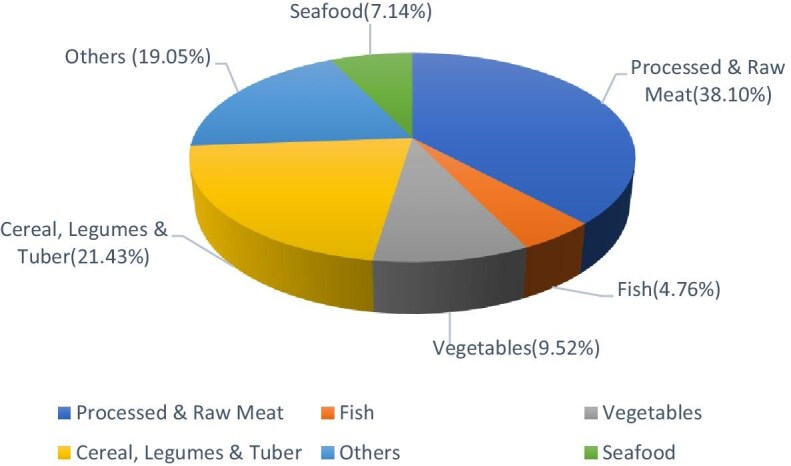
Microbial foodborne outbreaks are a severe public health challenge in Africa, which bears the highest global burden due to systemic vulnerabilities. Common microbial pathogens contaminate various foods, particularly raw and processed meats, leading to significant morbidity, mortality and economic losses. In this review, data from 31 studies encompassing 42 microbial foodborne outbreaks in Africa were synthesized, analyzed and visualized. Overall, 877 067 of infections and intoxications occurred, with 2064 hospitalizations and 2061 deaths. Salmonella enterica accounted for the most of infections and intoxication (53.6%), while Staphylococcus aureus caused the highest rate of outbreaks (21.4%). Clostridium botulinum was associated with the highest fatality (46.154%), followed by Listeria monocytogenes (20.323%). The implicated food vehicles in the outbreaks included processed meats (38.1%), cereals, legumes and tuber (21.43%), vegetables (9.52%) and seafood (7.14%). The key contributing factors were poor hygiene, inadequate food storage and limited compliance with food safety practices. Addressing critical deficiencies in food safety infrastructure, public awareness and hygiene practices requires enhanced surveillance systems, stricter regulatory frameworks, investment in infrastructure and public education campaigns. Efforts should prioritize the control of prevalent pathogens to mitigate the health and socioeconomic impacts of foodborne illnesses across the continent.
Overview
The claims and statistics of this paper haven’t been checked yet.
Free: it reads the open-access text and checks the first 5 claims that cite a source we can check. Create a free account to check every claim.
Integrity signals
Registry
Cites
Statistics
Figures
Verification
Claims the paper makes
The claims and statistics of this paper haven’t been checked yet.
Free: it reads the open-access text and checks the first 5 claims that cite a source we can check. Create a free account to check every claim.
Claims other papers make about this one
Each is checked against this paper’s own text: does it say what the citing paper says it does?
The source backs part of the claim, not all of it — or backs it for a different population, condition or comparison.
In the citing paper
“Recent studies on the burden of foodborne disease in Burkina Faso have identified bacterial hazards as a major contributor to the nation's overall disease burden, with vegetables being a key transmission vehicle (Dinede et al. , 2023; Sosah and Donkor, 2025).”
From Microbiological quality of raw vegetables in Ouagadougou: enumeration of Escherichia coli and detection of Salmonella spp. and antibiotic resistance profiles (2026) · cites this paper as Sosah and Donkor, 2025
Experimental — accuracy not yet measured
Self-check
Percentages, sums and reported differences re-computed from the paper’s own numbers.
The self-check needs the paper’s full text.
Citations
Cites
The PRISMA 2020 statement: An updated guideline for reporting systematic reviews
Page, M. J., McKenzie, J. E., Bossuyt, P. M., Boutron, I., Hoffmann, T. C., Mulrow, C. D., Shamseer, L., Tetzlaff, J. M., Akl, E. A., Brennan, S. E., et al. (2021) · BMJ · doi:10.1136/bmj.n71 · Cited by 108,283
Havelaar, A. H., Kirk, M. D., Torgerson, P. R., Gibb, H. J., Hald, T., Lake, R. J., Praet, N., Bellinger, D. C., de Silva, N. R., Gargouri, N., et al. (2015) · PLoS Medicine · doi:10.1371/journal.pmed.1001923 · Cited by 2,067
Microbial contamination of drinking water and disease outcomes in developing regions
Ashbolt, N. J. (2004) · Toxicology · doi:10.1016/j.tox.2004.01.030 · Cited by 1,080 · cited 1×
“8 These outbreaks result not only in signifi-cant morbidity and mortality but also in substantial economic losses, further straining already fragile healthcare systems in Africa.”
Staphylococcus aureus and Staphylococcal Food-Borne Disease: An Ongoing Challenge in Public Health
Kadariya, J., Smith, T. C., & Thapaliya, D. (2014) · BioMed Research International · doi:10.1155/2014/827965 · Cited by 863 · cited 1×
“47 , 48 This could explain why 56 and 53 individuals were infected with S. aureus in cooked beans and stewed chicken, respectively.”
Carstens, C. K., Salazar, J. K., & Darkoh, C. (2019) · Frontiers in Microbiology · doi:10.3389/fmicb.2019.02667 · Cited by 431 · cited 1×
“63 , 64 Aside from practices that could lead to the contamination of fresh produce, their high moisture content may be conducive for the growth of both spoilage and pathogenic microbes.”
Microbial Contamination of Fresh Produce: What, Where, and How?
Machado‐Moreira, B., Richards, K., Brennan, F., Abram, F., & Burgess, C. M. (2019) · Comprehensive Reviews in Food Science and Food Safety · doi:10.1111/1541-4337.12487 · Cited by 258 · cited 1×
“4 –7 The high prevalence of microbial contamination is exacerbated by inadequate food safety practices, poor sanitation and limited access to clean water, making outbreaks both frequent and severe.”
Outbreak of Listeriosis in South Africa Associated with Processed Meat
Thomas, J., Govender, N., McCarthy, K. M., Erasmus, L. K., Doyle, T. J., Allam, M., Ismail, A., Ramalwa, N., Sekwadi, P., Ntshoe, G., et al. (2020) · New England Journal of Medicine · doi:10.1056/nejmoa1907462 · Cited by 253 · cited 1×
“13 , 21 , 23 The current study revealed different categories of food products responsible as vehicles in microbial foodborne outbreaks, such as vegetables, fish, seafood, cereals, legumes, tuber and traditional African foods.”
The role of seafood in foodborne diseases in the United States of America: -EN- -FR- -ES-
LIPP, E. K., & ROSE, J. B. (1997) · Revue Scientifique et Technique de l'OIE · doi:10.20506/rst.16.2.1048 · Cited by 246 · cited 1×
“59 , 60 Traditional African and cultural foods, although nutritious, face safety challenges.”
Health-system resilience: reflections on the Ebola crisis in western Africa
Kieny, M.-P., Evans, D. B., Schmets, G., & Kadandale, S. (2014) · Bulletin of the World Health Organization · doi:10.2471/blt.14.149278 · Cited by 243 · cited 1×
“9 , 10 Despite the significant public health implications, foodborne diseases caused by pathogens in Africa have not received the same level of attention as other major infectious diseases such as HIV/AIDS, malaria and TB, despite having a comparable burden.”
Smith, A. M., Tau, N. P., Smouse, S. L., Allam, M., Ismail, A., Ramalwa, N. R., Disenyeng, B., Ngomane, M., & Thomas, J. (2019) · Foodborne Pathogens and Disease · doi:10.1089/fpd.2018.2586 · Cited by 203
Review of major meat-borne zoonotic bacterial pathogens
Ali, S., & Alsayeqh, A. F. (2022) · Frontiers in Public Health · doi:10.3389/fpubh.2022.1045599 · Cited by 181 · cited 1×
“57 , 58 By contrast, other food categories, such as fish and seafood, were less frequently implicated.”
Outbreaks and factors influencing microbiological contamination of fresh produce
Wadamori, Y., Gooneratne, R., & Hussain, M. A. (2017) · Journal of the Science of Food and Agriculture · doi:10.1002/jsfa.8125 · Cited by 175
Prevalence of foodborne pathogens in food from selected African countries – A meta-analysis
Paudyal, N., Anihouvi, V. B., Hounhouigan, J. D., Matsheka, M. I., Sekwati‐Monang, B., Amoa‐Awua, W. K., Atter, A., Ackah, N. B., Mbugua, S. K., Asagbra, A. E., et al. (2017) · International Journal of Food Microbiology · doi:10.1016/j.ijfoodmicro.2017.03.002 · Cited by 175 · cited 2×
“5 , 45 Among these pathogens, Salmonella spp . stands out as the most prevalent across the continent, with an average prevalence rate of 19.9% in raw foods and 21.7% in ready-to-eat foods.”
InfluentialFresh Produce–Associated Listeriosis Outbreaks, Sources of Concern, Teachable Moments, and Insights
Garner, D., & Kathariou, S. (2016) · Journal of Food Protection · doi:10.4315/0362-028x.jfp-15-387 · Cited by 162 · cited 1×
“63 , 64 Aside from practices that could lead to the contamination of fresh produce, their high moisture content may be conducive for the growth of both spoilage and pathogenic microbes.”
Grace, D. (2023) · Food Security · doi:10.1007/s12571-023-01391-3 · Cited by 159 · cited 1×
“4 –7 The high prevalence of microbial contamination is exacerbated by inadequate food safety practices, poor sanitation and limited access to clean water, making outbreaks both frequent and severe.”
Working conditions and public health risks in slaughterhouses in western Kenya
Cook, E. A. J., de Glanville, W. A., Thomas, L. F., Kariuki, S., Bronsvoort, M., & Fèvre, E. M. (2017) · BMC Public Health · doi:10.1186/s12889-016-3923-y · Cited by 158
Kaptchouang Tchatchouang, C.-D., Fri, J., De Santi, M., Brandi, G., Schiavano, G. F., Amagliani, G., & Ateba, C. N. (2020) · Microorganisms · doi:10.3390/microorganisms8010135 · Cited by 124 · cited 1×
“13 , 21 , 23 The current study revealed different categories of food products responsible as vehicles in microbial foodborne outbreaks, such as vegetables, fish, seafood, cereals, legumes, tuber and traditional African foods.”
Epidemic cholera among refugees in Malawi, Africa: treatment and transmission
SWERDLOW, D. L., MALENGA, G., BEGKOYIAN, G., NYANGULU, D., TOOLE, M., WALDMAN, R. J., PUHR, D. N. D., & TAUXE, R. V. (1997) · Epidemiology and Infection · doi:10.1017/s0950268896007352 · Cited by 114
Kabwama, S. N., Bulage, L., Nsubuga, F., Pande, G., Oguttu, D. W., Mafigiri, R., Kihembo, C., Kwesiga, B., Masiira, B., Okullo, A. E., et al. (2017) · BMC Public Health · doi:10.1186/s12889-016-4002-0 · Cited by 113
Zeaki, N., Johler, S., Skandamis, P. N., & Schelin, J. (2019) · Frontiers in Microbiology · doi:10.3389/fmicb.2019.01307 · Cited by 84 · cited 1×
“47 , 48 This could explain why 56 and 53 individuals were infected with S. aureus in cooked beans and stewed chicken, respectively.”
African traditional foods and sustainable food security
Aworh, O. C. (2022) · Food Control · doi:10.1016/j.foodcont.2022.109393 · Cited by 83 · cited 1×
“61 Many are produced in informal settings under unhygienic conditions, leading to chemical and microbial contamination.”
Olanya, O. M., Hoshide, A. K., Ijabadeniyi, O. A., Ukuku, D. O., Mukhopadhyay, S., Niemira, B. A., & Ayeni, O. (2019) · Food Control · doi:10.1016/j.foodcont.2019.02.007 · Cited by 76
Safety Challenges Associated with Traditional Foods of West Africa
Oguntoyinbo, F. A. (2014) · Food Reviews International · doi:10.1080/87559129.2014.940086 · Cited by 66 · cited 1×
“62 For instance, C. botulinum outbreaks in Ethiopia were linked to consuming traditional foods such as kochi-kocha (cheese) and clarified butter.”
Gutema, F. D., Agga, G. E., Abdi, R. D., Jufare, A., Duchateau, L., Zutter, L. D., & Gabriël, S. (2021) · International Journal of Environmental Research and Public Health · doi:10.3390/ijerph18052729 · Cited by 56
Muvhali, M., Smith, A. M., Rakgantso, A., & Keddy, K. H. (2017) · BMC Infectious Diseases · doi:10.1186/s12879-017-2751-8 · Cited by 54
Estimates of global disease burden associated with foodborne pathogens
Pires, S. M., & Devleesschauwer, B. (2021) · Elsevier eBooks · doi:10.1016/b978-0-12-819519-2.00020-7 · Cited by 46
Cholera outbreak in Addis Ababa, Ethiopia: A case-control study
Dinede, G., Abagero, A., & Tolosa, T. (2020) · PLoS ONE · doi:10.1371/journal.pone.0235440 · Cited by 45
Havelaar, A. H., Sapp, A. C., Amaya, M. P., Nane, G. F., Morgan, K. M., Devleesschauwer, B., Grace, D., Knight-Jones, T., & Kowalcyk, B. B. (2022) · Frontiers in Sustainable Food Systems · doi:10.3389/fsufs.2022.1024560 · Cited by 43 · cited 2×
“12 These deficiencies are particularly pronounced in low-and middle-income countries, where infrastructure limitations exacerbate the risks of microbial contamination.”
InfluentialPrevention of foodborne listeriosis
Troncoso, A., Rebagliati, V., Philippi, R., & Rossi, M. (2009) · Indian Journal of Pathology and Microbiology · doi:10.4103/0377-4929.48903 · Cited by 36 · cited 1×
“50 , 51 Foodborne botulism, while less prevalent compared with other foodborne illnesses, has also been associated with high case fatality rates in Africa.”
Salmonella Behavior in Meat during Cool Storage: A Systematic Review and Meta-Analysis
da Silva, J. L., Vieira, B. S., Carvalho, F. T., Carvalho, R. C. T., & Figueiredo, E. E. D. S. (2022) · Animals · doi:10.3390/ani12212902 · Cited by 32 · cited 1×
“57 , 58 By contrast, other food categories, such as fish and seafood, were less frequently implicated.”
Staphylococcus aureus food poisoning among Bulawayo City Council employees, Zimbabwe, 2014
Gumbo, A., Bangure, D., Gombe, N. T., Mungati, M., Tshimanga, M., Hwalima, Z. E., & Dube, I. (2015) · BMC Research Notes · doi:10.1186/s13104-015-1490-4 · Cited by 30
Odo, S. E., Uchechukwu, C. F., & Ezemadu, U. R. (2021) · Journal of Advances in Microbiology · doi:10.9734/jamb/2020/v20i1230312 · Cited by 28 · cited 1×
“5 , 45 Among these pathogens, Salmonella spp . stands out as the most prevalent across the continent, with an average prevalence rate of 19.9% in raw foods and 21.7% in ready-to-eat foods.”
InfluentialMultiple burden of infectious disease outbreaks: Implications for Africa healthcare system
Omosigho, P. O., Okesanya, O. J., Olaleke, N. O., Eshun, G., & Lucero‐Prisno, D. E. (2023) · Journal of Taibah University Medical Sciences · doi:10.1016/j.jtumed.2023.06.004 · Cited by 28 · cited 1×
“9 , 10 Despite the significant public health implications, foodborne diseases caused by pathogens in Africa have not received the same level of attention as other major infectious diseases such as HIV/AIDS, malaria and TB, despite having a comparable burden.”
First Report of a Foodborne Providencia alcalifaciens Outbreak in Kenya
Shah, M. M., Odoyo, E., Larson, P. S., Wandera, E. A., Kathiiko, C., Miringu, G., Nakashima, M., & Ichinose, Y. (2015) · American Journal of Tropical Medicine and Hygiene · doi:10.4269/ajtmh.15-0126 · Cited by 27
Ramatla, T. A., Tawana, M., Onyiche, T. E., Lekota, K. E., & Thekisoe, O. M. M. (2022) · International Journal of Microbiology · doi:10.1155/2022/8952669 · Cited by 25 · cited 1×
“46 The findings of these studies International Health are similar to our findings in this review, that Salmonella spp .”
Chepkemoi, S., Lamuka, P., Abong, G. O., & Matofari, J. W. (2015) · Cited by 24
Ameme, D. K., Alomatu, H., Antobre-Boateng, A., Zakaria, A., Addai, L., Fianko, K., Janneh, B., Afari, E. A., Nyarko, K. M., Sackey, S. O., et al. (2016) · BMC Public Health · doi:10.1186/s12889-016-3199-2 · Cited by 21
Tariku, M. K., & Wongiel, S. (2019) · BMC Research Notes · doi:10.1186/s13104-019-4407-9 · Cited by 20
An Acute Foodborne Outbreak Due to Plesiomonas shigelloides in Yaounde, Cameroon
Wouafo, M., Pouillot, R., Kwetche, P. R. F., Tejiokem, M. C., Kamgno, J., & Fonkoua, M. (2006) · Foodborne Pathogens and Disease · doi:10.1089/fpd.2006.3.209 · Cited by 19
Ameme, D. K., Abdulai, M., Yirenkyi, E., Afari, E. A., Nyarko, K. M., Asante, D., Kye-Duodu, G., Abbas, M., Sackey, S. O., & Wurapa, F. (2016) · Pan African Medical Journal · doi:10.11604/pamj.2016.23.69.7660 · Cited by 19
Arias-Granada, Y., Neuhofer, Z. T., Bauchet, J., Ebner, P., & Ricker-Gilbert, J. E. (2021) · African Journal of Agricultural and Resource Economics · doi:10.53936/afjare.2021.16(2).12 · Cited by 17 · cited 1×
“44 The major cause of microbial foodborne outbreaks in Africa is attributed to pathogenic bacteria, particularly Salmonella spp .”
Foodborne illness among school children in Ga east, Accra
Malm, K., Nyarko, K., Yawson, A. E., Gogo, B., Lawson, A. T. D.-D., & Afari, E. A. (2015) · Ghana Medical Journal · doi:10.4314/gmj.v49i2.2 · Cited by 16
Motladiile, T. W., Tumbo, J. M., Malumba, A., Adeoti, B., Masekwane, N. J., Mokate, O. M. R., & Sebekedi, O. C. (2019) · Southern African Journal of Infectious Diseases · doi:10.4102/sajid.v34i1.124 · Cited by 16
Outbreak of type A foodborne botulism at a boarding school, Uganda, 2008
Viray, M. A., Wamala, J. F., Fagan, R. P., Lúquez, C., Maslanka, S., Downing, R. G., Biggerstaff, M., Malimbo, M., Kirenga, B., Nakibuuka, J., et al. (2014) · Epidemiology and Infection · doi:10.1017/s0950268814000387 · Cited by 14
Impact of COVID-19 on foodborne illness in Africa – A perspective piece
Onyeaka, H. N., Mazi, I. M., Oladunjoye, I. O., Njoagwuani, E. I., Akegbe, H., Omotosho, A. D., Nwaiwu, O., Tamasiga, P., & Ochulor, C. E. (2023) · Journal of Infection and Public Health · doi:10.1016/j.jiph.2023.02.018 · Cited by 13 · cited 1×
“43 Despite the implementation of government programs aimed at reducing outbreaks, the lack of financial investment, limited technical capacity and insufficient public awareness campaigns continue to hinder progress in mitigating these outbreaks.”
Abdou, H. M., Dahbi, I., Akrim, M., Meskı, F. Z., Khader, Y. S., Lakranbi, M., Ezzine, H., & Khattabi, A. (2019) · JMIR Public Health and Surveillance · doi:10.2196/14227 · Cited by 13
Dangers of Clostridium perfringens food poisoning in psychiatric patients
Bamford, C., Milligan, P. D., & Kaliski, S. (2019) · South African Journal of Psychiatry · doi:10.4102/sajpsychiatry.v25i0.1339 · Cited by 12
Cholera outbreak during a scientific conference at a Nairobi hotel, Kenya 2017
Mwenda, V., Niyomwungere, A., Oyugi, E. O., Githuku, J. N., Obonyo, M. O., & Gura, Z. (2019) · Journal of Public Health · doi:10.1093/pubmed/fdz078 · Cited by 11
Microbial Contamination and Meat Handling Practices in Hawassa City Butcher Shops, Ethiopia
Kenaw, Z., Ejeso, A., Derese, D., & Olkeba, B. K. (2024) · Environmental Health Insights · doi:10.1177/11786302241293289 · Cited by 10 · cited 1×
“52 –56 The liste-riosis outbreak in South Africa, which resulted in > 1000 cases and > 200 deaths, demonstrates the consequences of meat contamination.”
Botulism outbreak in a rural Ethiopia: a case series
Bacha, T., Abebaw, E., Moges, A., Bekele, A., Tamiru, A., Shemsedin, I., Siraj, D. S., Jima, D., & Amogne, W. (2021) · BMC Infectious Diseases · doi:10.1186/s12879-021-06969-w · Cited by 9 · cited 1×
“13 , 21 , 23 The current study revealed different categories of food products responsible as vehicles in microbial foodborne outbreaks, such as vegetables, fish, seafood, cereals, legumes, tuber and traditional African foods.”
A foodborne disease outbreak investigation experience in a College in Lusaka, Zambia, 2017
Kapaya, F., Mwansa, F. D., Sakubita, P., Gama, A., Langa, N., Chewe, O., Mutale, L. S., Nanzaluka, F. H., Chongwe, G., Chola, M., et al. (2018) · Pan African Medical Journal · doi:10.11604/pamj.2018.29.100.14737 · Cited by 7
Food Safety and Fish Production the Case of Staphylococcus aureus: A Review
Hernández-Nava, R. G., Salgado‐Cruz, M. D. L. P., D�az-Ram�rez, M., & Cort�s-S�nchez, A. D. J. (2020) · OnLine Journal of Biological Sciences · doi:10.3844/ojbsci.2020.291.306 · Cited by 7 · cited 1×
“49 Besides the frequency of, and the number of infected individuals affected by the outbreaks in the current study, there is a high fatality rate associated with L. monocytogenes and C. botulinum microbial pathogens.”
Foodborne Outbreak, Meknes, Morocco, June 2017: What We Need to Learn
Essayagh, T., Essayagh, M., Rhaffouli, A. E., Khouchoua, M., Essayagh, S., & Khattabi, A. (2017) · Journal of Tropical Diseases · doi:10.4172/2329-891x.1000241 · Cited by 6
Mbaé, S. B. A., Mlindassé, M., Mihidjaé, S., & Seyler, T. (2016) · Toxicon · doi:10.1016/j.toxicon.2016.07.015 · Cited by 5
Cholera outbreak following a marriage ceremony in Medinya, Western Ghana
Acquah, H., Malm, K. L., Der, J. B., Kye-Duodu, G., Mensah, E. K., Sackey, S. O., Nyarko, K. M., & Afari, E. A. (2016) · Pan African Medical Journal · doi:10.11604/pamj.supp.2016.25.1.6167 · Cited by 5
Sithole, Z., Juru, T., Chonzi, P., Bangure, D., Shambira, G., Gombe, N. T., & Tshimanga, M. (2017) · BMC Research Notes · doi:10.1186/s13104-017-3030-x · Cited by 4
Preservation of Seafoods by Hurdle Technology
Pal, J., Ravi, O. P. K., Kumari, S., & Singh, A. K. (2021) · IntechOpen eBooks · doi:10.5772/intechopen.95900 · Cited by 4 · cited 1×
“59 , 60 Traditional African and cultural foods, although nutritious, face safety challenges.”
Akotowanou, O. C. A., Adjou, E. S., Kougblenou, S. D., Akpo, E., Olubi, A. B., Ahoussi, E. D., Yessoufou, A., Bankole, H. S., & Sohounhloué, D. C. K. (2023) · Journal of Advances in Microbiology · doi:10.9734/jamb/2023/v23i7732 · Cited by 4 · cited 1×
“65 Food safety practices must be enhanced through comprehensive public awareness campaigns and increased financial investment in sanitation and food handling training to effectively con-trol foodborne outbreaks in Africa.”
Collective poisoning from sea turtle consumption in Mahajanga Madagascar, May 2014
Rasamimanana, N. G., Andrianirina, Z. Z., Razafilalaina, F. M. F., Rakotozanany, L. M. P., Andriamalala, N. C., Andrianarimanana, D., Tiandaza, D. O., & Raveloson, N. E. (2017) · Médecine et Santé Tropicales · doi:10.1684/mst.2017.0664 · Cited by 2
We are (at risk with) what we eat
Kang, G., & White, A. C. (2016) · Current Opinion in Infectious Diseases · doi:10.1097/qco.0000000000000307 · Cited by 1
Investigating a paralytic shellfish poisoning in Gando Village, Wete District, Tanzania, July 2015
Urio, L. J., Frimpong, J. A., Semali, I. A., Kishimba, R. S., Mghamba, J. M., Abade, A., Sembuche, S. L., Lema, N. A., & Ussi, A. K. (2018) · Pan African Medical Journal · doi:10.11604/pamj.supp.2018.30.1.15265 · Cited by 1
Adjei, M. R., Bawa, S., Amoo-Sakyi, F., Appiah, P. C., Twum-Nuamah, K., & Amugi, G. (2022) · Postgraduate Medical Journal of Ghana · doi:10.60014/pmjg.v9i1.217 · Cited by 1
Elkhal, A., Chibani, A., Dahou, B., Sanae, S., Rkhaila, A., Auajjar, N., & Attarassi, B. (2024) · Bangladesh Journal of Medical Science · doi:10.3329/bjms.v23i4.76511 · Cited by 1
Yimana, M., & Hassen, A. (2024) · Research Square · doi:10.21203/rs.3.rs-3908768/v1 · Cited by 1
Research works printed but not linked: 1
- Rossi M, Paiva ACR, Tornese M et al. Listeria monocytogenes outbreaks: a review of the routes that favor bacterial presence. Rev Chil Infectologia Organo Of Soc Chil Infectologia. 2008; 25(5): 328– 35. 18949142
Cited by
Omokpariola, D. O. (2026) · Food Safety and Risk · doi:10.1186/s40550-026-00146-0 · Cited by 4
“This informal sector is a major source of foodborne illnesses due to these inherent risks (Sosah and Donkor 2025; Fung et al. 2018).”
Kawooya, A., Nakavuma, J. L., Anyanwu, C. N., Eilu, E., Kafeero, H. M., Tibyangye, J., Makeri, D., & Akinola, S. A. (2026) · Frontiers in Microbiology · doi:10.3389/fmicb.2026.1802185 · Cited by 2
“Staphylococcus aureus can produce enterotoxins responsible for staphylococcal food poisoning (Grispoldi et al., 2021; Cieza et al., 2024; Sosah and Donkor, 2025), while other opportunistic and environmental bacteria, such as Klebsiella , Enterobacter , and Pseudomonas species, are also frequently…”
Shi, H., Wang, H., Cao, H., Sha, J., & Zhu, X. (2026) · Diagnostic Microbiology and Infectious Disease · doi:10.1016/j.diagmicrobio.2025.117250 · Cited by 1
Madler, A. K., Hosseini, A. F., Noack, C. E., Dadmohammadi, Y., Abbaspourrad, A., & Lei, X. G. (2026) · Food Research International · doi:10.1016/j.foodres.2026.119759 · Cited by 1
Martin, M. M., Martin, H. D., & Lyimo, B. M. (2026) · PLoS ONE · doi:10.1371/journal.pone.0353396 · Cited by 1
“Animal contact and unpasteurized milk consumption were strongly associated with infection, consistent with studies in Tanzania and neighboring countries [42,43].”
Metadata
- Authors
- Sosah, F. K., & Donkor, E. S.
- Affiliations
- University of Ghana (GH)
- Corresponding author
- Donkor, Eric S
- Venue
- International Health
- Publisher
- Oxford University Press (OUP)
- Published
- 2025-06-24
- Volume
- 17
- Issue
- 6
- Pages
- 893-902
- ISSN
- 1876-3405 (ISSN-L)
- 1876-3413
- PMC
- PMC12585584
- OpenAlex
- W4411758833
- Cited by
- 13
- References
- 67
- Citations by year
- 2026: 13
- FWCI
- 1.06
- Type
- journal article
- Language
- en
- Open access
- gold
- doi.org
- Licence
- Locations
- International Health (publishedVersion, cc-by)
- Europe PMC (PubMed Central) (publishedVersion, cc-by)
- PubMed (publishedVersion)
- Funders
- National Institutes of Health
- Topics
- Life Sciences › Agricultural and Biological Sciences › Food Science › Salmonella and Campylobacter epidemiology
- Life Sciences › Agricultural and Biological Sciences › Food Science › Food Safety and Hygiene
- Life Sciences › Agricultural and Biological Sciences › Food Science › Listeria monocytogenes in Food Safety
- Keywords
- foodborne pathogens, Africa, Salmonella enterica, Staphylococcus aureus, Clostridium botulinum, Listeria monocytogenes, processed meat, food safety, food hygiene, food storage, food safety regulation, surveillance systems
- MeSH terms
- Africa, Disease Outbreaks, Food Handling, Food Microbiology, Foodborne Diseases, Humans, Listeria monocytogenes, Staphylococcus aureus, Salmonella enterica
About these checks
Registry, retraction, Cites and statistics results are computed, not judged, with one exception: a printed reference that no index lists is read once by a model before it counts as a citation error. Claims are extracted by a model and kept only when their quote appears verbatim in the text; each cited source is then checked, with a model’s help, for whether it says what the claim relies on. Those verdicts can be wrong — read the claim’s quote and the cited source before relying on one.
Statistics and arithmetic are recomputed, not judged.
Confidence bands are shown only for fields calibrated on our annotated test set. None is calibrated yet, so no band is shown.
What counts as a claim ›How we measure confidence ›How we check this ›
Are you an author, or do you see a problem with this page? Request a review
Data sources
Bibliographic data: Semantic Scholar, OpenAlex, Crossref.
Contains information from the Semantic Scholar Academic Graph Datasets, made available under the ODC Attribution License (ODC-BY 1.0).
Semantic Scholar’s data is described in: Kinney, R., et al. (2023). The Semantic Scholar Open Data Platform. arXiv:2301.10140.
