

Addressing the gender-knowledge gap in glucose-6-phosphate dehydrogenase deficiency: challenges and opportunities
The DOI matches its Crossref record; 11 of the 11 references it cites were found in a registry or an index.
Abstract
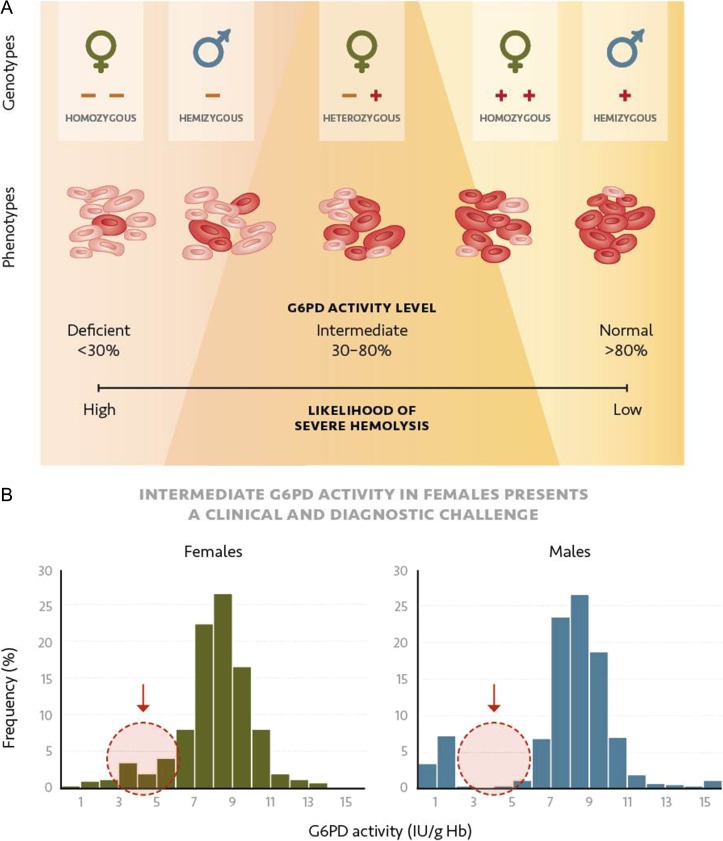
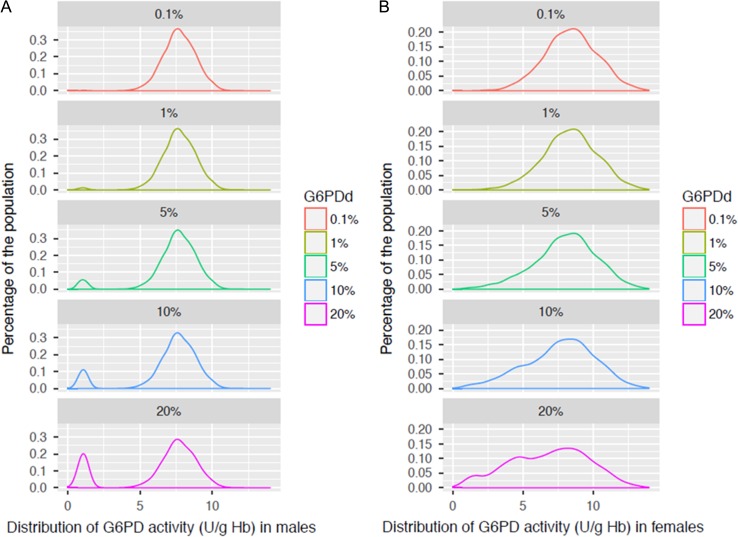
Glucose-6-phosphate dehyrdgoenase (G6PD) deficiency is a common X-linked genetic trait, with an associated enzyme phenotype, whereby males are either G6PD deficient or normal, but females exhibit a broader range of G6PD deficiencies, ranging from severe deficiency to normal. Heterozygous females typically have intermediate G6PD activity. G6PD deficiency has implications for the safe treatment for Plasmodium vivax malaria. Individuals with this deficiency are at greater risk of serious adverse events following treatment with the only curative class of anti-malarials, 8-aminoquinolines, such as primaquine. Quantitative diagnostic tests for G6PD deficiency are complex and require sophisticated laboratories. The commonly used qualitative tests, do not discriminate intermediate G6PD activities. This has resulted in poor understanding of the epidemiology of G6PD activity in females and its corresponding treatment ramifications. New simple-to-use quantitative tests, and a momentum to eliminate malaria, create an opportunity to address this knowledge gap. While this will require additional resources for clinical studies, adequate operational research, and appropriate pharmacovigilance, the health benefits from this investment go beyond the immediate intervention for which the G6PD status is first diagnosed.
Overview
The claims and statistics of this paper haven’t been checked yet.
Free: it reads the open-access text and checks the first 5 claims that cite a source we can check. Create a free account to check every claim.
Integrity signals
Registry
Cites
Statistics
Figures
Verification
Claims the paper makes
The claims and statistics of this paper haven’t been checked yet.
Free: it reads the open-access text and checks the first 5 claims that cite a source we can check. Create a free account to check every claim.
Claims other papers make about this one
Each is checked against this paper’s own text: does it say what the citing paper says it does?
In the citing paper
“The result of our study is in agreement with a previous research article [34], which states that females are more affected by G6PDd.”
From Pooled prevalence of Glucose-6-phosphate dehydrogenase deficiency among malaria patients in Ethiopia: a systematic review and meta-analysis (2026) · cites this paper as [34]
Self-check
Percentages, sums and reported differences re-computed from the paper’s own numbers.
The self-check needs the paper’s full text.
Citations
Cites
Glucose-6-phosphate dehydrogenase deficiency
Cappellini, M., & Fiorelli, G. (2008) · The Lancet · doi:10.1016/s0140-6736(08)60073-2 · Cited by 1,590
How Malaria Has Affected the Human Genome and What Human Genetics Can Teach Us about Malaria
Kwiatkowski, D. P. (2005) · The American Journal of Human Genetics · doi:10.1086/432519 · Cited by 1,104
Beutler, E. (1994) · Blood · doi:10.1182/blood.v84.11.3613.bloodjournal84113613 · Cited by 731
Nkhoma, E. T., Poole, C., Vannappagari, V., Hall, S. A., & Beutler, E. (2009) · Blood Cells, Molecules, and Diseases · doi:10.1016/j.bcmd.2008.12.005 · Cited by 711
Ruwende, C., Khoo, S. C., Snow, R. W., Yates, S. N. R., Kwiatkowski, D., Gupta, S., Warn, P., Allsopp, C. E. M., Gilbert, S. C., Peschu, N., et al. (1995) · Nature · doi:10.1038/376246a0 · Cited by 595
Howes, R. E., Piel, F. B., Patil, A. P., Nyangiri, O. A., Gething, P. W., Dewi, M., Hogg, M. M., Battle, K. E., Padilla, C. D., Baird, J. K., et al. (2012) · PLoS Medicine · doi:10.1371/journal.pmed.1001339 · Cited by 562
Beutler, E., Yeh, M., & Fairbanks, V. F. (1962) · Proceedings of the National Academy of Sciences · doi:10.1073/pnas.48.1.9 · Cited by 503
Glucose-6-Phosphate Dehydrogenase Deficiency
Luzzatto, L., Nannelli, C., & Notaro, R. (2016) · Hematology/Oncology Clinics of North America · doi:10.1016/j.hoc.2015.11.006 · Cited by 400
Robinson, L. J., Wampfler, R., Betuela, I., Karl, S., White, M. T., Li Wai Suen, C. S. N., Hofmann, N. E., Kinboro, B., Waltmann, A., Brewster, J., et al. (2015) · PLOS Medicine · doi:10.1371/journal.pmed.1001891 · Cited by 276
Domingo, G. J., Satyagraha, A. W., Anvikar, A., Baird, K., Bancone, G., Bansil, P., Carter, N., Cheng, Q., Culpepper, J., Eziefula, C., et al. (2013) · Malaria Journal · doi:10.1186/1475-2875-12-391 · Cited by 160
Self-citation
Research works printed but not linked: 35
- Gomez-Manzo S, Marcial-Quino J, Vanoye-Carlo A et al Glucose-6-phosphate dehydrogenase: update and analysis of new mutations around the world. Int J Mol Sci 2016; 17(12). PMC5187869 27941691 · DOI · Paper page
- Bancone G, Kalnoky M, Chu CS et al The G6PD flow-cytometric assay is a reliable tool for diagnosis of G6PD deficiency in women and anaemic subjects. Sci Rep 2017; 7(1): 9822. 28852037 PMC5575121 · DOI
- LaRue N, Kahn M, Murray M et al Comparison of quantitative and qualitative tests for glucose-6-phosphate dehydrogenase deficiency. Am J Trop Med Hyg 2014; 91(4): 854– 61. 25071003 PMC4183416 · DOI · Paper page
- Nantakomol D, Paul R, Palasuwan A et al Evaluation of the phenotypic test and genetic analysis in the detection of glucose-6-phosphate dehydrogenase deficiency. Malar J 2013; 12: 289. 23965028 PMC3765345 · DOI
- Peters AL, Veldthuis M, van Leeuwen K et al Comparison of spectrophotometry, chromate inhibition, and cytofluorometry versus gene sequencing for detection of heterozygously glucose-6-phosphate dehydrogenase-deficient females. J Histochem Cytochem 2017; 65(11): 627– 36. 28902532 PMC5665106 · DOI
- Kalnoky M, Bancone G, Kahn M et al Cytochemical flow analysis of intracellular G6PD and aggregate analysis of mosaic G6PD expression. Eur J Haematol 2017; 100(3): 294– 303. PMC5888147 29240263 · DOI
- Cunningham AD, Hwang S, Mochly-Rosen D Glucose-6-phosphate dehydrogenase deficiency and the need for a novel treatment to prevent kernicterus. Clin Perinatol 2016; 43(2): 341– 54. 27235212 PMC8265784 · DOI
- Kaplan M, Hammerman C Glucose-6-phosphate dehydrogenase deficiency and severe neonatal hyperbilirubinemia: a complexity of interactions between genes and environment. Semin Fetal Neonatal Med 2010; 15(3): 148– 56. 19942489 · DOI
- Olusanya BO, Emokpae AA, Zamora TG et al Addressing the burden of neonatal hyperbilirubinaemia in countries with significant glucose-6-phosphate dehydrogenase deficiency. Acta Paediatr 2014; 103(11): 1102– 9. 24990658 · DOI
- Glucose-6-phosphate dehydrogenase deficiency. WHO Working Group. Bull World Health Organ. 1989; 67(6): 601– 11. 2633878 PMC2491315
- WHO. Standardization of procedures for the study of glucose-6-phosphate dehydrogenase: report of a WHO Scientific Group. WHO Technical Report Series No. 366. Geneva: WHO; 1967. 4963040
- Reclos GJ, Hatzidakis CJ, Schulpis KH Glucose-6-phosphate dehydrogenase deficiency neonatal screening: preliminary evidence that a high percentage of partially deficient female neonates are missed during routine screening. J Med Screen 2000; 7(1): 46– 51. 10807147 · DOI
- Van Noorden CJ, Dolbeare F, Aten J Flow cytofluorometric analysis of enzyme reactions based on quenching of fluorescence by the final reaction product: detection of glucose-6-phosphate dehydrogenase deficiency in human erythrocytes. J Histochem Cytochem 1989; 37(9): 1313– 18. 2768805 · DOI
- Kalnoky M, Bancone G, Kahn M et al Cytochemical flow analysis of intracellular G6PD and aggregate analysis of mosaic G6PD expression. Eur J Haematol 2018; 100(3): 294– 303. 29240263 PMC5888147 · DOI
- Crow JF Hardy, Weinberg and language impediments. Genetics 1999; 152(3): 821– 5. 10388804 PMC1460671 · DOI
- Clarke GM, Rockett K, Kivinen K et al Characterisation of the opposing effects of G6PD deficiency on cerebral malaria and severe malarial anaemia. Elife 2017; 6: 15085. PMC5222559 28067620 · DOI
- Baird K Origins and implications of neglect of G6PD deficiency and primaquine toxicity in Plasmodium vivax malaria. Pathog Glob Health 2015; 109(3): 93– 106. 25943156 PMC4455359 · DOI
- Luzzatto L The rise and fall of the antimalarial Lapdap: a lesson in pharmacogenetics. Lancet 2010; 376(9742): 739– 41. 20599264 · DOI
- Douglas NM, Lampah DA, Kenangalem E et al Major burden of severe anemia from non-falciparum malaria species in Southern Papua: a hospital-based surveillance study. PLoS Med 2013; 10(12): e1001575. 24358031 PMC3866090 · DOI · Paper page
- Kenangalem E, Karyana M, Burdarm L et al Plasmodium vivax infection: a major determinant of severe anaemia in infancy. Malar J 2016; 15: 321. 27306221 PMC4910236 · DOI
- Luxemburger C, van Vugt M, Jonathan S et al Treatment of vivax malaria on the western border of Thailand. Trans R Soc Trop Med Hyg 1999; 93(4): 433– 8. 10674098 · DOI
- Llanos-Cuentas A, Lacerda MV, Rueangweerayut R et al Tafenoquine plus chloroquine for the treatment and relapse prevention of Plasmodium vivax malaria (DETECTIVE): a multicentre, double-blind, randomised, phase 2b dose-selection study. Lancet 2014; 383(9922): 1049– 58. 24360369 · DOI · Paper page
- Lubell Y, White L, Varadan S et al Ethics, economics, and the use of primaquine to reduce falciparum malaria transmission in asymptomatic populations. PLoS Med 2014; 11(8): e1001704. 25137246 PMC4137981 · DOI
- Malaria Policy Advisory Committee to the WHO: conclusions and recommendations of eighth biannual meeting (September 2015). Malar J 2016; 15(1): 117. 26911803 PMC4766637 · DOI · Paper page
- Rueangweerayut R, Bancone G, Harrell EJ et al Hemolytic potential of tafenoquine in female volunteers heterozygous for glucose-6-phosphate dehydrogenase (G6PD) deficiency (G6PD mahidol variant) versus G6PD-normal volunteers. Am J Trop Med Hyg 2017; 97(3): 702– 11. 28749773 PMC5590573 · DOI · Paper page
- Chu CS, Bancone G, Nosten F et al Primaquine-induced haemolysis in females heterozygous for G6PD deficiency. Malar J 2018; 17(1): 101. 29499733 PMC5833093 · DOI · Paper page
- Wang FL, Boo NY, Ainoon O et al Comparison of detection of glucose-6-phosphate dehydrogenase deficiency using fluorescent spot test, enzyme assay and molecular method for prediction of severe neonatal hyperbilirubinaemia. Singapore Med J 2009; 50(1): 62– 7. 19224086
- Kaplan M, Beutler E, Vreman HJ et al Neonatal hyperbilirubinemia in glucose-6-phosphate dehydrogenase-deficient heterozygotes. Pediatrics 1999; 104(1 Pt 1): 68– 74. 10390262 · DOI
- Kaplan M, Hammerman C, Vreman HJ et al Acute hemolysis and severe neonatal hyperbilirubinemia in glucose-6-phosphate dehydrogenase-deficient heterozygotes. J Pediatr 2001; 139(1): 137– 40. 11445808 · DOI
- Meloni T, Forteleoni G, Dore A et al Neonatal hyperbilirubinaemia in heterozygous glucose-6-phosphate dehydrogenase deficient females. Br J Haematol 1983; 53(2): 241– 6. 6821654 · DOI
- Riskin A, Gery N, Kugelman A et al Glucose-6-phosphate dehydrogenase deficiency and borderline deficiency: association with neonatal hyperbilirubinemia. J Pediatr 2012; 161(2): 191– 6.e1. 22459229 · DOI
- Fu C, Luo S, Li Q et al Newborn screening of glucose-6-phosphate dehydrogenase deficiency in Guangxi, China: determination of optimal cutoff value to identify heterozygous female neonates. Sci Rep 2018; 8(1): 833. 29339739 PMC5770456 · DOI
- Kitchakarn S, Lek D, Thol S et al Implementation of G6PD testing and primaquine for P. vivax radical cure: operational perspectives from Thailand and Cambodia. WHO South East Asia J Publ Health 2017; 6(2): 60– 8. 28857064 · DOI
- Ong KIC, Kosugi H, Thoeun S et al Systematic review of the clinical manifestations of glucose-6-phosphate dehydrogenase deficiency in the Greater Mekong Subregion: implications for malaria elimination and beyond. BMJ Glob Health 2017; 2(3): e000415. PMC5656182 29082022 · DOI
- Bancone G, Chu CS, Chowwiwat N et al Suitability of capillary blood for quantitative assessment of G6PD activity and performances of G6PD point-of-care tests. Am J Trop Med Hyg 2015; 92(4): 818– 24. 25646252 PMC4385780 · DOI · Paper page
Cited by
Dessie, G., Getnet, M., Getahun, A. B., Mengstie, T. A., Asefa, T., Enyew, E. F., Yewodiaw, T. K., Endale, H. T., & Endalew, H. L. (2026) · Malaria Journal · doi:10.1186/s12936-026-05800-8
Metadata
- Authors
- Domingo, G. J., Advani, N., Satyagraha, A. W., Sibley, C. H., Rowley, E., Kalnoky, M., Cohen, J., Parker, M., & Kelley, M.
- Venue
- International Health
- Publisher
- Oxford University Press (OUP)
- Published
- 2018-09-03
- Volume
- 11
- Issue
- 1
- Pages
- 7-14
- ISSN
- 1876-3413
- 1876-3405
- PMC
- PMC6314154
- Semantic Scholar
- 9fad3bbd566001f9896dba32a3853669609f5b7c
- Cited by
- 67
- References
- 11
- Language
- en
- Funders
- UK Department for International Development (204139)
- Bill & Melinda Gates Foundation (OPP1107113)
- Wellcome Trust (096527)
- Wellcome Trust and MRC Newton Fund Collaborative (200344)
About these checks
Registry, retraction, Cites and statistics results are computed, not judged, with one exception: a printed reference that no index lists is read once by a model before it counts as a citation error. Claims are extracted by a model and kept only when their quote appears verbatim in the text; each cited source is then checked, with a model’s help, for whether it says what the claim relies on. Those verdicts can be wrong — read the claim’s quote and the cited source before relying on one.
Statistics and arithmetic are recomputed, not judged.
Confidence bands are shown only for fields calibrated on our annotated test set. None is calibrated yet, so no band is shown.
What counts as a claim ›How we measure confidence ›How we check this ›
Are you an author, or do you see a problem with this page? Request a review
Data sources
Bibliographic data: Semantic Scholar, OpenAlex, Crossref.
Contains information from the Semantic Scholar Academic Graph Datasets, made available under the ODC Attribution License (ODC-BY 1.0).
Semantic Scholar’s data is described in: Kinney, R., et al. (2023). The Semantic Scholar Open Data Platform. arXiv:2301.10140.
