

The DOI matches its Crossref record; 6 of the 6 references it cites were found in a registry or an index.
Towards an International Classification for Patient Safety: the conceptual framework
Open accessAbstract
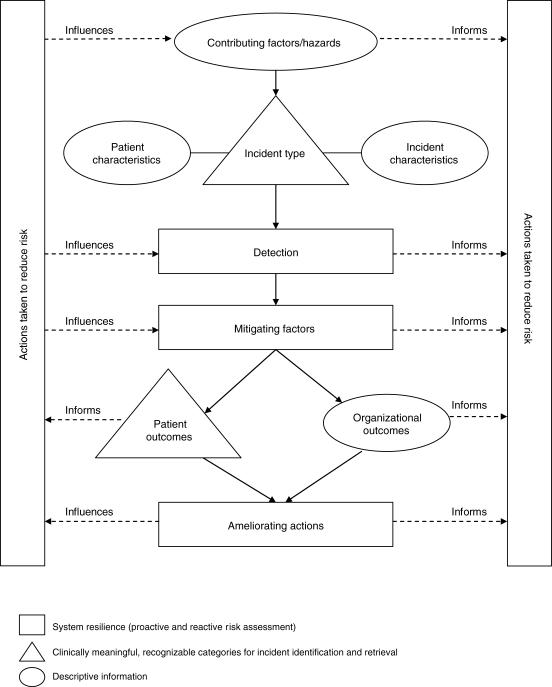
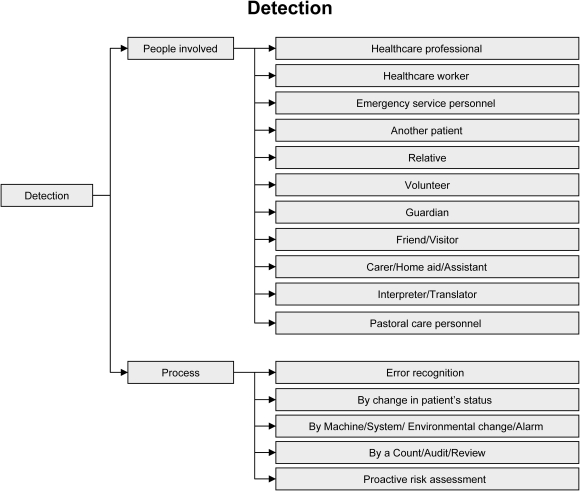
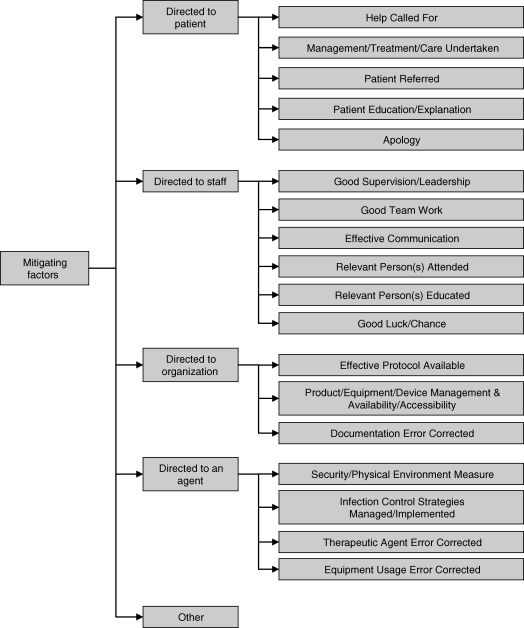
Global advances in patient safety have been hampered by the lack of a uniform classification of patient safety concepts. This is a significant barrier to developing strategies to reduce risk, performing evidence-based research and evaluating existing healthcare policies relevant to patient safety. Since 2005, the World Health Organization's World Alliance for Patient Safety has undertaken the Project to Develop an International Classification for Patient Safety (ICPS) to devise a classification which transforms patient safety information collected from disparate systems into a common format to facilitate aggregation, analysis and learning across disciplines, borders and time. A drafting group, comprised of experts from the fields of patient safety, classification theory, health informatics, consumer/patient advocacy, law and medicine, identified and defined key patient safety concepts and developed an internationally agreed conceptual framework for the ICPS based upon existing patient safety classifications. The conceptual framework was iteratively improved through technical expert meetings and a two-stage web-based modified Delphi survey of over 250 international experts. This work culminated in a conceptual framework consisting of ten high level classes: incident type, patient outcomes, patient characteristics, incident characteristics, contributing factors/hazards, organizational outcomes, detection, mitigating factors, ameliorating actions and actions taken to reduce risk. While the framework for the ICPS is in place, several challenges remain. Concepts need to be defined, guidance for using the classification needs to be provided, and further real-world testing needs to occur to progressively refine the ICPS to ensure it is fit for purpose.
Overview
The claims and statistics of this paper haven’t been checked yet.
Run the check — free, no account needed. It reads the open-access text and checks the sources it cites.
Integrity signals
Registry
Cites
Statistics
Figures
Verification
Claims the paper makes
The claims and statistics of this paper haven’t been checked yet.
Run the check — free, no account needed. It reads the open-access text and checks the sources it cites.
Claims other papers make about this one
Each is checked against this paper’s own text: does it say what the citing paper says it does?
In the citing paper
“The framework is based upon existing classifications such as AIMS, with additional input from international experts in safety, systems engineering, health policy, medicine, and the law.5 28 29”
From An analysis of computer-related patient safety incidents to inform the development of a classification (2010) · cites this paper as [28]
Self-check
Percentages, sums and reported differences re-computed from the paper’s own numbers.
The self-check needs the paper’s full text.
Citations
Cites
(1986) · North-Holland eBooks · Cited by 1,883
Towards an International Classification for Patient Safety: key concepts and terms
Runciman, W., Hibbert, P., Thomson, R., Van Der Schaaf, T., Sherman, H., & Lewalle, P. (2009) · International Journal for Quality in Health Care · doi:10.1093/intqhc/mzn057 · Cited by 647
Self-citationChang, A. (2005) · International Journal for Quality in Health Care · doi:10.1093/intqhc/mzi021 · Cited by 392
Runciman, W. B., Williamson, J. A. H., Deakin, A., Benveniste, K. A., Bannon, K., & Hibbert, P. D. (2006) · Quality in Health Care · doi:10.1136/qshc.2005.017467 · Cited by 156
Self-citationTowards an International Classification for Patient Safety: a Delphi survey
Thomson, R., Lewalle, P., Sherman, H., Hibbert, P., Runciman, W., & Castro, G. (2009) · International Journal for Quality in Health Care · doi:10.1093/intqhc/mzn055 · Cited by 87
Self-citationPerneger, T. (2006) · International Journal for Quality in Health Care · doi:10.1093/intqhc/mzl008 · Cited by 5
Self-citation
Research works printed but not linked: 1
- 2006, International Journal for Quality in Health Care, 28, 264
Cited by
Sorted by citations
Panagioti, M., Khan, K., Keers, R. N., Abuzour, A., Phipps, D., Kontopantelis, E., Bower, P., Campbell, S., Haneef, R., Avery, A. J., et al. (2019) · BMJ · doi:10.1136/bmj.l4185 · Cited by 874
Towards an International Classification for Patient Safety: key concepts and terms
Runciman, W., Hibbert, P., Thomson, R., Van Der Schaaf, T., Sherman, H., & Lewalle, P. (2009) · International Journal for Quality in Health Care · doi:10.1093/intqhc/mzn057 · Cited by 647
Self-citationPatient complaints in healthcare systems: a systematic review and coding taxonomy
Reader, T. W., Gillespie, A., & Roberts, J. (2014) · BMJ Quality & Safety · doi:10.1136/bmjqs-2013-002437 · Cited by 446
“95 For example, systematic frameworks have been developed to standardise the identification and analysis of contributory factors leading to adverse events.”
BackgroundRhodes, A., Moreno, R. P., Azoulay, É., Capuzzo, M., Chiche, J., Eddleston, J. M., Endacott, R., Ferdinande, P., Flaatten, H. K., Guidet, B., et al. (2012) · Intensive Care Medicine · doi:10.1007/s00134-011-2462-3 · Cited by 291
The safety of health care for ethnic minority patients: a systematic review
Chauhan, A., Walton, M., Manias, E., Walpola, R. L., Seale, H., Latanik, M., Leone, D., Mears, S. R., & Harrison, R. (2020) · International Journal for Equity in Health · doi:10.1186/s12939-020-01223-2 · Cited by 271
Metadata
- Authors
- The World Alliance For Patient Safety Drafting Group, Sherman, H., Castro, G., Fletcher, M., on behalf of The World Alliance for Patient Safety, Hatlie, M., Hibbert, P., Jakob, R., Koss, R., Lewalle, P., Loeb, J., Perneger, T., Runciman, W., Thomson, R., Van Der Schaaf, T., & Virtanen, M.
- Affiliations
- Joint Commission (US)
- National Patient Safety Agency (GB)
- World Health Organization (CH)
- Royal Adelaide Hospital (AU)
- University Hospital of Geneva (CH)
- Newcastle University (GB)
- Corresponding author
- Sherman, H.
- Venue
- International Journal for Quality in Health Care
- Publisher
- Oxford University Press (OUP)
- Published
- 2009-02-01
- Volume
- 21
- Issue
- 1
- Pages
- 2-8
- ISSN
- 1353-4505 (ISSN-L)
- 1464-3677
- PMC
- PMC2638753
- OpenAlex
- W2138968928
- Cited by
- 281
- References
- 6
- Citations by year
- 2026: 17 · 2025: 14 · 2024: 22 · 2023: 14 · 2022: 26 · 2021: 19 · 2020: 13 · 2019: 12 · 2018: 14 · 2017: 13 · 2016: 23 · 2015: 17 · 2014: 22 · 2013: 17 · 2012: 7
- FWCI
- 17.13
- Type
- journal article
- Language
- en
- Open access
- bronze
- doi.org
- Locations
- International Journal for Quality in Health Care (publishedVersion)
- PubMed Central (publishedVersion)
- PubMed (publishedVersion)
- TU/e Research Portal (publishedVersion, other-oa)
- reroDoc Digital Library (submittedVersion)
- UniSA Research Outputs Repository (University of South Australia) (submittedVersion, cc-by-nc)
- TU/e Research Portal (submittedVersion)
- Adelaide Research & Scholarship (AR&S) (University of Adelaide) (submittedVersion, cc-by-nc)
- Document Server@UHasselt (UHasselt) (submittedVersion)
- Archive ouverte UNIGE (University of Geneva) (submittedVersion)
- Archive ouverte UNIGE (University of Geneva) (submittedVersion, cc-by)
- TU/e Research Portal (submittedVersion, other-oa)
- Newcastle University ePrints (Newcastle Univesity)
- Funders
- World Health Organization
- Topics
- Health Sciences › Medicine › Public Health, Environmental and Occupational Health › Patient Safety and Medication Errors
- Health Sciences › Health Professions › Health Information Management › Medical Coding and Health Information
- Health Sciences › Medicine › Public Health, Environmental and Occupational Health › Healthcare Quality and Management
- Keywords
- patient safety, conceptual framework, incident classification, patient outcomes, contributing factors, risk mitigation, World Alliance for Patient Safety, Delphi method, health informatics
- MeSH terms
- Concept Formation, International Cooperation, Safety Management, Medical Errors
About these checks
Registry, retraction, Cites and statistics results are computed, not judged, with one exception: a printed reference that no index lists is read once by a model before it counts as a citation error. Claims are extracted by a model and kept only when their quote appears verbatim in the text; each cited source is then checked, with a model’s help, for whether it says what the claim relies on. Those verdicts can be wrong — read the claim’s quote and the cited source before relying on one.
Statistics and arithmetic are recomputed, not judged.
Confidence bands are shown only for fields calibrated on our annotated test set. None is calibrated yet, so no band is shown.
What counts as a claim ›How we measure confidence ›How we check this ›
Are you an author, or do you see a problem with this page? Request a review
