

Automatic detection of hand hygiene using computer vision technology
Open accessThe DOI matches its Crossref record; 17 of the 17 references it cites were found in a registry or an index.
Abstract
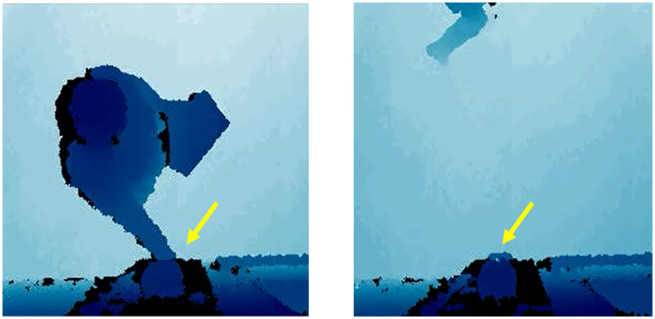
Objective: Hand hygiene is essential for preventing hospital-acquired infections but is difficult to accurately track. The gold-standard (human auditors) is insufficient for assessing true overall compliance. Computer vision technology has the ability to perform more accurate appraisals. Our primary objective was to evaluate if a computer vision algorithm could accurately observe hand hygiene dispenser use in images captured by depth sensors. Materials and Methods: Sixteen depth sensors were installed on one hospital unit. Images were collected continuously from March to August 2017. Utilizing a convolutional neural network, a machine learning algorithm was trained to detect hand hygiene dispenser use in the images. The algorithm’s accuracy was then compared with simultaneous in-person observations of hand hygiene dispenser usage. Concordance rate between human observation and algorithm’s assessment was calculated. Ground truth was established by blinded annotation of the entire image set. Sensitivity and specificity were calculated for both human and machine-level observation. Results: A concordance rate of 96.8% was observed between human and algorithm (kappa = 0.85). Concordance among the 3 independent auditors to establish ground truth was 95.4% (Fleiss’s kappa = 0.87). Sensitivity and specificity of the machine learning algorithm were 92.1% and 98.3%, respectively. Human observations showed sensitivity and specificity of 85.2% and 99.4%, respectively. Conclusions: A computer vision algorithm was equivalent to human observation in detecting hand hygiene dispenser use. Computer vision monitoring has the potential to provide a more complete appraisal of hand hygiene activity in hospitals than the current gold-standard given its ability for continuous coverage of a unit in space and time.
Overview
The claims and statistics of this paper haven’t been checked yet.
Free: it reads the open-access text and checks the first 5 claims that cite a source we can check. Create a free account to check every claim.
Integrity signals
Registry
Cites
Statistics
Figures

Verification
Claims the paper makes
The claims and statistics of this paper haven’t been checked yet.
Free: it reads the open-access text and checks the first 5 claims that cite a source we can check. Create a free account to check every claim.
Claims other papers make about this one
Each is checked against this paper’s own text: does it say what the citing paper says it does?
In the citing paper
“Applications like activity recognition 30 and live scene understanding 31 are useful in detecting and responding to important or adverse clinical events 32 .”
From Deep learning-enabled medical computer vision (2021) · cites this paper as [32]
In the citing paper
“In hospitals, for example, early works have demonstrated CV-based ambient intelligence in intensive care units to monitor for safety-critical behaviors such as hand hygiene activity 32 and patient mobilization 8,129,130 .”
From Deep learning-enabled medical computer vision (2021) · cites this paper as [32]
Self-check
Percentages, sums and reported differences re-computed from the paper’s own numbers.
The self-check needs the paper’s full text.
Citations
Cites
LeCun, Y., Bengio, Y., & Hinton, G. (2015) · Nature · doi:10.1038/nature14539 · Cited by 84,126
Densely Connected Convolutional Networks
Huang, G., Liu, Z., Van Der Maaten, L., & Weinberger, K. Q. (2017) · 2017 IEEE Conference on Computer Vision and Pattern Recognition (CVPR) · doi:10.1109/cvpr.2017.243 · Cited by 48,566
Statistical Methods for Rates and Proportions
Fleiss, J. L., Levin, B., & Paik, M. C. (2003) · Wiley Series in Probability and Statistics · doi:10.1002/0471445428 · Cited by 18,646
Gulshan, V., Peng, L., Coram, M., Stumpe, M. C., Wu, D., Narayanaswamy, A., Venugopalan, S., Widner, K., Madams, T., Cuadros, J., et al. (2016) · JAMA · doi:10.1001/jama.2016.17216 · Cited by 7,697
A guide to deep learning in healthcare
Esteva, A., Robicquet, A., Ramsundar, B., Kuleshov, V., DePristo, M., Chou, K., Cui, C., Corrado, G., Thrun, S., & Dean, J. (2019) · Nature Medicine · doi:10.1038/s41591-018-0316-z · Cited by 5,312
Ehteshami Bejnordi, B., Veta, M., Johannes van Diest, P., van Ginneken, B., Karssemeijer, N., Litjens, G., van der Laak, J. A. W. M., and the CAMELYON16 Consortium, Hermsen, M., Manson, Q. F., et al. (2017) · JAMA · doi:10.1001/jama.2017.14585 · Cited by 3,293
Erratum: Corrigendum: Dermatologist-level classification of skin cancer with deep neural networks
Esteva, A., Kuprel, B., Novoa, R. A., Ko, J., Swetter, S. M., Blau, H. M., & Thrun, S. (2017) · Nature · doi:10.1038/nature22985 · Cited by 213
Armellino, D., Hussain, E., Schilling, M. E., Senicola, W., Eichorn, A., Dlugacz, Y., & Farber, B. F. (2012) · Clinical Infectious Diseases · doi:10.1093/cid/cir773 · Cited by 184
Learning Spatio-Temporal Structure from RGB-D Videos for Human Activity Detection and Anticipation
Koppula, H. S., & Saxena, A. (2013) · International Conference on Machine Learning · Cited by 169
Yeung, S., Rinaldo, F., Jopling, J., Liu, B., Mehra, R., Downing, N. L., Guo, M., Bianconi, G. M., Alahi, A., Lee, J., et al. (2019) · npj Digital Medicine · doi:10.1038/s41746-019-0087-z · Cited by 125 · cited 1×
“).(17,22) This step involved human labeling and observation, which was separate from the concordance exercise noted previously.”
ResultSelf-citation
Research works printed but not linked: 1
- 2009, WHO Guidelines on Hand Hygiene in Health Care: First Global Patient Safety Challenge: Clean Care is Safer Care
Cited by
Deep learning-enabled medical computer vision
Esteva, A., Chou, K., Yeung, S., Naik, N., Madani, A., Mottaghi, A., Liu, Y., Topol, E., Dean, J., & Socher, R. (2021) · npj Digital Medicine · doi:10.1038/s41746-020-00376-2 · Cited by 1,406
Self-citationIlluminating the dark spaces of healthcare with ambient intelligence
Haque, A., Milstein, A., & Fei-Fei, L. (2020) · Nature · doi:10.1038/s41586-020-2669-y · Cited by 274
“In a pioneering study, researchers installed depth sensors above wall-mounted dispensers across an entire hospital unit 37,38 .”
BackgroundSelf-citationChaparro, J. D., Beus, J. M., Dziorny, A. C., Hagedorn, P. A., Hernandez, S., Kandaswamy, S., Kirkendall, E. S., McCoy, A. B., Muthu, N., & Orenstein, E. W. (2022) · Applied Clinical Informatics · doi:10.1055/s-0042-1748856 · Cited by 76
Lindroth, H. L., Nalaie, K., Raghu, R., Ayala, I. N., Busch, C., Bhattacharyya, A., Franco, P. M., Diedrich, D. A., Pickering, B. W., & Herasevich, V. (2024) · Journal of Imaging · doi:10.3390/jimaging10040081 · Cited by 87
Baddal, B., Taner, F., & Ozsahin, D. U. (2024) · Diagnostics · doi:10.3390/diagnostics14050484 · Cited by 67
Metadata
- Authors
- Singh, A., Haque, A., Alahi, A., Yeung, S., Guo, M., Glassman, J. R., Beninati, W., Platchek, T., Fei-Fei, L., & Milstein, A.
- Affiliations
- Stanford Medicine (US)
- Stanford University (US)
- École Polytechnique Fédérale de Lausanne (CH)
- Intermountain Healthcare (US)
- Corresponding author
- Singh, Amit
- ORCID
- Venue
- Journal of the American Medical Informatics Association
- Publisher
- Oxford University Press (OUP)
- Published
- 2020-07-26
- Volume
- 27
- Issue
- 8
- Pages
- 1316-1320
- ISSN
- 1067-5027 (ISSN-L)
- 1527-974X
- PMC
- PMC7481030
- OpenAlex
- W3044915203
- Cited by
- 61
- References
- 16
- Citations by year
- 2026: 9 · 2025: 16 · 2024: 8 · 2023: 8 · 2022: 13 · 2021: 5 · 2020: 2
- FWCI
- 0.92
- Type
- journal article
- Language
- en
- Open access
- hybrid
- doi.org
- Licence
- Locations
- Journal of the American Medical Informatics Association (publishedVersion, cc-by-nc)
- PubMed Central (publishedVersion, cc-by-nc)
- PubMed (publishedVersion)
- Infoscience (Ecole Polytechnique Fédérale de Lausanne) (submittedVersion, cc-by-nc-nd)
- Topics
- Health Sciences › Medicine › Infectious Diseases › Infection Control in Healthcare
- Physical Sciences › Computer Science › Human-Computer Interaction › Hand Gesture Recognition Systems
- Physical Sciences › Computer Science › Computer Vision and Pattern Recognition › Advanced Neural Network Applications
- Keywords
- hand hygiene, hand hygiene compliance, computer vision, convolutional neural networks, depth sensors, nosocomial infections, human observation, automated monitoring, sensitivity and specificity
- MeSH terms
- Machine Learning, Algorithms, California, Cross Infection, Hospitals, Pediatric, Humans, Image Processing, Computer-Assisted, Personnel, Hospital, Video Recording, Neural Networks, Computer, Infection Control, Hand Hygiene
About these checks
Registry, retraction, Cites and statistics results are computed, not judged, with one exception: a printed reference that no index lists is read once by a model before it counts as a citation error. Claims are extracted by a model and kept only when their quote appears verbatim in the text; each cited source is then checked, with a model’s help, for whether it says what the claim relies on. Those verdicts can be wrong — read the claim’s quote and the cited source before relying on one.
Statistics and arithmetic are recomputed, not judged.
Confidence bands are shown only for fields calibrated on our annotated test set. None is calibrated yet, so no band is shown.
What counts as a claim ›How we measure confidence ›How we check this ›
Are you an author, or do you see a problem with this page? Request a review
How to cite
Cite CoChat for the checks on this page, and the paper for its own findings.
- This page
- CoChat. (2026). Citation check: Automatic detection of hand hygiene using computer vision technology. https://app.cochat.ai/papers/10.1093/jamia/ocaa115
- The paper
- Singh, A., Haque, A., Alahi, A., Yeung, S., Guo, M., Glassman, J. R., Beninati, W., Platchek, T., Fei-Fei, L., & Milstein, A. (2020). Automatic detection of hand hygiene using computer vision technology. Journal of the American Medical Informatics Association. https://doi.org/10.1093/jamia/ocaa115
Data sources
Bibliographic data: Semantic Scholar, OpenAlex, Crossref.
Contains information from the Semantic Scholar Academic Graph Datasets, made available under the ODC Attribution License (ODC-BY 1.0).
Semantic Scholar’s data is described in: Kinney, R., et al. (2023). The Semantic Scholar Open Data Platform. arXiv:2301.10140.
