

Mitochondrial replacement techniques and Mexico's rule of law: on the legality of the first maternal spindle transfer case
Open accessThe DOI matches its Crossref record; 17 of the 17 references it cites were found in a registry or an index.
Abstract
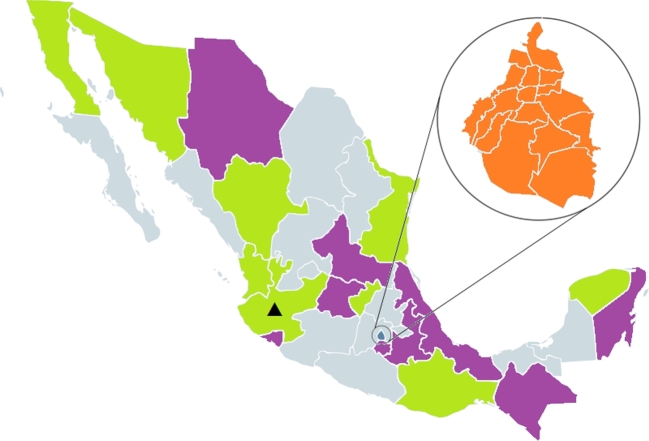
News about the first baby born after a mitochondrial replacement technique (MRT; specifically maternal spindle transfer) broke on September 27, 2016 and, in a matter of hours, went global. Of special interest was the fact that the mitochondrial replacement procedure happened in Mexico. One of the scientists behind this world first was quoted as having said that he and his team went to Mexico to carry out the procedure because, in Mexico, there are no rules. In this paper, we explore Mexico's rule of law in relation to mitochondrial replacement techniques and show that, in fact, certain instances of MRTs are prohibited at the federal level and others are prohibited at the state level. According to our interpretation of the law, the scientists behind this first successful MRT procedure broke federal regulations regarding assisted fertilization research.
Overview
The claims and statistics of this paper haven’t been checked yet.
Free: it reads the open-access text and checks the first 5 claims that cite a source we can check. Create a free account to check every claim.
Integrity signals
Registry
Cites
Statistics
Figures
Verification
Claims the paper makes
The claims and statistics of this paper haven’t been checked yet.
Free: it reads the open-access text and checks the first 5 claims that cite a source we can check. Create a free account to check every claim.
Claims other papers make about this one
Each is checked against this paper’s own text: does it say what the citing paper says it does?
The source backs part of the claim, not all of it — or backs it for a different population, condition or comparison.
In the citing paper
“Patterns of transnational exploitation have been observed with the marketing of recent biotechnologies such as unproven ''stem cell therapies'' 58,59 and human nuclear genome transfer.60,61”
From Human Germline and Heritable Genome Editing: The Global Policy Landscape (2020) · cites this paper as [61]
Experimental — accuracy not yet measured
Self-check
Percentages, sums and reported differences re-computed from the paper’s own numbers.
The self-check needs the paper’s full text.
Citations
Cites
Mitochondrial gene replacement in primate offspring and embryonic stem cells
Tachibana, M., Sparman, M., Sritanaudomchai, H., Ma, H., Clepper, L., Woodward, J., Li, Y., Ramsey, C., Kolotushkina, O., & Mitalipov, S. (2009) · Nature · doi:10.1038/nature08368 · Cited by 573
Pronuclear transfer in human embryos to prevent transmission of mitochondrial DNA disease
Craven, L., Tuppen, H. A., Greggains, G. D., Harbottle, S. J., Murphy, J. L., Cree, L. M., Murdoch, A. P., Chinnery, P. F., Taylor, R. W., Lightowlers, R. N., et al. (2010) · Nature · doi:10.1038/nature08958 · Cited by 480
Towards clinical application of pronuclear transfer to prevent mitochondrial DNA disease
Hyslop, L. A., Blakeley, P., Craven, L., Richardson, J., Fogarty, N. M. E., Fragouli, E., Lamb, M., Wamaitha, S. E., Prathalingam, N., Zhang, Q., et al. (2016) · Nature · doi:10.1038/nature18303 · Cited by 343
Mitochondrial replacement in human oocytes carrying pathogenic mitochondrial DNA mutations
Kang, E., Wu, J., Gutierrez, N. M., Koski, A., Tippner-Hedges, R., Agaronyan, K., Platero-Luengo, A., Martinez-Redondo, P., Ma, H., Lee, Y., et al. (2016) · Nature · doi:10.1038/nature20592 · Cited by 326
Genetic Drift Can Compromise Mitochondrial Replacement by Nuclear Transfer in Human Oocytes
Yamada, M., Emmanuele, V., Sanchez-Quintero, M. J., Sun, B., Lallos, G., Paull, D., Zimmer, M., Pagett, S., Prosser, R. W., Sauer, M. V., et al. (2016) · Cell Stem Cell · doi:10.1016/j.stem.2016.04.001 · Cited by 191
Human Nuclear Genome Transfer (So‐Called Mitochondrial Replacement): Clearing the Underbrush
Baylis, F. E. (2016) · Bioethics · doi:10.1111/bioe.12309 · Cited by 79
Ishii, T. (2014) · Reproductive BioMedicine Online · doi:10.1016/j.rbmo.2014.04.001 · Cited by 73
What Is the Value of Three‐Parent IVF?
Rulli, T. (2016) · The Hastings Center Report · doi:10.1002/hast.594 · Cited by 67
Transatlantic lessons in regulation of mitochondrial replacement therapy
Cohen, I. G., Savulescu, J., & Adashi, E. Y. (2015) · Science · doi:10.1126/science.aaa8153 · Cited by 52
Haimes, E., & Taylor, K. (2015) · Bioethics News · doi:10.1007/s40592-015-0046-7 · Cited by 49
Cited by
Human Germline and Heritable Genome Editing: The Global Policy Landscape
Baylis, F., Darnovsky, M., Hasson, K., & Krahn, T. M. (2020) · The CRISPR Journal · doi:10.1089/crispr.2020.0082 · Cited by 155
Assisted reproductive technologies to prevent human mitochondrial disease transmission
Greenfield, A., Braude, P., Flinter, F. A., Lovell-Badge, R. H., Ogilvie, C. M., & Perry, A. C. F. (2017) · Nature Biotechnology · doi:10.1038/nbt.3997 · Cited by 125
Ginoza, M., & Isasi, R. M. (2019) · Cold Spring Harbor Perspectives in Medicine · doi:10.1101/cshperspect.a036681 · Cited by 82
The Regulation of Mitochondrial Replacement Techniques Around the World
Cohen, I. G., Adashi, E. Y., Gerke, S., Palacios‐González, C., & Ravitsky, V. (2020) · Annual Review of Genomics and Human Genetics · doi:10.1146/annurev-genom-111119-101815 · Cited by 77
“F or p er so na l u se o nl y. National Committee for Human Medical Research, which must grant special approval for all medical research involving genetics or ARTs in humans.”
BackgroundSelf-citationHow and Why to Replace the 14-Day Rule
Chan, S. (2018) · Current Stem Cell Reports · doi:10.1007/s40778-018-0135-7 · Cited by 50
Ethical development of stem-cell-based interventions
MacPherson, A., & Kimmelman, J. (2019) · Nature Medicine · doi:10.1038/s41591-019-0511-6 · Cited by 51
Mitochondria: emerging therapeutic strategies for oocyte rescue
Jiang, Z., & Shen, H. (2021) · Reproductive Sciences · doi:10.1007/s43032-021-00523-4 · Cited by 50
Mitochondrial manipulation in fertility clinics: Regulation and responsibility
Ishii, T., & Hibino, Y. (2018) · Reproductive Biomedicine & Society Online · doi:10.1016/j.rbms.2018.01.002 · Cited by 46
“However, this judgement can be rebutted becausewomenwith anmtDNAmutation responsible for Leigh syndrome have undergone ‘sterility problems’ of being unable to conceive as well as carry pregnancy to full term (Ishii, 2017b).”
BackgroundInfluentialThe division of advisory labour: the case of ‘mitochondrial donation’
Lewens, T. (2018) · European Journal for Philosophy of Science · doi:10.1007/s13194-018-0235-3 · Cited by 43
The ethics of creating genetically modified children using genome editing
Ishii, T. (2017) · Current Opinion in Endocrinology Diabetes and Obesity · doi:10.1097/med.0000000000000369 · Cited by 32
Legal Issues Regarding Gene Editing at the Beginning of Life: An EU Perspective
Beriaín, Í. D. M. (2017) · Regenerative Medicine · doi:10.2217/rme-2017-0033 · Cited by 31
“For instance, the first three-parent baby, born in 2016 in the USA after an MRT practised in Mexico [2,3], was able to avoid Leigh syndrome, a fatal disorder that affects the developing nervous system that was present in her mother’s mitochondrial DNA, thanks to the use of this technology [4].”
BackgroundGonzález‐Santos, S. P., Stephens, N., & Dimond, R. (2018) · Science Communication · doi:10.1177/1075547018772312 · Cited by 29
“(Dr. Dusko Ilic, quoted in The Sun, UK) The press uncritically reproduced this narrative, failing to reflect on the existing legal framework regarding reproduction and experimentation on human subjects in Mexico (Palacios-González & Medina-Arellano, 2017).”
BackgroundThinking the unthinkable: how did human germline genome editing become ethically acceptable?
Martin, P. A., & Turkmendag, I. (2021) · New Genetics and Society · doi:10.1080/14699915.2021.1932451 · Cited by 25
“The first child to be born using MRT was in 2016.”
MethodInfluentialLópez, A., Betancourt, M., Casas, E., Retana‐Márquez, S., Juárez‐Rojas, L., & Casillas, F. (2021) · Reproductive Health · doi:10.1186/s12978-021-01293-7 · Cited by 21
“Costa Rica is the only country in the world in which IVF was concretely prohibited, through an appeal of unconstitutionality appeal against Executive Decree (24029-S), resolved in 2000, in which the right to life was challenged, due to the argumentation which considers embryos as human beings [18, 27].”
BackgroundInfluentialMitochondrial Replacement Therapy: In Whose Interests?
Noohi, F., Ravitsky, V., Knoppers, B. M., & Joly, Y. (2022) · The Journal of Law Medicine & Ethics · doi:10.1017/jme.2022.98 · Cited by 21
Mitochondrial Replacement Techniques, Scientific Tourism, and the Global Politics of Science
Chan, S., Palacios‐González, C., & Arellano, M. D. J. M. (2017) · The Hastings Center Report · doi:10.1002/hast.763 · Cited by 21
“”(14) In fact, Mexico has rules regarding both research oversight and assisted reproduction; indeed, Zhang’s team may have violated Mexican federal regulations on medical research.(15) Focusing solely on Mexico’s apparent failure to conform to the stan-”
BackgroundSelf-citationMitochondrial Replacement Techniques: Remaining Ethical Challenges
Bredenoord, A. L., & Appleby, J. (2017) · Cell stem cell · doi:10.1016/j.stem.2017.08.009 · Cited by 19
Public attitudes towards novel reproductive technologies: a citizens’ jury on mitochondrial donation
Newson, A. J., de Lacey, S. L., Dowling, D. K., Murray, S., Sue, C. M., Thorburn, D. R., Gillam, L. H., & Degeling, C. (2019) · Human Reproduction · doi:10.1093/humrep/dez021 · Cited by 17
Cohen, I. G. (2018) · Indiana Journal of Global Legal Studies · doi:10.2979/indjglolegstu.25.1.0439 · Cited by 13
Germline genome modification through novel political, ethical, and social lenses
Xafis, V., Schaefer, G. O., Labude, M. K., Zhu, Y., Holm, S., Foo, R., Lai, P. S., & CHADWICK, R. F. (2021) · PLoS Genetics · doi:10.1371/journal.pgen.1009741 · Cited by 13
“This sort of venue shopping is not merely hypothetical: The first reproductive use of mitochondrial replacement therapy occurred in Mexico largely because of the lead scientist’s perception of a comparatively lax regulation there [40,41].”
BackgroundIshii, T., & Palacios‐González, C. (2017) · Gender and the Genome · doi:10.1089/gg.2017.0016 · Cited by 13
Self-citationMitochondrial Replacement Therapy: The Road to the Clinic in Canada
Knoppers, B. M., Leader, A., Hume, S. L., Shoubridge, E. A., Isasi, R. M., Noohi, F., Ogbogu, U., Ravitsky, V., & Kleiderman, E. (2017) · Journal of Obstetrics and Gynaecology Canada · doi:10.1016/j.jogc.2017.05.007 · Cited by 12
“61).(2) Some authors argue that Zhang was in violation of this law,(2) considering the mother did not have “unsolvable” infertility problems, per se.”
BackgroundIshii, T. (2019) · The New Bioethics · doi:10.1080/20502877.2019.1654672 · Cited by 12
Alón, I., Chebance, Z., Massucci, F. A., Bounartzi, T., & Ravitsky, V. (2023) · Journal of Assisted Reproduction and Genetics · doi:10.1007/s10815-023-02834-8 · Cited by 12
“Mexico has also attracted attention due to the 2016 controversy surrounding the birth of the world first MRT-conceived baby [25].”
BackgroundInnovative Care in Latin America: Definition, Justification and Ethical Principles
Holzer, F., & Mastroleo, I. (2019) · International library of ethics, law, and the new medicine/The international library of ethics, law, and the new medicine · doi:10.1007/978-3-030-17963-2_9 · Cited by 12
Mexico and mitochondrial replacement techniques: what a mess
Palacios‐González, C. (2018) · British Medical Bulletin · doi:10.1093/bmb/ldy037 · Cited by 11
Self-citationGlobal Changes in the Regulation of Reproductive Medicine
Ishii, T. (2017) · Elsevier eBooks · doi:10.1016/b978-0-12-801238-3.64907-3 · Cited by 11
Natural and Artificial Mechanisms of Mitochondrial Genome Elimination
Zakirova, E. G., Muzyka, V. V., Mazunin, I., & Orishchenko, К. E. (2021) · Life · doi:10.3390/life11020076 · Cited by 10
Innovative Practice in Latin America: Medical Tourism and the Crowding Out of Research
Holzer, F., & Mastroleo, I. (2019) · The American Journal of Bioethics · doi:10.1080/15265161.2019.1602189 · Cited by 10
Cussins, J., & Lowthorp, L. (2018) · The New Bioethics · doi:10.1080/20502877.2018.1443409 · Cited by 9
“34 The British Fertility Society has called for Purdy, the world’s first embryologist, to be recognized as IVF’s third pioneer alongside Edwards and Steptoe on the 40th anniversary of IVF next year, see Photopoulos 2017.”
BackgroundMitochondrial replacement therapy: Genetic counselors' experiences, knowledge, and opinions
Aryamvally, A., Myers, M. F., Huang, T., Slone, J. D., Pilipenko, V. V., & Hartmann, J. E. (2021) · Journal of Genetic Counseling · doi:10.1002/jgc4.1382 · Cited by 8
“…bill under Section 749 of the Consolidated Appropriation Act of 2016, which precludes the FDA from evaluating ‘research in which a human embryo is intentionally created or modified to include heritable genetic modification’ (Palacios-González & Medina-Arellano, 2017; Pompei & Pompei, 2018).”
BackgroundGenome Editing am Menschen. Endbericht zum Monitoring
Albrecht, S., König, H., & Sauter, A. (2021) · Repository KITopen (Karlsruhe Institute of Technology) · doi:10.5445/ir/1000141083 · Cited by 8
The need for donor consent in mitochondrial replacement
Schaefer, G. O. (2018) · Journal of Medical Ethics · doi:10.1136/medethics-2017-104661 · Cited by 7
Uterine lavage: ethics of research and clinical applications
Pennings, G. (2020) · Human Reproduction · doi:10.1093/humrep/deaa140 · Cited by 6
Promissory ethical regimes: publics and public goods in genome editing for human health
Wienroth, M., & Scully, J. L. (2021) · Science and Public Policy · doi:10.1093/scipol/scab052 · Cited by 6
Luce, J. (2018) · Journal of Bioethical Inquiry · doi:10.1007/s11673-018-9873-6 · Cited by 5
Mitochondrial Replacement Therapy: An Islamic Perspective
Ibrahim, A. H., Rahman, N. N. A., & Saifuddeen, S. M. (2023) · Journal of Bioethical Inquiry · doi:10.1007/s11673-023-10279-y · Cited by 5
“Thus, Zhang’s team broke the General health research regulations and probably also regulations relating to research on human beings (Palacios-Gonzalez and Medina-Arellano 2017; Hamzelou 2016).”
BackgroundZhang, J. Y. (2025) · Journal of Responsible Innovation · doi:10.1080/23299460.2025.2557066 · Cited by 4
Disruptive Synergy: Melding of Human Genetics and Clinical Assisted Reproduction
Adashi, E. Y., & Cohen, I. G. (2020) · Cell Reports Medicine · doi:10.1016/j.xcrm.2020.100093 · Cited by 4
Znachorova, T., Dudko, N., Ming, H., Jiang, Z., & Fulka, J. (2024) · Molecular Human Reproduction · doi:10.1093/molehr/gaae024 · Cited by 3
Mitochondrial Medicine: A Historical Point of View
Ng, Y. S., DiMauro, S., & Turnbull, D. M. (2019) · Springer eBooks · doi:10.1007/978-3-030-05517-2_1 · Cited by 3
The Regulation of Human Germline Genome Modification in Mexico
Arellano, M. D. J. M. (2019) · Cambridge University Press eBooks · doi:10.1017/9781108759083.006 · Cited by 3
Sobre la ética de una moratoria en edición genética humana
Hall, R. T., & Arellano, M. D. J. M. (2021) · Problema Anuario de Filosofía y Teoría del Derecho · doi:10.22201/iij.24487937e.2021.15.16130 · Cited by 3
Policy landscapes on human genome editing: a perspective from Latin America
Saldaña‐Tejeda, A., Aparicio, A., González‐Santos, S. P., Ramírez, G. A., Cavalcanti, J. M., Shaw, M. K., & Perler, L. (2022) · Trends in biotechnology · doi:10.1016/j.tibtech.2022.07.018 · Cited by 3
“Hecho en México”: a media analysis of the first MRT baby
González‐Santos, S. P., & Saldaña‐Tejeda, A. (2023) · Tapuya Latin American Science Technology and Society · doi:10.1080/25729861.2023.2245990 · Cited by 3
Research Guideline Recommendations for Research on Stem Cells, Human Embryos, and Gene Editing
Var, S. R., Strell, P., Shetty, A. V., Roman, A., Clark, I. H., Crane, A. T., Dunbar, G. L., Fink, K. D., Grande, A. W., Parr, A. M., et al. (2025) · Cell Transplantation · doi:10.1177/09636897241312793 · Cited by 2
“The lack of explicit federal regulations allowed for a controversial MRT performed in Mexico by a US-based physician 50 .”
Regulatory and governance gaps for human genome editing in Mexico
Aquino‐Jarquín, G. (2023) · Trends in biotechnology · doi:10.1016/j.tibtech.2023.11.013 · Cited by 2
Murtinger, M., Wirleitner, B., Hradecký, L., Comploj, G., Okhowat, J., Spitzer, D., Stadler, J., Haidbauer, R., Schuff, M., Yildirim, S., et al. (2020) · Journal of Assisted Reproduction and Genetics · doi:10.1007/s10815-020-01954-9 · Cited by 2
Camporesi, S. (2018) · Journal of Bioethical Inquiry · doi:10.1007/s11673-018-9840-2 · Cited by 2
The Moral Clause in Patent Law and Threats Posed by Human Germl ine Genome Editing
Tocchetto, G. Z. (2021) · Mexican Law Review · doi:10.22201/iij.24485306e.2021.1.16095 · Cited by 1
Uterus transplants and Mexico’s rule of law
Palacios‐González, C., & Cárdenas, H. A. M. (2024) · Journal of Law and the Biosciences · doi:10.1093/jlb/lsae027 · Cited by 1
Self-citationHuman Reproduction in the Twenty-First Century
Greely, H. T. (2017) · Journal of Posthuman Studies · doi:10.5325/jpoststud.1.2.0205 · Cited by 1
Regulation of Assisted Reproduction: Past, Present and Future
Alghrani, A. (2018) · Cambridge University Press eBooks · doi:10.1017/9781316675823.003 · Cited by 1
Técnicas de substituição de DNA mitocondrial para reduzir a transmissão da Síndrome de Leigh
de Fraga, A. G., & Lazzari, V. M. (2021) · Clinical & Biomedical Research · doi:10.22491/2357-9730.105256 · Cited by 1
Singapur un camino interrumpido hacia la regulación de las técnicas de reemplazo mitocondrial.
Cabezas, M. R. (2023) · IUS ET SCIENTIA · doi:10.12795/iestscientia.2023.i01.08 · Cited by 1
Harrel, N. (2021) · uO Research (University of Ottawa) · doi:10.20381/ruor-26088 · Cited by 2
Robinson, E. (2019) · Texas ScholarWorks (Texas Digital Library) · doi:10.15781/t2f18t21s
Review, M. L. (2021) · Mexican Law Review · doi:10.22201/iij.24485306e.2021.1.16098
Práctica médica innovadora en América Latina: definición, justificación y principios éticosPreprint
Holzer, F., & Mastroleo, I. (2023) · OSF Preprints (OSF Preprints) · doi:10.31219/osf.io/bzjqt
The ethical issues of mitochondrial transplantation and transfer
Appleby, J. (2024) · Elsevier eBooks · doi:10.1016/b978-0-443-18858-9.00014-7
Synthetic DNA and mitochondrial donation: no need for donor eggs?
Villalba, A., Brassington, I., Smajdor, A., & Cutas, D. (2025) · Journal of Medical Ethics · doi:10.1136/jme-2024-110122
“9 13 The case of gamete donation is potentially instructive here, showing that the law can change.”
Johnson, W. G., & Bowman, D. (2020) · The Conversation · doi:10.64628/aai.knej9r67k
Mitochondrial Replacement Techniques: Genetic Relatedness, Gender Implications, and Justice
Palacios‐González, C., & Ishii, T. (2017) · PhilPapers (PhilPapers Foundation)
Self-citationCabezas, M. R., Martínez Pastor, F., & Soriano‐Úbeda, C. (2025) · Buleria (Universidad de León)
Short, J. P. (2022) · DigitalGeorgetown (Georgetown University Library)
Le don d'engendrement et le droit : essai sur le genre et l’anonymat du don d’engendrement
Mahjoubi, K. E. (2020) · theses.fr (ABES) · doi:10.70675/e00cc8aczcbbaz41c5zb47bza7c14d8c7b5d
Should Mitochondrial Replacement Therapy be Legalised in Hong Kong?
Kong, C., & William Wing-Kee, T. O. (2023) · Hong Kong Journal of Gynaecology Obstetrics and Midwifery
Metadata
- Authors
- Palacios-González, C., & Medina-Arellano, M. D. J.
- Venue
- Journal of Law and the Biosciences
- Publisher
- Oxford University Press (OUP)
- Published
- 2017-03-23
- Volume
- 4
- Issue
- 1
- Pages
- 50-69
- ISSN
- 2053-9711 (ISSN-L)
- PMC
- PMC5570699
- OpenAlex
- W2602575586
- Cited by
- 57
- References
- 17
- Citations by year
- 2025: 3 · 2024: 2 · 2023: 5 · 2022: 3 · 2021: 8 · 2020: 7 · 2019: 8 · 2018: 12 · 2017: 9
- FWCI
- 7.29
- Type
- journal article
- Language
- en
- Open access
- diamond
- doi.org
- Licence
- cc-by
- Locations
- Journal of Law and the Biosciences (publishedVersion, cc-by)
- PubMed Central (publishedVersion, cc-by)
- PubMed (publishedVersion)
- Research Portal (King's College London) (submittedVersion, cc-by)
- PhilPapers (PhilPapers Foundation) (submittedVersion)
- Funders
- Wellcome Trust (097897/Z/11/Z, 097897, /Z/11/Z)
- British Academy (PM130243)
- Topics
- Health Sciences › Nursing › Issues, ethics and legal aspects › Biomedical Ethics and Regulation
- Social Sciences › Law › Medical and Health Sciences Research
- Social Sciences › Political Science and International Relations › International Human Rights and Reproductive Law
- Keywords
- mitochondrial replacement therapy, rule of law, assisted reproduction law, Mexico, federal and state regulation, reproductive technology regulation
About these checks
Registry, retraction, Cites and statistics results are computed, not judged, with one exception: a printed reference that no index lists is read once by a model before it counts as a citation error. Claims are extracted by a model and kept only when their quote appears verbatim in the text; each cited source is then checked, with a model’s help, for whether it says what the claim relies on. Those verdicts can be wrong — read the claim’s quote and the cited source before relying on one.
Statistics and arithmetic are recomputed, not judged.
Confidence bands are shown only for fields calibrated on our annotated test set. None is calibrated yet, so no band is shown.
What counts as a claim ›How we measure confidence ›How we check this ›
Are you an author, or do you see a problem with this page? Request a review
Data sources
Bibliographic data: Semantic Scholar, OpenAlex, Crossref.
Contains information from the Semantic Scholar Academic Graph Datasets, made available under the ODC Attribution License (ODC-BY 1.0).
Semantic Scholar’s data is described in: Kinney, R., et al. (2023). The Semantic Scholar Open Data Platform. arXiv:2301.10140.
