

Activation of STING-Dependent Innate Immune Signaling By S-Phase-Specific DNA Damage in Breast Cancer
Open accessThe DOI matches its Crossref record; 29 of the 30 references it cites were found in a registry or an index.
Abstract
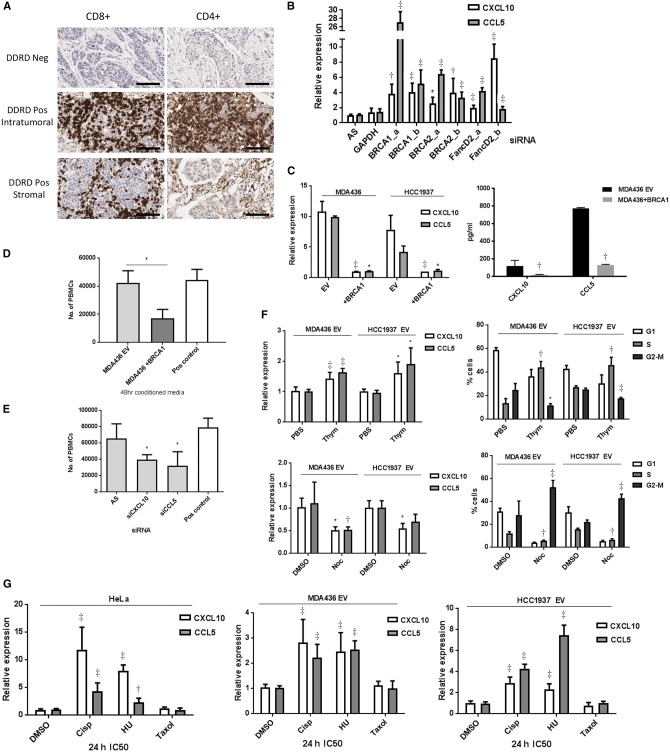
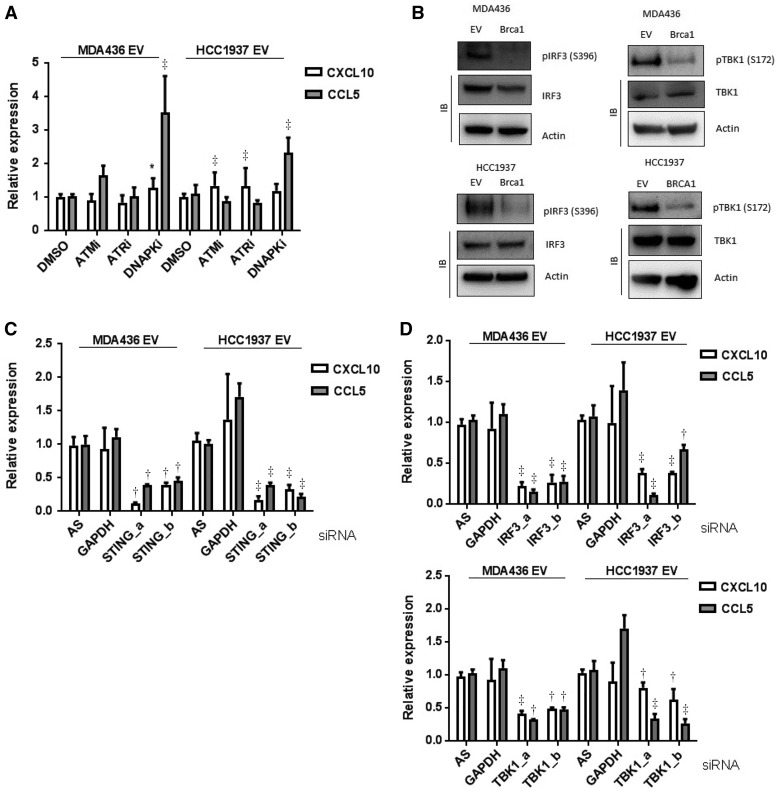
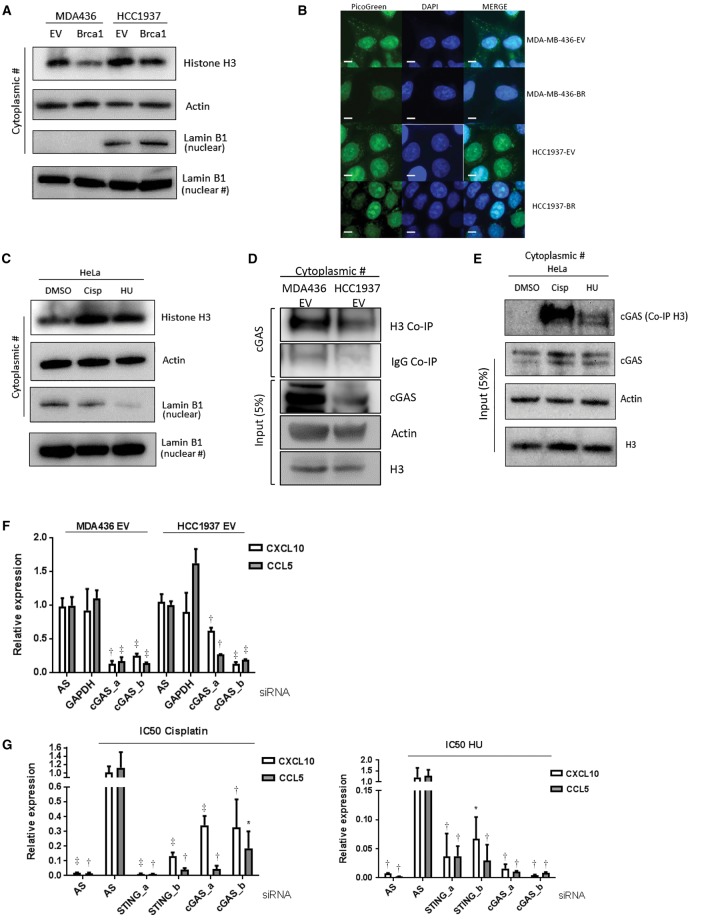
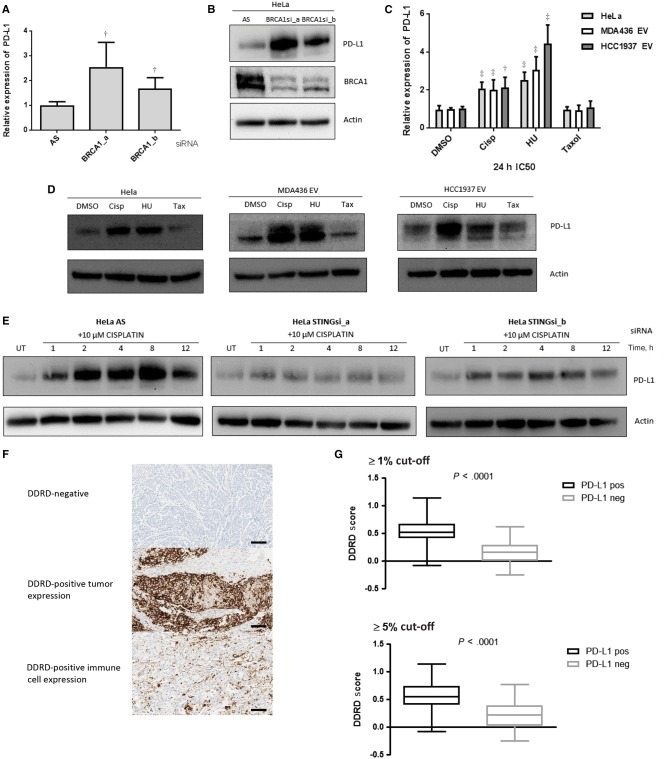
Background: Previously we identified a DNA damage response-deficient (DDRD) molecular subtype within breast cancer. A 44-gene assay identifying this subtype was validated as predicting benefit from DNA-damaging chemotherapy. This subtype was defined by interferon signaling. In this study, we address the mechanism of this immune response and its possible clinical significance. Methods: We used immunohistochemistry (IHC) to characterize immune infiltration in 184 breast cancer samples, of which 65 were within the DDRD subtype. Isogenic cell lines, which represent DDRD-positive and -negative, were used to study the effects of chemokine release on peripheral blood mononuclear cell (PBMC) migration and the mechanism of immune signaling activation. Finally, we studied the association between the DDRD subtype and expression of the immune-checkpoint protein PD-L1 as detected by IHC. All statistical tests were two-sided. Results: We found that DDRD breast tumors were associated with CD4+ and CD8+ lymphocytic infiltration (Fisher's exact test P < .001) and that DDRD cells expressed the chemokines CXCL10 and CCL5 3.5- to 11.9-fold more than DNA damage response-proficient cells (P < .01). Conditioned medium from DDRD cells statistically significantly attracted PBMCs when compared with medium from DNA damage response-proficient cells (P < .05), and this was dependent on CXCL10 and CCL5. DDRD cells demonstrated increased cytosolic DNA and constitutive activation of the viral response cGAS/STING/TBK1/IRF3 pathway. Importantly, this pathway was activated in a cell cycle-specific manner. Finally, we demonstrated that S-phase DNA damage activated expression of PD-L1 in a STING-dependent manner. Conclusions: We propose a novel mechanism of immune infiltration in DDRD tumors, independent of neoantigen production. Activation of this pathway and associated PD-L1 expression may explain the paradoxical lack of T-cell-mediated cytotoxicity observed in DDRD tumors. We provide a rationale for exploration of DDRD in the stratification of patients for immune checkpoint-based therapies.
Overview
The claims and statistics of this paper haven’t been checked yet.
Free: it reads the open-access text and checks the first 5 claims that cite a source we can check. Create a free account to check every claim.
Integrity signals
Registry
Cites
Statistics
Figures
Verification
Claims the paper makes
The claims and statistics of this paper haven’t been checked yet.
Free: it reads the open-access text and checks the first 5 claims that cite a source we can check. Create a free account to check every claim.
Claims other papers make about this one
Each is checked against this paper’s own text: does it say what the citing paper says it does?
In the citing paper
“Additionally, homologous repair defects, such as pathogenic mutations in BRCA1/2, can lead to enhanced immune response by multiple pathways including the release of cytosolic DNA, promotion of type I IFN signaling, and upregulation of PD-L1 (137-139).”
From The Next Decade of Immune Checkpoint Therapy (2021) · cites this paper as [138]
Self-check
Percentages, sums and reported differences re-computed from the paper’s own numbers.
The self-check needs the paper’s full text.
Citations
Cites
PD-1 and PD-L1 Immune Checkpoint Blockade to Treat Breast Cancer
Hartkopf, A. D., Taran, F.-A., Wallwiener, M., Walter, C. B., Krämer, B., Grischke, E.-M., & Brucker, S. Y. (2016) · Breast Care · doi:10.1159/000453569 · Cited by 30,845
PD-1 Blockade in Tumors with Mismatch-Repair Deficiency
Le, D. T., Uram, J. N., Wang, H., Bartlett, B. R., Kemberling, H., Eyring, A. D., Skora, A. D., Luber, B. S., Azad, N. S., Laheru, D., et al. (2015) · New England Journal of Medicine · doi:10.1056/nejmoa1500596 · Cited by 9,377
Safety and activity of anti-PD-L1 antibody in patients with advanced cancer
Brahmer, J. R., Tykodi, S. S., Chow, L. Q. M., Hwu, W.-J., Topalian, S. L., Hwu, P., Drake, C. G., Camacho, L. H., Kauh, J., Odunsi, K., et al. (2012) · New England Journal of Medicine · doi:10.1056/nejmoa1200694 · Cited by 7,945 · cited 1×
“Inhibition of the PD-1/PD-L1 axis has resulted in dramatic responses in a subset of patients with advanced solid tumors including melanoma and non–small cell lung cancer (22).”
BackgroundSTING-Dependent Cytosolic DNA Sensing Mediates Innate Immune Recognition of Immunogenic Tumors
Woo, S.-R., Fuertes, M. B., Corrales, L., Spranger, S., Furdyna, M. J., Leung, M. Y. K., Duggan, R., Wang, Y., Barber, G. N., Fitzgerald, K. A., et al. (2014) · Immunity · doi:10.1016/j.immuni.2014.10.017 · Cited by 1,917
Denkert, C., Loibl, S., Noske, A., Roller, M., Müller, B. M., Komor, M., Budczies, J., Darb-Esfahani, S., Kronenwett, R., Hanusch, C., et al. (2010) · Journal of Clinical Oncology · doi:10.1200/jco.2009.23.7370 · Cited by 1,762
CGAS produces a 2′-5′-linked cyclic dinucleotide second messenger that activates STING.
Ablasser, A., Goldeck, M., Cavlar, T., Deimling, T., Witte, G., Röhl, I., Hopfner, K.-P., Ludwig, J., & Hornung, V. (2013) · Nature · doi:10.1038/nature12306 · Cited by 1,695 · cited 1×
“The cytosolic DNA sensor cGAS has been described as the most potent activator of the STING pathway (18).”
BackgroundHallmarks of 'BRCAness' in sporadic cancers
Turner, N., Tutt, A., & Ashworth, A. (2004) · Nature Reviews Cancer · doi:10.1038/nrc1457 · Cited by 1,657
Loi, S., Sirtaine, N., Piette, F., Salgado, R., Viale, G., Van Eenoo, F., Rouas, G., Francis, P., Crown, J. P. A., Hitre, E., et al. (2013) · Journal of Clinical Oncology · doi:10.1200/jco.2011.41.0902 · Cited by 1,632
Corrales, L., Glickman, L. H., McWhirter, S. M., Kanne, D. B., Sivick, K. E., Katibah, G. E., Woo, S.-R., Lemmens, E., Banda, T., Leong, J. J., et al. (2015) · Cell Reports · doi:10.1016/j.celrep.2015.04.031 · Cited by 1,560
The function of programmed cell death 1 and its ligands in regulating autoimmunity and infection
Sharpe, A. H., Wherry, E. J., Ahmed, R., & Freeman, G. J. (2007) · Nature Immunology · doi:10.1038/ni1443 · Cited by 1,528
Research works printed but not linked: 1
- Soria, 2014, Biomarkers associated with clinical activity of PD-L1 blockade in non-small cell lung carcinoma (NSCLC) patients (pts) in a phase I study of MPDL3280A, Ann Oncol, 25, iv426
Cited by
Items 101–200 of 464
Hsiehchen, D., Hsieh, A., Samstein, R. M., Lu, T., Beg, M. S., Gerber, D. E., Wang, T., Morris, L. G. T., & Zhu, H. (2020) · Cell Reports Medicine · doi:10.1016/j.xcrm.2020.100034 · Cited by 81
New Perspectives for Resistance to PARP Inhibitors in Triple-Negative Breast Cancer
Han, Y., Yu, X., Li, S., Tian, Y. E., & Liu, C. (2020) · Frontiers in Oncology · doi:10.3389/fonc.2020.578095 · Cited by 79
Patin, E. C., Dillon, M. T., Nenclares, P., Grove, L., Soliman, H., Leslie, I., Northcote, D., Bozhanova, G., Crespo-Rodriguez, E., Baldock, H., et al. (2022) · Journal for ImmunoTherapy of Cancer · doi:10.1136/jitc-2021-004306 · Cited by 76
cGAS–STING, an important signaling pathway in diseases and their therapy
Li, Q., Wu, P., Du, Q., Hanif, U., Hu, H., & Li, K. (2024) · MedComm · doi:10.1002/mco2.511 · Cited by 106
cGAS/STING cross-talks with cell cycle and potentiates cancer immunotherapy
Long, Z., Wang, J., Xu, J., Lei, X., & Liu, Q. (2022) · Molecular Therapy · doi:10.1016/j.ymthe.2022.01.044 · Cited by 79
G-quadruplex binders as cytostatic modulators of innate immune genes in cancer cells
Miglietta, G., Russo, M. V., Duardo, R. C., & Capranico, G. (2021) · Nucleic Acids Research · doi:10.1093/nar/gkab500 · Cited by 80
Vasiyani, H., Mane, M., Rana, K., Shinde, A., Roy, M., Singh, J., Gohel, D., Currim, F., Srivastava, R., & Singh, R. K. (2022) · APOPTOSIS · doi:10.1007/s10495-022-01763-8 · Cited by 77
Role of DNA repair defects in predicting immunotherapy response
Zhang, J., Shih, D. J. H., & Lin, S.-Y. (2020) · Biomarker Research · doi:10.1186/s40364-020-00202-7 · Cited by 69
Zhu, L., Liu, J., Chen, J., & Zhou, Q. (2021) · Journal of Hematology & Oncology · doi:10.1186/s13045-021-01218-8 · Cited by 84
Hardaker, E. L., Sanseviero, E., Karmokar, A., Taylor, D. K., Milo, M., Michaloglou, C., Hughes, A. M., Mai, M., King, M. A., Solanki, A., et al. (2024) · Nature Communications · doi:10.1038/s41467-024-45996-4 · Cited by 82
Homologous Recombination Repair Deficiency and Implications for Tumor Immunogenicity
van Wilpe, S., Tolmeijer, S. H., Koornstra, R. H. T., de Vries, I. J. M., Gerritsen, W. R., Ligtenberg, M. J. L., & Mehra, N. (2021) · Cancers · doi:10.3390/cancers13092249 · Cited by 83
Criscuolo, D., Morra, F., Giannella, R., Visconti, R., Cerrato, A., & Celetti, A. (2019) · Journal of Experimental & Clinical Cancer Research · doi:10.1186/s13046-019-1089-z · Cited by 64
Antecedent chromatin organization determines cGAS recruitment to ruptured micronuclei
MacDonald, K. M., Nicholson-Puthenveedu, S., Tageldein, M. M., Khasnis, S., Arrowsmith, C. H., & Harding, S. M. (2023) · Nature Communications · doi:10.1038/s41467-023-36195-8 · Cited by 74
Bergholz, J. S., Wang, Q., Kabraji, S. K., & Zhao, J. J. (2020) · Clinical Cancer Research · doi:10.1158/1078-0432.ccr-19-2300 · Cited by 62
A wake-up call for cancer DNA damage: the role of Schlafen 11 (SLFN11) across multiple cancers
Zhang, B., Ramkumar, K., Cardnell, R. J., Gay, C. M., Stewart, C. A., Wang, W., Fujimoto, J., Wistuba, I. I., & Byers, L. A. (2021) · British Journal of Cancer · doi:10.1038/s41416-021-01476-w · Cited by 65
Post-Translational Modifications of STING: A Potential Therapeutic Target
Kang, J., Wu, J., Liu, Q., Wu, X., Zhao, Y., & Ren, J. (2022) · Frontiers in Immunology · doi:10.3389/fimmu.2022.888147 · Cited by 59
Opportunities and challenges of targeting cGAS–STING in cancer
Lu, C., Wang, W., & Fu, Y. (2026) · Nature reviews. Cancer · doi:10.1038/s41568-025-00894-9 · Cited by 79
Regulation of cGAS‐Mediated Immune Responses and Immunotherapy
Saeed, A. F. U. H., Ruan, X., Guan, H., Su, J., & Ouyang, S. (2020) · Advanced Science · doi:10.1002/advs.201902599 · Cited by 62
Defective Replication Stress Response Is Inherently Linked to the Cancer Stem Cell Phenotype
McGrail, D. J., Lin, C. C.-J., Dai, H., Mo, W., Li, Y., STEPHAN, C. C., Davies, P. J., Lu, Z., Mills, G. B., Lee, J., et al. (2018) · Cell Reports · doi:10.1016/j.celrep.2018.04.068 · Cited by 60
When breaks get hot: inflammatory signaling in BRCA1/2-mutant cancers
van Vugt, M. A. T. M., & Parkes, E. E. (2022) · Trends in cancer · doi:10.1016/j.trecan.2021.12.003 · Cited by 67
Chen, M., Yu, S., van der Sluis, T., Zwager, M. C., Schröder, C. P., van der Vegt, B., & van Vugt, M. A. T. M. (2024) · npj Breast Cancer · doi:10.1038/s41523-023-00609-z · Cited by 65
Nicotinamide Augments the Anti-Inflammatory Properties of Resveratrol through PARP1 Activation
Yanez, M., Jhanji, M., Murphy, K. P., Gower, R. M., Sajish, M., & Jabbarzadeh, E. (2019) · Scientific Reports · doi:10.1038/s41598-019-46678-8 · Cited by 59
Biomarkers of Immune Checkpoint Blockade Response in Triple-Negative Breast Cancer
Isaacs, J. M., Anders, C. K., McArthur, H. L., & Force, J. M. (2021) · Current Treatment Options in Oncology · doi:10.1007/s11864-021-00833-4 · Cited by 64
Padariya, M., Sznarkowska, A., Kote, S., Gómez-Herranz, M., Mikac, S., Pilch, M., Alfaro, J. A., Fåhræus, R., Hupp, T. R., & Kalathiya, U. (2021) · Biomolecules · doi:10.3390/biom11050622 · Cited by 66
Ka, N., Lim, G. Y., Hwang, S., Kim, S.-S., & Lee, M. (2021) · Cell Reports · doi:10.1016/j.celrep.2021.110138 · Cited by 66
cGAS–STING signalling in cancer: striking a balance with chromosomal instability
Beernaert, B., & Parkes, E. E. (2023) · Biochemical Society Transactions · doi:10.1042/bst20220838 · Cited by 62
Sato, H., Jeggo, P. A., & Shibata, A. (2019) · Cancer Science · doi:10.1111/cas.14197 · Cited by 57
Yang, B., Li, X., Fu, Y., Guo, E., Ye, Y., Li, F., Liu, S., Xiao, R., Liu, C., Lu, F., et al. (2021) · Cancer Research · doi:10.1158/0008-5472.can-20-2370 · Cited by 55
The cGAS Paradox: Contrasting Roles for cGAS-STING Pathway in Chromosomal Instability
Hong, C., Tijhuis, A. E., & Foijer, F. (2019) · Cells · doi:10.3390/cells8101228 · Cited by 63
Helbling-Leclerc, A., Garcin, C., & Rosselli, F. (2021) · Cell Death and Differentiation · doi:10.1038/s41418-021-00764-5 · Cited by 61
PARP inhibitors in ovarian cancer: overcoming resistance with combination strategies
Miller, R. E., El-Shakankery, K. H., & Lee, J. (2022) · Journal of Gynecologic Oncology · doi:10.3802/jgo.2022.33.e44 · Cited by 59
cGAS-STING Activation in the Tumor Microenvironment and Its Role in Cancer Immunity
Pépin, G., & Gantier, M. P. (2017) · Advances in experimental medicine and biology · doi:10.1007/978-981-10-5987-2_8 · Cited by 56
Ali, R., McIntosh, S., & Savage, K. I. (2020) · Genes Chromosomes and Cancer · doi:10.1002/gcc.22921 · Cited by 57
The promise of DNA damage response inhibitors for the treatment of glioblastoma
Majd, N., Yap, T. A., Koul, D., Balasubramaniyan, V., Li, X., Khan, S., Gandy, K. S., Yung, W. K. A., & de Groot, J. (2021) · Neuro-Oncology Advances · doi:10.1093/noajnl/vdab015 · Cited by 63
Sharma, P., Barlow, W. E., Godwin, A. K., Parkes, E. E., Knight, L. A., Walker, S. M., Kennedy, R. D., Harkin, D. P., Logan, G. E., Steele, C., et al. (2019) · Journal of Clinical Oncology · doi:10.1200/jco.19.00693 · Cited by 55
Kulasinghe, A., Monkman, J. H., Shah, E. T., Matigian, N., Adams, M. N., & O'Byrne, K. J. (2022) · Frontiers in Oncology · doi:10.3389/fonc.2021.798296 · Cited by 51
Zhao, J., Tong, A., Liu, J., Xu, M., & Mi, P. (2025) · Science Advances · doi:10.1126/sciadv.adr1728 · Cited by 56
Beyond the Double-Strand Breaks: The Role of DNA Repair Proteins in Cancer Stem-Cell Regulation
Nathansen, J., Meyer, F., Müller, L., Schmitz, M., Borgmann, K., & Dubrovska, A. (2021) · Cancers · doi:10.3390/cancers13194818 · Cited by 54
Mechanisms of immunogenicity in colorectal cancer
Sillo, T. O., Beggs, A. D., Morton, D. G., & Middleton, G. (2019) · British journal of surgery · doi:10.1002/bjs.11204 · Cited by 53
Therapeutic applications of PARP inhibitors in ovarian cancer
Xie, H., Wang, W., Xia, B., Jin, W., & Lou, G. (2020) · Biomedicine & Pharmacotherapy · doi:10.1016/j.biopha.2020.110204 · Cited by 52
Time for remodeling: SNF2-family DNA translocases in replication fork metabolism and human disease
Joseph, S. A., Taglialatela, A., Leuzzi, G., Huang, J., Cuella-Martin, R., & Ciccia, A. (2020) · DNA repair · doi:10.1016/j.dnarep.2020.102943 · Cited by 48
Targeting nuclear acid-mediated immunity in cancer immune checkpoint inhibitor therapies
Chen, M., Hu, S., Li, Y., Jiang, T., Jin, H., & Feng, L. (2020) · Signal Transduction and Targeted Therapy · doi:10.1038/s41392-020-00347-9 · Cited by 51
NR1D1 Stimulates Antitumor Immune Responses in Breast Cancer by Activating cGAS-STING Signaling
Ka, N., Park, M. K., Kim, S.-S., Jeon, Y., Hwang, S., Kim, S. M., Lim, G. Y., Lee, H., & Lee, M. (2023) · Cancer Research · doi:10.1158/0008-5472.can-23-0329 · Cited by 54
Ho, A. Y., Wright, J. L., Blitzblau, R. C., Mutter, R. W., Duda, D. G., Norton, L., Bardia, A., Spring, L. M., Isakoff, S. J., Chen, J. H., et al. (2020) · International Journal of Radiation Oncology*Biology*Physics · doi:10.1016/j.ijrobp.2020.05.011 · Cited by 49
Genomic instability and innate immune responses to self-DNA in progeria
Gonzalo, S., & Coll-Bonfill, N. (2019) · GeroScience · doi:10.1007/s11357-019-00082-2 · Cited by 46
Zhang, W., & Huang, X. (2025) · Biomarker Research · doi:10.1186/s40364-025-00750-w · Cited by 51
Inflammatory signaling in genomically instable cancers
Talens, F., & van Vugt, M. A. T. M. (2019) · Cell Cycle · doi:10.1080/15384101.2019.1638192 · Cited by 43
The Landscape of Alterations in DNA Damage Response Pathways in Colorectal Cancer
Arai, H., Elliott, A., Xiu, J., Wang, J., Battaglin, F., Kawanishi, N. K., Soni, S., Zhang, W., Millstein, J., Sohal, D. P. S., et al. (2021) · Clinical Cancer Research · doi:10.1158/1078-0432.ccr-20-3635 · Cited by 49
Cheradame, L., Guerrera, I. C., Gaston, J., Schmitt, A., Jung, V. A., Goudin, N., Pouillard, M., Radosevic‐Robin, N., Modesti, M., Judde, J., et al. (2021) · Oncogene · doi:10.1038/s41388-021-02037-4 · Cited by 54
Mouw, K. W., & Konstantinopoulos, P. A. (2018) · British Journal of Cancer · doi:10.1038/s41416-018-0017-x · Cited by 47
Genomic instability as a driver and suppressor of anti-tumor immunity
Requesens, M., Foijer, F., Nijman, H. W., & de Bruyn, M. (2024) · Frontiers in Immunology · doi:10.3389/fimmu.2024.1462496 · Cited by 51
A Tale of Two Checkpoints: ATR Inhibition and PD-(L)1 Blockade
Ngoi, N. Y. L., Peng, G., & Yap, T. A. (2021) · Annual Review of Medicine · doi:10.1146/annurev-med-042320-025136 · Cited by 46
Franzese, O., & Graziani, G. (2022) · Cancers · doi:10.3390/cancers14225633 · Cited by 55
Functions of the CXC ligand family in the pancreatic tumor microenvironment
Lee, N., Nikfarjam, M., & He, H. Z. (2018) · Pancreatology · doi:10.1016/j.pan.2018.07.011 · Cited by 45
Knarr, M., Avelar, R. A., Sekhar, S. C., Kwiatkowski, L. J., Dziubinski, M. L., McAnulty, J., Skala, S. L., Avril, S., Drapkin, R., & DiFeo, A. V. (2020) · Nature Communications · doi:10.1038/s41467-020-17030-w · Cited by 45
DNA Repair Deficiency and Immunotherapy Response
Mouw, K. W., & D’Andrea, A. D. (2018) · Journal of Clinical Oncology · doi:10.1200/jco.2018.78.2425 · Cited by 43
Miglietta, F., Griguolo, G., Guarneri, V., & Dieci, M. V. (2019) · The Oncologist · doi:10.1634/theoncologist.2019-0197 · Cited by 41
Gupta, M., Iyer, R. V., & Fountzilas, C. K. (2019) · Cancers · doi:10.3390/cancers11121980 · Cited by 43
Immune-Based Therapy in Triple-Negative Breast Cancer: From Molecular Biology to Clinical Practice
Carlino, F., Diana, A., Piccolo, A., Ventriglia, A., Bruno, V., Santo, I. D., Letizia, O., Vita, F. D., Daniele, B., Ciardiello, F., et al. (2022) · Cancers · doi:10.3390/cancers14092102 · Cited by 44
Xu, S., Chen, X., Ying, H., Chen, J., Ye, M., Lin, Z., Zhang, X., Shen, T., Li, Z., Zheng, Y., et al. (2024) · BMC Cancer · doi:10.1186/s12885-024-12911-5 · Cited by 40
Mechanistic link between DNA damage sensing, repairing and signaling factors and immune signaling
Mukherjee, S., Abdisalaam, S., Bhattacharya, S., Kalayarasan, S., Sinha, D., & Asaithamby, A. (2019) · Advances in protein chemistry and structural biology · doi:10.1016/bs.apcsb.2018.11.004 · Cited by 41
Alerting the immune system to DNA damage: micronuclei as mediators
MacDonald, K. M., Benguerfi, S., & Harding, S. M. (2020) · Essays in Biochemistry · doi:10.1042/ebc20200016 · Cited by 43
Improved T-cell Immunity Following Neoadjuvant Chemotherapy in Ovarian Cancer
Liu, M., Tayob, N., Penter, L., Sellars, M., Tarren, A. Y., Chea, V. A., Carulli, I. P., Huang, T., Li, S., Cheng, S., et al. (2022) · Clinical Cancer Research · doi:10.1158/1078-0432.ccr-21-2834 · Cited by 41
The Role of cGAS-STING in Age-Related Diseases from Mechanisms to Therapies
Zheng, W., Feng, D., Xiong, X., Liao, X., Wang, S., Xu, H., Le, W., Wei, Q., & Yang, L. (2023) · Aging and Disease · doi:10.14336/ad.2023.0117 · Cited by 50
Criscuolo, D., Morra, F., Giannella, R., Cerrato, A., & Celetti, A. (2019) · International Journal of Molecular Sciences · doi:10.3390/ijms20123100 · Cited by 43
Lama-Sherpa, T. D., & Shevde, L. A. (2020) · Molecular Cancer Research · doi:10.1158/1541-7786.mcr-19-0665 · Cited by 41
Targeted therapies in gynaecological cancers
Crusz, S. M., & Miller, R. E. (2019) · Histopathology · doi:10.1111/his.14009 · Cited by 41
The clinical and molecular significance associated with STING signaling in breast cancer
Parkes, E. E., Humphries, M. P., Gilmore, E. S., Sidi, F. A., Bingham, V., Phyu, S. M., Craig, S. G., Graham, C., Miller, J. J., Griffin, D., et al. (2021) · npj Breast Cancer · doi:10.1038/s41523-021-00283-z · Cited by 37
Strategies involving STING pathway activation for cancer immunotherapy: Mechanism and agonists
Pan, X., Zhang, W., Guo, H., Wang, L., Wu, H., Ding, L., & Yang, B. (2023) · Biochemical Pharmacology · doi:10.1016/j.bcp.2023.115596 · Cited by 37
DNA Repair and Signaling in Immune-Related Cancer Therapy
Kakoti, S., Sato, H., Laskar, S. S., Yasuhara, T., & Shibata, A. (2020) · Frontiers in Molecular Biosciences · doi:10.3389/fmolb.2020.00205 · Cited by 42
Jhanji, M., Rao, C. N., & Sajish, M. (2020) · GeroScience · doi:10.1007/s11357-020-00295-w · Cited by 38
Parkes, E. E., Savage, K. I., Lioe, T. F., Boyd, C., Halliday, S. R., Walker, S. M., Lowry, K., Knight, L. A., Buckley, N. E., Grogan, A., et al. (2021) · British Journal of Cancer · doi:10.1038/s41416-021-01599-0 · Cited by 37
Fu, G., Wu, Y., Zhao, G., Chen, X., Xu, Z., Sun, J., Tian, J., Cheng, Z., Shi, Y. X., & Jin, B. (2022) · Cells · doi:10.3390/cells11193011 · Cited by 38
Do, K. T., Manuszak, C., Thrash, E. M., Giobbie‐Hurder, A., Hu, J., Kelland, S., Powers, A., de Jonge, A., Shapiro, G. I., & Severgnini, M. (2021) · Cancer Immunology Immunotherapy · doi:10.1007/s00262-021-02910-x · Cited by 38
Zhao, X., Hu, S., Zeng, L., Liu, X., Song, Y., Zhang, Y., Chen, Q., Bai, Y., Zhang, J., Zhang, H., et al. (2022) · iScience · doi:10.1016/j.isci.2022.104690 · Cited by 37
Tang, M., Chen, G., Tu, B., Hu, Z., Huang, Y., DuFort, C. C., Wan, X., Mao, Z., Liu, Y., Zhu, W., et al. (2023) · Science Advances · doi:10.1126/sciadv.ade6624 · Cited by 40
DNA damage response in breast cancer and its significant role in guiding novel precise therapies
Li, J., Jia, Z., Lin, D., Cao, H., Huang, Y., Xu, H., Xie, Z., Jiang, Y., Wang, X., & Liu, J. (2024) · Biomarker Research · doi:10.1186/s40364-024-00653-2 · Cited by 46
Pu, F., Chen, F., Liu, J., Zhang, Z., & Shao, Z. (2021) · OncoTargets and Therapy · doi:10.2147/ott.s298958 · Cited by 35
López‐Peláez, M., Young, L. A., Vázquez–Chantada, M., Nelson, N., Durant, S. T., Wilkinson, R. W., Poon, E., Gaspar, M., Valge-Archer, V., Smith, P. D., et al. (2022) · OncoImmunology · doi:10.1080/2162402x.2022.2117321 · Cited by 37
Interferon restores replication fork stability and cell viability in BRCA-defective cells via ISG15
Moro, R. N., Biswas, U., Kharat, S. S., Duzanic, F. D., Das, P., Stavrou, M., Raso, M. C., Freire, R., Chaudhuri, A. R., Sharan, S. K., et al. (2023) · Nature Communications · doi:10.1038/s41467-023-41801-w · Cited by 40
Papavassiliou, K. A., Sofianidi, A. A., Gogou, V. A., Anagnostopoulos, N., & Papavassiliou, A. G. (2024) · International Journal of Molecular Sciences · doi:10.3390/ijms25052479 · Cited by 45
DNA Repair Deficiency in Breast Cancer: Opportunities for Immunotherapy
Gilmore, E. S., McCabe, N., Kennedy, R. D., & Parkes, E. E. (2019) · Journal of Oncology · doi:10.1155/2019/4325105 · Cited by 33
Li, J., Ko, J. M. Y., Dai, W., Yu, V. Z., Ng, H. Y., Hoffmann, J., & Lung, M. L. (2021) · Cancers · doi:10.3390/cancers13133204 · Cited by 36
Wu, S., Wang, B., Li, H., Wang, H., Du, S., Huang, X., Fan, Y., Gao, Y., Gu, L., Huang, Q., et al. (2024) · Oncogene · doi:10.1038/s41388-024-03013-4 · Cited by 32
RetractedWu, X. Y., Kang, X., Zhang, X., Xie, W., Su, Y., Liu, X., Guo, L., Guo, E., Li, F., Hu, D., et al. (2021) · Cancer Science · doi:10.1111/cas.15108 · Cited by 32
The DNA damage induced immune response: Implications for cancer therapy
Barros, E. M., McIntosh, S., & Savage, K. I. (2022) · DNA repair · doi:10.1016/j.dnarep.2022.103409 · Cited by 40
Activation of MAPK signalling results in resistance to saracatinib (AZD0530) in ovarian cancer
McGivern, N., Helali, A. E., Mullan, P. B., McNeish, I. A., Harkin, D. P., Kennedy, R. D., & McCabe, N. (2017) · Oncotarget · doi:10.18632/oncotarget.23524 · Cited by 28
The DNA damage response in immunotherapy and radiation
Samstein, R. M., & Riaz, N. (2018) · Advances in Radiation Oncology · doi:10.1016/j.adro.2018.08.017 · Cited by 36
Transcriptional Expressions of CXCL9/10/12/13 as Prognosis Factors in Breast Cancer
Li, Y., Liang, M., Lin, Y., Lv, J., Chen, M., Zhou, P., Fu, F., & Wang, C. (2020) · Journal of Oncology · doi:10.1155/2020/4270957 · Cited by 36
Xu, Y., Nowsheen, S., & Deng, M. (2023) · Cancers · doi:10.3390/cancers15051619 · Cited by 33
DNA double-strand break repair and nucleic acid-related immunity
Zhang, H., Chen, Y., Jiang, Y., & Mao, Z. (2022) · Acta Biochimica et Biophysica Sinica · doi:10.3724/abbs.2022061 · Cited by 30
Hong, W., Zhang, Y., Wang, S., Li, Z., Zheng, D.-X., Hsu, S.-J., Zhou, J., Fan, J., Chen, Z., Xia, X., et al. (2024) · Advanced Science · doi:10.1002/advs.202308009 · Cited by 42
Targeting DNA Damage Response and Repair as a Therapeutic Strategy for Ovarian Cancer
Konstantinopoulos, P. A., & Matulonis, U. A. (2018) · Hematology/Oncology Clinics of North America · doi:10.1016/j.hoc.2018.07.006 · Cited by 30
de Boo, L. W., Cimino‐Mathews, A., Lubeck, Y., Daletzakis, A., Opdam, M., Sanders, J., Hooijberg, E., van Rossum, A. G. J., Loncová, Z., Rieder, D., et al. (2020) · European Journal of Cancer · doi:10.1016/j.ejca.2019.12.003 · Cited by 31
Wayne, J., Brooks, T., Landras, A., & Massey, A. J. (2021) · FEBS Journal · doi:10.1111/febs.15747 · Cited by 29
Teo, Z. L., O’Connor, M. J., Versaci, S., Clarke, K. A., Brown, E., Percy, L. W., Kuykhoven, K. S., Mintoff, C., Savas, P. S., Virassamy, B., et al. (2023) · npj Breast Cancer · doi:10.1038/s41523-023-00568-5 · Cited by 35
Malla, S. B., Fisher, D. J., Domingo, E., Blake, A., Hassanieh, S., Redmond, K. L., Richman, S. D., Youdell, M., Walker, S. M., Logan, G. E., et al. (2021) · Clinical Cancer Research · doi:10.1158/1078-0432.ccr-20-3237 · Cited by 29
Turkington, R. C., Knight, L. A., Blayney, J. K., Secrier, M., Douglas, R. V., Parkes, E. E., Sutton, E. K., Stevenson, L. S., McManus, D. T., Halliday, S. R., et al. (2019) · Gut · doi:10.1136/gutjnl-2018-317624 · Cited by 28
Exploiting replicative stress in gynecological cancers as a therapeutic strategy
Ngoi, N. Y. L., Sundararajan, V., & Tan, D. S. P. (2020) · International Journal of Gynecological Cancer · doi:10.1136/ijgc-2020-001277 · Cited by 29
Fighting resistance: post-PARP inhibitor treatment strategies in ovarian cancer
Veneziani, A. C., Scott, C. L., Wakefield, M. J., Tinker, A. V., & Lheureux, S. (2023) · Therapeutic Advances in Medical Oncology · doi:10.1177/17588359231157644 · Cited by 33
Metadata
- Authors
- Parkes, E. E., Walker, S. M., Taggart, L. E., McCabe, N., Knight, L. A., Wilkinson, R., McCloskey, K. D., Buckley, N. E., Savage, K. I., Salto-Tellez, M., McQuaid, S., Harte, M. T., Mullan, P. B., Harkin, D. P., & Kennedy, R. D.
- Affiliations
- Queen's University Belfast (GB)
- Corresponding author
- Kennedy, Richard D.
- ORCID
- Venue
- Journal of the National Cancer Institute
- Publisher
- Oxford University Press (OUP)
- Published
- 2016-10-05
- Volume
- 109
- Issue
- 1
- Pages
- djw199
- ISSN
- 0027-8874 (ISSN-L)
- 1460-2105
- PMC
- PMC5441301
- OpenAlex
- W2527992063
- Cited by
- 462
- References
- 30
- Citations by year
- 2026: 29 · 2025: 41 · 2024: 46 · 2023: 63 · 2022: 63 · 2021: 77 · 2020: 54 · 2019: 48 · 2018: 27 · 2017: 14
- FWCI
- 17.84
- Type
- journal article
- Language
- en
- Open access
- hybrid
- doi.org
- Licence
- cc-by-nc
- Locations
- JNCI Journal of the National Cancer Institute (publishedVersion, cc-by-nc)
- Europe PMC (PubMed Central) (publishedVersion, cc-by-nc)
- PubMed Central (publishedVersion, cc-by-nc)
- PubMed (publishedVersion)
- Research Portal (Queen's University Belfast) (publishedVersion, cc-by-nc)
- Funders
- Invest Northern Ireland
- Cancer Research UK
- Medical Research Council (MR/K018965/1)
- European Regional Development Fund
- Topics
- Life Sciences › Immunology and Microbiology › Immunology › interferon and immune responses
- Health Sciences › Medicine › Oncology › Cancer Immunotherapy and Biomarkers
- Life Sciences › Biochemistry, Genetics and Molecular Biology › Cancer Research › Breast Cancer Treatment Studies
- Keywords
- breast cancer, STING signaling, innate immune activation, PD-L1 expression, tumor immune infiltration, CXCL10, RANTES, T cell cytotoxicity, immune checkpoint therapy, DNA-damaging chemotherapy
- MeSH terms
- STING Protein, Breast Neoplasms, Chemotaxis, Cytosol, DNA, DNA Damage, Female, Humans, Immunity, Innate, Immunohistochemistry, Leukocytes, Mononuclear, Membrane Proteins, Signal Transduction, CD4-Positive T-Lymphocytes, S Phase, Lymphocytes, Tumor-Infiltrating, Culture Media, Conditioned, Protein Serine-Threonine Kinases, CD8-Positive T-Lymphocytes, Chemokine CCL5, Cell Line, Tumor, Interferon Regulatory Factor-3, Chemokine CXCL10, B7-H1 Antigen
About these checks
Registry, retraction, Cites and statistics results are computed, not judged, with one exception: a printed reference that no index lists is read once by a model before it counts as a citation error. Claims are extracted by a model and kept only when their quote appears verbatim in the text; each cited source is then checked, with a model’s help, for whether it says what the claim relies on. Those verdicts can be wrong — read the claim’s quote and the cited source before relying on one.
Statistics and arithmetic are recomputed, not judged.
Confidence bands are shown only for fields calibrated on our annotated test set. None is calibrated yet, so no band is shown.
What counts as a claim ›How we measure confidence ›How we check this ›
Are you an author, or do you see a problem with this page? Request a review
Data sources
Bibliographic data: Semantic Scholar, OpenAlex, Crossref.
Contains information from the Semantic Scholar Academic Graph Datasets, made available under the ODC Attribution License (ODC-BY 1.0).
Semantic Scholar’s data is described in: Kinney, R., et al. (2023). The Semantic Scholar Open Data Platform. arXiv:2301.10140.
