

Activation of STING-Dependent Innate Immune Signaling By S-Phase-Specific DNA Damage in Breast Cancer
Open accessThe DOI matches its Crossref record; 29 of the 30 references it cites were found in a registry or an index.
Abstract
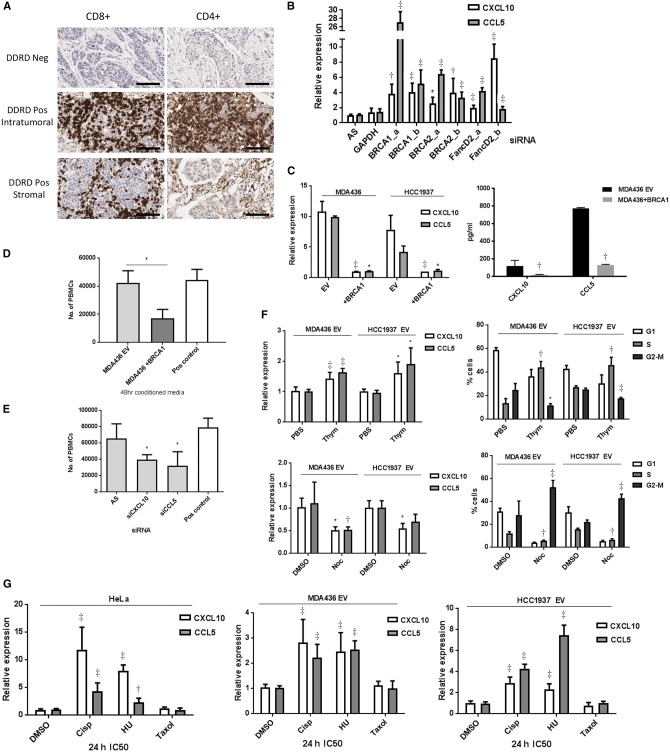
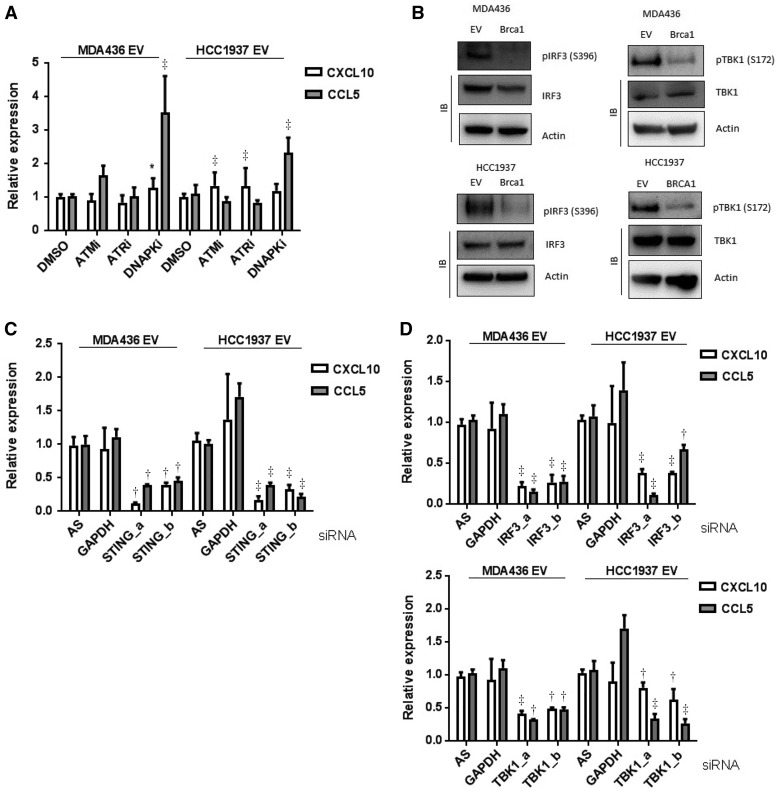
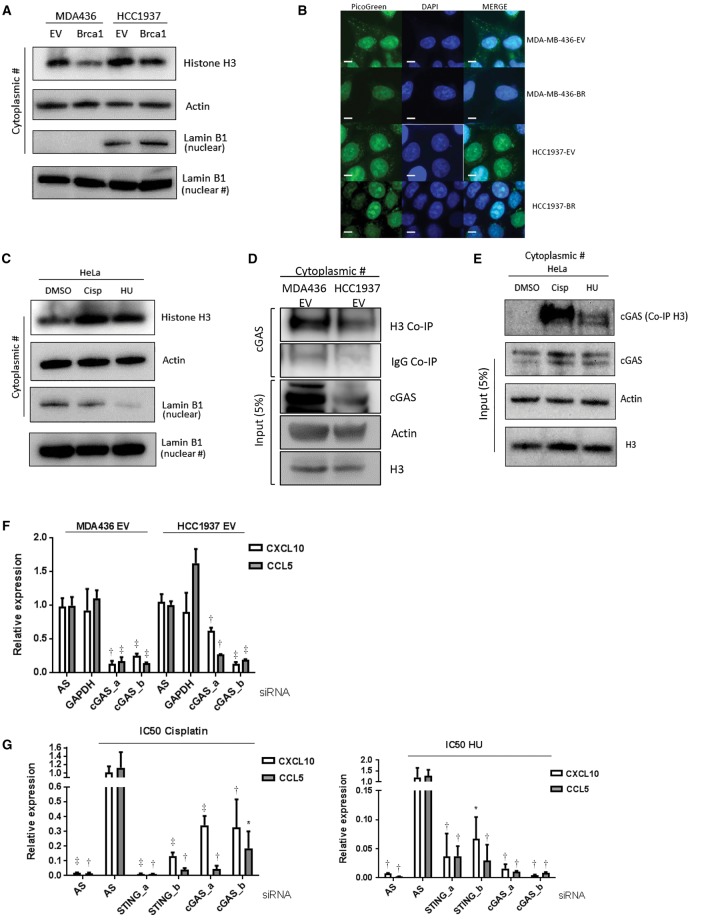
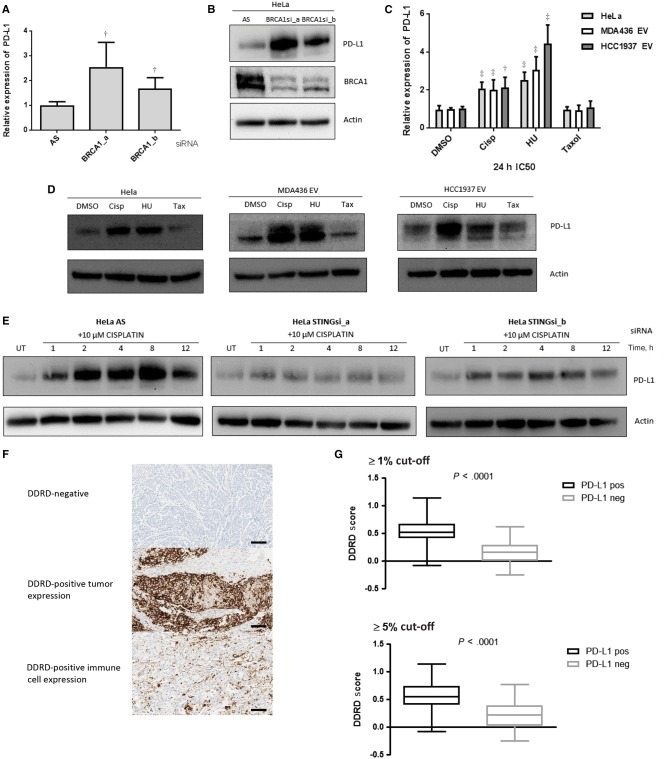
Background: Previously we identified a DNA damage response-deficient (DDRD) molecular subtype within breast cancer. A 44-gene assay identifying this subtype was validated as predicting benefit from DNA-damaging chemotherapy. This subtype was defined by interferon signaling. In this study, we address the mechanism of this immune response and its possible clinical significance. Methods: We used immunohistochemistry (IHC) to characterize immune infiltration in 184 breast cancer samples, of which 65 were within the DDRD subtype. Isogenic cell lines, which represent DDRD-positive and -negative, were used to study the effects of chemokine release on peripheral blood mononuclear cell (PBMC) migration and the mechanism of immune signaling activation. Finally, we studied the association between the DDRD subtype and expression of the immune-checkpoint protein PD-L1 as detected by IHC. All statistical tests were two-sided. Results: We found that DDRD breast tumors were associated with CD4+ and CD8+ lymphocytic infiltration (Fisher's exact test P < .001) and that DDRD cells expressed the chemokines CXCL10 and CCL5 3.5- to 11.9-fold more than DNA damage response-proficient cells (P < .01). Conditioned medium from DDRD cells statistically significantly attracted PBMCs when compared with medium from DNA damage response-proficient cells (P < .05), and this was dependent on CXCL10 and CCL5. DDRD cells demonstrated increased cytosolic DNA and constitutive activation of the viral response cGAS/STING/TBK1/IRF3 pathway. Importantly, this pathway was activated in a cell cycle-specific manner. Finally, we demonstrated that S-phase DNA damage activated expression of PD-L1 in a STING-dependent manner. Conclusions: We propose a novel mechanism of immune infiltration in DDRD tumors, independent of neoantigen production. Activation of this pathway and associated PD-L1 expression may explain the paradoxical lack of T-cell-mediated cytotoxicity observed in DDRD tumors. We provide a rationale for exploration of DDRD in the stratification of patients for immune checkpoint-based therapies.
Overview
The claims and statistics of this paper haven’t been checked yet.
Free: it reads the open-access text and checks the first 5 claims that cite a source we can check. Create a free account to check every claim.
Integrity signals
Registry
Cites
Statistics
Figures
Verification
Claims the paper makes
The claims and statistics of this paper haven’t been checked yet.
Free: it reads the open-access text and checks the first 5 claims that cite a source we can check. Create a free account to check every claim.
Claims other papers make about this one
Each is checked against this paper’s own text: does it say what the citing paper says it does?
In the citing paper
“Additionally, homologous repair defects, such as pathogenic mutations in BRCA1/2, can lead to enhanced immune response by multiple pathways including the release of cytosolic DNA, promotion of type I IFN signaling, and upregulation of PD-L1 (137-139).”
From The Next Decade of Immune Checkpoint Therapy (2021) · cites this paper as [138]
Self-check
Percentages, sums and reported differences re-computed from the paper’s own numbers.
The self-check needs the paper’s full text.
Citations
Cites
PD-1 and PD-L1 Immune Checkpoint Blockade to Treat Breast Cancer
Hartkopf, A. D., Taran, F.-A., Wallwiener, M., Walter, C. B., Krämer, B., Grischke, E.-M., & Brucker, S. Y. (2016) · Breast Care · doi:10.1159/000453569 · Cited by 30,845
PD-1 Blockade in Tumors with Mismatch-Repair Deficiency
Le, D. T., Uram, J. N., Wang, H., Bartlett, B. R., Kemberling, H., Eyring, A. D., Skora, A. D., Luber, B. S., Azad, N. S., Laheru, D., et al. (2015) · New England Journal of Medicine · doi:10.1056/nejmoa1500596 · Cited by 9,377
Safety and activity of anti-PD-L1 antibody in patients with advanced cancer
Brahmer, J. R., Tykodi, S. S., Chow, L. Q. M., Hwu, W.-J., Topalian, S. L., Hwu, P., Drake, C. G., Camacho, L. H., Kauh, J., Odunsi, K., et al. (2012) · New England Journal of Medicine · doi:10.1056/nejmoa1200694 · Cited by 7,945 · cited 1×
“Inhibition of the PD-1/PD-L1 axis has resulted in dramatic responses in a subset of patients with advanced solid tumors including melanoma and non–small cell lung cancer (22).”
BackgroundSTING-Dependent Cytosolic DNA Sensing Mediates Innate Immune Recognition of Immunogenic Tumors
Woo, S.-R., Fuertes, M. B., Corrales, L., Spranger, S., Furdyna, M. J., Leung, M. Y. K., Duggan, R., Wang, Y., Barber, G. N., Fitzgerald, K. A., et al. (2014) · Immunity · doi:10.1016/j.immuni.2014.10.017 · Cited by 1,917
Denkert, C., Loibl, S., Noske, A., Roller, M., Müller, B. M., Komor, M., Budczies, J., Darb-Esfahani, S., Kronenwett, R., Hanusch, C., et al. (2010) · Journal of Clinical Oncology · doi:10.1200/jco.2009.23.7370 · Cited by 1,762
CGAS produces a 2′-5′-linked cyclic dinucleotide second messenger that activates STING.
Ablasser, A., Goldeck, M., Cavlar, T., Deimling, T., Witte, G., Röhl, I., Hopfner, K.-P., Ludwig, J., & Hornung, V. (2013) · Nature · doi:10.1038/nature12306 · Cited by 1,695 · cited 1×
“The cytosolic DNA sensor cGAS has been described as the most potent activator of the STING pathway (18).”
BackgroundHallmarks of 'BRCAness' in sporadic cancers
Turner, N., Tutt, A., & Ashworth, A. (2004) · Nature Reviews Cancer · doi:10.1038/nrc1457 · Cited by 1,657
Loi, S., Sirtaine, N., Piette, F., Salgado, R., Viale, G., Van Eenoo, F., Rouas, G., Francis, P., Crown, J. P. A., Hitre, E., et al. (2013) · Journal of Clinical Oncology · doi:10.1200/jco.2011.41.0902 · Cited by 1,632
Corrales, L., Glickman, L. H., McWhirter, S. M., Kanne, D. B., Sivick, K. E., Katibah, G. E., Woo, S.-R., Lemmens, E., Banda, T., Leong, J. J., et al. (2015) · Cell Reports · doi:10.1016/j.celrep.2015.04.031 · Cited by 1,560
The function of programmed cell death 1 and its ligands in regulating autoimmunity and infection
Sharpe, A. H., Wherry, E. J., Ahmed, R., & Freeman, G. J. (2007) · Nature Immunology · doi:10.1038/ni1443 · Cited by 1,528
Research works printed but not linked: 1
- Soria, 2014, Biomarkers associated with clinical activity of PD-L1 blockade in non-small cell lung carcinoma (NSCLC) patients (pts) in a phase I study of MPDL3280A, Ann Oncol, 25, iv426
Cited by
Items 301–400 of 464
Differential immunomodulatory effect of PARP inhibition in BRCA1 deficient and competent tumor cells
Alvarado-Cruz, I., Mahmoud, M. M., Khan, M., Zhao, S., Oeck, S., Meas, R., Clairmont, K., Quintana, V., Zhu, Y., Porciuncula, A., et al. (2020) · Biochemical Pharmacology · doi:10.1016/j.bcp.2020.114359 · Cited by 12
Nanoparticle targeting cGAS-STING signaling in disease therapy
Zhou, L., Huang, Y., Wu, Y., & Tang, S. (2024) · Nano Research · doi:10.1007/s12274-024-6714-x · Cited by 12
PARylation-mediated post-transcriptional modifications in cancer immunity and immunotherapy
Matsumoto, K., Matsumoto, Y., & Wada, J. (2025) · Frontiers in Immunology · doi:10.3389/fimmu.2025.1537615 · Cited by 13
New Therapies and Biomarkers: Are We Ready for Personalized Treatment in Small Cell Lung Cancer?
Zhang, B., Birer, S. R., Dvorkin, M. V., Jolly, S., & Byers, L. A. (2021) · American Society of Clinical Oncology Educational Book · doi:10.1200/edbk_320673 · Cited by 13
Li, C., Yu, S., Chen, J., Hou, Q., Wang, S., Qian, C., & Yin, S. (2023) · Frontiers in Immunology · doi:10.3389/fimmu.2023.1127982 · Cited by 13
Saldajeno, D. P., Kawaoka, S., Masuda, N., Tanaka, S., Bando, H., Nishimura, T., Kadoya, T., Yamanaka, T., Imoto, S., Velaga, R., et al. (2024) · British Journal of Cancer · doi:10.1038/s41416-023-02527-0 · Cited by 10
TBK1 is paradoxical in tumor development: a focus on the pathway mediating IFN-I expression
Wang, B., Zhang, F., Wu, X., & Ji, M. Q. (2024) · Frontiers in Immunology · doi:10.3389/fimmu.2024.1433321 · Cited by 16
Xu, Q., Wen, Y., Huang, T., Li, H., Liu, X., Shi, S.-N., Gong, W., Mills, G. B., Ma, D., Gao, Q., et al. (2025) · Biomarker Research · doi:10.1186/s40364-025-00814-x · Cited by 13
Overcoming radioresistance in prostate cancer by targeting DNA damage repair
Matos, A. C., Lima, M. L. S. D. O., Miranda‐Gonçalves, V., Indraccolo, S., Jerónimo, C., & Saraiva, L. (2025) · Cancer Letters · doi:10.1016/j.canlet.2025.218183 · Cited by 10
Functional genomics of complex cancer genomes
Menghi, F., & Liu, E. T. (2022) · Nature Communications · doi:10.1038/s41467-022-33717-8 · Cited by 11
Premnath, N., & O'Reilly, E. M. (2020) · Chinese Clinical Oncology · doi:10.21037/cco-2019-ddp-05 · Cited by 13
PARP inhibitors and immunotherapy in ovarian and endometrial cancers
Miller, R. E., Lewis, A. J., & Powell, M. E. B. (2021) · British Journal of Radiology · doi:10.1259/bjr.20210002 · Cited by 11
Farooq, H., Bien, H., Chang, V. T.-S., Becker, D. J., Park, Y.-H., & Bates, S. E. (2022) · Seminars in Oncology · doi:10.1053/j.seminoncol.2022.06.008 · Cited by 12
Oualla, K., Kassem, L. M. H., Nouiakh, L., Amaadour, L., Benbrahim, Z., Arifi, S., & Mellas, N. (2020) · International Journal of Breast Cancer · doi:10.1155/2020/8209173 · Cited by 9
MYC promotes immune-suppression in TNBC via inhibition of IFN signalingPreprint
Zimmerli, D., Brambillasca, C. S., Talens, F., Bhin, J., Bhattacharya, A., Joosten, S. E. P., Silva, A. M. D., Wellenstein, M. D., Kersten, K., de Boo, M., et al. (2021) · bioRxiv (Cold Spring Harbor Laboratory) · doi:10.1101/2021.02.24.432659 · Cited by 9
Linstra, R., Stappenbelt, C., Bakker, F. J., Everts, M., Bhattacharya, A., Yu, S., van Bergen, S. D., van der Vegt, B., Wisman, G. B. A., Fehrmann, R. S. N., et al. (2025) · Journal of Biological Chemistry · doi:10.1016/j.jbc.2025.108560 · Cited by 10
The cold immunological landscape of ATM-deficient cancers
Sinha, S., Ng, V., Novaj, A., Zhu, Y., Yazaki, S., Pei, X., Derakhshan, F. N., Pareja, F. G., Setton, J. S., Naulin, F., et al. (2025) · Journal for ImmunoTherapy of Cancer · doi:10.1136/jitc-2024-010548 · Cited by 9
Elucidating DNA Damage-Dependent Immune System Activation
Deligianni, E., Papanikolaou, C., Terpos, E., & Souliotis, V. L. (2025) · International Journal of Molecular Sciences · doi:10.3390/ijms26125849 · Cited by 12
Han, Y., Guo, Z., Wang, X., Jiang, L., Li, X., Chen, J., Ouyang, L., & Li, Y. (2022) · PubMed Central · doi:10.5281/zenodo.6997707 · Cited by 20
Yao, S., Han, Y., Yang, M., Jin, K., & Lan, H. (2023) · Frontiers in Immunology · doi:10.3389/fimmu.2023.1241208 · Cited by 11
Protein expression of the gp78 E3 ligase predicts poor breast cancer outcome based on race
Singhal, S. K., Byun, J. S., Yan, T., Yancey, R., Caban, A., Gil‐Hernández, S., Bufford, S., Hewitt, S. M., Winfield, J. R., Pradhan, J. S., et al. (2022) · JCI Insight · doi:10.1172/jci.insight.157465 · Cited by 12
An insight into the role of innate immune cells in breast tumor microenvironment
Garg, S., Rai, G., Singh, S., Gauba, P., Ali, J., & Dang, S. (2024) · Breast Cancer · doi:10.1007/s12282-024-01645-8 · Cited by 7
The immunology of human breast cancer
Torralba, E. G., Loi, S., Salgado, R., Galluzzi, L., & Buqué, A. (2026) · Nature reviews. Immunology · doi:10.1038/s41577-026-01307-0 · Cited by 11
Xu, L., Zhang, S., Feng, J., Tan, D., Sun, H., & Guo, H. (2023) · Cancer Cell International · doi:10.1186/s12935-023-02869-y · Cited by 9
Harnessing immunomodulation during DNA damage in Ewing sarcoma
Daley, J. D., Olson, A. C., & Bailey, K. M. (2022) · Frontiers in Oncology · doi:10.3389/fonc.2022.1048705 · Cited by 8
Innate immunity mediator STING modulates nascent DNA metabolism at stalled forks in human cells
Nguyen, V. N., Brunon, S., Pavlova, M. N., Lazarchuk, P., Sharifian, R., & Sidorova, J. M. (2023) · Frontiers in Molecular Biosciences · doi:10.3389/fmolb.2022.1048726 · Cited by 9
Zhao, Y., Xiao, Y., Hu, Z., Wang, J., Xu, Z., Mo, Y., Guojun, Q., Chen, K., Wu, W., & Ma, W. (2023) · Frontiers in Oncology · doi:10.3389/fonc.2023.1067305 · Cited by 9
Stecklein, S. R., Barlow, W. E., Pusztai, L., Timms, K. M., Kennedy, R. D., Logan, G. E., Seitz, R. S., Badve, S., Gökmen‐Polar, Y., Porter, P. L., et al. (2023) · JCO Precision Oncology · doi:10.1200/po.23.00197 · Cited by 10
Shen, J., Mancina, E. G., Chen, S., Manolakou, T., Gad, H., Berglund, U. W., Sanjiv, K., & Helleday, T. (2024) · Oncogenesis · doi:10.1038/s41389-024-00518-1 · Cited by 7
PARP inhibitors in non-ovarian gynecologic cancers
Fernandes, Í., Chehade, R., & MacKay, H. J. (2024) · Therapeutic Advances in Medical Oncology · doi:10.1177/17588359241255174 · Cited by 6
Papanikolaou, C., Economopoulou, P., Spathis, A., Kotsantis, I., Gavrielatou, N., Anastasiou, Μ., Moutafi, M. K., Kyriazoglou, A. I., Foukas, G.-R. P., Lelegiannis, I. M., et al. (2025) · British Journal of Cancer · doi:10.1038/s41416-025-03032-2 · Cited by 7
Tumor irradiation induced immunogenic response: the impact of DNA damage induction and misrepair
Liu, Q., Shi, X., Tayier, N., & Ma, L. (2025) · Radiation Oncology · doi:10.1186/s13014-025-02711-x · Cited by 8
Wang, X., Lü, X. Q., Liu, C., Cheng, H., & Tan, X. (2025) · International Journal of Molecular Sciences · doi:10.3390/ijms26178649 · Cited by 9
Strategies to target PD-1/PD-L1 in the tumor microenvironment
Kui, Y., Tong, F., Zhang, R., Dong, X., & Wang, J. (2026) · Cellular Oncology · doi:10.1007/s13402-026-01181-x · Cited by 11
Xiao, Z., Sun, L., Zheng, Y., Chen, H., Zheng, X., Luo, J., Gu, C., Lin, R., Huang, M., Bai, Y., et al. (2022) · Translational Lung Cancer Research · doi:10.21037/tlcr-22-746 · Cited by 7
Wang, R., Liu, Y., Liu, M., Zhang, M., Li, C., Xu, S., Tang, S., Ma, Y., Wu, X., & Fei, W. (2024) · International Journal of Pharmaceutics · doi:10.1016/j.ijpharm.2024.125028 · Cited by 7
The Prognostic and Predictive Role of Xeroderma Pigmentosum Gene Expression in Melanoma
Fischer, S., Hamed, M., Emmert, S., Wolkenhauer, O., Fuellen, G., & Thiem, A. (2022) · Frontiers in Oncology · doi:10.3389/fonc.2022.810058 · Cited by 7
DNA Damage Response and Cancer Metastasis: Clinical Implications and Therapeutic Opportunities
Yin, M., Hong, F., & Wang, Q.-E. (2022) · Exon Publications eBooks · doi:10.36255/exon-publications.metastasis.dna-damage-response · Cited by 12
Chang, S., Singh, L., Thaker, K., Abedi, S., Singh, M. K., Patel, T. H., Chwa, M., Atilano, S. R., Udar, N., Bota, D. A., et al. (2022) · International Journal of Molecular Sciences · doi:10.3390/ijms23126687 · Cited by 6
The Role of PARP Inhibitors in Patients with Primary Malignant Central Nervous System Tumors
Gueble, S. E., Vasquez, J. C., & Bindra, R. S. (2022) · Current Treatment Options in Oncology · doi:10.1007/s11864-022-01024-5 · Cited by 6
Systemic Therapy for Hereditary Breast Cancers
Harvey-Jones, E. J., Lord, C. J., & Tutt, A. N. J. (2022) · Hematology/Oncology Clinics of North America · doi:10.1016/j.hoc.2022.08.018 · Cited by 8
Poly (ADP-Ribose) Polymerase Inhibitors in Patients With Urothelial Cancer
Gamba, T., Paparo, J., Panepinto, O., Dionisio, R., Maïo, M. D., & Vignani, F. (2023) · Clinical Genitourinary Cancer · doi:10.1016/j.clgc.2023.07.009 · Cited by 6
The entanglement of DNA damage and pattern recognition receptor signaling
Ha, C. T., Tageldein, M. M., & Harding, S. M. (2023) · DNA repair · doi:10.1016/j.dnarep.2023.103595 · Cited by 6
Chabanon, R. M., Shcherbakova, L., Lacroix‐Triki, M., Aglave, M., Zeghondy, J., Kriaa, V., Gougé, A., Garrido, M., Edmond, E., Bigot, L., et al. (2025) · Nature Communications · doi:10.1038/s41467-025-62309-5 · Cited by 9
Vasiyani, H. (2026) · APOPTOSIS · doi:10.1007/s10495-026-02283-5 · Cited by 6
Khorramdelazad, H., Arfaei, R., Yaraghi, P., Boroumand, A., Kheyri, A., Shirzad, Z., Kheiri, F., & Bagheri, V. (2026) · Critical Reviews in Oncology/Hematology · doi:10.1016/j.critrevonc.2026.105218 · Cited by 5
Targeting ATR in Cancer Medicine
Salguero, C., Valladolid, C., Robinson, H. M. R., Smith, G. C. M., & Yap, T. A. (2023) · Cancer treatment and research · doi:10.1007/978-3-031-30065-3_14 · Cited by 6
Kefas, J., & Flynn, M. (2024) · Cancer Drug Resistance · doi:10.20517/cdr.2024.67 · Cited by 14
Cancer mutation profiles predict ICIs efficacy in patients with non-small cell lung cancer
Zhu, L., Ye, D., Lei, T., Wu, J., Wang, W., & Xu, B. (2022) · Expert Reviews in Molecular Medicine · doi:10.1017/erm.2022.9 · Cited by 6
Zang, H., Ni, G., & Gong, L. (2022) · Central European Journal of Immunology · doi:10.5114/ceji.2022.121046 · Cited by 5
Yan, J., Wang, S., Zhang, J., Yuan, Q., Gao, X., Zhang, N., Pan, Y., Zhang, H., Liu, K., Yu, J., et al. (2023) · Cancer Biology and Medicine · doi:10.20892/j.issn.2095-3941.2023.0303 · Cited by 8
Bingham, V., Harewood, L., McQuaid, S., Craig, S. G., Revolta, J. F., Kim, C. S., Srivastava, S., Quezada-Marín, J. I., Humphries, M. P., & Salto‐Tellez, M. (2024) · Scientific Reports · doi:10.1038/s41598-024-62031-0 · Cited by 5
Off-label use of common predictive biomarkers in gastrointestinal malignancies: a critical appraisal
Tessier‐Cloutier, B., Cai, E., & Schaeffer, D. F. (2019) · Diagnostic Pathology · doi:10.1186/s13000-019-0843-z · Cited by 5
Lin, F., Tang, Y., & Zheng, C. (2021) · International Reviews of Immunology · doi:10.1080/08830185.2021.1898605 · Cited by 5
PARP inhibitors: shifting the paradigm in the treatment of pancreatic cancer
Desai, D., Khandwala, P., Parsi, M., & Potdar, R. R. (2021) · Medical Oncology · doi:10.1007/s12032-021-01507-9 · Cited by 5
Brooks, T., Wayne, J., & Massey, A. J. (2021) · Molecular Biomedicine · doi:10.1186/s43556-021-00044-1 · Cited by 6
Cheradame, L., Guerrera, I. C., Gaston, J., Schmitt, A., Jung, V. A., Pouillard, M., Radosevic‐Robin, N., Modesti, M., Judde, J., Cairo, S., et al. (2020) · bioRxiv (Cold Spring Harbor Laboratory) · doi:10.1101/2020.07.11.196790 · Cited by 5
Targeting AKR1B1 reprograms tumor-associated macrophages to enhance antitumor immunity
Liu, Y., Zhou, C., Tang, Y., Lei, H., Aihemaiti, A., Liu, H., Zou, P., Xie, J., Guo, X., Xia, R., et al. (2026) · Journal for ImmunoTherapy of Cancer · doi:10.1136/jitc-2025-014043 · Cited by 7
Chen, D., Liu, A., Wang, Z., Wang, C., Hu, J., Wang, D., & Yao, D. (2026) · Coordination Chemistry Reviews · doi:10.1016/j.ccr.2026.217976 · Cited by 4
Targeting mitotic regulators in cancer as a strategy to enhance immune recognition
Gregorczyk, M., & Parkes, E. E. (2023) · DNA repair · doi:10.1016/j.dnarep.2023.103583 · Cited by 4
Towards Predictive Biomarkers for Immunotherapy Response in Breast Cancer Patients
Voorwerk, L., Kat, M., & Kok, M. (2018) · Breast Cancer Management · doi:10.2217/bmt-2017-0014 · Cited by 4
cGAS-STING and PD1/PDL-1 pathway in breast cancer: a window to new therapies
Khorasani, M., & Alaei, M. (2024) · Journal of Receptors and Signal Transduction · doi:10.1080/10799893.2024.2325353 · Cited by 4
Tang, Q., Li, H., Zhao, X. T., Li, Z. Y., Xiao, C., Zhou, S. Q., & Chen, D. D. (2024) · World Journal of Oncology · doi:10.14740/wjon1853 · Cited by 5
Awaji, A. A., Maigoro, A. Y., Aborode, A. T., Akintola, A. A., Fatoba, D. O., Idris, E. B., Idris, A. B., Jafri, S., Shoaib, E. A., Onifade, I. A., et al. (2024) · Genome Instability & Disease · doi:10.1007/s42764-024-00133-9 · Cited by 5
Immunogenomic precision medicine: a personalized approach based on immunogenomic cancer evolution
Momoi, Y., Kumagai, S., & Nishikawa, H. (2025) · International Immunology · doi:10.1093/intimm/dxaf020 · Cited by 5
Alotaibi, F., Alshammari, K. M., Alotaibi, B. A., & Alsaab, H. O. (2024) · Frontiers in Pharmacology · doi:10.3389/fphar.2023.1280591 · Cited by 6
Rad51 at the Crossroads: Bridging DNA Repair, Tumorigenesis, and Immune Regulation
Qin, Z., Lu, M., Guo, J., Wang, C., & Ma, T. (2025) · Med Research · doi:10.1002/mdr2.70032 · Cited by 7
Zhou, Y., Lu, Y., Lu, S., Huang, Y., Ning, S., Li, X., Zhu, D., & Tang, W. (2025) · Journal of Colloid and Interface Science · doi:10.1016/j.jcis.2025.139208 · Cited by 4
Tian, M., Xia, P., Yan, L., Gou, X., Yu, H., & Zhang, X. (2022) · Chemosphere · doi:10.1016/j.chemosphere.2022.137658 · Cited by 4
Baxter, M. A., Spender, L. C., Cairns, D. A., Walsh, S. V., Oparka, R., Porter, R., Bray, S. E., Skinner, G., King, S., Turbitt, J., et al. (2024) · ESMO Open · doi:10.1016/j.esmoop.2024.103450 · Cited by 3
Kang, X., Zhang, L., Liu, S., Wang, F., Liu, H., Zhou, F., Wu, F., Zhang, H., Fan, D., Nie, Y., et al. (2025) · The Journal of Pathology Clinical Research · doi:10.1002/2056-4538.70015 · Cited by 8
PARP1 in melanoma: Mechanistic insights and implications for basic and clinical research
Marranci, A., Maresca, L., Lodovichi, S., di Rorà, A. G. L., Stecca, B. A., & Poliseno, L. (2025) · Cancer Letters · doi:10.1016/j.canlet.2025.217599 · Cited by 4
Cox, Ó. T., O’Sullivan, N., Tresse, E., Ward, S., Buckley, N. E., & O’Connor, R. (2022) · Frontiers in Oncology · doi:10.3389/fonc.2022.1028959 · Cited by 4
Combining PARP Inhibition and Immunotherapy in BRCA-Associated Cancers
Shapiro, G. I., & Barry, S. M. (2023) · Cancer treatment and research · doi:10.1007/978-3-031-30065-3_12 · Cited by 3
Li, Y., Gan, X., Li, F., & Hu, L. (2023) · Immunological Investigations · doi:10.1080/08820139.2023.2284885 · Cited by 3
Xiong, H., Chen, Z., Lin, B., Chen, W., Li, Q., Li, Y., Fang, M., Wang, Y., Zhang, H., Lu, Y., et al. (2022) · Molecular Therapy — Oncolytics · doi:10.1016/j.omto.2021.12.024 · Cited by 2
RetractedTsukamoto, Y., Kurogi, S., Fujishima, H., Shibata, T., Fumoto, S., Nishiki, K., Suzuki, K., Etoh, T., Shiraishi, N., Fuchino, T., et al. (2023) · Cancer Science · doi:10.1111/cas.15942 · Cited by 3
Genomics guiding personalized first-line immunotherapy response in lung and bladder tumors
Iglesias, J. B., Gallardo‐Gómez, M., Oitabén, A., Lázaro-Quintela, M., León‐Mateos, L., Alves, J. M., Pino-González, M., Juaneda‐Magdalena, L., García-Benito, C., Abdulkader, I., et al. (2025) · Journal of Translational Medicine · doi:10.1186/s12967-025-06323-7 · Cited by 3
Madaan, V., Kollara, A., Spaner, D., & Brown, T. J. (2026) · Neoplasia · doi:10.1016/j.neo.2026.101320 · Cited by 3
da Costa, F. H. B., Kawabe, M., Tsai, T., Okamoto, K., Bartels, M. D., Cortes, S., Veeramachaneni, R., Rangel, R., Frederick, M. J., Sandulache, V. C., et al. (2026) · Translational Oncology · doi:10.1016/j.tranon.2026.102869 · Cited by 2
Conant, A., Suzuki, T., McGivney, K., Ayyadevara, V. S. S. A., Asariah, S., Deng, J., Nyein, E., Coats, J. S., Yu, G., Ioffe, Y., et al. (2026) · Molecular Oncology · doi:10.1002/1878-0261.70305 · Cited by 2
The DNA damage response and cancer immunotherapy
Sheng, H., & Li, G. (2026) · Nature reviews. Cancer · doi:10.1038/s41568-026-00958-4 · Cited by 6
Ak, R., Karaçin, C., Bahsi, T., & Öksüzoğlu, B. Ç. (2021) · Journal of Oncological Sciences · doi:10.37047/jos.2021-81821 · Cited by 2
PLP2 Could Be a Prognostic Biomarker and Potential Treatment Target in Glioblastoma Multiforme
Qiao, H., & Li, H. (2023) · Pharmacogenomics and Personalized Medicine · doi:10.2147/pgpm.s425251 · Cited by 3
Ning, J., Lu, X., Dong, J., Xue, C., Ou, C., Zhang, Y.-Z., Zhang, X.-Z., & Gao, F. (2024) · ACS Biomaterials Science & Engineering · doi:10.1021/acsbiomaterials.4c00560 · Cited by 2
Development of PARP Inhibitors for BRCA-Deficient Epithelial Ovarian Cancer
Parkes, E. E., McCabe, N., & KENNEDY, R. J. (2018) · Elsevier eBooks · doi:10.1016/b978-0-12-811785-9.00036-3 · Cited by 3
Cantini, L., Pecci, F., Merloni, F., Lanese, A., Lenci, E., Paoloni, F., Aerts, J. G. J. V., & Berardi, R. (2021) · Exploration of Targeted Anti-tumor Therapy · doi:10.37349/etat.2021.00030 · Cited by 2
Trials of Immunotherapy in Triple Negative Breast Cancer
Gümüşay, Ö., Wabl, C. A., & Rugo, H. S. (2021) · Current Breast Cancer Reports · doi:10.1007/s12609-021-00418-y · Cited by 3
Stukan, А. I., Goryainova, А. Y., Riger, N. A., Викторович, Ш. С., Станиславовна, Ш. А., Chukhray, O. Y., & Andreev, D. V. (2021) · Cancer Urology · doi:10.17650/1726-9776-2021-17-3-85-94 · Cited by 2
Genetic variants in African‑American and Hispanic patients with breast cancer
Dutta, P., Keung, M., Wu, Y., & Vadgama, J. V. (2022) · Oncology Letters · doi:10.3892/ol.2022.13637 · Cited by 2
Genomic Instability in Kidney Cancer: Etiologies and Treatment Opportunities
Pilie, P. G. (2019) · Kidney Cancer · doi:10.3233/kca-190052 · Cited by 2
Chabanon, R. M., & Postel-Vinay, S. C. (2019) · médecine/sciences · doi:10.1051/medsci/2019148 · Cited by 4
Loss of Neuroligin 4X Induces an Intrinsic Innate Immune Response in TNBCPreprint
Yirsaw, A. W., Omar, M. G., Elhussin, I. A., King, D. S., Henderson, H. J., Sandhey, M., White, J. A., Samuel, T., Karanam, B., Yates, C. C., et al. (2021) · Research Square · doi:10.21203/rs.3.rs-565425/v1 · Cited by 2
Radiation-induced persistent DNA damage response and late toxicity in cardiac tissuePreprint
Shigemori, K., Jiang, Y., Martin, J., Hawkins, M., Ryan, A. J., & Parkes, E. E. (2023) · bioRxiv (Cold Spring Harbor Laboratory) · doi:10.1101/2023.02.27.530210 · Cited by 2
Li, T., Jiang, N., Bai, Y., Liu, T., Zhao, Z., Xu, X., Zhang, Y., Wei, F., Sun, R., Liu, S., et al. (2023) · Heliyon · doi:10.1016/j.heliyon.2023.e13661 · Cited by 2
Efficacy of chemoimmunotherapy in a lung adenocarcinoma patient with mutations in the KRAS and STK11
Krzyżanowska, N., Krawczyk, P. A., Chmielewska, I., Jankowski, T., Wojas‐Krawczyk, K., & Milanowski, J. (2023) · Oncology in Clinical Practice · doi:10.5603/ocp.2023.0012 · Cited by 1
Gjerstorff, M. F. (2023) · Frontiers in Immunology · doi:10.3389/fimmu.2023.1219870 · Cited by 1
Role of Innate Immunity in Cancer
Joseph, A. M., Aiyan, A. A., Kumari, R., George, A. J. T., & Kishore, U. (2025) · Advances in experimental medicine and biology · doi:10.1007/978-3-031-85340-1_13 · Cited by 2
Liu, Q., Zhang, C., Gao, Y., Feng, D., Deng, D., & Pan, Y. (2025) · Advanced Biology · doi:10.1002/adbi.202400720 · Cited by 3
Tumor Evolution Driving Genome Instability, Immune Interactions, and Response to Radiotherapy
Seed, G., Truong, F., Riahi, R., & O’Leary, B. (2025) · The Cancer Journal · doi:10.1097/ppo.0000000000000777 · Cited by 2
Metadata
- Authors
- Parkes, E. E., Walker, S. M., Taggart, L. E., McCabe, N., Knight, L. A., Wilkinson, R., McCloskey, K. D., Buckley, N. E., Savage, K. I., Salto-Tellez, M., McQuaid, S., Harte, M. T., Mullan, P. B., Harkin, D. P., & Kennedy, R. D.
- Affiliations
- Queen's University Belfast (GB)
- Corresponding author
- Kennedy, Richard D.
- ORCID
- Venue
- Journal of the National Cancer Institute
- Publisher
- Oxford University Press (OUP)
- Published
- 2016-10-05
- Volume
- 109
- Issue
- 1
- Pages
- djw199
- ISSN
- 0027-8874 (ISSN-L)
- 1460-2105
- PMC
- PMC5441301
- OpenAlex
- W2527992063
- Cited by
- 462
- References
- 30
- Citations by year
- 2026: 29 · 2025: 41 · 2024: 46 · 2023: 63 · 2022: 63 · 2021: 77 · 2020: 54 · 2019: 48 · 2018: 27 · 2017: 14
- FWCI
- 17.84
- Type
- journal article
- Language
- en
- Open access
- hybrid
- doi.org
- Licence
- cc-by-nc
- Locations
- JNCI Journal of the National Cancer Institute (publishedVersion, cc-by-nc)
- Europe PMC (PubMed Central) (publishedVersion, cc-by-nc)
- PubMed Central (publishedVersion, cc-by-nc)
- PubMed (publishedVersion)
- Research Portal (Queen's University Belfast) (publishedVersion, cc-by-nc)
- Funders
- Invest Northern Ireland
- Cancer Research UK
- Medical Research Council (MR/K018965/1)
- European Regional Development Fund
- Topics
- Life Sciences › Immunology and Microbiology › Immunology › interferon and immune responses
- Health Sciences › Medicine › Oncology › Cancer Immunotherapy and Biomarkers
- Life Sciences › Biochemistry, Genetics and Molecular Biology › Cancer Research › Breast Cancer Treatment Studies
- Keywords
- breast cancer, STING signaling, innate immune activation, PD-L1 expression, tumor immune infiltration, CXCL10, RANTES, T cell cytotoxicity, immune checkpoint therapy, DNA-damaging chemotherapy
- MeSH terms
- STING Protein, Breast Neoplasms, Chemotaxis, Cytosol, DNA, DNA Damage, Female, Humans, Immunity, Innate, Immunohistochemistry, Leukocytes, Mononuclear, Membrane Proteins, Signal Transduction, CD4-Positive T-Lymphocytes, S Phase, Lymphocytes, Tumor-Infiltrating, Culture Media, Conditioned, Protein Serine-Threonine Kinases, CD8-Positive T-Lymphocytes, Chemokine CCL5, Cell Line, Tumor, Interferon Regulatory Factor-3, Chemokine CXCL10, B7-H1 Antigen
About these checks
Registry, retraction, Cites and statistics results are computed, not judged, with one exception: a printed reference that no index lists is read once by a model before it counts as a citation error. Claims are extracted by a model and kept only when their quote appears verbatim in the text; each cited source is then checked, with a model’s help, for whether it says what the claim relies on. Those verdicts can be wrong — read the claim’s quote and the cited source before relying on one.
Statistics and arithmetic are recomputed, not judged.
Confidence bands are shown only for fields calibrated on our annotated test set. None is calibrated yet, so no band is shown.
What counts as a claim ›How we measure confidence ›How we check this ›
Are you an author, or do you see a problem with this page? Request a review
Data sources
Bibliographic data: Semantic Scholar, OpenAlex, Crossref.
Contains information from the Semantic Scholar Academic Graph Datasets, made available under the ODC Attribution License (ODC-BY 1.0).
Semantic Scholar’s data is described in: Kinney, R., et al. (2023). The Semantic Scholar Open Data Platform. arXiv:2301.10140.
