

Down-regulation of the IbEXP1 gene enhanced storage root development in sweetpotato
Open accessThe DOI matches its Crossref record; 75 of the 75 references it cites were found in a registry or an index; none of the 45 sources its claims cite is checked for support yet.
Abstract
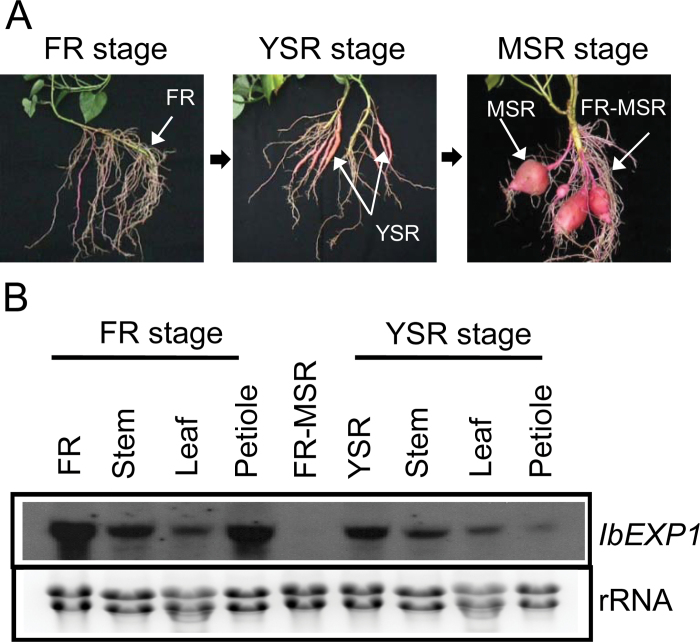
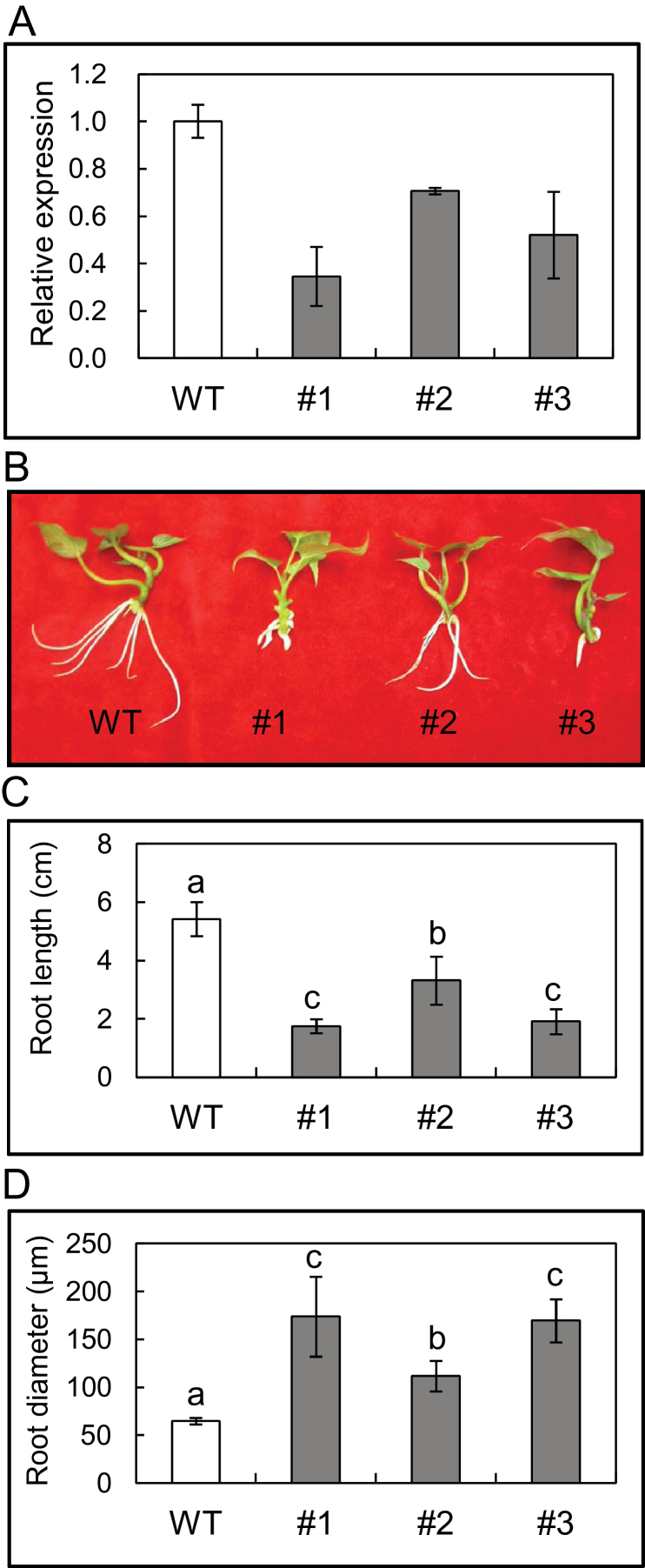
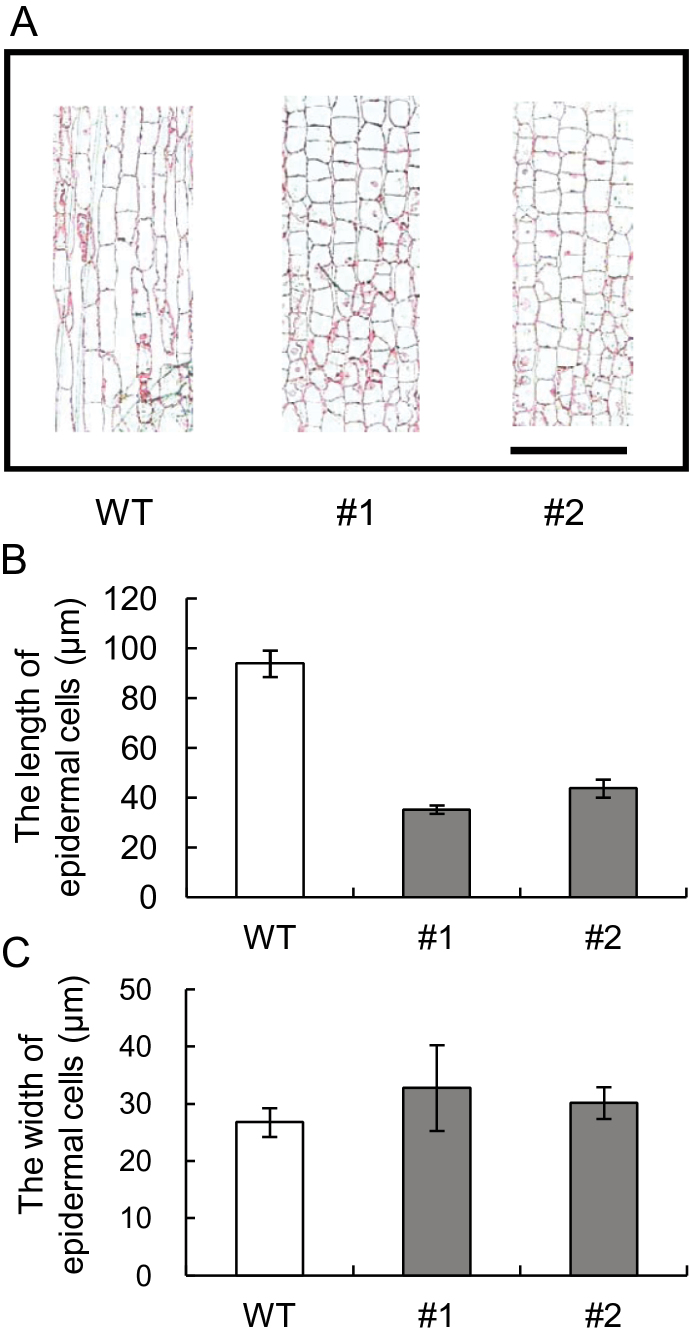
The role of an expansin gene (IbEXP1) in the formation of the storage root (SR) was investigated by expression pattern analysis and characterization of IbEXP1-antisense sweetpotato (Ipomoea batatas cv. Yulmi) plants in an attempt to elucidate the molecular mechanism underlying SR development in sweetpotato. The transcript level of IbEXP1 was high in the fibrous root (FR) and petiole at the FR stage, but decreased significantly at the young storage root (YSR) stage. IbEXP1-antisense plants cultured in vitro produced FRs which were both thicker and shorter than those of wild-type (WT) plants. Elongation growth of the epidermal cells was significantly reduced, and metaxylem and cambium cell proliferation was markedly enhanced in the FRs of IbEXP1-antisense plants, resulting in an earlier thickening growth in these plants relative to WT plants. There was a marked reduction in the lignification of the central stele of the FRs of the IbEXP1-antisense plants, suggesting that the FRs of the mutant plants possessed a higher potential than those of WT plants to develop into SRs. IbEXP1-antisense plants cultured in soil produced a larger number of SRs and, consequently, total SR weight per IbEXP1-antisense plant was greater than that per WT plant. These results demonstrate that SR development was accelerated in IbEXP1-antisense plants and suggest that IbEXP1 plays a negative role in the formation of SR by suppressing the proliferation of metaxylem and cambium cells to inhibit the initial thickening growth of SRs. IbEXP1 is the first sweetpotato gene whose role in SR development has been directly identified in soil-grown transgenic sweetpotato plants.
Overview
CoChat Summary
TL;DR
Down-regulation of the sweetpotato expansin gene *IbEXP1* accelerated storage root development, producing earlier thickening growth and higher storage root number and weight. The results suggest *IbEXP1* negatively regulates storage root formation by suppressing metaxylem and cambium cell proliferation.
Key findings
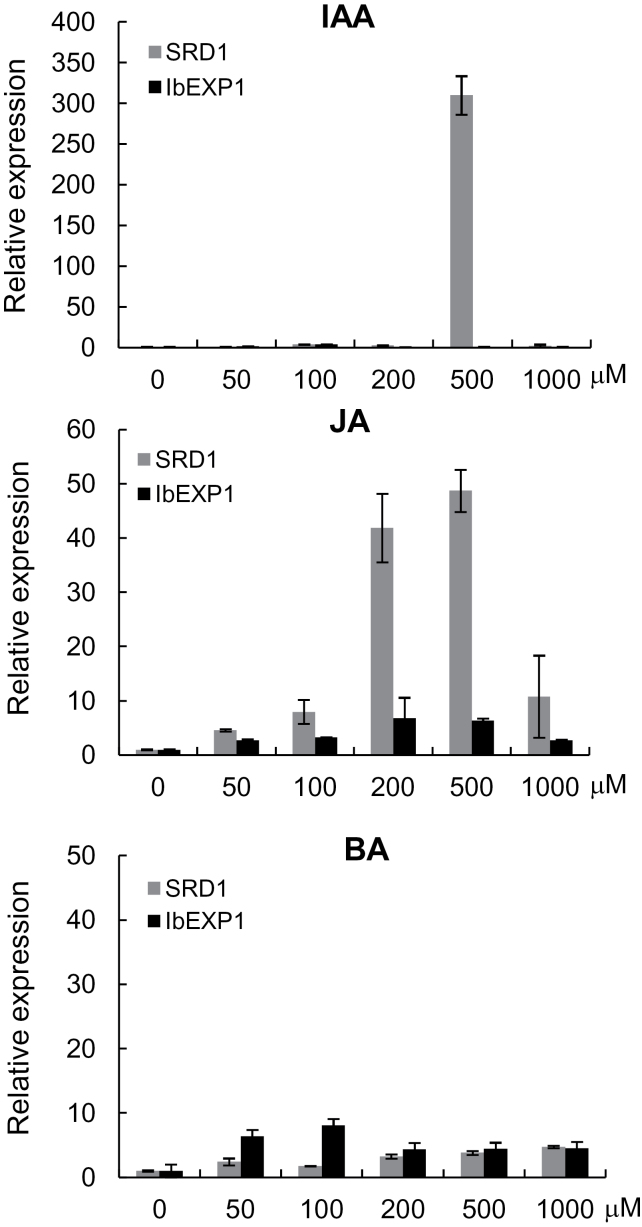
- *IbEXP1* transcript was high in fibrous root and petiole at the fibrous root stage, decreased markedly at the young storage root stage, and was not detected in fibrous roots at the mature storage root stage. Its expression was nearly insensitive to IAA, weakly induced by JA, and induced by BA.
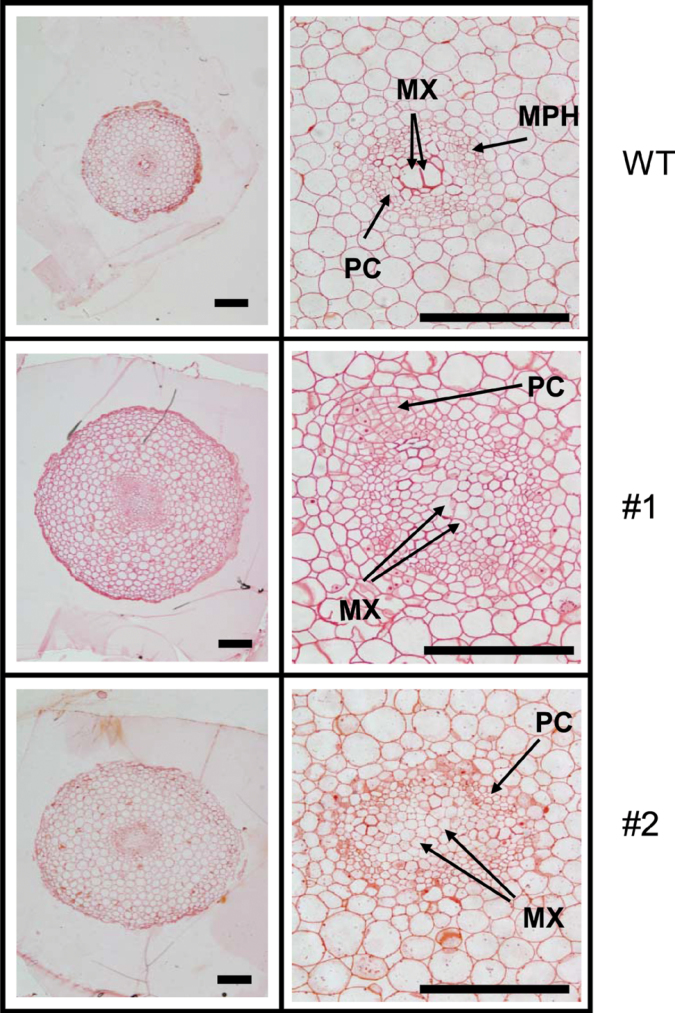
- *IbEXP1*-antisense lines #1, #3, and #2 had *IbEXP1* transcript levels of 35±12%, 52±18%, and 71±1% of wild type, respectively. Their fibrous roots were shorter and thicker; epidermal cell length in lines #1 and #2 was 38% and 47% of wild type, while metaxylem cell number increased 2.4- and 2.0-fold and cambium cell number increased 2.0- and 1.4-fold relative to wild type.
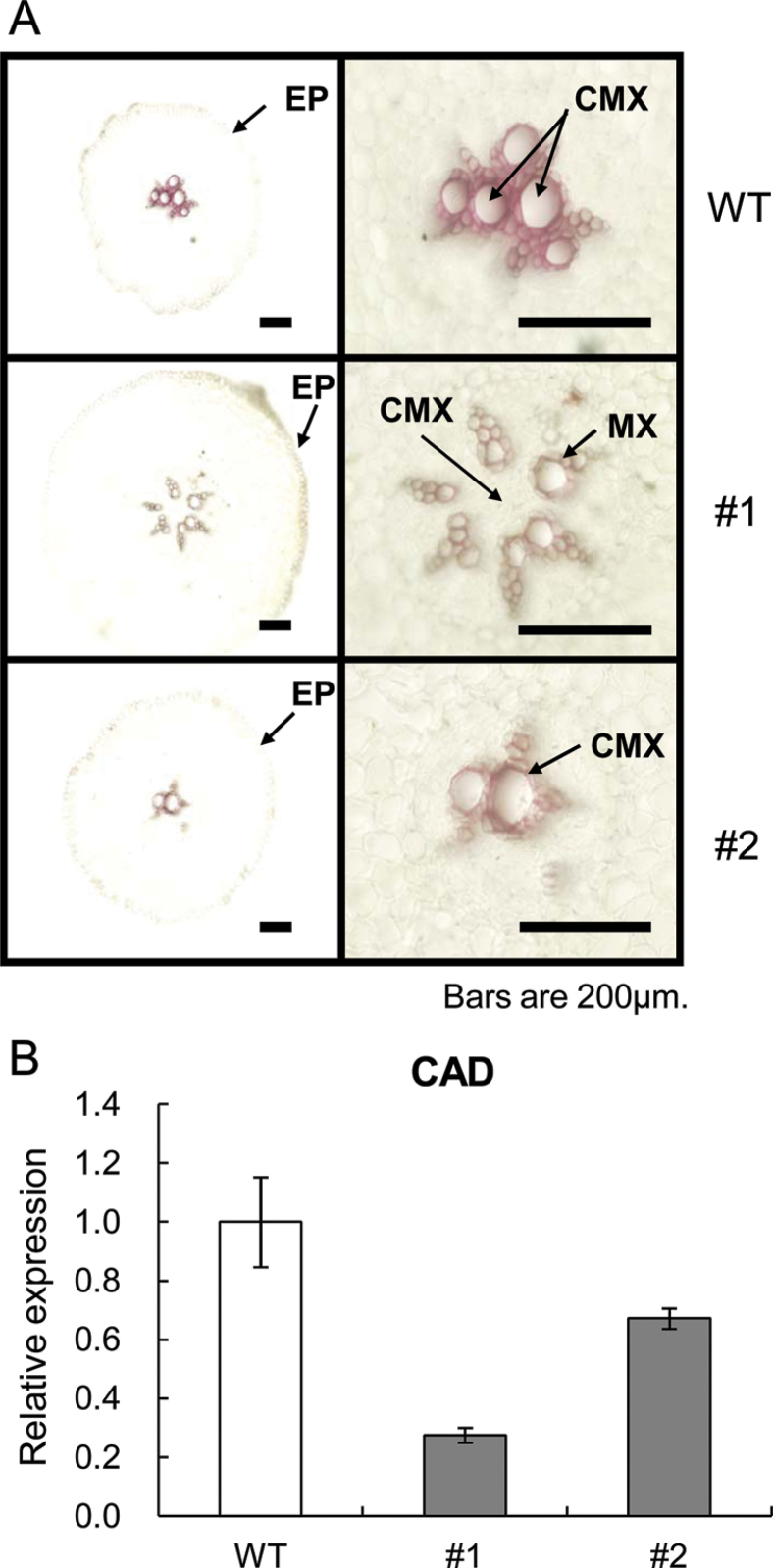
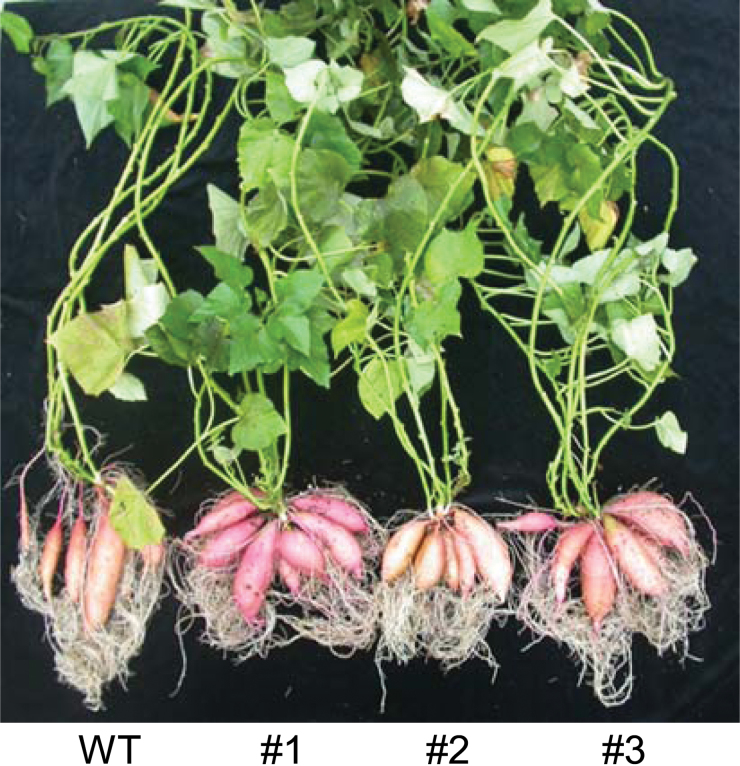
- Stele lignification and *CAD* transcript levels were reduced in antisense fibrous roots. Soil-grown antisense plants produced more storage roots—7.3±1.5, 7.0±0.6, and 6.0±0.6 for lines #1, #3, and #2 versus 4.5±2.4 for wild type—and greater total storage root weight: 393.8±35.0 g, 359.7±44.2 g, and 299.8±42.4 g versus 226.1±19.1 g for wild type.
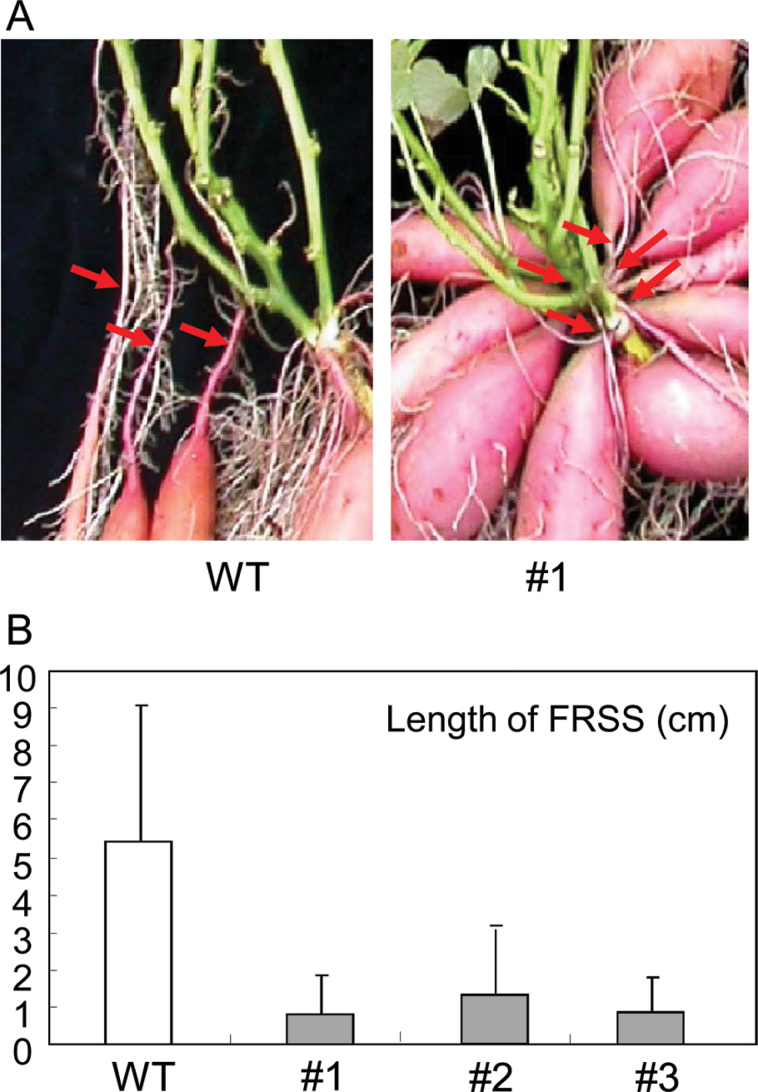
- The fibrous root segment between storage root and underground stem was <1.5 cm in antisense plants versus >5.0 cm in wild type, with storage roots forming near the proximal end of the fibrous root. Antisense plants also had more stems, greater total shoot weight, and delayed leaf senescence.
Methods
- *IbEXP1*-antisense sweetpotato (*Ipomoea batatas* cv. Yulmi) plants were generated by particle bombardment with full-length *IbEXP1* cDNA under the CaMV 35S promoter in antisense orientation; three independent transgenic lines were characterized.
- Expression was analyzed by RNA gel blot, RT-PCR, and qRT-PCR across fibrous root, young storage root, and mature storage root stages and after 3 h treatment with IAA, JA, or BA at 0, 50, 100, 200, 500, and 1000 µM. Root anatomy was examined by light microscopy, and lignin was detected with phloroglucinol-HCl staining.
- Wild-type and antisense plants were compared in vitro and in greenhouse soil for up to 5 months. Data are means ± SD from three measurements of three individual plants; significance was assessed by Duncan’s multiple range test at P < 0.05.
Limitations
- The paper does not include a dedicated limitations section.
- Evident from the text: characterization used three antisense lines rather than knockout or overexpression lines, and the main yield phenotypes were measured in greenhouse soil, not field conditions.
- Evident from the text: hormone treatments were short-term (3 h) and performed on fibrous roots, so they do not establish direct regulatory mechanisms; the authors also note that increased shoot weight may partially contribute to increased total storage root weight, though they argue enhanced storage root formation occurred before shoot growth increased.
Model-written summary. Check it against the paper before relying on it.
Integrity signals
Registry
Cites
Statistics
Figures
Verification
Claims the paper makes
0 Valid · 2 Not valid · 22 Not checked · 83 Own results and interpretations
A result the paper reports from its own data — it cites no other source for it, so there is none to check. The quote shows it is in the paper.
In the paper
“IbEXP1 transcript levels in the FRs of IbEXP1-antisense plants of lines #1, #3, and #2 decreased to 35±12, 52±18, and 71±1%, respectively, of that of the wild-type (WT) plants”
§ Down-regulation of the IbEXP1 gene enhanced storage root development in sweetpotato > Results > IbEXP1-antisense sweetpotato plants showed an earlier thickening growth in FRs
plain- Asserted: passes — The authors put it forward as true.
- Checkable: passes — It can be checked against evidence.
- Load-bearing: passes — The paper’s conclusions depend on it.
- Based: passes — The paper gives a reason why it holds.
A result the paper reports from its own data — it cites no other source for it, so there is none to check. The quote shows it is in the paper.
In the paper
“in the three IbEXP1-antisense lines, the length of the FRs was significantly reduced”
§ Down-regulation of the IbEXP1 gene enhanced storage root development in sweetpotato > Results > IbEXP1-antisense sweetpotato plants showed an earlier thickening growth in FRs
plainstates a cause- Asserted: passes — The authors put it forward as true.
- Checkable: passes — It can be checked against evidence.
- Load-bearing: passes — The paper’s conclusions depend on it.
- Based: passes — The paper gives a reason why it holds.
A result the paper reports from its own data — it cites no other source for it, so there is none to check. The quote shows it is in the paper.
In the paper
“The transcript levels of IbEXP1 increased gradually in response to increasing concentrations of JA, reaching a maximum transcript level (~10-fold) at 200 µM JA”
§ Down-regulation of the IbEXP1 gene enhanced storage root development in sweetpotato > Results > Transcriptional regulation of IbEXP1 in response to exogenous hormones
plainstates a cause- Asserted: passes — The authors put it forward as true.
- Checkable: passes — It can be checked against evidence.
- Load-bearing: unclear — It is unclear whether the paper’s conclusions depend on it.
- Based: passes — The paper gives a reason why it holds.
A result the paper states — it cites no source for it, so there is none to check. The quote shows it is in the paper.
In the paper
“WT plants showed the typical anatomy of FRs, with a relatively small root stele in which metaxylem and metaphloem had recently differentiated.”
§ Down-regulation of the IbEXP1 gene enhanced storage root development in sweetpotato > Results > Cell proliferation was enhanced in FRs of IbEXP1-antisense sweetpotato plants
plain- Asserted: passes — The authors put it forward as true.
- Checkable: passes — It can be checked against evidence.
- Load-bearing: unclear — It is unclear whether the paper’s conclusions depend on it.
- Based: passes — The paper gives a reason why it holds.
A result the paper reports from its own data — it cites no other source for it, so there is none to check. The quote shows it is in the paper.
In the paper
“IbEXP1 mRNA was not detected at all in the FR at the MSR stage.”
§ Down-regulation of the IbEXP1 gene enhanced storage root development in sweetpotato > Results > Transcript level of IbEXP1 was down-regulated during SR development
plain- Asserted: passes — The authors put it forward as true.
- Checkable: passes — It can be checked against evidence.
- Load-bearing: unclear — It is unclear whether the paper’s conclusions depend on it.
- Based: passes — The paper gives a reason why it holds.
44 more claims
Create a free account to see all 107 claims and to verify the 45 references still open.
- It may state two separate claims as one. 41
- Probably not a substantial claim. 20
Claims other papers make about this one
Each is checked against this paper’s own text: does it say what the citing paper says it does?
The cited source says what the claim attributes to it.
In the citing paper
“Noh et al. [14] reported that IbEXP1 inhibits the formation of storage roots, and the silencing of this gene leads to the early development of storage roots and significantly increases the number and total weight of storage roots.”
From RNA-Seq and iTRAQ reveal multiple pathways involved in storage root formation and development in sweet potato (Ipomoea batatas L.) (2019) · cites this paper as [14]
Self-check
Percentages, sums and reported differences re-computed from the paper’s own numbers.
Each contradiction between two passages listed here was confirmed by an independent check.
Rated minor: it would not touch a result — a value no result rests on, a p-value that stays on the same side of the significance level, or a conflict that is clerical, resolved elsewhere in the paper, or outside its own findings.
In the paper
§ Down-regulation of the IbEXP1 gene enhanced storage root development in sweetpotato > Results > IbEXP1-antisense sweetpotato plants produced a higher number of SRs
“| No. of SRsc | 4.5±2.4 | 7.3±1.5 | (1.6) | 6.0±0.6 | (1.3) | 7.0±0.6 | (1.6) | | Total weight of SRs (g)d | 226.1±19.1 | 393.8±35.0 | (1.7) | 299.8±42.4 | (1.3) | 359.7±44.2 | (1.6) | | No. of stems | 3.3±0.5 | 6.3±1.2 | (1.9) | 4.7±1.2 | (1.4) | 5.5±0.7 | (1.7) |”
§ Down-regulation of the IbEXP1 gene enhanced storage root development in sweetpotato > Results > IbEXP1-antisense sweetpotato plants produced a higher number of SRs
“Data are means ±SD from three separate measurements of three individual plants grown in the soil.”
Citations
Cites
A Revised Medium for Rapid Growth and Bio Assays with Tobacco Tissue Cultures
Murashige, T., & Skoog, F. (1962) · Physiologia Plantarum · doi:10.1111/j.1399-3054.1962.tb08052.x · Cited by 67,392
Two endogenous proteins that induce cell wall extension in plants.
McQueen-Mason, S., Durachko, D. M., & Cosgrove, D. J. (1992) · The Plant Cell · doi:10.1105/tpc.4.11.1425 · Cited by 960 · cited 1×
“Expansins have been characterized as cell wall-loosening proteins (McQueen-Mason et al., 1992; McQueen-Mason and Cosgrove, 1995; Li et al., 2003).”
Staswick, P. E., Su, W., & Howell, S. H. (1992) · Proceedings of the National Academy of Sciences · doi:10.1073/pnas.89.15.6837 · Cited by 864 · cited 1×
“JA has been shown to inhibit root elongation (Staswick et al., 1992; Feys et al., 1994).”
Sampedro, J., & Cosgrove, D. J. (2005) · Genome biology · doi:10.1186/gb-2005-6-12-242 · Cited by 814
Feys, B. J. F., Benedetti, C. E., Penfold, C. N., & Turner, J. G. (1994) · The Plant Cell · doi:10.2307/3869877 · Cited by 567
Expansin Mode of Action on Cell Walls (Analysis of Wall Hydrolysis, Stress Relaxation, and Binding)
McQueen-Mason, S. J., & Cosgrove, D. J. (1995) · Plant Physiology · doi:10.1104/pp.107.1.87 · Cited by 494 · cited 1×
“Expansins have been characterized as cell wall-loosening proteins (McQueen-Mason et al., 1992; McQueen-Mason and Cosgrove, 1995; Li et al., 2003).”
Altered expression of expansin modulates leaf growth and pedicel abscission in Arabidopsis thaliana
Cho, H.-T., & Cosgrove, D. J. (2000) · Proceedings of the National Academy of Sciences · doi:10.1073/pnas.160276997 · Cited by 489
Brummell, D. A., Harpster, M. H., Civello, P. M., Palys, J. M., Bennett, A. B., & Dunsmuir, P. (1999) · The Plant Cell · doi:10.1105/tpc.11.11.2203 · Cited by 483
Wang, Z., Fang, B., Chen, J., Zhang, X., Luo, Z., Huang, L., Chen, X., & Li, Y. (2010) · BMC Genomics · doi:10.1186/1471-2164-11-726 · Cited by 433
Expression of a divergent expansin gene is fruit-specific and ripening-regulated
Rose, J. K. C., Lee, H. H., & Bennett, A. B. (1997) · Proceedings of the National Academy of Sciences · doi:10.1073/pnas.94.11.5955 · Cited by 410
Self-citation
Research works printed but not linked: 3
- Akita S Yamamoto F Ono M Kusuhara M Kobayashi H Ikemoto S 1962 Studies on the small tuber set method in sweetpotato cultivation. Bulletin of the Chugoku National Agricultural Experiment Station. 8, 75– 128 (in Japanese with English summary)
- Kokubu T 1973 Thermatological studies on the relationship between the structure of tuberous root and its starch accumulating function in sweetpotato varieties. Bulletin of the Faculty of Agriculture, Kagoshima University. 23, 1– 126 (in Japanese with English summary)
- Togari Y 1950 A study of tuberous root formation in sweetpotato. Bulletin of Tokyo National Agricultural Experimental Station. 68, 1– 96
Cited by
Expansins: roles in plant growth and potential applications in crop improvement
Marowa, P., Ding, A., & Kong, Y. (2016) · Plant Cell Reports · doi:10.1007/s00299-016-1948-4 · Cited by 448
“For example, in cases where tubers are the harvested yield, expansins have been reported to increase the sizes of these tubers (Noh et al. 2013).”
BackgroundRoot System Architecture and Abiotic Stress Tolerance: Current Knowledge in Root and Tuber Crops
Khan, M. A., Gemenet, D. C., & Villordon, A. (2016) · Frontiers in Plant Science · doi:10.3389/fpls.2016.01584 · Cited by 245
Tuber and Tuberous Root Development
Zierer, W., Rüscher, D., Sonnewald, U., & Sonnewald, S. (2021) · Annual Review of Plant Biology · doi:10.1146/annurev-arplant-080720-084456 · Cited by 218
Firon, N., LaBonte, D., Villordon, A., Kfir, Y., Solis, J., Lapis, E., Perlman, T., Doron-Faigenboim, A., Hetzroni, A., Althan, L., et al. (2013) · BMC Genomics · doi:10.1186/1471-2164-14-460 · Cited by 182
“[31] showing that down-regulation of the IbEXP1 expansin gene (exhibiting high homology to contigs S_PBL_c6536 and S_PBL_c1824) in Ipomoea batatas cv.”
BackgroundGenomic insights into the origin, domestication and diversification of Brassica juncea
Kang, L., Qian, L., Zheng, M., Chen, L., Chen, H., Yang, L., You, L., Yang, B., Yan, M., Gu, Y., et al. (2021) · Nature Genetics · doi:10.1038/s41588-021-00922-y · Cited by 172
EXPANSINA17 Up-Regulated by LBD18/ASL20 Promotes Lateral Root Formation During the Auxin Response
Lee, H. W., & Kim, J. (2013) · Plant and Cell Physiology · doi:10.1093/pcp/pct105 · Cited by 154
Self-citationDong, T., Zhu, M., Yu, J., Han, R., Tang, C., Xu, T., Liu, J., & Li, Z. (2019) · BMC Plant Biology · doi:10.1186/s12870-019-1731-0 · Cited by 109
Improvement for agronomically important traits by gene engineering in sweetpotato
Liu, Q. (2017) · Ikushugaku zasshi · doi:10.1270/jsbbs.16126 · Cited by 145
“Noh et al. (2013) found that an expansin gene (IbEXP1) played a negative role in the formation of sweetpotato storage roots by suppressing the proliferation of metaxylem and cambium cells to inhibit the initial thickening growth of storage roots.”
BackgroundYang, L., Tu, L., Pettolino, F. A., Ji, S., Hao, J., Yuan, D., Deng, F., Tan, J., Hu, H., Wang, Q., et al. (2015) · Plant Biotechnology Journal · doi:10.1111/pbi.12450 · Cited by 115
Pereira, G. D. S., Gemenet, D. C., Mollinari, M., Olukolu, B. A., Wood, J. C., Diaz, F. C., Mosquera, V., Grüneberg, W. J., Khan, A., Buell, C. R., et al. (2020) · Genetics · doi:10.1534/genetics.120.303080 · Cited by 94
Wang, H., Yang, J. M., Zhang, M., Fan, W., Firon, N., Pattanaik, S., Yuan, L., & Zhang, P. (2016) · Scientific Reports · doi:10.1038/srep18645 · Cited by 78
He, S., Wang, H., Hao, X., Wu, Y., Bian, X., Yin, M., Zhang, Y., Fan, W., Dai, H., Yuan, L., et al. (2021) · The Plant Journal · doi:10.1111/tpj.15478 · Cited by 95
Chen, J., Pei, Z., Dai, L., Wang, B., Liu, L., An, X., & Peng, D. (2014) · BMC Genomics · doi:10.1186/1471-2164-15-919 · Cited by 58
“Expansin, known to have cell wall loosening activity and is involved in cell expansion and other developmental events during which cell wall modification occurs [19], plays important roles during cell elongation [20] and expansion [21], and specifically regulates fiber elongation [22] and fruit ripening [23].”
BackgroundLi, M., Yang, Y., Feng, F., Zhang, B., Chen, S., Yang, C., Gu, L., Wang, F., Zhang, J., Chen, A., et al. (2017) · BMC Plant Biology · doi:10.1186/s12870-017-1060-0 · Cited by 65
Overexpression of IbPAL1 promotes chlorogenic acid biosynthesis in sweetpotato
Yu, Y., Wang, Y., Yu, Y., Ma, P., Jia, Z., Guo, X., Xie, Y., & Bian, X. (2020) · The Crop Journal · doi:10.1016/j.cj.2020.06.003 · Cited by 55
Xie, Y., Xu, L., Wang, Y., Fan, L., Chen, Y., Tang, M., Luo, X., & Liu, L. (2018) · Horticulture Research · doi:10.1038/s41438-018-0057-7 · Cited by 52
Ponniah, S. K., Thimmapuram, J., Bhide, K. P., Kalavacharla, V. K., & Manoharan, M. (2017) · BMC Plant Biology · doi:10.1186/s12870-016-0950-x · Cited by 51
“[16] used antisense RNA interference to demonstrate the negative role of an expansin gene (IbEXP1) in SR development; IbEXP1 suppresses the proliferation of metaxylem and cambium cells, and thus”
BackgroundGenome-wide identification of agronomically important genes in outcrossing crops using OutcrossSeq
Chen, M., Fan, W., Ji, F., Hua, H., Liu, J., Yan, M., Ma, Q., Fan, J., Wang, Q., Zhang, S., et al. (2021) · Molecular Plant · doi:10.1016/j.molp.2021.01.003 · Cited by 52
Villordon, A. Q., LaBonte, D., Firon, N., & Carey, E. E. (2013) · HortScience · doi:10.21273/hortsci.48.6.808 · Cited by 54
OsEXPA10 mediates the balance between growth and resistance to biotic stress in rice
Tan, J., Wang, M., Shi, Z., et al. (2018) · Plant Cell Reports · doi:10.1007/s00299-018-2284-7 · Cited by 44
Overexpression of sweetpotato expansin cDNA (IbEXP1) increases seed yield in Arabidopsis
Bae, J. M., Kwak, M. S., Noh, S. A., Oh, M.-J., Kim, Y.-S., & Shin, J. S. (2014) · Transgenic Research · doi:10.1007/s11248-014-9804-1 · Cited by 45
“In one of our earlier studies, we observed that the elongation growth of various organs was limited in IbEXP1-antisense transgenic sweetpotato plants, resulting in shorter fibrous roots, stems, petioles, and internodes, and smaller leaves (Noh et al. 2013).”
BackgroundResultInfluentialSelf-citationShekhar, S., Mishra, D., Gayali, S., Buragohain, A. K., Chakraborty, S., & Chakraborty, N. (2016) · Journal of Proteomics · doi:10.1016/j.jprot.2016.03.028 · Cited by 39
“Several reports proposed that the growth hormones, such as auxins, cytokinins and ABA play a variety of roles in the formation and bulking of tubers [76].”
BackgroundSelvaraj, M. G., Montoya-P, M. E., Atanbori, J., French, A. P., & Pridmore, T. (2019) · Plant Methods · doi:10.1186/s13007-019-0517-6 · Cited by 38
Over-expression of PttEXPA8 gene showed various resistances to diverse stresses
Zhang, H., Liu, H., Yang, R., Xu, X., Liu, X., & Xu, J. (2019) · International Journal of Biological Macromolecules · doi:10.1016/j.ijbiomac.2019.02.115 · Cited by 37
Cai, Z., Cai, Z., Huang, J., Wang, A., Ntambiyukuri, A., Chen, B., Zheng, G., Li, H., Huang, Y., Zhan, J., et al. (2022) · BMC Genomics · doi:10.1186/s12864-022-08670-x · Cited by 45
“SRF6 was the most abundantly expressed in tuberous root, and its mRNA was located around the primary cambium and meristem of the xylem, promoting the thickening of the tuberous root [18, 19].”
BackgroundYan, M., Li, M., Wang, Y., Wang, X., Moeinzadeh, M.-H., Quispe-Huamanquispe, D. G., Fan, W., Fang, Y., Wang, Y., Nie, H., et al. (2023) · Molecular Plant · doi:10.1016/j.molp.2023.12.019 · Cited by 41
Gregory, P. J., & Wojciechowski, T. (2020) · Advances in agronomy · doi:10.1016/bs.agron.2020.01.001 · Cited by 50
Yang, Y., Zhu, J., Sun, L. J., Kong, Y., Chen, J., Zhu, M., Xu, T., Li, Z., & Dong, T. (2022) · Scientia Horticulturae · doi:10.1016/j.scienta.2022.111588 · Cited by 32
Recent Progress in Molecular Studies on Storage Root Formation in Sweetpotato (Ipomoea batatas)
Tanaka, M. (2016) · Japan Agricultural Research Quarterly JARQ · doi:10.6090/jarq.50.293 · Cited by 33
Li, J., Ding, Q., Wang, F., Zhang, Y., Li, H., & Gao, J. (2015) · PLoS ONE · doi:10.1371/journal.pone.0137983 · Cited by 29
“Expansin (EXP1) has been reported to play a negative role in the formation of storage root in sweet potatoes [10].”
BackgroundParallel evolution of storage roots in morning glories (Convolvulaceae)
Eserman, L. A., Jarret, R. L., & Leebens-Mack, J. H. (2018) · BMC Plant Biology · doi:10.1186/s12870-018-1307-4 · Cited by 25
Gu, L., Wu, Y., Li, M., Wang, F., Li, Z., Yuan, F., & Zhang, Z. (2021) · Plant Physiology and Biochemistry · doi:10.1016/j.plaphy.2021.05.010 · Cited by 23
Regulatory mechanism of GA3 on tuber growth by DELLA-dependent pathway in yam (Dioscorea opposita)
Zhou, Y., Li, Y., Gong, M., et al. (2021) · Plant Molecular Biology · doi:10.1007/s11103-021-01163-7 · Cited by 25
Proline-rich protein gene PdPRP regulates secondary wall formation in poplar
Li, S., Zhang, Y., Ding, C., et al. (2018) · Journal of Plant Physiology · doi:10.1016/j.jplph.2018.12.007 · Cited by 24
Tang, C., Han, R., Zhou, Z., Yang, Y., Zhu, M., Xu, T., Wang, A., Li, Z., & Dong, T. (2020) · Journal of Plant Physiology · doi:10.1016/j.jplph.2020.153224 · Cited by 24
IbNF‐YA1 is a key factor in the storage root development of sweet potato
Xue, L., Wang, Y., Fan, Y., Jiang, Z., Wei, Z., Zhai, H., He, S., Zhang, H., Yang, Y., Zhao, N., et al. (2024) · The Plant Journal · doi:10.1111/tpj.16723 · Cited by 28
Effects of nitrogen forms on carbohydrate metabolism and storage‐root formation of sweet potato
Si, C., Shi, C., Liu, H., Zhan, X., & Liu, Y. (2018) · Journal of Plant Nutrition and Soil Science · doi:10.1002/jpln.201700297 · Cited by 27
Bian, X., Kim, H. S., Kwak, S., Zhang, Q., Liu, S., Ma, P., Jia, Z., Xie, Y., Zhang, P., & Yu, Y. (2022) · Frontiers in Plant Science · doi:10.3389/fpls.2022.820450 · Cited by 22
Cheng, S., Liu, Y., Su, L., Liu, X., Chu, Q., He, Z., Zhou, X., Lu, W., Jiang, C., & Zheng, W. (2023) · BMC Plant Biology · doi:10.1186/s12870-023-04427-0 · Cited by 29
“Overexpression of IbEXP1 gene will inhibit the proliferation of xylem and cambium cells, thus inhibiting the thickening of tuberous roots [33].”
BackgroundHearn, D. J., O’Brien, P., & Poulsen, S. M. (2018) · PLoS ONE · doi:10.1371/journal.pone.0197166 · Cited by 21
Yoon, U.-H., Cao, Q., Shirasawa, K., Zhai, H., Lee, T., Tanaka, M., Hirakawa, H., Hahn, J.-H., Wang, X., Kim, H. S., et al. (2022) · bioRxiv (Cold Spring Harbor Laboratory) · doi:10.1101/2022.12.25.521700 · Cited by 21
Self-citationCRISPR/Cas9: an advanced platform for root and tuber crops improvement
Divya, K., Thangaraj, M., & Radhika, N. K. (2024) · Frontiers in Genome Editing · doi:10.3389/fgeed.2023.1242510 · Cited by 25
Duan, W., Zhang, H., Xie, B., Wang, B., Hou, F., Li, A., Dong, S., Qin, Z., Wang, Q., & Zhang, L. (2021) · Physiologia Plantarum · doi:10.1111/ppl.13504 · Cited by 16
Yu, J., Su, Y., Sun, J., Liu, J., Li, Z., & Zhang, B. (2020) · Molecular and Cellular Probes · doi:10.1016/j.mcp.2020.101610 · Cited by 17
Impact of paclobutrazol on storage root number and yield of sweet potato (Ipomoea batatas L.)
Si, C., Li, Y., Liu, H., Zhang, H.-Y., Meng, Y., Wang, N., & Shi, C. (2023) · Field Crops Research · doi:10.1016/j.fcr.2023.109011 · Cited by 20
Wang, H., Yu, J., Zhu, B., Gu, L., Wang, H., Du, X., Zeng, T., & Tang, H. (2023) · International Journal of Molecular Sciences · doi:10.3390/ijms241713061 · Cited by 18
“Expansins are common in plants and are categorized into four subfamilies: expansin-like B (EXLB), expansin-like A (EXLA), β-expansin (EXPB), and α-expansin (EXPA) [9].”
BackgroundRepression of OsEXPA3 Expression Leads to Root System Growth Suppression in Rice
Qiu, S., Ma, N., Che, S., Wang, Y., Peng, X., Zhang, G., Wang, G., & Huang, J. (2014) · Crop Science · doi:10.2135/cropsci2013.11.0746 · Cited by 15
Fan, W., Wang, Y., Zhang, L., Fang, Y., Yan, M., Yuan, L., Yang, J. M., & Wang, H. (2023) · Plant Physiology and Biochemistry · doi:10.1016/j.plaphy.2023.107796 · Cited by 17
Meng, X., Dong, T., Li, Z., & Zhu, M. (2024) · Frontiers in Plant Science · doi:10.3389/fpls.2024.1428975 · Cited by 22
“Moreover, molecular biology studies relatedto starch andtuberous root development have also made breakthroughs, and the functions of multiple related genes have been analyzed, including IbEXP1 , IbMADS1 , SRD1 , GBSSI , and SBEII (Kitahara et al., 2007; Ku et al., 2008; Noh et al., 2010, 2013).”
BackgroundYang, Y., Li, M. J., Yi, Y., Li, R. F., Dong, C., & Zhang, Z. Y. (2018) · Plant Cell Reports · doi:10.1007/s00299-018-2255-z · Cited by 14
“In sweet potatoes and carrots, the down-regulation of lignin biosynthesis promoted the expansion of normal roots (Taylor et al. 1992; Noh et al. 2013; Firon et al. 2013; Wang et al. 2016).”
BackgroundMathura, S. R. (2023) · AoB Plants · doi:10.1093/aobpla/plad027 · Cited by 14
“Auxin levels were observed to be high during the initial stages of SR formation (Noh et al. 2013), but these levels decline as secondary thickening growth progresses (Dong et al. 2019).”
BackgroundXiao, X., Hu, Y., Ming, Z., Si, S., Haonan, Z., Zhu, W., Ge, F., Caijun, W., & Shuying, F. (2023) · BMC Plant Biology · doi:10.1186/s12870-023-04303-x · Cited by 15
“Lignification of the fibrous root mid-column was significantly reduced, providing them a higher potential to develop storage roots, suggesting that EXP1 plays a suppressive role in the formation of storage roots in sweet potatoes [31].”
BackgroundSong, W., Yan, H., Ma, M., Kou, M., Li, C., Tang, W., Yu, Y., Hao, Q., Nguyen, T., Wang, X., et al. (2022) · Genes · doi:10.3390/genes13071156 · Cited by 16
Lone, R. A., Sarvendra, K., Singh, V., Bano, N., Bag, S. K., Mohanty, C. S., & Barik, S. K. (2022) · Current Plant Biology · doi:10.1016/j.cpb.2022.100266 · Cited by 14
Hu, Y., Li, Y., Baibi, Z., et al. (2024) · Frontiers in Plant Science · doi:10.3389/fpls.2024.1332240 · Cited by 12
Wang, D., Li, C., Liu, H., Song, W., Shi, C., & Li, Q. (2024) · The Plant Journal · doi:10.1111/tpj.17029 · Cited by 17
Sun, M., Zhu, Z.-P., Yu, J., Wu, K., Guo, Y.-X., Shen, M. Y., Liu, F., Tang, X., & Kang, Y. (2023) · Plant Growth Regulation · doi:10.1007/s10725-022-00953-3 · Cited by 12
Meng, Y., Wang, N., & Si, C. (2022) · Agronomy · doi:10.3390/agronomy12102317 · Cited by 17
Li, M., Chen, L., Lang, T., Qu, H., Zhang, C., Feng, J., Pu, Z., Peng, M., & Lin, H. (2022) · Genes · doi:10.3390/genes13061043 · Cited by 11
Suematsu, K., Tanaka, M., & Isobe, S. (2021) · Plant Production Science · doi:10.1080/1343943x.2021.1927766 · Cited by 11
“…(Dong et al., 2019; Eserman et al., 2018; Firon et al., 2013; Tanaka et al., 2005; Wang et al., 2015; Zhang et al., 2017), and the functions of some genes, especially SRF1 (Tanaka et al., 2009), IbEXP1 (Noh et al., 2013), and SRD1 (Noh et al., 2010), were analyzed using transgenic techniques.”
MethodCloning of expansin genes in ramie (Boehmeria nivea L.) based on universal fast walking
Chen, J., Dai, L., Wang, B., Liu, L., & Peng, D. (2014) · Gene · doi:10.1016/j.gene.2014.11.029 · Cited by 8
“Expansins play important roles during cell elongation (Bai et al., 2012) and expansion (Zenoni et al., 2011), specifically regulating fiber elongation (Zheng et al., 2012) and fruit ripening (Noh et al., 2013).”
BackgroundCui-Juan, W. A. N. G., Shi, C., Liu, N., Shuang-Rong, L. I. U., & Xin-Di, Y. U. (2016) · ACTA AGRONOMICA SINICA · doi:10.3724/sp.j.1006.2016.00131 · Cited by 11
Nuruzzaman, M., Sato, M., Okamoto, S., Hoque, M., Shea, D. J., Fujimoto, R., Shimizu, M., Fukai, E., & Okazaki, K. (2022) · Physiologia Plantarum · doi:10.1111/ppl.13770 · Cited by 9
Transgenic Research in Tuber and Root Crops
Si, H., Zhang, N., Tang, X., Yang, J., Wen, Y., Wang, L., & Zhou, X. (2018) · Elsevier eBooks · doi:10.1016/b978-0-12-810439-2.00011-8 · Cited by 15
Form and contour: breeding and genetics of organ shape from wild relatives to modern vegetable crops
Goldman, I. L., Wang, Y., Vega, A., Brainard, S. H., Oravec, M. W., McGregor, C., & van der Knaap, E. (2023) · Frontiers in Plant Science · doi:10.3389/fpls.2023.1257707 · Cited by 14
Ma, Y., Li, D., Xu, Z., et al. (2022) · International Journal of Molecular Sciences · doi:10.3390/ijms23095074 · Cited by 7
“Furthermore, GRMZM2G328988, GRMZM2G463904, GRMZM2G095968 and GRMZM2G050305 are orthologous to UPL3 in oilseed rape [45], to RLK7 in maize [46], to IbEXP1 in sweet potato [47] and to GmMYB14 in soybean [48], respectively.”
BackgroundRen, Y., Li, W. B., Li, Z. X., Zhang, W. L., Jue, D., Xing, H., Li, H. L., & Li, Q. (2023) · PLoS ONE · doi:10.1371/journal.pone.0287969 · Cited by 7
“Sweet potato IbEXP1 has been reported to play a negative role in the formation of storage roots by suppressing the proliferation of metaxylem and cambium cells and thus inhibiting the initial thickening of storage roots [22].”
BackgroundCao, J., Zhu, W., Zhang, W., Chen, X., Sun, H., Sun, R., Zhao, J., Zhu, S., Liu, X., da Silva, J. A. T., et al. (2024) · Scientia Horticulturae · doi:10.1016/j.scienta.2024.113165 · Cited by 5
Ding, F., Zou, X., Fan, H., Rao, L.-P., Sun, J., & Li, Q. (2025) · BMC Plant Biology · doi:10.1186/s12870-025-07030-7 · Cited by 5
“Levels of IAA, a growth hormone, are initially high in the strong stages of SPSR formation [15].”
Expansin Genes Expressed Differentially in Peduncle Elongation of Near-Isogenic Wheat Rht Lines
Jia-li, W. A. N. G., Liu, D., Guo, X., et al. (2014) · Journal of Integrative Agriculture · doi:10.1016/s2095-3119(13)60725-x · Cited by 4
Characterization and expression analysis of the expansin gene NnEXPA1 in lotus Nelumbo nucifera
Cheng, N., Zeng, X., Zheng, X., Diao, Y., Wang, Y., Xie, K., Zhou, M.-Q., & Hu, Z. (2016) · Biologia · doi:10.1515/biolog-2016-0015 · Cited by 4
“A similar result has been observed in sweet potato, in which the ibEXP1 significantly decreased during the development of fibrous root (Noh et al. 2013).”
ResultLin, X., Su, C., Hu, M., Tang, B., Wu, C., & Zhu, H. (2025) · BMC Plant Biology · doi:10.1186/s12870-025-07573-9 · Cited by 3
Phytohormones during tuber and storage root formation
Malankar, N., Vyawahare, A. B., & Kondhare, K. R. (2025) · Plant Hormones · doi:10.48130/ph-0025-0024 · Cited by 3
The IbMYB52/IbARF11L-IbDRM1 module negatively regulates the root development of sweetpotato
Li, C., Song, W., Wang, D., Li, C., Tang, W., Gao, R., Zhang, A., Gao, T., Yan, H., Wang, X., et al. (2025) · Plant Physiology and Biochemistry · doi:10.1016/j.plaphy.2025.110250 · Cited by 6
Sakamoto, M., & Suzuki, T. (2024) · AgriEngineering · doi:10.3390/agriengineering6040222 · Cited by 4
Achieving sustainable cultivation of potatoes Volume 1
Wang‐Pruski, G. (2018) · Burleigh Dodds series in agricultural science · doi:10.1201/9781351114455 · Cited by 11
Wang, G., Wang, T., Wang, G., et al. (2025) · BMC Plant Biology · doi:10.1186/s12870-025-07666-5 · Cited by 2
“…that EXPs participate in nearly all plant growth and development processes related to cell wall relaxation, including seed germination [42], root elongation [43], leaf and stem development [44, 45], pollen tube elongation [46], fruit softening and ripening [47, 48], and fruits abscission [49].”
Li, J., Zhang, Z., Li, Q., Geng, C., Huang, H., Qin, X., Liang, Y., Nan, W., Zhang, H., Fu, Y., et al. (2026) · Plants · doi:10.3390/plants15020305 · Cited by 2
“The protein sequences of Itr2xEXLA4, Iba4xEXLA2, Ibw6xEXLA2, and Iba6xEXLA2 are highly similar to the previously reported IbEXP1 [22].”
InfluentialLi, J., Cui, F., Wang, Y., Zhang, X., Xu, L., Wang, K., Yuan, X., Mei, Y., Ying, J., Wang, R., et al. (2026) · PLANT PHYSIOLOGY · doi:10.1093/plphys/kiag007 · Cited by 3
Genome-wide identification and expression analysis of the expansin gene family in Brassica napus L
Luo, W., Zhang, J., Zhang, H., Bao, K., Yan, W., & Qin, X. (2026) · Scientific Reports · doi:10.1038/s41598-026-46606-7 · Cited by 2
Hu, L., Zhao, M., Hu, Y. X., et al. (2024) · Agronomy · doi:10.3390/agronomy14112492 · Cited by 2
Improving genomic tools for outcrossing crops
Jubin, C., Griebel, S., & Beissinger, T. M. (2021) · Molecular Plant · doi:10.1016/j.molp.2021.03.013 · Cited by 2
Genetic Modification of Tropical Root and Tuber Crops: Prospects and Perspectives
Parvathy, S. T., & Sheela, M. N. (2024) · Springer eBooks · doi:10.1007/978-981-97-3119-0_6 · Cited by 2
Zhou, M., Huang, S., Liu, Q., Wang, S., Zhu, M., Song, C., Yin, T., & Li, H. (2025) · Journal of Agronomy and Crop Science · doi:10.1111/jac.70117 · Cited by 1
Expansion protein DcEXP22 regulates taproot enlargement via mediating root cell extension in carrot
Zhang, R., Wang, Y., Peng, X., Sun, Y., Xu, Z., Liu, H., & Xiong, A. (2026) · The Plant Journal · doi:10.1111/tpj.70677 · Cited by 1
Molecular mechanisms of root expansion in medicinal plants
Deng, M., Lv, Y., Zhang, S., Li, D., Xie, S., Xu, Y., Rao, C., Peng, C., & Gao, J. (2026) · Frontiers in Plant Science · doi:10.3389/fpls.2026.1830107 · Cited by 1
Genetic elements controlling starch biosynthesis and secondary growth in root and tuber crops
Abdulsalami, H. A., Lim, Y., & Cho, H. (2024) · Journal of Plant Biotechnology · doi:10.5010/jpb.2024.51.012.111 · Cited by 2
Feng, H., Yang, H., Sun, H., Lu, P., Yan, P., Zhao, W., Zeng, L., Li, Z., Zhang, L., & Hou, W. (2024) · Scientia Horticulturae · doi:10.1016/j.scienta.2024.113718 · Cited by 2
Kim, H. S., Yoon, U.-H., Lee, C.-J., Kim, S.-E., Ji, C. Y., & Kwak, S. (2018) · Journal of Plant Biotechnology · doi:10.5010/jpb.2018.45.3.196 · Cited by 1
Resequencing in Brassica juncea for Elucidation of Origin and Diversity
Kang, L., Qian, L., Chen, H., Yang, L., & Liu, Z. (2022) · Compendium of plant genomes · doi:10.1007/978-3-030-91507-0_14 · Cited by 2
Identification and Evaluation of the Expansin Genes in Salix purpurea Genome
Yang, R., Liu, X., Lan, B., et al. (2020) · Tree Genetics and Molecular Breeding · doi:10.5376/tgmb.2020.10.0001
“, 2014), root elongation (Noh et al., 2013), fruit ripening (Jiang et al.”
BackgroundAdvances in Our Understanding of the Genetic Regulation of Storage Root Formation and Growth
Villordon, A. Q., & LaBonte, D. (2024) · Compendium of plant genomes · doi:10.1007/978-3-031-65003-1_9 · Cited by 2
The Ibmyb52/Ibarf11l-Ibdrm1 Module Negatively Regulates the Root Development of SweetpotatoPreprint
Li, C., Song, W., Wang, D., Li, C., Tang, W., Gao, R., Zhang, A., Gao, T., Yan, H., Wang, X., et al. (2025) · SSRN Electronic Journal · doi:10.2139/ssrn.5209488
The Ibmyb52/Ibarf11l-Ibdrm1 Module Negatively Regulates the Root Development of SweetpotatoPreprint
Li, C., Song, W., Wang, D., Li, C., Tang, W., Gao, R., Zhang, A., Gao, T., Yan, H., Wang, X., et al. (2025) · SSRN Electronic Journal · doi:10.2139/ssrn.5221679
Xiao, X., Hu, Y., Ming, Z., Shucheng, S., Haonan, Z., Weifeng, Z., Fei, G., Wu, C., & Shuying, F. (2024) · Figshare · doi:10.6084/m9.figshare.26599654
Xiao, X., Hu, Y., Ming, Z., Shucheng, S., Haonan, Z., Weifeng, Z., Fei, G., Wu, C., & Shuying, F. (2024) · Figshare · doi:10.6084/m9.figshare.26599651
Xiao, X., Hu, Y., Ming, Z., Shucheng, S., Haonan, Z., Weifeng, Z., Fei, G., Wu, C., & Shuying, F. (2024) · Figshare · doi:10.6084/m9.figshare.26599642
Cheng, S., Liu, Y., Su, L., Liu, X., Chu, Q., He, Z., Zhou, X., Lu, W., Jiang, C., & Zheng, W. (2023) · Figshare · doi:10.6084/m9.figshare.24098268
Xiao, X., Hu, Y., Ming, Z., Shucheng, S., Haonan, Z., Weifeng, Z., Fei, G., Wu, C., & Shuying, F. (2024) · Figshare · doi:10.6084/m9.figshare.26599648
Metadata
- Authors
- Noh, S. A., Lee, H.-S., Kim, Y.-S., Paek, K.-H., Shin, J. S., & Bae, J. M.
- Affiliations
- Korea University (KR)
- Korea Research Institute of Bioscience and Biotechnology (KR)
- Corresponding author
- Bae, Jung Myung
- Venue
- Journal of Experimental Botany
- Publisher
- Oxford University Press (OUP)
- Published
- 2012-09-03
- Volume
- 64
- Issue
- 1
- Pages
- 129-142
- ISSN
- 0022-0957 (ISSN-L)
- 1460-2431
- PMC
- PMC3528024
- OpenAlex
- W2119842556
- Cited by
- 100
- References
- 75
- Citations by year
- 2026: 8 · 2025: 8 · 2024: 13 · 2023: 11 · 2022: 11 · 2021: 9 · 2020: 6 · 2019: 3 · 2018: 10 · 2017: 3 · 2016: 8 · 2015: 2 · 2014: 5 · 2013: 3
- FWCI
- 3.65
- Type
- journal article
- Language
- en
- Open access
- hybrid
- doi.org
- Licence
- cc-by-nc
- Locations
- Journal of Experimental Botany (publishedVersion, cc-by-nc)
- PubMed Central (publishedVersion, cc-by-nc)
- PubMed (publishedVersion)
- KRIBB Repository (submittedVersion)
- Funders
- National Research Foundation
- Rural Development Administration
- National Research Foundation of Korea
- Ministry of Education, Science and Technology
- Topics
- Life Sciences › Agricultural and Biological Sciences › Plant Science › Plant Molecular Biology Research
- Life Sciences › Agricultural and Biological Sciences › Plant Science › Plant tissue culture and regeneration
- Life Sciences › Agricultural and Biological Sciences › Plant Science › Plant nutrient uptake and metabolism
- Keywords
- expansin, storage root development, Ipomoea batatas, antisense transgenic plants, fibrous roots, cell wall expansion, root thickening, lignification, gene downregulation
- MeSH terms
- Lignin, Phenotype, Plant Growth Regulators, Plant Proteins, RNA, Messenger, Transcription, Genetic, Down-Regulation, RNA, Antisense, Genes, Plant, Gene Expression Regulation, Plant, Plant Roots, Plant Shoots, Plant Epidermis, Ipomoea batatas, Cell Proliferation
About these checks
Registry, retraction, Cites and statistics results are computed, not judged, with one exception: a printed reference that no index lists is read once by a model before it counts as a citation error. Claims are extracted by a model and kept only when their quote appears verbatim in the text; each cited source is then checked, with a model’s help, for whether it says what the claim relies on. Those verdicts can be wrong — read the claim’s quote and the cited source before relying on one.
A language model drew the claims from the paper on 2026-10-04, under version 3 of the claim definition (model deepseek-v4.1-flash, prompt extract-v3).
A second model labelled each claim on 2026-10-04 (model jev-1.13-20260917, definition revision gold-guideline-v0.2).
Statistics and arithmetic are recomputed, not judged.
Confidence bands are shown only for fields calibrated on our annotated test set. None is calibrated yet, so no band is shown.
What counts as a claim ›How we measure confidence ›How we check this ›
Are you an author, or do you see a problem with this page? Request a review
Data sources
Bibliographic data: Semantic Scholar, OpenAlex, Crossref.
Contains information from the Semantic Scholar Academic Graph Datasets, made available under the ODC Attribution License (ODC-BY 1.0).
Semantic Scholar’s data is described in: Kinney, R., et al. (2023). The Semantic Scholar Open Data Platform. arXiv:2301.10140.
