

The DOI matches its Crossref record; the references it cites are not checked yet.
Parallel evolution of storage roots in morning glories (Convolvulaceae)
Open accessAbstract
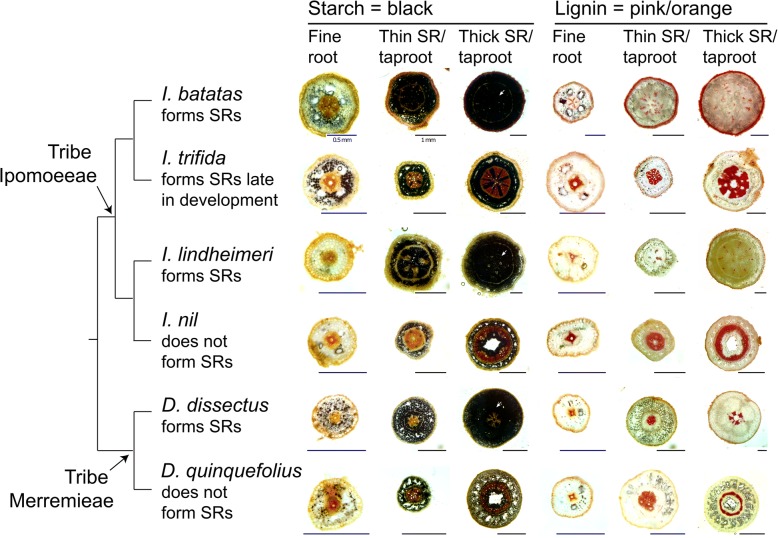
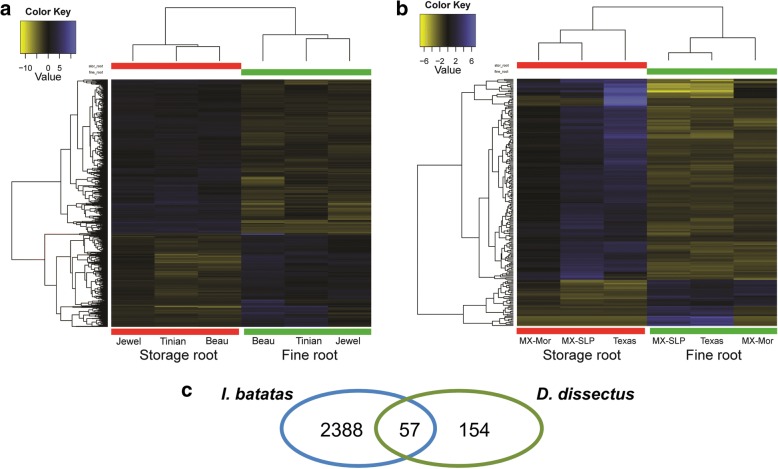
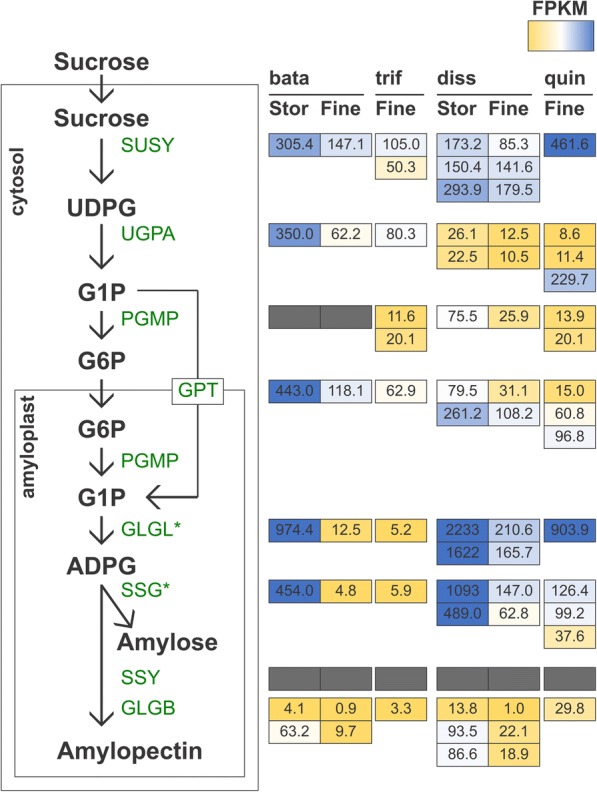
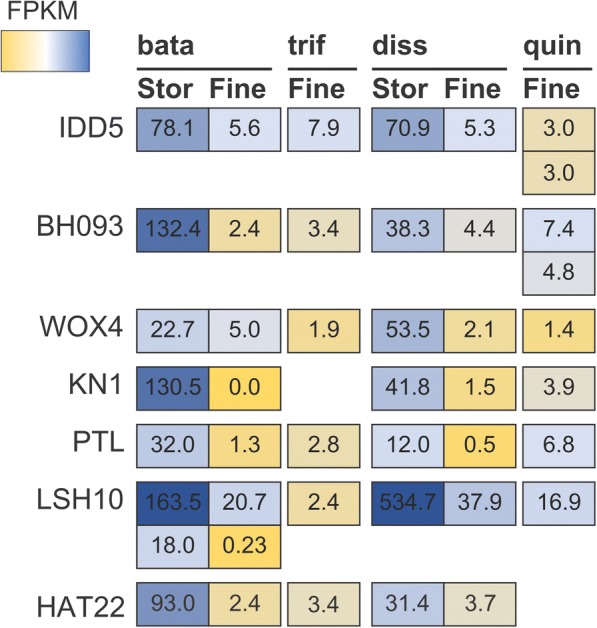
BACKGROUND: Storage roots are an ecologically and agriculturally important plant trait that have evolved numerous times in angiosperms. Storage roots primarily function to store carbohydrates underground as reserves for perennial species. In morning glories, storage roots are well characterized in the crop species sweetpotato, where starch accumulates in storage roots. This starch-storage tissue proliferates, and roots thicken to accommodate the additional tissue. In morning glories, storage roots have evolved numerous times. The primary goal of this study is to understand whether this was through parallel evolution, where species use a common genetic mechanism to achieve storage root formation, or through convergent evolution, where storage roots in distantly related species are formed using a different set of genes. Pairs of species where one forms storage roots and the other does not were sampled from two tribes in the morning glory family, the Ipomoeeae and Merremieae. Root anatomy in storage roots and fine roots was examined. Furthermore, we sequenced total mRNA from storage roots and fine roots in these species and analyzed differential gene expression. RESULTS: Anatomical results reveal that storage roots of species in the Ipomoeeae tribe, such as sweetpotato, accumulate starch similar to species in the Merremieae tribe but differ in vascular tissue organization. In both storage root forming species, more genes were found to be upregulated in storage roots compared to fine roots. Further, we find that fifty-seven orthologous genes were differentially expressed between storage roots and fine roots in both storage root forming species. These genes are primarily involved in starch biosynthesis, regulation of starch biosynthesis, and transcription factor activity. CONCLUSIONS: Taken together, these results demonstrate that storage roots of species from both morning glory tribes are anatomically different but utilize a common core set of genes in storage root formation. This is consistent with a pattern of parallel evolution, thus highlighting the importance of examining anatomy together with gene expression to understand the evolutionary origins of ecologically and economically important plant traits.
Overview
The claims and statistics of this paper haven’t been checked yet.
Run the check — free, no account needed. It reads the open-access text and checks the sources it cites.
Integrity signals
Registry
Cites
Statistics
Figures
Verification
Claims the paper makes
The claims and statistics of this paper haven’t been checked yet.
Run the check — free, no account needed. It reads the open-access text and checks the sources it cites.
Claims other papers make about this one
Each is checked against this paper’s own text: does it say what the citing paper says it does?
The source backs part of the claim, not all of it — or backs it for a different population, condition or comparison.
In the citing paper
“Several enzymes including ADP-glucose pyrophosphorylase (GLGL), starch synthase (SSY) and starch-branching enzyme (GLGB), are essential in sweet potato starch biosynthesis [26, 27].”
From RNA-Seq and iTRAQ reveal multiple pathways involved in storage root formation and development in sweet potato (Ipomoea batatas L.) (2019) · cites this paper as [26]
Experimental — accuracy not yet measured
Self-check
Percentages, sums and reported differences re-computed from the paper’s own numbers.
The self-check needs the paper’s full text.
Citations
The citation lists are queued
They are fetched later and appear here then.
References 55 · Cited by 25
Research works printed but not linked: 49
- Ng J, Smith SD. Widespread flower color convergence in Solanaceae via alternate biochemical pathways. New Phytol. 2015;209:407–17. · DOI
- Yoon H-S, Baum DA. Transgenic study of parallelism in plant morphological evolution. Proc Natl Acad Sci. 2004;101:6524–9. · DOI
- Wittkopp PJ, Williams BL, Selegue JE, Carroll SB. Drosophila pigmentation evolution: divergent genotypes underlying convergent phenotypes. Proc Natl Acad Sci. 2003;100:1808–13. · DOI
- Haas O, Simpson GG. Analysis of some phylogenetic terms, with Attempts at Redefinition. Proc Am Philos Soc. 1946;90:319–49.
- Scotland RW. What is parallelism? Evol Dev. 2011;13:214–27. · DOI
- Des Marais DL, Rausher MD. Parallel evolution at multiple levels in the origin of hummingbird pollinated flowers in Ipomoea. Evolution. 2010;64:2044–54.
- Eserman LA, Tiley GP, Jarret RL, Leebens-Mack JH, Miller RE. Phylogenetics and diversification of morning glories (tribe Ipomoeeae, Convolvulaceae) based on whole plastome sequences. Am J Bot. 2014;101:92–103. · DOI
- Artschwager E. On the anatomy of the sweet potato with notes on internal breakdown. J Agric Res. 1924;27:157–66.
- Lowe SB, Wilson LA. Comparative analysis of tuber development in six sweet potato (Ipomoea batatas (L.) lam.) cultivars. 1. Tuber initiation, tuber growth and partition of assimilate. Ann Bot. 1974;38:307–17. · DOI
- Lowe SB, Wilson LA. Comparative analysis of tuber development in six sweet potato (Ipomoea batatas (L.) lam.) cultivars. 2. Interrelationships between tuber shape and yield. Ann Bot. 1974;38:319–26. · DOI
- Ku AT, Huang Y-S, Wang Y-S, Ma D, Yeh K-W. IbMADS1 (Ipomoea batatas MADS-box 1 gene) is involved in tuberous root initiation in sweet potato (Ipomoea batatas). Ann Bot. 2008;102:57–67. · DOI · Paper page
- FAO. Food and Agriculture Organization of the United Nations. 2016. www.fao.org .
- Hotz C, Loechl C, de Brauw A, Eozenou P, Gilligan D, Moursi M, et al. A large-scale intervention to introduce orange sweet potato in rural Mozambique increases vitamin a intakes among children and women. Br J Nutr. 2012;108:163–76. · DOI
- De Souza JG, Viera Da Silva J. Partitioning of carbohydrates in annual and perennial cotton (Gossypium hirsutum L.). J Exp Bot. 1987;38:1211–8. · DOI
- Vriet C, Smith AM, Wang TL. Root starch reserves are necessary for vigorous re-growth following cutting back in Lotus japonicus. PLoS One. 2014;9:1–7. · DOI
- Bowen BJ, Pate JS. The significance of root starch in post-fire shoot recovery of the resprouter Stirlingia latifolia R. Br. (Proteaceae). Ann Bot. 1993;72:7–16. · DOI
- Bell TL, Pate JS, Dixon KW. Relationships between fire response, morphology, root anatomy and starch distribution in south-west Australian Epacridaceae. Ann Bot. 1996;77:357–64. · DOI
- Ozias-Akins P, Jarret RL. Nuclear DNA content and ploidy levels in the genus Ipomoea. J Soc Hortic Sci. 1994;119:110–5. · DOI
- Jones A. Chromosome numbers in Ipomoea and related genera. J Hered. 1968;59:99–102. · DOI
- Jones A. Chromosome numbers in the genus Ipomoea. J. Hered. 1964;55:216–9. · DOI
- Nakatani M, Tanaka M, Yoshinaga M. Physiological and Anatomical characterization of a late-storage root-forming mutant of Sweetpotato. J Am Soc Hortic Sci. 2002;127:178–83. · DOI
- Jensen WA. Botanical histochemistry: principles and Practice. San Francisco: W. H. Freeman; 1962.
- Turrell FM, Fisher PL. The proximate chemical constituents of Citrus woods, with special reference to lignin. Plant Physiol. 1942;17:558–81. · DOI
- Herr JM. New uses for calcium chloride solution as a mounting medium. Biotech Histochem. 1992;67:9–13. · DOI
- Preibisch S, Saalfeld S, Tomancak P. Globally optimal stitching of tiled 3D microscopic image acquisitions. Bioinformatics. 2009;25:1463–5. · DOI · Paper page
- Schindelin J, Arganda-Carreras I, Frise E, Kaynig V, Longair M, Pietzsch T, et al. Fiji: an open-source platform for biological-image analysis. Nat Methods. 2012;9:676–82. · DOI · Paper page
- Schindelin J, Rueden CT, Hiner MC, Eliceiri KW. The ImageJ ecosystem: an open platform for biomedical image analysis. Mol Reprod Dev. 2015;82:518–29. · DOI
- Parkhomchuk D, Borodina T, Amstislavskiy V, Banaru M, Hallen L, Krobitsch S, et al. Transcriptome analysis by strand-specific sequencing of complementary DNA. Nucleic Acids Res. 2009;37:e123. · DOI
- Grabherr MG, Haas BJ, Yassour M, Levin JZ, Thompson DA, Amit I, et al. Full-length transcriptome assembly from RNA-Seq data without a reference genome. Nat Biotechnol. 2011;29:644–52. · DOI
- Haas BJ, Papanicolaou A, Yassour M, Grabherr M, Philip D, Bowden J, et al. De novo transcript sequence reconstruction from RNA-Seq: reference generation and analysis with trinity. Nat Protoc. 2013;8:1–43. · DOI · Paper page
- Li B, Dewey CN. RSEM: accurate transcript quantification from RNA-Seq data with or without a reference genome. BMC Bioinformatics. 2011;12:323. · DOI · Paper page
- Langmead B, Salzberg SL. Fast gapped-read alignment with bowtie 2. Nat Methods. 2012;9:357–9. · DOI · Paper page
- Schmieder R, Edwards R. Fast identification and removal of sequence contamination from genomic and metagenomic datasets. PLoS One. 2011;6(3):e17288. · DOI
- Robinson MD, McCarthy DJ, Smyth GK. edgeR: a Bioconductor package for differential expression analysis of digital gene expression data. Bioinformatics. 2010;26:139–40. · DOI · Paper page
- Robinson M, Oshlack A. A scaling normalization method for differential expression analysis of RNA-seq data. Genome Biol. 2010;11:R25. · DOI · Paper page
- Emms DM, Kelly S. OrthoFinder: solving fundamental biases in whole genome comparisons dramatically improves orthogroup inference accuracy. Genome Biol. 2015;16:157. · DOI · Paper page
- Liu K, Warnow TJ, Holder MT, Nelesen SM, Yu J, Stamatakis AP, et al. SATe-II: very fast and accurate simultaneous estimation of multiple sequence alignments and phylogenetic trees. Syst Biol. 2012;61:90–106. · DOI
- Stamatakis A. RAxML version 8: a tool for phylogenetic analysis and post-analysis of large phylogenies. Bioinformatics. 2014;30:1312–3. · DOI · Paper page
- Bahaji A, Li J, Sánchez-López ÁM, Baroja-Fernández E, Muñoz FJ, Ovecka M, et al. Starch biosynthesis, its regulation and biotechnological approaches to improve crop yields. Biotechnol Adv. 2014;32:87–106. · DOI
- Waramboi JG, Dennien S, Gidley MJ, Sopade PA. Characterisation of sweetpotato from Papua New Guinea and Australia: physicochemical, pasting and gelatinisation properties. Food Chem. 2011;126:1759–70. · DOI
- Walter WM, Truong VD, Wiesenborn DP, Carvajal P. Rheological and physicochemical properties of starches from moist- and dry-type sweetpotatoes. J Agric Food Chem. 2000;48:2937–42. · DOI
- Mejia-Aguero LE, Galeno F, Hernandez-Hernandez O, Matehus J, Tovar J. Starch determination, amylose content and susceptibility to in vitro amylolysis in flours from the roots of 25 cassava varieties. J Sci Food Agric. 2012;92:673–8. · DOI
- Xu X, Pan S, Cheng S, Zhang B, Mu D, Ni P, et al. Genome sequence and analysis of the tuber crop potato. Nature. 2011;475:189–95. · DOI
- Loretan PA, Bonsi CK, Mortley DG, Wheeler RM, Mackowiak CL, Hill WA, et al. Effects of several environmental factors on sweetpotato growth. Adv Sp Res. 1994;14:277–80. · DOI
- Ingkasuwan P, Netrphan S, Prasitwattanaseree S, Tanticharoen M, Bhumiratana S, Meechai A, et al. Inferring transcriptional gene regulation network of starch metabolism in Arabidopsis thaliana leaves using graphical Gaussian model. BMC Syst Biol. 2012;6:100. · DOI
- Welch D, Hassan H, Blilou I, Immink R, Heidstra R, Scheres B. Arabidopsis JACKDAW and MAGPIE zinc finger proteins delimit asymmetric cell division and stabilize tissue boundaries by restricting SHORT-ROOT action. Genes Dev. 2007;21:2196–204. · DOI
- Hassan H, Scheres B, Blilou I. JACKDAW controls epidermal patterning in the Arabidopsis root meristem through a non-cell-autonomous mechanism. Development. 2010;137:1523–9. · DOI
- Suer S, Agusti J, Sanchez P, Schwarz M, Greb T. WOX4 imparts auxin responsiveness to cambium cells in Arabidopsis. Plant Cell. 2011;23:3247–59. · DOI
- Etchells JP, Provost CM, Mishra L, Turner SR. WOX4 and WOX14 act downstream of the PXY receptor kinase to regulate plant vascular proliferation independently of any role in vascular organisation. Development. 2013;140:2224–34. · DOI
Metadata
- Authors
- Eserman, L. A., Jarret, R. L., & Leebens-Mack, J. H.
- Affiliations
- University of Georgia (US)
- United States Department of Agriculture (US)
- Corresponding author
- Eserman, Lauren A.
- Venue
- BMC Plant Biology
- Published
- 2018-05-29
- Volume
- 18
- Issue
- 1
- Pages
- 95-95
- ISSN
- 1471-2229 (ISSN-L)
- PMC
- PMC5975488
- OpenAlex
- W2807384079
- Cited by
- 25
- References
- 55
- Citations by year
- 2026: 4 · 2024: 4 · 2023: 2 · 2022: 4 · 2021: 6 · 2020: 2 · 2019: 3
- FWCI
- 2.43
- Type
- journal article
- Language
- en
- Open access
- gold
- doi.org
- Locations
- BMC Plant Biology (publishedVersion, cc-by)
- PubMed Central (publishedVersion, cc-by)
- PubMed (publishedVersion)
- DOAJ (DOAJ: Directory of Open Access Journals) (submittedVersion, cc-by-sa)
- Funders
- USDA
- Society for the Study of Evolution
- UGA Plant Biology Department
- Society for Integrative and Comparative Biology
- Topics
- Life Sciences › Agricultural and Biological Sciences › Plant Science › Plant Molecular Biology Research
- Life Sciences › Agricultural and Biological Sciences › Plant Science › Plant Parasitism and Resistance
- Life Sciences › Agricultural and Biological Sciences › Plant Science › Plant nutrient uptake and metabolism
- Keywords
- tuberous roots, parallel evolution, convergent evolution, Convolvulaceae, Ipomoea batatas, starch biosynthesis, root anatomy, fine roots, differential gene expression, orthologs, transcription factors, carbohydrate storage
- MeSH terms
- Phenotype, RNA, Messenger, Starch, Up-Regulation, Gene Expression Regulation, Plant, Plant Roots, Evolution, Molecular, Gene Expression Profiling, Ipomoea batatas, Ipomoea, Biosynthetic Pathways, Transcriptome
About these checks
Registry, retraction, Cites and statistics results are computed, not judged, with one exception: a printed reference that no index lists is read once by a model before it counts as a citation error. Claims are extracted by a model and kept only when their quote appears verbatim in the text; each cited source is then checked, with a model’s help, for whether it says what the claim relies on. Those verdicts can be wrong — read the claim’s quote and the cited source before relying on one.
Statistics and arithmetic are recomputed, not judged.
Confidence bands are shown only for fields calibrated on our annotated test set. None is calibrated yet, so no band is shown.
What counts as a claim ›How we measure confidence ›How we check this ›
Are you an author, or do you see a problem with this page? Request a review
How to cite
Cite CoChat for the checks on this page, and the paper for its own findings.
- This page
- CoChat. (2026). Citation check: Parallel evolution of storage roots in morning glories (Convolvulaceae). https://app.cochat.ai/papers/10.1186/s12870-018-1307-4
- The paper
- Eserman, L. A., Jarret, R. L., & Leebens-Mack, J. H. (2018). Parallel evolution of storage roots in morning glories (Convolvulaceae). BMC Plant Biology. https://doi.org/10.1186/s12870-018-1307-4
