

LUCApedia: a database for the study of ancient life
Open accessThe DOI matches its Crossref record; 35 of the 35 references it cites were found in a registry or an index.
Abstract
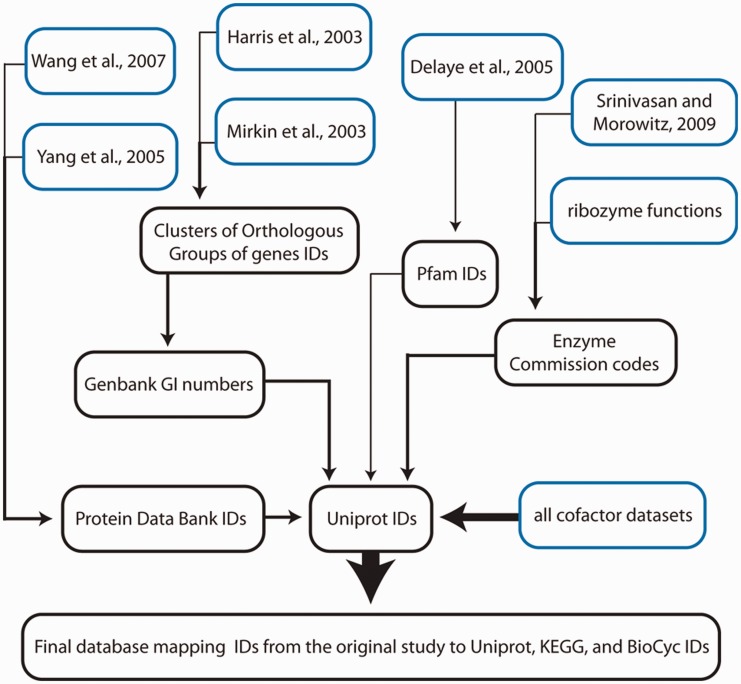
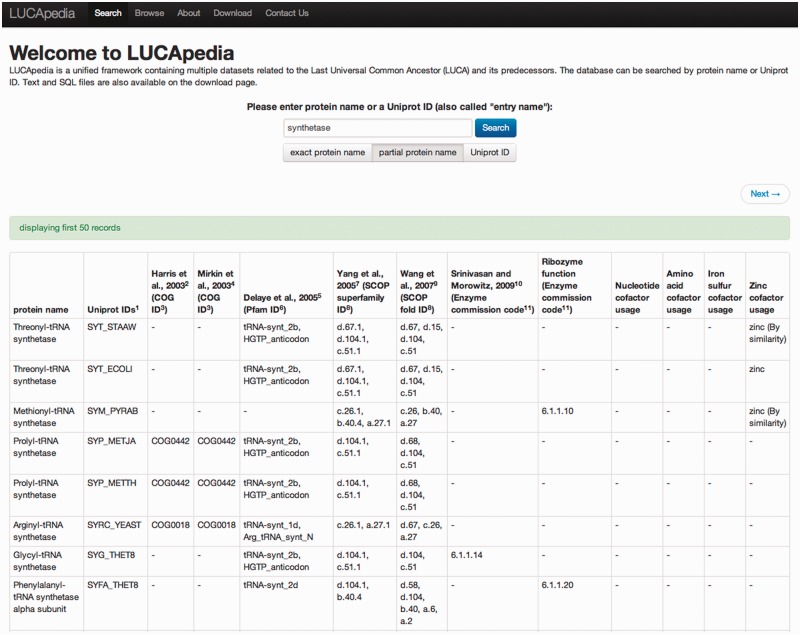
Organisms represented by the root of the universal evolutionary tree were most likely complex cells with a sophisticated protein translation system and a DNA genome encoding hundreds of genes. The growth of bioinformatics data from taxonomically diverse organisms has made it possible to infer the likely properties of early life in greater detail. Here we present LUCApedia, (http://eeb.princeton.edu/lucapedia), a unified framework for simultaneously evaluating multiple data sets related to the Last Universal Common Ancestor (LUCA) and its predecessors. This unification is achieved by mapping eleven such data sets onto UniProt, KEGG and BioCyc IDs. LUCApedia may be used to rapidly acquire evidence that a certain gene or set of genes is ancient, to examine the early evolution of metabolic pathways, or to test specific hypotheses related to ancient life by corroborating them against the rest of the database.
Overview
The claims and statistics of this paper haven’t been checked yet.
Free: it reads the open-access text and checks the first 5 claims that cite a source we can check. Create a free account to check every claim.
Integrity signals
Registry
Cites
Statistics
Figures
Verification
Claims the paper makes
The claims and statistics of this paper haven’t been checked yet.
Free: it reads the open-access text and checks the first 5 claims that cite a source we can check. Create a free account to check every claim.
Claims other papers make about this one
Each is checked against this paper’s own text: does it say what the citing paper says it does?
The source backs part of the claim, not all of it — or backs it for a different population, condition or comparison.
In the citing paper
“sequence data, including the data presented by Weiss et al. , support the idea that LUCA was a prokaryotic cell using nucleic acids as genetic material, 20 genetically encoded amino acids, ribosomes for templatedirected protein synthesis, and membranes that allowed for chemiosmotic coupling 7,8 .”
From Is LUCA a thermophilic progenote? (2016) · cites this paper as [8]
Experimental — accuracy not yet measuredIn the citing paper
“sequence data, including the data presented by Weiss et al. , support the idea that LUCA was a prokaryotic cell using nucleic acids as genetic material, 20 genetically encoded amino acids, ribosomes for templatedirected protein synthesis, and membranes that allowed for chemiosmotic coupling 7,8 .”
From Is LUCA a thermophilic progenote? (2016) · cites this paper as [8]
In the citing paper
“sequence data, including the data presented by Weiss et al. , support the idea that LUCA was a prokaryotic cell using nucleic acids as genetic material, 20 genetically encoded amino acids, ribosomes for templatedirected protein synthesis, and membranes that allowed for chemiosmotic coupling 7,8 .”
From Is LUCA a thermophilic progenote? (2016) · cites this paper as [8]
In the citing paper
“Recently, a database aggregating a variety of bioinformatic approaches to LUCA was compiled, allowing for testing hypotheses in investigations of ancient biochemistry [163].”
From The Future of Origin of Life Research: Bridging Decades-Old Divisions (2020) · cites this paper as [163]
Self-check
Percentages, sums and reported differences re-computed from the paper’s own numbers.
The self-check needs the paper’s full text.
Citations
Cites
Gapped BLAST and PSI-BLAST: a new generation of protein database search programs
Altschul, S. (1997) · Nucleic Acids Research · doi:10.1093/nar/25.17.3389 · Cited by 73,302
The Pfam Protein Families Database
Bateman, A. (2002) · Nucleic Acids Research · doi:10.1093/nar/30.1.276 · Cited by 14,000
KEGG for integration and interpretation of large-scale molecular data sets
Kanehisa, M., Goto, S., Sato, Y., Furumichi, M., & Tanabe, M. (2012) · Nucleic Acids Research · doi:10.1093/nar/gkr988 · Cited by 4,848 · cited 6×
“Entry IDs from UniProt (16), BioCyc (17) and the Kyoto Encyclopedia of Genes and Genomes (KEGG) (18) supply the underlying framework.”
BackgroundInfluentialThe Pfam protein families database
Punta, M., Coggill, P. C., Eberhardt, R. Y., Mistry, J., Tate, J., Boursnell, C., Pang, N., Forslund, K., Ceric, G., Clements, J., et al. (2012) · Nucleic Acids Research · doi:10.1093/nar/gkr1065 · Cited by 3,719
A Genomic Perspective on Protein Families
Tatusov, R. L., Koonin, E. V., & Lipman, D. J. (1997) · Science · doi:10.1126/science.278.5338.631 · Cited by 3,590 · cited 1×
“The COG database (20) was used to identify 80 gene families that are universally distributed and have a similar phylogenetic pattern to ribosomal RNAs.”
MethodCaspi, R., Billington, R., Ferrer, L., Foerster, H., Fulcher, C. A., Keseler, I. M., Kothari, A., Krummenacker, M., Latendresse, M., Mueller, L. A., et al. (2016) · Nucleic Acids Research · doi:10.1093/nar/gkv1164 · Cited by 3,395
Gilbert, W. (1986) · Nature · doi:10.1038/319618a0 · Cited by 2,721
Gilbert, W. (1986) · Nature · Cited by 1,941
Reorganizing the protein space at the Universal Protein Resource (UniProt)
The UniProt Consortium (2012) · Nucleic Acids Research · doi:10.1093/nar/gkr981 · Cited by 1,220
The major evolutionary transitions
Szathmáry, E., & Smith, J. M. (1995) · Nature · doi:10.1038/374227a0 · Cited by 1,095
Cited by
Remnants of an Ancient Metabolism without Phosphate
Goldford, J. E., Hartman, H., Smith, T. F., & Segrè, D. (2017) · Cell · doi:10.1016/j.cell.2017.02.001 · Cited by 226
“Addition of these five amino acids to the repertoire of amino acids would have enabled broader catalytic capabilities, and paved the way for increased richness of (Goldman et al., 2013).”
InfluentialSynteny-based analyses indicate that sequence divergence is not the main source of orphan genes
Vakirlis, N., Carvunis, A.-R., & McLysaght, A. (2020) · eLife · doi:10.7554/elife.53500 · Cited by 148
“Given that the genome and gene repertoire of the Last Universal Common Ancestor (LUCA) was likely small relative to that of most extant eukaryotic organisms (Becerra et al., 2007; Goldman et al., 2013) (Figure 1A), what processes gave rise to these distinct gene families? Answering this question is essential to unders…”
BackgroundThe Future of Origin of Life Research: Bridging Decades-Old Divisions
Preiner, M., Asche, S., Becker, S., Betts, H. C., Boniface, A., Camprubi, E., Chandru, K., Erastova, V., Garg, S. G., Khawaja, N., et al. (2020) · Life · doi:10.3390/life10030020 · Cited by 140
“Recently, a database aggregating a variety of bioinformatic approaches to LUCA was compiled, allowing for testing hypotheses in investigations of ancient biochemistry [163].”
BackgroundCofactors are Remnants of Life’s Origin and Early Evolution
Goldman, A. D., & Kaçar, B. (2021) · Journal of Molecular Evolution · doi:10.1007/s00239-020-09988-4 · Cited by 117
Self-citationThe TIM Barrel Architecture Facilitated the Early Evolution of Protein-Mediated Metabolism
Goldman, A. D., Beatty, J. T., & Landweber, L. F. (2016) · Journal of Molecular Evolution · doi:10.1007/s00239-015-9722-8 · Cited by 81
“…networks (Kyrpides et al. 1999; Goldman et al. 2012) and a stable, protein-rich, membrane that supported energy transduction via ATP synthase (Becerra et al. 2007; Lane et al. 2010), all encoded by a genome with hundreds or thousands of gene families (Ouzounis et al. 2006; Goldman et al. 2013).”
BackgroundSelf-citationSchwander, L., Brabender, M., Mrnjavac, N., Wimmer, J. L. E., Preiner, M., & Martin, W. F. (2023) · Frontiers in Microbiology · doi:10.3389/fmicb.2023.1257597 · Cited by 65
Blanco, C., Bayas, M. V., Yan, F., & Chen, I. A. (2018) · Current Biology · doi:10.1016/j.cub.2018.01.014 · Cited by 61
Modern views of ancient metabolic networks
Goldford, J. E., & Segrè, D. (2018) · Current Opinion in Systems Biology · doi:10.1016/j.coisb.2018.01.004 · Cited by 56
A consensus view of the proteome of the last universal common ancestor
Crapitto, A. J., Campbell, A. E., Harris, A., & Goldman, A. D. (2022) · Ecology and Evolution · doi:10.1002/ece3.8930 · Cited by 59
“The results of six of these studies were previously mapped onto UniProt accessions as part of the original LUCApedia database (Delaye et al., 2005; Goldman et al., 2013; Harris et al., 2003; Mirkin et al., 2003; Srinivasan & Morowitz, 2009; Wang et al., 2007; Yang et al., 2005).”
InfluentialSelf-citationSystems biology perspectives on minimal and simpler cells
Xavier, J. C., Patil, K. R., & Rocha, I. (2014) · Microbiology and Molecular Biology Reviews · doi:10.1128/mmbr.00050-13 · Cited by 58
“A prominent systems biology initiative concerning the LUCA is LUCApedia, a recently launched online database that integrates different data sets related to the LUCA and its predecessors (86).”
BackgroundIt's more than stamp collecting: how genome sequencing can unify biological research
Richards, S. (2015) · Trends in Genetics · doi:10.1016/j.tig.2015.04.007 · Cited by 60
“Since then, new estimates have ranged between 66 and 571 COGs depending on the methods used [50].”
MethodIs LUCA a thermophilic progenote?
Gogarten, J. P., & Deamer, D. (2016) · Nature Microbiology · doi:10.1038/nmicrobiol.2016.229 · Cited by 53
Berkemer, S. J., & McGlynn, S. E. (2020) · Molecular Biology and Evolution · doi:10.1093/molbev/msaa089 · Cited by 52
The Coevolution of Cellularity and Metabolism Following the Origin of Life
Takagi, Y. A., Nguyen, D. H., Wexler, T., & Goldman, A. D. (2020) · Journal of Molecular Evolution · doi:10.1007/s00239-020-09961-1 · Cited by 41
Self-citationThe Evolutionary Traceability of a Protein
Jain, A., Perisa, D., Fliedner, F., von Haeseler, A., & Ebersberger, I. (2019) · Genome Biology and Evolution · doi:10.1093/gbe/evz008 · Cited by 39
Molecular Mechanisms of Transcription Elongation in Archaea
Werner, F. (2013) · Chemical Reviews · doi:10.1021/cr4002325 · Cited by 40
Scaling laws in enzyme function reveal a new kind of biochemical universality
Gagler, D. C., Karas, B., Kempes, C. P., Malloy, J., Mierzejewski, V., Goldman, A. D., Kim, H., & Walker, S. I. (2022) · Proceedings of the National Academy of Sciences · doi:10.1073/pnas.2106655119 · Cited by 34
Self-citationElectron transport chains as a window into the earliest stages of evolution
Goldman, A. D., Weber, J. M., LaRowe, D. E., & Barge, L. M. (2023) · Proceedings of the National Academy of Sciences · doi:10.1073/pnas.2210924120 · Cited by 32
Self-citationMultiple Facets of Marine Invertebrate Conservation Genomics
Lopez, J. V., Kamel, B., Medina, M., Collins, T. M., & Baums, I. B. (2018) · Annual Review of Animal Biosciences · doi:10.1146/annurev-animal-020518-115034 · Cited by 32
Signatures of co-deregulated genes and their transcriptional regulators in colorectal cancer
Mastrogamvraki, N., & Zaravinos, A. (2020) · npj Systems Biology and Applications · doi:10.1038/s41540-020-00144-8 · Cited by 28
The Case for an Early Biological Origin of DNA
Poole, A. M., Horinouchi, N., Catchpole, R. J., Si, D., Hibi, M., Tanaka, K., & Ogawa, J. (2014) · Journal of Molecular Evolution · doi:10.1007/s00239-014-9656-6 · Cited by 28
“In stark contrast to ribosomal RNAs and many ribosomal proteins, which show a primarily vertical evolutionary history (Goldman et al. 2013; Harris et al. 2003; Woese and Fox 1977), the early evolutionary history of RNRs is peppered by interdomain horizontal transfer (Lundin et al.”
BackgroundInfluentialPhosphates as Energy Sources to Expand Metabolic Networks
Tian, T., Chu, X., Yang, Y., Zhang, X., Liu, Y.-M., Gao, J., Ma, B., & Zhang, H. (2019) · Life · doi:10.3390/life9020043 · Cited by 26
Peptides En Route from Prebiotic to Biotic Catalysis
Hlouchová, K. (2024) · Accounts of Chemical Research · doi:10.1021/acs.accounts.4c00137 · Cited by 24
A proposal of the proteome before the last universal common ancestor (LUCA)
de Farías, S. T., do Rego, T. G., & José, M. V. (2015) · International Journal of Astrobiology · doi:10.1017/s1473550415000464 · Cited by 20
A New View of the Last Universal Common Ancestor
Goldman, A. D., & Becerra, A. (2024) · Journal of Molecular Evolution · doi:10.1007/s00239-024-10193-w · Cited by 16
“…decades have seen numerous studies aiming to date LUCA's emergence (Betts et al. 2018), reconstruct its genome and proteome (Becerra et al. 2007; Goldman et al. 2013), and predict its metabolism (Weiss et al. 2016; Goldman et al. 2023; Ledford and Meredith 2024), habitat (Weiss et al. 2016),…”
BackgroundSelf-citationOpitz, J. M., & Bianchi, D. W. (2015) · Molecular Genetics & Genomic Medicine · doi:10.1002/mgg3.127 · Cited by 15
Emerging Frontiers in the Study of Molecular Evolution
Liberles, D. A., Chang, B. S. W., Geiler‐Samerotte, K., Goldman, A. D., Hey, J., Kaçar, B., Meyer, M. M., Murphy, W. J., Posada, D., & Storfer, A. T. (2020) · Journal of Molecular Evolution · doi:10.1007/s00239-020-09932-6 · Cited by 14
“Even so, LUCA appears to represent a population of organisms that may have had a level of molecular and physiological complexity not too different from some modern organisms.”
BackgroundResultInfluentialSelf-citationThe Unfinished Reconstructed Nature of the Last Universal Common Ancestor
Delaye, L. (2024) · Journal of Molecular Evolution · doi:10.1007/s00239-024-10187-8 · Cited by 13
“LUCApedia stands as the only exception (Goldman et al. 2013).”
On Protein Loops, Prior Molecular States and Common Ancestors of Life
Caetano-Anollés, K., Aziz, M. F., Mughal, F., & Caetano‐Anollés, G. (2024) · Journal of Molecular Evolution · doi:10.1007/s00239-024-10167-y · Cited by 12
“A number of early studies had already uncovered a simple yet relatively complex urancestral functionome, some of which can be found indexed in the LUCApedia database (Goldman et al. 2013).”
BackgroundEntering the labyrinth: A hypothesis about the emergence of metabolism from protobiotic routes
Prosdocimi, F., & de Farías, S. T. (2022) · Biosystems · doi:10.1016/j.biosystems.2022.104751 · Cited by 11
Natural History of DNA-Dependent DNA Polymerases: Multiple Pathways to the Origins of DNA
de Farías, S. T., Furtado, A. N. M., dos Santos, A. P., & José, M. V. (2023) · Viruses · doi:10.3390/v15030749 · Cited by 11
“Some hypotheses suggest that this transition occurred before the diversification of the basal cellular lineages, Bacteria and Archaea, in a lineage already having cell structure, known as LUCA (last universal common ancestor) [11,12].”
BackgroundOn the Nature of the Last Common Ancestor: A Story from its Translation Machinery
Rivas, M., & Fox, G. E. (2024) · Journal of Molecular Evolution · doi:10.1007/s00239-024-10199-4 · Cited by 10
“As far as we know the very first attempt was LUCApedia (Goldman et al. 2012) a database that was presented as “ a unified framework for simultaneously evaluating multiple datasets related to the LCA .””
Does the Ribosome Challenge our Understanding of the RNA World?
Poole, A. M., Jeffares, D. C., Hoeppner, M. P., & Penny, D. (2015) · Journal of Molecular Evolution · doi:10.1007/s00239-015-9720-x · Cited by 10
Coenzyme-protein interactions since early life
Sánchez-Rocha, A. C., Makarov, M., Pravda, L., Novotný, M., & Hlouchová, K. (2025) · eLife · doi:10.1101/2023.10.28.563965 · Cited by 9
“Both demonstrated that these ancient motifs are highly robust to sequence variations, implying that such interaction can be encountered more easily than previously thought (Longo et al., 2020 (b); Keefe and Szostak, 2001).”
The Origin(s) of LUCA: Computer Simulation of a New Theory
Tang, S., & Gao, M. (2025) · Life · doi:10.3390/life15010075 · Cited by 7
“…we concur with several earlier studies that LUCA has at least three hallmarks: (1) a fully functioning membrane; (2) a fully evolved standard genetic code (SGC); (3) about one hundred proteins and several hundred genes [34–39] (most likely, these genes had been linked into a chromosome [40]).”
Mulkidjanian, A. Y., Dibrova, D. V., & Bychkov, A. Y. (2025) · Life · doi:10.3390/life15030399 · Cited by 7
Freire, M. Á. (2021) · Biosystems · doi:10.1016/j.biosystems.2021.104547 · Cited by 7
Reconstructing the Last Universal Common Ancestor
Poole, A. M. (2021) · Advances in astrobiology and biogeophysics · doi:10.1007/978-3-030-81039-9_9 · Cited by 5
Palacios-Pérez, M., Andrade-Díaz, F., & José, M. V. (2017) · Origins of Life and Evolution of Biospheres · doi:10.1007/s11084-017-9553-2 · Cited by 5
Coenzyme-Protein Interactions since Early LifePreprint
Sánchez-Rocha, A. C., Makarov, M., Pravda, L., Novotný, M., & Hlouchová, K. (2024) · eLife · doi:10.7554/elife.94174.1 · Cited by 5
Reconstructing the Last Common Ancestor: Epistemological and Empirical Challenges
Estrada, A., Suárez‐Díaz, E., & Becerra, A. (2022) · Acta Biotheoretica · doi:10.1007/s10441-022-09439-1 · Cited by 4
“- progenote, and it is not consistent with what biologists nowadays know about the origin of life (Delaye et al. 2005; Becerra et al. 2007; Goldman et al. 2013).”
BackgroundResearch Article The structural proteome for the primordial glycolysis/gluconeogenesis
do Ó, I., do Rego, T. G., José, M. V., & de Farías, S. T. (2020) · Genetics and Molecular Research · doi:10.4238/gmr18699 · Cited by 3
Kinetic Modeling and Parameter Estimation of a Prebiotic Peptide Reaction Network
Boigenzahn, H., González, L. D., Thompson, J. C., Zavala, V. M., & Yin, J. (2023) · Journal of Molecular Evolution · doi:10.1007/s00239-023-10132-1 · Cited by 3
“Similar approaches could be useful for furthering experimental chemical origins of life research, but aside from a few reviews and computational investigations, they have generally been overlooked (Johnson and Hung 2019; Ludlow and Otto 2008; Goldman et al. 2013).”
BackgroundThe evolution of early cellular systems viewed through the lens of biological interactions
Poole, A. M., Lundin, D., & Rytkönen, K. T. (2015) · Frontiers in Microbiology · doi:10.3389/fmicb.2015.01144 · Cited by 3
“Moreover, there is no reason to expect that the LUCA was in any way a minimal cell, and it is difficult to equate the two, other than to assess the core of processes common to known biological systems (Goldman et al., 2013).”
BackgroundPandi-Perumal, S. R., Saravanan, K. M., Spence, D. W., Paul, S., Pandian, G. N., & Chidambaram, S. B. (2026) · Molecular Genetics and Genomics · doi:10.1007/s00438-025-02332-9 · Cited by 2
The Origin and Early Evolution of Life: Prebiotic Chemistry of Biomolecules
Fiore, M. (2019) · MDPI eBooks · doi:10.3390/books978-3-03921-607-9 · Cited by 2
Introduction to the Special Issue on Early Evolution and the Last Common Ancestor
Becerra, A., & Goldman, A. D. (2024) · Journal of Molecular Evolution · doi:10.1007/s00239-024-10208-6 · Cited by 2
“…have worked to estimate the time of the emergence of the LUCA (Betts et al. 2018), reconstruct its genome and proteome (Becerra et al. 2007; Goldman et al. 2013), and predict its metabolism (Weiss et al. 2016; Goldman et al. 2023; Ledford and Meredith 2024), habitat (Weiss et al. 2016) and…”
BackgroundSelf-citationCoenzyme-Protein Interactions since Early LifePreprint
Sánchez-Rocha, A. C., Makarov, M., Pravda, L., Novotný, M., & Hlouchová, K. (2024) · eLife · doi:10.7554/elife.94174.2 · Cited by 2
A new LUCApedia database for data-driven research on early evolutionary history
Nikfarjam, Z., Thota, I., Nikfarjam, A., Kailing, F., & Goldman, A. D. (2025) · Bioinformatics Advances · doi:10.1093/bioadv/vbaf309 · Cited by 1
“Following its publication in 2013 (Goldman et al. 2013), the LUCApedia database has been used by a number of labs to study different aspects of early evolutionary history (Goldman et al. 2016, Goldford et al. 2017, Blanco et al. 2018, Crapitto et al. 2022).”
Self-citationThe Phylogenomic Roots of Translation
Caetano-Anollés, D., & Caetano‐Anollés, G. (2016) · Springer eBooks · doi:10.1007/978-3-319-39468-8_2 · Cited by 1
“present in the last universal common ancestor of life [79].”
BackgroundMushegian, A. R. (2014) · bioRxiv (Cold Spring Harbor Laboratory) · doi:10.1101/013326 · Cited by 1
“The successes and failures of LUCA reconstruction will be likely recorded not only in individual research papers, but also in LUCApedia (Goldman et al., 2013).”
BackgroundLast Universal Common Ancestor
Delaye, L. (2023) · Encyclopedia of Astrobiology · doi:10.1007/978-3-662-65093-6_1728 · Cited by 1
Modeling state transitions with automata
Jonoska, N., & Dolzhenko, E. (2013)
Self-citationAre Molecular Alphabets Universal Enabling Factors for the Evolution of Complex Life?
Dunn, I. S. (2013) · Origins of Life and Evolution of Biospheres · doi:10.1007/s11084-014-9354-9
Systems analysis of minimal metabolic networks In prokaryotes
Xavier, J. C. (2016) · Portuguese National Funding Agency for Science, Research and Technology (RCAAP Project by FCT)
Utilization of Phylogenetic Analysis Methods to Understand Deep Phylogeny
O'Brien, J. M. (2017) · OpenCommons at University of Connecticut (University of Connecticut)
Last Universal Common Ancestor
Delaye, L. (2015) · Encyclopedia of Astrobiology · doi:10.1007/978-3-662-44185-5_1728
Last Universal Common Ancestor
Delaye, L. (2014) · Encyclopedia of Astrobiology · doi:10.1007/978-3-642-27833-4_1728-4
Author Response: Coenzyme-Protein Interactions since Early Life
Sánchez-Rocha, A. C., Makarov, M., Pravda, L., Novotný, M., & Hlouchová, K. (2024) · eLife · doi:10.7554/elife.94174.1.sa3
eLife Assessment: Coenzyme-Protein Interactions since Early Life
Hamelberg, D. (2024) · eLife · doi:10.7554/elife.94174.2.sa3
Bioinformatics tools and AI algorithms tracking the origins of life
Ashrafuzzaman, M. (2025) · Elsevier eBooks · doi:10.1016/b978-0-443-36368-9.00007-x
Author response: Coenzyme-protein interactions since early life
Sánchez-Rocha, A. C., Makarov, M., Pravda, L., Novotný, M., & Hlouchová, K. (2025) · eLife · doi:10.7554/elife.94174.3.sa3
Modeling State Transitions with Automata
Dolzhenko, E., Dolzhenko, E., & Brian Curtin Ph., D. (2013) · Digital Commons - University of South Florida (University of South Florida)
Self-citationBerkemer, S. J. (2019) · Qucosa (Saxon State and University Library Dresden)
Levels of Analysis in Evolutionary Genetics: Novel Genes and the Misuse of Homology
Johnson, B. R. (2026) · Journal of Experimental Zoology Part B Molecular and Developmental Evolution · doi:10.1002/jezb.70013
Protein Architecture Comparisons and the Reconstruction of the Last Universal Common Ancestor (LUCA)
Hernández-Morales, R., Luna, C. C. G., Lazcano, A., & Becerra, A. (2026) · Methods in molecular biology · doi:10.1007/978-1-0716-4836-0_17
FAIRsharing record for: LUCApedia
FAIRsharing Team, Lister, A., et al. (2025) · FAIRsharing.org · doi:10.25504/fairsharing.4851cc
Metadata
- Authors
- Goldman, A. D., Bernhard, T. M., Dolzhenko, E., & Landweber, L. F.
- Affiliations
- Princeton University (US)
- Corresponding author
- Goldman, Aaron David
- Landweber, Laura F.
- Venue
- Nucleic Acids Research
- Publisher
- Oxford University Press (OUP)
- Published
- 2012-11-26
- Volume
- 41
- Issue
- D1
- Pages
- D1079-D1082
- ISSN
- 0305-1048 (ISSN-L)
- 1362-4962
- PMC
- PMC3531223
- OpenAlex
- W2100898679
- Cited by
- 58
- References
- 35
- Citations by year
- 2026: 2 · 2025: 4 · 2024: 9 · 2023: 5 · 2022: 4 · 2021: 2 · 2020: 7 · 2019: 4 · 2018: 3 · 2017: 2 · 2016: 3 · 2015: 6 · 2014: 4 · 2013: 3
- FWCI
- 1.67
- Type
- journal article
- Language
- en
- Open access
- gold
- doi.org
- Licence
- Locations
- Nucleic Acids Research (publishedVersion, cc-by-nc)
- Europe PMC (PubMed Central) (publishedVersion, cc-by-nc)
- PubMed Central (publishedVersion, cc-by-nc)
- PubMed (publishedVersion)
- Funders
- National Science Foundation (0900544)
- National Aeronautics and Space Administration
- Topics
- Life Sciences › Biochemistry, Genetics and Molecular Biology › Molecular Biology › Genomics and Phylogenetic Studies
- Physical Sciences › Physics and Astronomy › Astronomy and Astrophysics › Origins and Evolution of Life
- Life Sciences › Agricultural and Biological Sciences › Ecology, Evolution, Behavior and Systematics › Protist diversity and phylogeny
- Keywords
- last universal common ancestor, LUCA, early life, metabolic pathway evolution, UniProt, KEGG, BioCyc, database integration
- MeSH terms
- Origin of Life, Multigene Family, Phylogeny, Proteins, Software, Evolution, Molecular, Internet, Databases, Genetic, Metabolic Networks and Pathways
About these checks
Registry, retraction, Cites and statistics results are computed, not judged, with one exception: a printed reference that no index lists is read once by a model before it counts as a citation error. Claims are extracted by a model and kept only when their quote appears verbatim in the text; each cited source is then checked, with a model’s help, for whether it says what the claim relies on. Those verdicts can be wrong — read the claim’s quote and the cited source before relying on one.
Statistics and arithmetic are recomputed, not judged.
Confidence bands are shown only for fields calibrated on our annotated test set. None is calibrated yet, so no band is shown.
What counts as a claim ›How we measure confidence ›How we check this ›
Are you an author, or do you see a problem with this page? Request a review
Data sources
Bibliographic data: Semantic Scholar, OpenAlex, Crossref.
Contains information from the Semantic Scholar Academic Graph Datasets, made available under the ODC Attribution License (ODC-BY 1.0).
Semantic Scholar’s data is described in: Kinney, R., et al. (2023). The Semantic Scholar Open Data Platform. arXiv:2301.10140.
