

The genetic code constrains yet facilitates Darwinian evolution
Open accessThe DOI matches its Crossref record; 42 of the 42 references it cites were found in a registry or an index.
Abstract
An important goal of evolutionary biology is to understand the constraints that shape the dynamics and outcomes of evolution. Here, we address the extent to which the structure of the standard genetic code constrains evolution by analyzing adaptive mutations of the antibiotic resistance gene TEM-1 β-lactamase and the fitness distribution of codon substitutions in two influenza hemagglutinin inhibitor genes. We find that the architecture of the genetic code significantly constrains the adaptive exploration of sequence space. However, the constraints endow the code with two advantages: the ability to restrict access to amino acid mutations with a strong negative effect and, most remarkably, the ability to enrich for adaptive mutations. Our findings support the hypothesis that the standard genetic code was shaped by selective pressure to minimize the deleterious effects of mutation yet facilitate the evolution of proteins through imposing an adaptive mutation bias.
Overview
The claims and statistics of this paper haven’t been checked yet.
Free: it reads the open-access text and checks the first 5 claims that cite a source we can check. Create a free account to check every claim.
Integrity signals
Registry
Cites
Statistics
Figures
Verification
Claims the paper makes
The claims and statistics of this paper haven’t been checked yet.
Free: it reads the open-access text and checks the first 5 claims that cite a source we can check. Create a free account to check every claim.
Claims other papers make about this one
Each is checked against this paper’s own text: does it say what the citing paper says it does?
The source backs part of the claim, not all of it — or backs it for a different population, condition or comparison.
In the citing paper
“As a result, the highest fitness mutants evolved along consecutive single substitution trajectories were far inferior to many variants selected from exhaustive mutagenesis experiments (22).”
From Origin and Evolution of the Universal Genetic Code (2017) · cites this paper as [22]
Experimental — accuracy not yet measuredThe cited source says what the claim attributes to it.
In the citing paper
“In particular, in vitro evolution experiments, in which the fitness cost of mutations was assessed by their effect on the properties of proteins, have shown that the structure of the code measurably constrains evolution.”
From Origin and Evolution of the Universal Genetic Code (2017) · cites this paper as [22]
Experimental — accuracy not yet measuredThe cited source says what the claim attributes to it.
In the citing paper
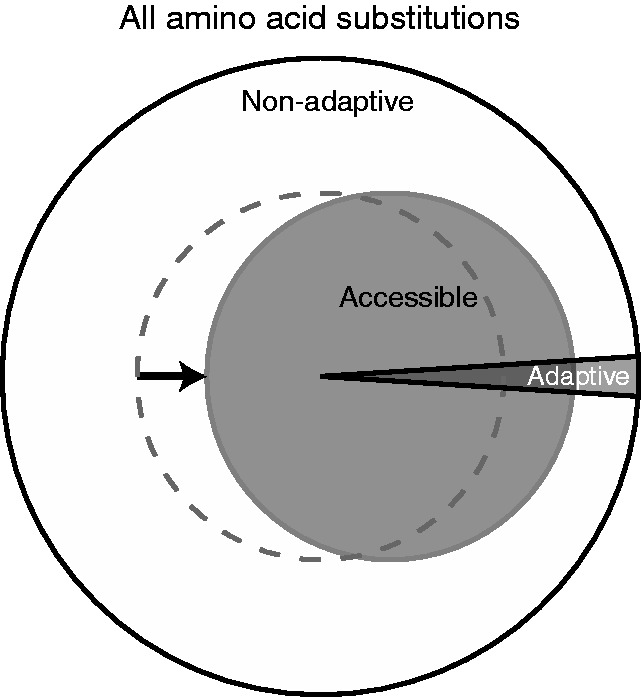
“Moreover, and much less intuitively, the fraction of adaptive amino acid replacements is greater among those that are accessible via a single substitution than among all replacements.”
From Origin and Evolution of the Universal Genetic Code (2017) · cites this paper as [22]
The cited source says what the claim attributes to it.
In the citing paper
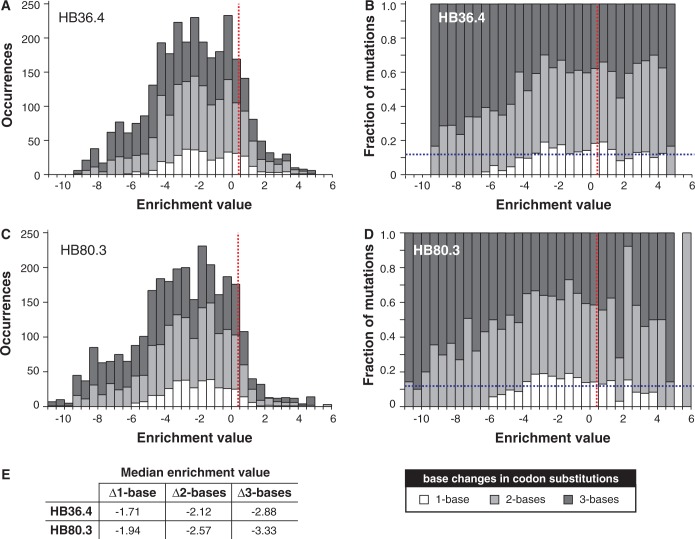
“The same study showed that the code minimizes the fitness cost of mutations in the sense that the mean cost of an amino acid replacement caused by a single nucleotide substitution is substantially lower than the cost of replacements associated with two or three nucleotide substitutions.”
From Origin and Evolution of the Universal Genetic Code (2017) · cites this paper as [22]
The cited source says what the claim attributes to it.
In the citing paper
“Within a broader biological context, it is worth noting in this regard that extreme error minimization is not necessarily a beneficial feature of the code because it severely constrains the exploration of the sequence space in the course of evolution (22).”
From Origin and Evolution of the Universal Genetic Code (2017) · cites this paper as [22]
Self-check
Percentages, sums and reported differences re-computed from the paper’s own numbers.
The self-check needs the paper’s full text.
Citations
Cites
The genetical theory of natural selection
Fisher, R. A. (1930) · doi:10.5962/bhl.title.27468 · Cited by 17,617
The origin of the genetic code
Crick, F. H. C. (1968) · Journal of Molecular Biology · doi:10.1016/0022-2836(68)90392-6 · Cited by 2,320
Rapid evolution of a protein in vitro by DNA shuffling
Stemmer, W. P. C. (1994) · Nature · doi:10.1038/370389a0 · Cited by 1,932
Darwinian Evolution Can Follow Only Very Few Mutational Paths to Fitter Proteins
Weinreich, D. M., Delaney, N. F., DePristo, M. A., & Hartl, D. L. (2006) · Science · doi:10.1126/science.1123539 · Cited by 1,415 · cited 16×
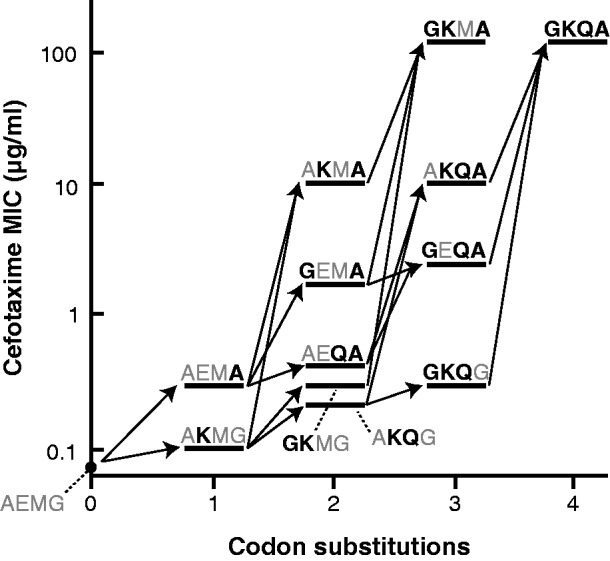
“For example, TEM-52 differs from TEM-1 by three point mutations resulting in the E104K/M182T/ G238S mutations (21) that increase cefotaxime resistance 4000-fold (16).”
BackgroundMethodInfluentialBryson, V., & Vogel, H. J. (1965) · Science · doi:10.1126/science.147.3653.68 · Cited by 1,341
Natural Selection and the Concept of a Protein Space
MAYNARD SMITH, J. (1970) · Nature · doi:10.1038/225563a0 · Cited by 922
The frailty of adaptive hypotheses for the origins of organismal complexity
Lynch, M. (2007) · Proceedings of the National Academy of Sciences · doi:10.1073/pnas.0702207104 · Cited by 817
WHITLOCK, M. C. (2005) · Journal of Evolutionary Biology · doi:10.1111/j.1420-9101.2005.00917.x · Cited by 752
Lee, H., Popodi, E., Tang, H., & Foster, P. L. (2012) · Proceedings of the National Academy of Sciences · doi:10.1073/pnas.1210309109 · Cited by 681
A co-evolution theory of the genetic code
Wong, J. T.-F. (1975) · Proceedings of the National Academy of Sciences · doi:10.1073/pnas.72.5.1909 · Cited by 649
Research works printed but not linked: 1
- Gould SJ The evolutionary biology of constraint Daedalus 1980 109 39 52
Cited by
A Comprehensive, High-Resolution Map of a Gene’s Fitness Landscape
Firnberg, E., Labonte, J. W., Gray, J. J., & Ostermeier, M. (2014) · Molecular Biology and Evolution · doi:10.1093/molbev/msu081 · Cited by 337
“2012) that were reengineered for a new function in a nonnative organism (Firnberg and Ostermeier 2013).”
BackgroundResultInfluentialSelf-citationOrigin and Evolution of the Universal Genetic Code
Koonin, E. V., & Novozhilov, A. S. (2017) · Annual Review of Genetics · doi:10.1146/annurev-genet-120116-024713 · Cited by 200
The immunological functions of the Appendix: An example of redundancy?
Girard-Madoux, M. J. H., de Agüero, M. G., Ganal-Vonarburg, S. C., Mooser, C., Belz, G. T., Macpherson, A. J., & Vivier, É. (2018) · Seminars in Immunology · doi:10.1016/j.smim.2018.02.005 · Cited by 155
Environmental changes bridge evolutionary valleys
Steinberg, B. E., & Ostermeier, M. (2016) · Science Advances · doi:10.1126/sciadv.1500921 · Cited by 130
Self-citationLessons from diversity of directed evolution experiments by an analysis of 3,000 mutations
Zhao, J. B., Kardashliev, T., Ruff, A. J., Bocola, M., & Schwaneberg, U. (2014) · Biotechnology and Bioengineering · doi:10.1002/bit.25302 · Cited by 48
“S4) and lead to a narrow and mostly conservative amino acid spectrum due to the organization of the genetic code (Bloom et al., 2006; Firnberg and Ostermeier, 2013).”
BackgroundFan, X., Sun, L., Li, K., Yang, X., Cai, B., Zhang, Y., Zhu, Y., Ma, Y., Guan, Z., Wu, Y., et al. (2017) · Molecular Therapy — Nucleic Acids · doi:10.1016/j.omtn.2017.09.010 · Cited by 34
Refactoring the Genetic Code for Increased Evolvability
Pines, G., Winkler, J. D., Pines, A., & Gill, R. T. (2017) · mBio · doi:10.1128/mbio.01654-17 · Cited by 31
“The number of nucleotide replacements required for inter-amino acid conversion and their observed frequency in the data are strongly anticorrelated (P 10 10, Spearman test), comporting well with previous findings (33).”
ResultEmergent properties as by-products of prebiotic evolution of aminoacylation ribozymes
Janzen, E., Shen, Y., Vázquez-Salazar, A., Liu, Z., Blanco, C., Kenchel, J., & Chen, I. A. (2022) · Nature Communications · doi:10.1038/s41467-022-31387-0 · Cited by 27
Directed Evolution of RecA Variants with Enhanced Capacity for Conjugational Recombination
Kim, T., Chitteni‐Pattu, S., Cox, B. L., Wood, E. A., Sandler, S. J., & Cox, M. M. (2015) · PLoS Genetics · doi:10.1371/journal.pgen.1005278 · Cited by 25
“Note that due to the structure of the genetic code [120, 121], single nucleotide changes do not provide access to every possible amino acid substitution, but our library should include over a third of them.”
BackgroundSelf-similarity and the maximum entropy principle in the genetic code
Kak, S. C. (2023) · Theory in Biosciences · doi:10.1007/s12064-023-00396-y · Cited by 18
“Another theory sees the universality of the code structure having coevolved with amino acid biosynthesis pathways (Francis 2013; Sengupta et al 2014; Di Giulio 2016; Firnberg and Ostermeier 2013).”
BackgroundRobust genetic codes enhance protein evolvability
Rozhoňová, H., Martí‐Gómez, C., McCandlish, D. M., & Payne, J. L. (2024) · PLoS Biology · doi:10.1371/journal.pbio.3002594 · Cited by 20
Predicting Drug Resistance Using Deep Mutational Scanning
Pines, G., Fankhauser, R. G., & Eckert, C. A. (2020) · Molecules · doi:10.3390/molecules25092265 · Cited by 17
The Resistome: A Comprehensive Database of Escherichia coli Resistance Phenotypes
Winkler, J. D., Halweg‐Edwards, A. L., Erickson, K. E., Choudhury, A., Pines, G., & Gill, R. T. (2016) · ACS Synthetic Biology · doi:10.1021/acssynbio.6b00150 · Cited by 18
Pines, G., Oh, E. J., Bassalo, M. C., Choudhury, A., Garst, A. D., Fankhauser, R. G., Eckert, C. A., & Gill, R. T. (2018) · ACS Synthetic Biology · doi:10.1021/acssynbio.8b00219 · Cited by 19
Expanded Genetic Codes Create New Mutational Routes to Rifampicin Resistance inEscherichia coli
Hammerling, M. J., Gollihar, J., Mortensen, C., Alnahhas, R. N., Ellington, A. D., & Barrick, J. E. (2016) · Molecular Biology and Evolution · doi:10.1093/molbev/msw094 · Cited by 15
Nucleic acid recognition during prokaryotic immunity
Baca, C. F., & Marraffini, L. A. (2025) · Molecular Cell · doi:10.1016/j.molcel.2024.12.007 · Cited by 16
Accelerating structure‐function mapping using the ViVa webtool to mine natural variation
Hamm, M. O., Moss, B. L., Leydon, A. R., Gala, H., Lanctot, A., Ramos, R., Klaeser, H., Lemmex, A. C., Zahler, M. L., Nemhauser, J. L., et al. (2019) · Plant Direct · doi:10.1002/pld3.147 · Cited by 9
“As non-synonymous polymorphisms are more likely to give rise to functional change than synonymous polymorphisms, the ratio of the presence of nonsynonymous to synonymous polymorphisms provides a measure of the potential for functional diversity (Firnberg & Ostermeier, 2013; Whitehead et al., 2012).”
The Standard Genetic Code Facilitates Exploration of the Space of Functional Nucleotide Sequences
Tripathi, S., & Deem, M. W. (2018) · Journal of Molecular Evolution · doi:10.1007/s00239-018-9852-x · Cited by 9
Highly efficient libraries design for saturation mutagenesis
Pines, G., Pines, A., & Eckert, C. A. (2022) · Synthetic Biology · doi:10.1093/synbio/ysac006 · Cited by 6
“Thus, limiting a library to a larger distance than 1 may not only reduce its size but may also enhance the contrast between beneficial and nonbeneficial mutations since such libraries are mainly enriched in deleterious mutations (12).”
BackgroundSpace ethics to test directed panspermia
Makukov, M. A., & shCherbak, V. I. (2014) · Life Sciences in Space Research · doi:10.1016/j.lssr.2014.07.003 · Cited by 9
The Organization of the Genetic CodePreprint
Kak, S. C. (2022) · doi:10.36227/techrxiv.19224741.v1 · Cited by 6
Alphabet cardinality and adaptive evolution
Srivastava, M., Rozhoňová, H., & Payne, J. L. (2023) · Journal of Physics A Mathematical and Theoretical · doi:10.1088/1751-8121/ad0200 · Cited by 7
“An additional limitation of our study is that we did not take into consideration the genetic code, which influences both landscape topography [47] and the likelihood of various alphabet expansions [48–51].”
BackgroundDynamic Management of Codon Compression for Saturation Mutagenesis
Pines, G., & Gill, R. T. (2018) · Methods in molecular biology · doi:10.1007/978-1-4939-7795-6_9 · Cited by 4
Miyachi, R., & Ichihashi, N. (2026) · eLife · doi:10.7554/elife.111164.3 · Cited by 2
The Resistome: updating a standardized resource for analyzing resistance phenotypesPreprint
Winkler, J. (2018) · bioRxiv (Cold Spring Harbor Laboratory) · doi:10.1101/418814 · Cited by 2
Mapping of the influenza A hemagglutinin serotypes evolution by the ISSCOR method.
Radomski, J. P., Słonimski, P. P., Zagórski‐Ostoja, W., & Borowicz, P. (2014) · Acta Biochimica Polonica · doi:10.18388/abp.2014_1862 · Cited by 1
Mierke, C. T. (2020) · Biological and medical physics, biomedical engineering · doi:10.1007/978-3-030-58532-7_11 · Cited by 1
Wichmann, S., & Ardern, Z. (2023) · BioCosmos · doi:10.2478/biocosmos-2023-0001 · Cited by 1
“It has already been shown that constraints from the structure of the genetic code facilitate Darwinian evolution (52), so it is reasonable to look for more cases of this.”
BackgroundThe impact of synthetically expanded genetic codes on evolvability
Hammerling, M. J. (2016) · Texas ScholarWorks (Texas Digital Library) · doi:10.15781/t2sx64v33
Quantitative high-throughput genomics in RNA viruses
Du, Y. (2017) · eScholarship (California Digital Library)
Visualizing Amino Acid Substitutions in a Physicochemical Vector SpacePreprint
Nemzer, L. R. (2021) · bioRxiv (Cold Spring Harbor Laboratory) · doi:10.1101/2021.07.15.452549
The Organization of the Genetic CodePreprint
Kak, S. C. (2022) · doi:10.36227/techrxiv.19224741
Compartmentalized directed evolution of enzymes using molecular programs as self-selection function
Dramé-Maigné, A. (2018) · theses.fr (ABES) · doi:10.70675/ad78e5e7z7c34z47e1z970az11f87d138935 · Cited by 3
Miyachi, R., & Ichihashi, N. (2026) · eLife · doi:10.7554/elife.111164.1
Miyachi, R., & Ichihashi, N. (2026) · eLife · doi:10.7554/elife.111164.2
Alternative Biochemistries of Life Making Universal Constraints Testable
Baxter, J. K. (2026) · Philosophy of Science · doi:10.1017/psa.2026.10254
Metadata
- Authors
- Firnberg, E., & Ostermeier, M.
- Affiliations
- Johns Hopkins University (US)
- Corresponding author
- Ostermeier, Marc
- Venue
- Nucleic Acids Research
- Publisher
- Oxford University Press (OUP)
- Published
- 2013-06-10
- Volume
- 41
- Issue
- 15
- Pages
- 7420-7428
- ISSN
- 0305-1048 (ISSN-L)
- 1362-4962
- PMC
- PMC3753648
- OpenAlex
- W2152492900
- Cited by
- 36
- References
- 42
- Citations by year
- 2026: 4 · 2025: 1 · 2024: 1 · 2023: 4 · 2022: 5 · 2021: 2 · 2020: 2 · 2019: 1 · 2018: 5 · 2017: 3 · 2016: 3 · 2015: 1 · 2014: 4
- FWCI
- 1.77
- Type
- journal article
- Language
- en
- Open access
- gold
- doi.org
- Licence
- Locations
- Nucleic Acids Research (publishedVersion, cc-by-nc)
- Europe PMC (PubMed Central) (publishedVersion, cc-by-nc)
- PubMed Central (publishedVersion, cc-by-nc)
- PubMed (publishedVersion)
- Funders
- National Science Foundation (0950939)
- Topics
- Life Sciences › Biochemistry, Genetics and Molecular Biology › Genetics › Evolution and Genetic Dynamics
- Life Sciences › Biochemistry, Genetics and Molecular Biology › Molecular Biology › RNA and protein synthesis mechanisms
- Physical Sciences › Physics and Astronomy › Astronomy and Astrophysics › Origins and Evolution of Life
- Keywords
- genetic code, adaptive mutation, mutational bias, TEM-1 beta-lactamase, antibiotic resistance, influenza hemagglutinin, codon substitution, fitness distribution, sequence space exploration, deleterious mutations, protein evolution
- MeSH terms
- Adaptation, Biological, Alleles, Bacteria, Bacterial Proteins, beta-Lactamases, Cefotaxime, Codon, DNA, Bacterial, Epistasis, Genetic, Genetic Code, Hemagglutination Inhibition Tests, Selection, Genetic, Point Mutation, Evolution, Molecular, Hemagglutinin Glycoproteins, Influenza Virus, Amino Acid Substitution, Drug Resistance, Bacterial, Genetic Fitness
About these checks
Registry, retraction, Cites and statistics results are computed, not judged, with one exception: a printed reference that no index lists is read once by a model before it counts as a citation error. Claims are extracted by a model and kept only when their quote appears verbatim in the text; each cited source is then checked, with a model’s help, for whether it says what the claim relies on. Those verdicts can be wrong — read the claim’s quote and the cited source before relying on one.
Statistics and arithmetic are recomputed, not judged.
Confidence bands are shown only for fields calibrated on our annotated test set. None is calibrated yet, so no band is shown.
What counts as a claim ›How we measure confidence ›How we check this ›
Are you an author, or do you see a problem with this page? Request a review
Data sources
Bibliographic data: Semantic Scholar, OpenAlex, Crossref.
Contains information from the Semantic Scholar Academic Graph Datasets, made available under the ODC Attribution License (ODC-BY 1.0).
Semantic Scholar’s data is described in: Kinney, R., et al. (2023). The Semantic Scholar Open Data Platform. arXiv:2301.10140.
