

The DOI matches its Crossref record; 57 of the 57 references it cites were found in a registry or an index.
The influence of CpG and UpA dinucleotide frequencies on RNA virus replication and characterization of the innate cellular pathways underlying virus attenuation and enhanced replication
Open accessAbstract
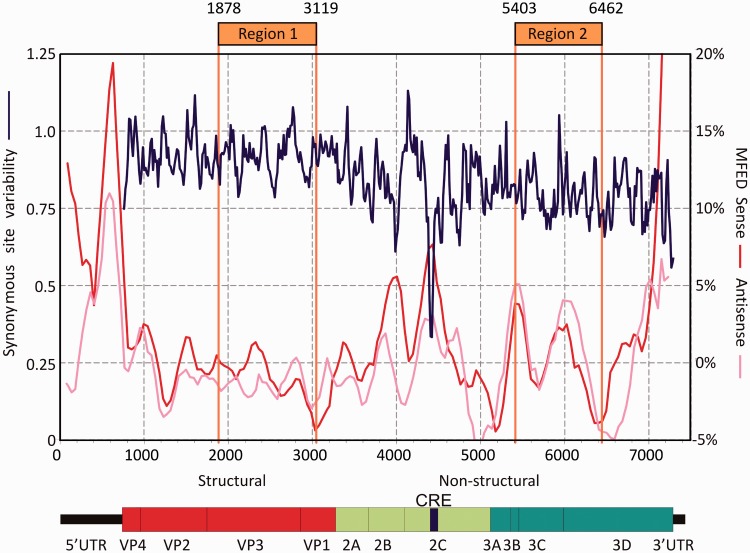
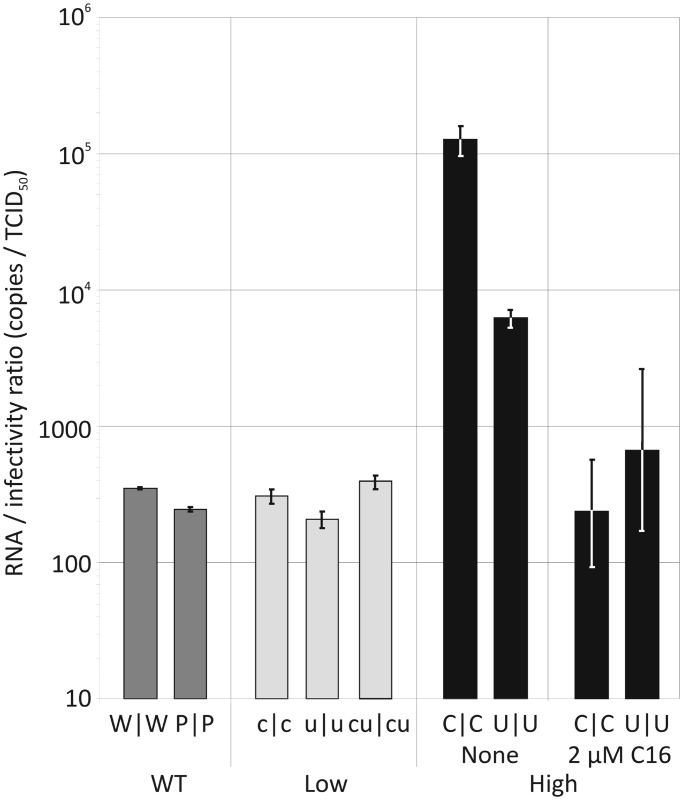
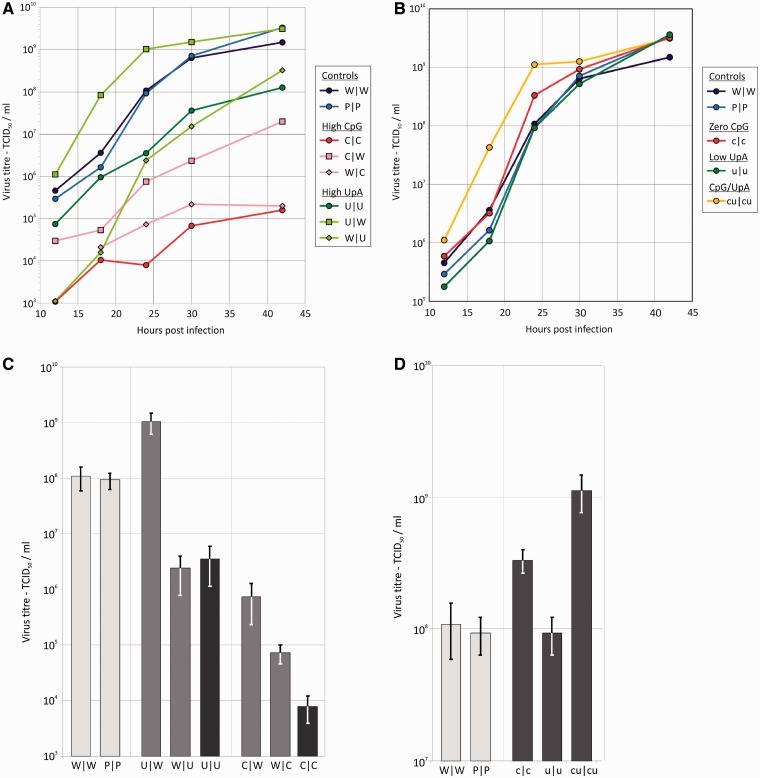
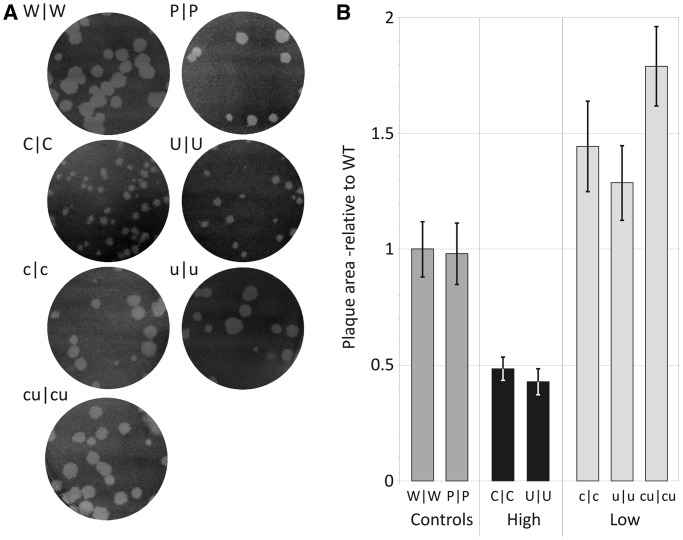
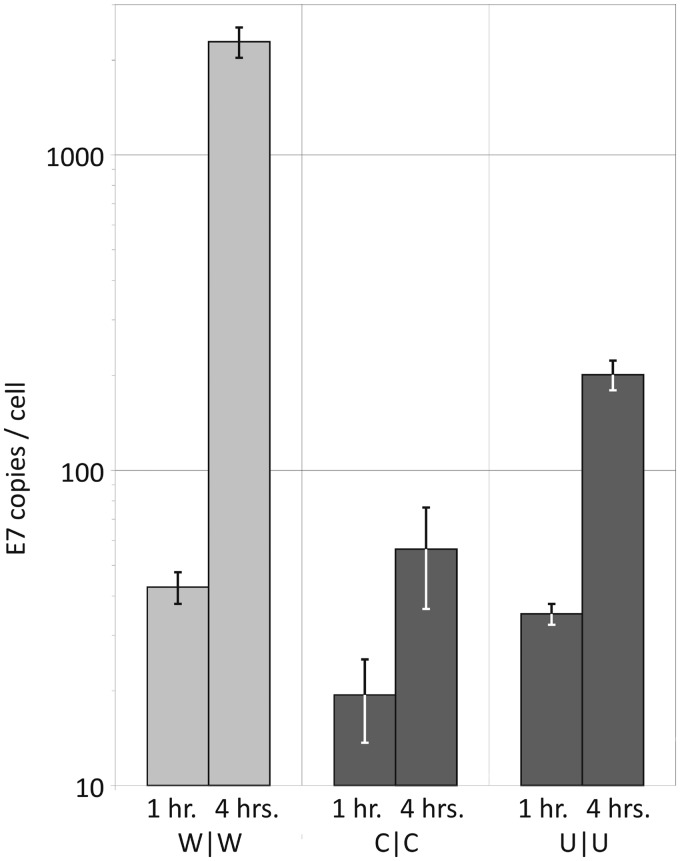
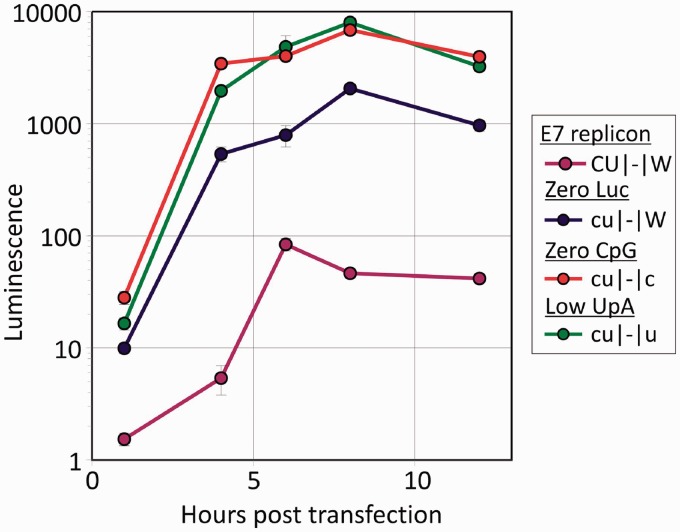
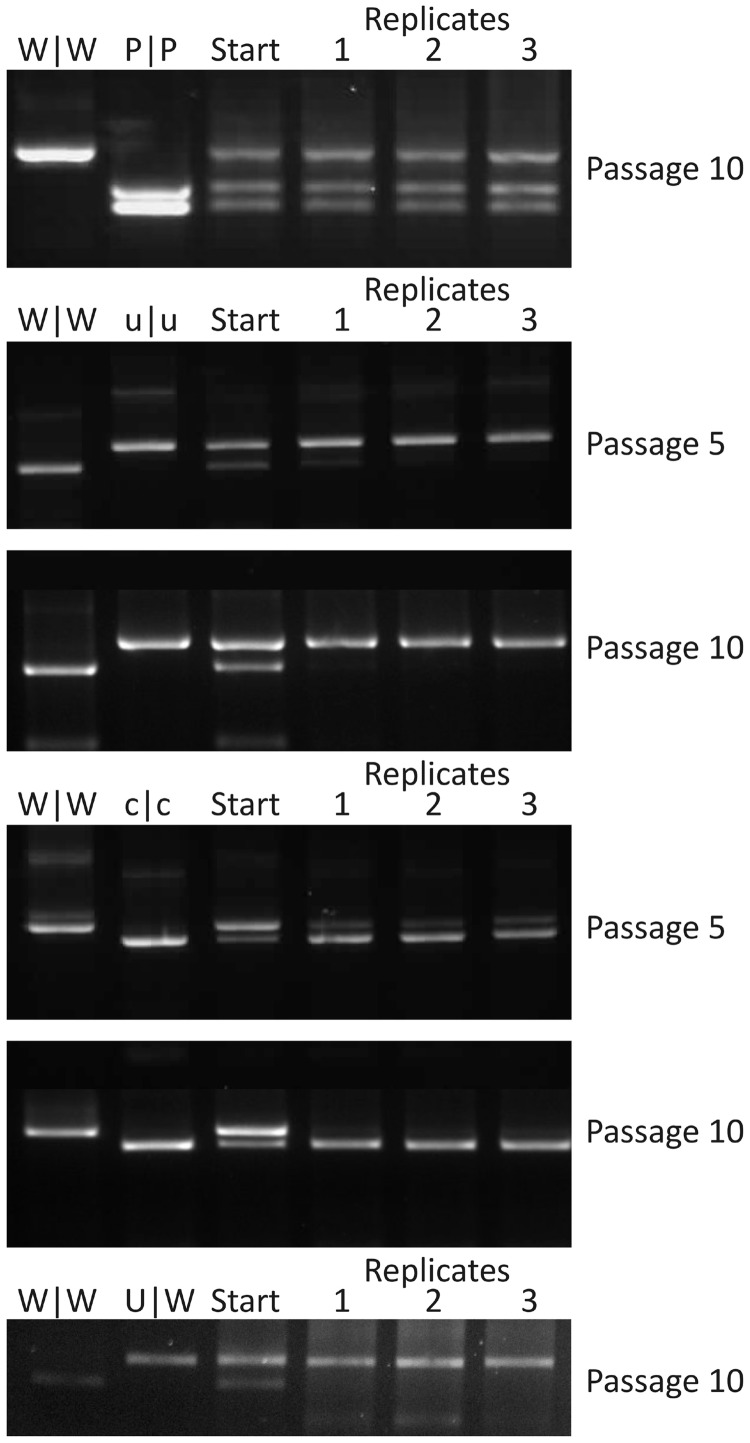
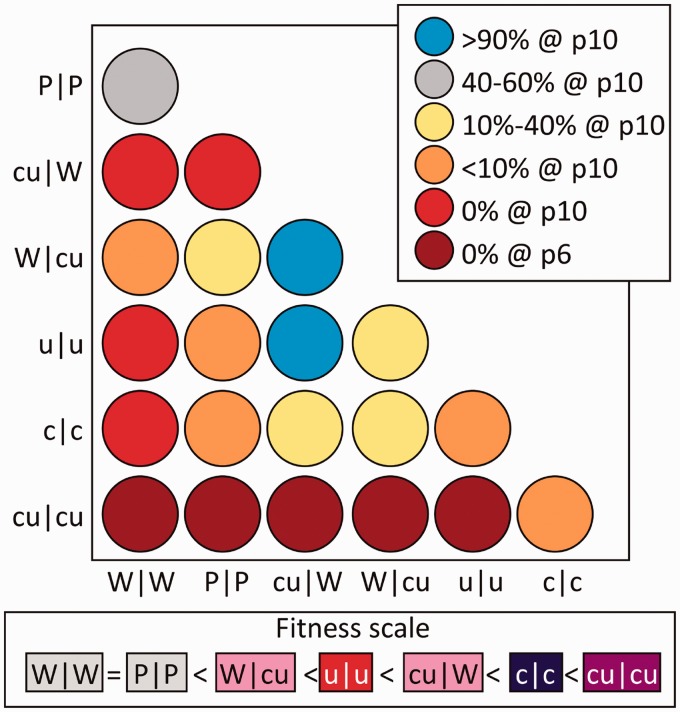
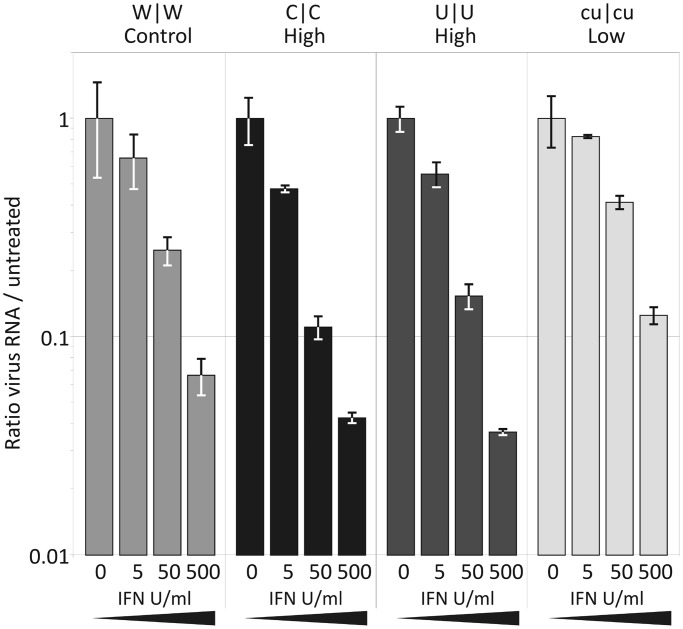
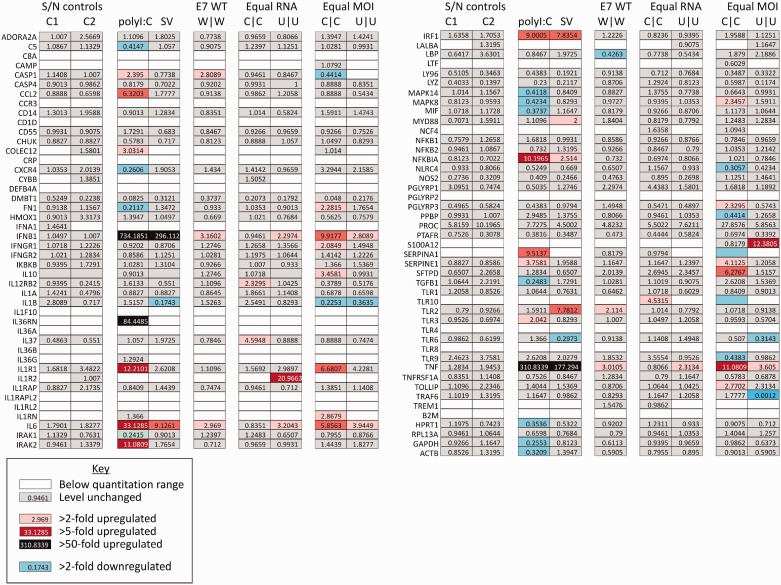
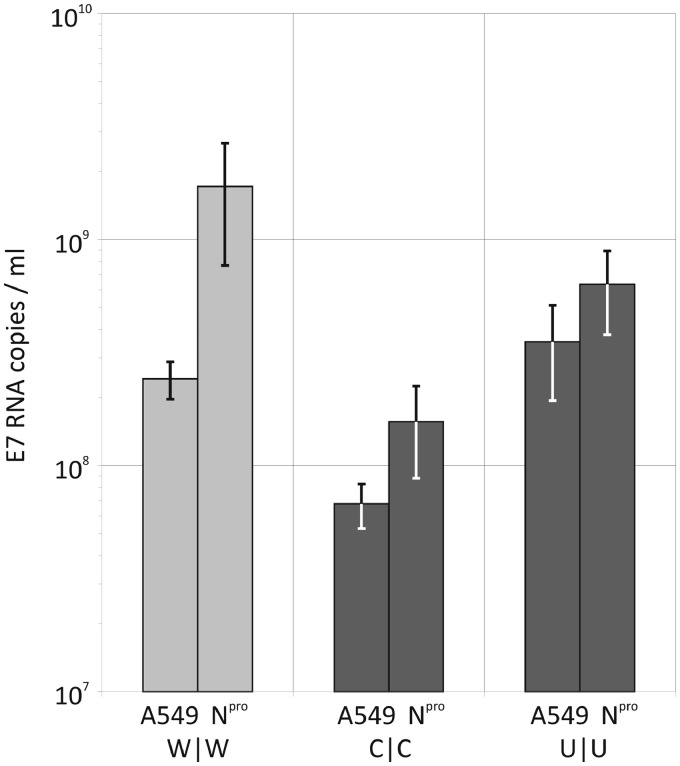
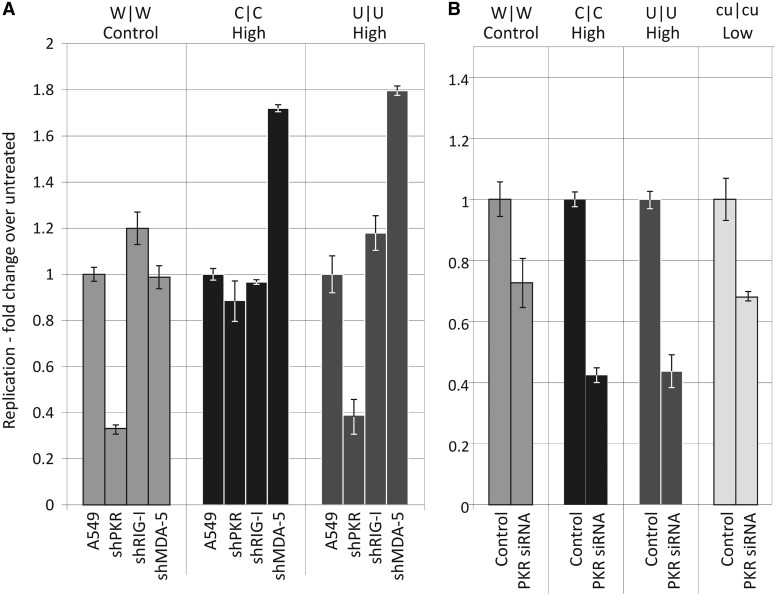
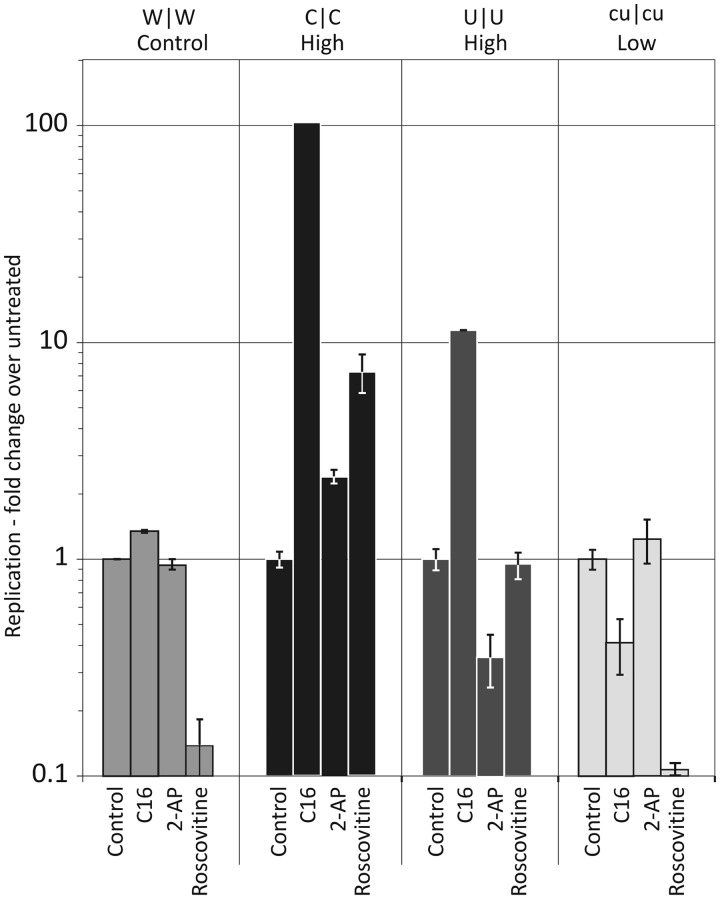
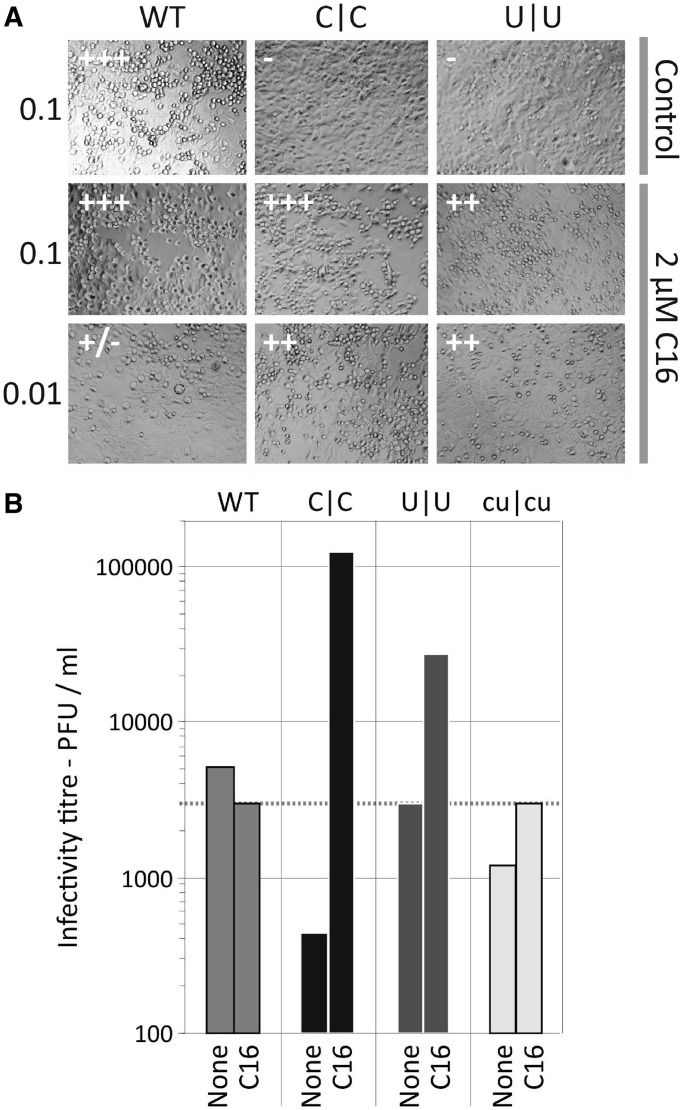
Most RNA viruses infecting mammals and other vertebrates show profound suppression of CpG and UpA dinucleotide frequencies. To investigate this functionally, mutants of the picornavirus, echovirus 7 (E7), were constructed with altered CpG and UpA compositions in two 1.1–1.3 Kbase regions. Those with increased frequencies of CpG and UpA showed impaired replication kinetics and higher RNA/infectivity ratios compared with wild-type virus. Remarkably, mutants with CpGs and UpAs removed showed enhanced replication, larger plaques and rapidly outcompeted wild-type virus on co-infections. Luciferase-expressing E7 sub-genomic replicons with CpGs and UpAs removed from the reporter gene showed 100-fold greater luminescence. E7 and mutants were equivalently sensitive to exogenously added interferon-β, showed no evidence for differential recognition by ADAR1 or pattern recognition receptors RIG-I, MDA5 or PKR. However, kinase inhibitors roscovitine and C16 partially or entirely reversed the attenuated phenotype of high CpG and UpA mutants, potentially through inhibition of currently uncharacterized pattern recognition receptors that respond to RNA composition. Generating viruses with enhanced replication kinetics has applications in vaccine production and reporter gene construction. More fundamentally, the findings introduce a new evolutionary paradigm where dinucleotide composition of viral genomes is subjected to selection pressures independently of coding capacity and profoundly influences host–pathogen interactions.
Overview
The claims and statistics of this paper haven’t been checked yet.
Run the check — free, no account needed. It reads the open-access text and checks the sources it cites.
Integrity signals
Registry
Cites
Statistics
Figures
Verification
Claims the paper makes
The claims and statistics of this paper haven’t been checked yet.
Run the check — free, no account needed. It reads the open-access text and checks the sources it cites.
Claims other papers make about this one
Each is checked against this paper’s own text: does it say what the citing paper says it does?
The source backs part of the claim, not all of it — or backs it for a different population, condition or comparison.
In the citing paper
“Previous studies have shown that SAVE not only increases the number of codon pairs that are underrepresented in coding sequences of the target host”
From Codon Pair Bias Is a Direct Consequence of Dinucleotide Bias (2016) · cites this paper as Atkinson et al., 2014
Experimental — accuracy not yet measuredThe source backs part of the claim, not all of it — or backs it for a different population, condition or comparison.
In the citing paper
“when done using vertebrate CPSs, inadvertently increases the number of CpG and, to lesser degree, also TpA dinucleotides in recoded sequences”
From Codon Pair Bias Is a Direct Consequence of Dinucleotide Bias (2016) · cites this paper as Atkinson et al., 2014
Experimental — accuracy not yet measuredThe source backs part of the claim, not all of it — or backs it for a different population, condition or comparison.
In the citing paper
“codon pairs that contain CpG and TpA dinucleotides at codon position P3-A1 are among the most underrepresented codon pairs”
From Codon Pair Bias Is a Direct Consequence of Dinucleotide Bias (2016) · cites this paper as Atkinson et al., 2014
Experimental — accuracy not yet measuredThe cited source says what the claim attributes to it.
In the citing paper
“Several studies have shown that increasing the frequency of CpG dinucleotides in the RNA virus genome reduces the virus fitness (Atkinson et al., 2014;Burns et al., 2009;Tulloch et al., 2014).”
From Mechanism of Virus Attenuation by Codon Pair Deoptimization (2020) · cites this paper as Atkinson et al., 2014
Self-check
Percentages, sums and reported differences re-computed from the paper’s own numbers.
The self-check needs the paper’s full text.
Citations
Cites
Differential roles of MDA5 and RIG-I helicases in the recognition of RNA viruses
Kato, H., Takeuchi, O., Sato, S., Yoneyama, M., Yamamoto, M., Matsui, K., Uematsu, S., Jung, A., Kawai, T., Ishii, K. J., et al. (2006) · Nature · doi:10.1038/nature04734 · Cited by 3,888
5'-Triphosphate RNA Is the Ligand for RIG-I
Hornung, V., Ellegast, J., Kim, S., Brzózka, K., Jung, A., Kato, H., Poeck, H., Akira, S., Conzelmann, K.-K., Schlee, M., et al. (2006) · Science · doi:10.1126/science.1132505 · Cited by 2,474
The ‘effective number of codons’ used in a gene
Wright, F. (1990) · Gene · doi:10.1016/0378-1119(90)90491-9 · Cited by 2,318
Meijer, L., Borgne, A., Mulner, O., Chong, J. P. J., Blow, J. J., Inagaki, N., Inagaki, M., Delcros, J., & Moulinoux, J. (1997) · European Journal of Biochemistry · doi:10.1111/j.1432-1033.1997.t01-2-00527.x · Cited by 1,352
A novel influenza A virus mitochondrial protein that induces cell death
Chen, W., Calvo, P. A., Malide, D. A., Gibbs, J. S., Schubert, U., Bačík, I., Basta, S., O’Neill, R. E., Schickli, J. H., Palese, P., et al. (2001) · Nature Medicine · doi:10.1038/nm1201-1306 · Cited by 1,037
Virus attenuation by genome-scale changes in codon pair bias
Coleman, J. R., Papamichail, D., Skiena, S., Futcher, B., Wimmer, E., & Mueller, S. (2008) · Science · doi:10.1126/science.1155761 · Cited by 715
Etchison, D., Milburn, S. C., Edery, I., Sonenberg, N., & Hershey, J. W. B. (1982) · Journal of Biological Chemistry · doi:10.1016/s0021-9258(18)33352-0 · Cited by 583
The distribution of fitness effects caused by single-nucleotide substitutions in an RNA virus.
Sanjuán, R., Moya, A., & Elena, S. F. (2004) · Proceedings of the National Academy of Sciences · doi:10.1073/pnas.0400146101 · Cited by 582
CAIcal: A combined set of tools to assess codon usage adaptation
Puigbò, P., Bravo, I., & García-Vallvé, S. (2008) · Biology Direct · doi:10.1186/1745-6150-3-38 · Cited by 569
Activation of MDA5 Requires Higher-Order RNA Structures Generated during Virus Infection
Pichlmair, A., Schulz, O., Tan, C.-P., Rehwinkel, J., Kato, H., Takeuchi, O., Akira, S., Way, M., Schiavo, G., & Sousa, C. R. E. (2009) · Journal of Virology · doi:10.1128/jvi.00770-09 · Cited by 469
Cited by
Sorted by citations
Discriminating self from non-self in nucleic acid sensing
Schlee, M., & Hartmann, G. (2016) · Nature reviews. Immunology · doi:10.1038/nri.2016.78 · Cited by 598
Origins and challenges of viral dark matter
Krishnamurthy, S. R., & Wang, D. (2017) · Virus Research · doi:10.1016/j.virusres.2017.02.002 · Cited by 259
Synonymous but Not Silent: The Codon Usage Code for Gene Expression and Protein Folding
Liu, Y., Yang, Q., & Zhao, F. (2021) · Annual Review of Biochemistry · doi:10.1146/annurev-biochem-071320-112701 · Cited by 254
Theoretical basis for stabilizing messenger RNA through secondary structure design
Wayment-Steele, H. K., Kim, D. S., Choe, C. A., Nicol, J. J., Wellington-Oguri, R., Watkins, A. M., Parra Sperberg, R. A., Huang, P.-S., Participants, E., & Das, R. (2021) · Nucleic Acids Research · doi:10.1093/nar/gkab764 · Cited by 197
Tulloch, F., Atkinson, N. J., Evans, D. J., Ryan, M. D., & Simmonds, P. (2014) · eLife · doi:10.7554/elife.04531 · Cited by 178
Self-citation
Metadata
- Authors
- Atkinson, N. J., Witteveldt, J., Evans, D. J., & Simmonds, P.
- Affiliations
- Roslin Institute (GB)
- 1 Infection and Immunity Division, Roslin Institute, University of Edinburgh, Easter Bush, Edinburgh EH25 9RG, UK and 2School of Life Sciences, University of Warwick, Coventry CV4 7AL, UK
- Venue
- Nucleic Acids Research
- Publisher
- Oxford University Press (OUP)
- Published
- 2014-01-25
- Volume
- 42
- Issue
- 7
- Pages
- 4527-4545
- ISSN
- 0305-1048 (ISSN-L)
- 1362-4962
- PMC
- PMC3985648
- OpenAlex
- W2057088297
- Cited by
- 192
- References
- 57
- Citations by year
- 2026: 12 · 2025: 15 · 2024: 9 · 2023: 8 · 2022: 11 · 2021: 36 · 2020: 26 · 2019: 17 · 2018: 11 · 2017: 20 · 2016: 10 · 2015: 13 · 2014: 3
- FWCI
- 7.01
- Type
- journal article
- Language
- en
- Open access
- gold
- doi.org
- Locations
- Nucleic Acids Research (publishedVersion, cc-by)
- Europe PMC (PubMed Central) (publishedVersion, cc-by)
- PubMed Central (publishedVersion, cc-by)
- PubMed (publishedVersion)
- Warwick Research Archive Portal (University of Warwick) (acceptedVersion)
- Edinburgh Research Explorer (University of Edinburgh) (submittedVersion, cc-by)
- St Andrews Research Repository (St Andrews Research Repository) (submittedVersion, cc-by)
- Funders
- Wellcome Trust (095831, WT087628MA)
- University of St Andrews
- Medical Research Council
- Biotechnology and Biological Sciences Research Council (BBS/E/D/20241864)
- Topics
- Life Sciences › Immunology and Microbiology › Immunology › interferon and immune responses
- Life Sciences › Biochemistry, Genetics and Molecular Biology › Genetics › Evolution and Genetic Dynamics
- Life Sciences › Biochemistry, Genetics and Molecular Biology › Molecular Biology › RNA and protein synthesis mechanisms
- Keywords
- CpG, RNA virus replication, echovirus 7, picornavirus, viral genome evolution, RNA composition, innate immune recognition, pattern recognition receptors, interferon-beta, roscovitine, RNA replicon, vaccine production, host-pathogen interaction
- MeSH terms
- Base Composition, Cell Line, Mutation, RNA, Viral, Virus Replication, Dinucleoside Phosphates, GC Rich Sequence, Enterovirus B, Human
About these checks
Registry, retraction, Cites and statistics results are computed, not judged, with one exception: a printed reference that no index lists is read once by a model before it counts as a citation error. Claims are extracted by a model and kept only when their quote appears verbatim in the text; each cited source is then checked, with a model’s help, for whether it says what the claim relies on. Those verdicts can be wrong — read the claim’s quote and the cited source before relying on one.
Statistics and arithmetic are recomputed, not judged.
Confidence bands are shown only for fields calibrated on our annotated test set. None is calibrated yet, so no band is shown.
What counts as a claim ›How we measure confidence ›How we check this ›
Are you an author, or do you see a problem with this page? Request a review
