

IntaRNA 2.0: enhanced and customizable prediction of RNA–RNA interactions
Open accessThe DOI matches its Crossref record; 41 of the 41 references it cites were found in a registry or an index.
Abstract
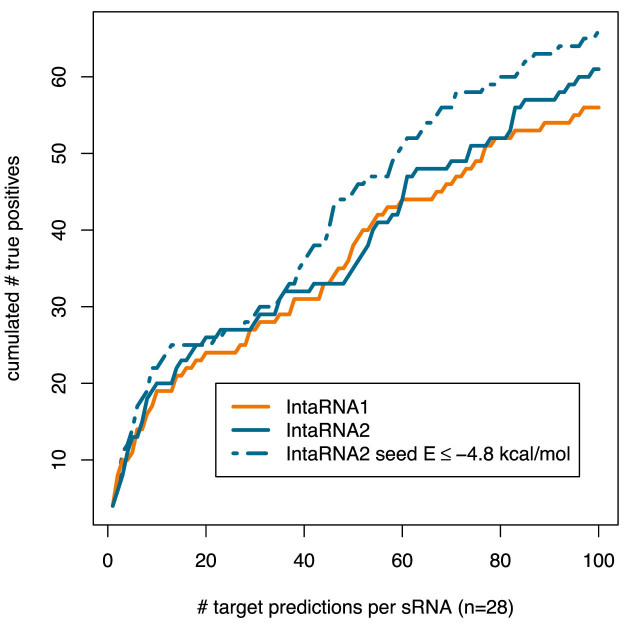
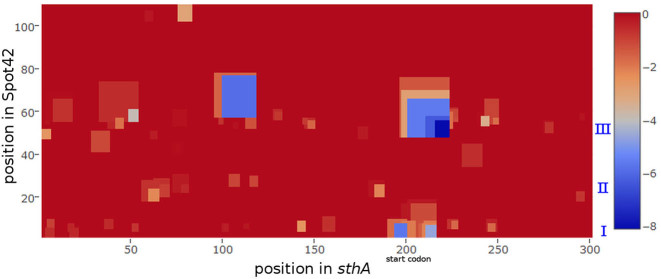
The IntaRNA algorithm enables fast and accurate prediction of RNA-RNA hybrids by incorporating seed constraints and interaction site accessibility. Here, we introduce IntaRNAv2, which enables enhanced parameterization as well as fully customizable control over the prediction modes and output formats. Based on up to date benchmark data, the enhanced predictive quality is shown and further improvements due to more restrictive seed constraints are highlighted. The extended web interface provides visualizations of the new minimal energy profiles for RNA-RNA interactions. These allow a detailed investigation of interaction alternatives and can reveal potential interaction site multiplicity. IntaRNAv2 is freely available (source and binary), and distributed via the conda package manager. Furthermore, it has been included into the Galaxy workflow framework and its already established web interface enables ad hoc usage.
Overview
The claims and statistics of this paper haven’t been checked yet.
Free: it reads the open-access text and checks the first 5 claims that cite a source we can check. Create a free account to check every claim.
Integrity signals
Registry
Cites
Statistics
Figures
Verification
Claims the paper makes
The claims and statistics of this paper haven’t been checked yet.
Free: it reads the open-access text and checks the first 5 claims that cite a source we can check. Create a free account to check every claim.
Self-check
Percentages, sums and reported differences re-computed from the paper’s own numbers.
The self-check needs the paper’s full text.
Citations
Cites
Prediction of Mammalian MicroRNA Targets
Lewis, B. P., Shih, I.-H., Jones-Rhoades, M. W., Bartel, D. P., & Burge, C. B. (2003) · Cell · doi:10.1016/s0092-8674(03)01018-3 · Cited by 5,199
Lorenz, R., Bernhart, S. H., Höner zu Siederdissen, C., Tafer, H., Flamm, C., Stadler, P. F., & Hofacker, I. L. (2011) · Algorithms for Molecular Biology · doi:10.1186/1748-7188-6-26 · Cited by 5,098
Regulation of mRNA Translation and Stability by microRNAs
Fabian, M. R., Sonenberg, N., & Filipowicz, W. (2010) · Annual Review of Biochemistry · doi:10.1146/annurev-biochem-060308-103103 · Cited by 3,214 · cited 1×
“For instance, bacterial small RNAs (sRNA) and eukaryotic microRNAs form highly stable subinteractions, which are considered to seed the formation of extended RNA–RNA duplexes (5,6).”
Fast and effective prediction of microRNA/target duplexes
REHMSMEIER, M., STEFFEN, P., HÖCHSMANN, M., & GIEGERICH, R. (2004) · RNA · doi:10.1261/rna.5248604 · Cited by 2,560
Fast folding and comparison of RNA secondary structures
Hofacker, I. L., Fontana, W., Stadler, P. F., Bonhoeffer, L. S., Tacker, M., & Schuster, P. (1994) · Monatshefte f�r Chemie Chemical Monthly · doi:10.1007/bf00818163 · Cited by 2,306
The Galaxy platform for accessible, reproducible and collaborative biomedical analyses: 2016 update
Afgan, E., Baker, D., van den Beek, M., Blankenberg, D., Bouvier, D., Čech, M., Chilton, J., Clements, D., Coraor, N., Eberhard, C., et al. (2016) · Nucleic Acids Research · doi:10.1093/nar/gkw343 · Cited by 2,148
Turner, D. H., & Mathews, D. H. (2010) · Nucleic Acids Research · doi:10.1093/nar/gkp892 · Cited by 575 · cited 3×
“Firstly, INTARNA was fixed to an aged Vienna RNA library (v1.*) (16) and its energy parameters Turner99 (17).”
Busch, A., Richter, A. S., & Backofen, R. (2008) · Bioinformatics · doi:10.1093/bioinformatics/btn544 · Cited by 552
Small RNAs in Bacteria and Archaea
Wagner, E. G. H., & Romby, P. (2015) · Advances in Genetics · doi:10.1016/bs.adgen.2015.05.001 · Cited by 520
Thermodynamics of RNA–RNA binding
Mückstein, U., Tafer, H., Hackermüller, J., Bernhart, S. H., Stadler, P. F., & Hofacker, I. L. (2006) · Bioinformatics · doi:10.1093/bioinformatics/btl024 · Cited by 379
Research works printed but not linked: 1
- Wright P.R. Predicting small RNA targets in prokaryotes - a challenge beyond the barriers of thermodynamic models. 2016; Albert-Ludwigs-University Freiburg PhD thesis doi:10.6094/UNIFR/11472. · DOI
Cited by
Items 701–736 of 736
Yan, Y., 王, 菊., Zhao, F., & Wang, Y. (2026) · American Journal of Physiology-Gastrointestinal and Liver Physiology · doi:10.1152/ajpgi.00041.2026
Non-coding RNAs in peripheral vascular diseases – a snRNA study
Zalewski, D. P., Feldo, M., Stępniewski, A., Łuszczak, J., Kocki, J., & Bogucka‐Kocka, A. (2026) · Journal of Applied Genetics · doi:10.1007/s13353-026-01087-2
The sRNA LhrC5 and Hfq post-transcriptionally regulate ferritin expression in Listeria monocytogenes
Gomza, P., Ścibek, K., Ładziak, M., Burmistrz, M., Lillebæk, E. M. S., Kallipolitis, B. H., & Krawczyk-Balska, A. (2026) · Frontiers in Microbiology · doi:10.3389/fmicb.2026.1771046
“Interactions between LhrC sRNAs and fri mRNAs were predicted using the IntaRNA software (Mann et al., 2017).”
Long Non-coding RNAs in Infectious Diseases
Das, R., Sheikh, M. M. R., Sinnarasan, V. S. P., Paul, D., & Venkatesan, A. (2026) · Epigenetics and human health · doi:10.1007/978-3-032-19668-2_11
López-Núñez, S., Simba-Lahuasi, Á., Cantero-Camacho, Á., Ye, C., Mena, I., García‐Sastre, A., Martínez‐Sobrido, L., & Gallego, J. (2026) · Nucleic Acids Research · doi:10.1093/nar/gkag701
“To analyze the feasibility of the 3SL1 + 2–ORF7b contact, In-taRNA version 3.3.2 [ 24 ] was applied with default parameters to assess the thermodynamic stability of the interaction using a targeted search: 3SL1 + 2 as the query (NC_045512 nt 29543–29657) and ORF7b (NC_045512 nt 27694–27867) as the…”
InfluentialNawaz, M. A., Nawaz, M. Z., Haider, S. Z., Al‐Emam, A., & Yan, W. (2026) · Microorganisms · doi:10.3390/microorganisms14071561
“IntaRNA is a leading tool in this category, which incorporates the accessibility of RNA regions to interactions [131].”
Physicochemical principles of RNA-mediated crowding
Fiorentino, J., Monti, M., Broglia, L., & Tartaglia, G. G. (2026) · Current Opinion in Structural Biology · doi:10.1016/j.sbi.2026.103334 · Cited by 2
SOX2OT as a Novel Prognostic Biomarker and Therapeutic Target in Colorectal Cancer
Ghaleb, M. S., ElSmahey, M. K., Elsokkary, H. A. R., & Hamdy, N. Μ. (2026) · IEEE International Conference on Smart Sustainable Systems for Computer and Engineering Applications (3SCEA) · doi:10.1109/3scea68071.2026.11602901
“3) siRNA Binding Affinity Analysis All generated siRNA candidates were evaluated for their binding affinity to their respective target sequences using IntaRNA web server (http://rna.informatik.uni-freiburg.de/IntaRNA/) [27].”
Omidi, J. (2026) · Journal of Pharmacology and Pharmacotherapeutics · doi:10.1177/0976500x261462664
SSR42 enhances the hemolytic capacity of Staphylococcus aureus by stabilizing the hla mRNA
Jobson, M.-E., Tomlinson, B. R., Jackson, J. K., & Shaw, L. N. (2026) · Infection and Immunity · doi:10.64898/2026.07.23.740365
Desmarchais, A., Uzbekova, S., Maillard, V., Papillier, P., Douet, C., Duret, T., Uzbekov, R. E., Meffre, Q., Piégu, B., Lefort, G., et al. (2026) · Environmental Toxicology and Pharmacology · doi:10.1016/j.etap.2026.105117
Ye, Y., Sun, Y., Shahrour, H., Oglesby, I. K., Zheng, Y., & Greene, C. M. (2026) · Non-coding RNA Research · doi:10.1016/j.ncrna.2026.06.006
“3C) [27].”
Nishida, K., Kuroda, E., Kimura, K., Shibayama, K., Kiga, K., & Kinoshita-Daitoku, R. (2026) · Biochemical and Biophysical Research Communications · doi:10.1016/j.bbrc.2026.154384
Mao, M., Liang, Y.-J., Chen, J.-X., Zhang, Y.-J., Li, W.-P., & Huang, Z. (2026) · Virulence · doi:10.1080/21505594.2026.2707874
“Both IntaRNA [49,50] and TargetRNA2 [51] freeware were used with default parameters to predict the down-stream mRNA targets of S. mutans SmqsR2 and SmqsR4 at a genome-wide level as previously described with some modifications [43].”
Červenák, Z., Červenák, F., Valášková, S., Chomaničová, N., Katreničová, N., Hulman, M., Gažová, A., & KYSELOVIC, J. (2026) · Frontiers in Cardiovascular Medicine · doi:10.3389/fcvm.2026.1879458
“Potential intermolecular interactions between miR-499a-5p and MYH7B transcripts were analysed using the IntaRNA tool (version 2.0) from the Freiburg RNA Tools platform (33).”
InfluentialChen, B., Yin, J., Fei, J., & Yang, M. (2026) · bioRxiv (Cold Spring Harbor Laboratory) · doi:10.64898/2026.08.06.743413
“4.1 [53] was applied to the mRNA target fragment and the full guide sequence in heuristic pairwise mode, without imposing a seed constraint.”
InfluentialPhage-encoded sRNA counteracts xenogeneic silencing in pathogenic E. coli
Poudyal, P., Sy, B. M., Mediati, D. G., Payne, M., Nandel, V., Norris, D. M., McAteer, S., Ullah, A., Li, S., Menz, L., et al. (2026) · PLoS Pathogens · doi:10.1371/journal.ppat.1014486 · Cited by 1
“Prediction of RNA-RNA interaction was done using computational tool IntaRNA [62].”
Valle, C. D. V., Prévost, K., Lalaouna, D., & Massé, É. (2026) · RNA · doi:10.1261/rna.080914.125
Yang-Fischer, R., Shearer, A., Zhao, J., Nelson, T., Santín, I., Leão, F. B., Castellanos–Rubio, A., Bhagat, G., Basu, U., & Ghosh, S. (2026) · Immunity · doi:10.1016/j.immuni.2026.07.019
Wockenfuß, G., Tebben, J., Busch, L. M., Wolfgramm, H., de Oliveira, L. M. F., Schaffer, M., Salazar, M. G., Mäder, U., Surmann, K., Holtfreter, S., et al. (2026) · Infection Genetics and Evolution · doi:10.1016/j.meegid.2026.106009
Lishai, E. A., & Pakharukova, M. Y. (2026) · Vavilov Journal of Genetics and Breeding · doi:10.18699/vjgb-26-84
“Target prediction for tsRNAs was performed using tRFtarget 2.0 (Ningshan et al, 2024) (http://trftarget.net/), which combines RNAhybrid (Rehmsmeier et al, 2004) and IntaRNA (Mann et al, 2017) and reports binding sites predicted by both algorithms with a minimum free energy below –15 kcal/mol.”
InfluentialMokgopa, K. P., Lobb, K. A., & Tshiwawa, T. (2026) · ACS Omega · doi:10.1021/acsomega.6c03088
Zinz, R., Rohde, C., Pauli, C., Zhou, F., Syed, A. A., Heid, D., Shah, V., Wahl, N. A., Ray, A., Renders, S., et al. (2026) · Leukemia · doi:10.1038/s41375-026-03120-z
Du, N., Yang, M., Zhao, Y., Liu, S., & Du, Y. (2026) · Microorganisms · doi:10.3390/microorganisms14092036
“The predicted sRNA sequences were further analyzed using IntaRNA software (version: 2.0), with the suboptimal interaction overlap parameter set to “can overlap in query” and the min. number of basepairs in the seed set to 7. sRNAs were screened based on their predicted potential target genes [18].”
InfluentialUnravelling the Potential Regulatory Role of Blood lncRNA on Swine Immunity
Jové-Juncà, T., Hernández-Banqué, C., Crespo‐Piazuelo, D., González-Rodríguez, O., Quintanilla, R., & Ballester, M. (2026) · Cells · doi:10.3390/cells15181681
“0 [39].”
Gao, J., Liu, A., Myint, Y. Y. K., Hatasa, M., Srithanyarat, S. S., & Iwata, T. (2026) · Cell Communication and Signaling · doi:10.1186/s12964-026-03153-y
“4D), following the binding potential evaluation with TargetScan and IntaRNA analyses [30, 31].”
Effects of RyhB on Fur regulation of cytochrome c synthesis in Shewanella oneidensis
Jie, K., Liu, X., Zhang, F., Yah, J., Liu, L., & Gao, H. (2026) · Applied and Environmental Microbiology · doi:10.1128/aem.01500-26
“RyhB regulon was then predicted with multiple in silico tools, including RNAPredator, CopraRNA, and RNAtarget3 (29, 30).”
Tollis, P., Santini, T., Setti, A., Visciglio, W., Rea, J. N., Mariani, D., Belvedere, A., Ballarino, M., Bozzoni, I., & Laneve, P. (2026) · Cell Death and Differentiation · doi:10.1038/s41418-026-01880-w
Espuela‐Ortiz, A., Antón‐González, E., Bonnefous, L., Martín, M. V., Jerez, S., & Rodríguez‐Barreto, D. (2026) · Journal of Extracellular Biology · doi:10.1002/jex2.70175
“Candidate mRNAs were identified through two sequential filtering steps with RNAplex (Lorenz et al., 2011 ) and IntaRNA (Mann et al. 2017 ), both executed via Python’s subprocess module.”
Current Trends and Future Challenges in the RNA–RNA Interaction Prediction Tools and Methods
Kanchanapalli, L., Senthilkumar, H., & Varadarajan, S. (2026) · Methods in molecular biology · doi:10.1007/978-1-0716-5567-2_16
A Hybrid of LSTM–CNN for RNA–RNA Interaction Prediction
Kanchanapalli, L., & Varadarajan, S. (2026) · Methods in molecular biology · doi:10.1007/978-1-0716-5567-2_6
Tutorial: End-to-End Deep Learning Pipeline for RNA–RNA Interaction Prediction
Harithanush, S., Chokalingam, P., & Varadarajan, S. (2026) · Methods in molecular biology · doi:10.1007/978-1-0716-5567-2_24
LSTM-Based Methods for RNA–RNA Interaction Prediction
Ramachandran, A., & Varadarajan, S. (2026) · Methods in molecular biology · doi:10.1007/978-1-0716-5567-2_1
Tutorial on Machine Learning Methods for RNA–RNA Interaction Prediction
Parthiban, S. J., & Varadarajan, S. (2026) · Methods in molecular biology · doi:10.1007/978-1-0716-5567-2_11
Pseudoknots: Based RRI Detection Using Machine Learning Models
Joel, W., & Varadarajan, S. (2026) · Methods in molecular biology · doi:10.1007/978-1-0716-5567-2_9
Support Vector Machine (SVM)-Based Review of RNA–RNA Interaction Prediction Methods
Venkat, K. R., & Varadarajan, S. (2026) · Methods in molecular biology · doi:10.1007/978-1-0716-5567-2_2
Metadata
- Authors
- Mann, M., Wright, P. R., & Backofen, R.
- Affiliations
- University of Freiburg (DE)
- Corresponding author
- Backofen, Rolf
- Venue
- Nucleic Acids Research
- Publisher
- Oxford University Press (OUP)
- Published
- 2017-05-04
- Volume
- 45
- Issue
- W1
- Pages
- W435-W439
- ISSN
- 0305-1048 (ISSN-L)
- 1362-4962
- PMC
- PMC5570192
- OpenAlex
- W2610733803
- Cited by
- 725
- References
- 41
- Citations by year
- 2026: 80 · 2025: 100 · 2024: 101 · 2023: 82 · 2022: 97 · 2021: 107 · 2020: 68 · 2019: 47 · 2018: 41 · 2017: 1
- FWCI
- 17.64
- Type
- journal article
- Language
- en
- Open access
- gold
- doi.org
- Licence
- Locations
- Nucleic Acids Research (publishedVersion, cc-by-nc)
- PubMed Central (publishedVersion, cc-by-nc)
- PubMed (publishedVersion)
- Funders
- Deutsche Forschungsgemeinschaft (BA 2168/16-1, 2168/14-1, BA 2168/14-1, 2168/14, /14-1)
- Topics
- Life Sciences › Biochemistry, Genetics and Molecular Biology › Molecular Biology › RNA and protein synthesis mechanisms
- Life Sciences › Biochemistry, Genetics and Molecular Biology › Molecular Biology › RNA Research and Splicing
- Life Sciences › Biochemistry, Genetics and Molecular Biology › Molecular Biology › RNA regulation and disease
- Keywords
- RNA-RNA interactions, RNA secondary structure prediction, web server, Galaxy workflow, benchmark evaluation
- MeSH terms
- Algorithms, RNA, Software, Genome, Internet
About these checks
Registry, retraction, Cites and statistics results are computed, not judged, with one exception: a printed reference that no index lists is read once by a model before it counts as a citation error. Claims are extracted by a model and kept only when their quote appears verbatim in the text; each cited source is then checked, with a model’s help, for whether it says what the claim relies on. Those verdicts can be wrong — read the claim’s quote and the cited source before relying on one.
Statistics and arithmetic are recomputed, not judged.
Confidence bands are shown only for fields calibrated on our annotated test set. None is calibrated yet, so no band is shown.
What counts as a claim ›How we measure confidence ›How we check this ›
Are you an author, or do you see a problem with this page? Request a review
Data sources
Bibliographic data: Semantic Scholar, OpenAlex, Crossref.
Contains information from the Semantic Scholar Academic Graph Datasets, made available under the ODC Attribution License (ODC-BY 1.0).
Semantic Scholar’s data is described in: Kinney, R., et al. (2023). The Semantic Scholar Open Data Platform. arXiv:2301.10140.
