

The DOI matches its Crossref record; 2 of the 2 references it cites were found in a registry or an index.
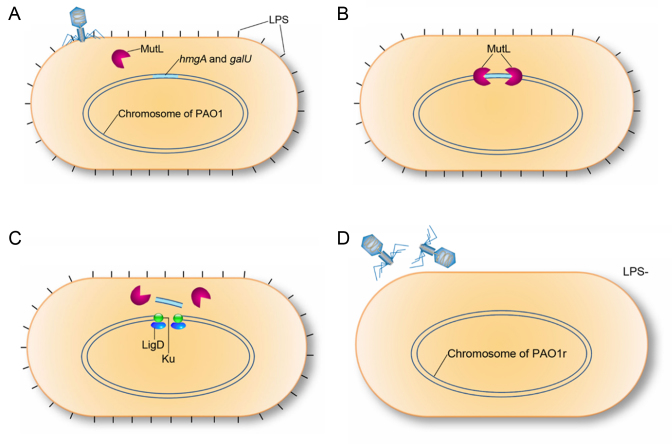
Pseudomonas aeruginosa MutL promotes large chromosomal deletions through non-homologous end joining to prevent bacteriophage predation
Overview
The claims and statistics of this paper haven’t been checked yet.
Run the check — free, no account needed. It reads the open-access text and checks the sources it cites.
Integrity signals
Registry
Cites
Statistics
Figures
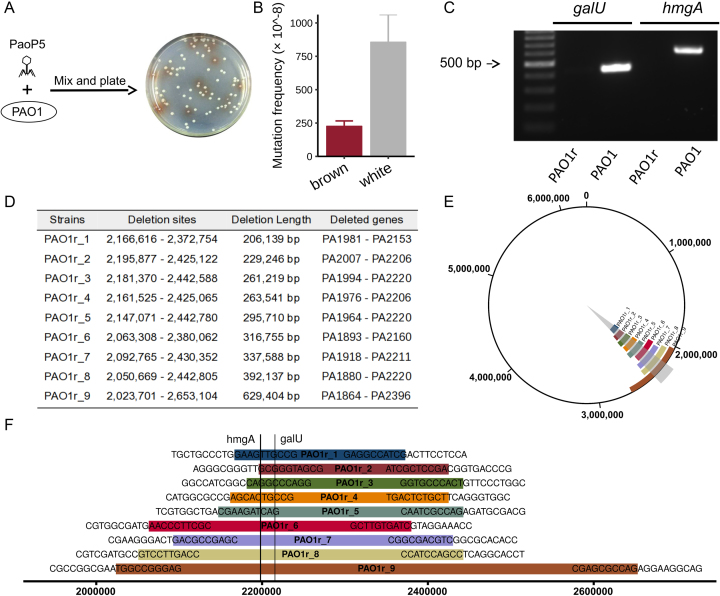
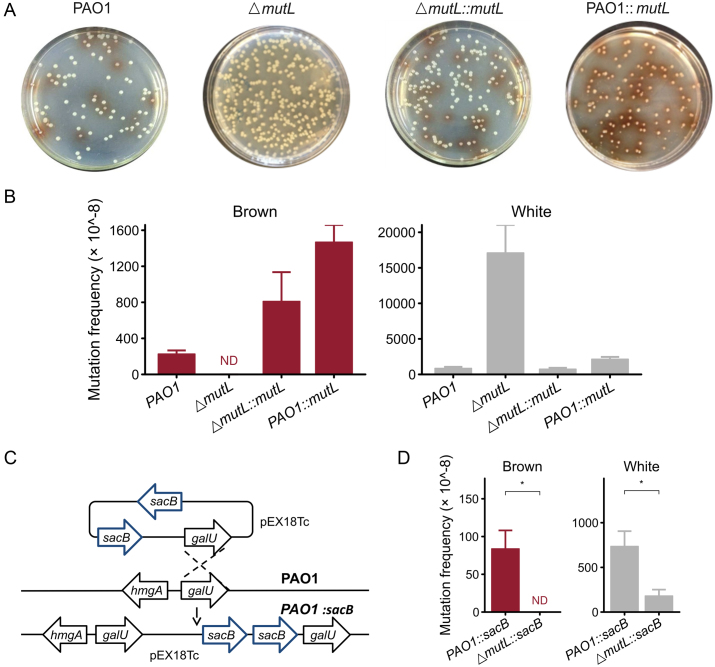
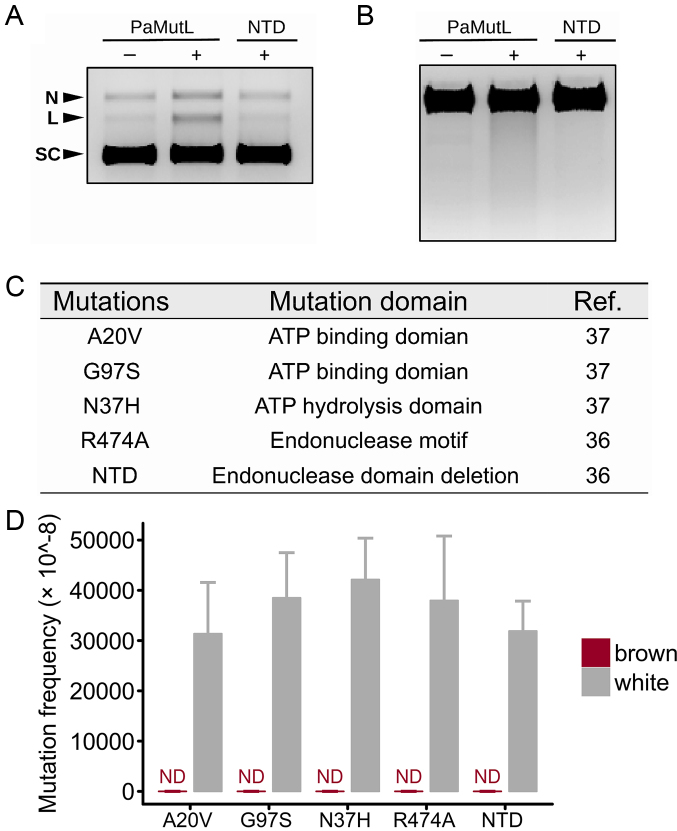
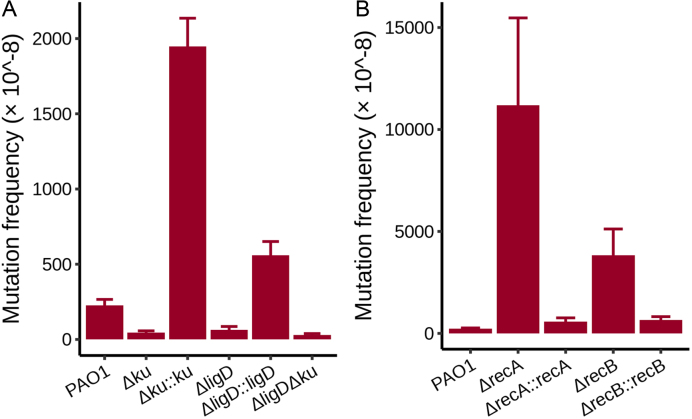
Verification
Claims the paper makes
The claims and statistics of this paper haven’t been checked yet.
Run the check — free, no account needed. It reads the open-access text and checks the sources it cites.
Claims other papers make about this one
Each is checked against this paper’s own text: does it say what the citing paper says it does?
In the citing paper
“It is possible that environmental stresses like fluoride exposure can cause DNA damage, and imprecise repair via the non-homologous end joining (NHEJ) pathway (37) may result in random deletions, but as the deletions are 18–300 kb, there needs to be other mechanisms involved too.”
From Adaptive evolution of Pseudomonas putida in the presence of fluoride exposes novel functions of a benzoate transporter (2026) · cites this paper as [37]
Self-check
Percentages, sums and reported differences re-computed from the paper’s own numbers.
The self-check needs the paper’s full text.
Citations
Cites
SeqKit: A Cross-Platform and Ultrafast Toolkit for FASTA/Q File Manipulation
Shen, W., Le, S., Li, Y., & Hu, F. (2016) · PLOS ONE · doi:10.1371/journal.pone.0163962 · Cited by 3,380
Self-citationThe mechanism of double-strand DNA break repair by the nonhomologous DNA end-joining pathway
Lieber, M. R. (2010) · Annual Review of Biochemistry · doi:10.1146/annurev.biochem.052308.093131 · Cited by 2,882
Research works printed but not linked: 57
- Koskiniemi, 2012, Selection-driven gene loss in bacteria, PLoS Genet., 8, e1002787
- Lee, 2012, Repeated, selection-driven genome reduction of accessory genes in experimental populations, PLoS Genet, 8, e1002651
- Moran, 2002, Microbial minimalism: genome reduction in bacterial pathogens, Cell, 108, 583
- Tanji, 2008, Spontaneous deletion of a 209-kilobase-pair fragment from the Escherichia coli genome occurs with acquisition of resistance to an assortment of infectious phages, Appl. Environ. Microbiol., 74, 4256
- Hocquet, 2016, Pyomelanin-producing Pseudomonas aeruginosa selected during chronic infections have a large chromosomal deletion which confers resistance to pyocins, Environ. Microbiol., 18, 3482
- Birch, 1991, Chromosomal deletion and rearrangement in Streptomyces glaucescens, J. Bacteriol., 173, 3531
- Le, 2014, Chromosomal DNA deletion confers phage resistance to Pseudomonas aeruginosa, Sci. Rep., 4, 4738
- He, 2015, Cultivation of a human-associated TM7 phylotype reveals a reduced genome and epibiotic parasitic lifestyle, Proc. Natl. Acad. Sci. U.S.A., 112, 244
- Stover, 2000, Complete genome sequence of Pseudomonas aeruginosa PAO1, an opportunistic pathogen, Nature, 406, 959
- Khaledi, 2016, Transcriptome Profiling of Antimicrobial Resistance in Pseudomonas aeruginosa, Antimicrob. Agents Chemother., 60, 4722
- Qin, 2012, Pseudomonas aeruginosa syntrophy in chronically colonized airways of cystic fibrosis patients, Antimicrob. Agents Chemother., 56, 5971
- Marvig, 2015, Within-host microevolution of Pseudomonas aeruginosa in Italian cystic fibrosis patients, BMC Microbiol., 15, 218
- Marvig, 2015, Convergent evolution and adaptation of Pseudomonas aeruginosa within patients with cystic fibrosis, Nat. Genet., 47, 57
- Winsor, 2016, Enhanced annotations and features for comparing thousands of Pseudomonas genomes in the Pseudomonas genome database, Nucleic Acids Res, 44, D646
- Didelot, 2016, Within-host evolution of bacterial pathogens, Nat. Rev. Microbiol., 14, 150
- Ghequire, 2014, Ribosomally encoded antibacterial proteins and peptides from Pseudomonas, FEMS Microbiol Rev, 38, 523
- Smith, 2006, Genetic adaptation by Pseudomonas aeruginosa to the airways of cystic fibrosis patients, Proc. Natl. Acad. Sci. U.S.A., 103, 8487
- Dingemans, 2014, The deletion of TonB-dependent receptor genes is part of the genome reduction process that occurs during adaptation of Pseudomonas aeruginosa to the cystic fibrosis lung, Pathogens Dis., 71, 26
- Grindley, 2006, Mechanisms of site-specific recombination, Annu. Rev. Biochem., 75, 567
- Li, 2011, GI-type T4SS-mediated horizontal transfer of the 89K pathogenicity island in epidemic Streptococcus suis serotype 2, Mol. Microbiol., 79, 1670
- Nilsson, 2005, Bacterial genome size reduction by experimental evolution, Proc. Natl. Acad. Sci. U.S.A., 102, 12112
- Salmond, 2015, A century of the phage: past, present and future, Nat. Rev. Microbiol., 13, 777
- Labrie, 2010, Bacteriophage resistance mechanisms, Nat. Rev. Microbiol, 8, 317
- Lim, 2016, Small colony variants and single nucleotide variations in Pf1 region of PB1 Phage-Resistant pseudomonas aeruginosa, Front. Microbiol., 7, 282
- Priebe, 2004, The galU Gene of Pseudomonas aeruginosa is required for corneal infection and efficient systemic spread following pneumonia but not for infection confined to the lung, Infect. Immun., 72, 4224
- Rodriguez-Rojas, 2009, Inactivation of the hmgA gene of Pseudomonas aeruginosa leads to pyomelanin hyperproduction, stress resistance and increased persistence in chronic lung infection, Microbiology-(UK), 155, 1050
- Shen, 2016, Characterization and comparative genomic analyses of pseudomonas aeruginosa phage PaoP5: New members assigned to PAK_P1-like viruses, Sci. Rep., 6, 34067
- Le, 2013, Mapping the tail fiber as the receptor binding protein responsible for differential host specificity of pseudomonas aeruginosa bacteriophages PaP1 and JG004, PLoS One, 8, e68562
- Bolger, 2014, Trimmomatic: a flexible trimmer for Illumina sequence data, Bioinformatics, 30, 2114
- Li, 2009, Fast and accurate short read alignment with Burrows-Wheeler transform, Bioinformatics, 25, 1754
- Li, 2009, The Sequence Alignment/Map format and SAMtools, Bioinformatics, 25, 2078
- Robinson, 2011, Integrative genomics viewer, Nat. Biotechnol., 29, 24
- Jacobs, 2003, Comprehensive transposon mutant library of Pseudomonas aeruginosa, Proc. Natl. Acad. Sci. U.S.A., 100, 14339
- Choi, 2006, A 10-min method for preparation of highly electrocompetent Pseudomonas aeruginosa cells: application for DNA fragment transfer between chromosomes and plasmid transformation, J. Microbiol. Methods, 64, 391
- Correa, 2011, Some amino acids of the Pseudomonas aeruginosa MutL D(Q/M)HA(X)(2)E(X)(4)E conserved motif are essential for the in vivo function of the protein but not for the in vitro endonuclease activity, DNA Repair, 10, 1106
- Bolz, 2012, Residues in the N-terminal domain of MutL required for mismatch repair in Bacillus subtilis, J. Bacteriol., 194, 5361
- Cronin, 1999, pUCP-Nco and pUCP-Nde: Escherichia-Pseudomonas shuttle vectors for recombinant protein expression in Pseudomonas, Anal. Biochem., 272, 112
- Polosina, 2010, MutL: conducting the cell's response to mismatched and misaligned DNA, Bioessays, 32, 51
- Groothuizen, 2015, MutS/MutL crystal structure reveals that the MutS sliding clamp loads MutL onto DNA, eLife, 4, e06744
- Guarne, 2015, Insights from a decade of biophysical studies on MutL: Roles in strand discrimination and mismatch removal, Prog. Biophys. Mol. Biol., 117, 149
- Correa, 2013, Analysis of DNA structure and sequence requirements for Pseudomonas aeruginosa MutL endonuclease activity, J. Biochem., 154, 505
- Stephanou, 2007, Mycobacterial nonhomologous end joining mediates mutagenic repair of chromosomal double-strand DNA breaks, J. Bacteriol., 189, 5237
- Deriano, 2013, Modernizing the nonhomologous end-joining repertoire: alternative and classical NHEJ share the stage, Annu. Rev. Genet., 47, 433
- Courcelle, 2015, RecBCD is required to complete chromosomal replication: implications for double-strand break frequencies and repair mechanisms, DNA Repair, 32, 86
- Jasin, 2016, The democratization of gene editing: Insights from site-specific cleavage and double-strand break repair, DNA Repair, 44, 6
- Shen, 2018, LncRNA lnc-RI regulates homologous recombination repair of DNA double-strand breaks by stabilizing RAD51 mRNA as a competitive endogenous RNA, Nucleic Acids Res., 46, 717
- Kadyrova, 2016, Endonuclease activities of MutL alpha and its homologs in DNA mismatch repair, DNA Repair, 38, 42
- Bhagwat, 2002, Cooperation and competition in mismatch repair: very short-patch repair and methyl-directed mismatch repair in Escherichia coli, Mol. Microbiol., 44, 1421
- Qiu, 2015, MutL traps MutS at a DNA mismatch, Proc. Natl. Acad. Sci. U.S.A., 112, 10914
- Lenhart, 2016, Mismatch repair in Gram-positive bacteria, Res. Microbiol., 167, 4
- Jacquelin, 2005, Pseudomonas aeruginosa MutL protein functions in Escherichia coli, Biochem. J., 388, 879
- Oliver, 2002, The mismatch repair system (mutS, mutL and uvrD genes) in Pseudomonas aeruginosa: molecular characterization of naturally occurring mutants, Mol. Microbiol., 43, 1641
- Magdanova, 2013, Heterogeneity as an adaptive trait of microbial populations, Microbiology, 82, 1
- Paterson, 2010, Antagonistic coevolution accelerates molecular evolution, Nature, 464, 275
- Pal, 2007, Coevolution with viruses drives the evolution of bacterial mutation rates, Nature, 450, 1079
- Boscaro, 2017, Parallel genome reduction in symbionts descended from closely related free-living bacteria, Nat. Ecol. Evol., 1, 1160
- Baumgartner, 2017, Letting go: bacterial genome reduction solves the dilemma of adapting to predation mortality in a substrate-restricted environment, ISME J., 11, 2258
Cited by
Sorted by citations
Ets, L., Ilves, H., Juhe, L., Ilmjärv, T., Puiggené, Ò., Nikel, P. I., & Kivisaar, M. (2026) · Journal of Bacteriology · doi:10.1128/jb.00479-25 · Cited by 1
Metadata
- Authors
- Shen, M., Zhang, H., Shen, W., Zou, Z., Lu, S., Li, G., He, X., Agnello, M., Shi, W., Hu, F., & Le, S.
- Affiliations
- Department of Microbiology, Third Military Medical University, Chongqing 400038, China
- Institute of Toxicology, College of Preventive Medicine, Third Military Medical University, Chongqing 400038, China
- Department of Medical Laboratory, Chengdu Military General Hospital, Chengdu 610083, China
- The Forsyth Institute, 245 First St, Cambridge, MA 02142, USA
- School of Dentistry, University of California, Los Angeles, CA 90095, USA
- Venue
- Nucleic Acids Research
- Publisher
- Oxford University Press (OUP)
- Published
- 2018-03-05
- Volume
- 46
- Issue
- 9
- Pages
- 4505-4514
- ISSN
- 0305-1048
- 1362-4962
- PMC
- PMC5961081
- Cited by
- 76
- References
- 2
- Language
- en
- Funders
- National Natural Science Foundation of China (31501004, 31570173)
- National Key Research and Development Program (2017YFC1002002)
- NIH (1R01DE023810, 1R01DE026186)
About these checks
Registry, retraction, Cites and statistics results are computed, not judged, with one exception: a printed reference that no index lists is read once by a model before it counts as a citation error. Claims are extracted by a model and kept only when their quote appears verbatim in the text; each cited source is then checked, with a model’s help, for whether it says what the claim relies on. Those verdicts can be wrong — read the claim’s quote and the cited source before relying on one.
Statistics and arithmetic are recomputed, not judged.
Confidence bands are shown only for fields calibrated on our annotated test set. None is calibrated yet, so no band is shown.
What counts as a claim ›How we measure confidence ›How we check this ›
Are you an author, or do you see a problem with this page? Request a review
