

“My Surgical Success”: Effect of a Digital Behavioral Pain Medicine Intervention on Time to Opioid Cessation After Breast Cancer Surgery—A Pilot Randomized Controlled Clinical Trial
Open accessThe DOI matches its Crossref record; 38 of the 38 references it cites were found in a registry or an index.
Abstract
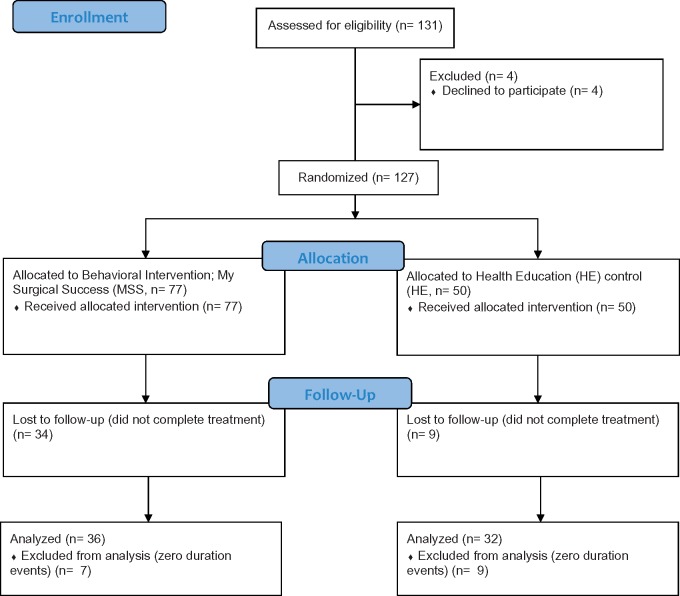
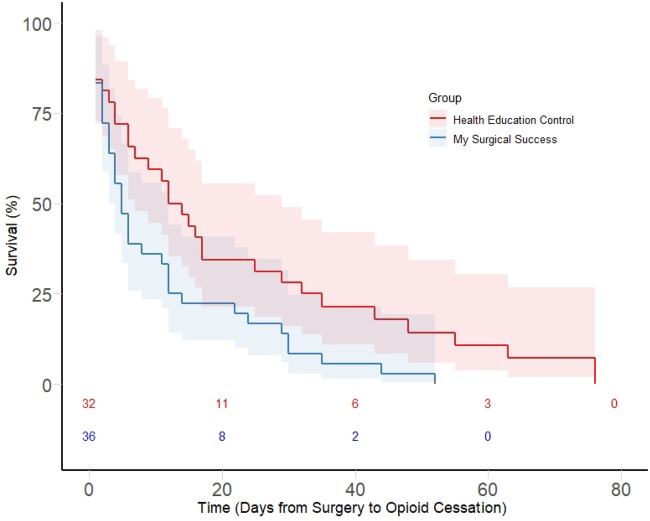
Objective: This study aims to assess the feasibility of digital perioperative behavioral pain medicine intervention in breast cancer surgery and evaluate its impact on pain catastrophizing, pain, and opioid cessation after surgery. Design and Setting: A randomized controlled clinical trial was conducted at Stanford University (Palo Alto, CA, USA) comparing a digital behavioral pain medicine intervention (“My Surgical Success” [MSS]) with digital general health education (HE). Participants: A convenience sample of 127 participants were randomized to treatment group. The analytic sample was 68 patients (N = 36 MSS, N = 32 HE). Main Outcomes: The primary outcome was feasibility and acceptability of a digital behavioral pain medicine intervention (80% threshold for acceptability items). Secondary outcomes were pain catastrophizing, past seven-day average pain intensity, and time to opioid cessation after surgery for patients who initiated opioid use. Results: The attrition rate for MSS intervention (44%) was notably higher than for HE controls (18%), but it was lower than typical attrition rates for e-health interventions (60–80%). Despite greater attrition for MSS, feasibility was demonstrated for the 56% of MSS engagers, and the 80% threshold for acceptability was met. We observed a floor effect for baseline pain catastrophizing, and no significant group differences were found for postsurgical pain catastrophizing or pain intensity. MSS was associated with 86% increased odds of opioid cessation within the 12-week study period relative to HE controls (hazard ratio = 1.86, 95% confidence interval = 1.12–3.10, P = 0.016). Conclusions: Fifty-six percent of patients assigned to MSS engaged with the online platform and reported high satisfaction. MSS was associated with significantly accelerated opioid cessation after surgery (five-day difference) with no difference in pain report relative to controls. Perioperative digital behavioral pain medicine may be a low-cost, accessible adjunct that could promote opioid cessation after breast cancer surgery.
Overview
The claims and statistics of this paper haven’t been checked yet.
Free: it reads the open-access text and checks the first 5 claims that cite a source we can check. Create a free account to check every claim.
Integrity signals
Registry
Cites
Statistics
Figures
Verification
Claims the paper makes
The claims and statistics of this paper haven’t been checked yet.
Free: it reads the open-access text and checks the first 5 claims that cite a source we can check. Create a free account to check every claim.
Claims other papers make about this one
Each is checked against this paper’s own text: does it say what the citing paper says it does?
The cited source says what the claim attributes to it.
In the citing paper
“Twelve studies evaluated (sub)acute outcomes, 2,7,11,12,18,21,29,32,39,44,45,55 and all but 2 studies 2,18 evaluated chronic outcomes.”
The cited source says what the claim attributes to it.
In the citing paper
“Relative to the adult literature, 45,66,70 there is much less pediatric research on psychological interventions during the perioperative period, 46”
From Virtual psychoeducation for improvement of pain catastrophizing in pediatric presurgical patients and caregivers: a proof-of-concept study (2023) · cites this paper as [70]
Self-check
Percentages, sums and reported differences re-computed from the paper’s own numbers.
The self-check needs the paper’s full text.
Citations
Cites
The Pain Catastrophizing Scale: Development and validation.
Sullivan, M. J. L., Bishop, S. R., & Pivik, J. (1995) · Psychological Assessment · doi:10.1037//1040-3590.7.4.524 · Cited by 8,227 · cited 5×
“The mean PCS scores were 7.33 (SEM¼ 1.3) for the MSS group and 10.06 (SEM¼ 1.4) for the HE control group, with no significant group differences.”
BackgroundMethodInfluentialFarrar, J. T., Young, J. P., LaMoreaux, L., Werth, J. L., & Poole, M. R. (2001) · Pain · doi:10.1016/s0304-3959(01)00349-9 · Cited by 5,808 · cited 1×
“Pain intensity was assessed on a numerical rating scale using an abbreviated PROMIS Pain Intensity measure [20]; respondents were asked to rate their average pain intensity over the previous seven days on a scale of 0–5.”
MethodEnhanced Recovery After Surgery: A Review
Ljungqvist, O., Scott, M., & Fearon, K. C. (2017) · JAMA Surgery · doi:10.1001/jamasurg.2016.4952 · Cited by 3,564 · cited 1×
“There is increasing interest in reducing postoperative opioid exposure by utilizing multimodal analgesia and nonpharmacological approaches to enhance recovery after surgery (ERAS) [25].”
BackgroundEysenbach, G. (2005) · Journal of Medical Internet Research · doi:10.2196/jmir.7.1.e11 · Cited by 2,524 · cited 1×
“Patients who would never otherwise receive specialized treatment are given the opportunity to do so [28], with costs being nominal to none.”
BackgroundNew Persistent Opioid Use After Minor and Major Surgical Procedures in US Adults
Brummett, C. M., Waljee, J. F., Goesling, J., Moser, S., Lin, P., Englesbe, M. J., Bohnert, A. S. B., Kheterpal, S., & Nallamothu, B. K. (2017) · JAMA Surgery · doi:10.1001/jamasurg.2017.0504 · Cited by 2,025 · cited 1×
“5% of patients prescribed opioids after surgery will transition to long-term opioid use [1,2], and up to 10% of women will continue to fill opioid prescriptions three months after breast reconstruction surgery [3].”
BackgroundSun, E. C., Darnall, B. D., Baker, L. C., & Mackey, S. (2016) · JAMA Internal Medicine · doi:10.1001/jamainternmed.2016.3298 · Cited by 1,078 · cited 1×
“5% of patients prescribed opioids after surgery will transition to long-term opioid use [1,2], and up to 10% of women will continue to fill opioid prescriptions three months after breast reconstruction surgery [3].”
BackgroundSelf-citationEhde, D. M., Dillworth, T. M., & Turner, J. A. (2014) · American Psychologist · doi:10.1037/a0035747 · Cited by 879 · cited 1×
“Cognitive-behavioral therapy for chronic pain (painCBT) is effective skills-based behavioral medicine with demonstrated efficacy for improving a wide range of pain outcomes [6] including reduced opioid use [7] and misuse [8] in outpatients.”
BackgroundPain Catastrophizing and Kinesiophobia: Predictors of Chronic Low Back Pain
Picavet, H. S. J. (2002) · American Journal of Epidemiology · doi:10.1093/aje/kwf136 · Cited by 744
Granot, M., & Ferber, S. G. (2005) · The Clinical Journal of Pain · doi:10.1097/01.ajp.0000135236.12705.2d · Cited by 426 · cited 1×
“This measure has been used in surgical research [13], specifically to examine predictors of postsurgical opioid cessation vs prolonged use (e.”
MethodPreoperative Pain Catastrophizing Predicts Pain Outcome after Knee Arthroplasty
Riddle, D. L., Wade, J. B., Jiranek, W. A., & Kong, X. (2010) · Clinical Orthopaedics & Related Research · doi:10.1007/s11999-009-0963-y · Cited by 406 · cited 1×
“However, we observed a floor effect for pain catastrophizing in the study sample; the average baseline PCS scores were well below the published ranges for clinically moderate or high levels in surgical populations [12, 34, 35] and could be best characterized as being in the “nonsymptomatic” range that does not require…”
Background
Cited by
Garcia, L. M., Birckhead, B. J., Krishnamurthy, P., Sackman, J., Mackey, I. G., Louis, R. G., Salmasi, V., Maddox, T., & Darnall, B. D. (2021) · Journal of Medical Internet Research · doi:10.2196/26292 · Cited by 218
Self-citationDarnall, B. D., Krishnamurthy, P., Tsuei, J., & Minor, J. D. (2020) · JMIR Formative Research · doi:10.2196/17293 · Cited by 150
“Despite these successes, any one modality will not meet the needs of everyone; indeed, even web-based pain treatments that are offered at no cost have <60% engagement rates [14], thus underscoring the need to offer a diverse range of accessible treatment options for chronic pain and, in particular, to identify treatme…”
BackgroundSelf-citationLee, K., Kim, S., Kim, S. H., Yoo, S., Sung, J. H., Oh, E. G., Kim, N. W., & Lee, J. (2023) · Journal of Medical Internet Research · doi:10.2196/38333 · Cited by 95
Schreiber, K. L., Zinboonyahgoon, N., Flowers, K. M., Hruschak, V., Fields, K. G., Patton, M. E., Schwartz, E., Azizoddin, D. R., Soens, M., King, T. A., et al. (2021) · Annals of Surgical Oncology · doi:10.1245/s10434-020-09479-2 · Cited by 77
Ziadni, M. S., Gonzalez-Castro, L., Anderson, S., Krishnamurthy, P., & Darnall, B. D. (2021) · Journal of Medical Internet Research · doi:10.2196/29672 · Cited by 59
Self-citationNadinda, P. G., van Ryckeghem, D. M. L., & Peters, M. L. (2022) · Pain · doi:10.1097/j.pain.0000000000002521 · Cited by 51
“Twelve studies evaluated (sub)acute outcomes, 2,7,11,12,18,21,29,32,39,44,45,55 and all but 2 studies 2,18 evaluated chronic outcomes.”
Yi, J. L., Porucznik, C. A., Gren, L. H., Guan, J., Joyce, E. J., Brodke, D. S., Dailey, A. T., Mahan, M. A., Hood, R. S., Lawrence, B. D., et al. (2018) · World Neurosurgery · doi:10.1016/j.wneu.2018.09.223 · Cited by 54
The efficacy of mindfulness-based interventions in acute pain: a systematic review and meta-analysis
Shires, A., Sharpe, L., Davies, J. N., & Newton-John, T. R. O. (2020) · Pain · doi:10.1097/j.pain.0000000000001877 · Cited by 43
“A recent study showed that a brief pain appwas effective in reducing opioid consumption postoperatively.(7) The present results would support more clinical trials of MBIs in these contexts.”
ResultDams, L., der Gucht, E. V., Devoogdt, N., Smeets, A., Bernar, K., Morlion, B. J., Godderis, L., Haenen, V., Vrieze, T. D., Fieuws, S., et al. (2022) · Pain · doi:10.1097/j.pain.0000000000002838 · Cited by 38
Davin, S. A., Savage, J., Thompson, N. R., Schuster, A. T., & Darnall, B. D. (2022) · Frontiers in Pain Research · doi:10.3389/fpain.2022.856252 · Cited by 32
Self-citationPhysiotherapy management of breast cancer treatment-related sequelae
Devoogdt, N., & Groef, A. D. (2024) · Journal of physiotherapy · doi:10.1016/j.jphys.2024.02.020 · Cited by 34
Ziadni, M. S., You, D. S., Keane, R., Salazar, B., Jaros, S., Ram, J., Roy, A., Tanner, N., Salmasi, V., Gardner, M., et al. (2022) · Anesthesia & Analgesia · doi:10.1213/ane.0000000000006088 · Cited by 28
Self-citationEgan, K. G., Souza, M. D., Muenks, E., Nazir, N., & Korentager, R. A. (2020) · Annals of Surgical Oncology · doi:10.1245/s10434-020-08432-7 · Cited by 29
“cessful, these may be more difficult to implement and to gain acceptance from patients and providers.(23,26) Despite having a trend towards lower pain scores postoperatively, patients in the intervention group showed a statistically significant reduction in opioid consumption, consuming 33% less opioids than the contr…”
BackgroundGarcia, L. M., Darnall, B. D., Krishnamurthy, P., Mackey, I. G., Sackman, J., Louis, R. G., Maddox, T., & Birckhead, B. J. (2021) · JMIR Research Protocols · doi:10.2196/25291 · Cited by 28
Self-citationGiravi, H. Y., Biskupiak, Z., Tyler, L. S., & Bulaj, G. W. (2022) · Frontiers in Digital Health · doi:10.3389/fdgth.2022.884047 · Cited by 27
Darnall, B. D., Edwards, K. A., Courtney, R. E., Ziadni, M. S., Simons, L. E., & Harrison, L. E. (2023) · Frontiers in Pain Research · doi:10.3389/fpain.2023.1223172 · Cited by 22
Self-citationAdam, R., Bond, C. M., Burton, C. D., de Bruin, M., & Murchie, P. (2020) · Supportive Care in Cancer · doi:10.1007/s00520-020-05510-0 · Cited by 25
“Some provide Web-based pain management advice [34], deliver psychological therapies or support for individuals with cancer pain [35, 36] or focus on specific situations such as post-surgical pain management [37].”
BackgroundAzizoddin, D. R., Soens, M., Beck, M. R., Flowers, K. M., Edwards, R. R., & Schreiber, K. L. (2023) · Clinical Journal of Pain · doi:10.1097/ajp.0000000000001090 · Cited by 23
der Gucht, E. V., Dams, L., Haenen, V., Godderis, L., Morlion, B. J., Bernar, K., Evenepoel, M., Vrieze, T. D., Vandendriessche, T., Asnong, A., et al. (2021) · Clinical Rehabilitation · doi:10.1177/02692155211006865 · Cited by 21
Ziadni, M. S., Anderson, S. R., Gonzalez-Castro, L., & Darnall, B. D. (2021) · Trials · doi:10.1186/s13063-021-05303-8 · Cited by 18
“Single-session interventions (SSIs) have shown promise and efficacy in diverse populations and health conditions such as serious mental illness [18], anxiety and conduct disorder in youth [19], acute insomnia [20], heavy alcohol consumption in college students [21], trauma and adversity [22, 23], postsurgical pain [24…”
BackgroundSelf-citationEffectiveness of Perioperative Opioid Educational Initiatives: A Systematic Review and Meta-Analysis
Vaca, A. Z., Mena, G. E., Ramirez, P. T., Lee, B. H., Sideris, A., & Wu, C. L. (2021) · Anesthesia & Analgesia · doi:10.1213/ane.0000000000005634 · Cited by 17
Pak, L. M., Pawloski, K. R., Sevilimedu, V., Kalvin, H. L., Le, T., Tokita, H. K., Tadros, A. B., Morrow, M., Zee, K. J. V., Kirstein, L. J., et al. (2022) · Annals of Surgical Oncology · doi:10.1245/s10434-022-11976-5 · Cited by 14
“provided breast surgery patients with information on behavioral tools to assist them with managing their postoperative pain.(28) Patients who received”
BackgroundDarnall, B. D., Abshire, L., Courtney, R. E., & Davin, S. A. (2025) · Regional Anesthesia & Pain Medicine · doi:10.1136/rapm-2024-105601 · Cited by 17
“We highlight the two studies that used autonomous digital interventions 23 24 and the potential of these approaches to improve patient access to skills-based perioperative pain management.”
Self-citationZiadni, M. S., Sturgeon, J. A., & Lumley, M. A. (2022) · Frontiers in Pain Research · doi:10.3389/fpain.2022.1028561 · Cited by 14
Self-citationAzizoddin, D. R., Wilson, J. M., Flowers, K. M., Beck, M. R., Chai, P. R., Enzinger, A. C., Edwards, R. R., Miaskowski, C. A., Tulsky, J. A., & Schreiber, K. L. (2023) · Pain · doi:10.1097/j.pain.0000000000002880 · Cited by 16
Effect of Pain Coping Skills Training on Pain and Pain Medication Use for Women With Breast Cancer
Fisher, H. M., Hyland, K. A., Winger, J. G., Miller, S. N., Amaden, G. H., Diachina, A. K., Kelleher, S. A., & Somers, T. J. (2023) · Journal of Pain and Symptom Management · doi:10.1016/j.jpainsymman.2023.03.012 · Cited by 15
Magee, M. R., Gholamrezaei, A., McNeilage, A. G., Dwyer, L., Sim, A., Ferreira, M. L., Darnall, B. D., Glare, P. A., & Ashton-James, C. E. (2022) · BMJ Open · doi:10.1136/bmjopen-2021-057174 · Cited by 14
Self-citationPrevalence and characteristics of preoperative patients with depression
Hietamies, T. M., Smith, A. E., Lii, T. R., Muzzall, E., Flohr, J. R., Okada, R. L., Andriella, Z. G., Nyongesa, C. A., Cianfichi, L. J., Hack, L. M., et al. (2024) · British Journal of Anaesthesia · doi:10.1016/j.bja.2024.04.017 · Cited by 13
Out of office hours: scalable, on-demand, digital support for patients tapering prescription opioids
Ashton-James, C. E., Glare, P. A., & Darnall, B. D. (2020) · Pain · doi:10.1097/j.pain.0000000000001947 · Cited by 12
“patients who received internet-delivered general health education.(2) Importantly, this eHealth intervention did not direct patients”
BackgroundSelf-citationMagee, M. R., Gholamrezaei, A., McNeilage, A. G., Sim, A., Dwyer, L., Ferreira, M. L., Darnall, B. D., Glare, P. A., & Ashton-James, C. E. (2022) · JMIR Formative Research · doi:10.2196/40507 · Cited by 12
“This content was drawn from digital and traditional written resources and included information about pain self-management education, cognitive behavioral therapy concepts, and informational and supportive content from previous chronic pain and tapering research [7,9,15,16,40,42-45,47-51].”
BackgroundMethodSelf-citationThe Contribution of Cancer-Specific Psychosocial Factors to the Pain Experience in Cancer Survivors
Jones, K. F., Magee, L. W., Fu, M. R., Bernacki, R., Bulls, H. W., Merlin, J. S., & McTernan, M. L. (2023) · Journal of Hospice and Palliative Nursing · doi:10.1097/njh.0000000000000965 · Cited by 11
Cogan, J. C., Raghunathan, R. R., Beauchemin, M., Accordino, M. K., Elkin, E. B., Melamed, A., Wright, J. D., & Hershman, D. L. (2021) · Breast Cancer Research and Treatment · doi:10.1007/s10549-021-06275-8 · Cited by 12
Elphinston, R. A., Sterling, M. M., Leung, J., Gray, P. D., Requena, S. S., & Connor, J. P. (2020) · Clinical Journal of Pain · doi:10.1097/ajp.0000000000000908 · Cited by 10
Lukas, A., Theunissen, M., Boer, D. D. K., van Kuijk, S. M. J., Noyen, L. V., Magerl, W., Mess, W. H., Bühre, W., & Peters, M. L. (2022) · Trials · doi:10.1186/s13063-022-06549-6 · Cited by 9
“A one-session preoperative internet-based intervention targeting pain catastrophizing before breast cancer surgery reduced the duration of postoperative of opioid consumption, yet no effect in pain intensity was found [49].”
BackgroundGholamrezaei, A., Magee, M. R., McNeilage, A. G., Dwyer, L., Sim, A., Ferreira, M. L., Darnall, B. D., Brake, T., Aggarwal, A., Craigie, M., et al. (2024) · PAIN Reports · doi:10.1097/pr9.0000000000001128 · Cited by 8
“38 Studies have also found that educational videos can effectively provide patients with information about chronic pain, pain self-management, and opioid tapering 13,19,31 and can increase self-efficacy for opioid tapering in people who are currently on LTOT for chronic pain.”
BackgroundSelf-citationInfluence of perioperative opioid-related patient education: A systematic review and meta-analysis
Ghaddaf, A. A., Alsharef, J. F., Alhindi, A. K., Bahathiq, D. M., Khaldi, S. E., Alowaydhi, H. M., & Alshehri, M. S. (2022) · Patient Education and Counseling · doi:10.1016/j.pec.2022.04.016 · Cited by 8
Can perioperative psychological interventions reduce chronic pain after surgery?
Peters, M. L. (2023) · British Journal of Hospital Medicine · doi:10.12968/hmed.2022.0400 · Cited by 9
Edwards, K. A., Palenski, P. E., Perez, L., You, D. S., Ziadni, M. S., Jung, C., Adair, E., Tian, L., Mackey, S., & Darnall, B. D. (2024) · BMJ Open · doi:10.1136/bmjopen-2024-086889 · Cited by 7
“39 Finally, a fourth RCT in orthopaedic trauma surgery patients showed that patients randomised to MSS reported clinically meaningful and superior analgesia 3 months after surgery.”
BackgroundSelf-citationKlein, M. R., Darnall, B. D., & You, D. S. (2024) · JMIR Research Protocols · doi:10.2196/53784 · Cited by 7
Self-citationTransitional Pain Medicine; New Era, New Opportunities, and New Journey
Terkawi, A. S., Ottestad, E., Altirkawi, O. K., & Salmasi, V. (2023) · Anesthesiology Clinics · doi:10.1016/j.anclin.2023.03.007 · Cited by 7
Ziadni, M. S., Chen, A. L., Winslow, T., Mackey, S., & Darnall, B. D. (2020) · Trials · doi:10.1186/s13063-020-04415-x · Cited by 8
“Evidence-based, skills-based behavioral medicine for pain has been shown to reduce pain-specific distress [4, 5], pain intensity [6], pain bothersomeness [7], improve response to pain treatments [8], and reduce opioid use among perioperative patients [9].”
BackgroundSelf-citationEdwards, K. A., Dildine, T. C., You, D. S., Herrick, A., Darnall, B. D., Mackey, S., & Ziadni, M. S. (2025) · JMIR Formative Research · doi:10.2196/68292 · Cited by 8
Self-citationThe 3P‐CP model: Expanding our conceptualization of cancer pain
Azizoddin, D. R., Zhao, J., Somers, T. J., Taylor, S. E., Winger, J. G., Dorsey, S. G., Orris, S. M., Nasta, A., Schenker, Y., Merlin, J. S., et al. (2025) · Cancer · doi:10.1002/cncr.70080 · Cited by 6
Perez, L., Palenski, P. E., Adair, E., Contreras, L., Dorsonne, B., Hailu, A. Y., Gedeon, K., Boyd, H., Ziadni, M. S., Herrick, A., et al. (2026) · Scientific Reports · doi:10.1038/s41598-025-29943-x · Cited by 5
Self-citationGholamrezaei, A., Magee, M. R., McNeilage, A. G., Dwyer, L., Jafari, H., Sim, A., Ferreira, M. L., Darnall, B. D., Glare, P. A., & Ashton-James, C. E. (2023) · BMJ Open · doi:10.1136/bmjopen-2023-073297 · Cited by 5
“20 Studies have also shown that educational videos may be an effective means of providing patients with information about chronic pain, pain self-management and opioid tapering, 21–23 and can increase the opioid-tapering self-efficacy of people currently on LTOT for chronic pain.”
BackgroundSelf-citationFritz, J. M., Alodaibi, F., Bamer, A. M., & Amtmann, D. (2021) · Quality of Life Research · doi:10.1007/s11136-021-02923-0 · Cited by 6
Olson, S. L., Welton, L. L., & Jahansouz, C. (2024) · Antibiotics · doi:10.3390/antibiotics13040317 · Cited by 6
“One way to do this is to increase preoperative physical activity, optimize nutrition status, and encourage patient engagement with online platforms aiding in opioid cessation, as these can significantly reduce postoperative opioid use and decrease the duration of opioid use [81,82].”
BackgroundZachariades, F., Maras, D., Mervitz, D., Martelli, B., Prayal-Brown, A., Hayawi, L., Barrowman, N., & Lamontagne, C. (2023) · Canadian Journal of Anesthesia/Journal canadien d anesthésie · doi:10.1007/s12630-023-02583-3 · Cited by 4
“69 Relative to the adult literature, 45,66,70 there is much less pediatric research on psychological interventions during the perioperative period, 46 although interest in this area is growing with future development of a digital CBT intervention.”
BackgroundAzizoddin, D. R., Zhao, J., DeForge, S. M., Chen, M., Nipp, R. D., Stagg, J. H., Bond, K., Leckie, R., Hilton, B. T., Neil, J. M., et al. (2025) · Cancer Medicine · doi:10.1002/cam4.70898 · Cited by 7
“Importantly, this single-session telehealth design is built on previous models [49, 50] that overcome challenges associated with in-person or multi-session interventions, such as clinician burden or transportation barriers [51, 52].”
Self-citationPsychosocial Interventions for Pain Management in Breast Cancer Survivors: A RE-AIM Evaluation
Cox-Martin, E., Phimphasone‐Brady, P., Hoffecker, L., & Glasgow, R. E. (2022) · Journal of Clinical Psychology in Medical Settings · doi:10.1007/s10880-022-09874-9 · Cited by 4
Evenepoel, M., Dijck, S. V., Meeus, M., Dams, L., Haenen, V., Devoogdt, N., Roussel, N. A., & Groef, A. D. (2023) · Scandinavian Journal of Pain · doi:10.1515/sjpain-2022-0115 · Cited by 4
Groef, A. D., der Gucht, E. V., Devoogdt, N., Smeets, A., Bernar, K., Morlion, B. J., Godderis, L., Vrieze, T. D., Fieuws, S., Meeus, M., et al. (2023) · Journal of Occupational Rehabilitation · doi:10.1007/s10926-023-10103-9 · Cited by 4
“To our knowledge, only two studies have looked at the effect of PNE compared to biomedical pain education (BPE) in a breast cancer only population [29, 30].”
BackgroundMun, C. J., Hook, J., Winsick, N., Nair, L. J., Chen, A. C., Parsons, T. D., & Roos, C. R. (2024) · Current Addiction Reports · doi:10.1007/s40429-024-00551-5 · Cited by 4
Einsatzmöglichkeiten digitaler Tools in der postoperativen Schmerztherapie
Aulenkamp, J., Mosch, L. K., Meyer‐Frießem, C. H., & Malewicz, N. M. (2023) · Der Schmerz · doi:10.1007/s00482-023-00732-7 · Cited by 3
Sullivan, L., Ritter, E., Williams, E., Moley, J. P., Barker, T., Singh, S., Carter, J., Patel, J., Edwards, M., & Vasileff, W. K. (2025) · BMC Musculoskeletal Disorders · doi:10.1186/s12891-025-08965-6 · Cited by 4
“A small number of interventions were individualized despite evidence suggesting that individualized interventions promote patient-centered, high-quality care and generally enhance the effectiveness of interventions [66–69].”
Schapira, M. M., Chhatre, S., Dow, P. M., Leonard, C. E., Groeneveld, P. W., Prigge, J. M., Roberts, C., Meisel, Z. F., Parikh, R. B., Jayadevappa, R., et al. (2025) · Cancer · doi:10.1002/cncr.70009 · Cited by 3
Akkarakittichoke, N., Janwantanakul, P., Kanlayanaphotporn, R., & Jensen, M. P. (2022) · Clinical Journal of Pain · doi:10.1097/ajp.0000000000001043 · Cited by 5
Sadh, P., Perez‐Albela, A., Shah, I., Bara-Garcia, S., Jeng, T., & Basques, B. A. (2025) · Journal of Clinical Neuroscience · doi:10.1016/j.jocn.2025.111777 · Cited by 2
You, D. S., Edwards, K. A., Ziadni, M. S., Kim, S., Klein, M. R., Cox, R., Raney, E., Kuchera, J., & Darnall, B. D. (2026) · JMIR Formative Research · doi:10.2196/86070 · Cited by 2
“To date, among 13 completed ER clinical trials [29-36,53,54, 64-66 ], 8 show strong effects for reducing pain catastrophizing, with all of those being Finally, it is unclear whether additional treatment “dosing” might yield effects on pain catastrophizing and other variables where no effects were…”
Self-citationAdair, E., Mardian, A. S., Saxena, K., Dorsonne, B., Hailu, A. Y., Heggan, E., Riazi, G., Slater, K., Poupore‐King, H., Clifton, J., et al. (2026) · Pain Medicine · doi:10.1093/pm/pnag027 · Cited by 2
Self-citationZiadni, M. S., Dildine, T. C., Edwards, K. A., Herrick, A., You, D. S., & Darnall, B. D. (2026) · Journal of Pain · doi:10.1016/j.jpain.2026.106220 · Cited by 2
Self-citationElphinston, R. A., Pager, S., Fatehi, F., Sterling, M. M., Brown, K., Gray, P. D., Hipper, L., Cahill, L., Ziadni, M. S., Worthy, P., et al. (2025) · JMIR Formative Research · doi:10.2196/57212 · Cited by 2
Self-citationReal-Time Pain Control Education After Outpatient General Surgery: A Randomized Controlled Trial
Lee, W. G., Amersi, F. F., Jain, M., Cunneen, S. A., Burch, M. A., Phillips, E. H., & Chen, Y. (2024) · Journal of Surgical Research · doi:10.1016/j.jss.2024.10.053 · Cited by 2
Finan, P. H., Tsang, S., Cherup, N. P., Abraham, L., Reid, M. J., Yaden, D. B., & Smith, M. T. (2025) · Journal of Pain · doi:10.1016/j.jpain.2025.105598 · Cited by 2
Elphinston, R. A., Pager, S., Brown, K., Sterling, M. M., Fatehi, F., Gray, P. D., Hipper, L., Cahill, L., & Connor, J. P. (2025) · JMIR Formative Research · doi:10.2196/57208 · Cited by 1
Reply to letter from Dan Riddle
der Gucht, E. V., Dams, L., Haenen, V., Godderis, L., Morlion, B. J., Bernar, K., Evenepoel, M., Vrieze, T. D., Vandendriessche, T., Asnong, A., et al. (2021) · Clinical Rehabilitation · doi:10.1177/02692155211014100 · Cited by 1
Acute pain management for chronic pain patients: expanding the role of the anesthesiologist
Brulotte, V. (2023) · Canadian Journal of Anesthesia/Journal canadien d anesthésie · doi:10.1007/s12630-023-02610-3
Pain education research: Advances, innovations, and challenges
(2024) · Frontiers research topics · doi:10.3389/978-2-8325-4792-2
Ashton-James, C. E., Doane, M. A., McNeilage, A. G., Gholamrezaei, A., Glare, P. A., & Finniss, D. G. (2024) · BMJ Open · doi:10.1136/bmjopen-2024-086202
“12–14 Despite consistent evidence for the benefits of adjunctive behavioural approaches to acute pain management, the costs and feasibility of integrating these interventions in practice—particularly in hospital settings—may be a barrier to implementation and effectiveness.”
Cancer Pain and Supportive Care: Assessment, Evaluation, and Treatment
Votta‐Velis, G., Ram, B. S., Beckman, N. J., Malec, M., Nelson, A. M., Russell, J. M., Hereha, V., Siston, A. K., Ibe, A. T., Tian, Y., et al. (2025) · Springer eBooks · doi:10.1007/978-3-031-88357-6_7
Innovative Techniques and Nursing Practices in Pain Management in Surgical Patients
Gümüş, D. (2025) · Advances in computational intelligence and robotics book series · doi:10.4018/979-8-3373-1772-4.ch004
Groef, A. D., Dams, L., Moseley, G. L., Heathcote, L. C., Wiles, L., Catley, M. J., Vogelzang, A. R., Hibbert, P. D., Morlion, B. J., Overbeke, M. V., et al. (2025) · BMJ Open · doi:10.1136/bmjopen-2025-099241
Self-citationPrevention and Treatment of Postsurgical Pain
Wilson, J. M., Schreiber, K. L., Edwards, R. R., & Meints, S. M. (2025) · Clinics in Geriatric Medicine · doi:10.1016/j.cger.2025.08.006
Stapleton, J. W., Bohacek, S., Marsiglio, M., Kachmarik, J. E., & Carson, J. W. (2025) · BMC Surgery · doi:10.1186/s12893-025-03423-5
“Research literature was evaluated to determine the deviation, distribution, and effect size prior to this study to determine sample size and power [16, 22].”
Asar, A. S. (2024) · eArsiv - Adu (Adnan Menderes University)
Pain science education after breast cancer surgery
der Gucht, E. V. (2021) · Lirias
Kim, S., & Darnall, B. D. (2026) · Anesthesiology · doi:10.1097/aln.0000000000005912
Self-citationAcceptability of a brief behavioral pain treatment to enhance recovery after surgery
Davin, S. A., Abshire, L., Thompson, N., Savage, J., Amps, J., Pelle, D. W., & Steinmetz, M. P. (2026) · North American Spine Society Journal (NASSJ) · doi:10.1016/j.xnsj.2026.100880
Gunawan, A., & Upoyo, A. S. (2026) · Media Keperawatan Indonesia · doi:10.26714/mki.9.2.2026.182-195
Peters, M. L., Lukas, A., Noyen, L. V., Goossens, M., Houben, D., & Theunissen, M. M. (2026) · Current Oncology · doi:10.3390/curroncol33110656
Jian-dan, P., Cai, D.-F., Ma, J., Hu, M., Zhang, K.-P., & Li, J.-T. (2026) · World Journal of Psychiatry · doi:10.5498/wjp.v16.i6.116339
Virtual Reality Cognitive Behavioral Therapy (CBT) for Chronic Lower Back Pain
Feinberg, P. (2025) · Touro Scholar (Touro College)
Clinical Impact of Breast Cancer and Its Therapeutic Interventions: Part II
Mohammed, T. A., Khayat, S. A., & Shammari, M. O. A. (2026) · IntechOpen eBooks · doi:10.5772/intechopen.1015211
Kenner, F., Abshire, L., & Davin, S. A. (2026) · Springer eBooks · doi:10.1007/978-3-032-11484-6_22
Alpdogan, N. Y. (2025) · Knowledge UdeS (Institutional Deposit of the University of Sherbrooke)
Sim, A., Gholamrezaei, A., Richardson, C., & Ashton-James, C. E. (2026) · BMJ Open · doi:10.1136/bmjopen-2026-121932
Yan, X., Hassett, A. L., Waljee, J. F., Newman, M., Park, S. Y., Bei, R., & Carlozzi, N. E. (2026) · JMIR mhealth and uhealth · doi:10.2196/64278
Jethwa, A., Guo, N., Harrison, N., Chakraborty, D., Carvalho, B., Panelli, D. M., & Sultan, P. (2026) · International Journal of Obstetric Anesthesia · doi:10.1016/j.ijoa.2026.105300
The Effect of Perioperative Video Interventions on Postoperative Pain Control: A Systematic Review
Danielsson, A., Asif, S., Forsberg, A., Lipcsey, M., Kosek, E., & Bjurström, M. F. (2026) · Acta Anaesthesiologica Scandinavica · doi:10.1111/aas.70387
Metadata
- Authors
- Darnall, B. D., Ziadni, M. S., Krishnamurthy, P., Flood, P., Heathcote, L. C., Mackey, I. G., Taub, C. J., & Wheeler, A.
- Affiliations
- Stanford Medicine (US)
- University of Houston (US)
- University of Miami (US)
- Corresponding author
- Darnall, Beth D
- ORCID
- Venue
- Pain Medicine
- Publisher
- Oxford University Press (OUP)
- Published
- 2019-05-14
- Volume
- 20
- Issue
- 11
- Pages
- 2228-2237
- ISSN
- 1526-2375 (ISSN-L)
- 1526-4637
- PMC
- PMC6830264
- OpenAlex
- W2945116544
- Cited by
- 83
- References
- 38
- Citations by year
- 2026: 12 · 2025: 15 · 2024: 11 · 2023: 14 · 2022: 13 · 2021: 9 · 2020: 8
- FWCI
- 10.66
- Type
- journal article
- Language
- en
- Open access
- hybrid
- doi.org
- Licence
- Locations
- Pain Medicine (publishedVersion, cc-by-nc)
- PubMed Central (publishedVersion, cc-by-nc)
- PubMed (publishedVersion)
- Research Portal (King's College London) (publishedVersion, other-oa)
- Funders
- National Institutes of Health
- National Center for Complementary and Integrative Health (R01 AT008561)
- National Institute on Drug Abuse (T32 035165)
- Topics
- Health Sciences › Medicine › Anesthesiology and Pain Medicine › Pain Management and Opioid Use
- Health Sciences › Health Professions › General Health Professions › Mobile Health and mHealth Applications
- Health Sciences › Medicine › Anesthesiology and Pain Medicine › Anesthesia and Pain Management
- Keywords
- breast cancer surgery, opioid cessation, pain catastrophizing, postoperative pain, digital health interventions, intervention feasibility and acceptability, attrition
- MeSH terms
- Adult, Analgesics, Analgesics, Opioid, Behavior Therapy, Breast Neoplasms, Female, Humans, Mastectomy, Middle Aged, Opioid-Related Disorders, Pain Measurement, Pain, Postoperative, Postoperative Pain
About these checks
Registry, retraction, Cites and statistics results are computed, not judged, with one exception: a printed reference that no index lists is read once by a model before it counts as a citation error. Claims are extracted by a model and kept only when their quote appears verbatim in the text; each cited source is then checked, with a model’s help, for whether it says what the claim relies on. Those verdicts can be wrong — read the claim’s quote and the cited source before relying on one.
Statistics and arithmetic are recomputed, not judged.
Confidence bands are shown only for fields calibrated on our annotated test set. None is calibrated yet, so no band is shown.
What counts as a claim ›How we measure confidence ›How we check this ›
Are you an author, or do you see a problem with this page? Request a review
Data sources
Bibliographic data: Semantic Scholar, OpenAlex, Crossref.
Contains information from the Semantic Scholar Academic Graph Datasets, made available under the ODC Attribution License (ODC-BY 1.0).
Semantic Scholar’s data is described in: Kinney, R., et al. (2023). The Semantic Scholar Open Data Platform. arXiv:2301.10140.
