

Dissociable effects of self-reported daily sleep duration on high-level cognitive abilities
Open accessThe DOI matches its Crossref record; 54 of the 55 references it cites were found in a registry or an index.
Abstract
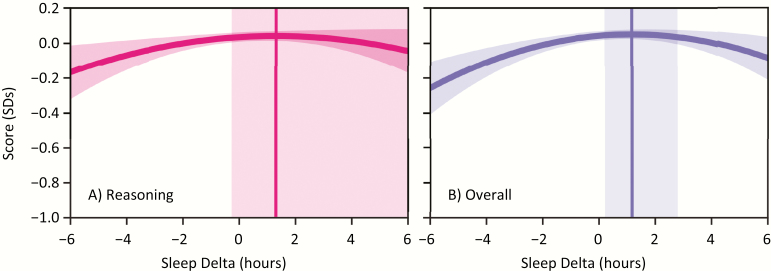
Most people will at some point experience not getting enough sleep over a period of days, weeks, or months. However, the effects of this kind of everyday sleep restriction on high-level cognitive abilities-such as the ability to store and recall information in memory, solve problems, and communicate-remain poorly understood. In a global sample of over 10000 people, we demonstrated that cognitive performance, measured using a set of 12 well-established tests, is impaired in people who reported typically sleeping less, or more, than 7-8 hours per night-which was roughly half the sample. Crucially, performance was not impaired evenly across all cognitive domains. Typical sleep duration had no bearing on short-term memory performance, unlike reasoning and verbal skills, which were impaired by too little, or too much, sleep. In terms of overall cognition, a self-reported typical sleep duration of 4 hours per night was equivalent to aging 8 years. Also, sleeping more than usual the night before testing (closer to the optimal amount) was associated with better performance, suggesting that a single night's sleep can benefit cognition. The relationship between sleep and cognition was invariant with respect to age, suggesting that the optimal amount of sleep is similar for all adult age groups, and that sleep-related impairments in cognition affect all ages equally. These findings have significant real-world implications, because many people, including those in positions of responsibility, operate on very little sleep and may suffer from impaired reasoning, problem-solving, and communications skills on a daily basis.
Overview
The claims and statistics of this paper haven’t been checked yet.
Free: it reads the open-access text and checks the first 5 claims that cite a source we can check. Create a free account to check every claim.
Integrity signals
Registry
Cites
Statistics
Figures
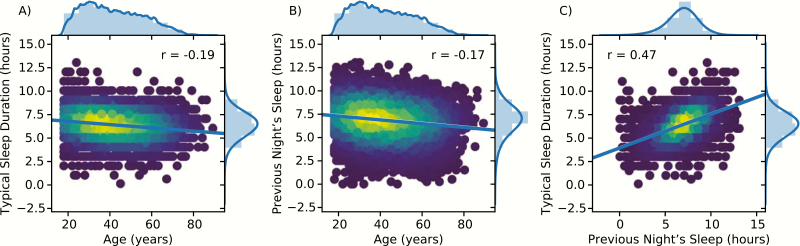
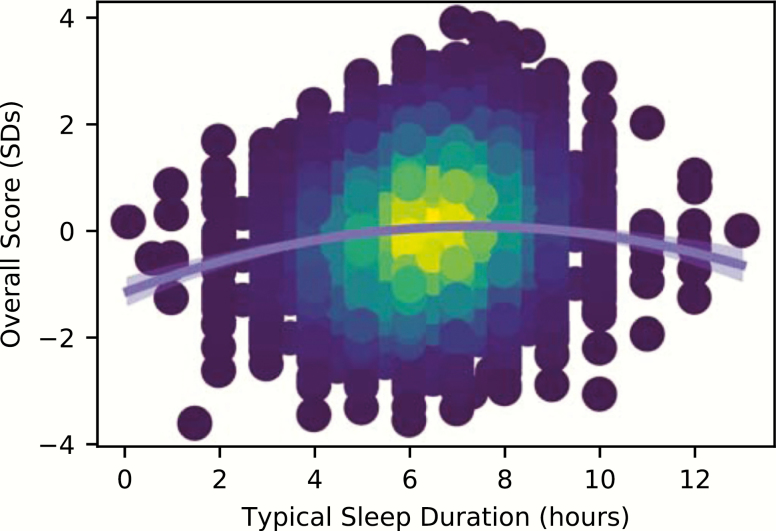
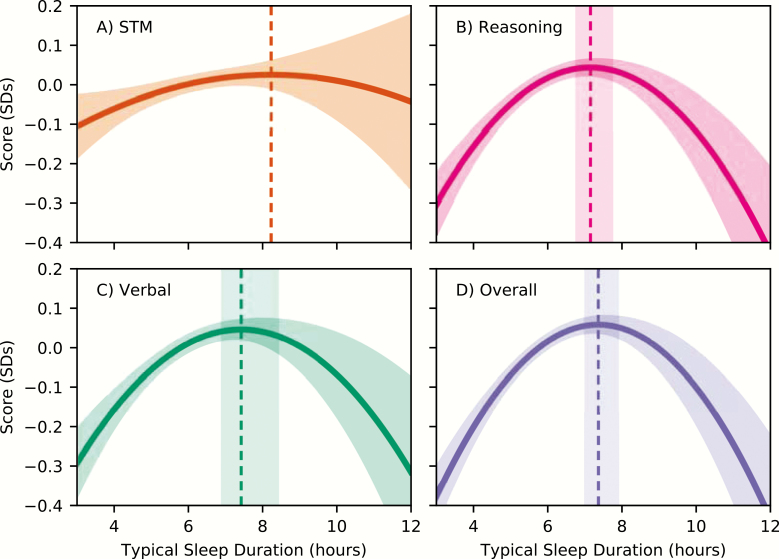
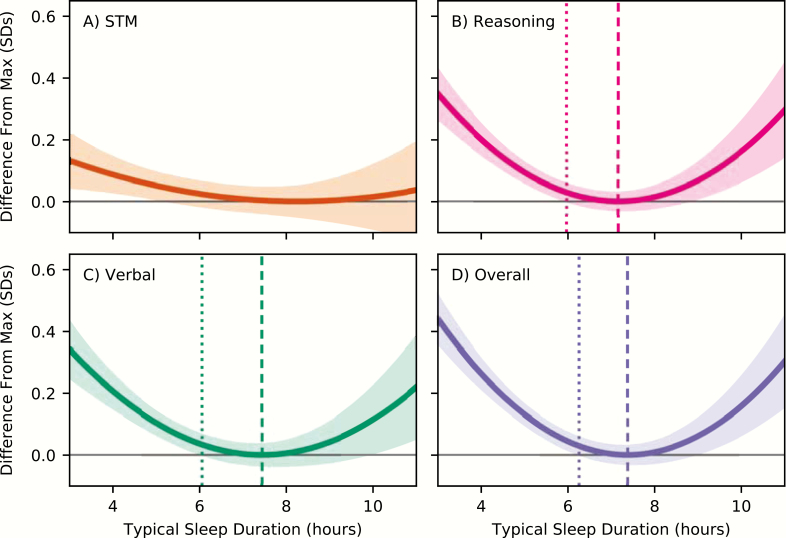
Verification
Claims the paper makes
The claims and statistics of this paper haven’t been checked yet.
Free: it reads the open-access text and checks the first 5 claims that cite a source we can check. Create a free account to check every claim.
Claims other papers make about this one
Each is checked against this paper’s own text: does it say what the citing paper says it does?
The source backs part of the claim, not all of it — or backs it for a different population, condition or comparison.
In the citing paper
“Previous studies in community-dwelling adults show a curvilinear relationship, such that too little sleep, as well as too much sleep, have been associated with poor cognition, mental health problems, and increased mortality risk (28, 29).”
From Nightly sleep duration predicts grade point average in the first year of college (2023) · cites this paper as [28]
Experimental — accuracy not yet measured
Self-check
Percentages, sums and reported differences re-computed from the paper’s own numbers.
The self-check needs the paper’s full text.
Citations
Cites
Ohayon, M. M., Carskadon, M. A., Guilleminault, C., & Vitiello, M. V. (2004) · Sleep · doi:10.1093/sleep/27.7.1255 · Cited by 3,349
Sleep Health: Can We Define It? Does It Matter?
Buysse, D. J. (2014) · Sleep · doi:10.5665/sleep.3298 · Cited by 2,536 · cited 1×
“between sleep duration and performance differed between reasoning and STM (F(2,32602) = 5.”
BackgroundA practical solution to the pervasive problems ofp values
Wagenmakers, E.-J. (2007) · Psychonomic Bulletin & Review · doi:10.3758/bf03194105 · Cited by 2,490
National Sleep Foundation’s updated sleep duration recommendations: final report
Hirshkowitz, M., Whiton, K., Albert, S. M., Alessi, C., Bruni, O., DonCarlos, L., Hazen, N., Herman, J., Adams Hillard, P. J., Katz, E. S., et al. (2015) · Sleep Health · doi:10.1016/j.sleh.2015.10.004 · Cited by 2,348
Neurocognitive consequences of sleep deprivation
Goel, N., Rao, H., Durmer, J., & Dinges, D. (2009) · Seminars in Neurology · doi:10.1055/s-0029-1237117 · Cited by 2,154
Vrieze, S. I. (2012) · Psychological Methods · doi:10.1037/a0027127 · Cited by 1,948 · cited 1×
“That is, it becomes more stringent as the sample size increases, and therefore tiny effect sizes are less likely to result in a rejection of the null hypothesis [34].”
BackgroundNyholt, D. R. (2004) · The American Journal of Human Genetics · doi:10.1086/383251 · Cited by 1,699 · cited 1×
“given that performance across tests was correlated (and hence the 16 measures were not completely independent), we estimated the effective number of comparisons using a method based on the variance of the eigenvalues derived from the correlation matrix of all 16 scores [31].”
MethodSelf-Reported and Measured Sleep Duration: How Similar Are They?
Lauderdale, D. S., Knutson, K. L., Yan, L. L., Liu, K., & Rathouz, P. J. (2008) · Epidemiology · doi:10.1097/ede.0b013e318187a7b0 · Cited by 1,565
Effects of Sleep Deprivation on Performance: A Meta-Analysis
Pilcher, J. J., & Huffcutt, A. I. (1996) · Sleep · doi:10.1093/sleep/19.4.318 · Cited by 1,549 · cited 1×
“On the other hand, it has been suggested that chronic partial sleep restriction has a greater impact on (broadly defined) cognitive function than total SD [36].”
BackgroundBehavioral and Physiological Consequences of Sleep Restriction
Banks, S., & Dinges, D. F. (2007) · Journal of Clinical Sleep Medicine · doi:10.5664/jcsm.26918 · Cited by 1,505 · cited 3×
“deviating from the optimal), and that cognition begins to recover as sleep duration returns to normal [4].”
Background
Cited by
Nichols, E. S., Wild, C. J., Stojanoski, B., Battista, M. E., & Owen, A. M. (2020) · Psychological Science · doi:10.1177/0956797620903113 · Cited by 201
Self-citationJonasdottir, S. S., Minor, K., & Lehmann, S. (2021) · Sleep · doi:10.1093/sleep/zsaa169 · Cited by 168
Willoughby, A. R., Alikhani, I., Karsikas, M., Chua, X. Y., & Chee, M. W. L. (2023) · Sleep Medicine · doi:10.1016/j.sleep.2023.08.010 · Cited by 145
Sleep Duration and Executive Function in Adults
Sen, A., & Tai, X. Y. (2023) · Current Neurology and Neuroscience Reports · doi:10.1007/s11910-023-01309-8 · Cited by 148
“The quadratic relationship between executive function and sleep [54, 64] is observed in other cognitive domains including memory [51, 53, 57, 64], visuospatial abilities [51, 65], verbal fluency [49, 57], and global cognitive tests like the MMSE [50, 55, 56].”
BackgroundQin, S., Leong, R. L. F., Ong, J. L., & Chee, M. W. L. (2022) · Sleep Medicine Reviews · doi:10.1016/j.smrv.2022.101734 · Cited by 109
Reported sleep duration reveals segmentation of the adult life-course into three phases
Coutrot, A., Lázár, A. S., Richards, M., Manley, E., Wiener, J. M., Dalton, R., Hornberger, M., & Spiers, H. J. (2022) · Nature Communications · doi:10.1038/s41467-022-34624-8 · Cited by 105
Dijk, D., & Landolt, H. (2019) · Handbook of experimental pharmacology · doi:10.1007/164_2019_243 · Cited by 97
Thirty-Five Years of Computerized Cognitive Assessment of Aging—Where Are We Now?
Sternin, A., Burns, A., & Owen, A. M. (2019) · Diagnostics · doi:10.3390/diagnostics9030114 · Cited by 71
“Indeed, sleep-related impairments in these three aspects of cognition were shown to affect all ages equally, despite the fact that, as expected, older people tended to sleep less [31].”
BackgroundSelf-citationLosing Control: Sleep Deprivation Impairs the Suppression of Unwanted Thoughts
Harrington, M. O., Ashton, J. E., Sankarasubramanian, S., Anderson, M. C., & Cairney, S. A. (2020) · Clinical Psychological Science · doi:10.1177/2167702620951511 · Cited by 83
Holding, B. C., Sundelin, T., Schiller, H., Åkerstedt, T., Kecklund, G., & Axelsson, J. (2020) · Proceedings of the National Academy of Sciences · doi:10.1073/pnas.2004535117 · Cited by 83
Understanding the Need for Sleep to Improve Cognition
Leong, R. L. F., & Chee, M. W. L. (2022) · Annual Review of Psychology · doi:10.1146/annurev-psych-032620-034127 · Cited by 110
Nightly sleep duration predicts grade point average in the first year of college
Creswell, J. D., Tumminia, M. J., Price, S., Sefidgar, Y., Cohen, S., Ren, Y., Brown, J., Dey, A. K., Dutcher, J. M., Villalba, D., et al. (2023) · Proceedings of the National Academy of Sciences · doi:10.1073/pnas.2209123120 · Cited by 53
“Previous studies in community-dwelling adults show a curvilinear relationship, such that too little sleep, as well as too much sleep, have been associated with poor cognition, mental health problems, and increased mortality risk (28, 29).”
Shorter sleep duration is associated with lower GABA levels in the anterior cingulate cortex
Park, S., Kang, I., Edden, R. A. E., Namgung, E., Kim, J., & Kim, J. (2020) · Sleep Medicine · doi:10.1016/j.sleep.2020.02.018 · Cited by 63
“As the recommended sleeping hours are 7–9 hours/night for adults [1], shorter sleep duration was defined as sleeping less than 6 hours [20], which was also associated with cognitive deficits [21, 22].”
BackgroundBrain Activation Time-Locked to Sleep Spindles Associated With Human Cognitive Abilities
Fang, Z., Ray, L. B., Owen, A. M., & Fogel, S. M. (2019) · Frontiers in Neuroscience · doi:10.3389/fnins.2019.00046 · Cited by 46
“The CBS platform is a web-based test battery1, which has previously been used in large-scale (Hampshire et al., 2012; Wild et al., 2018) and smaller-scale studies (Brewer-Deluce et al., 2017; Fang et al., 2017; Fogel et al., 2018; Phan et al., 2018).”
MethodSelf-citationImproving Diagnosis and Prognosis in Acute Severe Brain Injury: A Multimodal Imaging Protocol
Kazazian, K., Norton, L. E., Laforge, G., Abdalmalak, A., Gofton, T. E., Debicki, D., Slessarev, M., Hollywood, S., Lawrence, K. S., & Owen, A. M. (2021) · Frontiers in Neurology · doi:10.3389/fneur.2021.757219 · Cited by 49
“The CBS tests will be administered on a laptop or a tablet and are designed to assess deductive and verbal reasoning, episodic memory, visuospatial and working memory, and short-term memory and described in thorough detail elsewhere (33).”
MethodSelf-citationSleep, inflammation and cognitive function in middle-aged and older adults: A population-based study
Hu, M., Shu, X., Feng, H., & Xiao, L. D. (2021) · Journal of Affective Disorders · doi:10.1016/j.jad.2021.02.013 · Cited by 49
Feasibility of Digital Memory Assessments in an Unsupervised and Remote Study Setting
Berron, D., Ziegler, G., Vieweg, P., Billette, O. V., Güsten, J., Grande, X., Heneka, M. T., Schneider, A., Teipel, S. J., Jessen, F., et al. (2022) · Frontiers in Digital Health · doi:10.3389/fdgth.2022.892997 · Cited by 38
Association of the sleep regularity index with incident dementia and brain volume
Yiallourou, S. R., Cribb, L., Cavuoto, M. G., Rowsthorn, E., Nicolazzo, J., Gibson, M., Baril, A.-A., & Pase, M. P. (2024) · Neurology · doi:10.1212/wnl.0000000000208029 · Cited by 33
Disentangling the cognitive, physical, and mental health sequelae of COVID-19
Wild, C. J., Norton, L. E., Menon, D. K., Ripsman, D., Swartz, R. H., & Owen, A. M. (2022) · Cell Reports Medicine · doi:10.1016/j.xcrm.2022.100750 · Cited by 39
“43,44 We also calculated an ‘‘overall’’ score of cognitive performance (the mean of the 12 z-scored primary outcomes) and a measure of ‘‘processing speed’’ (the 1st principal component of the 11 reaction-time based features).”
Self-citationHonarmand, K., Malik, S., Wild, C. J., González-Lara, L. E., McIntyre, C. W., Owen, A. M., & Slessarev, M. (2019) · PLoS ONE · doi:10.1371/journal.pone.0215203 · Cited by 45
Self-citationVanini, G., & Torterolo, P. (2021) · Advances in experimental medicine and biology · doi:10.1007/978-3-030-61663-2_5 · Cited by 40
Mellow, M. L., Dumuid, D., Wade, A. T., Stanford, T., Olds, T., Karayanidis, F., Hunter, M., Keage, H. A. D., Dorrian, J., Goldsworthy, M. R., et al. (2022) · Frontiers in Human Neuroscience · doi:10.3389/fnhum.2022.1051793 · Cited by 34
“, >9 h or <6 h) is negatively associated with cognitive function, often referred to as an “inverted U-shaped” relationship (Gildner et al., 2014; Wild et al., 2018).”
BackgroundCárdenas-Egúsquiza, A. L., & Berntsen, D. (2022) · Consciousness and Cognition · doi:10.1016/j.concog.2022.103333 · Cited by 34
“…work have suggested a u-shaped relationship where too short and too long sleep duration (that is less, or more, than 7 – 8 h per night) are associated with impaired executive functioning (Kronholm et al., 2009; Wild et al., 2018) and negative mood (Hyakutake et al., 2016; Ohayon et al., 2013).”
Falloon, K., Bhoopatkar, H., Moir, F., Nakatsuji, M., & Wearn, A. M. (2022) · SLEEP Advances · doi:10.1093/sleepadvances/zpac019 · Cited by 35
Sleep Spindle-dependent Functional Connectivity Correlates with Cognitive Abilities
Fang, Z., Ray, L. B., Houldin, E., Smith, D., Owen, A. M., & Fogel, S. M. (2020) · Journal of Cognitive Neuroscience · doi:10.1162/jocn_a_01488 · Cited by 32
Self-citationCognition across the Lifespan: Investigating Age, Sex, and Other Sociodemographic Influences
Nichols, E. S., Wild, C. J., Owen, A. M., & Soddu, A. (2021) · Behavioral Sciences · doi:10.3390/bs11040051 · Cited by 25
Self-citationFactores asociados a una baja calidad de vida en adultos chilenos durante la cuarentena por COVID-19
Guzmán-Muñoz, E., Concha‐Cisternas, Y., Oñate-Barahona, A., Lira-Cea, C., Cigarroa, I., Méndez-Rebolledo, G., Castillo-Retamal, M., Valdés-Badilla, P. A., & Zapata‐Lamana, R. (2020) · Revista médica de Chile · doi:10.4067/s0034-98872020001201759 · Cited by 43
Sleep duration and cognition: is there an ideal amount?
Mantua, J., & Simonelli, G. (2019) · SLEEP · doi:10.1093/sleep/zsz010 · Cited by 33
Association between weekend catch-up sleep and executive functions in Chinese school-aged children
Lv, Y., Cai, L., Zeng, X., Gui, Z., Lai, L., Tan, W., & Chen, Y. (2020) · Journal of Clinical Sleep Medicine · doi:10.5664/jcsm.8494 · Cited by 32
“25,45 However, due to the very limited number of prospective studies, these results should be interpreted cautiously.”
Stojanoski, B. B., Wild, C. J., Battista, M. E., Nichols, E. S., & Owen, A. M. (2021) · Journal of Experimental Psychology General · doi:10.1037/xge0000773 · Cited by 30
“However, we found significant age- and sleep-related changes to cognition from the same dataset (Wild et al., 2018) consistent with previous lab-based studies (Banks & Dinges, 2007; Ferreira, Owen, Mohan, Corbett, & Ballard, 2015; Hampshire et al., 2012; Krause et al., 2017; Lim & Dinges, 2010).”
ResultSelf-citationDuration of night sleep and cognitive performance of community older adults
Alves, É. D. S., Pavarini, S. C. I., Luchesi, B. M., Ottaviani, A. C., Cardoso, J. D. F. Z., & Inouye, K. (2021) · Revista Latino-Americana de Enfermagem · doi:10.1590/1518-8345.4269.3439 · Cited by 30
Thun, E., Waage, S., Bjorvatn, B., Moen, B. E., Vedaa, Ø., Blytt, K. M., & Pallesen, S. (2020) · Nursing Outlook · doi:10.1016/j.outlook.2020.09.008 · Cited by 26
Targeting Cognitive Resilience through Prebiotics: A Focused Perspective
Dalile, B., Boyle, N. B., Ruiz, F. T., Chakrabarti, A., Respondek, F., Dodd, G. F., Kadosh, K. C., Hepsomali, P., Brummer, R. J., McArthur, S., et al. (2024) · Advances in Nutrition · doi:10.1016/j.advnut.2024.100343 · Cited by 23
Balouch, S., Dijk, D. A. D., Rusted, J. M., Skene, S. S., Tabet, N., & Dijk, D. (2022) · Alzheimer s & Dementia Diagnosis Assessment & Disease Monitoring · doi:10.1002/dad2.12303 · Cited by 24
Reexamining the “brain drain” effect: A replication of Ward et al. (2017)
Pardo, A. C. R., & Minda, J. P. (2022) · Acta Psychologica · doi:10.1016/j.actpsy.2022.103717 · Cited by 29
Sleeping time is associated with functional limitations in a national sample of older Americans
Vincent, B. M., Johnson, N., Tomkinson, G. R., McGrath, R., Clark, B. C., & Choi, B. (2020) · Aging Clinical and Experimental Research · doi:10.1007/s40520-020-01524-0 · Cited by 23
Stronger Associations Between Sleep and Mental Health in Adults with Autism: A UK Biobank Study
Henderson, L. M., Clair, M. S., Knowland, V. C. P., van Rijn, E., Walker, S., & Gaskell, M. G. (2021) · Journal of Autism and Developmental Disorders · doi:10.1007/s10803-021-05382-1 · Cited by 24
Sleep Duration Is Associated with Academic Achievement of Adolescent Girls in Mathematics
Lin, L., Somerville, G., Boursier, J., Santisteban, J. A., & Gruber, R. (2020) · Nature and Science of Sleep · doi:10.2147/nss.s237267 · Cited by 29
Pre-sleep Cognitive Arousal Decreases Following a 4-Week Introductory Mindfulness Course
Hassirim, Z., Lim, E., Lo, J. C.-Y., & Lim, J. (2019) · Mindfulness · doi:10.1007/s12671-019-01217-4 · Cited by 20
“Sleeping poorly or insufficiently can lead to acute adverse consequences such as negative mood (Dinges et al. 1997; Haack and Mullington 2005), cognitive impairment (Lim and Dinges 2010; Lowe et al. 2017; Wild et al. 2018), and low quality of life (Strine and Chapman 2005).”
BackgroundSleep and intelligence: critical review and future directions
Ujma, P. P., Bódizs, R., & Dresler, M. (2020) · Current Opinion in Behavioral Sciences · doi:10.1016/j.cobeha.2020.01.009 · Cited by 18
Meng, M., Jiang, Y., Lin, J., Zhang, J., Wang, G., Zhu, Q., Lin, Q., & Jiang, F. (2022) · Clinical Epigenetics · doi:10.1186/s13148-022-01284-w · Cited by 18
“Furthermore, the sensitivity analysis for the associations between the maternal sleep parameters and the offspring’s adiposity indicators was conducted by further extracting the subjects whose nighttime sleep duration was within − 4SD ~ + 4SD from the whole sample [28].”
MethodAl‐Saoud, S., Nichols, E. S., Brossard‐Racine, M., Wild, C. J., Norton, L. E., & Duerden, E. G. (2024) · Child Neuropsychology · doi:10.1080/09297049.2024.2364957 · Cited by 21
“Descriptions of each of the 12 cognitive tasks used in the assessment can be found below (Wild et al., 2018): The short-term memory domain consists of four tasks, including: 1) Spatial Span (SS), a spatial short-term memory tool derived from the Corsi Block Tapping Task (Corsi, 1972); 2) Monkey…”
Self-citationSilva, N. C. B. S., Petrella, A. F. M., Christopher, N., Marriott, C. F. S., Gill, D. P., Owen, A. M., & Petrella, R. J. (2021) · Frontiers in Aging Neuroscience · doi:10.3389/fnagi.2021.643809 · Cited by 27
“It is a fully automated, computerized adaptive testing platform and has been used to effectively evaluate cognition in several large-scale studies (Wild et al., 2018).”
MethodSelf-citationBaena, D., Fang, Z., Ray, L. B., Owen, A. M., & Fogel, S. M. (2022) · Cerebral Cortex · doi:10.1093/cercor/bhac428 · Cited by 18
“Wechsler Adult Intelligence Scale–Revised.”
MethodSelf-citationAssociations between sleepiness, sleep duration, and academic outcomes in early adolescence
Orihuela, C. A., Mrug, S., & Evans, R. R. (2022) · Psychology in the Schools · doi:10.1002/pits.22843 · Cited by 17
“However, other domains of cognitive processes, such as reasoning and verbal ability, have been found to be affected by shorter sleep duration (Wild et al., 2018).”
Mortlock, E., Silovský, V., Güldenpfennig, J., Faltusová, M., Olejarz, A., Börger, L., Ježek, M., Jennings, D. J., & Capellini, I. (2024) · Proceedings of the Royal Society B Biological Sciences · doi:10.1098/rspb.2023.2115 · Cited by 18
“Nonetheless, individuals that sleep less than average develop neurological disorders later in life, suggesting chronic short sleep durations entail long-term costs [8,9].”
BackgroundJyväkorpi, S. K., Urtamo, A., Kivimäki, M., & Strandberg, T. E. (2020) · European Geriatric Medicine · doi:10.1007/s41999-020-00421-z · Cited by 21
Ye, H., Ji, M., Wang, C., Wang, C., Li, Y., Chen, Y., Cheng, L., Li, Y., & Yang, J. (2022) · Frontiers in Psychiatry · doi:10.3389/fpsyt.2022.848709 · Cited by 17
Sleeping poorly is robustly associated with a tendency to engage in spontaneous waking thought
Cárdenas-Egúsquiza, A. L., & Berntsen, D. (2022) · Consciousness and Cognition · doi:10.1016/j.concog.2022.103401 · Cited by 16
Hennessy, A., Nichols, E. S., Al‐Saoud, S., Brossard‐Racine, M., & Duerden, E. G. (2024) · Clinical Child Psychology and Psychiatry · doi:10.1177/13591045241228889 · Cited by 21
“DT is a challenging version of the Stroop task, which demands focused attention and inhibition in order to successfully navigate the incongruent and doubly incongruent trials (Wild et al., 2018).”
BackgroundMethodInfluentialSelf-citationSmevik, H., Habli, S., Saksvik, S. B., Kliem, E., Evensmoen, H. R., Conde, V., Petroni, A., Asarnow, R. F., Dennis, E. L., Eikenes, L., et al. (2023) · Cerebral Cortex · doi:10.1093/cercor/bhad024 · Cited by 17
Zhu, H., Lin, R., Wang, J., Ruan, S., Hu, T., Yan, L., Ke, X., & Luo, H.-Y. (2024) · BMJ Open · doi:10.1136/bmjopen-2022-071417 · Cited by 16
“47 Optimal cognitive function appears to be associated with 7–8 hours of sleep across all age demographics, although excessive sleep can result in postsleep inertia.”
BackgroundHormone-sleep interactions predict cerebellar connectivity and behavior in aging females
Ballard, H. K., Jackson, T. B., Hicks, T. H., Cox, S. J., Symm, A. C., Maldonado, T., & Bernard, J. A. (2022) · Psychoneuroendocrinology · doi:10.1016/j.psyneuen.2023.106034 · Cited by 14
Longitudinal white matter changes associated with cognitive training
Nichols, E. S., Erez, J., Stojanoski, B. B., Lyons, K., Witt, S. T., Mace, C., Khalid, S., & Owen, A. M. (2021) · Human Brain Mapping · doi:10.1002/hbm.25580 · Cited by 16
“Scores again were first transformed to z-scores using population means and standard deviations (Wild et al., 2018), and the model was constructed with group (Self-Ordered Search/Double Trouble) and time (pre-training/posttraining), and participants as a random effect.”
MethodSelf-citationKuhn, T., Heisz, J. J., & Middleton, L. E. (2025) · Frontiers in Education · doi:10.3389/feduc.2025.1565920 · Cited by 23
Cognitive Impairment Early After Initiating Maintenance Hemodialysis: A Cross Sectional Study
Schorr, M., Zalitach, M., House, C., Gomes, J., Wild, C. J., Salerno, F. R., & McIntyre, C. W. (2022) · Frontiers in Neurology · doi:10.3389/fneur.2022.719208 · Cited by 14
Self-citationScharf, V. F., McPhetridge, J. B., & Dickson, R. E. (2022) · Journal of the American Veterinary Medical Association · doi:10.2460/javma.21.05.0234 · Cited by 13
Impact of Hours Awake and Hours Slept at Night on Radiologists’ Mammogram Interpretations
Alshabibi, A. S. A., Suleiman, M. E., Tapia, K. A., Heard, R. C., & Brennan, P. (2021) · Journal of the American College of Radiology · doi:10.1016/j.jacr.2020.12.023 · Cited by 12
Thienel, R., Borne, L., Faucher, C., Behler, A., Robinson, G. A., Fripp, J., Giorgio, J., Ceslis, A., McAloney, K., Adsett, J., et al. (2024) · Brain Imaging and Behavior · doi:10.1007/s11682-024-00918-2 · Cited by 13
“Creyos has been used in several large-scale epidemiological studies (Nichols et al., 2020, 2021; Wild et al., 2018).”
The relationship between cognitive ability and BOLD activation across sleep–wake states
Fang, Z., Smith, D., Houldin, E., Ray, L. B., Owen, A. M., & Fogel, S. M. (2021) · Brain Imaging and Behavior · doi:10.1007/s11682-021-00504-w · Cited by 9
Self-citationElfering, A., Kottwitz, M. U., & Semmer, N. K. (2021) · Sleep and Vigilance · doi:10.1007/s41782-021-00127-7 · Cited by 10
A design for life: Predicting cognitive performance from lifestyle choices
Nichols, E. S., Nelson, G., Wild, C. J., & Owen, A. M. (2024) · PLoS ONE · doi:10.1371/journal.pone.0298899 · Cited by 15
Self-citationLosing control: sleep deprivation impairs the suppression of unwanted thoughts
Harrington, M. O., Ashton, J. E., Sankarasubramanian, S., Anderson, M. C., & Cairney, S. A. (2019) · Sleep Medicine · doi:10.1101/813121 · Cited by 8
REM sleep vs exploratory wakefulness: Alternatives within adult ‘sleep debt’?
Horne, J. (2019) · Sleep Medicine Reviews · doi:10.1016/j.smrv.2019.101252 · Cited by 11
Jackson, R., & Wild, C. J. (2021) · Journal of Advances in Medicine and Medical Research · doi:10.9734/jammr/2021/v33i630857 · Cited by 8
Self-citationRagnarsson, S., Johansson, K., Bergström, E., Sjöberg, G., Hurtig, A., & Petersen, S. (2022) · Pain · doi:10.1097/j.pain.0000000000002625 · Cited by 13
Sahu, D. P., Taywade, M., Malla, P. S., Singh, P. K., Jasti, P., Singh, P., Sharma, P., Das, M., M, R. B. U., & Gupta, K. (2024) · Cureus · doi:10.7759/cureus.58323 · Cited by 20
“Studies have proposed a possible relationship between cognition and sleep [9].”
BackgroundLee, E. K., & Auger, R. R. (2024) · Current Sleep Medicine Reports · doi:10.1007/s40675-024-00299-4 · Cited by 7
“A similar pattern has been seen in studies of patients with sleep deprivation [41].”
Borges, D. F., Soares, J. I., Silva, H., Felgueiras, J., Batista, C., Ferreira, S., Rocha, N., & Leal, A. (2024) · Journal of Sleep Research · doi:10.1111/jsr.14368 · Cited by 7
Sujanthan, S., Puveendrakumaran, P., Dainty, K. N., Barense, M. D., Lanctôt, K. L., Owen, A. M., Singh, N., Buck, B. H., Khosravani, H., Coutts, S. B., et al. (2025) · European Stroke Journal · doi:10.1177/23969873251323171 · Cited by 8
Self-citationAdolescent Technology-use Rules and Sleep in a Large Representative Sample
Giovanelli, A., Ozer, E. J., Adams, S. H., Park, M. J., & Ozer, E. M. (2022) · Journal of Adolescent Health · doi:10.1016/j.jadohealth.2021.10.025 · Cited by 9
Zhang, J., Wang, A.-X., Yang, Y., Xu, Q., Liao, X., Ma, W., Zhang, N., Wang, C., & Wang, Y. (2022) · Nature and Science of Sleep · doi:10.2147/nss.s378743 · Cited by 6
“The impairment of those who slept 4 hours or less per night was equivalent to the effect of aging 8 years to their age.(29) The optimal sleep duration for about 5.”
BackgroundThe value of large-scale studies of sleep and cognition
Chee, M. W. L., & Willoughby, A. R. (2023) · Trends in Neurosciences · doi:10.1016/j.tins.2023.01.008 · Cited by 5
“Reassuringly, it appears that whether a spatial navigation game [6], standardised cognitive tasks [3,9] or other tools are used, the average optimum sleep duration appears to be ~7 h, at the lower bound of currently recommended sleep durations for adults [8].”
BackgroundProtocol for the Prognostication of Consciousness Recovery Following a Brain Injury
Duclos, C., Norton, L. E., Laforge, G., Frantz, A., Maschke, C., Badawy, M., Létourneau, J., Slessarev, M., Gofton, T. E., Debicki, D., et al. (2020) · Frontiers in Human Neuroscience · doi:10.3389/fnhum.2020.582125 · Cited by 8
“The tests include: Odd One Out, Rotations, Paired Associates, Grammatical Reasoning, Monkey Ladder, and Digit Span (see Wild et al., 2018).”
BackgroundMethodSelf-citationGallardo, J., Bellone, G., Plano, S. A., Vigo, D. E., & Risk, M. R. (2021) · Journal of Medical and Biological Engineering · doi:10.1007/s40846-020-00595-8 · Cited by 7
Lau, S. C. L., Hall, M. L., Terhorst, L. A., & Skidmore, E. R. (2024) · PM&R · doi:10.1002/pmrj.13108 · Cited by 7
“81 It has been suggested that long sleep is associated with longer and more intense sleep inertia, 82 a transitional state between sleep and wake that results in reduced alertness and impaired cognitive performance.”
Basta, M., Bouloukaki, I., Skourti, E., Zampetakis, A., Alexopoulou, C., Ganiaris, A., Aligizaki, M., Zaganas, I. V., Simos, P. G., & Vgontzas, A. N. (2024) · Journal of Alzheimer s Disease Reports · doi:10.3233/adr-230203 · Cited by 5
“Nonetheless, there are gaps in the current body of literature exploring associations between sleep and cognition, as most of the studies conducted in older adults rely on self-reported sleep data [13–15], which may differ from objec-tivesleepmeasures[16].”
BackgroundThe Good Sleeper Scale‐15 items: a questionnaire for the standardised assessment of good sleepers
Manners, J., Appleton, S., Reynolds, A. C., Melaku, Y. A., Gill, T. K., Lovato, N., Sweetman, A., Bickley, K., Adams, R., Lack, L. C., et al. (2022) · Journal of Sleep Research · doi:10.1111/jsr.13717 · Cited by 6
“…of 7–8 h indicated better sleep and responses in hourly bins either side of this duration were given incrementally lower scores (<6 or >9 h = worst sleep) based on the distribution of sleep durations in this dataset and known negative impacts of short and long sleep duration (Wild et al., 2018).”
BackgroundRelationship between self-reported sleep and cognitive function: a specification curve analysis
Xu, J.-J., Lin, G.-J., Fang, F., & Yu, J. (2023) · Cognitive Processing · doi:10.1007/s10339-023-01133-5 · Cited by 10
HUBUNGAN DURASI TIDUR DENGAN FUNGSI KOGNITIF GERIATRI
Handayani, F. (2019) · Healthy Tadulako Journal (Jurnal Kesehatan Tadulako) · doi:10.22487/j25020749.2019.v5.i3.14060 · Cited by 7
Royant‐Parola, S., Kovess–Masféty, V., Brion, A., Dagneaux, S., & Hartley, S. (2020) · PLoS ONE · doi:10.1371/journal.pone.0236404 · Cited by 7
“Chronic partial sleep deprivation has been shown to lead to modifications in executive function [41], to increase impulsive actions [42] and to reduce sustained [43] and vigilant attention [44] which could increase ANMAS even in the absence of sleepiness.”
BackgroundWild, C., Norton, L. E., Menon, D. K., Ripsman, D., Swartz, R. H., & Owen, A. M. (2021) · Research Square · doi:10.21203/rs.3.rs-373663/v1 · Cited by 7
Self-citationDominant baboons experience more interrupted and less rest at night
Fele, M., Christensen, C., Bracken, A. M., O'Riain, M. J., Lurgi, M., Papadopoulou, M., Fürtbauer, I., & King, A. J. (2025) · Current Biology · doi:10.1016/j.cub.2025.10.028 · Cited by 5
Association between self-reported sleep duration and cardiometabolic risk in corporate executives
Pienaar, P. R., Roden, L. C., Boot, C. R. L., van Mechelen, W., Twisk, J. W. R., Lambert, E. V., & Rae, D. E. (2021) · International Archives of Occupational and Environmental Health · doi:10.1007/s00420-021-01739-2 · Cited by 5
Hosseini, M., Borhani‐Haghighi, A., Petramfar, P., Foroughi, A. A., Ostovan, V. R., & Nami, M. (2023) · Clinical Neurology and Neurosurgery · doi:10.1016/j.clineuro.2023.107866 · Cited by 4
Effects of lifestyle on telomere length: A study on the Korean population
Bae, C., Kim, I.-H., Kim, S., Chun, H., Kim, B.-S., & Jeon, M.-H. (2025) · PLoS ONE · doi:10.1371/journal.pone.0325233 · Cited by 4
Jackson, R., & Glanz, R. M. (2023) · Journal for the Study of Education and Development Infancia y Aprendizaje · doi:10.1080/02103702.2023.2235802 · Cited by 3
Effects of night-float shifts on cognitive function among radiology residents
Flink, C. C., Hobohm, R. E., Zhang, B., Jacobson, D. L., & England, E. B. (2024) · Emergency Radiology · doi:10.1007/s10140-024-02269-3 · Cited by 2
“Performance on testing aimed at memory remained intact, however, which agrees with data from a large prior study [25].”
ResultLim, C. R., Ogawa, S., & Kumari, Y. (2024) · Archives of Pharmacal Research · doi:10.1007/s12272-024-01523-z · Cited by 4
“The deleterious effects of sleep loss on various cognitive domains, such as attention, memory, executive functioning, and language skills (Lim and Dinges 2010; Wild et al. 2018; Kim et al. 2022) have been demonstrated.”
EEG brain networks modulation during sleep onset: the effects of aging
Miraglia, F., Cacciotti, A., Vecchio, F., Scarpelli, S., Gorgoni, M., Gennaro, L. D., & Rossini, P. M. (2024) · GeroScience · doi:10.1007/s11357-024-01473-w · Cited by 3
“Furthermore, differences between the young and elderly groups were found during demonstrating the strict relationship between sleep nd cognitive functions (e.g., Wild et al. [6]), especially in aging population.”
Associations Between Sleep And Cognition Among Middle-Aged And Older Adults In Europe
Crowley, P., O’Donovan, M. R., Flanagan, E., & Ó’Caoimh, R. (2024) · Journal of Alzheimer s Disease · doi:10.1093/ageing/afae178.346 · Cited by 1
Cognitive outcomes of the at-home brain balance program
Jackson, R., & Meng, Y. (2024) · Frontiers in Child and Adolescent Psychiatry · doi:10.3389/frcha.2024.1450695 · Cited by 1
Singh, R., Pathak, A., Yadav, V., Singh, M., & Rana, Y. (2025) · Archives of Biological Psychiatry · doi:10.25259/abp_8_2025 · Cited by 1
Tang, Y., Xie, X., Wu, H., Huang, X., Qiu, J., Han, Y., Peng, K., Zeng, K., & Wu, X. (2025) · Food Science & Nutrition · doi:10.1002/fsn3.70816 · Cited by 1
“In a population-based clinical study involving over 10,000 participants globally, approximately 50% of individuals who reported sleeping less than seven hours per night exhibited cognitive decline (Wild et al. 2018).”
Exploring the Feasibility of the Creyos Cognitive Assessment Tool Among Patients With Heart Failure
Varickanickal, J., Chu, S., Swartz, R. H., Murray, T., Styra, R. G., Paleczny, S. G., Owen, A. M., Austin, P. C., Simard, A., Sun, L. Y., et al. (2025) · Cureus · doi:10.7759/cureus.97158 · Cited by 2
Self-citationUrian, D. M., Gupta, G., Battista, M. E., Wild, C. J., & Owen, A. M. (2026) · Journal of Alzheimer s Disease · doi:10.1177/13872877261424289 · Cited by 3
Self-citationThe Connection Between Undergraduates' Academic Self-efficacy, Anxiety, and Sleep Quality
Jia, J. (2023) · Lecture Notes in Education Psychology and Public Media · doi:10.54254/2753-7048/13/20230916 · Cited by 1
The interplay between genomic copy number variants, sleep, and cognition in the general population
Poulain, C., Tesfaye, R., Douard, E. A., Jean‐Louis, M., Saci, Z., Labbe, A., Glahn, D. C., Almasy, L. A., Elsabbagh, M., Huguet, G., et al. (2025) · Translational Psychiatry · doi:10.1038/s41398-025-03579-x · Cited by 1
“In recent years, support for an inverted U-shape association between sleep duration and cognition has emerged [18 – 21].”
Disentangling the Cognitive, Physical, and Mental Health Sequalae of COVID-19Preprint
Wild, C. J., Norton, L. E., Menon, D. K., Ripsman, D., Swartz, R. H., & Owen, A. M. (2022) · SSRN Electronic Journal · doi:10.2139/ssrn.4008565 · Cited by 1
Self-citationDevelopment of an Optimal Time for Learning Questionnaire in Chinese University StudentsPreprint
Lingshan, L. I. U., Hongyuan, L. V., Yifan, L. U., Wang, C., Chai, H., Rimol, L. M., & WANG, W. J. (2022) · Research Square · doi:10.21203/rs.3.rs-1321049/v1 · Cited by 1
“Indeed, Wild et al. (2018) reported that sleeping more than usual the night before testing was associated with better performance, suggesting even a single night’s sleep can bene t in learning.”
Background
Metadata
- Authors
- Wild, C. J., Nichols, E. S., Battista, M. E., Stojanoski, B., & Owen, A. M.
- Affiliations
- Western University (CA)
- Corresponding author
- Wild, Conor J
- Venue
- Sleep
- Publisher
- Oxford University Press (OUP)
- Published
- 2018-09-13
- Volume
- 41
- Issue
- 12
- ISSN
- 0161-8105 (ISSN-L)
- 1550-9109
- PMC
- PMC6289236
- OpenAlex
- W2890391705
- Cited by
- 123
- References
- 55
- Citations by year
- 2026: 11 · 2025: 11 · 2024: 20 · 2023: 12 · 2022: 26 · 2021: 18 · 2020: 15 · 2019: 10
- FWCI
- 14.08
- Type
- journal article
- Language
- en
- Open access
- hybrid
- doi.org
- Licence
- Locations
- SLEEP (publishedVersion, cc-by-nc)
- Europe PMC (PubMed Central) (publishedVersion, cc-by-nc)
- PubMed Central (publishedVersion, cc-by-nc)
- PubMed (publishedVersion)
- Scholarship@Western (Western University) (submittedVersion, cc-by-nc)
- Scholarship@Western (Western University) (submittedVersion)
- Funders
- Canada Excellence Research Chairs, Government of Canada (#215063)
- Topics
- Social Sciences › Psychology › Experimental and Cognitive Psychology › Sleep and Work-Related Fatigue
- Social Sciences › Psychology › Experimental and Cognitive Psychology › Sleep and related disorders
- Life Sciences › Neuroscience › Cognitive Neuroscience › Sleep and Wakefulness Research
- Keywords
- sleep duration, cognitive performance, sleep restriction, short-term memory, reasoning, verbal ability, problem solving, sleep deprivation, aging, age invariance, self-reported sleep
- MeSH terms
- Adult, Cognition, Cognition Disorders, Female, Humans, Male, Memory, Problem Solving, Surveys and Questionnaires, Sleep, Sleep Deprivation, Executive Function, Self Report
About these checks
Registry, retraction, Cites and statistics results are computed, not judged, with one exception: a printed reference that no index lists is read once by a model before it counts as a citation error. Claims are extracted by a model and kept only when their quote appears verbatim in the text; each cited source is then checked, with a model’s help, for whether it says what the claim relies on. Those verdicts can be wrong — read the claim’s quote and the cited source before relying on one.
Statistics and arithmetic are recomputed, not judged.
Confidence bands are shown only for fields calibrated on our annotated test set. None is calibrated yet, so no band is shown.
What counts as a claim ›How we measure confidence ›How we check this ›
Are you an author, or do you see a problem with this page? Request a review
Data sources
Bibliographic data: Semantic Scholar, OpenAlex, Crossref.
Contains information from the Semantic Scholar Academic Graph Datasets, made available under the ODC Attribution License (ODC-BY 1.0).
Semantic Scholar’s data is described in: Kinney, R., et al. (2023). The Semantic Scholar Open Data Platform. arXiv:2301.10140.
