

Spinal Cord Injury: The Global Incidence, Prevalence, and Disability From the Global Burden of Disease Study 2019
Open accessThe DOI matches its Crossref record; 19 of the 19 references it cites were found in a registry or an index.
Abstract
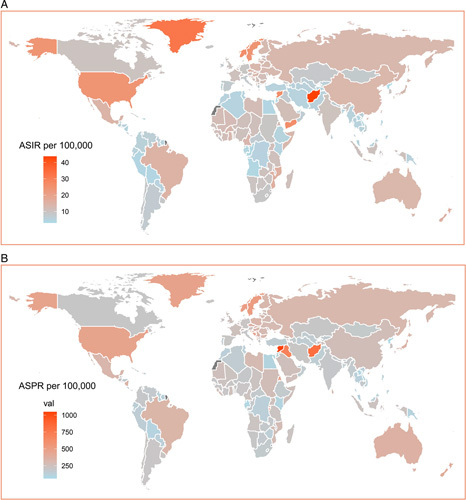
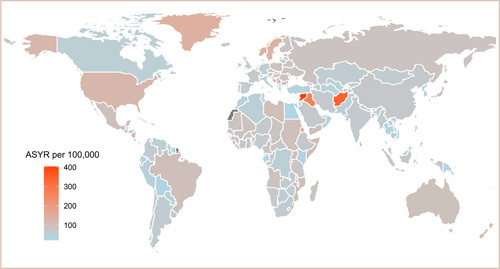
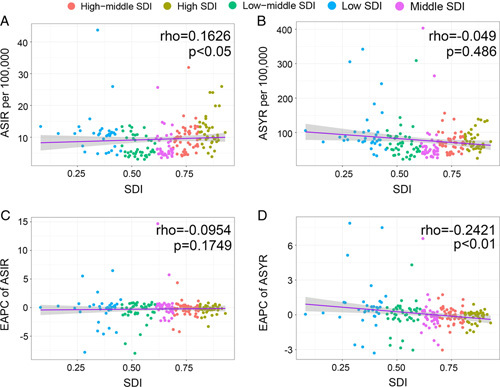
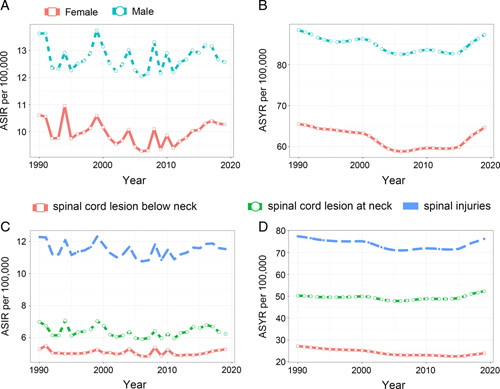
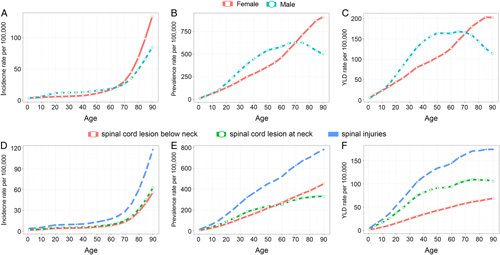
Study Design.: A retrospective cohort study. Objective.: The authors aimed to estimate the incidence, prevalence and years lived with disability (YLDs) of spinal cord injury (SCI) by location, sex, age, injury site and socio-demographic index (SDI) based on the data of the Global Burden of Disease Study (GBD) 2019. Summary of Background Data.: GBD 2019 estimates the burden of 369 diseases and injuries worldwide in 2019 and the temporal trends in the past 30 years. SCI is estimated as a result of injury from various causes. Methods.: A Bayesian meta-regression tool, DisMod-MR2.1, was used to produce the estimates. Estimated annual percentage change (EAPC) was calculated based on a linear regression mode of the age standardized rates and the calendar year to represent the temporal trends of the age standardized rates. Spearman rank order correlation was used to determine the correlation between SDI and the incidence and burden of SCI. Results.: Globally, there were 0.9 [95% uncertainty interval (UI), 0.7 to 1.2] million incident cases, 20.6 (95% UI, 18.9–23.6) million prevalent cases and 6.2 (95% UI, 4.5–8.2) million YLDs of total SCI in 2019. The ASPR increased (EAPC, 0.1; 95% confidence interval, −0.01 to 0.2), while the age standardized incidence rate (ASIR) (EAPC, −0.08; 95% UI, −0.24 to 0.09) and age standardized YLD rate (ASYR) (EAPC, −0.08; 95% confidence interval, −0.24 to 0.09) decreased. Males had higher ASIR and ASYR, and the rate of incidence, prevalence and YLD increased with age. Spinal injuries at neck level caused higher ASYR than injuries below neck level. A positive correlation existed between SDI and ASIR (ρ=0.1626, P <0.05), while a negative correlation was observed between SDI and EAPC of ASYR (ρ=−0.2421, P <0.01). Conclusion.: Conclusively, the incidence and burden of SCI has increased over the last 30 years. Males and the elderly were affected to a greater degree than females and younger individuals. Level of Evidence.: Level III.
Overview
The claims and statistics of this paper haven’t been checked yet.
Free: it reads the open-access text and checks the first 5 claims that cite a source we can check. Create a free account to check every claim.
Integrity signals
Registry
Cites
Statistics
Figures
Verification
Claims the paper makes
The claims and statistics of this paper haven’t been checked yet.
Free: it reads the open-access text and checks the first 5 claims that cite a source we can check. Create a free account to check every claim.
Self-check
Percentages, sums and reported differences re-computed from the paper’s own numbers.
The self-check needs the paper’s full text.
Citations
Cites
James, S. L., Abate, D., Abate, K. H., Abay, S. M., Abbafati, C., Abbasi, N., Abbastabar, H., Abd-Allah, F., Abdela, J., Abdelalim, A., et al. (2018) · The Lancet · doi:10.1016/s0140-6736(18)32279-7 · Cited by 13,867
James, S. L., Theadom, A., Ellenbogen, R. G., Bannick, M. S., Montjoy-Venning, W., Lucchesi, L. R., Abbasi, N., Abdulkader, R., Abraha, H. N., Adsuar, J. C., et al. (2019) · The Lancet Neurology · doi:10.1016/s1474-4422(18)30415-0 · Cited by 2,001
Wang, H., Abbas, K. M., Abbasifard, M., Abbasi-Kangevari, M., Abbastabar, H., Abd-Allah, F., Abdelalim, A., Abolhassani, H., Abreu, L. G., Abrigo, M. R. M., et al. (2020) · The Lancet · doi:10.1016/s0140-6736(20)30977-6 · Cited by 1,971
Epidemiology, Demographics, and Pathophysiology of Acute Spinal Cord Injury
Sekhon, L. H. S., & Fehlings, M. G. (2001) · Spine · doi:10.1097/00007632-200112151-00002 · Cited by 1,434
Prevention of falls and consequent injuries in elderly people
Kannus, P., Sievänen, H., Palvanen, M., Järvinen, T., & Parkkari, J. (2005) · The Lancet · doi:10.1016/s0140-6736(05)67604-0 · Cited by 1,129
Murray, C. J. L., Callender, C. S. K. H., Kulikoff, X. R., Srinivasan, V., Abate, D., Abate, K. H., Abay, S. M., Abbasi, N., Abbastabar, H., Abdela, J., et al. (2018) · The Lancet · doi:10.1016/s0140-6736(18)32278-5 · Cited by 484
Epidemiology and pathophysiology of neurogenic bladder after spinal cord injury
Hamid, R., Averbeck, M. A., Chiang, H., Garcia, A., Al Mousa, R. T., Oh, S.-J., Patel, A., Plata, M., & Del Popolo, G. (2018) · World Journal of Urology · doi:10.1007/s00345-018-2301-z · Cited by 239
Cognitive function after spinal cord injury: A systematic review
Sachdeva, R., Gao, F., Chan, C. C. H., & Krassioukov, A. V. (2018) · Neurology · doi:10.1212/wnl.0000000000006244 · Cited by 168
Dong, Y., Peng, R., Kang, H., Song, K., Guo, Q., Zhao, H., Zhu, M., Zhang, Y., Guan, H., & Li, F. (2021) · The Spine Journal · doi:10.1016/j.spinee.2021.12.007 · Cited by 158
Self-citationSpinal-cord injury: spurring regrowth
Holmes, D. I. R. (2017) · Nature · doi:10.1038/d41586-017-07550-9 · Cited by 80
Cited by
Items 301–400 of 522
The drug delivery systems based on nanoparticles for spinal cord injury repair
Li, Y., Ye, Q., Hu, J., Wu, G., Zhong, H., Zhong, N., Zhong, Y., Yang, J., Cao, J., Zhong, Q., et al. (2025) · Nanotechnology Reviews · doi:10.1515/ntrev-2025-0180 · Cited by 2
Spinal cord injury and electrical stimulation: analysis of neuroplasticity in a case report
Silvestre, O. F., Schleder, J. S. E. L., Zuchatti, B. V., Bittar, C. K., Fakih, C. A., Chagas, M. S. S., Lisboa, V. T., & Cliquet, A. (2025) · Frontiers in Rehabilitation Sciences · doi:10.3389/fresc.2025.1557010 · Cited by 1
Aslanoğlu, B., & Günara, S. O. (2025) · Journal of Spinal Cord Medicine · doi:10.1080/10790268.2025.2524224 · Cited by 1
“While falls and motor vehicle accidents are the most common causes of SCI, in aging populations, non-traumatic etiologies,such as tumors, degenerative conditions, and vascular pathologies,are more prevalent (3).”
Zhang, H., Han, Q., Wang, W., Liu, J., Ni, Q., Sun, B., Yin, G., & Sun, J. (2025) · Neurological Research · doi:10.1080/01616412.2025.2520023 · Cited by 1
“The report also indicated that males and the elderly were more susceptible to SCI [3].”
InfluentialTrbovich, M., Hoekstra, S. P., Gastaldelli, A., & Salehi, M. (2025) · Diabetes Obesity and Metabolism · doi:10.1111/dom.16563 · Cited by 1
Abrishami, R., Farhadi, R., Ranjbar, M. F., Aghili, S. H., & Baeeri, M. (2025) · PubMed Central · doi:10.22038/ijbms.2025.81837.17706 · Cited by 1
“Despite the significant prevalence of SCI globally and its highly disabling and costly consequences (5), there are no effective treatment options (11), presenting a substantial ongoing challenge.”
Akbari‐Gharalari, N., Kalan, A. E., Aliyari-Serej, Z., Zangbar, H. S., Ghahremani‐Nasab, M., Yahyavi, Y., Ebrahımı, A., Aghaei, N., & Nezhadshahmohammad, F. (2025) · Advanced Pharmaceutical Bulletin · doi:10.34172/apb.025.43284 · Cited by 1
Li, M.-Q., Li, M., Lam, W., Yeung, W. F., Ho, J. Y. S., Li, J.-Y., Sun, T. C., Yuen, S., Hu, Y., & Yorke, J. (2025) · Journal of Chinese Integrative Medicine · doi:10.1016/j.joim.2025.08.001 · Cited by 1
Priorities towards precision neurotrauma: A methodological perspective
Espin, A. T. (2025) · The Journal of Precision Medicine Health and Disease · doi:10.1016/j.premed.2025.100022 · Cited by 1
Bertels, N., Janssen‐Potten, Y., van Laake‐Geelen, C. C. M., Borgions, K., Oostra, K. M., & Spooren, A. I. F. (2025) · Spinal Cord · doi:10.1038/s41393-025-01120-x · Cited by 1
“Spinal cord injury (SCI) had a global incidence of 909.000 in 2019, with 54% of these cases involving people with a cervical spinal cord injury (PwC-SCI) [1].”
InfluentialNekhlopochyn, O. S. (2025) · Ukrainian Neurosurgical Journal · doi:10.25305/unj.325812 · Cited by 1
“The Economic threshold of excellence Despite significant advances, the outcomes of TSI remain equivocal [18].”
Yuan, K., Ou, M., Chen, S., Bai, T., Lin, H., Luo, Z., Gao, Y., Chen, X., Shi, S., & Zhu, D. (2025) · Frontiers in Public Health · doi:10.3389/fpubh.2025.1642367 · Cited by 1
“…decline may be linked to structural improvements in its trauma care system, such as expanded tertiary trauma center coverage (78% by 2012), coupled with a marked reduction in alcohol consumption (e.g., per capita alcohol intake decreased from 15.7 liters in 2003 to 11.1 liters in 2018) (12, 16).”
InfluentialAl‐Jabr, H., Salt, E., Stephenson, J. R., Hamdan, E., & Helliwell, T. (2025) · Archives of Physical Medicine and Rehabilitation · doi:10.1016/j.apmr.2025.10.012 · Cited by 1
Characterizing Non‐Traumatic Spinal Cord Injury in Neonatal Sprague Dawley Rats
Ridlen, R. M., Burke, M., Wesley, C., Le, H. T., Farrell, L., McGrath, K. C. Y., & Gorrie, C. A. (2025) · Journal of Neuroscience Research · doi:10.1002/jnr.70086 · Cited by 1
Xu, Y., Dai, H., Chen, Q. J., Xu, Y., Xu, Y., Dai, S., & Hong, M. (2025) · Frontiers in Pediatrics · doi:10.3389/fped.2025.1555091 · Cited by 1
The effect of health literacy on quality of life in individuals with chronic spinal cord injury
Temel, M. H., Taşpolat, E. K., Bağcıer, F., & Coşkun, E. (2025) · Spinal Cord · doi:10.1038/s41393-025-01146-1 · Cited by 1
“Spinal cord injury (SCI) is a complex condition that not only results in motor and sensory impairments but also leads to long-term complications affecting multiple organ systems, with signi fi cant consequences for individuals ’ independence and QoL [1, 2].”
Saleh, N. E. H., Abbas, L. A., Khachman, D., Naim, I., Mouchref, K., Hannoun, S., & Rachidi, S. (2025) · BMC Public Health · doi:10.1186/s12889-025-25287-3 · Cited by 1
“Spinal cord injury (SCI) is a serious neurological disorder with an increasing global incidence, with 0.9 million new cases in 2019 [1].”
InfluentialDhillon, P., Saway, B. F., Galimba, A., Suresh, R. E., Eckert, T., Kerensky, M., Vattipally, V. N., Kramer, P. J., Theodore, N., Patel, S. J., et al. (2025) · The Ultrasound Journal · doi:10.1186/s13089-025-00462-0 · Cited by 1
When injury costs too much: the catastrophic costs for spinal cord injury in Iran
Yousefzadeh-Chabok, S., Barzallo, D. P., Mohtasham‐Amiri, Z., & Rad, E. H. (2025) · BMC Health Services Research · doi:10.1186/s12913-025-13706-5 · Cited by 1
“In 2019, it was estimated that approximately 0.9 million people worldwide were affected by SCI [3].”
InfluentialLoubiri, I., Dergaa, I., Hajji, H., Ceylan, H. İ., Gaddour, M., Dridi, N., Ghali, H., Ștefănică, V., & Jemni, S. (2025) · Journal of Clinical Medicine · doi:10.3390/jcm14238380 · Cited by 3
Palanichamy, C., Thirumoorthi, S. P., Lakshminarayanan, K., Madathil, D., & Rahman, M. H. (2025) · Medical & Biological Engineering & Computing · doi:10.1007/s11517-025-03489-6 · Cited by 1
Upper Extremity Reconstruction in Patients With Cervical Spinal Cord Injury
Suresh, R., Shahid, M., Buddhiraju, A., Kuo, K. T., Zamore, Z. H., Park, K. E., Padovano, W. M., TUFFAHA, S. H., & Elhelali, A. (2025) · Hand · doi:10.1177/15589447251392943 · Cited by 1
Silvestre, J., Fehlings, M. G., Reitman, C. A., Lawrence, J. P., & Ravinsky, R. A. (2025) · Spinal Cord · doi:10.1038/s41393-025-01160-3 · Cited by 1
“Recent epidemiologic studies have highlighted an increasing need for these services in the US and globally [7 – 12].”
Rewiring the Lung–CNS Axis After Spinal Cord Injury
Wu, H., Li, X., Zhao, W., Li, Y., Zhang, H., Yin, H., & Gu, X. (2026) · Journal of Inflammation Research · doi:10.2147/jir.s542308 · Cited by 1
Kolcun, J. P. G., Ditzel, R. M., Kolb, B. L., Fontes, R. B. V., & Raksin, P. B. (2026) · PLoS ONE · doi:10.1371/journal.pone.0341863 · Cited by 1
Jazayeri, S. B., Khodadoust, E., Tabatabaei, M. S. H. Z., Rahimimovaghar, N., & Rahimi-Movaghar, V. (2026) · Neuroepidemiology · doi:10.1159/000550839 · Cited by 1
Reis, N. A. R., Pilusa, S. I., Benjamin‐Damons, N., & Kagura, J. (2026) · African Journal of Disability · doi:10.4102/ajod.v15i0.1804 · Cited by 1
Palma, R. D., Falco, L., Coccia, A., Amitrano, F., D'Addio, G., & Rovere, M. T. L. (2026) · Frontiers in Neurology · doi:10.3389/fneur.2026.1786173 · Cited by 1
Nakahara, R., Nasson, S., Bieler, E., Putsche-Young, E., Aguila, B., Shen, J., Chung, E., Winston, L., Burns, S., Crane, D., et al. (2026) · PLoS ONE · doi:10.1371/journal.pone.0347211 · Cited by 1
Coremans, M., Allewijn, I., Bataillie, F., Bruyn, L. D., Fobelets, M., Jacobs, F., Janssens, S., Pattyn, L., Putman, K., Schiltz, A., et al. (2026) · JMIR Research Protocols · doi:10.2196/93234 · Cited by 1
“…the increasing incidence and prevalence of stroke and SCI, driven by different underlying reasons such as increased exposure to risk factors, improved survival rates, and shifting demographic trends, will substantially increase the economic burden of these conditions across Europe [3,64-68].”
Ding, X., Dai, B., Peng, J., Sun, K., Lan, S., Yang, L., Ye, C., Pan, S., Wang, C., Liang, X. L., et al. (2026) · Molecular Neurobiology · doi:10.1007/s12035-026-05986-7 · Cited by 1
Miskala, M.-L., & Siaperas, P. (2023) · World Federation of Occupational Therapists Bulletin · doi:10.1080/14473828.2023.2219476 · Cited by 1
“SCI a ff ects millions of people across the world, and as of 2022, the numbers have risen to 20.6 million prevalent cases worldwide (Weizhong et al., 2022) and the prevalence in Greece is at an average of 33.6 persons per million annually (Rapidi & Kyriakides, 2017).”
InfluentialSharma, A., Muresanu, D. F., Tian, Z. R., Nozari, A., Lafuente, J. V., Buzoianu, A. D., Sjöquist, P.-O. B., Feng, L., Wiklund, L., & Sharma, H. S. (2023) · Advances in neurobiology · doi:10.1007/978-3-031-32997-5_5 · Cited by 1
Pratiwi, S. H., Dahlia, D., & Arista, L. (2023) · Journal of Telenursing (JOTING) · doi:10.31539/joting.v5i2.6377 · Cited by 1
“Prevalensi SCI di dunia mencapai 20,6 million kasus pada tahun 2019 (Ding et al., 2022).”
BackgroundMicroRNA-133b Dysregulation in a Mouse Model of Cervical Contusion Injury
Yu, J. Y. H., Chen, T. C., & Danilov, C. A. (2024) · International Journal of Molecular Sciences · doi:10.3390/ijms25053058 · Cited by 1
Traumatic spinal cord injury: A four-year study in Puerto Rico
Mas, M. F., Pérez, F., Blanco, A., Deya, J., Frontera, N. L., Latimer, M. R., Quintana, J., Conde, J. G., & Frontera, W. R. (2024) · Journal of Spinal Cord Medicine · doi:10.1080/10790268.2024.2319917 · Cited by 1
Mandani, G., Namazi, N. G., & Akbarfahimi, N. (2024) · Journal of Qualitative Research in Health Sciences · doi:10.34172/jqr.2024.14 · Cited by 1
Correia, P. D., de Sousa, B. M., Chato‐Astrain, J., de Faria, J. P., Estrada, V., Relvas, J. B., Müller, H. W., Carriel, V., Bosse, F., & Vieira, S. I. (2024) · Neural Regeneration Research · doi:10.4103/nrr.nrr-d-24-00232 · Cited by 1
Lobianco, A., Adams, C., & Fitzpatrick, C. (2025) · Journal of Vocational Rehabilitation · doi:10.1177/10522263241310391 · Cited by 1
“Approximately 300,000 people live with SCI in the United States (Paralysis in the U.S., 2023), and globally there are over 20 million individuals with SCI (Ding et al., 2022).”
Ren, D., Li, H., Liu, X., & Wang, M. (2025) · Journal of College of Physicians And Surgeons Pakistan · doi:10.29271/jcpsp.2025.02.238 · Cited by 1
Early functional proprioceptive stimulation in high spinal cord injury: a pilot study
Martinache, F., de Crouy, A.-C., Boutin, A., Duranteau, J., & Vigué, B. (2025) · Frontiers in Rehabilitation Sciences · doi:10.3389/fresc.2025.1490904 · Cited by 1
Adult neurogenesis through glial transdifferentiation in a CNS injury paradigmPreprint
Casas‐Tintó, S., García-Guillén, N., & Losada‐Pérez, M. (2024) · eLife · doi:10.7554/elife.96890.1 · Cited by 1
Spinal cord injury as a component of polytrauma in road accident victims
Guryev, С. O., Кушнір, В. А., Iskra, N. I., & Kushnir, H. P. (2023) · PAIN JOINTS SPINE · doi:10.22141/pjs.13.3.2023.383
Xu, Z.-X., Xu, D., Fang, F., Fan, Y., Wu, B., Chen, Y., Huang, H.-E., Huang, X., Zhuang, Y., & Xu, W. (2023) · Regenerative Therapy · doi:10.1016/j.reth.2023.11.013
“Globally, there were estimated 6.2 million people living with disability of spinal cord injury (SCI) in 2019 [1].”
BackgroundInfluentialNURSING TELECONSULTATION FOR PEOPLE WITH SPINAL CORD INJURY: NURSES’ OPINION ON THE MAIN GUIDELINES
Tabari, L., Kamada, I., Rabeh, S. A. N., & Nogueira, P. C. (2024) · Revista Estima · doi:10.30886/estima.v21.1475_in
Stilwell, G., Symons, D., Gooch, S., & Dunn, J. A. (2024) · Ergonomics · doi:10.1080/00140139.2024.2325536
“Over the last 30 years, the global incidence and thus economic burden on healthcare systems to care for people with sci have increased (Ding et al., 2022; French et al., 2007).”
Wang, B., Xu, L., Zheng, P., Zhang, Y., Liu, W., Wang, Y., & Zhang, Z. (2024) · European Spine Journal · doi:10.1007/s00586-024-08208-7
Effect of Yiqi Huoxue Decoction on Neurological Function for Cervical Spinal Cord Injury
Wu, Q., Chen, J., & Ma, B. (2024) · Journal of Biobased Materials and Bioenergy · doi:10.1166/jbmb.2024.2438
Huang, B., Wang, Z., Kong, Y., Jin, M., & Ma, L. (2023) · Figshare · doi:10.6084/m9.figshare.24531989
Yusuprihastuti, M. N., Adiyanto, B., & Arifin, J. (2024) · JAI (Jurnal Anestesiologi Indonesia) · doi:10.14710/jai.v0i0.59220
Serum markers of neuroinflammation and oxidative stress in modeling spinal injury of various genesis
Pozdnyakov, D. I., Kozlova, V. V., & Reps, V. F. (2024) · Sechenov Medical Journal · doi:10.47093/2218-7332.2024.15.1.36-46
Kaur, S., Arumugam, N., & Chhabra, H. S. (2024) · International Journal of Neurologic Physical Therapy · doi:10.11648/j.ijnpt.20241001.12
Merighi, F., Vincentiis, S. D., Onorati, M., & Raffa, V. (2024) · doi:10.3791/66704-v
Wang, P., Zhou, S., Li, B., Wang, Y. P., & Xu, W. (2024) · Military Medicine · doi:10.1093/milmed/usae178
Self-citationVentilación mecánica invasiva en el paciente con trauma raquimedular: Revisión de la literatura
Cardozo, M. P. M. , Serna–Trejos, J. S., Bermúdez–Moyano, S. G., Beltrán, J. C. D. –., & Montenegro, A. A. (2024) · Revista Chilena de Rehabilitación y Actividad Física · doi:10.32457/reaf1.2485
Cocjin, H. G., Chiu, J. M. S., Tan, G., & Valdevieso, M. E. M. (2024) · Research Square · doi:10.21203/rs.3.rs-4578785/v1
REVISIÓN DE LESIONES DE COLUMNA CERVICAL EN NIÑOS: UNA MIRADA DETALLADA.
Ortiz, R. J. J., Córdova, J. L. A., Menoscal, C. L. F., Intriago, I. A. B., Quiñonez, D. K. L., Cisneros, L., Zambrano, N. L. V., Rivera, L. S. B., Evelin Zulime Asencio De La, A., Calderón, F. A. B., et al. (2024) · Brazilian Journal of Implantology and Health Sciences · doi:10.36557/2674-8169.2024v6n8p332-345
“En contraste, en países en desarrollo, caídas y accidentes domésticos son más comunes debido a la falta de infraestructura de seguridad y supervisión adecuada(11).”
BackgroundMechanisms of vascular injury in neurotrauma: A critical review of the literature
Willman, J., Kurian, A. L., & Lucke-Wold, B. P. (2024) · World Journal of Meta-Analysis · doi:10.13105/wjma.v12.i3.95417
Mojtabavi, K., Alizadeh, S. D., Digaleh, H., Sadeghi-Naini, M., Ghodsi, Z., Sahebdel, F., Rukerd, M. R. Z., Iranagh, M. S. A., Gholami, M., Khavandegar, A., et al. (2024) · Archives of Neuroscience · doi:10.5812/ans-149217
Epidemiological Profile of Spine Cases in a Tertiary Care Hospital
Chiu, J. M. S., Cocjin, H. G., Tan, G., & Valdevieso, M. E. M. (2024) · Philippine journal of orthopaedics. · doi:10.69472/poai.2024.19
Sõber-Williams, E. K., Lucci, V.-E. M., McBride, C. B., McGrath, M. S., Willms, R., Gainforth, H. L., & Claydon, V. E. (2024) · Disability and Rehabilitation · doi:10.1080/09638288.2024.2429747
“spinal cord injury (sci) affects over 20 million people worldwide [1] and not only causes paralysis, but also disrupts the neural pathways that control bodily processes, including control of bowel function. accordingly, individuals with sci experience a range of continence challenges. specifically,…”
Gatica-Rojas, V., López-Monardez, J. C., & Cartes‐Velásquez, R. (2024) · Bioengineering · doi:10.3390/bioengineering11121185
Adult neurogenesis through glial transdifferentiation in a CNS injury paradigmPreprint
Casas‐Tintó, S., García-Guillén, N., & Losada‐Pérez, M. (2024) · eLife · doi:10.7554/elife.96890.2
Gomez, C., Guo, S., Jobarteh, S., Lele, A. V., Vavilala, M. S., Théard, M. A., & Aichholz, P. (2025) · Current anesthesiology reports · doi:10.1007/s40140-024-00667-4 · Cited by 1
“Like TBI, Primary SCI results from mechanical forces, causing compression, distraction, and/or cord disruption, followed by secondary injury triggered by systemic and local factors such as hypoxia or hyperthermia.”
Estudo e prevalência da disfunção intestinal neurogênica em pessoas com lesão medular no Brasil
Ferreira, E. (2024) · Digital Library of Theses and Dissertations (Universidade de São Paulo) · doi:10.11606/d.22.2024.tde-03022025-113717 · Cited by 2
Research Progress and Prospects of Spinal Cord Injury Repair
巫, 红. (2025) · Journal of Clinical Personalized Medicine · doi:10.12677/jcpm.2025.41056
Adult neurogenesis through glial transdifferentiation in a CNS injury paradigmPreprint
Casas‐Tintó, S., García-Guillén, N., & Losada‐Pérez, M. (2025) · eLife · doi:10.7554/elife.96890.3
Lee, H., Nam, H. J., & Yoon, J. Y. (2025) · Research in Community and Public Health Nursing · doi:10.12799/rcphn.2025.00962
Martins, I., Nunes, C., & Trigo, D. (2025) · OSF Preprints (OSF Preprints) · doi:10.31219/osf.io/etx3d_v1
Li, M., Mei, X., Li, Y., Yorke, J., Sun, T.-C., Wang, Y., Tran, Y., & Craig, A. R. (2025) · Disability and Rehabilitation · doi:10.1080/09638288.2025.2491120
“The global incidence of SCI is estimated to be 40–80 cases per million worldwide [2].”
Personalized ML-Assisted Respiratory Muscle Training for Patients with Paraplegia
López, A. M., Schachner, C., Khan, S., Rajab, T., & Geiß, M. (2025) · Lecture notes in computer science · doi:10.1007/978-3-031-82957-4_30
Stoikov, S. M., Do, C. T. D., Pershouse, K. J., Panagoda, C. E., Harre, D., & Amsters, D. I. (2025) · Spinal Cord · doi:10.1038/s41393-025-01086-w
“Global incidence of spinal cord injury (SCI) is increasing [1, 2].”
Hu, Y., Li, M., Tao, R., Hsu, C. L., Craig, A. R., Lam, C. Y., Kahraman, T., & Leung, A. Y. M. (2025) · Frontiers in Neurology · doi:10.3389/fneur.2025.1578323
Torres, R. D., Castillo, C., & de Paleville, D. T. (2025) · PRESENCE Virtual and Augmented Reality · doi:10.1162/pres.a.7
Shi, R., Sun, S., Herr, S., Alford, A., Stingel, R., Zhang, Z., & Dong, T. (2025) · bioRxiv (Cold Spring Harbor Laboratory) · doi:10.1101/2025.06.08.658505
Krishna, B., Gupta, A., Prakash, N. B., Khanna, M., & Talakad, S. N. (2025) · Journal of the International Society of Physical and Rehabilitation Medicine · doi:10.1097/ph9.0000000000000054
Long-term Trends in Bladder Management Strategies in Females Following Spinal Cord Injury
Findlay, B. L., Fadel, A. E., Dash, M., Kemble, J. P., Viers, B. R., & Anderson, K. T. (2025) · Urology · doi:10.1016/j.urology.2025.06.026
Wu, S., Li, X., Li, D., Chen, R., Sun, T., Zhou, Q., Xie, W., Du, Z., Ying, B., & Cheng, B. (2026) · Interdisciplinary Neurosurgery · doi:10.1016/j.inat.2026.102281
Functional electrical stimulation for improving upper limb function following spinal cord injuries
Bucys, H., Gordon, H., & Killingback, C. (2025) · Physical Therapy Reviews · doi:10.1080/10833196.2025.2528408
Pan, H., Ding, M., Xie, F., Sun, X., Huang, L., Yang, Y., & Quan, W. (2025) · Research Square · doi:10.21203/rs.3.rs-6676117/v1
Wu, H., Yu, L., Yang, H., Li, J., Deng, J., Zhou, Z., Tao, Y., Chen, F., Zhang, L., & Zhang, C. (2025) · Frontiers in Neurology · doi:10.3389/fneur.2025.1637608
Martins, I., Nunes, C., & Trigo, D. (2025) · OSF Preprints (OSF Preprints) · doi:10.31219/osf.io/etx3d_v2
Biomechanical Analysis of Experimental Spinal Cord Injury Treated with Photobiomodulation
Beloni, L. F. K., de Lima, L. B., Neves, M. F., Lima, M. O., Lima, F. P. S., Lopes‐Martins, R. Á. B., Sant’Anna, L. B., & Arisawa, E. Â. L. S. (2025) · World Congress on Medical Physics and Biomedical Engineering, September 7 - 12, 2009, Munich, Germany · doi:10.1007/978-3-031-93646-3_34
Neuroplastic and Neuroinflammatory Alterations in the Hippocampus after Spinal Cord Injury
Konovalova, S. P., Sysoev, Y. I., Shkorbatova, P. Y., Vetlugina, А., Shtol, V. S., Arsentiev, K. A., Stepanichev, M. Y., Okovityi, S. V., & Евгеньевич, М. П. (2025) · Cell and Tissue Biology · doi:10.1134/s1990519x25600383
Ahmed, E., Asghar, A., Tayyab, M., Tanveer, M., Gulzaib, U., Khattak, H. A., & Mansoor, U. (2025) · Cureus · doi:10.7759/cureus.90648
“A large percentage of the world's illness burden is caused by spinal injuries and abnormalities, which often require specialized treatment [1,2].”
Engagement of People With Lived Experience in Spinal Cord Injury to Address Innovation Priorities
Ross, J. T., Noonan, V. K., Chernesky, J., Hektner, J., Peter, R., Hawes, S., Forshner, A., Shekhar, S., Ray, T., Raina, A., et al. (2025) · Health Expectations · doi:10.1111/hex.70369
“The global incidence of SCI is estimated to be between 40 and 80 cases per million population [3], while the prevalence is estimated to be 20.6 million cases worldwide [4].”
InfluentialKang, H. R., Lima, M. C., & Sugawara, A. T. (2025) · Acta Fisiátrica · doi:10.11606/issn.2317-0190.v32i2a233919
Self-citationFortin-Bédard, N., Nindorera, F., Leblond, J., Rahn, C., Best, K. L., Borisoff, J., Sweet, S. N., Arbour‐Nicitopoulos, K. P., & Routhier, F. (2025) · Disabilities · doi:10.3390/disabilities5030077
Skein, K., George, R., Doig, R. L. O., Corrigan, F., & Leonard, A. (2025) · medRxiv · doi:10.1101/2025.10.07.25337129
Gupta, M., & Bairwa, B. L. (2025) · Romanian Neurosurgery · doi:10.33962/roneuro-2025-029
“2,4,10 The impact of SCI is pronounced in developing countries, where resource limitations exacerbate outcomes.”
Repairing spinal cord injuries: The most promising polymeric biomaterials and local drug delivery
Martins, I., Nunes, C., & Trigo, D. (2025) · Neural Regeneration Research · doi:10.4103/nrr.nrr-d-25-00460
Neural Repair and Regeneration After Spinal Cord Injury
Naik, A., Datta, A., Chaudhary, S., Weiner, J., & Parr, A. M. (2025) · Hot topics in acute care surgery and trauma · doi:10.1007/978-3-031-99890-4_20
Vattipally, V. N., Ogunsola, O., Davidar, A. D., Jiang, K., Weber-Levine, C., Azad, T. D., & Theodore, N. (2025) · Hot topics in acute care surgery and trauma · doi:10.1007/978-3-031-99890-4_8
Exoskeleton Rehabilitation for Complete Thoracic Spinal Cord Lesion: A Case Study
Choo, R. X. L., Oh, J., Yu, H., & Kwok, B. C. (2025) · Disabilities · doi:10.3390/disabilities5040105
Lu, X., Xiao, X., Wu, Y., Wei, Y., & Li, B. (2025) · Current Neuropharmacology · doi:10.2174/011570159x443258251114091930
Flower, O. J., & Arora, S. (2025) · Elsevier eBooks · doi:10.1016/b978-0-443-11611-7.00081-5
Fahmida, Niaz, A., Ullah, M. A., Nisa, Z.-U., Tariq, S., & Riaz, M. (2025) · Allied Medical Research Journal · doi:10.59564/amrj/03.01/022
Metadata
- Authors
- Ding, W., Hu, S., Wang, P., Kang, H., Peng, R., Dong, Y., & Li, F.
- Affiliations
- Tongji Hospital (CN)
- Corresponding author
- Hu, Shian
- Li, Feng
- Venue
- Spine
- Published
- 2022-06-30
- Volume
- 47
- Issue
- 21
- Pages
- 1532-1540
- ISSN
- 0362-2436 (ISSN-L)
- PMC
- PMC9554757
- OpenAlex
- W4286008396
- Cited by
- 459
- References
- 19
- Citations by year
- 2026: 94 · 2025: 163 · 2024: 145 · 2023: 56 · 2022: 1
- FWCI
- 62.66
- Type
- journal article
- Language
- en
- Open access
- hybrid
- doi.org
- Licence
- Locations
- Spine (publishedVersion, cc-by-nc-nd)
- PubMed Central (publishedVersion, cc-by-nc-nd)
- PubMed (publishedVersion)
- Topics
- Health Sciences › Medicine › Clinical Neurology › Spinal Cord Injury Research
- Health Sciences › Health Professions › Physical Therapy, Sports Therapy and Rehabilitation › Musculoskeletal pain and rehabilitation
- Health Sciences › Medicine › Emergency Medicine › Trauma and Emergency Care Studies
- Keywords
- spinal cord injury, incidence, prevalence, years lived with disability, global burden of disease, socioeconomic status, injury location, sex differences, age differences, temporal trends, cervical spine injury, disability burden, injury epidemiology, health equity, health insurance coverage, health care costs, health care utilization, quality of care, health care outcomes
- MeSH terms
- Global Burden of Disease, Aged, Bayes Theorem, Female, Humans, Male, Retrospective Studies, Spinal Cord Injuries, Global Health, Incidence, Prevalence, Quality-Adjusted Life Years
About these checks
Registry, retraction, Cites and statistics results are computed, not judged, with one exception: a printed reference that no index lists is read once by a model before it counts as a citation error. Claims are extracted by a model and kept only when their quote appears verbatim in the text; each cited source is then checked, with a model’s help, for whether it says what the claim relies on. Those verdicts can be wrong — read the claim’s quote and the cited source before relying on one.
Statistics and arithmetic are recomputed, not judged.
Confidence bands are shown only for fields calibrated on our annotated test set. None is calibrated yet, so no band is shown.
What counts as a claim ›How we measure confidence ›How we check this ›
Are you an author, or do you see a problem with this page? Request a review
Data sources
Bibliographic data: Semantic Scholar, OpenAlex, Crossref.
Contains information from the Semantic Scholar Academic Graph Datasets, made available under the ODC Attribution License (ODC-BY 1.0).
Semantic Scholar’s data is described in: Kinney, R., et al. (2023). The Semantic Scholar Open Data Platform. arXiv:2301.10140.
