

Sharing ICU Patient Data Responsibly Under the Society of Critical Care Medicine/European Society of Intensive Care Medicine Joint Data Science Collaboration: The Amsterdam University Medical Centers Database (AmsterdamUMCdb) Example*
Open accessThe DOI matches its Crossref record; 31 of the 31 references it cites were found in a registry or an index.
Abstract
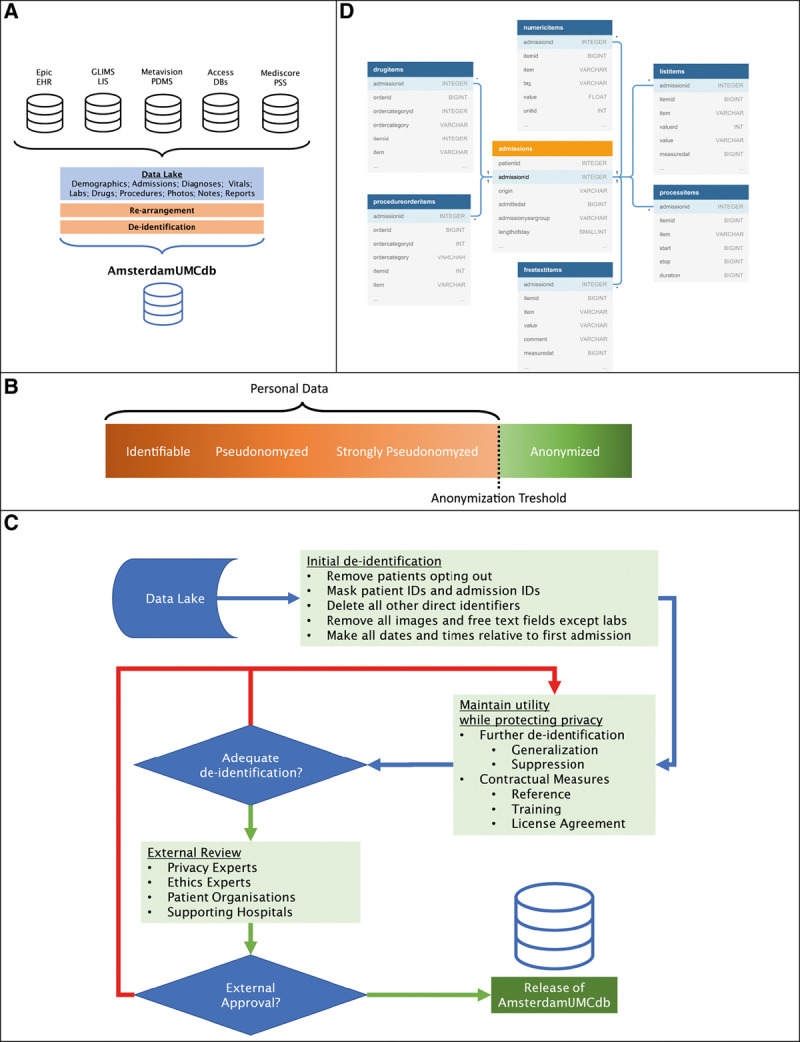
OBJECTIVES: Critical care medicine is a natural environment for machine learning approaches to improve outcomes for critically ill patients as admissions to ICUs generate vast amounts of data. However, technical, legal, ethical, and privacy concerns have so far limited the critical care medicine community from making these data readily available. The Society of Critical Care Medicine and the European Society of Intensive Care Medicine have identified ICU patient data sharing as one of the priorities under their Joint Data Science Collaboration. To encourage ICUs worldwide to share their patient data responsibly, we now describe the development and release of Amsterdam University Medical Centers Database (AmsterdamUMCdb), the first freely available critical care database in full compliance with privacy laws from both the United States and Europe, as an example of the feasibility of sharing complex critical care data. SETTING: University hospital ICU. SUBJECTS: Data from ICU patients admitted between 2003 and 2016. INTERVENTIONS: We used a risk-based deidentification strategy to maintain data utility while preserving privacy. In addition, we implemented contractual and governance processes, and a communication strategy. Patient organizations, supporting hospitals, and experts on ethics and privacy audited these processes and the database. MEASUREMENTS AND MAIN RESULTS: AmsterdamUMCdb contains approximately 1 billion clinical data points from 23,106 admissions of 20,109 patients. The privacy audit concluded that reidentification is not reasonably likely, and AmsterdamUMCdb can therefore be considered as anonymous information, both in the context of the U.S. Health Insurance Portability and Accountability Act and the European General Data Protection Regulation. The ethics audit concluded that responsible data sharing imposes minimal burden, whereas the potential benefit is tremendous. CONCLUSIONS: Technical, legal, ethical, and privacy challenges related to responsible data sharing can be addressed using a multidisciplinary approach. A risk-based deidentification strategy, that complies with both U.S. and European privacy regulations, should be the preferred approach to releasing ICU patient data. This supports the shared Society of Critical Care Medicine and European Society of Intensive Care Medicine vision to improve critical care outcomes through scientific inquiry of vast and combined ICU datasets.
Overview
The claims and statistics of this paper haven’t been checked yet.
Free: it reads the open-access text and checks the first 5 claims that cite a source we can check. Create a free account to check every claim.
Integrity signals
Registry
Cites
Statistics
Figures
Verification
Claims the paper makes
The claims and statistics of this paper haven’t been checked yet.
Free: it reads the open-access text and checks the first 5 claims that cite a source we can check. Create a free account to check every claim.
Claims other papers make about this one
Each is checked against this paper’s own text: does it say what the citing paper says it does?
The source backs part of the claim, not all of it — or backs it for a different population, condition or comparison.
In the citing paper
“Barriers include legal and ethical issues related to privacy protection as well as technical issues related to concept mapping across different-based Intensive Care Unit Data (EHR vendors where similar clinical concepts are represented differently, thus introducing semantic ambiguity [4]).”
From Use of artificial intelligence in critical care: opportunities and obstacles (2024) · cites this paper as [4]
Experimental — accuracy not yet measuredThe cited source says what the claim attributes to it.
In the citing paper
“The AmsterdamUMCdb provides granular information for 23,106 admissions of 20,109 unique individuals admitted to a single academic medical center in the Netherlands5.”
From MIMIC-IV, a freely accessible electronic health record dataset (2023) · cites this paper as [5]
Self-check
Percentages, sums and reported differences re-computed from the paper’s own numbers.
The self-check needs the paper’s full text.
Citations
Cites
MIMIC-III, a freely accessible critical care database
Johnson, A. E. W., Pollard, T. J., Shen, L., Lehman, L.-W. H., Feng, M., Ghassemi, M., Moody, B., Szolovits, P., Anthony Celi, L., & Mark, R. G. (2016) · Scientific Data · doi:10.1038/sdata.2016.35 · Cited by 8,141 · cited 4×
“Third, several EHR vendors, at least in the United States, are actively lobbying against data sharing based on privacy arguments yet are also actively developing revenue streams based on smart analytics (39).”
BackgroundInfluentialRajkomar, A., Dean, J., & Kohane, I. (2019) · New England Journal of Medicine · doi:10.1056/nejmra1814259 · Cited by 4,579 · cited 1×
“The adoption of machine learning is progressing at a revolutionary pace (1), even in the traditionally conservative medical domain (2).”
BackgroundBig Data and Machine Learning in Health Care
Beam, A. L., & Kohane, I. S. (2018) · JAMA · doi:10.1001/jama.2017.18391 · Cited by 2,506 · cited 1×
“The adoption of machine learning is progressing at a revolutionary pace (1), even in the traditionally conservative medical domain (2).”
BackgroundPollard, T. J., Johnson, A. E. W., Raffa, J. D., Celi, L. A., Mark, R. G., & Badawi, O. (2018) · Scientific Data · doi:10.1038/sdata.2018.178 · Cited by 1,993 · cited 4×
“Third, several EHR vendors, at least in the United States, are actively lobbying against data sharing based on privacy arguments yet are also actively developing revenue streams based on smart analytics (39).”
BackgroundInfluentialEstimating the success of re-identifications in incomplete datasets using generative models
Rocher, L., Hendrickx, J. M., & de Montjoye, Y.-A. (2019) · Nature Communications · doi:10.1038/s41467-019-10933-3 · Cited by 816 · cited 1×
“” And indeed, some may argue that no deidentification strategy is able to guarantee zero risk of reidentification and that individual critical care patient data could never be released (23, 32).”
BackgroundModeling Users' Activity on Twitter Networks: Validation of Dunbar's Number
Gonçalves, B., Perra, N., & Vespignani, A. (2011) · PLoS ONE · doi:10.1371/journal.pone.0022656 · Cited by 638 · cited 1×
“For the “friendly researcher,” we used the Dunbar estimate of average number of friends (25), that is, 150, and the prevalence of ICU admissions ( ρ ), that is, 20,109 patients in the database divided by 13.7 million adult inhabitants in the Netherlands (26), to calculate the likelihood of knowing…”
MethodInfluentialA Systematic Review of Re-Identification Attacks on Health Data
El Emam, K., Jonker, E., Arbuckle, L., & Malin, B. (2011) · PLoS ONE · doi:10.1371/journal.pone.0028071 · Cited by 427 · cited 1×
“Nevertheless, although many previously released public databases suffered from incorrect deidentification strategies or were only deidentified by following HIPAA Safe Harbor methods, and thus were not able to withstand reidentification attacks (33), recent evidence suggests that when a dataset is properly deidentified…”
BackgroundHealth Insurance Portability and Accountability Act of 1996. Public Law 104-191.
(1996) · PubMed · Cited by 318
Use of machine learning to analyse routinely collected intensive care unit data: a systematic review
Shillan, D., Sterne, J. A. C., Champneys, A., & Gibbison, B. (2019) · Critical Care · doi:10.1186/s13054-019-2564-9 · Cited by 251 · cited 1×
“As mentioned, currently all freely available critical care datasets come from the United States (9, 10, 42).”
BackgroundAnonymising and sharing individual patient data
El Emam, K., Rodgers, S., & Malin, B. (2015) · BMJ · doi:10.1136/bmj.h1139 · Cited by 216 · cited 2×
“In addition, we set up contractual and governance processes (21, 22).”
Background
Research works printed but not linked: 2
- Mark R. The story of MIMIC. In: Secondary Analysis of Electronic Health Records. MIT Critical Data (Eds). Cham, CH: Springer; 2016 Available at: https://www.ncbi.nlm.nih.gov/books/NBK543630/. Accessed September 22, 2020 31314219
- Ciglic M Eder J Koncilia C. k-Anonymity of microdata with NULL values. In: Database and Expert Systems Applications. Decker H Lhotská L Link S (Eds). DEXA 2014. Lecture Notes in Computer Science. Springer Verlag; 2014, pp 328– 342
Cited by
MIMIC-IV, a freely accessible electronic health record dataset
Johnson, A. E. W., Bulgarelli, L., Shen, L., Gayles, A., Shammout, A., Horng, S., Pollard, T. J., Hao, S., Moody, B., Gow, B., et al. (2023) · Scientific Data · doi:10.1038/s41597-022-01899-x · Cited by 3,401
VitalDB, a high-fidelity multi-parameter vital signs database in surgical patients
Lee, H.-C., Park, Y., Yoon, S. B., Yang, S. M., Park, D., & Jung, C.-W. (2022) · Scientific Data · doi:10.1038/s41597-022-01411-5 · Cited by 263
Use of artificial intelligence in critical care: opportunities and obstacles
Pinsky, M. R., Bedoya, A., Bihorac, A., Celi, L., Churpek, M., Economou-Zavlanos, N. J., Elbers, P., Saria, S., Liu, V., Lyons, P. G., et al. (2024) · Critical Care · doi:10.1186/s13054-024-04860-z · Cited by 160
“Barriers include legal and ethical issues related to privacy protection as well as technical issues related to concept mapping across different-based Intensive Care Unit Data (EHR vendors where similar clinical concepts are represented differently, thus introducing semantic ambiguity [4]).”
BackgroundSelf-citationArtificial Intelligence in Critical Care Medicine
Yoon, J. H., Pinsky, M. R., & Clermont, G. (2022) · Critical Care · doi:10.1186/s13054-022-03915-3 · Cited by 137
“of Intensive Care Medicine (ESICM) Joint Data Science Task Force team has published the process to create a large-scale database from different source databases, including the following steps: (1) using an anonymization threshold, personal data are separated from anonymous data; (2) iterative, risk-based process to de…”
MethodSelf-citationvan de Sande, D., Van Genderen, M. E., Smit, J. M., Huiskens, J., Visser, J. J., Veen, R. E. R., van Unen, E., BA, O. H., Gommers, D., & Bommel, J. V. (2022) · BMJ Health & Care Informatics · doi:10.1136/bmjhci-2021-100495 · Cited by 135
Moor, M., Bennett, N., Plečko, D., Horn, M., Rieck, B., Meinshausen, N., Bühlmann, P., & Borgwardt, K. (2023) · eClinicalMedicine · doi:10.1016/j.eclinm.2023.102124 · Cited by 118
Sauer, C. M., Dam, T. A., Celi, L. A., Faltys, M., de la Hoz, M. A. A., Adhikari, L., Ziesemer, K. A., Girbes, A., Thoral, P. J., & Elbers, P. (2022) · Critical Care Medicine · doi:10.1097/ccm.0000000000005517 · Cited by 104
Self-citationA Survey of Generative Adversarial Networks for Synthesizing Structured Electronic Health Records
Ghosheh, G. O., Li, J., & Zhu, T. (2024) · ACM Computing Surveys · doi:10.1145/3636424 · Cited by 95
“Similarly, another European ICU data is the Amsterdam University Medical Centers Database (AmsterdamUMCdb), which was released in 2021 [171].”
BackgroundA guide to sharing open healthcare data under the General Data Protection Regulation
de Kok, J. W. T. M., de la Hoz, M. Á. A., de Jong, Y., Brokke, V., Elbers, P. W. G., Thoral, P., Castillejo, A., Trenor, T., Castellano, J. M., Bronchalo, A. E., et al. (2023) · Scientific Data · doi:10.1038/s41597-023-02256-2 · Cited by 89
Self-citationGlobal healthcare fairness: We should be sharing more, not less, data
Seastedt, K. P., Schwab, P., O’Brien, Z., Wakida, E. K., Herrera, K. V., Marcelo, P. G., Agha-Mir-Salim, L., Borrat, X., Ndulue, E. B., Marcelo, A., et al. (2022) · PLOS Digital Health · doi:10.1371/journal.pdig.0000102 · Cited by 120
Federated Learning for Electronic Health Records
Dang, T. K., Lan, X., Weng, J., & Feng, M. (2022) · ACM Transactions on Intelligent Systems and Technology · doi:10.1145/3514500 · Cited by 85
The impact of commercial health datasets on medical research and health-care algorithms
Alberto, I. R. I., Alberto, N. R. I., Ghosh, A. K., Jain, B., Jayakumar, S., Martinez-Martin, N., McCague, N., Moukheiber, D., Moukheiber, L., Moukheiber, M., et al. (2023) · The Lancet Digital Health · doi:10.1016/s2589-7500(23)00025-0 · Cited by 86
“Other open-access databases have emerged worldwide, including the AmsterdamUMCdb, 53 the eICU-CRD, 54 and the High Time-Resolution Intensive Care Unit Dataset.”
MethodXie, F., Zhou, J. R., Lee, J. W., Tan, M., Li, S., Rajnthern, L. S. O., Chee, M. L., Chakraborty, B., Wong, A.-K. I., Dagan, A. S., et al. (2022) · Scientific Data · doi:10.1038/s41597-022-01782-9 · Cited by 135
“Based on a few large-scale EHR databases, such as Medical Information Mart for Intensive Care III (MIMIC-III) 13 , eICU Collaborative Research Database 14 , and Amsterdam University Medical Centers Database (AmsterdamUMCdb) 15 , several benchmarks have been established 16-18 .”
A scoping review of the governance of federated learning in healthcare
Eden, R., Chukwudi, I., Bain, C., Barbieri, S., Callaway, L. K., de Jersey, S., George, Y., Gorse, A., Lawley, M., Marendy, P., et al. (2025) · npj Digital Medicine · doi:10.1038/s41746-025-01836-3 · Cited by 115
“Italsoraisesquestionsregardingwhatthe secondary use of data entails and its potential for harm, including discrimination,stigmatisation,andunethicalbehaviour 18 – 20 .”
Rockenschaub, P., Hilbert, A., Kossen, T., Elbers, P., von Dincklage, F., Madai, V. I., & Frey, D. (2024) · Critical Care Medicine · doi:10.1097/ccm.0000000000006359 · Cited by 73
Self-citationArtificial intelligence in critical illness and its impact on patient care: a comprehensive review
Saqib, M., Iftikhar, M., Neha, F., Karishma, F., & Mumtaz, H. (2023) · Frontiers in Medicine · doi:10.3389/fmed.2023.1176192 · Cited by 63
Zhang, G., Shao, F., Wei, Y., Wu, J., Qi, X., Gao, J., Shao, R., Tang, Z., & Wang, T. (2024) · European journal of medical research · doi:10.1186/s40001-024-01756-0 · Cited by 79
“The AmsterdamUMCdb contains approximately 1 billion clinical data points from 23,106 admissions of 20,109 patients [26].”
BackgroundLiu, X., Hu, P., Yeung, W. L. K., Zhang, Z., Ho, V., Liu, C., DuMontier, C., Thoral, P., Mao, Z., Cao, D., et al. (2023) · The Lancet Digital Health · doi:10.1016/s2589-7500(23)00128-0 · Cited by 75
Self-citationExternal validation of AI-based scoring systems in the ICU: a systematic review and meta-analysis
Rockenschaub, P., Akay, E. M., Carlisle, B. G., Hilbert, A., Wendland, J., Meyer-Eschenbach, F., Näher, A.-F., Frey, D., & Madai, V. I. (2025) · BMC Medical Informatics and Decision Making · doi:10.1186/s12911-024-02830-7 · Cited by 58
“AUMCdb [37] and HiRID [15] — two further, more recent public ICU databases — were only used in 7 / 85 (8.2”
InfluentialLiu, P., Li, S., Zheng, T., Wu, J., Fan, Y., Liu, X., Gong, W., Xie, H., Liu, J., Li, Y., et al. (2023) · EClinicalMedicine · doi:10.1016/j.eclinm.2023.101970 · Cited by 50
The application of artificial intelligence in the management of sepsis
Yang, J., Hao, S., Huang, J., Chen, T., Liu, R., Zhang, P., Feng, M., He, Y., Xiao, W., Hong, Y., et al. (2023) · Medical Review · doi:10.1515/mr-2023-0039 · Cited by 54
“We have conducted a concise overview of the online databases related to sepsis that are accessible, such as MIMIC-IV [54], eICU [55], AmsterdamUMCdb [56], HiRID [57], PIC [58], Zhejiang Province ICU [59] and INSPIRE [60],with the aim of assisting readers in furthering their research endeavors…”
Wang, Z., Zhang, L., Huang, T., Yang, R., Cheng, H., Wang, H., Yin, H., & Lyu, J. (2022) · Heart & Lung · doi:10.1016/j.hrtlng.2022.11.005 · Cited by 50
Fleuren, L. M., Dam, T. A., Tonutti, M., de Bruin, D. P., Lalisang, R. C. A., Gommers, D. A. M. P. J., Cremer, O. L., Bosman, R. J., Rigter, S., Wils, E., et al. (2021) · Critical Care · doi:10.1186/s13054-021-03733-z · Cited by 50
“Moreover, several individual hospitals have extracted these EHR data and converted them into critical care datasets available for research, including the Medical Information Mart for Intensive Care (MIMIC) [4], AmsterdamUMCdb [5], and HiRID [6].”
MethodSelf-citationThe Salzburg Intensive Care database (SICdb): an openly available critical care dataset
Rodemund, N., Wernly, B., Jung, C., Cozowicz, C., & Koköfer, A. (2023) · Intensive Care Medicine · doi:10.1007/s00134-023-07046-3 · Cited by 57
The obesity paradox and hypoglycemia in critically ill patients
Plečko, D., Bennett, N., Mårtensson, J., & Bellomo, R. (2021) · Critical Care · doi:10.1186/s13054-021-03795-z · Cited by 42
“The AUMC Database is available through the website of Amsterdam Medical Data Science [30].”
MethodInfluentialLee, S. M., Lee, G., Kim, T. K., Le, T. T., Hao, J., Jung, Y. M., Park, C., Park, J. S., Jun, J. K., Lee, H., et al. (2022) · JAMA Network Open · doi:10.1001/jamanetworkopen.2022.46637 · Cited by 47
Estimating treatment effects for time-to-treatment antibiotic stewardship in sepsis
Liu, R., Hunold, K. M., Caterino, J. M., & Zhang, P. (2023) · Nature Machine Intelligence · doi:10.1038/s42256-023-00638-0 · Cited by 45
Artificial intelligence to advance acute and intensive care medicine
Biesheuvel, L. A., Dongelmans, D. A., & Elbers, P. (2024) · Current Opinion in Critical Care · doi:10.1097/mcc.0000000000001150 · Cited by 56
Self-citationAlfieri, F., Ancona, A., Tripepi, G. L., Rubeis, A., Arjoldi, N., Finazzi, S., Cauda, V., & Fagugli, R. M. (2023) · PLoS ONE · doi:10.1371/journal.pone.0287398 · Cited by 39
Non-imaging Medical Data Synthesis for Trustworthy AI: A Comprehensive Survey
Xing, X., Wu, H., Wang, L., Stenson, I., Yong, M., Ser, J. D., Walsh, S. L. F., & Yang, G. (2024) · ACM Computing Surveys · doi:10.1145/3614425 · Cited by 53
“Amsterdam UMCdb [138] 20,109 Medical signals and sequential EHR Patient monitor and life support device data, laboratory measurements, clinical observation and scores, medical procedures and tasks, medication, luid balance, diagnosis groups and clinical patient outcomes Not speciied”
MethodAccess control solutions in electronic health record systems: A systematic review
Cobrado, U. N., Sharief, S., Regahal, N. G., Zepka, E., Mamauag, M. B., & Velasco, L. C. (2024) · Informatics in Medicine Unlocked · doi:10.1016/j.imu.2024.101552 · Cited by 50
Do Thresholds for Invasive Ventilation in Hypoxemic Respiratory Failure Exist? A Cohort Study
Yarnell, C. J., Johnson, A. E. W., Dam, T. A., Jonkman, A. H., Liu, K., Wunsch, H., Brochard, L. J., Celi, L. A., de Grooth, H., Elbers, P., et al. (2022) · American Journal of Respiratory and Critical Care Medicine · doi:10.1164/rccm.202206-1092oc · Cited by 37
Self-citationThoral, P. J., Fornasa, M., de Bruin, D. P., Tonutti, M., Hovenkamp, H., Driessen, R. H., Girbes, A. R. J., Hoogendoorn, M., & Elbers, P. W. G. (2021) · Critical Care Explorations · doi:10.1097/cce.0000000000000529 · Cited by 34
Self-citationChandra, J., de la Hoz, M. Á. A., Lee, G., Lee, A., Thoral, P., Elbers, P., Lee, H., Munger, J. S., Celi, L. A., & Kaufman, D. A. (2022) · Critical Care · doi:10.1186/s13054-022-03968-4 · Cited by 38
Self-citationRICD: Russian Intensive Care Dataset
Grechko, A. V., Yadgarov, M. Y., Yakovlev, A. А., Бондоевич, Б. Л., Kuzovlev, A. N., Polyakov, P. A., Kuznetsov, I. V., & Likhvantsev, V. V. (2024) · General Reanimatology · doi:10.15360/1813-9779-2024-3-22-31 · Cited by 36
Verhaeghe, J., Corte, T. D., Sauer, C. M., Hendriks, T., Thijssens, O., Ongenae, F., Elbers, P., Waele, J. J. D., & Hoecke, S. V. (2023) · International Journal of Medical Informatics · doi:10.1016/j.ijmedinf.2023.105086 · Cited by 34
Self-citationde Vos, J., Visser, L. A., de Beer, A. A., Fornasa, M., Thoral, P. J., Elbers, P. W. G., & Cinà, G. (2022) · Value in Health · doi:10.1016/j.jval.2021.06.018 · Cited by 28
Self-citationCritical Care Database Comprising Patients With Infection
Xu, P., Chen, L., Zhu, Y., Yu, S., Chen, R., Huang, W., Wu, F., & Zhang, Z. (2022) · Frontiers in Public Health · doi:10.3389/fpubh.2022.852410 · Cited by 40
The barriers to uptake of artificial intelligence in hepatology and how to overcome them
Clusmann, J., Balaguer‐Montero, M., Bassegoda, O., Schneider, C. V., Seraphin, T. P., Paintsil, E. K., Luedde, T., Pérez-López, R., Caldéraro, J., Gilbert, S., et al. (2025) · Journal of Hepatology · doi:10.1016/j.jhep.2025.07.003 · Cited by 34
RetractedSarkar, I. N. (2022) · Yearbook of Medical Informatics · doi:10.1055/s-0042-1742519 · Cited by 39
Machine learning for predicting successful extubation in patients receiving mechanical ventilation
Igarashi, Y., Ogawa, K., Nishimura, K., Osawa, S., Ohwada, H., & Yokobori, S. (2022) · Frontiers in Medicine · doi:10.3389/fmed.2022.961252 · Cited by 34
“ICU datasets are freely available [Amsterdam UMCdb (36), eICUCRD (37), HiRID (38), and MIMIC-IV (25)]; it is possible to perform external validation using these datasets.”
Zhang, Z., Chen, L., Liu, X., Yang, J., Huang, J., Yang, Q., Hu, Q., Jin, K., Celi, L. A., & Hong, Y. (2023) · Intensive Care Medicine · doi:10.1007/s00134-023-07226-1 · Cited by 31
“The Amsterdam database contained clinical data from 3019 sepsis patients admitted between 2003 and 2016 [12].”
MethodBologheanu, R., Kapral, L., Laxar, D., Maleczek, M., Dibiasi, C., Zeiner, S., Agibetov, A., Ercole, A., Thoral, P., Elbers, P., et al. (2023) · Journal of Clinical Medicine · doi:10.3390/jcm12041513 · Cited by 35
“The ethical approvals for the AmsterdamUMCdb have been previously described [17].”
BackgroundMethodSelf-citationA common longitudinal intensive care unit data format (CLIF) for critical illness research
Rojas, J. C., Lyons, P. G., Chhikara, K., Chaudhari, V., Bhavani, S. V., Nour, M., Buell, K. G., Smith, K. D., Gao, C. A., Amagai, S., et al. (2025) · Intensive Care Medicine · doi:10.1007/s00134-025-07848-7 · Cited by 40
Machine Learning as a Novel Method to Support Therapeutic Drug Management and Precision Dosing
van Gelder, T., & Vinks, A. A. T. M. M. (2021) · Clinical Pharmacology & Therapeutics · doi:10.1002/cpt.2326 · Cited by 25
“Machine learning is now being introduced in medicine, with the idea that the vast multidimensional clinical data and experiences documented in electronic health records can assist in the care of future patients.(1) The ability of a machine learning model to find statistical patterns across millions of features and exa…”
Backgroundricu: R’s interface to intensive care data
Bennett, N., Plečko, D., Ukor, I.-F., Meinshausen, N., & Bühlmann, P. (2022) · GigaScience · doi:10.1093/gigascience/giad041 · Cited by 42
“…], containing data collected from 208 hospitals across the United States; HiRID [ 15 ] from the Department of Intensive Care Medicine of the Bern University Hospital, Switzerland; AmsterdamUMCdb [ 16 ] from the Amsterdam University Medical Center; and MIMIC-IV [ 17 ], again using data fr om BIDMC.”
Harnessing Big Data in Critical Care: Exploring a new European Dataset
Rodemund, N., Wernly, B., Jung, C., Cozowicz, C., & Koköfer, A. (2024) · Scientific Data · doi:10.1038/s41597-024-03164-9 · Cited by 33
“Elements that may be important for research (e.g.: age, sex and weight) have been grouped into bins of 5, with ages over 90 placed in a final bin to increase k-means anonymity 14 .”
BackgroundRitoré, Á., Jiménez, C. M., González-Caballero, J. L., Rejón-Parrilla, J. C., Hervás, P., Toro, E., Parra-Calderón, C. L., Celi, L. A., Túnez, I., & de la Hoz, M. Á. A. (2024) · PLOS Digital Health · doi:10.1371/journal.pdig.0000599 · Cited by 27
“…University Hospital Consortium (Amsterdam UMC) as the first open-access intensive care database within the EU containing deidentified health data related to tens of thousands of admissions to European ICUs, including demographic information, vital signs, laboratory tests, and medications [28].”
BackgroundLifting Hospital Electronic Health Record Data Treasures: Challenges and Opportunities
Maletzky, A., Böck, C., Tschoellitsch, T., Roland, T., Ludwig, H., Thumfart, S., Giretzlehner, M., Hochreiter, S., & Meier, J. M. (2022) · JMIR Medical Informatics · doi:10.2196/38557 · Cited by 31
Out-of-Distribution Detection for Medical Applications: Guidelines for Practical Evaluation
Zadorozhny, K., Thoral, P., Elbers, P., & Cinà, G. (2022) · Studies in computational intelligence · doi:10.1007/978-3-031-14771-5_10 · Cited by 36
Self-citationAlfieri, F., Ancona, A., Tripepi, G. L., Randazzo, V., Paviglianiti, A., Pasero, E. G. A., Vecchi, L., Politi, C., Cauda, V., & Fagugli, R. M. (2022) · Journal of Nephrology · doi:10.1007/s40620-022-01335-8 · Cited by 25
“The “AmsterdamUMC database” contains data concerning 23'106 admissions to the ICU of the University of Amsterdam observed and recorded between 2003 and 2016 [5].”
MethodInfluentialBass, G. A., Kaplan, L. J., Ryan, É. J., Cao, Y., Lane-Fall, M. B., Duffy, C. C., Vail, E. A., & Mohseni, S. (2022) · European Journal of Trauma and Emergency Surgery · doi:10.1007/s00068-022-02045-3 · Cited by 29
“Local Institutional Review Board concerns around data security and data de-identification are often the first hurdle auditors must clear prior to launching a snapshot audit [35].”
Self-citationPalmowski, L., Nowak, H., Witowski, A., Koos, B., Wolf, A., Weber, M., Kleefisch, D., Unterberg, M., Haberl, H., von Busch, A., et al. (2024) · PLoS ONE · doi:10.1371/journal.pone.0300739 · Cited by 25
Self-citationVitalDB: fostering collaboration in anaesthesia research
Vistisen, S. T., Pollard, T., Enevoldsen, J., & Scheeren, T. (2021) · British Journal of Anaesthesia · doi:10.1016/j.bja.2021.03.011 · Cited by 26
Pappada, S. M., Owais, M. H., Feeney, J. J., Salinas, J., Chaney, B., Duggan, J. M., Sparkle, T., Aouthmany, S., Hinch, B. T., & Papadimos, T. J. (2024) · Anaesthesia Critical Care & Pain Medicine · doi:10.1016/j.accpm.2024.101430 · Cited by 14
Yarnell, C. J., Angriman, F., Ferreyro, B. L., Liu, K., de Grooth, H., Burry, L. D., Munshi, L., Mehta, S., Celi, L. A., Elbers, P., et al. (2023) · Critical Care · doi:10.1186/s13054-023-04307-x · Cited by 24
“The study incorporated two deidentified patient-level databases of intensive care unit admissions: Medical Information Mart for Intensive Care IV (MIMIC-IV) [27, 29] and the Amsterdam University Medical Centers database (AmsterdamUMCdb) [30, 31].”
MethodSelf-citationIs artificial intelligence prepared for the 24-h shifts in the ICU?
Gonzalez, F. A., Santonocito, C., Lamas, T., Costa, P., Vieira, S. M., Ferreira, H. A., & Sanfilippo, F. (2024) · Anaesthesia Critical Care & Pain Medicine · doi:10.1016/j.accpm.2024.101431 · Cited by 14
Clunie, D., Flanders, A. E., Taylor, A. J., Erickson, B., Bialecki, B., Brundage, D., Gutman, D. A., Prior, F., Seibert, J. A., Perry, J. H., et al. (2023) · PubMed Central · doi:10.48550/arxiv.2303.10473 · Cited by 38
Artificial Intelligence in Critical Care Medicine
Yoon, J. H., Pinsky, M. R., & Clermont, G. (2022) · Annual update in intensive care and emergency medicine · doi:10.1007/978-3-030-93433-0_27 · Cited by 23
Self-citationLow lymphocyte to high-density lipoprotein ratio predicts mortality in sepsis patients
Liu, W., Tao, Q., Xiao, J., Du, Y., Pan, T., Wang, Y., & Zhong, X. (2023) · Frontiers in Immunology · doi:10.3389/fimmu.2023.1279291 · Cited by 22
Open datasets in perioperative medicine: a narrative review
Lim, L., & Lee, H. (2023) · Anesthesia and Pain Medicine · doi:10.17085/apm.23076 · Cited by 21
Liang, Q., Xu, Y., Zhou, Y., Chen, X., Chen, J., & Huang, M. (2022) · BMJ Open · doi:10.1136/bmjopen-2021-054092 · Cited by 20
Reep, C. A. T., Wils, E., & Heunks, L. M. A. (2025) · Critical Care · doi:10.1186/s13054-025-05723-x · Cited by 19
“With the growing availability and accessibility of observational ICU-based databases [6–12], many studies strive to draw causal conclusions from these non-randomized sources.”
Ortega‐Martorell, S., Pieroni, M., Johnston, B. W., Olier, I., & Welters, I. D. (2022) · Frontiers in Cardiovascular Medicine · doi:10.3389/fcvm.2022.897709 · Cited by 20
MC-MED, multimodal clinical monitoring in the emergency department
Kansal, A., Chen, E., Jin, B. T., Rajpurkar, P., & Kim, D. A. (2025) · Scientific Data · doi:10.1038/s41597-025-05419-5 · Cited by 40
Otten, M., Jagesar, A. R., Dam, T. A., Biesheuvel, L. A., den Hengst, F., Ziesemer, K. A., Thoral, P., de Grooth, H., Girbes, A. R. J., François-Lavet, V., et al. (2023) · Critical Care Medicine · doi:10.1097/ccm.0000000000006100 · Cited by 23
Self-citationKe, Y., Yang, R., & Liu, N. (2024) · Journal of Medical Internet Research · doi:10.2196/48330 · Cited by 22
“These include (1) MIMIC [19], (2) eICU-CRD [20], (3) Amsterdam University Medical Centers Database (AmsterdamUMCdb) [33], (4) High Time Resolution ICU Dataset (HiRID) [34], and (5) Pediatric Intensive Care database [35].”
van Ruijven, I. M., Stapel, S. N., Girbes, A. R. J., & Weijs, P. J. M. (2022) · European Journal of Clinical Nutrition · doi:10.1038/s41430-022-01103-8 · Cited by 15
Self-citationJin, S., Chen, L., Chen, K., Hu, C., Hu, S., & Zhang, Z. (2023) · Scientific Data · doi:10.1038/s41597-023-01952-3 · Cited by 19
Xiao, W., Liu, W., Zhang, J., Huang, L., Liu, Y., Hu, J., Hua, T., & Yang, M. (2023) · The American Journal of Emergency Medicine · doi:10.1016/j.ajem.2023.09.043 · Cited by 14
Liu, X., DuMontier, C., Hu, P., Liu, C., Yeung, W., Mao, Z., Ho, V., Thoral, P. J., Kuo, P.-C., Hu, J., et al. (2023) · The Journals of Gerontology: Series A · doi:10.1093/gerona/glac107 · Cited by 14
Self-citationSharing is caring: A systematic review of publicly available intensive care data sets
Jagesar, A. R., Dam, T. A., Struja, T., Sauer, C. M., Otten, M., Biesheuvel, L. A., Girbes, A. R. J., Adhikari, L., Zhang, Z., Faltys, M., et al. (2025) · Journal of Critical Care · doi:10.1016/j.jcrc.2025.155205 · Cited by 15
Self-citationGuideline-informed reinforcement learning for mechanical ventilation in critical care
den Hengst, F., Otten, M., Elbers, P., van Harmelen, F., François-Lavet, V., & Hoogendoorn, M. (2023) · Artificial Intelligence in Medicine · doi:10.1016/j.artmed.2023.102742 · Cited by 21
Self-citationA Scoping Review on Analysis of the Barriers and Support Factors of Open Data
Lichtenauer, N., Schmidbauer, L., Wilhelm, S., & Wahl, F. (2023) · Information · doi:10.3390/info15010005 · Cited by 17
Advances in critical care nephrology through artificial intelligence
Cheungpasitporn, W., Thongprayoon, C., & KASHANI, K. B. (2024) · Current Opinion in Critical Care · doi:10.1097/mcc.0000000000001202 · Cited by 18
Hernandez, B., Ming, D. K. Y., Rawson, T. M., Bolton, W., Wilson, R. C., Vasikasin, V., Daniels, J., Rodríguez-Manzano, J., Davies, F., Georgiou, P., et al. (2024) · Artificial Intelligence in Medicine · doi:10.1016/j.artmed.2024.103008 · Cited by 23
Alkhalifah, A. S., Rumindo, G. K., Brincat, E., Blanchard, F., Helleberg, J., Clarke, D., Popoff, B., Duranteau, O., Mohamed, Z. U., & Senosy, A. (2025) · PLoS ONE · doi:10.1371/journal.pone.0318018 · Cited by 14
Palmowski, L., Westhus, B., Witowski, A., Nowak, H., Traut, I., Canbay, A. E., Schnitzbauer, A. A., Elbers, P., Adamzik, M., Katsounas, A., et al. (2025) · EClinicalMedicine · doi:10.1016/j.eclinm.2025.103173 · Cited by 15
Self-citationTable 0; documenting the steps to go from clinical database to research dataset
de Kok, J. W. T. M., van Bussel, B. C. T., Schnabel, R. M., van Herpt, T. T. W., Driessen, R., Meijs, D. A. M., Goossens, J. A., Mertens, H. J. M. M., van Kuijk, S. M. J., Wynants, L., et al. (2024) · Journal of Clinical Epidemiology · doi:10.1016/j.jclinepi.2024.111342 · Cited by 15
Self-citationHarnessing AI in critical care: opportunities, challenges and key steps for success
Kalimouttou, A., Stevens, R. D., & Pirracchio, R. (2026) · Thorax · doi:10.1136/thorax-2024-222125 · Cited by 12
“Despite efforts to enhance data quality 38 and interoperability in ICU research, no universally adopted data model, such as OMOP (Observational Medical Outcomes Partnership), has emerged.”
Deriving consensus sepsis clusters via goal-directed subgroup identification in multi-omics study
Zhang, Z., Chen, L., Shen, H., Wang, J., Yang, J., Yang, S., Zhang, W., Jiang, X., Wu, X., Meng, X., et al. (2025) · Nature Communications · doi:10.1038/s41467-025-65271-4 · Cited by 20
Self-citationFong, N., Langnas, E. M., Law, T. J., Reddy, M. P., Lipnick, M. S., & Pirracchio, R. (2023) · Anaesthesia Critical Care & Pain Medicine · doi:10.1016/j.accpm.2023.101248 · Cited by 15
Sadeghi, S., Hempel, L., Rodemund, N., & Kirsten, T. (2024) · Scientific Reports · doi:10.1038/s41598-024-61380-0 · Cited by 15
“These include the U.S. multicenter ICU database, namely the eICU Collaborative Research Database (eICU-CRD), and two European single-center ICU databases; the Amsterdam University Medical Center data-base (AUMCdb), and the High Time Resolution ICU Dataset (HiRID) 25–27 .”
MethodZappalá, S., Alfieri, F., Ancona, A., Taccone, F. S., Maviglia, R., Cauda, V., Finazzi, S., & Dell’Anna, A. M. (2024) · Critical Care · doi:10.1186/s13054-024-04954-8 · Cited by 15
Modern Learning from Big Data in Critical Care: Primum Non Nocere
Gravesteijn, B. Y., Steyerberg, E. W., & Lingsma, H. F. (2022) · Neurocritical Care · doi:10.1007/s12028-022-01510-6 · Cited by 14
Yulianto, P., & Awaludin, S. (2024) · Journal of Holistic Nursing Science · doi:10.31603/nursing.v11i1.10155 · Cited by 14
Contribution of Open Access Databases to Intensive Care Medicine Research: Scoping Review
Kallout, J., Lamer, A., Grosjean, J., Kerdelhué, G., Bouzillé, G., Clavier, T., & Popoff, B. (2025) · Journal of Medical Internet Research · doi:10.2196/57263 · Cited by 14
Leveraging the power of routinely collected ICU data
Lijović, L., & Elbers, P. (2025) · Intensive Care Medicine · doi:10.1007/s00134-024-07745-5 · Cited by 10
“With the notable exception of some freely available ICU datasets—such as MIMIC from the USA and its European counterparts AmsterdamUMCdb, HiRID and SICdb—ICU data sharing currently remains scarce [1, 5–7].”
Self-citationChinese experts’ consensus on the application of intensive care big data
Su, L., Liu, S., Long, Y., Chen, C., Chen, K., Chen, M., Chen, Y., Cheng, Y., Cui, Y., Ding, Q., et al. (2024) · Frontiers in Medicine · doi:10.3389/fmed.2023.1174429 · Cited by 11
Nazar, W., Nazar, G., Kamińska, A., & Daniłowicz‐Szymanowicz, L. (2025) · Journal of Medical Internet Research · doi:10.2196/70481 · Cited by 20
Albu, E., Gao, S., Stijnen, P., Rademakers, F. E., van Bussel, B. C. T., Collyer, T. A., Hernandez‐Boussard, T., Wynants, L., & CALSTER, B. V. (2025) · Journal of Medical Internet Research · doi:10.2196/73987 · Cited by 19
A New Interactive Tool to Visualize and Analyze COVID-19 Data: The PERISCOPE Atlas
Pala, D., Parimbelli, E., Larizza, C., Cheng, C. I.-F., Ottaviano, M., Pogliaghi, A., Đukić, G., Jovanović, A., Milicevic, O. S., Urošević, V., et al. (2022) · International Journal of Environmental Research and Public Health · doi:10.3390/ijerph19159136 · Cited by 11
“The European Centre for Disease Control and Prevention (ECDC) is an agency that is part of the European Union, created to improve Europe’s defenses against infectious diseases [9].”
BackgroundInfluentialIntroducing the BlendedICU dataset, the first harmonized, international intensive care dataset
Oliver, M., Allyn, J., Carencotte, R., Allou, N., & Ferdynus, C. (2023) · Journal of Biomedical Informatics · doi:10.1016/j.jbi.2023.104502 · Cited by 21
Jin, C., Hao, R., Ren, X., & Shen, J. (2025) · European journal of medical research · doi:10.1186/s40001-025-02903-x · Cited by 10
Topaloğlu, D., & Polat, O. (2025) · BMC Medical Informatics and Decision Making · doi:10.1186/s12911-025-03132-2 · Cited by 11
“Other datasets like MIMIC-II [17], Amsterdam UMCdb [18] and HiRID [19] were notable but less frequent (Fig.”
Magnesium Supplementation and Tachyarrhythmias: A Nonrandomized Clinical Trial
Goulden, R., Abrahamowicz, M., Strumpf, E., & Tamblyn, R. M. (2025) · JAMA Internal Medicine · doi:10.1001/jamainternmed.2025.6572 · Cited by 13
de Andrade, J. B. C., Cavalcante, M. A. O. D. M., Lopes, T. L. M., Treigher, J. M. S., Balsells, M. D., Vasconcelos, J. L., Monteiro, L. C., & MOTA, D. D. D. S. (2026) · Critical Care · doi:10.1186/s13054-025-05677-0 · Cited by 16
Kervezee, L., Dashti, H. S., Pilz, L. K., Skarke, C., & Ruben, M. D. (2024) · PLOS Digital Health · doi:10.1371/journal.pdig.0000511 · Cited by 12
“Notable examples of open-access databases in the intensive care domain are the MIMIC-IV database [27], the eICU [28], the HiRID database [29], and the AmsterdamUMCdb [30].”
BackgroundMethodAn optimal antibiotic selection framework for Sepsis patients using Artificial Intelligence
Wendland, P., Schenkel-Häger, C., Wenningmann, I., & Kschischo, M. (2024) · npj Digital Medicine · doi:10.1038/s41746-024-01350-y · Cited by 12
“Toaddressthis,wetestedOptAB,trainedonMIMIC-IV,on the AmsterdamUMCdb dataset 36 , which includes 6285 sepsis patients (364 treated with Ceftriaxone, 35 with Vancomycin, and none with Piperacillin/ Tazobactam).”
InfluentialSheikhalishahi, S., Goss, S., Seidlmayer, L. K., Zaghdoudi, S., Hinske, L. C., & Kaspar, M. (2024) · BMC Medical Informatics and Decision Making · doi:10.1186/s12911-024-02800-z · Cited by 9
“…data, data from patient monitors and life support devices (captured at a frequency of up to one measurement per minute), laboratory measurements, clinical observations and scores, medical procedures, medical tasks, medications, fluid balance, diagnosis groups, and clinical outcomes [18].”
Metadata
- Authors
- Thoral, P. J., Peppink, J. M., Driessen, R. H., Sijbrands, E. J. G., Kompanje, E. J. O., Kaplan, L., Bailey, H., Kesecioglu, J., Cecconi, M., Churpek, M., Clermont, G., van der Schaar, M., Ercole, A., Girbes, A. R. J., & Elbers, P. W. G.
- Affiliations
- Amsterdam University Medical Centers (NL)
- Erasmus MC (NL)
- Society of Critical Care Medicine (US)
- Department of Intensive Care Medicine, University Medical Center Utrecht, Utrecht University, Utrecht, The Netherlands.
- Humanitas University (IT)
- University of Wisconsin–Madison (US)
- University of Pittsburgh (US)
- University of Cambridge, Cambridge, United Kingdom.
- University of Cambridge (GB)
- European Society of Intensive Care Medicine (BE)
- Corresponding author
- Thoral, Patrick J.
- ORCID
- Venue
- Critical Care Medicine
- Published
- 2021-02-24
- Volume
- 49
- Issue
- 6
- Pages
- e563-e577
- ISSN
- 0090-3493 (ISSN-L)
- PMC
- PMC8132908
- OpenAlex
- W3131505924
- Semantic Scholar
- ee16a5a270df2067827c1e25174894386e124bad
- Cited by
- 257
- References
- 30
- Citations by year
- 2026: 46 · 2025: 60 · 2024: 55 · 2023: 45 · 2022: 33 · 2021: 18
- FWCI
- 13.34
- Type
- journal article
- Language
- en
- Open access
- hybrid
- doi.org
- Licence
- Locations
- Critical Care Medicine (publishedVersion, cc-by-nc-nd)
- PubMed Central (publishedVersion, cc-by-nc-nd)
- PubMed (publishedVersion)
- Pure Amsterdam UMC (publishedVersion, cc-by)
- EUR Research Repository (Erasmus University Rotterdam) (publishedVersion, cc-by)
- EUR Research Repository (Erasmus University Rotterdam) (submittedVersion, cc-by)
- Utrecht University Repository (Utrecht University) (submittedVersion, other-oa)
- Amsterdam UMC (VU Amsterdam) - Institutional Repository (submittedVersion, other-oa)
- Apollo (University of Cambridge) (submittedVersion, cc-by-nc-nd)
- Data Archiving and Networked Services (DANS) (submittedVersion, cc-by-nc-nd)
- Apollo
- Funders
- National Science Foundation
- U.S. Department of Defense
- Amgen
- Edwards Lifesciences
- University of Chicago
- National Institutes of Health
- National Institute of General Medical Sciences (R01GM123193)
- Topics
- Physical Sciences › Computer Science › Artificial Intelligence › Privacy-Preserving Technologies in Data
- Health Sciences › Health Professions › Health Information Management › Electronic Health Records Systems
- Health Sciences › Medicine › Public Health, Environmental and Occupational Health › Ethics in Clinical Research
- Keywords
- data anonymization, privacy compliance, HIPAA, General Data Protection Regulation, data governance, ethics audit, re-identification risk, Society of Critical Care Medicine
- MeSH terms
- Confidentiality, Hospitals, University, Humans, Intensive Care Units, Netherlands, Societies, Medical, United States, Databases, Factual, Health Insurance Portability and Accountability Act, Health Information Exchange
About these checks
Registry, retraction, Cites and statistics results are computed, not judged, with one exception: a printed reference that no index lists is read once by a model before it counts as a citation error. Claims are extracted by a model and kept only when their quote appears verbatim in the text; each cited source is then checked, with a model’s help, for whether it says what the claim relies on. Those verdicts can be wrong — read the claim’s quote and the cited source before relying on one.
Statistics and arithmetic are recomputed, not judged.
Confidence bands are shown only for fields calibrated on our annotated test set. None is calibrated yet, so no band is shown.
What counts as a claim ›How we measure confidence ›How we check this ›
Are you an author, or do you see a problem with this page? Request a review
Data sources
Bibliographic data: Semantic Scholar, OpenAlex, Crossref.
Contains information from the Semantic Scholar Academic Graph Datasets, made available under the ODC Attribution License (ODC-BY 1.0).
Semantic Scholar’s data is described in: Kinney, R., et al. (2023). The Semantic Scholar Open Data Platform. arXiv:2301.10140.
