

Sharing ICU Patient Data Responsibly Under the Society of Critical Care Medicine/European Society of Intensive Care Medicine Joint Data Science Collaboration: The Amsterdam University Medical Centers Database (AmsterdamUMCdb) Example*
Open accessThe DOI matches its Crossref record; 31 of the 31 references it cites were found in a registry or an index.
Abstract
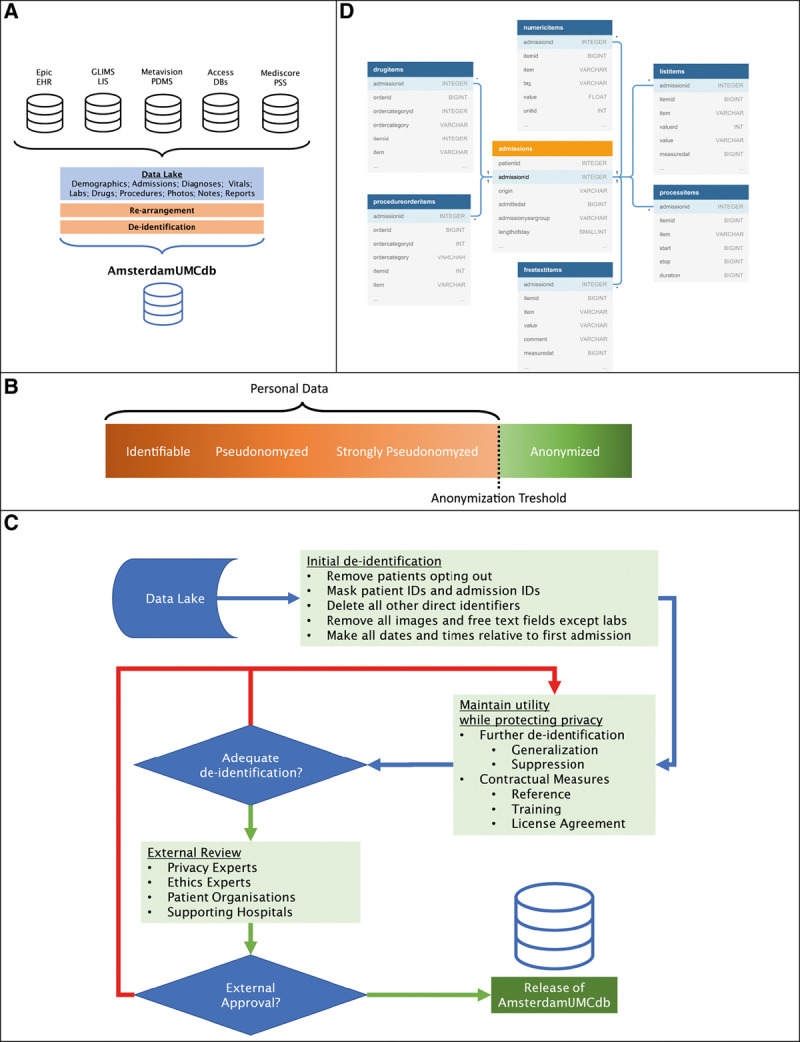
OBJECTIVES: Critical care medicine is a natural environment for machine learning approaches to improve outcomes for critically ill patients as admissions to ICUs generate vast amounts of data. However, technical, legal, ethical, and privacy concerns have so far limited the critical care medicine community from making these data readily available. The Society of Critical Care Medicine and the European Society of Intensive Care Medicine have identified ICU patient data sharing as one of the priorities under their Joint Data Science Collaboration. To encourage ICUs worldwide to share their patient data responsibly, we now describe the development and release of Amsterdam University Medical Centers Database (AmsterdamUMCdb), the first freely available critical care database in full compliance with privacy laws from both the United States and Europe, as an example of the feasibility of sharing complex critical care data. SETTING: University hospital ICU. SUBJECTS: Data from ICU patients admitted between 2003 and 2016. INTERVENTIONS: We used a risk-based deidentification strategy to maintain data utility while preserving privacy. In addition, we implemented contractual and governance processes, and a communication strategy. Patient organizations, supporting hospitals, and experts on ethics and privacy audited these processes and the database. MEASUREMENTS AND MAIN RESULTS: AmsterdamUMCdb contains approximately 1 billion clinical data points from 23,106 admissions of 20,109 patients. The privacy audit concluded that reidentification is not reasonably likely, and AmsterdamUMCdb can therefore be considered as anonymous information, both in the context of the U.S. Health Insurance Portability and Accountability Act and the European General Data Protection Regulation. The ethics audit concluded that responsible data sharing imposes minimal burden, whereas the potential benefit is tremendous. CONCLUSIONS: Technical, legal, ethical, and privacy challenges related to responsible data sharing can be addressed using a multidisciplinary approach. A risk-based deidentification strategy, that complies with both U.S. and European privacy regulations, should be the preferred approach to releasing ICU patient data. This supports the shared Society of Critical Care Medicine and European Society of Intensive Care Medicine vision to improve critical care outcomes through scientific inquiry of vast and combined ICU datasets.
Overview
The claims and statistics of this paper haven’t been checked yet.
Free: it reads the open-access text and checks the first 5 claims that cite a source we can check. Create a free account to check every claim.
Integrity signals
Registry
Cites
Statistics
Figures
Verification
Claims the paper makes
The claims and statistics of this paper haven’t been checked yet.
Free: it reads the open-access text and checks the first 5 claims that cite a source we can check. Create a free account to check every claim.
Claims other papers make about this one
Each is checked against this paper’s own text: does it say what the citing paper says it does?
The source backs part of the claim, not all of it — or backs it for a different population, condition or comparison.
In the citing paper
“Barriers include legal and ethical issues related to privacy protection as well as technical issues related to concept mapping across different-based Intensive Care Unit Data (EHR vendors where similar clinical concepts are represented differently, thus introducing semantic ambiguity [4]).”
From Use of artificial intelligence in critical care: opportunities and obstacles (2024) · cites this paper as [4]
Experimental — accuracy not yet measuredThe cited source says what the claim attributes to it.
In the citing paper
“The AmsterdamUMCdb provides granular information for 23,106 admissions of 20,109 unique individuals admitted to a single academic medical center in the Netherlands5.”
From MIMIC-IV, a freely accessible electronic health record dataset (2023) · cites this paper as [5]
Self-check
Percentages, sums and reported differences re-computed from the paper’s own numbers.
The self-check needs the paper’s full text.
Citations
Cites
MIMIC-III, a freely accessible critical care database
Johnson, A. E. W., Pollard, T. J., Shen, L., Lehman, L.-W. H., Feng, M., Ghassemi, M., Moody, B., Szolovits, P., Anthony Celi, L., & Mark, R. G. (2016) · Scientific Data · doi:10.1038/sdata.2016.35 · Cited by 8,141 · cited 4×
“Third, several EHR vendors, at least in the United States, are actively lobbying against data sharing based on privacy arguments yet are also actively developing revenue streams based on smart analytics (39).”
BackgroundInfluentialRajkomar, A., Dean, J., & Kohane, I. (2019) · New England Journal of Medicine · doi:10.1056/nejmra1814259 · Cited by 4,579 · cited 1×
“The adoption of machine learning is progressing at a revolutionary pace (1), even in the traditionally conservative medical domain (2).”
BackgroundBig Data and Machine Learning in Health Care
Beam, A. L., & Kohane, I. S. (2018) · JAMA · doi:10.1001/jama.2017.18391 · Cited by 2,506 · cited 1×
“The adoption of machine learning is progressing at a revolutionary pace (1), even in the traditionally conservative medical domain (2).”
BackgroundPollard, T. J., Johnson, A. E. W., Raffa, J. D., Celi, L. A., Mark, R. G., & Badawi, O. (2018) · Scientific Data · doi:10.1038/sdata.2018.178 · Cited by 1,993 · cited 4×
“Third, several EHR vendors, at least in the United States, are actively lobbying against data sharing based on privacy arguments yet are also actively developing revenue streams based on smart analytics (39).”
BackgroundInfluentialEstimating the success of re-identifications in incomplete datasets using generative models
Rocher, L., Hendrickx, J. M., & de Montjoye, Y.-A. (2019) · Nature Communications · doi:10.1038/s41467-019-10933-3 · Cited by 816 · cited 1×
“” And indeed, some may argue that no deidentification strategy is able to guarantee zero risk of reidentification and that individual critical care patient data could never be released (23, 32).”
BackgroundModeling Users' Activity on Twitter Networks: Validation of Dunbar's Number
Gonçalves, B., Perra, N., & Vespignani, A. (2011) · PLoS ONE · doi:10.1371/journal.pone.0022656 · Cited by 638 · cited 1×
“For the “friendly researcher,” we used the Dunbar estimate of average number of friends (25), that is, 150, and the prevalence of ICU admissions ( ρ ), that is, 20,109 patients in the database divided by 13.7 million adult inhabitants in the Netherlands (26), to calculate the likelihood of knowing…”
MethodInfluentialA Systematic Review of Re-Identification Attacks on Health Data
El Emam, K., Jonker, E., Arbuckle, L., & Malin, B. (2011) · PLoS ONE · doi:10.1371/journal.pone.0028071 · Cited by 427 · cited 1×
“Nevertheless, although many previously released public databases suffered from incorrect deidentification strategies or were only deidentified by following HIPAA Safe Harbor methods, and thus were not able to withstand reidentification attacks (33), recent evidence suggests that when a dataset is properly deidentified…”
BackgroundHealth Insurance Portability and Accountability Act of 1996. Public Law 104-191.
(1996) · PubMed · Cited by 318
Use of machine learning to analyse routinely collected intensive care unit data: a systematic review
Shillan, D., Sterne, J. A. C., Champneys, A., & Gibbison, B. (2019) · Critical Care · doi:10.1186/s13054-019-2564-9 · Cited by 251 · cited 1×
“As mentioned, currently all freely available critical care datasets come from the United States (9, 10, 42).”
BackgroundAnonymising and sharing individual patient data
El Emam, K., Rodgers, S., & Malin, B. (2015) · BMJ · doi:10.1136/bmj.h1139 · Cited by 216 · cited 2×
“In addition, we set up contractual and governance processes (21, 22).”
Background
Research works printed but not linked: 2
- Mark R. The story of MIMIC. In: Secondary Analysis of Electronic Health Records. MIT Critical Data (Eds). Cham, CH: Springer; 2016 Available at: https://www.ncbi.nlm.nih.gov/books/NBK543630/. Accessed September 22, 2020 31314219
- Ciglic M Eder J Koncilia C. k-Anonymity of microdata with NULL values. In: Database and Expert Systems Applications. Decker H Lhotská L Link S (Eds). DEXA 2014. Lecture Notes in Computer Science. Springer Verlag; 2014, pp 328– 342
Cited by
Items 101–200 of 258
Lijović, L., Pelajić, S., Hawchar, F., Minev, I., da Silva, B. H. C. S., Angelucci, A., Ercole, A., de Grooth, H., Thoral, P., Radočaj, T., et al. (2023) · Journal of Critical Care · doi:10.1016/j.jcrc.2023.154276 · Cited by 11
Self-citationYet Another ICU Benchmark: A Flexible Multi-Center Framework for Clinical ML
van de Water, R., Schmidt, H., Elbers, P., Thoral, P., Arnrich, B., & Rockenschaub, P. (2023) · arXiv · doi:10.48550/arxiv.2306.05109 · Cited by 9
Self-citationSchneider, A. L. C., Ginestra, J. C., Kerlin, M. P., Shashaty, M. G. S., Miano, T. A., Herman, D. S., Mitchell, O. J. L., Bennett, R., Moffett, A. T., Chandler, J., et al. (2024) · Learning Health Systems · doi:10.1002/lrh2.10439 · Cited by 10
“4,5 12 – 14 and by the inclusion Here we describe the rationale, design, data elements, clinical validation, and patient characteristics for the novel Complete Inpatient Record Using Comprehensive Electronic Data (CIRCE) Project.”
Zhang, X., Kong, W., Shi, R., Sun, L., Xu, M., & Gong, L. (2025) · Computers in Biology and Medicine · doi:10.1016/j.compbiomed.2025.110670 · Cited by 11
Smit, J. M., van Bommel, J., Gommers, D. A. M. P. J., Reinders, M. J. T., van Genderen, M. E., Krijthe, J. H., & Jonkman, A. H. (2025) · Intensive Care Medicine Experimental · doi:10.1186/s40635-025-00785-1 · Cited by 11
“We utilized clinical data from three deidentified ICU data sets that were merged: our local EMC database (ICU admissions from 2017 to 2022); the Medical Information Mart for Intensive Care IV (MIMIC-IV) database (2008– 2019), [12]; and the AmsterdamUMCdb (2003–2016) [13].”
Deep learning models for ICU readmission prediction: a systematic review and meta-analysis
Koumantakis, E., Remoundou, K., Colombi, N., Fava, C., Roussaki, I. G., Visconti, A., & Berchialla, P. (2025) · Critical Care · doi:10.1186/s13054-025-05642-x · Cited by 11
“This is despite the availability of pipelines to harmonize the MIMICs and eICU datasets [90], and to merge them with two European ICU data sources [91], i.e., the Amster-dam University Medical Center database (Amsterda-mUMCdb) [92], and the High time-Resolution ICU Dataset (HiRID) [93].”
Jangda, M., Patel, J. J., Vaid, A., Gill, J., McCarthy, P. J., Desman, J. M., Gupta, R., Patel, D., Kavi, N., Bakare, S., et al. (2025) · Nature Communications · doi:10.1038/s41467-025-66200-1 · Cited by 9
CyclOps: Cyclical development towards operationalizing ML models for healthPreprint
Krishnan, A., Subasri, V., McKeen, K., Kore, A., Ogidi, F., Alinoori, M., Lalani, N., Dhalla, A., Verma, A. A., Razak, F. A., et al. (2022) · medRxiv · doi:10.1101/2022.12.02.22283021 · Cited by 12
Clinical phenotyping of septic shock with latent profile analysis: A retrospective multicenter study
Liu, G., Wu, R., He, J., Xu, Y., Han, L., Yu, Y., Zhu, H., Guo, Y., Fu, H., Chen, T., et al. (2024) · Journal of Critical Care · doi:10.1016/j.jcrc.2024.154932 · Cited by 8
Innovation in intensive care: a framework to turn ideas and concepts into actionable solutions
Cecconi, M., Greco, M., Balzani, E., Ioan, A.-M., Ferrando, E. S., Aliverti, A., Angus, D., Azoulay, É., Bignami, E. G., Blanch, L. L., et al. (2026) · Intensive Care Medicine · doi:10.1007/s00134-026-08405-6 · Cited by 10
“Innovations must be accompanied by well-designed implementation strategies to ensure their effective integration into patient care [20].”
Self-citationZhang, G., Xie, Q., Wang, C., Xu, J., Liu, G., & Su, C. (2024) · Medical & Biological Engineering & Computing · doi:10.1007/s11517-024-03143-7 · Cited by 8
“The early warning model was constructed and evaluated utilizing two large-scale medical databases, namely the MIMIC-III database and the National Cancer Database [17] and UMC [18].”
External Validation of Persistent Severe Acute Kidney Injury Prediction With Machine Learning Model
Zappalá, S., Alfieri, F., Ancona, A., Dell’Anna, A. M., & KASHANI, K. B. (2025) · Mayo Clinic Proceedings Digital Health · doi:10.1016/j.mcpdig.2025.100200 · Cited by 7
RMS: a ML-based system for ICU respiratory monitoring and resource planning
Hüser, M., Lyu, X., Faltys, M., Pace, A., Berger, D., Hoche, M., Hyland, S. L., Yèche, H., Burger, M., Merz, T. M., et al. (2025) · npj Digital Medicine · doi:10.1038/s41746-025-02081-4 · Cited by 19
“A high-resolution external evaluation dataset, extracted from the AmsterdamUMCdb 21 , was used to test the generalizability of RMS to other health care systems (Supplementary Fig.”
InfluentialZhang, G., Xu, J., Wang, H., Yu, M. Z., & Yuan, J. (2022) · Biomedical Signal Processing and Control · doi:10.1016/j.bspc.2022.103779 · Cited by 7
A Foundation Model for Intensive Care: Unlocking Generalization across Tasks and Domains at ScalePreprint
Burger, M., Chopard, D., Lichtner, G., Londschien, M., Sergeev, F., Fuchs, M., Yèche, H., Kuznetsova, R., Faltys, M., Gerdes, E., et al. (2025) · medRxiv · doi:10.1101/2025.07.25.25331635 · Cited by 21
“However, some datasets and studies expose higher frequency recordings 1;2;43 and show benefits in more timely predictions by considering higher resolution data where available 5 .”
Predictive performance of ROX index and its variations for NIV failure
Lijović, L., Radočaj, T., Kovač, N., Vučić, M., & Elbers, P. (2025) · Medicina Intensiva · doi:10.1016/j.medine.2025.502136 · Cited by 6
“16,17 From these databases we selected patients that underwent NIV in PS/CPAP mode.”
Self-citationLarge Language Model–Based Critical Care Big Data Deployment and Extraction: Descriptive Analysis
Zhong-bao, Y., Xu, S.-S., Liu, X., Xu, N., Chen, Y., Wang, S., Miao, M.-Y., Hou, M., Liu, S., Zhou, Y., et al. (2025) · JMIR Medical Informatics · doi:10.2196/63216 · Cited by 7
“We will expand the research achievements to other databases and enrich the prompt templates of ICU-GPT, such as the Amster-dam UMCdb and high time–resolution intensive care unit dataset (HiRID) [6,41].”
Do, D.-K., Rockenschaub, P., Boie, S. D., Kumpf, O., Volk, H., Balzer, F., von Dincklage, F., & Lichtner, G. (2026) · Journal of Medical Internet Research · doi:10.2196/72083 · Cited by 7
Papapanagiotou, I., Karalis, A., Kokkoris, S., Vrettou, C. S., Kampouropoulou, O., Giannopoulou, V., Golemati, S., Kotanidou, A. N., Papapanagiotou, S., Dimopoulou, I., et al. (2026) · International Journal of Medical Informatics · doi:10.1016/j.ijmedinf.2026.106420 · Cited by 9
Providing Remote Aid During a Humanitarian Crisis
Kaplan, L. J., Levin, S. L., Yelon, J. A., Cannon, J. M., Mehta, S. D., Reilly, P. M., Kovach, S. J., Donegan, D. J., Claycomb, K., Savchenko-Fullerton, M., et al. (2023) · Critical Care Explorations · doi:10.1097/cce.0000000000000992 · Cited by 6
Self-citationJagesar, A. R., Otten, M., Dam, T. A., Biesheuvel, L. A., Dongelmans, D. A., Brinkman, S., Thoral, P., François-Lavet, V., Girbes, A. R. J., de Keizer, N. F., et al. (2024) · International Journal of Medical Informatics · doi:10.1016/j.ijmedinf.2024.105477 · Cited by 7
Self-citationWilliams, C. Y. K., Edinburgh, T., Elbers, P., Thoral, P., & Ercole, A. (2024) · PLoS ONE · doi:10.1371/journal.pone.0304133 · Cited by 6
“…Sepsis-3 criteria to characterise the septic cohort in the Amsterdam University Medical Centres database, the first freely accessible European critical care database of complete ICU records [14], in order to contribute to the existing literature evaluating sepsis epidemiology in different settings.”
BackgroundSelf-citationCarencotte, R., Oliver, M., Allou, N., Ferdynus, C., & Allyn, J. (2024) · Journal of Medical Systems · doi:10.1007/s10916-024-02107-6 · Cited by 7
“Unfortunately, alarm data were not available in any other massive ICU database (eICU, HiRID or AmsterdamUMCdb) and reasons for an alarm setting’s change were not specified in MIMIC-IV [19 –21].”
Knowledge fusion in deep learning-based medical vision-language models: A review
Xu, D., Chen, Y., Chai, Z., Xiao, Y., Yan, Y., Ding, W., Wang, H., Jin, Z. J., Jiao, W., Yue, W., et al. (2025) · Information Fusion · doi:10.1016/j.inffus.2025.103455 · Cited by 16
MAP: evaluation and multi-agent enhancement of large language models for inpatient pathways
Chen, Z., Peng, Z., Liang, X., Wang, C., Liang, P., Zeng, L., Ju, M., & Yuan, Y. (2026) · npj Health Systems · doi:10.1038/s44401-026-00085-0 · Cited by 18
A novel vital sign pattern predicts sepsis-related myocardial injury mortality
Liu, W., Dai, J., Zhang, P., Ni, M., Zhang, Y., Fang, H., & Zhang, Z. (2024) · iScience · doi:10.1016/j.isci.2024.110787 · Cited by 7
Striking the balance: privacy protection and data accessibility in critical care research
Rodemund, N., Wernly, B., Jung, C., Cozowicz, C., & Koköfer, A. (2023) · Intensive Care Medicine · doi:10.1007/s00134-023-07153-1 · Cited by 5
“In the case of AmsterdamUMCdb, k-anonymity and l-diversity were applied to a limited set of parameters [4].”
BackgroundMethodInfluentialKlopfenstein, S. A. I., Flint, A. R., Heeren, P., Prendke, M., Chaoui, A., Ocker, T., Chromik, J., Arnrich, B., Balzer, F., & Poncette, A.-S. (2025) · Journal of Medical Internet Research · doi:10.2196/65961 · Cited by 6
Loriga, B., Baglivo, F., Bellini, V., Adembri, C., Montomoli, J., Cascella, M., Diedenhofen, G., Angelis, L. D., Gentili, N., Altini, M., et al. (2025) · Journal of Anesthesia Analgesia and Critical Care · doi:10.1186/s44158-025-00306-2 · Cited by 6
Krbec, M., Vancura, M., Waldauf, P., Heldeweg, M. L. A., Giosa, L., Elbers, P., Länger, T., Zadek, F., Regenmortel, N. V., & Duška, F. (2026) · British Journal of Anaesthesia · doi:10.1016/j.bja.2026.02.001 · Cited by 4
Self-citationPrediction-guided clustering for sepsis phenotyping: a retrospective cohort analysis
Hilders, P., Lijović, L., Otten, M., Biesheuvel, L. A., Hiemstra, F., van der Kuil, M., Jagesar, A. R., Thoral, P., Ercole, A., & Elbers, P. (2026) · Intensive Care Medicine Experimental · doi:10.1186/s40635-026-00882-9 · Cited by 4
“The primary data set in this study was extracted from AmsterdamUMCdb, a publicly accessible database consisting of de-identified health data from 23,106 admissions to the intensive care unit (ICU) of Amsterdam University Medical Centre in the Netherlands between 2003 and 2016 [16].”
Self-citationZhu, H., Li, P., Wang, B., Fu, H., Guo, Y., Han, Z., Huang, S., Xie, Y., He, J., Zheng, S., et al. (2026) · Critical Care · doi:10.1186/s13054-026-06070-1 · Cited by 4
“…discrepancies observed in Amsterda-mUMCdb are likely caused by competing risks rather than the initial septic event, particularly given this population’s high prevalence of severe cardiovascular and respiratory comorbidities and a substantially greater proportion of post-surgical admissions [26].”
Wendel‐Garcia, P. D., Morales, S., David, S., Ibarra-Estrada, M. Á., Jung, C., Schuepbach, R. A., Castro, R., Retamal, J., Messina, A., Camen, G., et al. (2026) · Anesthesiology · doi:10.1097/aln.0000000000006134 · Cited by 4
Reproducible clinical archetypes in acute respiratory failure: a multi-cohort trajectory analysis
Marshall, D. C., Green, A. D., Komorowski, M., Patel, B. V., Parbhoo, S., & Antcliffe, D. B. (2026) · Intensive Care Medicine · doi:10.1007/s00134-026-08441-2 · Cited by 5
“For external validation, we curated a specific cohort from three hospitals within Imperial College Healthcare NHS Trust (ICHT, London, 2009–2024) and utilised the Amsterdam UMCdb (AUMC, 2003–2016) [16].”
Wu, C.-P., Canakoglu, A., Vine, J., Mathur, A., Nath, R., Kashiouris, M. G., Mathur, P., Ercole, A., Elbers, P., Duggal, A., et al. (2025) · Intensive Care Medicine Experimental · doi:10.1186/s40635-025-00736-w · Cited by 4
“It is also linked to clinical outcomes data, such as length of stay in the ICU and mortality [14].”
Self-citationPublic Health Informatics and the Perioperative Physician: Looking to the Future
Mudumbai, S. C., Gabriel, R. A., Howell, S., Tan, J. M., Freundlich, R. E., O’Reilly-Shah, V. N., Kendale, S. M., Poterack, K. A., & Rothman, B. S. (2024) · Anesthesia & Analgesia · doi:10.1213/ane.0000000000006649 · Cited by 5
van de Sande, D., van Genderen, M. E., Huiskens, J., Veen, R. E. R., Meijerink, Y., Gommers, D. A. M. P. J., & van Bommel, J. (2021) · BMJ Health & Care Informatics · doi:10.1136/bmjhci-2021-100447 · Cited by 4
“6 Furthermore, the agglomeration of data is unresponsive to local variations in population or disease-specific patterns, and different local practices and clinical definitions impede proper comparison between cohorts.”
BackgroundXu, H., Agha-Mir-Salim, L., O’Brien, Z., Huang, D. C., Li, P., Gómez, J., Liu, X., Liu, T., Yeung, W. L. K., Thoral, P., et al. (2021) · BMJ Health & Care Informatics · doi:10.1136/bmjhci-2021-100419 · Cited by 7
Self-citationSepsis-3 criteria in AmsterdamUMCdb: open-source code implementation
Edinburgh, T., Eglen, S. J., Thoral, P., Elbers, P., & Ercole, A. (2022) · Gigabyte · doi:10.46471/gigabyte.45 · Cited by 9
“Amsterdam University Medical Centers Database (AmsterdamUMCdb) [9] is a new, freely-accessible European ICU database, released in collaboration with the Society of Critical Care Medicine (SCCM) and the European Society of Intensive Care Medicine (ESICM).”
MethodSelf-citationPetrișor, C., Chirteș, M., Magdas, T. M., Szabó, R., Constantinescu, C. S., & Crişan, H. (2025) · Nursing Reports · doi:10.3390/nursrep15050164 · Cited by 4
“Personal data and biological samples protection needs to be a point of attention for everybody involved in ICU research [14–16 , 29 ].”
Güler, Ö., Alparslan, V., İnner, B., Balcı, S., Düzgün, A., Baykara, N., & Kuş, A. (2026) · Journal of Intensive Care Medicine · doi:10.1177/08850666261423499 · Cited by 3
Montomoli, J., Rezoagli, E., Bellini, V., Finazzi, S., & Bignami, E. G. (2023) · Minerva Anestesiologica · doi:10.23736/s0375-9393.23.17256-7 · Cited by 3
Plečko, D., Bennett, N., Ukor, I.-F., Rodemund, N., Neto, A. S., & Bühlmann, P. (2025) · Critical Care and Resuscitation · doi:10.1016/j.ccrj.2025.100105 · Cited by 3
Hasidim, A. A., Klein, M. A., Shitrit, I. B., Einav, S., Ilan, K., & Fuchs, L. (2025) · Scientific Reports · doi:10.1038/s41598-025-95535-4 · Cited by 5
“The data used for method validation was taken from the Amsterdam University Medical Center database (AUMCdb) 45 .”
Lumlertgul, N., Wannakittirat, A., Kung, J. Y. C., Srisawat, N., Collister, D., See, E. J., Pannu, N., Mehta, R. L., Soranno, D. E., Ostermann, M., et al. (2025) · BMC Medicine · doi:10.1186/s12916-025-04202-y · Cited by 3
Walke, D., Steinbach, D., Gibb, S., Kaiser, T., Saake, G., Ahrens, P. C., Broneske, D., & Heyer, R. (2025) · PLoS ONE · doi:10.1371/journal.pone.0327636 · Cited by 4
“One promising direction might be the integration of samples from electronic health records like MIMIC-IV [47], Amsterdam University Medical Center Database [48], high time resolution ICU dataset (HiRID) [49] and eICU Collaborative Research Database [50].”
Liu, C., Liu, X., Hu, M., Mao, Z., Zhou, Y., Peng, J., Geng, X., Chi, K., Hong, Q., Cao, D., et al. (2023) · The Journals of Gerontology Series A · doi:10.1093/gerona/glad124 · Cited by 3
Fujarski, M., Porschen, C., Plagwitz, L., Brenner, A., Ghoreishi, N., Thoral, P. J., de Grooth, H., Elbers, P., Weiß, R., Meersch, M., et al. (2022) · Studies in health technology and informatics · doi:10.3233/shti220419 · Cited by 3
Self-citationArtificial intelligence in critical care
Wu, C.-P., & Mathur, P. (2023) · Elsevier eBooks · doi:10.1016/b978-0-443-15688-5.00006-1 · Cited by 3
How to improve perioperative pathways for the patient and society
Jammer, I., & Brandsborg, B. (2022) · Acta Anaesthesiologica Scandinavica · doi:10.1111/aas.14192 · Cited by 3
“However, it has been shown that these barriers can be overcome while in full compliance with privacy laws.(5)”
BackgroundKinoshita, T., Umemura, Y., Watanabe, M., Uchida, K., Nishimoto, Y., Katayama, S., Inoue, Y., Kurosawa, H., Igarashi, Y., Kodate, A., et al. (2025) · medRxiv · doi:10.1101/2025.09.12.25335671 · Cited by 3
Schwinn, J., Sheikhalishahi, S., Morhart, M., Kaspar, M., & Hinske, L. C. (2024) · Studies in health technology and informatics · doi:10.3233/shti240529 · Cited by 3
Helleberg, J., Sundelin, A., Mårtensson, J., Rooyackers, O., & Thobaben, R. (2025) · BMC Medical Informatics and Decision Making · doi:10.1186/s12911-025-03115-3 · Cited by 5
Shickel, B., Ozrazgat‐Baslanti, T., & Bihorac, A. (2025) · Current Opinion in Nephrology & Hypertension · doi:10.1097/mnh.0000000000001112 · Cited by 4
Scharen, A. V., Cruyt, K., Colon, J., Sutter, S. D., Duerinck, J., Forsyth, R. G., Olsen, C., Quinn, P. F., Tzavella, K., Dooren, S. V., et al. (2025) · Journal of Healthcare Informatics Research · doi:10.1007/s41666-025-00220-w · Cited by 5
“Concerns over re-identification[15], particularly in relation to genetic data, which is widely accepted as never truly anonymous, and imaging data like MRI scans, which can potentially be used for facial reconstruction (as shown in Fig.”
InfluentialA survey On large language models for medical time series
Liu, X., Zhou, F., Xiao, H., Li, Z., Liu, S., & Qian, L. (2026) · Expert Systems with Applications · doi:10.1016/j.eswa.2026.131364 · Cited by 7
Brown, A., Cuthbertson, G., Boer, M., Walker, H. G. M., & Faltys, M. (2026) · Trends in Anaesthesia and Critical Care · doi:10.1016/j.tacc.2026.101658 · Cited by 2
Allyn, J., Oliver, M., Cerveau, R., Allou, N., Barennes, T., & Ferdynus, C. (2026) · Critical Care · doi:10.1186/s13054-026-06034-5 · Cited by 4
“The proliferation of electronic health records has led to several high-quality ICU research databases, such as eICU and MIMIC-IV from the United States, Amsterda-mUMC from the Netherlands, and HiRID from Switzer-land [9–12].”
Slicing and Dictionaries: A New Approach to Medical Big Data
Zhang, J., Li, K., Zhang, Y., & Luo, P. (2025) · iMetaMed · doi:10.1002/imm3.70000 · Cited by 2
pyAKI—An open source solution to automated acute kidney injury classification
Porschen, C., Ernsting, J., Brauckmann, P., Weiß, R., Würdemann, T. J., Booke, H., Amini, W., Maidowski, L., Risse, B., Hahn, T., et al. (2025) · PLoS ONE · doi:10.1371/journal.pone.0315325 · Cited by 2
“While projects like the MIMIC-database [4] or the Amsterdam University Medical Center Database (AmsterdamUMCdb) [5] have recently undergone efforts to implement KDIGO criteria within their own data sets, a pipeline implementation for cross-project application defining a common standard for AKI is…”
Schmidt, L., Pigat, L., Sheikhalishahi, S., Sander, J., Kaspar, M., Wang, B., & Hinske, L. C. (2025) · Journal of Critical Care · doi:10.1016/j.jcrc.2025.155123 · Cited by 2
Zappalá, S., Scaravilli, V., Rovati, L., Bosone, M., Alfieri, F., Ancona, A., & Grasselli, G. (2025) · Journal of Critical Care · doi:10.1016/j.jcrc.2025.155105 · Cited by 2
Causalteshap: discerning predictive from prognostic features for treatment effect analysis
Verhaeghe, J., Ongenae, F., & Hoecke, S. V. (2025) · International Journal of Machine Learning and Cybernetics · doi:10.1007/s13042-025-02666-1 · Cited by 5
“Model-6 from the same study was used as the outcome model for the S-learner and applied to the Amster-damUMCdb dataset [33].”
Dynamic Outcomes-Based Clustering of Disease Trajectory in Mechanically Ventilated Patients
Rocheteau, E., Bica, I., Lió, P., & Ercole, A. (2023) · Studies in computational intelligence · doi:10.1007/978-3-031-36938-4_6 · Cited by 2
Self-citationFitzgerald, O., Perez-Concha, O., Gallego-Luxan, B., Rudd, L., & Jorm, L. R. (2023) · medRxiv · doi:10.1101/2023.04.20.23288845 · Cited by 2
The ESICM datathon and the ESICM and ICMx data science strategy
Elbers, P., Thoral, P., Bos, L. D. J., Greco, M., Wendel‐Garcia, P. D., & Ercole, A. (2024) · Intensive Care Medicine Experimental · doi:10.1186/s40635-024-00615-w · Cited by 2
“Organized in collaboration with Amsterdam UMC and using the first freely available European intensive care database, AmsterdamUMCdb [9], 12 teams took one of this year’s three challenges: mechanical power, transfusion and ICU capacity.”
MethodSelf-citation„Data-driven-Intensivmedizin“: Mangel an umfassenden Datensätzen
Hardenberg, J.-H. (2024) · Medizinische Klinik - Intensivmedizin und Notfallmedizin · doi:10.1007/s00063-024-01141-z · Cited by 1
Open-access databases in anesthesiology and intensive care: a systematic review and guidelines
Yadgarov, M. Y., Бондоевич, Б. Л., Yakovlev, A. A., & Likhvantsev, V. V. (2025) · Russian Journal of Anesthesiology and Reanimatology · doi:10.17116/anaesthesiology202504161 · Cited by 1
Huang, Y., Jiang, R., Liu, K., Li, J., Sheng, R., Xu, W., Mao, H., & Wu, B. (2025) · Renal Failure · doi:10.1080/0886022x.2025.2598121 · Cited by 1
“…database, the first freely accessible European iCu database, includes data on 23,106 iCu and high-dependency unit admissions from 2003 to 2016 [29]. the JSPH CRRt database includes data on 787 patients with aKi who underwent CRRt at a large tertiary teaching hospital in Eastern China from…”
Jagesar, A. R., Smalbil, L., Galea, E., Struja, T., Dam, T. A., Hilders, P., Otten, M., Biesheuvel, L. A., Girbes, A. R. J., Thoral, P., et al. (2025) · Journal of Intensive Medicine · doi:10.1016/j.jointm.2025.07.002 · Cited by 1
Self-citationAlfieri, F., Zappalá, S., Bacci, A., Cauda, V., Basso, M., Musso, G., Cochelli, L., Votta, C. D., Mariconti, L., Maderna, L., et al. (2026) · Intensive Care Medicine Experimental · doi:10.1186/s40635-026-00928-y · Cited by 2
“…heterogeneity may influence both model calibration and discrimination, as models trained on aggregated data can be sensitive to shifts in outcome prevalence and variable distributions, especially in critical care contexts where local protocols and resource availability differ substantially [16].”
AI Ethics Implementation In Indonesia Hospitals: Challenges Or Opportunities
Sanantagraha, A. I., Warnars, H. L. H. S., Prabowo, H., Sfenrianto, S., & Mahadewi, E. P. (2025) · International Journal Of Science Technology & Management · doi:10.46729/ijstm.v6i3.1217 · Cited by 1
“Eventhough we are acknowledging AI’s vast potential, previous studies consitently stress that realizing the benefits in Indonesian hospitals depends on addressing ethical consideration throughout the AI lifecycle[34].”
A Three‐Stage Prediction Model Based on Transformer for Chronic Kidney Disease
Lu, Y., Chang, W., Yang, D., & Jiang, Y. (2025) · Concurrency and Computation Practice and Experience · doi:10.1002/cpe.70322 · Cited by 1
“Table 1 shows the statistics on partial characteristics in TFHCKD. ForAUMC,weusedthepre-processingmethodproposedinYAIB [35] to select a total of 52 features, including 48 biochemical and 4 static features.”
Hilders, P., Lijović, L., Otten, M., Biesheuvel, L. A., Jagesar, A. R., Sigling, O., & Elbers, P. (2026) · Journal of the Intensive Care Society · doi:10.1177/17511437261479649 · Cited by 1
“21 The dataset used for external validation was extracted from the MIMIC-IV database, which contains de-identified medical data for 73,181 admissions to an ICU at the Beth Israel Deaconess Medical Center between 2008 and 2019.”
Self-citationSchwinn, J., Sheikhalishahi, S., Morhart, M., Soto‐Rey, I., Simon, P., Kaspar, M., & Hinske, L. C. (2026) · Digital Health · doi:10.1177/20552076261428383 · Cited by 1
Jonkers, J., Rouzé, A., Verhaeghe, J., Biesen, W. V., Waele, J. D., Duchateau, L., Wallendael, G. V., Hoste, E. A. J., & Hoecke, S. V. (2026) · Critical Care · doi:10.1186/s13054-026-06017-6 · Cited by 1
Thematic mapping of perioperative incident reporting data to relational coordination domains
Duffy, C. C., Bass, G. A., Yura, C., Dymek, M., Lorenzi, C., Kaplan, L. J., Clapp, J. T., & Atkins, J. H. (2022) · Journal of Interprofessional Care · doi:10.1080/13561820.2022.2057454 · Cited by 1
“Creating a federated system of deidentified data could enable a “big data” approach to evaluating IRS-derived data across the multiple entities of a health system, a consortium, or a country (Kaplan et al., 2020; Thoral et al., 2021).”
BackgroundSelf-citationAbbara, S., Dinh, A., Nguyen, L. L., Thy, M., Deschanvres, C., Bleibtreu, A., Courjon, J., Crabol, Y., Jamard, S., Cormier, H., et al. (2024) · Médecine et Maladies Infectieuses Formation · doi:10.1016/j.mmifmc.2024.04.435 · Cited by 1
Samonte, M. J. C., Evangelista, R. J. L., Jonson, J. A. T., & Tamargo, J. B. (2024) · International Conference on Software Technology and Engineering · doi:10.1109/icste63875.2024.00043 · Cited by 2
“A multidisciplinary approach can be used to solve the technical, legal, ethical, and privacy challenges associated with responsible data sharing [44].”
Association between statin administration and outcome in patients with sepsis: A retrospective study
Zhou, J., Feng, Z., Qiu, H., Li, T., Huang, X., Ye, L., Huang, L., Guo, C., Guo, C., & He, L. Q. (2025) · Open Medicine · doi:10.1515/med-2024-1112 · Cited by 1
“It contains extensive clinical data derived from 23,106 admissions involving 20,109 patients, spanning from 2003 to 2016 [18].”
Novel pulse pressure pattern monitoring in critical care of elderly sepsis patients
Liu, W., Zhou, S., Li, M., Zhang, P., Pan, M., Wei, L., Zhang, Z., & Gong, R. (2025) · Intensive and Critical Care Nursing · doi:10.1016/j.iccn.2025.104005 · Cited by 2
Distribution-Based Similarity Measures Applied to Laboratory Results Matching
Courtois, M., Filiot, A., & Ficheur, G. (2021) · Studies in health technology and informatics · doi:10.3233/shti210823 · Cited by 1
Encouraging responsible intensive care data sharing
Thoral, P. J., & Elbers, P. (2023) · Intensive Care Medicine · doi:10.1007/s00134-023-07113-9 · Cited by 1
“Thoral PJ, Peppink JM, Driessen RH et al (2021) Sharing ICU patient data Responsibly under the Society of critical care Medicine/European Society of intensive care medicine joint data science collaboration: the Amsterdam University medical centers database (AmsterdamUMCdb) example.”
MethodInfluentialSelf-citationXie, F., Zhou, J. R., Lee, J. W., Tan, M., Li, S., Rajnthern, L. S. O., Chee, M. L., Chakraborty, B., Wong, A.-K. I., Dagan, A. S., et al. (2021) · arXiv (Cornell University) · Cited by 1
Meyer-Eschenbach, F., Schmiedler, R., Stoephasius, J. V., Zhang, C. L., Kronfli, L., Frey, N., Näher, A., Ehret, J., Nothacker, J., Kalle, C. V., et al. (2026) · medRxiv · doi:10.64898/2026.02.27.26347259 · Cited by 1
Reidentification of Protected Health Information: Can the Risk Be Quantified?*
Higgins, T. L. (2021) · Critical Care Medicine · doi:10.1097/ccm.0000000000004931
Information Sharing through Digital Service Agreement (Preprint)Preprint
Elvas, L. B., Helgheim, B. I., Martins, A., & Ferreira, J. C. (2022) · doi:10.2196/preprints.40663
Monitoring Strategy for the Operating Room and Intensive Care Unit After Thoracic Injury
Duffy, C. C., Bass, G. A., & Lane-Fall, M. B. (2022) · Springer eBooks · doi:10.1007/978-3-031-06959-8_21
Information Sharing through Digital Service AgreementPreprint
Elvas, L. B., Helgheim, B. I., & Ferreira, J. C. (2023) · medRxiv · doi:10.1101/2023.01.18.23284718
“Privacy [10], [11], [13], [14], [17]–[20]”
MethodInfluentialSaint‐Dizier, C., Lamer, A., Zaanouar, M., Amariei, A., & Quindroit, P. (2023) · Studies in health technology and informatics · doi:10.3233/shti230288
Predictive Alarm Prevention by Forecasting Threshold Alarms at the Intensive Care Unit
Chromik, J., Pfitzner, B., Ihde, N., Michaelis, M., Schmidt, D., Klopfenstein, S. A. I., Poncette, A.-S., Balzer, F., & Bert Arnrich, A. (2023) · Communications in computer and information science · doi:10.1007/978-3-031-38854-5_12 · Cited by 1
Which Ethical Issues Need to Be Considered Related to Microwires or Utah Arrays?
Young, M. J. (2023) · Studies in neuroscience, psychology and behavioral economics · doi:10.1007/978-3-031-20910-9_7 · Cited by 1
Understanding Deep Learning for LoS prediction via Latent space visualizationPreprint
Momo, L. N. W., Scheltjens, V., Rademakers, F. E., Verbeke, W., & Moor, B. D. (2023) · doi:10.36227/techrxiv.24278491.v1
Learning to Behave: Reinforcement Learning in Human Contexts
den Hengst, F. (2023) · doi:10.5463/thesis.390
Jagesar, A. R., Smalbil, L., Galea, E., Dam, T. A., Hilders, P., Girbes, A. R. J., Thoral, P., Hoogendoorn, M., & Elbers, P. (2025) · SSRN Electronic Journal · doi:10.2139/ssrn.5158206
Self-citationFrecè, J. T., Черниш, І. В., & Harder, D. L. (2025) · Springer eBooks · doi:10.1007/978-3-031-76902-3_19
Schallmoser, S., Schweisthal, J., von Ehr, A., Ghanbari, H., Schiefenhövel, F., Valley, T. S., Wiens, J., & Feuerriegel, S. (2025) · medRxiv · doi:10.1101/2025.06.25.25330260 · Cited by 1
Sheikhalishahi, S., Kaspar, M., Schwinn, J., Morhart, M., Simon, P., & Hinske, L. C. (2026) · JMIR Medical Informatics · doi:10.2196/79713 · Cited by 2
Senosy, A., Pierrakos, C. N., Neto, A. S., & Schultz, M. J. (2025) · Critical Care Science · doi:10.62675/2965-2774.20250403
Metadata
- Authors
- Thoral, P. J., Peppink, J. M., Driessen, R. H., Sijbrands, E. J. G., Kompanje, E. J. O., Kaplan, L., Bailey, H., Kesecioglu, J., Cecconi, M., Churpek, M., Clermont, G., van der Schaar, M., Ercole, A., Girbes, A. R. J., & Elbers, P. W. G.
- Affiliations
- Amsterdam University Medical Centers (NL)
- Erasmus MC (NL)
- Society of Critical Care Medicine (US)
- Department of Intensive Care Medicine, University Medical Center Utrecht, Utrecht University, Utrecht, The Netherlands.
- Humanitas University (IT)
- University of Wisconsin–Madison (US)
- University of Pittsburgh (US)
- University of Cambridge, Cambridge, United Kingdom.
- University of Cambridge (GB)
- European Society of Intensive Care Medicine (BE)
- Corresponding author
- Thoral, Patrick J.
- ORCID
- Venue
- Critical Care Medicine
- Published
- 2021-02-24
- Volume
- 49
- Issue
- 6
- Pages
- e563-e577
- ISSN
- 0090-3493 (ISSN-L)
- PMC
- PMC8132908
- OpenAlex
- W3131505924
- Semantic Scholar
- ee16a5a270df2067827c1e25174894386e124bad
- Cited by
- 257
- References
- 30
- Citations by year
- 2026: 46 · 2025: 60 · 2024: 55 · 2023: 45 · 2022: 33 · 2021: 18
- FWCI
- 13.34
- Type
- journal article
- Language
- en
- Open access
- hybrid
- doi.org
- Licence
- Locations
- Critical Care Medicine (publishedVersion, cc-by-nc-nd)
- PubMed Central (publishedVersion, cc-by-nc-nd)
- PubMed (publishedVersion)
- Pure Amsterdam UMC (publishedVersion, cc-by)
- EUR Research Repository (Erasmus University Rotterdam) (publishedVersion, cc-by)
- EUR Research Repository (Erasmus University Rotterdam) (submittedVersion, cc-by)
- Utrecht University Repository (Utrecht University) (submittedVersion, other-oa)
- Amsterdam UMC (VU Amsterdam) - Institutional Repository (submittedVersion, other-oa)
- Apollo (University of Cambridge) (submittedVersion, cc-by-nc-nd)
- Data Archiving and Networked Services (DANS) (submittedVersion, cc-by-nc-nd)
- Apollo
- Funders
- National Science Foundation
- U.S. Department of Defense
- Amgen
- Edwards Lifesciences
- University of Chicago
- National Institutes of Health
- National Institute of General Medical Sciences (R01GM123193)
- Topics
- Physical Sciences › Computer Science › Artificial Intelligence › Privacy-Preserving Technologies in Data
- Health Sciences › Health Professions › Health Information Management › Electronic Health Records Systems
- Health Sciences › Medicine › Public Health, Environmental and Occupational Health › Ethics in Clinical Research
- Keywords
- data anonymization, privacy compliance, HIPAA, General Data Protection Regulation, data governance, ethics audit, re-identification risk, Society of Critical Care Medicine
- MeSH terms
- Confidentiality, Hospitals, University, Humans, Intensive Care Units, Netherlands, Societies, Medical, United States, Databases, Factual, Health Insurance Portability and Accountability Act, Health Information Exchange
About these checks
Registry, retraction, Cites and statistics results are computed, not judged, with one exception: a printed reference that no index lists is read once by a model before it counts as a citation error. Claims are extracted by a model and kept only when their quote appears verbatim in the text; each cited source is then checked, with a model’s help, for whether it says what the claim relies on. Those verdicts can be wrong — read the claim’s quote and the cited source before relying on one.
Statistics and arithmetic are recomputed, not judged.
Confidence bands are shown only for fields calibrated on our annotated test set. None is calibrated yet, so no band is shown.
What counts as a claim ›How we measure confidence ›How we check this ›
Are you an author, or do you see a problem with this page? Request a review
Data sources
Bibliographic data: Semantic Scholar, OpenAlex, Crossref.
Contains information from the Semantic Scholar Academic Graph Datasets, made available under the ODC Attribution License (ODC-BY 1.0).
Semantic Scholar’s data is described in: Kinney, R., et al. (2023). The Semantic Scholar Open Data Platform. arXiv:2301.10140.
