

Autophagy-related Proteins as a Prognostic Factor of Patients With Colorectal Cancer
Open accessThe DOI matches its Crossref record; 49 of the 51 references it cites were found in a registry or an index.
Abstract
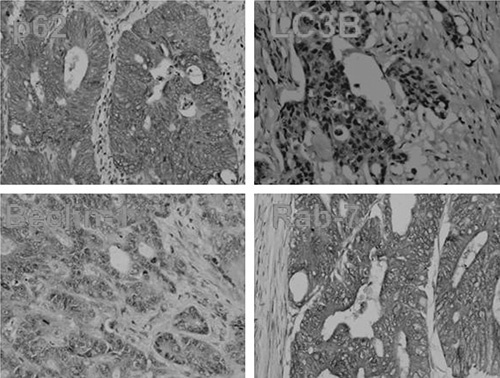
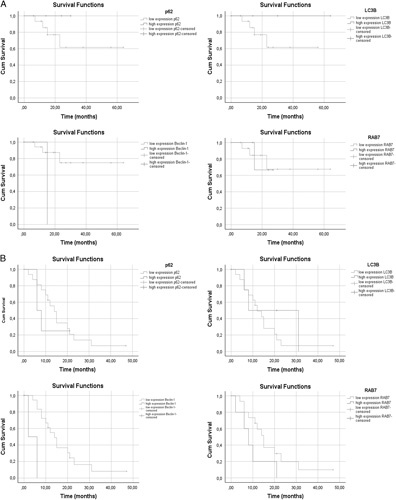
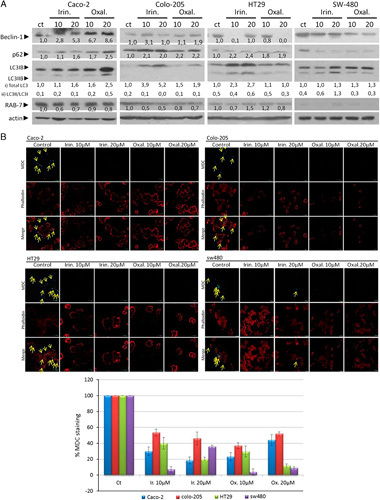
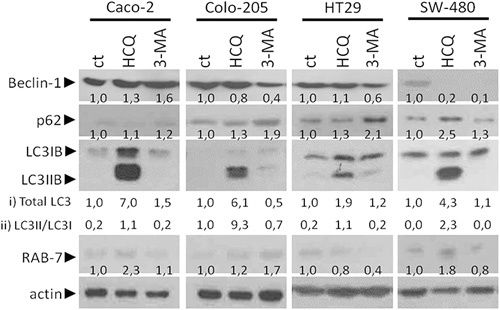
Objectives: Autophagy plays a dual role in tumorigenesis. In the initial stages, it promotes cell survival and suppresses carcinogenesis, whereas in cancer development, it induces cancer cell survival. In this study, we investigate the role of autophagy as a protective or tumor suppressor mechanism in colorectal cancer (CRC) cell lines and evaluate its role as a potential biomarker in human tumor samples. Materials and Methods: The data of 68 patients with CRC treated at our Department from January 1 to December 31, 2016 were analyzed. Immunohistochemistry evaluation of p62, LC3B, Beclin-1, and Rab-7 in formalin-fixed paraffin-embedded tissue samples was performed and their expression was correlated with clinicopathologic characteristics, mutation status, and therapeutic approach. The χ 2 was used to test an association among categorical variables. Survival curves were estimated using the Kaplan-Meier method and differences were assessed using the log-rank test. Colo-205, HT29, SW-480, and Caco-2 cell lines were also used so as to test the autophagy markers with oxaliplatin, irinotecan, hydroxychloroquine, and 3-methyladenine. Results: Overexpression of Beclin-1 is associated with poor survival (P=0.001) in patients with CRC treated with chemotherapy, irrespective of the stage and mutational status. Rab-7 is also correlated with progression-free survival (PFS) (P=0.088). Oxaliplatin (10 and 20 μΜ) and irinotecan (10 and 20 μΜ) inhibit autophagy in microsatellite stable (MSS) CRC cell lines. The inhibition of autophagy in MSS CRC cell lines after treatment with oxaliplatin and irinotecan is further identified through monodancylcadaverine staining. Moreover, inhibition of autophagy with molecules such as hydroxychloroquine (20 μΜ) and 3-methyladenine (5 mM) was identified by the accumulation of p62 and LC3B. Conclusions: Beclin-1 is an independent prognostic factor of overall survival and PFS. Also, Rab-7 is identified as an independent prognostic factor of PFS. Besides, several chemotherapeutic drugs such as oxaliplatin and irinotecan inhibit autophagy in MSS CRC cell lines in a similar way like hydroxychloroquine and 3-methyladenine. Thus, in MSS patients who develop chemoresistance, a combination of other therapies that include an autophagy inhibitor could be more beneficial. Further clinical trials are needed to investigate these therapeutic strategies.
Overview
The claims and statistics of this paper haven’t been checked yet.
Free: it reads the open-access text and checks the first 5 claims that cite a source we can check. Create a free account to check every claim.
Integrity signals
Registry
Cites
Statistics
Figures
Verification
Claims the paper makes
The claims and statistics of this paper haven’t been checked yet.
Free: it reads the open-access text and checks the first 5 claims that cite a source we can check. Create a free account to check every claim.
Claims other papers make about this one
Each is checked against this paper’s own text: does it say what the citing paper says it does?
The cited source says what the claim attributes to it.
In the citing paper
“In CRC patients undergoing chemotherapy, overexpression of autophagy-associated proteins, such as Beclin-1, was associated with low survival [270].”
From Drug Resistance in Colorectal Cancer: From Mechanism to Clinic (2022) · cites this paper as [270]
In the citing paper
“These results suggest that autophagy-associated proteins may be associated with chemotherapy resistance in CRC patients.”
From Drug Resistance in Colorectal Cancer: From Mechanism to Clinic (2022) · cites this paper as [270]
Self-check
Percentages, sums and reported differences re-computed from the paper’s own numbers.
The self-check needs the paper’s full text.
Citations
Cites
1 retracted
Mariño, G., Salvador-Montoliu, N., Fueyo, A., Knecht, E., Mizushima, N., & López-Otín, C. (2007) · Journal of Biological Chemistry · doi:10.1074/jbc.m701194200 · Cited by 407
RetractedGlobal patterns and trends in colorectal cancer incidence and mortality
Arnold, M., Sierra, M. S., Laversanne, M., Soerjomataram, I., Jemal, A., & Bray, F. (2017) · Gut · doi:10.1136/gutjnl-2015-310912 · Cited by 5,228
The Role of Atg Proteins in Autophagosome Formation
Mizushima, N., Yoshimori, T., & Ohsumi, Y. (2011) · Annual Review of Cell and Developmental Biology · doi:10.1146/annurev-cellbio-092910-154005 · Cited by 2,978
Yue, Z., Jin, S., Yang, C., Levine, A. J., & Heintz, N. (2003) · Proceedings of the National Academy of Sciences · doi:10.1073/pnas.2436255100 · Cited by 2,116
Kihara, A., Noda, T., Ishihara, N., & Ohsumi, Y. (2001) · The Journal of Cell Biology · doi:10.1083/jcb.152.3.519 · Cited by 1,004
The Roles of Autophagy in Cancer
Yun, C. W., & Lee, S. H. (2018) · International Journal of Molecular Sciences · doi:10.3390/ijms19113466 · Cited by 965
Patterns of metastasis in colon and rectal cancer
Riihimäki, M., Hemminki, A., Sundquist, J., & Hemminki, K. (2016) · Scientific Reports · doi:10.1038/srep29765 · Cited by 947
Bif-1 interacts with Beclin 1 through UVRAG and regulates autophagy and tumorigenesis
Takahashi, Y., Coppola, D., Matsushita, N., Cualing, H. D., Sun, M., Sato, Y., Liang, C., Jung, J. U., Cheng, J. Q., Mul, J. J., et al. (2007) · Nature Cell Biology · doi:10.1038/ncb1634 · Cited by 927
Liu, W. J., Ye, L., Huang, W. F., Guo, L. J., Xu, Z. G., Wu, H. L., Yang, C., & Liu, H. F. (2016) · Cellular & Molecular Biology Letters · doi:10.1186/s11658-016-0031-z · Cited by 914
Autophagosome Formation in Mammalian Cells.
Mizushima, N., Ohsumi, Y., & Yoshimori, T. (2002) · Cell Structure and Function · doi:10.1247/csf.27.421 · Cited by 877
Transcriptional control of autophagy-lysosome function drives pancreatic cancer metabolism
Perera, R. M., Stoykova, S., Nicolay, B. N., Ross, K. N., Fitamant, J., Boukhali, M., Lengrand, J., Deshpande, V., Selig, M. K., Ferrone, C. R., et al. (2015) · Nature · doi:10.1038/nature14587 · Cited by 799
Atg8: an autophagy-related ubiquitin-like protein family.
Shpilka, T., Weidberg, H., Pietrokovski, S., & Elazar, Z. (2011) · Genome biology · doi:10.1186/gb-2011-12-7-226 · Cited by 543
Autophagy is critical for pancreatic tumor growth and progression in tumors with p53 alterations
Yang, A., Rajeshkumar, N. V., Wang, X., Yabuuchi, S., Alexander, B. M., Chu, G. C., Von Hoff, D. D., Maitra, A., & Kimmelman, A. C. (2014) · Cancer Discovery · doi:10.1158/2159-8290.cd-14-0362 · Cited by 486
Maturation of autophagosomes and endosomes: A key role for Rab7
Hyttinen, J. M. T., Niittykoski, M., Salminen, A., & Kaarniranta, K. (2013) · Biochimica et Biophysica Acta (BBA) - Molecular Cell Research · doi:10.1016/j.bbamcr.2012.11.018 · Cited by 422
Role of Autophagy in Cancer: Management of Metabolic Stress
Jin, S., & White, E. (2007) · Autophagy · doi:10.4161/auto.3269 · Cited by 404
Multiple Roles of the Small GTPase Rab7
Guerra, F., & Bucci, C. (2016) · Cells · doi:10.3390/cells5030034 · Cited by 397
Rangwala, R., Leone, R., Chang, Y. C., Fecher, L. A., Schuchter, L. M., Kramer, A., Tan, K.-S., Heitjan, D. F., Rodgers, G., Gallagher, M., et al. (2014) · Autophagy · doi:10.4161/auto.29118 · Cited by 367
Targeting Autophagy in Cancer: Update on Clinical Trials and Novel Inhibitors
Chude, C., & Amaravadi, R. (2017) · International Journal of Molecular Sciences · doi:10.3390/ijms18061279 · Cited by 361
Pasquier, B. (2016) · Cellular and Molecular Life Sciences · doi:10.1007/s00018-015-2104-y · Cited by 329
Yue, P.-P., Hu, Y.-J., Fu, G.-Q., Sun, C.-X., Li, M.-F., Peng, F., & Sun, R.-C. (2017) · International Journal of Molecular Sciences · doi:10.3390/ijms19010001 · Cited by 310
Pattern of distant metastases in colorectal cancer: a SEER based study
Qiu, M., Hu, J., Yang, D., Cosgrove, D. P., & Xu, R. (2015) · Oncotarget · doi:10.18632/oncotarget.6130 · Cited by 249
Autophagosome Maturation and Fusion
Reggiori, F., & Ungermann, C. (2017) · Journal of Molecular Biology · doi:10.1016/j.jmb.2017.01.002 · Cited by 237
Autophagy in endothelial cells and tumor angiogenesis
Schaaf, M. B., Houbaert, D., Meçe, O., & Agostinis, P. (2019) · Cell Death & Differentiation · doi:10.1038/s41418-019-0287-8 · Cited by 232
Chloroquine and hydroxychloroquine for cancer therapy
Manic, G., Obrist, F., Kroemer, G., Vitale, I., & Galluzzi, L. (2014) · Molecular & Cellular Oncology · doi:10.4161/mco.29911 · Cited by 222
Autophagy Modulation in Cancer: Current Knowledge on Action and Therapy
Marinković, M., Šprung, M., Buljubašić, M., & Novak, I. (2018) · Oxidative Medicine and Cellular Longevity · doi:10.1155/2018/8023821 · Cited by 211
Endocytosis and autophagy: Shared machinery for degradation
Lamb, C. A., Dooley, H. C., & Tooze, S. A. (2013) · BioEssays · doi:10.1002/bies.201200130 · Cited by 185
The role of autophagy induced by tumor microenvironment in different cells and stages of cancer
Yang, X. F., Yu, D., Yan, F., Jing, Y., Han, Z., Sun, K., Liang, L., Hou, J., & Wei, L. (2015) · Cell & Bioscience · doi:10.1186/s13578-015-0005-2 · Cited by 167
Autophagy in colorectal cancer: An important switch from physiology to pathology
Burada, F. (2015) · World Journal of Gastrointestinal Oncology · doi:10.4251/wjgo.v7.i11.271 · Cited by 167
Schmitz, K. J., Ademi, C., Bertram, S., Schmid, K. W., & Baba, H. A. (2016) · World Journal of Surgical Oncology · doi:10.1186/s12957-016-0946-x · Cited by 157
Myung Park, J., Huang, S., Wu, T.-T., Foster, N. R., & Sinicrope, F. A. (2013) · Cancer Biology & Therapy · doi:10.4161/cbt.22954 · Cited by 153
Ma, K.-G., Shao, Z.-W., Yang, S.-H., Wang, J., Wang, B.-C., Xiong, L.-M., Wu, Q., & Chen, S.-F. (2013) · Osteoarthritis and Cartilage · doi:10.1016/j.joca.2013.10.002 · Cited by 153
The role of the hypoxia-inducible BH3-only proteins BNIP3 and BNIP3L in cancer
Mellor, H. R., & Harris, A. L. (2007) · Cancer and Metastasis Reviews · doi:10.1007/s10555-007-9080-0 · Cited by 152
EMT Regulation by Autophagy: A New Perspective in Glioblastoma Biology
Colella, B., Faienza, F., & Bartolomeo, S. D. (2019) · Cancers · doi:10.3390/cancers11030312 · Cited by 143
The frequency and clinical impact of HER2 alterations in lung adenocarcinoma
Kim, E., Kim, K., Lee, C. Y., & Shim, H. S. (2017) · PLoS ONE · doi:10.1371/journal.pone.0171280 · Cited by 125
Liu, J. C., Voisin, V., Wang, S., Wang, D., Jones, R. A., Datti, A., Uehling, D., Al‐awar, R., Egan, S. E., Bader, G. D., et al. (2014) · EMBO Molecular Medicine · doi:10.15252/emmm.201404402 · Cited by 110
Thunnissen, E., Allen, T. C., Adam, J., Aisner, D. L., Beasley, M. B., Borczuk, A., Cagle, P. T., Capelozzi, V. L., Cooper, W. A., Hariri, L. P., et al. (2017) · Archives of Pathology & Laboratory Medicine · doi:10.5858/arpa.2017-0106-sa · Cited by 80
Lee, J. W., Jeong, E. G., Soung, Y. H., Nam, S. W., Lee, J. Y., Yoo, N. J., & Lee, S. H. (2006) · Pathology · doi:10.1080/00313020600820880 · Cited by 79
B7-H6 expression correlates with cancer progression and patient's survival in human ovarian cancer.
Zhou, Y., Xu, Y., Chen, L., Xu, B., Wu, C., & Jiang, J. (2015) · PubMed Central · Cited by 71
Sakellariou, S., Fragkou, P., Levidou, G., Gargalionis, A. N., Piperi, C., Dalagiorgou, G., Adamopoulos, C., Saetta, A. A., Agrogiannis, G. D., Theohari, I., et al. (2016) · BMC Cancer · doi:10.1186/s12885-016-2213-5 · Cited by 70
Self-citationGoulielmaki, M., Koustas, E., Moysidou, E., Vlassi, M., Sasazuki, T., Shirasawa, S., Zografos, G., Oikonomou, E., & Pintzas, A. (2016) · Oncotarget · doi:10.18632/oncotarget.6942 · Cited by 66
Self-citationInterplay between apoptosis and autophagy in colorectal cancer
Qian, H., Shi, Z., Zhu, H., Gu, L., Wang, X.-F., & Yang, Y. (2017) · Oncotarget · doi:10.18632/oncotarget.18663 · Cited by 63
Koustas, E., Sarantis, P., Kyriakopoulou, G., Papavassiliou, A. G., & Karamouzis, M. V. (2019) · Cancers · doi:10.3390/cancers11040533 · Cited by 54
Self-citationAredia, F., Guamán Ortiz, L. M., Giansanti, V., & Scovassi, A. I. (2012) · Cells · doi:10.3390/cells1030520 · Cited by 50
AMBRA1 and BECLIN 1 interplay in the crosstalk between autophagy and cell proliferation
Cianfanelli, V., D'Orazio, M., & Cecconi, F. (2015) · Cell Cycle · doi:10.1080/15384101.2015.1021526 · Cited by 38
Huijbers, A., Plantinga, T. S., Joosten, L. A. B., Aben, K. K. H., Guðmundsson, J., den Heijer, M., Kiemeney, L. A. L. M., Netea, M. G., Hermus, A. R., & Netea-Maier, R. T. (2012) · Endocrine Related Cancer · doi:10.1530/erc-11-0302 · Cited by 37
Koustas, E., Papavassiliou, A. G., & Karamouzis, M. V. (2018) · PLoS ONE · doi:10.1371/journal.pone.0207227 · Cited by 26
Self-citationXu, Y., Cai, X., Zong, B., Feng, R., Ji, Y., Chen, G., & Li, Z. (2018) · Frontiers in Pharmacology · doi:10.3389/fphar.2018.00234 · Cited by 20
Upgraded role of autophagy in colorectal carcinomas
Koustas, E., Sarantis, P., Papavassiliou, A. G., & Karamouzis, M. V. (2018) · World Journal of Gastrointestinal Oncology · doi:10.4251/wjgo.v10.i11.367 · Cited by 15
Self-citationTsikalakis, S., Chatziandreou, I., Michalopoulos, N. V., Theodoropoulos, G. E., Sakellariou, S., Korkolopoulou, P. A., Patsouris, E., & Saetta, A. A. (2018) · Pathology - Research and Practice · doi:10.1016/j.prp.2018.04.019 · Cited by 9
Self-citation
Cited by
Drug Resistance in Colorectal Cancer: From Mechanism to Clinic
Wang, Q., Shen, X., Chen, G., & Du, J. (2022) · Cancers · doi:10.3390/cancers14122928 · Cited by 160
The Role of non-coding RNAs in colorectal cancer, with a focus on its autophagy
Chen, L., He, M., Zhang, M., Sun, Q., Zeng, S., Zhao, H., Yang, H., Liu, M., Ren, S., Meng, X., et al. (2021) · Pharmacology & Therapeutics · doi:10.1016/j.pharmthera.2021.107868 · Cited by 111
Inhibiting autophagy to prevent drug resistance and improve anti-tumor therapy
Ramirez, J. A. Z., Romagnoli, G. G., & Kaneno, R. (2020) · Life Sciences · doi:10.1016/j.lfs.2020.118745 · Cited by 96
The Resistance Mechanisms of Checkpoint Inhibitors in Solid Tumors
Koustas, E., Sarantis, P., Papavassiliou, A. G., & Karamouzis, M. V. (2020) · Biomolecules · doi:10.3390/biom10050666 · Cited by 57
“Moreover, loss of PTEN leads to autophagy inhibition through activation of the phosphoinositide 3-kinases (PI3K) signaling pathway, which had little effect on T-cells and immunotherapy [83,84].”
BackgroundSelf-citationComprehensive review of the resistance mechanisms of colorectal cancer classified by therapy type
Oh, J. M., Kim, S. W., Tsung, C., Kent, E. W., Jain, A., Ruff, S. M., & Zhang, H. (2025) · Frontiers in Immunology · doi:10.3389/fimmu.2025.1571731 · Cited by 56
“Koustas et al. further con fi rmed the overexpression of Beclin-1 and its association with poorer survival was paralleled in patients with CRC undergoing chemotherapy, regardless of stage or mutational status (112).”
Metadata
- Authors
- Koustas, E., Sarantis, P., Theoharis, S., Saetta, A. A., Chatziandreou, I., Kyriakopoulou, G., Giannopoulou, I., Michelli, M., Schizas, D., Papavassiliou, A. G., & Karamouzis, M. V.
- Affiliations
- Molecular Oncology Unit, Department of Biological Chemistry
- Department of Pathology
- First Department of Surgery
- National and Kapodistrian University of Athens (GR)
- Corresponding author
- Koustas, Evangelos
- Sarantis, Panagiotis
- Kyriakopoulou, Georgia
- Papavassiliou, Athanasios G.
- Karamouzis, Michalis V.
- ORCID
- Venue
- American Journal of Clinical Oncology
- Published
- 2019-10
- Volume
- 42
- Issue
- 10
- Pages
- 767-776
- ISSN
- 0277-3732 (ISSN-L)
- PMC
- PMC6766360
- OpenAlex
- W2972837098
- Cited by
- 44
- References
- 51
- Citations by year
- 2026: 4 · 2025: 6 · 2024: 12 · 2023: 5 · 2022: 8 · 2021: 4 · 2020: 5
- FWCI
- 3.24
- Type
- journal article
- Language
- en
- Open access
- hybrid
- doi.org
- Licence
- Locations
- American Journal of Clinical Oncology (publishedVersion, cc-by-nc-nd)
- PubMed Central (publishedVersion, cc-by-nc-nd)
- PubMed (publishedVersion)
- Topics
- Life Sciences › Biochemistry, Genetics and Molecular Biology › Cell Biology › Autophagy in Disease and Therapy
- Health Sciences › Medicine › Oncology › Colorectal Cancer Treatments and Studies
- Life Sciences › Biochemistry, Genetics and Molecular Biology › Cancer Research › Ferroptosis and cancer prognosis
- Keywords
- colorectal cancer, autophagy, prognostic factors, Beclin-1, Rab7, p62, LC3B, oxaliplatin, irinotecan, hydroxychloroquine, 3-methyladenine, microsatellite stable, tumor suppressor, overall survival, progression-free survival, autophagy inhibition, chemotherapy response, KRAS
- MeSH terms
- Autophagy-Related Proteins, Beclin-1, Adult, Aged, Aged, 80 and over, Biopsy, Needle, Combined Modality Therapy, Female, Humans, Immunohistochemistry, Male, Middle Aged, Mutation, Prognosis, Retrospective Studies, Biomarkers, Tumor, Colorectal Neoplasms, Cohort Studies, Survival Analysis, Disease-Free Survival, Statistics, Nonparametric, Cell Line, Tumor, Kaplan-Meier Estimate
About these checks
Registry, retraction, Cites and statistics results are computed, not judged, with one exception: a printed reference that no index lists is read once by a model before it counts as a citation error. Claims are extracted by a model and kept only when their quote appears verbatim in the text; each cited source is then checked, with a model’s help, for whether it says what the claim relies on. Those verdicts can be wrong — read the claim’s quote and the cited source before relying on one.
Statistics and arithmetic are recomputed, not judged.
Confidence bands are shown only for fields calibrated on our annotated test set. None is calibrated yet, so no band is shown.
What counts as a claim ›How we measure confidence ›How we check this ›
Are you an author, or do you see a problem with this page? Request a review
Data sources
Bibliographic data: Semantic Scholar, OpenAlex, Crossref.
Contains information from the Semantic Scholar Academic Graph Datasets, made available under the ODC Attribution License (ODC-BY 1.0).
Semantic Scholar’s data is described in: Kinney, R., et al. (2023). The Semantic Scholar Open Data Platform. arXiv:2301.10140.
