

Antia-Buch versus Franssen-Frechner Technique
Open accessThe DOI matches its Crossref record; 5 of the 5 references it cites were found in a registry or an index; none of the 5 sources its claims cite is checked for support yet.
Abstract
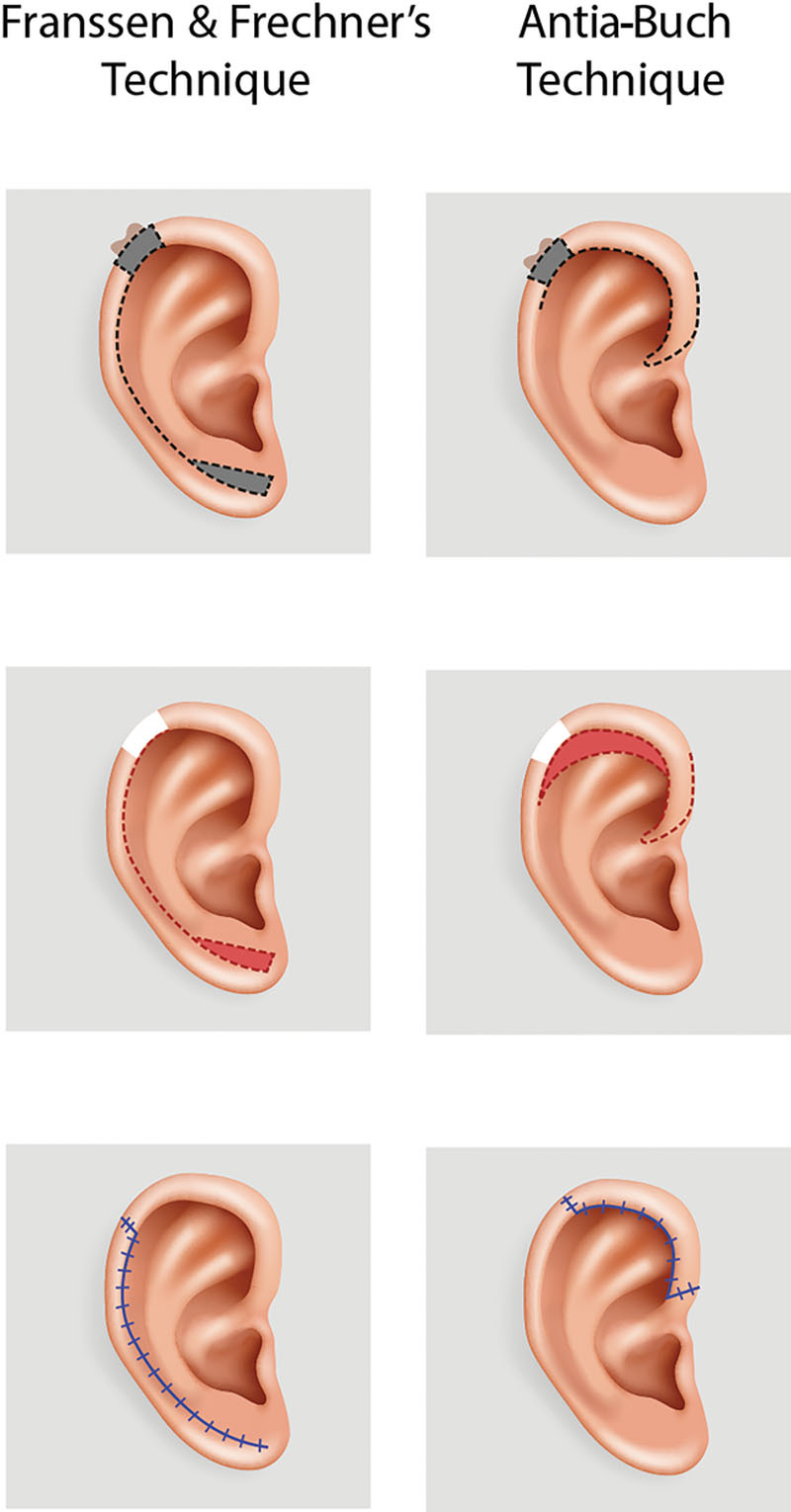
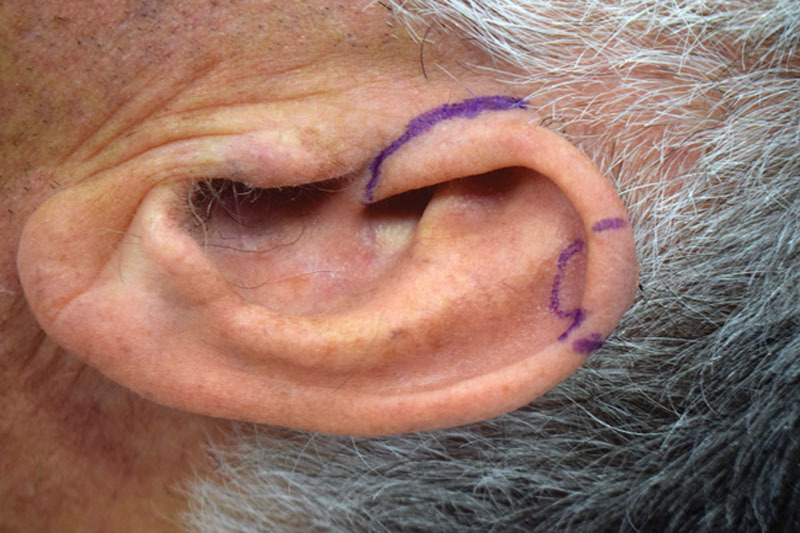
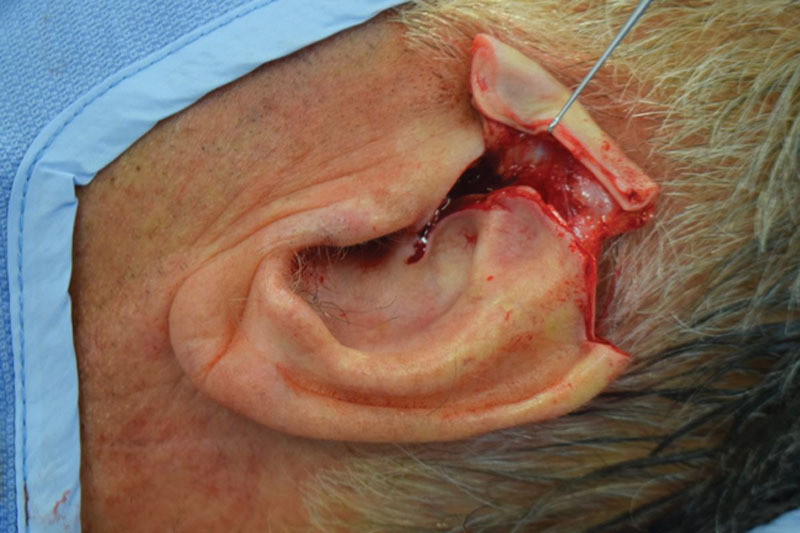
We performed a retrospective study comparing 2 patient groups. Each cohort included 22 cases of skin cancer of the external ear. Each patient required resection of the affected part of the external ear, followed by flap reconstruction. METHODS: The patients in Cohort A underwent external ear reconstruction with a classic Antia-Buch flap, as described by Antia and Buch in 1967: The defect was closed by mobilizing an advancement flap from the root of the helix (upper ear), which was closed in a V-Y fashion, after a rim of healthy scaphal cartilage was resected to allow approximation of the skin. The patients in Cohort B underwent external ear reconstruction with a modified Antia-Buch flap, as presented by Franssen and Frechner in 2010. Here, a wedge of skin was removed from the ear lobe (lower ear), to allow mobilization of an advancement flap from the caudal end of the ear, to close the defect. RESULTS: Both techniques allowed tension-free closure. Cohort B, however, required less dissection of the ear. The entire cephalic ear remained unaffected and no scaphal cartilage was sacrificed, thus preserving ear width, with scars that were overall less visible. Also, the loss in ear height associated with Cohort B was easily symmetrized by contralateral ear lobe reduction. CONCLUSIONS: Cohort B achieved closure with less ear dissection, achieving excellent morphological outcomes. The patients in Cohort B had superior levels of satisfaction with scars and ear symmetry than those in Cohort A.
Overview
CoChat Summary
TL;DR
This retrospective comparison of 44 external ear cancer reconstructions found that the Franssen-Frechner (F-F) modification required less ear dissection than the classic Antia-Buch (A-B) technique while achieving better patient-rated scar and symmetry outcomes. Both techniques achieved 100% tumor clearance and tension-free closure, but F-F preserved ear width and avoided scaphal cartilage resection.
Key findings
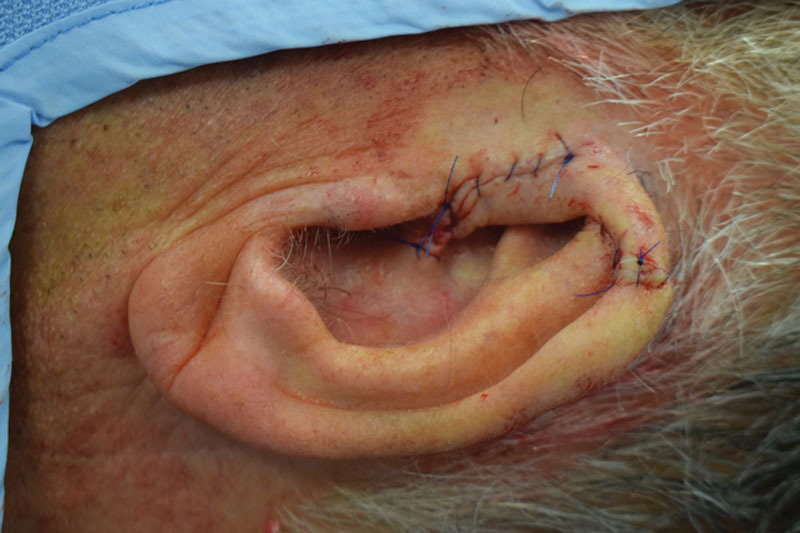
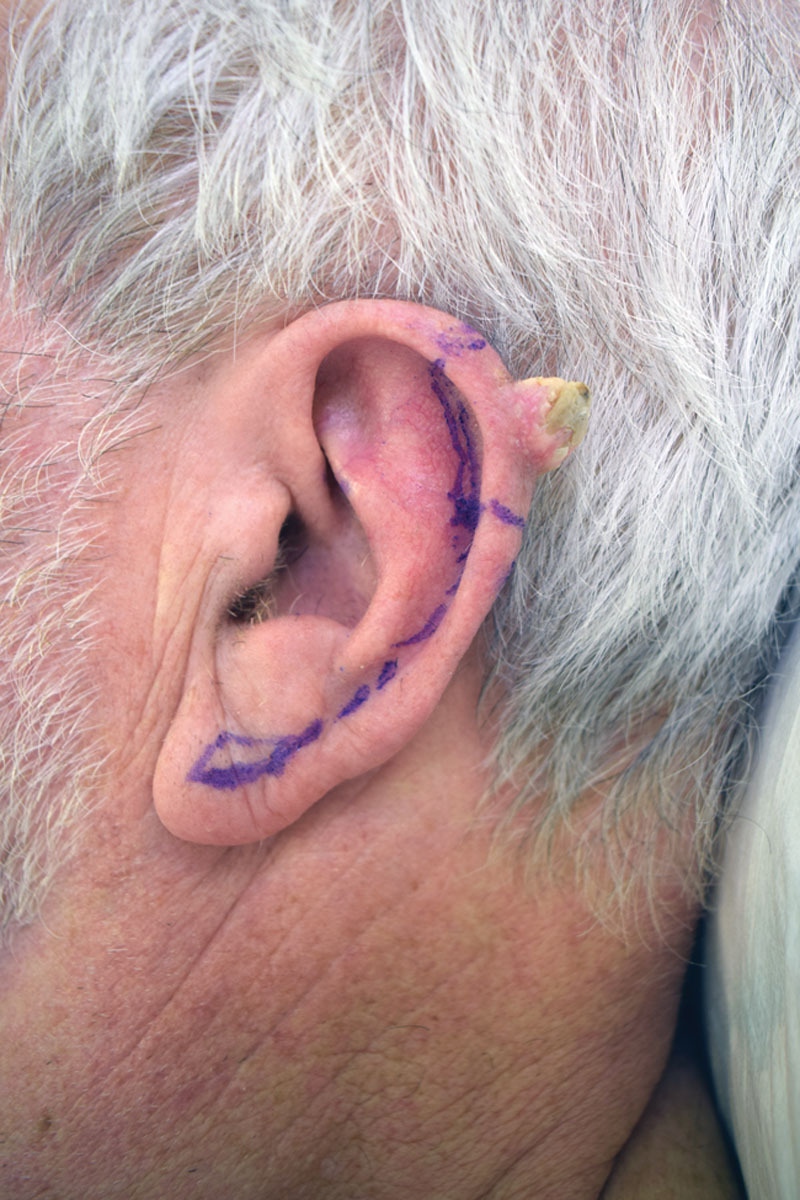
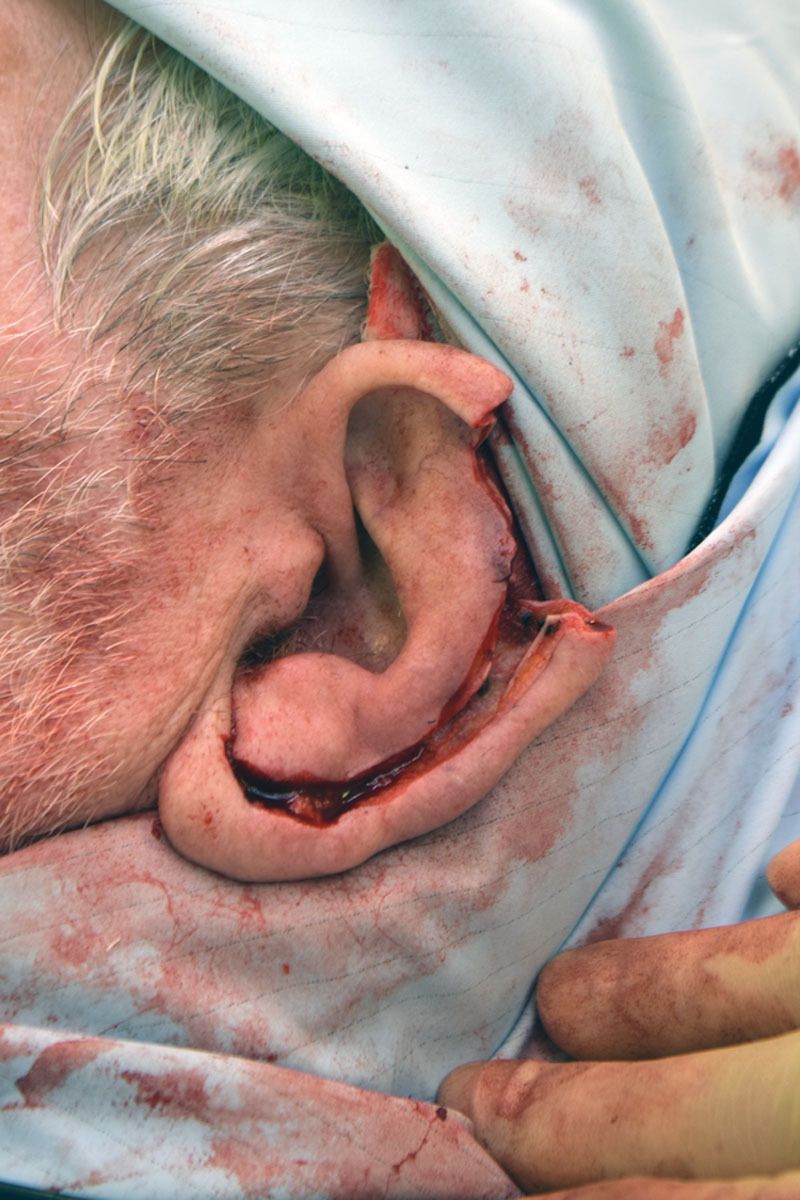
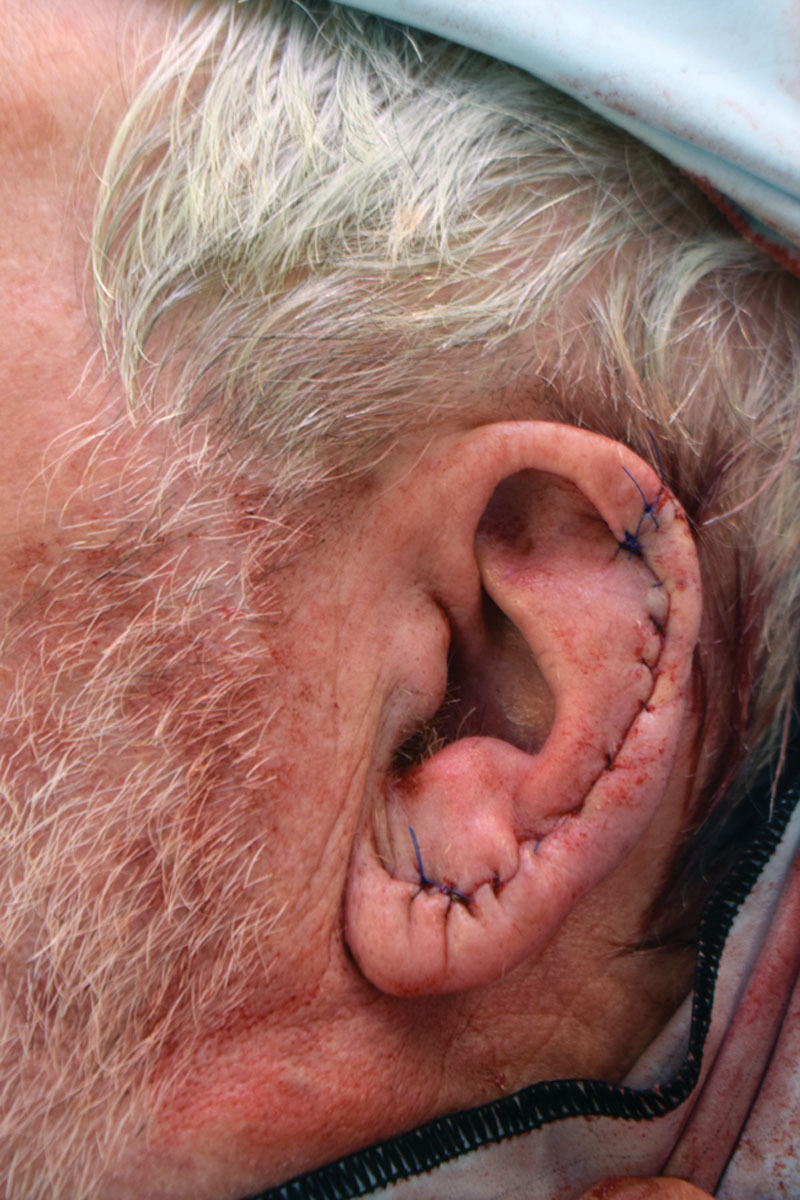
- Cohort B (F-F) required less dissection, left the cephalic ear and root of helix unaffected, sacrificed no scaphal cartilage, preserved ear width, and produced overall less visible scars; its loss of ear height was corrected by contralateral ear lobe reduction.
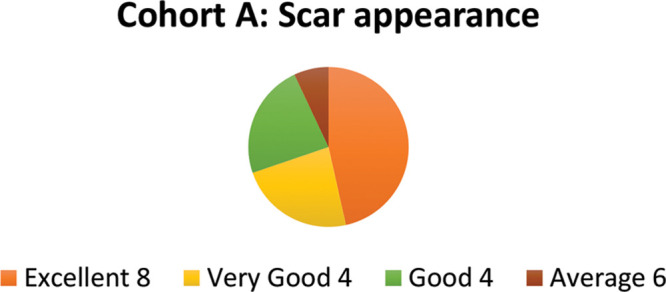
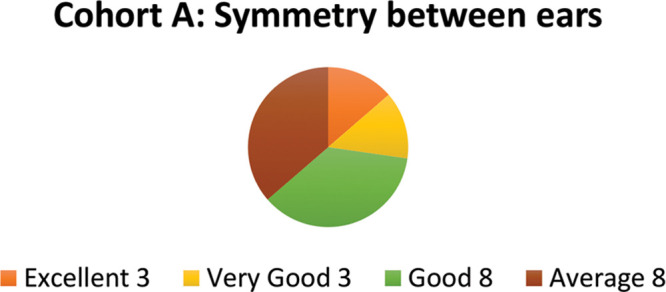
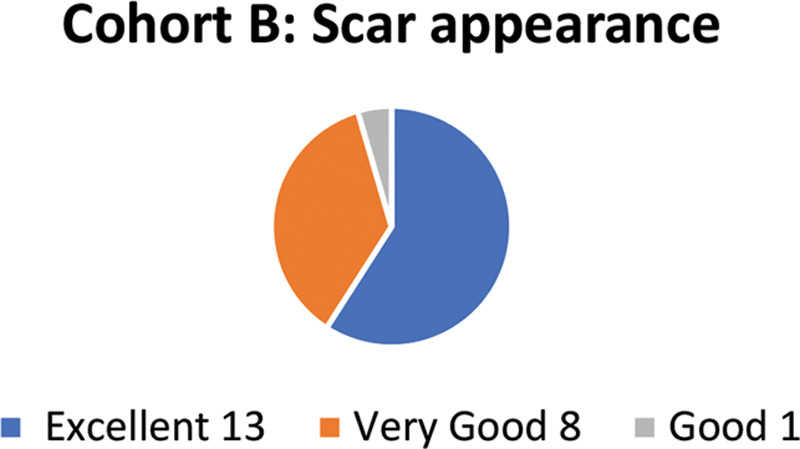
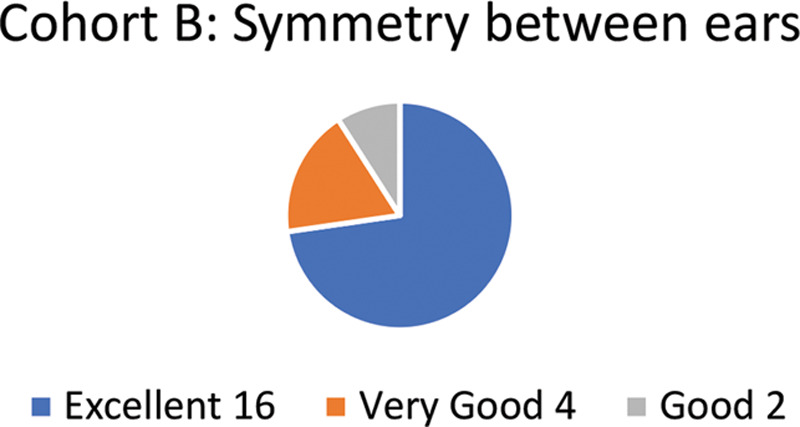
- Patient-rated scar appearance in Cohort B was excellent in 13 cases, very good in 8, and good in 1; symmetry was excellent in 16, very good in 4, and good in 2. In Cohort A, scar appearance was excellent in 8, very good in 4, good in 4, and average/poor in 6; symmetry was excellent in 3, very good in 3, good in 8, and average/poor in 8.
- Tumor clearance was achieved in 100% of cases in both cohorts. No complications such as infection, bleeding, hematoma, wound dehiscence, floppy ear, ear cupping, or cauliflower deformity were noted; only 1 case had helical rim notching, from Cohort A. Mild postoperative erythema and swelling occurred in all cases and settled by 3 months.
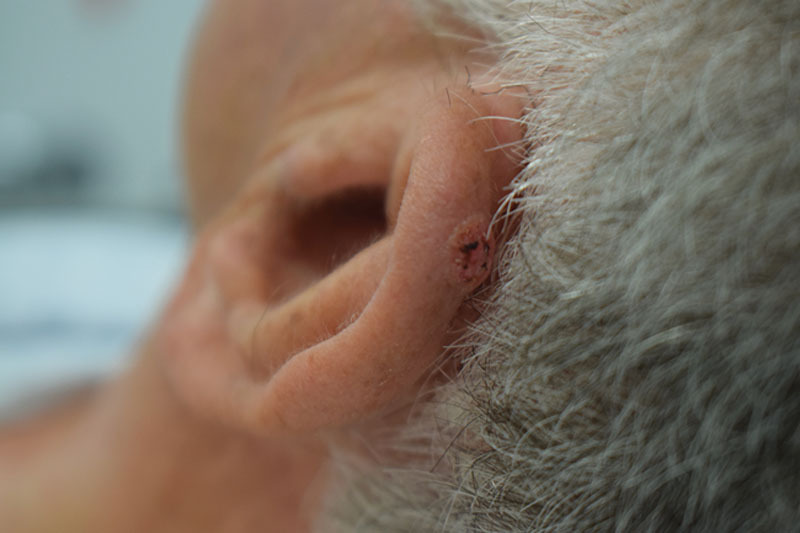
- Cohort A had 3 women and 19 men, mean age 73 years, defect size 1.8–3.5 cm, with 10 basal cell carcinomas and 12 squamous cell carcinomas. Cohort B had 4 women and 18 men, mean age 72 years, defect size 1.5–3.5 cm, with 11 basal cell carcinomas and 11 squamous cell carcinomas.
Methods
- Retrospective analysis of 44 patients with external ear malignancies requiring surgical resection and reconstruction, operated on by the same surgeon between May 2016 and June 2020; patients were identified from the department’s multidisciplinary team audit database and treated as day cases.
- Patients were divided into 2 cohorts of 22: Cohort A underwent classic Antia-Buch reconstruction based on the superior ear; Cohort B underwent Franssen-Frechner reconstruction incorporating the lower ear. Excision used a 4-mm margin, with local anesthesia via ear block and closure using 5/0 Monocryl anchoring sutures and 5/0 Prolene.
- Outcomes included complications, tumor clearance, and a postprocedure questionnaire asking patients to grade scar appearance and ear symmetry as excellent, very good, good, or average/poor; no formal statistical comparison is reported.
Limitations
- Not stated in the paper; the paper has no dedicated limitations section.
- Evident from the text: retrospective, single-surgeon, single-unit design with only 22 patients per cohort, and no formal statistical testing reported for between-cohort comparisons.
- Evident from the text: cosmetic outcomes rely on a postprocedure patient questionnaire described only as a 4-point grading scale, with no validation or blinding reported.
Model-written summary. Check it against the paper before relying on it.
Integrity signals
Registry
Cites
Statistics
Figures
Verification
Claims the paper makes
0 Valid · 0 Not valid · 5 Not checked · 32 Own results and interpretations
A result the paper states — it cites no source for it, so there is none to check. The quote shows it is in the paper.
In the paper
“The entire cephalic ear remained unaffected and no scaphal cartilage was sacrificed, thus preserving ear width, with scars that were overall less visible.”
§ Antia-Buch versus Franssen-Frechner Technique > Abstract > Results:
plain- Asserted: passes — The authors put it forward as true.
- Checkable: passes — It can be checked against evidence.
- Load-bearing: passes — The paper’s conclusions depend on it.
- Based: passes — The paper gives a reason why it holds.
A result the paper reports from its own data — it cites no other source for it, so there is none to check. The quote shows it is in the paper.
In the paper
“The symmetry was rated as excellent in 16 cases, very good in 4 cases, and good in 2 cases (Fig. 12).”
§ Antia-Buch versus Franssen-Frechner Technique > Results
plainn = 16- Asserted: passes — The authors put it forward as true.
- Checkable: passes — It can be checked against evidence.
- Load-bearing: unclear — It is unclear whether the paper’s conclusions depend on it.
- Based: passes — The paper gives a reason why it holds.
A result the paper reports from its own data — it cites no other source for it, so there is none to check. The quote shows it is in the paper.
In the paper
“Cohort B, however, required less dissection of the ear.”
§ Antia-Buch versus Franssen-Frechner Technique > Abstract > Results:
plainstates a cause- Asserted: passes — The authors put it forward as true.
- Checkable: passes — It can be checked against evidence.
- Load-bearing: passes — The paper’s conclusions depend on it.
- Based: passes — The paper gives a reason why it holds.
A result the paper reports from its own data — it cites no other source for it, so there is none to check. The quote shows it is in the paper.
In the paper
“The patients rated the scar appearance as excellent in 8 cases, very good in 4 cases, good in 4 case, and average or poor in 6 cases (Table 1).”
§ Antia-Buch versus Franssen-Frechner Technique > Results
plainn = 8- Asserted: passes — The authors put it forward as true.
- Checkable: passes — It can be checked against evidence.
- Load-bearing: unclear — It is unclear whether the paper’s conclusions depend on it.
- Based: passes — The paper gives a reason why it holds.
A result the paper reports from its own data — it cites no other source for it, so there is none to check. The quote shows it is in the paper.
In the paper
“The patients rated the scar appearance as excellent in 13 cases, very good in 8 cases, and good in 1 case (Table 2).”
§ Antia-Buch versus Franssen-Frechner Technique > Results
plainn = 13- Asserted: passes — The authors put it forward as true.
- Checkable: passes — It can be checked against evidence.
- Load-bearing: unclear — It is unclear whether the paper’s conclusions depend on it.
- Based: passes — The paper gives a reason why it holds.
7 more claims
Create a free account to see all 37 claims and every source verdict.
- It may state two separate claims as one. 17
- Probably not a substantial claim. 13
- The quote only partly states this claim. 1
Self-check
Percentages, sums and reported differences re-computed from the paper’s own numbers.
Each contradiction between two passages listed here was confirmed by an independent check.
Rated minor: it would not touch a result — a value no result rests on, a p-value that stays on the same side of the significance level, or a conflict that is clerical, resolved elsewhere in the paper, or outside its own findings.
In the paper
§ Antia-Buch versus Franssen-Frechner Technique > Results
“The defect size (Fig. 11) varied between 1.5 and 3.5 cm.”
§ Antia-Buch versus Franssen-Frechner Technique > Results
“| Defect size (cm) | 1.9 | 1.9 | 2.2 | 3.2 | 1.7 | 2.3 | 2.2 | 3.1 | 2.0 | 3.1 | 1.8 | 1.5 | 2.5 | 2.4 | 2.2 | 3.4 | 3.0 | 2.7 | 1.3 | 2.4 | 3.5 | 3.1 |”
Citations
Cites
Chondrocutaneous Advancement Flap for the Marginal Defect of the Ear
ANTIA, N. H., & BUCH, V. I. (1967) · Plastic and Reconstructive Surgery · doi:10.1097/00006534-196705000-00006 · Cited by 300 · cited 1×
“They were asked to grade their results as either (1) excellent, (2) very good, (3) good, or (4) average or poor.”
BackgroundA METHOD OF PARTIAL EAR RECONSTRUCTION FOR AVULSION OF THE UPPER PORTION OF THE EAR
CRIKELAIR, G. F. (1956) · Plastic and Reconstructive Surgery · doi:10.1097/00006534-195606000-00003 · Cited by 59 · cited 1×
“They were asked to grade their results as either (1) excellent, (2) very good, (3) good, or (4) average or poor.”
BackgroundMalignant tumours of the ear and their treatment
Blake, G. B., & Wilson, J. S. P. (1974) · British Journal of Plastic Surgery · doi:10.1016/0007-1226(74)90065-4 · Cited by 55
Reconstruction of partial loss of the auricle
ORTICOCHEA, M. (1970) · Plastic and Reconstructive Surgery · doi:10.1097/00006534-197010000-00019 · Cited by 47
Franssen, B. B. G. M., & Frechner, M. R. (2010) · European Journal of Plastic Surgery · doi:10.1007/s00238-010-0397-5 · Cited by 5 · cited 1×
“They were asked to grade their results as either (1) excellent, (2) very good, (3) good, or (4) average or poor.”
Background
Research works printed but not linked: 5
- Salgarello M Visconti G. Shiffman MA. Combined technique in aesthetic otoplasty. Advanced Cosmetic Otoplasty. 2013, Berlin, Heidelberg: Springer-Verlag; 209– 233
- Thorne CH Beasley RW Aston SJ. Thorne CH Beasley RW Aston SJ. Specific regional defects. Grabb and Smith’s Plastic Surgery. 2007, Philadelphia, Pa.: Wolters Kluwer Health; 301– 304
- Tanzer R. Converse JM. Deformities of the auricle. Reconstructive Plastic Surgery. 1977 2nd ed Philadelphia: WB Saunders
- Davis JE. Milton E Tanzer RC. Reconstruction of the upper third of the ear with a chondrocutaneous composite flap based on the crus helix. Symposium on Reconstruction of the Auricle. 1974, St Louis: CV Mosby
- Aguiar EA. Evans GR. Traumatic total or partial ear loss. Operative Plastic Surgery. 2000, New York: McGraw-Hill
Cited by
De Rosa, A., Grieco, M. P., D’Antonio, S., Rullo, V., Castellaneta, F., & Fabrizio, T. (2025) · Plastic and Reconstructive Surgery - Global Open · doi:10.1097/gox.0000000000006531 · Cited by 4
Our experience and modification of the Antia-Buch flap for pinna reconstruction
Lancer, H., Goh, S., & Anari, S. (2023) · Journal of Plastic, Reconstructive & Aesthetic Surgery · doi:10.1016/j.bjps.2023.01.005 · Cited by 2
Reconstruction of partial auricular skin cancer defects: a review of current techniques
Noor, A., & Thomson, N. (2023) · Current Opinion in Otolaryngology & Head & Neck Surgery · doi:10.1097/moo.0000000000000894 · Cited by 3
“Multiple case series have reported that this modified approach provides superior cosmetic outcomes in comparison to the original Antia–Buch flap by avoiding cephalic ear dissection andhealthy scaphal cartilage sacrifice, which results in normal ear width [32,33].”
ResultManagement der Ohrmuschelteilamputationen
Huseynov, J., Haxel, B., Fischer, M., & Fischer, I.-S. (2022) · Laryngo-Rhino-Otologie · doi:10.1055/a-1792-2194 · Cited by 1
Metadata
- Authors
- Abdelkader, R., Malahias, M., Abdalbary, S. A., & Noaman, A.
- Affiliations
- Cairo University (EG)
- University Hospitals Birmingham, Birmingham, United Kingdom;
- Nahda University (EG)
- Corresponding author
- Abdelkader, Rasha
- Noaman, Ayman
- Venue
- Plastic and Reconstructive Surgery, Global Open
- Published
- 2021-03
- Volume
- 9
- Issue
- 3
- Pages
- e3498
- ISSN
- 2169-7574 (ISSN-L)
- PMC
- PMC7989990
- OpenAlex
- W3138556365
- Semantic Scholar
- ebd360a7ec9e2c593f57ec70edf8fed6acc11a7c
- Cited by
- 4
- References
- 5
- Citations by year
- 2025: 1 · 2023: 2 · 2022: 1
- FWCI
- 0.70
- Type
- journal article
- Language
- en
- Open access
- gold
- doi.org
- Licence
- Locations
- Plastic & Reconstructive Surgery Global Open (publishedVersion, cc-by-nc-nd)
- PubMed Central (publishedVersion, cc-by-nc-nd)
- PubMed (publishedVersion)
- DOAJ (DOAJ: Directory of Open Access Journals) (submittedVersion, cc-by-sa)
- Topics
- Health Sciences › Medicine › Surgery › Reconstructive Facial Surgery Techniques
- Health Sciences › Medicine › Oncology › Ear and Head Tumors
- Health Sciences › Medicine › Dermatology › Nonmelanoma Skin Cancer Studies
- Keywords
- external ear reconstruction, ear cancer, advancement flap, earlobe, ear symmetry, scar visibility
About these checks
Registry, retraction, Cites and statistics results are computed, not judged, with one exception: a printed reference that no index lists is read once by a model before it counts as a citation error. Claims are extracted by a model and kept only when their quote appears verbatim in the text; each cited source is then checked, with a model’s help, for whether it says what the claim relies on. Those verdicts can be wrong — read the claim’s quote and the cited source before relying on one.
A language model drew the claims from the paper on 2026-10-10, under version 3 of the claim definition (model deepseek-v4.1-flash, prompt extract-v3).
A second model labelled each claim on 2026-10-10 (model jev-1.13-20260917, definition revision gold-guideline-v0.2).
Statistics and arithmetic are recomputed, not judged.
Confidence bands are shown only for fields calibrated on our annotated test set. None is calibrated yet, so no band is shown.
What counts as a claim ›How we measure confidence ›How we check this ›
Are you an author, or do you see a problem with this page? Request a review
How to cite
Cite CoChat for the checks on this page, and the paper for its own findings.
- This page
- CoChat. (2026). Citation check: Antia-Buch versus Franssen-Frechner Technique. https://app.cochat.ai/papers/10.1097/gox.0000000000003498
- The paper
- Abdelkader, R., Malahias, M., Abdalbary, S. A., & Noaman, A. (2021). Antia-Buch versus Franssen-Frechner Technique. Plastic and Reconstructive Surgery, Global Open. https://doi.org/10.1097/gox.0000000000003498
Data sources
Bibliographic data: Semantic Scholar, OpenAlex, Crossref.
Contains information from the Semantic Scholar Academic Graph Datasets, made available under the ODC Attribution License (ODC-BY 1.0).
Semantic Scholar’s data is described in: Kinney, R., et al. (2023). The Semantic Scholar Open Data Platform. arXiv:2301.10140.
