

Intermittent fasting improves hepatic end points in nonalcoholic fatty liver disease: A systematic review and meta-analysis
Open accessThe DOI matches its Crossref record; 40 of the 40 references it cites were found in a registry or an index.
Abstract
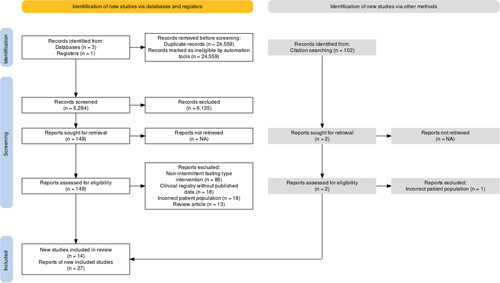
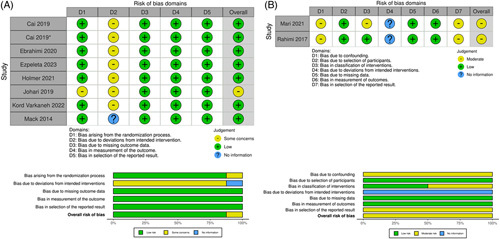
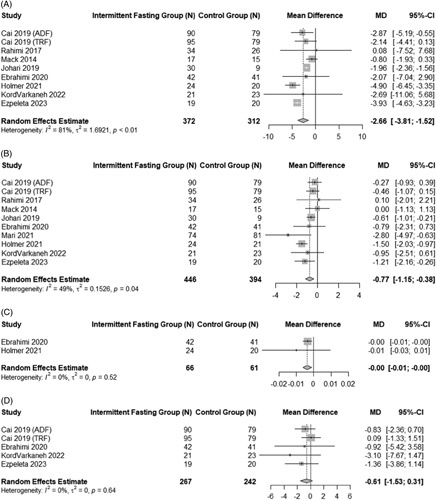
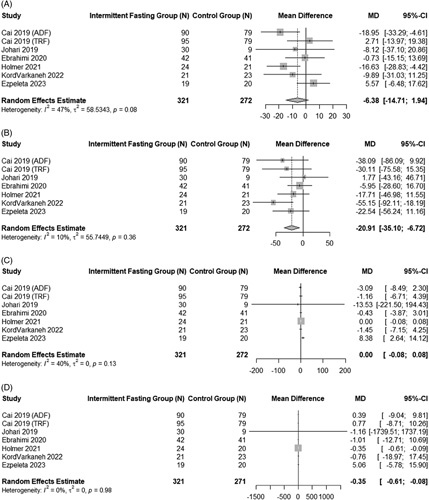
Background and Aims: Despite NAFLD being the most prevalent liver disease globally, currently there are no FDA-approved treatments, and weight loss through caloric restriction and enhanced physical activity is the recommended treatment strategy. Intermittent fasting (IF) has been proposed as an alternative strategy with additional cardiometabolic benefits. In this systematic review and meta-analysis, we evaluated the anthropometric, biochemical, and hepatic impacts of IF in patients with NAFLD. Methods: MEDLINE, EMBASE, Cochrane Central, and conference abstracts were searched for IF interventions in adults with NAFLD until April 2, 2023. Meta-analysis with a random effects model was used to compare pre-intervention and post-intervention changes in anthropometric, biochemical, and hepatic end points in the IF intervention group with the control group. Publication bias was assessed using Egger’s test. Results: Fourteen studies were included in the systematic review and ten in the meta-analysis (n = 840 participants, 44.64% male). Studies varied in modalities for NAFLD diagnosis, duration of IF (4–52 weeks), and type of IF (5:2 diet, modern alternate-day fasting, time-restricted eating, or religious fasting). Body weight, body mass index, and waist to hip ratio all significantly improved following fasting intervention (p< 0.05). Adults with NAFLD showed an improvement in serum alanine transaminase, aspartate aminotransferase, hepatic steatosis (controlled attenuation parameter measured by vibration-controlled transient elastography), and hepatic stiffness (measured by vibration-controlled transient elastography) after fasting intervention (p < 0.05). Conclusions: There is limited, but moderate- to high-quality evidence to suggest that IF can improve hepatic end points and promote weight loss in adults with NAFLD. Larger randomized controlled studies with extended duration are needed to further validate our findings.
Overview
The claims and statistics of this paper haven’t been checked yet.
Free: it reads the open-access text and checks the first 5 claims that cite a source we can check. Create a free account to check every claim.
Integrity signals
Registry
Cites
Statistics
Figures
Verification
Claims the paper makes
The claims and statistics of this paper haven’t been checked yet.
Free: it reads the open-access text and checks the first 5 claims that cite a source we can check. Create a free account to check every claim.
Claims other papers make about this one
Each is checked against this paper’s own text: does it say what the citing paper says it does?
The cited source says what the claim attributes to it.
In the citing paper
“Previous meta-analyses have suggested that IF may improve hepatic outcomes in patients with NAFLD (15).”
From Intermittent fasting versus continuous energy restriction in MASLD: a systematic review and meta-analysis (2026) · cites this paper as [15]
Self-check
Percentages, sums and reported differences re-computed from the paper’s own numbers.
The self-check needs the paper’s full text.
Citations
Cites
Haddaway, N. R., Page, M. J., Pritchard, C. C., & McGuinness, L. A. (2022) · Campbell Systematic Reviews · doi:10.1002/cl2.1230 · Cited by 3,486
Younossi, Z. M., Golabi, P., Paik, J. M., Henry, A., Van Dongen, C., & Henry, L. (2023) · Hepatology · doi:10.1097/hep.0000000000000004 · Cited by 3,383 · cited 2×
“As a consequence of the increasing prevalence of obesity, type 2 diabetes, and related metabolic conditions, NAFLD has become one of the most important causes of chronic liver disease worldwide, affecting 24% of the global population[1] and increasing the risk of all-cause mortality.[1,2] While there are several thera…”
BackgroundVilar-Gomez, E., Martinez-Perez, Y., Calzadilla-Bertot, L., Torres-Gonzalez, A., Gra-Oramas, B., Gonzalez-Fabian, L., Friedman, S. L., Diago, M., & Romero-Gomez, M. (2015) · Gastroenterology · doi:10.1053/j.gastro.2015.04.005 · Cited by 2,492
Comparison of Weight-Loss Diets with Different Compositions of Fat, Protein, and Carbohydrates
Sacks, F. M., Bray, G. A., Carey, V. J., Smith, S. R., Ryan, D. H., Anton, S. D., McManus, K., Champagne, C. M., Bishop, L. M., Laranjo, N., et al. (2009) · New England Journal of Medicine · doi:10.1056/nejmoa0804748 · Cited by 1,966
Dansinger, M. L., Gleason, J. A., Griffith, J. L., Selker, H. P., & Schaefer, E. J. (2005) · JAMA · doi:10.1001/jama.293.1.43 · Cited by 1,726 · cited 1×
“[3–5] However, caloric restrictionmay be challenging to maintain in the long term,[6] an important consideration given the significant impact of an individual’s dietary choices and adherence on the degree of weight loss.[7,8] To optimize NAFLD management and increase the likelihood of favorable hepatic outcomes, a var…”
BackgroundEffects of intermittent fasting on health, aging, and disease
de Cabo, R., & Mattson, M. P. (2019) · New England Journal of Medicine · doi:10.1056/nejmra1905136 · Cited by 1,605
Metabolic Implications of Body Fat Distribution
Björntorp, P. (1991) · Diabetes Care · doi:10.2337/diacare.14.12.1132 · Cited by 1,046
Fasting, Circadian Rhythms, and Time-Restricted Feeding in Healthy Lifespan
Longo, V. D., & Panda, S. (2016) · Cell Metabolism · doi:10.1016/j.cmet.2016.06.001 · Cited by 1,013
Understanding the Physiology of FGF21
Fisher, F. M., & Maratos-Flier, E. (2016) · Annual Review of Physiology · doi:10.1146/annurev-physiol-021115-105339 · Cited by 912
Trepanowski, J. F., Kroeger, C. M., Barnosky, A., Klempel, M. C., Bhutani, S., Hoddy, K. K., Gabel, K., Freels, S., Rigdon, J., Rood, J., et al. (2017) · JAMA Internal Medicine · doi:10.1001/jamainternmed.2017.0936 · Cited by 645
Research works printed but not linked: 4
- Di Battista E Yeoman A Everitt J Williams S Kenkre J. The treating liver study: Preliminary findings of a “time re-focused eating” feasibility study for obesity and non-alcoholic fatty liver disease. Obes Rev. 2020; 21: S211.
- Mack A Hodge A Tuck C Tchongue J Holt D Sievert W Moore GT. Non-alcoholic fatty liver disease intermittent fasting time intervention (NIFTI): fasting without calorie restriction improves hepatic transient elastography, visceral adiposity and insulin resistance compared to standard care. J Gastroenterol Hepatol. 2014; 29(S2): 68– 101.
- Rahimi H Emad Habibi M Gharavinia A Hasan Emami M Baghaei A Tavakol N. Effect of Ramadan Fastin on Alanine Aminotransferase (ALT) in Non-Alcoholic Fatty Liver Disease (NAFLD). J Fast Health. 2017; 5: 107– 112.
- Rynders CA Thomas EA Zaman A Pan Z Catenacci VA Melanson EL. Effectiveness of Intermittent Fasting and Time-Restricted Feeding Compared to Continuous Energy Restriction for Weight Loss. Nutrients. 2019; 11: 2442. 31614992 PMC6836017 · DOI · Paper page
Cited by
Yanai, H., Adachi, H., Hakoshima, M., Iida, S., & Katsuyama, H. (2023) · International Journal of Molecular Sciences · doi:10.3390/ijms242015473 · Cited by 194
“In another meta-analysis, body weight, BMI and waist-to-hip ratio were significantly improved following the intermittent fasting intervention ( p 0.05) [66].”
BackgroundInfluentialEslam, M., Fan, J.-G., Yu, M.-L., Wong, V. W.-S., Cua, I. H., Liu, C.-J., Tanwandee, T., Gani, R., Seto, W.-K., Alam, S., et al. (2025) · Hepatology International · doi:10.1007/s12072-024-10774-3 · Cited by 170
“However, a meta-analysis suggested, with moderate-to high-quality evidence, that intermittent fasting and time-restricted feeding improve hepatic inflammation, steatosis, and stiffness, as well as promoting weight loss in adults with MAFLD [164].”
Zeng, X.-F., Varady, K. A., Wang, X.-D., Targher, G., Byrne, C. D., Tayyem, R., Latella, G., Bergheim, I., Valenzuela, R., George, J., et al. (2024) · Metabolism · doi:10.1016/j.metabol.2024.156028 · Cited by 124
Self-citationSun, M.-L., Yao, W., Wang, X.-Y., Gao, S., Varady, K. A., Forslund, S. K., Zhang, M., Shi, Z.-Y., Cao, F., Zou, B.-J., et al. (2024) · eClinicalMedicine · doi:10.1016/j.eclinm.2024.102519 · Cited by 95
Fan, J., Xu, X., Yang, R.-X., Nan, Y., Wei, L., Jia, J., Zhuang, H., Shi, J., Li, X., Cm, S., et al. (2024) · Journal of Clinical and Translational Hepatology · doi:10.14218/jcth.2024.00311 · Cited by 153
MASLD treatment—a shift in the paradigm is imminent
Machado, M. V. (2023) · Frontiers in Medicine · doi:10.3389/fmed.2023.1316284 · Cited by 51
Hamamah, S., Iatcu, O. C., & Covașă, M. (2024) · Nutrients · doi:10.3390/nu17010143 · Cited by 58
Ali, H., Shahzil, M., Moond, V., Shahzad, M., Thandavaram, A., Sehar, A., Waseem, H., Siddiqui, T. A., Dahiya, D. S., Patel, P., et al. (2024) · Journal of Personalized Medicine · doi:10.3390/jpm14010061 · Cited by 48
Practical Lifestyle Management of Nonalcoholic Fatty Liver Disease for Busy Clinicians
Zelber‐Sagi, S., & Moore, J. B. (2024) · Diabetes Spectrum · doi:10.2337/dsi23-0009 · Cited by 43
“To date, all trials have been relatively short, not all have been RCTs, and there are few long-term follow-up data (38).”
BackgroundSun, X., Li, F., Yan, H., Chang, X., Yao, X., Yang, X., Wu, S., Suo, Y., Zhu, X., Wang, C., et al. (2025) · The American Journal of Clinical Nutrition · doi:10.1016/j.ajcnut.2024.10.012 · Cited by 30
Giannakogeorgou, A., & Roden, M. (2024) · Alimentary Pharmacology & Therapeutics · doi:10.1111/apt.17848 · Cited by 30
“Mediterranean diets seem to be most effective in improving MASLD, even in the absence of weight loss 73– 75 (Table S3).”
BackgroundNAFLD in the 21st Century: Current Knowledge Regarding Its Pathogenesis, Diagnosis and Therapeutics
Kounatidis, D. C., Vallianou, N. G., Geladari, E. V., Panoilia, M.-P., Daskou, A., Stratigou, T., Karampela, Ι., Tsilingiris, D., & Dalamaga, Μ. (2024) · Biomedicines · doi:10.3390/biomedicines12040826 · Cited by 40
Grinshpan, L. S., Haim, Y. E., Wajcman, D. I., Isakov, N. F., Nov, Y., Webb, M., Shibolet, O., Kariv, R., & Zelber‐Sagi, S. (2024) · Hepatology Communications · doi:10.1097/hc9.0000000000000583 · Cited by 29
Saleh, S. A. K., Santos, H. O., Găman, M., Cerqueira, H. S. C., Zaher, E. A., Alromaih, W. R., Arafat, N. S., Adi, A. R., Adly, H. M., Alyoubi, R. A., et al. (2023) · Clinical Nutrition ESPEN · doi:10.1016/j.clnesp.2023.11.009 · Cited by 32
Chrononutrition in the Prevention and Management of Metabolic Disorders: A Literature Review
Mentzelou, M., Papadopoulou, S. Κ., Psara, E., Voulgaridou, G., Pavlidou, E., Androutsos, O., & Giaginis, C. (2024) · Nutrients · doi:10.3390/nu16050722 · Cited by 48
“Currently, it is well established that the global prevalence of diabetes, obesity, atherosclerosis, and non-alcoholic fatty liver disease has become a major public health problem and a burden on healthcare systems [8–10].”
BackgroundTime Restricted Eating: A Valuable Alternative to Calorie Restriction for Addressing Obesity?
Parrotta, M. E., Colangeli, L., Scipione, V., Vitale, C., Sbraccia, P., & Guglielmi, V. (2025) · Current Obesity Reports · doi:10.1007/s13679-025-00609-z · Cited by 21
Das, M., Kumar, D., Sauceda, C., Oberg, A., Ellies, L. G., Zeng, L., Jih, L., Newton, I. G., & Webster, N. J. G. (2024) · Cancers · doi:10.3390/cancers16081513 · Cited by 20
Al‐Busafi, S. A., Alwassief, A., Madian, A., Atalla, H., Alboraie, M. A. A., Elbahrawy, A., & Eslam, M. (2025) · World Journal of Hepatology · doi:10.4254/wjh.v17.i8.108730 · Cited by 11
Righetti, R., Cinque, F., Volpe, M. T., & Sebastiani, G. (2024) · Expert Review of Gastroenterology & Hepatology · doi:10.1080/17474124.2024.2385487 · Cited by 13
“Other dietary approaches, such as the ketogenic diet [90], intermittent fasting [91], and soy diet [92], have been proposed in smaller studies, but their large-scale applicability remains to be evaluated.”
Hua, Z., Yang, S., Li, J., Sun, Y., Liao, Y., Song, S., Cheng, S., Li, Z., Ze, L., Li, D., et al. (2024) · Diabetes Obesity and Metabolism · doi:10.1111/dom.16092 · Cited by 12
“63,64 Recent animal studies have also found that the 5:2 diet improves and prevents NASH through the regulation of key molecules like peroxisome-proliferator-activated receptor alpha and glucocorticoid-signalling-induced PCK1, reducing the risk of transitioning from NASH to hepatocellular…”
Intermittent fasting as a treatment for obesity in young people: a scoping review
Bakhsh, J. A., Salvy, S., & Vidmar, A. P. (2024) · npj Metabolic Health and Disease · doi:10.1038/s44324-024-00041-2 · Cited by 15
Pathogenesis and Clinical Management of Metabolic Dysfunction-Associated Steatotic Liver Disease
Lucaciu, R. L., Coste, S. C., Hangan, A. C., Iancu, M., Orasan, O. H., Cozma, A., Bogdan, S. G., & Procopciuc, L. M. (2025) · International Journal of Molecular Sciences · doi:10.3390/ijms26125717 · Cited by 14
“By maintaining this type of diet, metabolic dysfunction is improved with better glycemia and blood pressure control and a better evolution in terms of steatosis and liver fibrosis [118].”
Hashim, M. M. A., Khan, M. A. M., Ashraf, M. U., Mohsin, S., Zahoor, K., Niazi, J., Khan, A., Muzaffar, S., Makhdumi, M., Ibad, O. A., et al. (2025) · Cureus · doi:10.7759/cureus.86963 · Cited by 19
“Additionally, recent studies have evaluated structured dietary interventions including low-carbohydrate, high-protein diets and intermittent fasting regimens, which have shown promise in reducing hepatic fat content and improving cardiometabolic parameters [74,75].”
Ebeigbe, O. P., Mezhnina, V., Astaf’ev, A. A., Velingkaar, N., Kodger, J. V., Poe, A., Fritz, J., Williams, K. Z., Trokhimenko, E., Rom, J.-M. B., et al. (2025) · Cell Reports · doi:10.1016/j.celrep.2025.116141 · Cited by 8
Khalil, M., Abdallah, H., Jaber, N., Garruti, G., Ciaula, A. D., & Portincasa, P. (2024) · European Journal of Internal Medicine · doi:10.1016/j.ejim.2024.08.014 · Cited by 9
Role of Nutrition in the Management of Chronic Liver Disease
Pelton, M., Abdel-Meguid, S., Goradia, E., Bussetty, A., Cohen, D., & Kesavarapu, K. (2025) · Gastro Hep Advances · doi:10.1016/j.gastha.2024.100613 · Cited by 11
Reshaping lipid metabolism with long-term alternate day feeding in type 2 diabetes mice
Beli, E., Yan, Y., Moldovan, L., Lydic, T. A., Krishman, P., Tersey, S. A., Duan, Y., Salazar, T. E., Dominguez, J. M., Nguyen, D. V., et al. (2025) · npj Metabolic Health and Disease · doi:10.1038/s44324-024-00039-w · Cited by 6
“Alternate day fasting has been suggested as an innovative non-pharmacological lifestyle strategy to treat fatty liver disease 2,4 – 11 , thus understandingitsimpactondiabeticlivercomplicationsiscriticallyneeded.”
Ranjbar, M., Shab‐Bidar, S., Mohammadi, H., & Djafarian, K. (2024) · Nutrition Reviews · doi:10.1093/nutrit/nuae070 · Cited by 6
Liu, X., Meng, Q., Fan, W., Ning, L., & Ge, L. (2025) · BMC Cancer · doi:10.1186/s12885-025-13806-9 · Cited by 4
Gasmi, M., Muscella, A., Marsigliante, S., Missawi, K., & Khalıfa, R. (2025) · Experimental Gerontology · doi:10.1016/j.exger.2025.112896 · Cited by 4
Nutritional and Fasting Strategies for the Management of MASLD / MASH : An Integrative Review
Tawk, D., Ghader, G., Khatib, Y., Attieh, P., Youssef, T., Othman, M., Harb, F., Azar, S. T., & Ghadieh, H. E. (2025) · JGH Open · doi:10.1002/jgh3.70315 · Cited by 4
Zou, J., Tian, F., Cui, S., Hou, J. Y., Li, Z., Wei, Y., Cui, H., Li, Y., Zhou, S., He, Z., et al. (2025) · BMC Gastroenterology · doi:10.1186/s12876-025-04535-1 · Cited by 4
“Similarly, Lange et al. conducted a systematic review focusing on IF confirmed its potential to ameliorate hepatic steatosis and improve liver enzyme profiles [67].”
Liu, Q., Zhang, L., Wang, Y., Li, J., & Li, Y. (2026) · Clinics and Research in Hepatology and Gastroenterology · doi:10.1016/j.clinre.2026.102875 · Cited by 3
The Role of Chrononutrition in Global Wellness
Fatima, G. (2025) · Chronobiology in Medicine · doi:10.33069/cim.2025.0016 · Cited by 4
Youssef, O. M., Osman, A., El-Deen, A. E.-S. N., El‐Kashef, D. H., Eraky, S. M., & Arida, D. A. (2026) · Scientific Reports · doi:10.1038/s41598-026-36143-8 · Cited by 4
“IF , by contrast, yielded superior improvements in glucose handling and insulin sensitivity, consistent with recent findings showing that time-restricted feeding activates hepatic AMPK and promotes metabolic flexibility 30,31 .”
Haddad, R. R., Battula, N. S., Chay, T., Patel, T., Dumaru, N., Maddukuri, S., & Khan, S. (2025) · Cureus · doi:10.7759/cureus.84259 · Cited by 3
“As NAFLD has no specific pharmacological therapy management, the primary recommended treatment is lifestyle changes, especially weight loss through diet and exercise [4].”
Suilik, H. A., Gadelmawla, A. F., Rifai, M. K., Alhawi, M., Ashour, A., Abdalshafy, H., Bataineh, O. A., Rezq, H. S., Hani, A. B., Elkhattib, I., et al. (2026) · Clinical Nutrition ESPEN · doi:10.1016/j.clnesp.2026.103415 · Cited by 1
Different Types of Intermittent Fasting for Glucosa Index Control in Diabetics: A Systematic Review
Asbath, & Said, F. M. (2024) · Journal Of Nursing Practice · doi:10.30994/jnp.v7i2.504 · Cited by 4
Li, H., & Li, T. (2026) · Frontiers in nutrition · doi:10.3389/fnut.2026.1833688 · Cited by 1
“The terms NAFLD and MAFLD are retained only where appropriate, such as in the description of prior studies or diagnostic criteria.”
InfluentialIntermittent Fasting as New Approaches as Anti Aging for Preventing Age-associated Diseases
Rosalia, Y., & Sumadi, I. W. J. (2023) · Jurnal Penelitian Pendidikan IPA · doi:10.29303/jppipa.v9i11.5492 · Cited by 3
Intermittent Fasting in Youth: A Scoping ReviewPreprint
Bakhsh, J. A., Vidmar, A. P., & Salvy, S. (2024) · Research Square · doi:10.21203/rs.3.rs-4524102/v1
AGE-RELATED FEATURES OF LIVER CHANGES DURING INTERMITTENT FASTING (LITERATURE REVIEW)
Kryvozub, D., Riabenko, T. V., & Ponyrko, A. (2025) · Eastern Ukrainian Medical Journal · doi:10.21272/eumj.2025;13(2):352-363
Xu, H., Fan, T., Xu, Y., Li, W., & Cui, J. (2025) · Clinical Therapeutics · doi:10.1016/j.clinthera.2025.08.002
Mesnage, R., & Buchinger, V. (2026) · Journal of Nutrition and Metabolism · doi:10.1155/jnme/3190642
Alzahrani, A. K., Aldawsari, M. Q., & Alfaiz, A. S. (2026) · Galician Medical Journal · doi:10.21802/e-gmj2026-a13
Wu, J., Zheng, W., Qi, Q., He, C., Zhai, C., & Fan, H. (2026) · Reviews in Cardiovascular Medicine · doi:10.31083/rcm51234 · Cited by 1
“A meta-analysis of 10 studies of adult MASLD patients revealed that intermittent fasting interventions significantly improved serum ALT and AST levels, hepatic steatosis, and liver stiffness, as measured by controlled attenuation parameter-based transient elastography [ 158].”
Jiang, W., Yang, Z., Cui, Y., Huang, N., Dong, L., Sun, T., & Zhang, B. (2026) · Frontiers in Nutrition · doi:10.3389/fnut.2026.1902349
“Based on a 12-article systematic review, TRE and IF both improved hepatic steatosis by improving insulin sensitivity and reducing inflammatory factors (80).”
Chen, H., Zhang, S., Deng, X., Xie, W., Xu, F. L., Shen, J., & Liang, H. (2026) · Advanced Science · doi:10.1002/advs.76826
Ye, T., Hou, S., Lin, C., Huang, M., Huang, M., & Luo, X. (2026) · International Journal of Radiation Research · doi:10.66224/ijrr.24.3.11
Metadata
- Authors
- Lange, M., Nadkarni, D., Martin, L., Newberry, C., Kumar, S., & Kushner, T.
- Affiliations
- Icahn School of Medicine at Mount Sinai (US)
- Cornell University (US)
- Corresponding author
- Lange, Marcia
- Venue
- Hepatology Communications
- Published
- 2023-08
- Volume
- 7
- Issue
- 8
- ISSN
- 2471-254X (ISSN-L)
- PMC
- PMC10552959
- OpenAlex
- W4385514946
- Cited by
- 49
- References
- 40
- Citations by year
- 2026: 10 · 2025: 16 · 2024: 19 · 2023: 4
- FWCI
- 1.75
- Type
- journal article
- Language
- en
- Open access
- gold
- doi.org
- Licence
- Locations
- Hepatology Communications (publishedVersion, cc-by-nc-nd)
- PubMed Central (publishedVersion, cc-by-nc-nd)
- PubMed (publishedVersion)
- DOAJ (DOAJ: Directory of Open Access Journals) (submittedVersion, cc-by-sa)
- Funders
- European Association for the Study of the Liver
- Topics
- Health Sciences › Medicine › Physiology (medical) › Dietary Effects on Health
- Health Sciences › Medicine › Hepatology › Liver Disease Diagnosis and Treatment
- Health Sciences › Medicine › Pathology and Forensic Medicine › Alcohol Consumption and Health Effects
- Keywords
- intermittent fasting, non-alcoholic fatty liver disease, weight loss, anthropometric outcomes, alanine aminotransferase, aspartate aminotransferase, hepatic steatosis, liver stiffness, controlled attenuation parameter, vibration-controlled transient elastography, time-restricted eating, alternate-day fasting, 5:2 diet, religious fasting
- MeSH terms
- Intermittent Fasting, Adult, Diet, Female, Humans, Male, Weight Loss, Non-alcoholic Fatty Liver Disease
About these checks
Registry, retraction, Cites and statistics results are computed, not judged, with one exception: a printed reference that no index lists is read once by a model before it counts as a citation error. Claims are extracted by a model and kept only when their quote appears verbatim in the text; each cited source is then checked, with a model’s help, for whether it says what the claim relies on. Those verdicts can be wrong — read the claim’s quote and the cited source before relying on one.
Statistics and arithmetic are recomputed, not judged.
Confidence bands are shown only for fields calibrated on our annotated test set. None is calibrated yet, so no band is shown.
What counts as a claim ›How we measure confidence ›How we check this ›
Are you an author, or do you see a problem with this page? Request a review
Data sources
Bibliographic data: Semantic Scholar, OpenAlex, Crossref.
Contains information from the Semantic Scholar Academic Graph Datasets, made available under the ODC Attribution License (ODC-BY 1.0).
Semantic Scholar’s data is described in: Kinney, R., et al. (2023). The Semantic Scholar Open Data Platform. arXiv:2301.10140.
