

The DOI matches its Crossref record; the references it cites are not checked yet.
Surviving and Thriving: Early Intervention for Neonatal Survivors With Developmental Disability in Uganda
Open accessAbstract
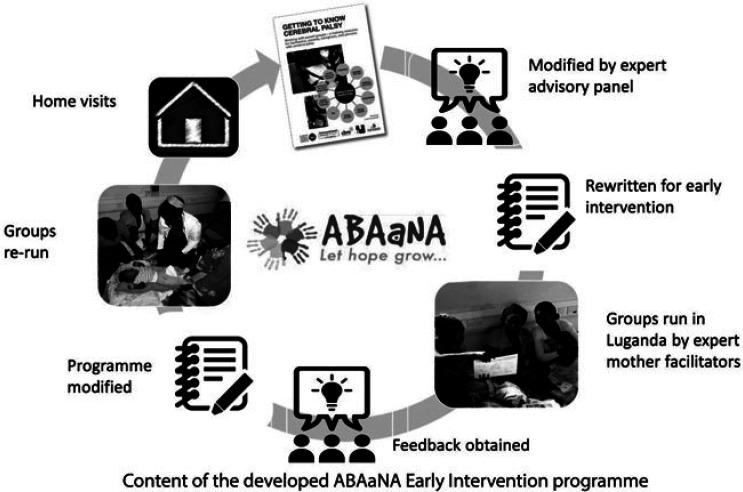
Global attention on early child development, inclusive of those with disability, has the potential to translate into improved action for the millions of children with developmental disability living in low- and middle-income countries. Nurturing care is crucial for all children, arguably even more so for children with developmental disability. A high proportion of survivors of neonatal conditions such as prematurity and neonatal encephalopathy are affected by early child developmental disability. The first thousand days of life is a critical period for neuroplasticity and an important window of opportunity for interventions, which maximize developmental potential and other outcomes. Since 2010, our group has been examining predictors, outcomes, and experiences of neonatal encephalopathy in Uganda. The need for an early child intervention program to maximize participation and improve the quality of life for children and families became apparent. In response, the “ABAaNA early intervention program,” (now re-branding as ‘Baby Ubuntu’) a group participatory early intervention program for young children with developmental disability and their families, was developed and piloted. Piloting has provided early evidence of feasibility, acceptability, and impact and a feasibility trial is underway. Future research aims to develop programmatic capacity across diverse settings and evaluate its impact at scale.
Overview
The claims and statistics of this paper haven’t been checked yet.
Run the check — free, no account needed. It reads the open-access text and checks the sources it cites.
Integrity signals
Registry
Cites
Statistics
Figures
Verification
Claims the paper makes
The claims and statistics of this paper haven’t been checked yet.
Run the check — free, no account needed. It reads the open-access text and checks the sources it cites.
Claims other papers make about this one
Each is checked against this paper’s own text: does it say what the citing paper says it does?
The cited source says what the claim attributes to it.
In the citing paper
“and pre-/post-evaluations have reported a 20–25% improvement in family impact quality of life [32].”
Self-check
Percentages, sums and reported differences re-computed from the paper’s own numbers.
The self-check needs the paper’s full text.
Citations
The citation lists haven’t been fetched yet
References 62 · Cited by 24
Research works printed but not linked: 54
- Amod, 2007, Use of the 1996 Griffiths Mental Development Scales for infants: A pilot study with a Black, South African sample, Journal of Child and Adolescent Mental Health, 19, 123, 10.2989/17280580709486647 · DOI
- Arregoces, 2019, Accountability for funds for nurturing care: What can we measure, Archives of Disease in Childhood, 104, S34, 10.1136/archdischild-2018-315429 · DOI
- Badawi, 1998, Antepartum risk factors for newborn encephalopathy: The Western Australian case-control study, BMJ, 317, 1549, 10.1136/bmj.317.7172.1549 · DOI
- Badawi, 1998, Intrapartum risk factors for newborn encephalopathy: The Western Australian case-control study, BMJ, 317, 1554, 10.1136/bmj.317.7172.1554 · DOI
- Banerjee, 2019, Reaching the dream of optimal development for every child, everywhere: What do we know about “how to”, Archives of Disease in Childhood, 104, S1, 10.1136/archdischild-2019-317087 · DOI
- Banks, 2017, Poverty and disability in low- and middle-income countries: A systematic review, PLoS One, 12, e0189996, 10.1371/journal.pone.0189996 · DOI
- Bao, 1997, Early intervention improves intellectual development in asphyxiated newborn infants. Intervention of Asphyxiated Newborn Infants Cooperative Research Group, Chinese Medical Journal (Engl.), 110, 875
- Bellman, 2013, Developmental assessment of children, BMJ, 346, e8687, 10.1136/bmj.e8687 · DOI · Paper page
- Belonwu, 2009, Cerebral palsy in Kano, Nigeria—a review, Nigerian Journal of Medicine, 18, 186, 10.4314/njm.v18i2.45062 · DOI
- Blencowe, 2012, National, regional, and worldwide estimates of preterm birth rates in the year 2010 with time trends since 1990 for selected countries: A systematic analysis and implications, Lancet, 379, 2162, 10.1016/S0140-6736(12)60820-4 · DOI · Paper page
- Boggs, 2019, Rating early child development outcome measurement tools for routine health programme use, Archives of Disease in Childhood, 104, S22, 10.1136/archdischild-2018-315431 · DOI
- Campbell, 2000, Framework for design and evaluation of complex interventions to improve health, BMJ, 321, 694, 10.1136/bmj.321.7262.694 · DOI · Paper page
- Cavallera, 2019, Scaling early child development: What are the barriers and enablers, Archives of Disease in Childhood, 104, S43, 10.1136/archdischild-2018-315425 · DOI
- Courtright, 2011, Visual impairment in children in middle- and lower-income countries, Archives of Disease in Childhood, 96, 1129, 10.1136/archdischild-2011-300093 · DOI
- Damiano, 2019, Poor data produce poor models: Children with developmental disabilities deserve better, Lancet Global Health, 7, e188, 10.1016/S2214-109X(18)30498-4 · DOI
- de Souza, 2006, The determinants of compliance with an early intervention programme for high-risk babies in India, Child Care Health Dev, 32, 63, 10.1111/j.1365-2214.2006.00576.x · DOI
- Dixon, 2002, Early developmental outcomes after newborn encephalopathy, Pediatrics, 109, 26, 10.1542/peds.109.1.26 · DOI
- Durkin, 2002, The epidemiology of developmental disabilities in low-income countries, Mental Retardation and Developmental Disabilities Research Reviews, 8, 206, 10.1002/mrdd.10039 · DOI
- Eken, 1995, Predictive value of early neuroimaging, pulsed Doppler and neurophysiology in full term infants with hypoxic-ischaemic encephalopathy, Archives of Disease in Childhood Fetal and Neonatal Edition, 73, F75, 10.1136/fn.73.2.F75 · DOI
- Ellis, 2000, Risk factors for neonatal encephalopathy in Kathmandu, Nepal, a developing country: Unmatched case-control study, BMJ, 320, 1229, 10.1136/bmj.320.7244.1229 · DOI
- Fleiss, 2015, Inflammation-induced sensitization of the brain in term infants, Developmental Medicine and Child Neurology, 57, 17, 10.1111/dmcn.12723 · DOI
- Hagberg, 2015, The role of inflammation in perinatal brain injury, Nature Reviews: Neurology, 11, 192
- Harteman, 2013, Placental pathology in full-term infants with hypoxic-ischemic neonatal encephalopathy and association with magnetic resonance imaging pattern of brain injury, Journal of Pediatrics, 163, 968, 10.1016/j.jpeds.2013.06.010 · DOI
- Hassell, 2018, Contribution of perinatal conditions to cerebral palsy in Uganda, Lancet Global Health, 6, e248, 10.1016/S2214-109X(18)30041-X · DOI
- Hayes, 2013, The placenta in infants >36 weeks gestation with neonatal encephalopathy: A case control study, Archives of Disease in Childhood Fetal and Neonatal Edition, 98, F233, 10.1136/archdischild-2012-301992 · DOI
- Kakooza-Mwesige, 2017, Prevalence of cerebral palsy in Uganda: A population-based study, Lancet Global Health, 5, e1275, 10.1016/S2214-109X(17)30374-1 · DOI
- Kakooza-Mwesige, 2016, Grey matter brain injuries are common in Ugandan children with cerebral palsy suggesting a perinatal aetiology in full-term infants, Acta Paediatrica, 105, 655, 10.1111/apa.13352 · DOI
- Kohli-Lynch, 2017, Neurodevelopmental impairment in children after group b streptococcal disease worldwide: Systematic review and meta-analyses, Clinical Infectious Diseases, 65, S190, 10.1093/cid/cix663 · DOI
- Kohli-Lynch, 2019, Early intervention for children at high risk of developmental disability in low- and middle-income countries: A narrative review, International Journal of Environmental Research and Public Health, 16, 4449, 10.3390/ijerph16224449 · DOI
- Kostanjsek, 2013, Counting disability: Global and national estimation, Disability and Rehabilitation, 35, 1065, 10.3109/09638288.2012.720354 · DOI
- Lawn, 2014, Every newborn: Progress, priorities, and potential beyond survival, Lancet, 384, 189, 10.1016/S0140-6736(14)60496-7 · DOI · Paper page
- Lee, 2013, Intrapartum-related neonatal encephalopathy incidence and impairment at regional and global levels for 2010 with trends from 1990, Pediatric Research, 74, 50, 10.1038/pr.2013.206 · DOI
- Martinez-Biarge, 2013, Antepartum and intrapartum factors preceding neonatal hypoxic-ischemic encephalopathy, Pediatrics, 132, e952, 10.1542/peds.2013-0511 · DOI
- McDermott, 2011, The myth and reality of disability prevalence: Measuring disability for research and service, Disability and Health Journal, 4, 1, 10.1016/j.dhjo.2010.06.002 · DOI
- Milner, 2019, Contextual design choices and partnerships for scaling early child development programmes, Archives of Disease in Childhood, 104, S3, 10.1136/archdischild-2018-315433 · DOI
- Milner, 2019, Counting outcomes, coverage and quality for early child development programmes, Archives of Disease in Childhood, 104, S13, 10.1136/archdischild-2018-315430 · DOI
- Mwaniki, 2012, Long-term neurodevelopmental outcomes after intrauterine and neonatal insults: A systematic review, Lancet, 379, 445, 10.1016/S0140-6736(11)61577-8 · DOI · Paper page
- Nakamanya, 2015, Maternal experiences of caring for an infant with neurological impairment after neonatal encephalopathy in Uganda: A qualitative study, Disability and Rehabilitation, 37, 1470, 10.3109/09638288.2014.972582 · DOI
- Nampijja, 2019, Randomised controlled pilot feasibility trial of an early intervention programme for young infants with neurodevelopmental impairment in Uganda: A study protocol, BMJ Open, 9, e032705, 10.1136/bmjopen-2019-032705 · DOI
- Olusanya, 2012, Neonatal hearing screening and intervention in resource-limited settings: An overview, Archives of Disease in Childhood, 97, 654, 10.1136/archdischild-2012-301786 · DOI
- Olusanya, 2019, Poor data produce poor models: Children with developmental disabilities deserve better—authors' reply, Lancet Glob Health, 7, e189, 10.1016/S2214-109X(18)30496-0 · DOI
- Olusanya, 2018, Developmental disabilities among children younger than 5 years in 195 countries and territories, 1990-2016: A systematic analysis for the Global Burden of Disease Study 2016, Lancet Global Health, 6, e1100, 10.1016/S2214-109X(18)30309-7 · DOI · Paper page
- Palmer, 1993, The effects of physical therapy on cerebral palsy: A controlled trial in infants with spastic diplegia, Pediatric Physical Therapy, 5, 93, 10.1097/00001577-199300520-00019 · DOI
- Seale, 2013, Neonatal severe bacterial infection impairment estimates in South Asia, sub-Saharan Africa, and Latin America for 2010, Pediatric Research, 74, 73, 10.1038/pr.2013.207 · DOI · Paper page
- Singhi, 2002, Clinical spectrum of cerebral palsy in north India—an analysis of 1,000 cases, Journal of Tropical Pediatrics, 48, 162, 10.1093/tropej/48.3.162 · DOI
- Singhi, 2013, Changes in the clinical spectrum of cerebral palsy over two decades in North India—an analysis of 1212 cases, Journal of Tropical Pediatrics, 59, 434, 10.1093/tropej/fmt035 · DOI
- Tann, 2016, Early cranial ultrasound findings among infants with neonatal encephalopathy in Uganda: An observational study, Pediatric Research, 80, 190, 10.1038/pr.2016.77 · DOI
- Tann, 2018, Perinatal risk factors for neonatal encephalopathy: An unmatched case-control study, Archives of Disease in Childhood Fetal and Neonatal Edition, 103, F250, 10.1136/archdischild-2017-312744 · DOI
- Tann, 2014, Prevalence of bloodstream pathogens is higher in neonatal encephalopathy cases vs. controls using a novel panel of real-time PCR assays, PLoS One, 9, e97259, 10.1371/journal.pone.0097259 · DOI
- Tann, 2018, Early childhood outcomes after neonatal encephalopathy in Uganda: A cohort study, EClinicalMedicine, 6, 26, 10.1016/j.eclinm.2018.12.001 · DOI
- Thompson, 1997, The value of a scoring system for hypoxic ischaemic encephalopathy in predicting neurodevelopmental outcome, Acta Paediatrica, 86, 757, 10.1111/j.1651-2227.1997.tb08581.x · DOI
- Varni, 2003, The PedsQL 4.0 as a pediatric population health measure: Feasibility, reliability, and validity, Ambulatory Pediatrics, 3, 329, 10.1367/1539-4409(2003)003<0329:TPAAPP>2.0.CO;2 · DOI
- Wallander, 2014, Development of children at risk for adverse outcomes participating in early intervention in developing countries: A randomized controlled trial, Journal of Child Psychology and Psychiatry and Allied Disciplines, 55, 1251, 10.1111/jcpp.12247 · DOI
- Wallander, 2010, Brain research to ameliorate impaired neurodevelopment–home-based intervention trial (BRAIN-HIT), BMC Pediatrics, 10, 27, 10.1186/1471-2431-10-27 · DOI
Metadata
- Authors
- Tann, C. J., Kohli-Lynch, M., Nalugya, R., Sadoo, S., Martin, K., Lassman, R., Nanyunja, C., Musoke, M., Sewagaba, M., Nampijja, M., Seeley, J., & Webb, E. L.
- Affiliations
- University of Bristol (GB)
- Corresponding author
- Tann, Cally J.
- ORCID
- Venue
- Infants & Young Children
- Published
- 2021-01
- Volume
- 34
- Issue
- 1
- Pages
- 17-32
- ISSN
- 0896-3746 (ISSN-L)
- PMC
- PMC7983078
- OpenAlex
- W3108523065
- Cited by
- 24
- References
- 62
- Citations by year
- 2026: 7 · 2025: 3 · 2024: 2 · 2023: 5 · 2022: 5 · 2021: 2
- FWCI
- 1.20
- Type
- journal article
- Language
- en
- Open access
- hybrid
- doi.org
- Licence
- Locations
- Infants & Young Children (publishedVersion, cc-by-nc-nd)
- PubMed Central (publishedVersion, cc-by-nc-nd)
- PubMed (publishedVersion)
- LSHTM Research Online (London School of Hygiene and Tropical Medicine) (submittedVersion)
- Funders
- Wellcome Trust (094016, 094016/Z/10/Z)
- National Institute for Health and Care Research (ACF-2017-25-006)
- Grand Challenges Canada
- Cerebral Palsy Alliance
- Medical Research Council (MR/R010161/1, MR/S004971/1)
- Topics
- Social Sciences › Psychology › Clinical Psychology › Family and Disability Support Research
- Health Sciences › Medicine › Pediatrics, Perinatology and Child Health › Infant Development and Preterm Care
- Health Sciences › Medicine › Pediatrics, Perinatology and Child Health › Neonatal and fetal brain pathology
- Keywords
- developmental disabilities, early childhood development, neonatal encephalopathy, preterm birth, nurturing care, early intervention, Uganda, low- and middle-income countries, family involvement, quality of life, first 1000 days
About these checks
Registry, retraction, Cites and statistics results are computed, not judged, with one exception: a printed reference that no index lists is read once by a model before it counts as a citation error. Claims are extracted by a model and kept only when their quote appears verbatim in the text; each cited source is then checked, with a model’s help, for whether it says what the claim relies on. Those verdicts can be wrong — read the claim’s quote and the cited source before relying on one.
Statistics and arithmetic are recomputed, not judged.
Confidence bands are shown only for fields calibrated on our annotated test set. None is calibrated yet, so no band is shown.
What counts as a claim ›How we measure confidence ›How we check this ›
Are you an author, or do you see a problem with this page? Request a review
How to cite
Cite CoChat for the checks on this page, and the paper for its own findings.
- This page
- CoChat. (2026). Citation check: Surviving and Thriving: Early Intervention for Neonatal Survivors With Developmental Disability in Uganda. https://app.cochat.ai/papers/10.1097/iyc.0000000000000182
- The paper
- Tann, C. J., Kohli-Lynch, M., Nalugya, R., Sadoo, S., Martin, K., Lassman, R., Nanyunja, C., Musoke, M., Sewagaba, M., Nampijja, M., Seeley, J., & Webb, E. L. (2021). Surviving and Thriving: Early Intervention for Neonatal Survivors With Developmental Disability in Uganda. Infants & Young Children. https://doi.org/10.1097/iyc.0000000000000182
