

The paracetamol metabolite N-acetylp-benzoquinone imine reduces excitability in first- and second-order neurons of the pain pathway through actions on KV7 channels
Open accessThe DOI matches its Crossref record; 58 of the 58 references it cites were found in a registry or an index.
Abstract
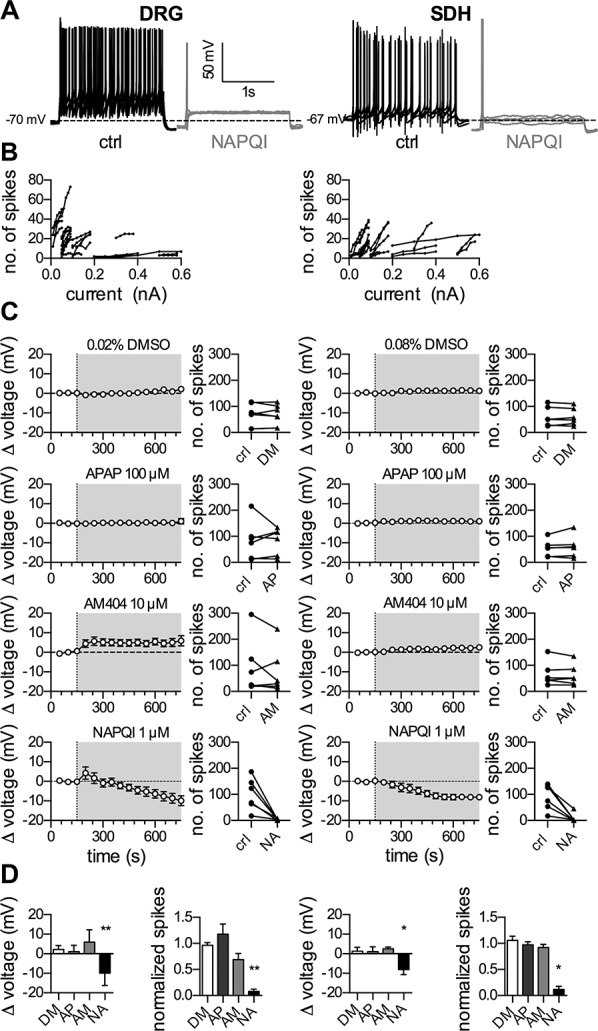
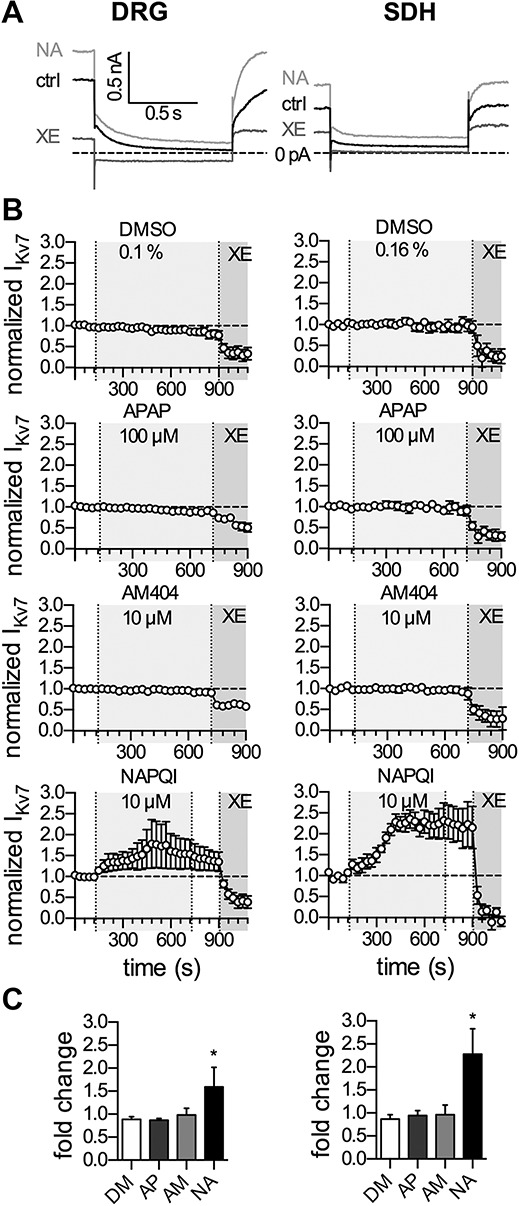
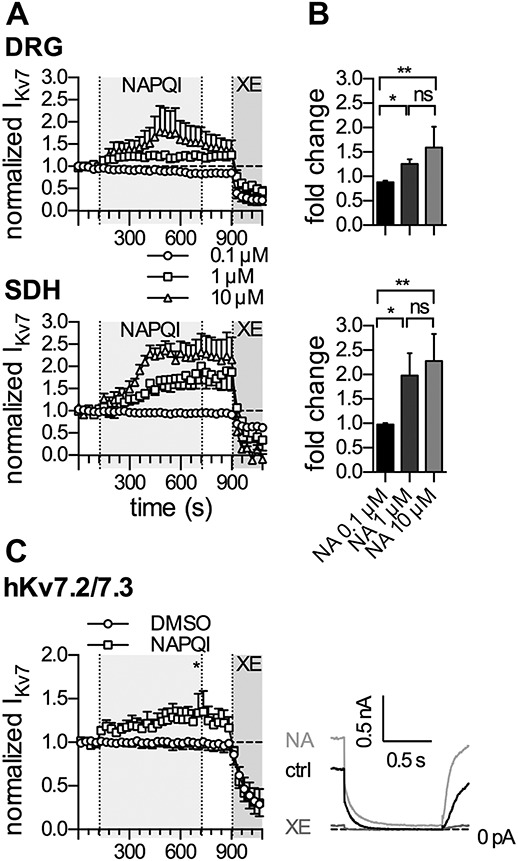
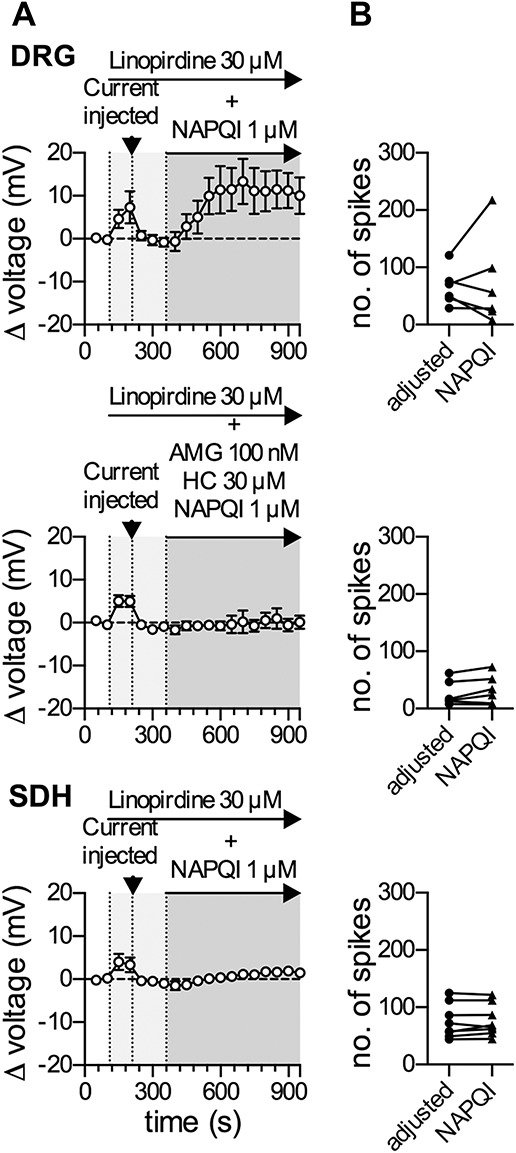
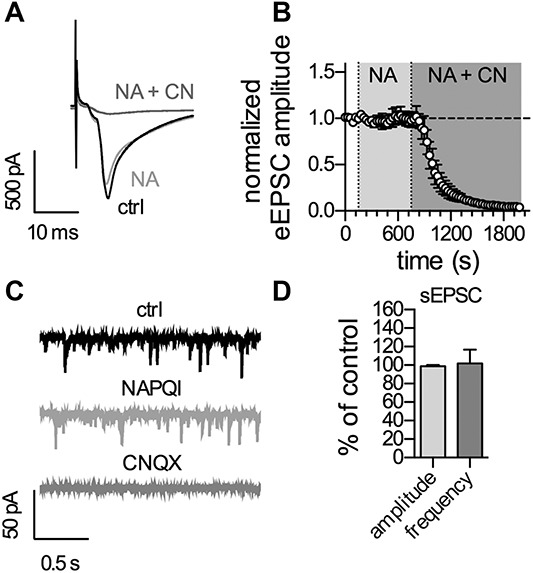
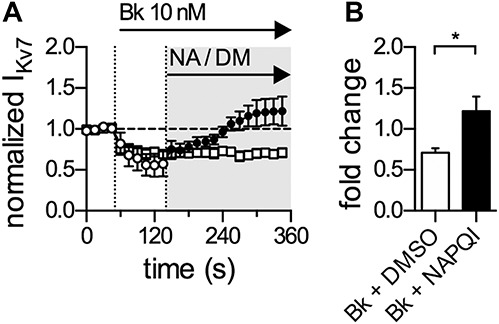
Paracetamol (acetaminophen, APAP) is one of the most frequently used analgesic agents worldwide. It is generally preferred over nonsteroidal anti-inflammatory drugs because it does not cause typical adverse effects resulting from the inhibition of cyclooxygenases, such as gastric ulcers. Nevertheless, inhibitory impact on these enzymes is claimed to contribute to paracetamols mechanisms of action which, therefore, remained controversial. Recently, the APAP metabolites N-arachidonoylaminophenol (AM404) and N-acetyl-p-benzoquinone imine (NAPQI) have been detected in the central nervous system after systemic APAP administration and were reported to mediate paracetamol effects. In contrast to nonsteroidal anti-inflammatory drugs that rather support seizure activity, paracetamol provides anticonvulsant actions, and this dampening of neuronal activity may also form the basis for analgesic effects. Here, we reveal that the APAP metabolite NAPQI, but neither the parent compound nor the metabolite AM404, reduces membrane excitability in rat dorsal root ganglion (DRG) and spinal dorsal horn (SDH) neurons. The observed reduction of spike frequencies is accompanied by hyperpolarization in both sets of neurons. In parallel, NAPQI, but neither APAP nor AM404, increases currents through K V 7 channels in DRG and SDH neurons, and the impact on neuronal excitability is absent if K V 7 channels are blocked. Furthermore, NAPQI can revert the inhibitory action of the inflammatory mediator bradykinin on K V 7 channels but does not affect synaptic transmission between DRG and SDH neurons. These results show that the paracetamol metabolite NAPQI dampens excitability of first- and second-order neurons of the pain pathway through an action on K V 7 channels.
Overview
The claims and statistics of this paper haven’t been checked yet.
Free: it reads the open-access text and checks the first 5 claims that cite a source we can check. Create a free account to check every claim.
Integrity signals
Registry
Cites
Statistics
Figures
Verification
Claims the paper makes
The claims and statistics of this paper haven’t been checked yet.
Free: it reads the open-access text and checks the first 5 claims that cite a source we can check. Create a free account to check every claim.
Claims other papers make about this one
Each is checked against this paper’s own text: does it say what the citing paper says it does?
The source backs part of the claim, not all of it — or backs it for a different population, condition or comparison.
In the citing paper
“In addition, the reactive paracetamol metabolite N-acetyl-p-benzoquinone imine, which has been detected in the CNS, has recently been shown to reduce membrane excitability in rat dorsal root ganglion and spinal dorsal horn neurons accompanied by hyperpolarization resulting from increased currents through potassium K V 7 channels [108].”
From Paracetamol (acetaminophen): A familiar drug with an unexplained mechanism of action (2021) · cites this paper as [108]
Experimental — accuracy not yet measured
Self-check
Percentages, sums and reported differences re-computed from the paper’s own numbers.
The self-check needs the paper’s full text.
Citations
Cites
TRPA1 mediates formalin-induced pain
McNamara, C. R., Mandel-Brehm, J., Bautista, D. M., Siemens, J., Deranian, K. L., Zhao, M., Hayward, N. J., Chong, J. A., Julius, D., Moran, M. M., et al. (2007) · Proceedings of the National Academy of Sciences · doi:10.1073/pnas.0705924104 · Cited by 1,263 · cited 1×
“To reveal whether the NAPQIinduced depolarization in DRG neurons with blocked KV7 channels was mediated by these 2 types of TRP channels, the APAP metabolite was applied again together with the TRPV1 blocker AMG 9810 (100 nM)(16) and the TRPA1 blocker HC 030031 (30 mΜ).(35) This concentration of AMG 9810 reduced curre…”
McGill, M. R., & Jaeschke, H. (2013) · Pharmaceutical Research · doi:10.1007/s11095-013-1007-6 · Cited by 704 · cited 2×
“(NAPQI), which is known to mediate hepatotoxicity after paracetamol over dosage.(34) Less than 0.”
Brown, D. A., & Passmore, G. M. (2009) · British Journal of Pharmacology · doi:10.1111/j.1476-5381.2009.00111.x · Cited by 676 · cited 1×
“5 proteins and to display currents mediated by the respective channels.(3,11) Akin effects were also observed with recombinant human KV7.”
Graham, G. G., Davies, M. J., Day, R. O., Mohamudally, A., & Scott, K. F. (2013) · Inflammopharmacology · doi:10.1007/s10787-013-0172-x · Cited by 671 · cited 1×
“inhibit COX-1 and COX-2 with half maximal effects at 105 and 26 mM, respectively,(21) and COX inhibition is frequently inferred as an analgesic mechanism of this drug.(5,19) In light of uncertainties regarding COX inhibition as para-”
Acetaminophen (paracetamol) is a selective cyclooxygenase‐2 inhibitor in man
Hinz, B., Cheremina, O., & Brune, K. (2008) · The FASEB Journal · doi:10.1096/fj.07-8506com · Cited by 478
Högestätt, E. D., Jönsson, B. A. G., Ermund, A., Andersson, D. A., Björk, H., Alexander, J. P., Cravatt, B. F., Basbaum, A. I., & Zygmunt, P. M. (2005) · Journal of Biological Chemistry · doi:10.1074/jbc.m501489200 · Cited by 454
Devaux, J. J., Kleopa, K. A., Cooper, E. C., & Scherer, S. S. (2004) · The Journal of Neuroscience · doi:10.1523/jneurosci.4512-03.2004 · Cited by 450 · cited 3×
“Functional characteristics of Kv7 channels in the spinal cord are poorly investigated even though the expression of relevant proteins has been detected by immunohistochemistry [9].”
InfluentialGavva, N. R., Tamir, R., Qu, Y., Klionsky, L., Zhang, T. J., Immke, D., Wang, J., Zhu, D., Vanderah, T. W., Porreca, F., et al. (2005) · The Journal of Pharmacology and Experimental Therapeutics · doi:10.1124/jpet.104.079855 · Cited by 390
Acetaminophen from liver to brain: New insights into drug pharmacological action and toxicity
Ghanem, C. I., Pérez, M. J., Manautou, J. E., & Mottino, A. D. (2016) · Pharmacological Research · doi:10.1016/j.phrs.2016.02.020 · Cited by 384 · cited 3×
“dose may cause acute liver failure, a toxic effect rarely seen with NSAIDs.(5,17) Analgesic and unfavorable actions of NSAIDs, such as”
Musazzi, L., Milanese, M., Farisello, P., Zappettini, S., Tardito, D., Barbiero, V. S., Bonifacino, T., Mallei, A., Baldelli, P., Racagni, G., et al. (2010) · PLoS ONE · doi:10.1371/journal.pone.0008566 · Cited by 289
Cited by
Paracetamol (acetaminophen): A familiar drug with an unexplained mechanism of action
Ayoub, S. S. (2021) · Temperature · doi:10.1080/23328940.2021.1886392 · Cited by 223
“[108] Ray S, Salzer I, Kronschläger MT, et al.”
BackgroundParacetamol – An old drug with new mechanisms of action
Przybyła, G. W., Szychowski, K. A., & Gmiński, J. (2021) · Clinical and Experimental Pharmacology and Physiology · doi:10.1111/1440-1681.13392 · Cited by 190
D’Arcy, Y. M., Mantyh, P. W., Yaksh, T. L., Donevan, S. D., Hall, J. A., Sadrarhami, M. M., & Viktrup, L. (2021) · Postgraduate Medicine · doi:10.1080/00325481.2021.1949199 · Cited by 80
“nociceptive N-Methyl-d-aspartic acid/nitric oxide signaling in the spinal cord or activation of voltage-gated potassium channels in the dorsal horn [73,79].”
BackgroundNociceptor Signalling through ion Channel Regulation via GPCRs
Salzer, I., Ray, S., Schicker, K. W., & Boehm, S. (2019) · International Journal of Molecular Sciences · doi:10.3390/ijms20102488 · Cited by 66
“Enhancing KV7 currents exerts analgesic effects since hyperpolarizing the resting membrane potential of nociceptors decreases neuronal excitability [220,221].”
BackgroundSelf-citationThe M-current works in tandem with the persistent sodium current to set the speed of locomotion
Verneuil, J., Brocard, C., Trouplin, V., Villard, L., Peyronnet, J., & Brocard, F. (2020) · PLoS Biology · doi:10.1371/journal.pbio.3000738 · Cited by 52
van der Horst, J., Manville, R. W., Hayes, K., Thomsen, M. B., Abbott, G. W., & Jepps, T. A. (2020) · Arteriosclerosis Thrombosis and Vascular Biology · doi:10.1161/atvbaha.120.313997 · Cited by 41
Physiology and Therapeutic Potential of SK, H, and M Medium AfterHyperPolarization Ion Channels
Dwivedi, D., & Bhalla, U. S. (2021) · Frontiers in Molecular Neuroscience · doi:10.3389/fnmol.2021.658435 · Cited by 30
“These drugs produce a hyperpolarization shift in M channel activation and reduce their inactivation (Peretz et al., 2005, 2007, 2010; Ray et al., 2019).”
BackgroundNovel Analgesics with Peripheral Targets
Ciotu, C. I., & Fischer, M. J. M. (2020) · Neurotherapeutics · doi:10.1007/s13311-020-00937-z · Cited by 23
Garrido‐Suárez, B. B., Garrido, G., Menéndez, A. B., Merino, N., Valdés, O., Delgado, R., & Granados‐Soto, V. (2021) · Neurochemistry International · doi:10.1016/j.neuint.2021.105160 · Cited by 16
The pharmacology activities of Angelica keiskei Koidzumi and its efficacy and safety in humans
Wahyuni, I., Aulifa, D. L., Rosdianto, A. M., & Levita, J. (2024) · Heliyon · doi:10.1016/j.heliyon.2024.e24119 · Cited by 12
“Acetaminophen is an antipyretic-analgesic drug that is widely used because it does not inhibit the catalytic work of COX-1 in the stomach, thus the production of prostaglandin is not altered [83].”
BackgroundInsights into ion channels to identify drug target for neuropathic pain management
Sharma, S., Rana, P., Dhingra, N., & Kaur, T. (2025) · Inflammopharmacology · doi:10.1007/s10787-025-01899-4 · Cited by 11
Carotenuto, L., Keminer, O., Carleo, G., Zaliani, A., Leo, A., Citraro, R., De Sarro, G., Dirkx, N., Kaji, M., Weckhuysen, S., et al. (2025) · British Journal of Pharmacology · doi:10.1111/bph.70119 · Cited by 10
“Nonetheless, Kv7 activation may contribute to the analgesic action of celecoxib (Du et al., 2011) and paracetamol (Ray et al., 2019), and to the vasorelaxant effects of fasudil (Zhang et al., 2016).”
Suleimanova, A., Talanov, M. O., van den Maagdenberg, A. M. J. M., & Giniatullin, R. A. (2021) · Frontiers in Cellular Neuroscience · doi:10.3389/fncel.2021.644047 · Cited by 9
“One possibility may be the activation of potassium-mediated K V 7/M-currents, which contribute to the stabilization of the membrane potential and can be activated by the analgesic drugs, such as paracetamol (Ray et al., 2019).”
BackgroundPharmacological and toxicological effects of paracetamol: current knowledge and a review
Athbhaiya, G., Tiwari, A., Choudhary, R., & Samal, P. K. (2026) · Drug and Chemical Toxicology · doi:10.1080/01480545.2025.2604674 · Cited by 10
“3, in dorsal root ganglion and spinal dorsal horn neurons (Ray et al., 2018). cell cultures from the spinal dorsal horn of Sprague Dawley rats were used to show that NAPQi stimulates Kv7 channels both directly and indirectly, resulting in enhanced hyperpolarization and decreased action potential…”
Analgesic Action of Acetaminophen via Kv7 Channels
Stampf, J., Ciotu, C. I., Heber, S., Boehm, S., Fischer, M. J. M., & Salzer, I. (2022) · International Journal of Molecular Sciences · doi:10.3390/ijms24010650 · Cited by 8
“Our results suggest that a central effect of APAP is not caused by NAPQI, and thus probably does not involve Kv7 [13].”
BackgroundInfluentialSelf-citationLosgott, T., Kudlacek, O., Yang, J., Schicker, K. W., Boehm, S., & Salzer, I. (2024) · British Journal of Pharmacology · doi:10.1111/bph.17419 · Cited by 7
“This is a major mechanism for algogenic agents to boost neuronal excitability in DRG neurons and to trigger pain sensation (Salzer et al., 2019).”
InfluentialSelf-citationTsuchiya, H., & Mizogami, M. (2025) · Future Pharmacology · doi:10.3390/futurepharmacol5030040 · Cited by 9
“Ray et al. [130] conducted electrophysiological experiments with dissociated rat dorsal root ganglion and spiral dorsal horn neurons in a perforated current-clamp mode.”
Dannesboe, J., Bastrup, J., Nielsen, K. H., Munck, P., Thomsen, M. B., Hawkins, C. L., & Jepps, T. A. (2024) · Pharmacological Research · doi:10.1016/j.phrs.2024.107540 · Cited by 6
Ray, S., Stampf, J., Kudlacek, O., Yang, J., Schicker, K. W., Graf, Y., Losgott, T., Boehm, S., & Salzer, I. (2024) · British Journal of Pharmacology · doi:10.1111/bph.16380 · Cited by 5
“…of paracetamol (Stampf et al., 2022), and the paracetamol metabolite N-acetyl-p-benzo quinone imine ( NAPQI ), but not the parental drug itself, increased currents through K V 7 channels in neurons of the pain pathway (Ray et al., 2019) and vascular smooth muscle cells (van der Horst et al., 2020).”
BackgroundMethodSelf-citationParacetamol (N-acetyl-p-aminophenol, APAP) Threats: Therapeutic Clock
Prasad, T., Singh, S., Kumar, P., Rathi, R., Kumar, N., Anuj, Sharma, S., Nisha, N., Dhanajaybharati, Abhishek, A., et al. (2023) · International Journal of Pharma Professional’s Research (IJPPR) · doi:10.48165/ijppronline.2023.14203 · Cited by 4
Melatonin synergizes with the antinociceptive effect of N-palmitoylethanolamide and paracetamol
Alavez-Pérez, N. S., Patiño-Camacho, I. S., Granados‐Soto, V., & Déciga‐Campos, M. (2022) · Die Pharmazie · doi:10.31083/ph.2022.2428 · Cited by 3
Mechanisms of sympathoexcitation via P2Y6 receptors
Mosshammer, A., Zou, L., Boehm, S., & Schicker, K. W. (2022) · Frontiers in Pharmacology · doi:10.3389/fphar.2022.1014284 · Cited by 3
Self-citationImproving K v 7 targeting anticonvulsants ‐ will repurposing save the day?
Gamper, N. L. (2025) · British Journal of Pharmacology · doi:10.1111/bph.70290 · Cited by 2
“These include painkillers, celecoxib (Du et al., 2011) and paracetamol (Ray et al., 2019) and a vasodilator, fasudil (Zhang et al., 2016).”
Combining clinically common drugs with hindlimb stretching in spinal cord injured rodents
Forston, M. J., Jordan, S., Cesarz, G. M., Burke, D. A., Shum-Siu, A., Petruska, J. C., & Magnuson, D. S. K. (2024) · Spinal Cord · doi:10.1038/s41393-024-01023-3 · Cited by 1
Gaussian white noise stimulation as an alternative method to excite sensory neurons
Losgott, T., Schicker, K. W., Hilber, K., Boehm, S., & Salzer, I. (2025) · Frontiers in Pharmacology · doi:10.3389/fphar.2025.1561905 · Cited by 1
Self-citationKv7 channels as pharmacological targets for central nervous system diseases
Miceli, F., Soldovieri, M. V., Barrese, V., & Taglialatela, M. (2026) · Pharmacological Reviews · doi:10.1016/j.pharmr.2026.100153 · Cited by 1
Synthesis and Biological Evaluation of New Antiseizure Compounds Derived From Valproic Acid
Garofalo, F. M., Sbaraglini, M. L., Barrionuevo, E. M., Peralta, E., Bonifazi, E. L., Talevi, A., & Gavernet, L. (2023) · Future Medicinal Chemistry · doi:10.4155/fmc-2022-0222 · Cited by 1
Wang, Q., Wang, Z., Ma, T., Wang, L., Zhao, C., & Kang, P. (2022) · Research Square · doi:10.21203/rs.3.rs-1794721/v1 · Cited by 1
Meet Our Editorial Board Member
Boehm, S. (2020) · Current Neuropharmacology · doi:10.2174/1570159x1902201231152908
Self-citation(2022) · Elsevier eBooks · doi:10.1016/b978-3-437-23673-0.00006-9
KCNQ Kanalak eta Parazetamola: Epilepsiaren Tratamendurako Aukera Bat?
Núñez, E., M‐Alicante, S., Sanchez, N., Urrutia, J., Muguruza‐Montero, A., Ibarluzea, M. G., & Villarroel, Á. (2025) · EKAIA Euskal Herriko Unibertsitateko Zientzi eta Teknologi Aldizkaria · doi:10.1387/ekaia.27126
Menon, S., Lawrence, L., Sivaram, V. P., Padikkala, J., Mathew, S. E., & Narayanankutty, A. (2025) · Zeitschrift für Naturforschung C · doi:10.1515/znc-2025-0088
Postoperative Pain and Opioid Use in Urogynecology Patients
Divirgilio, L., Long, J. B., & Boyd, S. S. (2025) · Anesthesia Research · doi:10.3390/anesthres2040021
“Its metabolites have also been shown to act at cannabinoid receptors, modulate serotonergic and adenosine pathways and modulate neuronal excitability, also contributing to analgesic effects [60,61].”
GPR88 promotes neurite outgrowth of sensory neurons via activation of Gi/o
Ün, D., Gilbert, C. E., Steinkellner, T., Salzer, I., & Freissmuth, M. (2026) · Frontiers in Pharmacology · doi:10.3389/fphar.2025.1730247
Self-citationRadzka, M., Kosowska, M., Kukulska, M. B., Dzierzgowska, W. N., Grzelak, D., Draim, M., Rostkowska, A., Kupisiak, S., Pasierb, N., & Radzka, I. (2025) · International Journal of Innovative Technologies in Social Science · doi:10.31435/ijitss.4(48).2025.5008
La contribution du courant potassique M dans les processus physio-pathologiques de la locomotion
Verneuil, J. (2021) · theses.fr (ABES) · doi:10.70675/d6aff829z706az473az9150zbe286f56aa0a
Could NAPQI Contribute to Paracetamol Analgesia? Redox Modulation of Kv7 Ion Channels
M‐Alicante, S., Urrutia, J., Muguruza‐Montero, A., Revuelta, M., Arrizabalaga-Iriondo, A., Villarroel, Á., & Núñez, E. (2026) · Pharmacology Research & Perspectives · doi:10.1002/prp2.70283
Reporting of Statistical Results in the Field of Pain Research
Chinaka, T. (2025) · University of the Witwatersrand, Johannesburg Institutional Repository on DSpace (University of the Witwatersrand, Johannesburg)
Metadata
- Authors
- Ray, S., Salzer, I., Kronschläger, M. T., & Boehm, S.
- Affiliations
- Medical University of Vienna (AT)
- Corresponding author
- Boehm, Stefan
- Venue
- Pain
- Published
- 2018-12-28
- Volume
- 160
- Issue
- 4
- Pages
- 954-964
- ISSN
- 0304-3959 (ISSN-L)
- 1872-6623
- PMC
- PMC6430418
- OpenAlex
- W2907714915
- Semantic Scholar
- 096ce4b8cbeff2295995fcfec417cfb90bc964bb
- Cited by
- 35
- References
- 58
- Citations by year
- 2026: 4 · 2025: 8 · 2024: 5 · 2023: 2 · 2022: 4 · 2021: 6 · 2020: 5 · 2019: 1
- FWCI
- 2.06
- Type
- journal article
- Language
- en
- Open access
- hybrid
- doi.org
- Locations
- Pain (publishedVersion, cc-by)
- Europe PMC (PubMed Central) (publishedVersion, cc-by)
- PubMed Central (publishedVersion, cc-by)
- PubMed (publishedVersion)
- Topics
- Health Sciences › Medicine › Physiology (medical) › Pain Mechanisms and Treatments
- Life Sciences › Biochemistry, Genetics and Molecular Biology › Molecular Biology › Ion channel regulation and function
- Life Sciences › Neuroscience › Sensory Systems › Ion Channels and Receptors
- Keywords
- paracetamol, N-acetyl-p-benzoquinone imine, AM404, Kv7 channels, neuronal excitability, dorsal root ganglion neurons, dorsal horn, bradykinin, analgesia, pain pathways, cyclooxygenase inhibition, hyperpolarization, synaptic transmission
- MeSH terms
- Animals, Animals, Newborn, Bradykinin, Capsaicin, Cells, Cultured, Dose-Response Relationship, Drug, Female, Humans, Imines, Male, Pregnancy, Sensory Receptor Cells, Spinal Cord, Transfection, Signal Transduction, Benzoquinones, Rats, Sprague-Dawley, Patch-Clamp Techniques, Analgesics, Non-Narcotic, Excitatory Postsynaptic Potentials, Potassium Channel Blockers, Rats, KCNQ1 Potassium Channel, In Vitro Techniques
About these checks
Registry, retraction, Cites and statistics results are computed, not judged, with one exception: a printed reference that no index lists is read once by a model before it counts as a citation error. Claims are extracted by a model and kept only when their quote appears verbatim in the text; each cited source is then checked, with a model’s help, for whether it says what the claim relies on. Those verdicts can be wrong — read the claim’s quote and the cited source before relying on one.
Statistics and arithmetic are recomputed, not judged.
Confidence bands are shown only for fields calibrated on our annotated test set. None is calibrated yet, so no band is shown.
What counts as a claim ›How we measure confidence ›How we check this ›
Are you an author, or do you see a problem with this page? Request a review
Data sources
Bibliographic data: Semantic Scholar, OpenAlex, Crossref.
Contains information from the Semantic Scholar Academic Graph Datasets, made available under the ODC Attribution License (ODC-BY 1.0).
Semantic Scholar’s data is described in: Kinney, R., et al. (2023). The Semantic Scholar Open Data Platform. arXiv:2301.10140.
