

The paracetamol metabolite N-acetylp-benzoquinone imine reduces excitability in first- and second-order neurons of the pain pathway through actions on KV7 channels
Open accessThe DOI matches its Crossref record; 58 of the 58 references it cites were found in a registry or an index.
Abstract
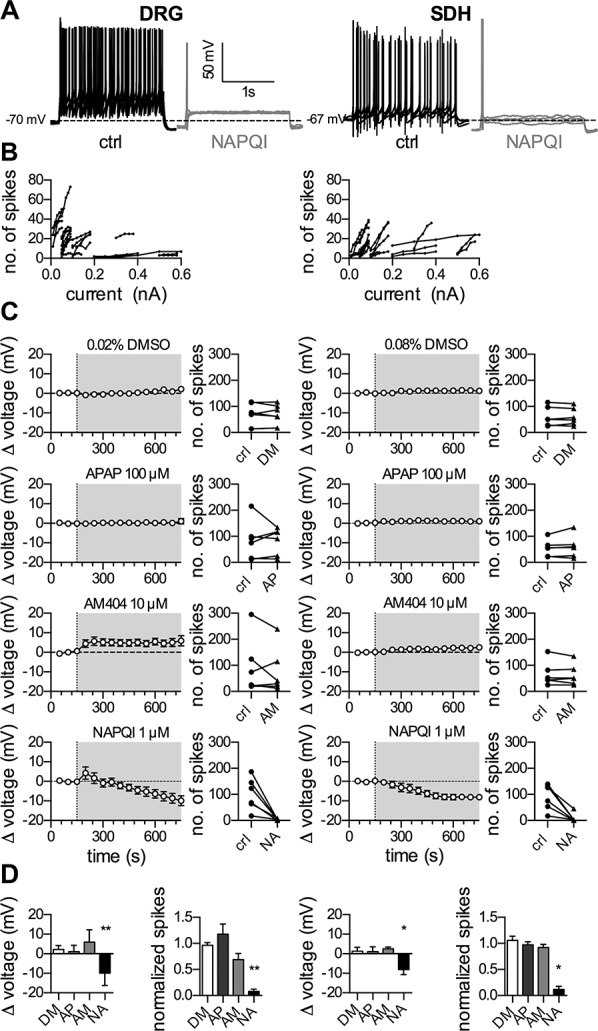
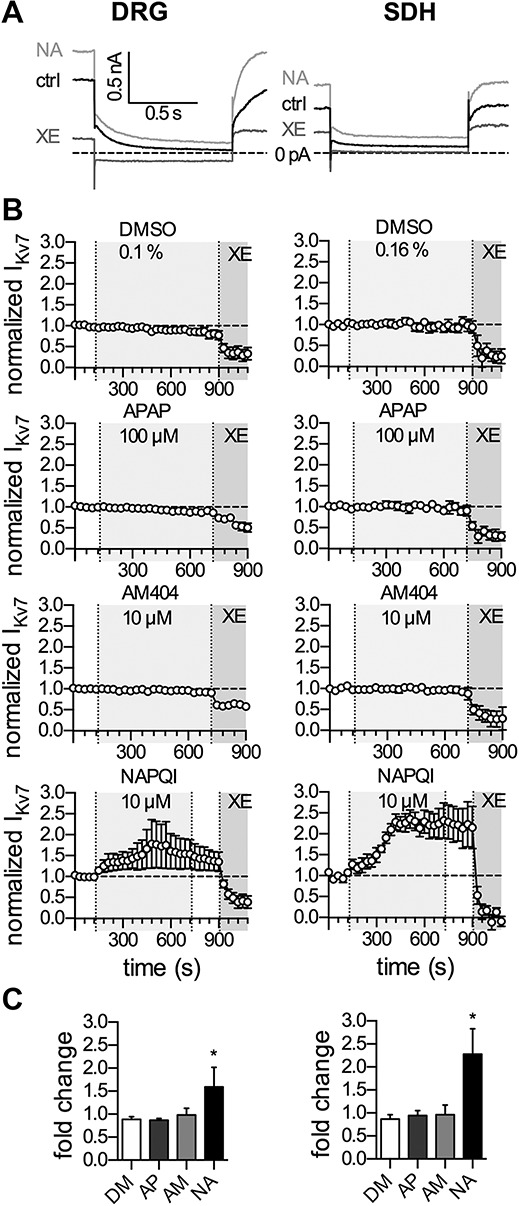
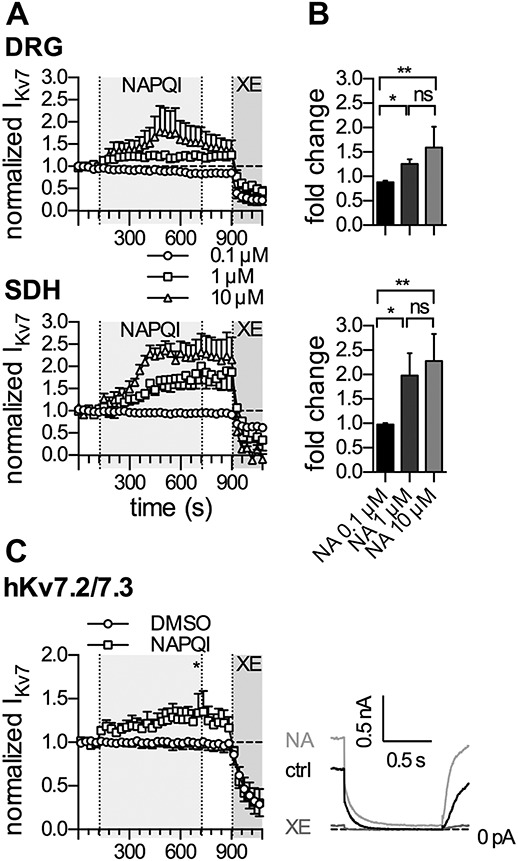
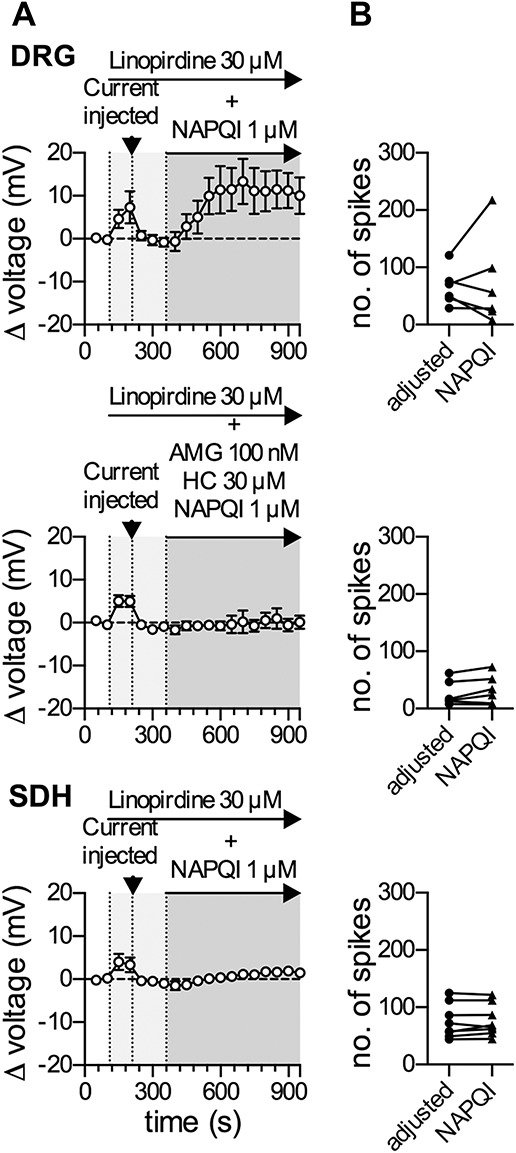
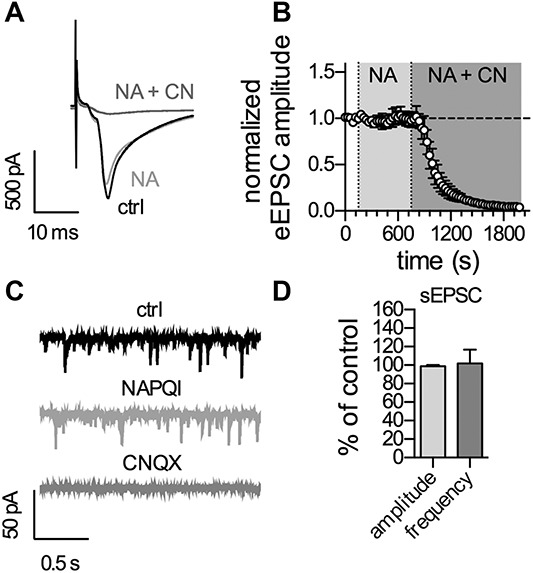
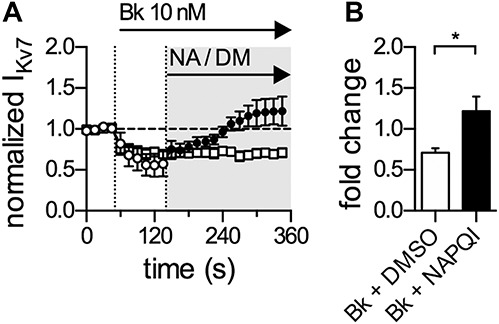
Paracetamol (acetaminophen, APAP) is one of the most frequently used analgesic agents worldwide. It is generally preferred over nonsteroidal anti-inflammatory drugs because it does not cause typical adverse effects resulting from the inhibition of cyclooxygenases, such as gastric ulcers. Nevertheless, inhibitory impact on these enzymes is claimed to contribute to paracetamols mechanisms of action which, therefore, remained controversial. Recently, the APAP metabolites N-arachidonoylaminophenol (AM404) and N-acetyl-p-benzoquinone imine (NAPQI) have been detected in the central nervous system after systemic APAP administration and were reported to mediate paracetamol effects. In contrast to nonsteroidal anti-inflammatory drugs that rather support seizure activity, paracetamol provides anticonvulsant actions, and this dampening of neuronal activity may also form the basis for analgesic effects. Here, we reveal that the APAP metabolite NAPQI, but neither the parent compound nor the metabolite AM404, reduces membrane excitability in rat dorsal root ganglion (DRG) and spinal dorsal horn (SDH) neurons. The observed reduction of spike frequencies is accompanied by hyperpolarization in both sets of neurons. In parallel, NAPQI, but neither APAP nor AM404, increases currents through K V 7 channels in DRG and SDH neurons, and the impact on neuronal excitability is absent if K V 7 channels are blocked. Furthermore, NAPQI can revert the inhibitory action of the inflammatory mediator bradykinin on K V 7 channels but does not affect synaptic transmission between DRG and SDH neurons. These results show that the paracetamol metabolite NAPQI dampens excitability of first- and second-order neurons of the pain pathway through an action on K V 7 channels.
Overview
The claims and statistics of this paper haven’t been checked yet.
Free: it reads the open-access text and checks the first 5 claims that cite a source we can check. Create a free account to check every claim.
Integrity signals
Registry
Cites
Statistics
Figures
Verification
Claims the paper makes
The claims and statistics of this paper haven’t been checked yet.
Free: it reads the open-access text and checks the first 5 claims that cite a source we can check. Create a free account to check every claim.
Claims other papers make about this one
Each is checked against this paper’s own text: does it say what the citing paper says it does?
The source backs part of the claim, not all of it — or backs it for a different population, condition or comparison.
In the citing paper
“In addition, the reactive paracetamol metabolite N-acetyl-p-benzoquinone imine, which has been detected in the CNS, has recently been shown to reduce membrane excitability in rat dorsal root ganglion and spinal dorsal horn neurons accompanied by hyperpolarization resulting from increased currents through potassium K V 7 channels [108].”
From Paracetamol (acetaminophen): A familiar drug with an unexplained mechanism of action (2021) · cites this paper as [108]
Experimental — accuracy not yet measured
Self-check
Percentages, sums and reported differences re-computed from the paper’s own numbers.
The self-check needs the paper’s full text.
Citations
Cites
TRPA1 mediates formalin-induced pain
McNamara, C. R., Mandel-Brehm, J., Bautista, D. M., Siemens, J., Deranian, K. L., Zhao, M., Hayward, N. J., Chong, J. A., Julius, D., Moran, M. M., et al. (2007) · Proceedings of the National Academy of Sciences · doi:10.1073/pnas.0705924104 · Cited by 1,263 · cited 1×
“To reveal whether the NAPQIinduced depolarization in DRG neurons with blocked KV7 channels was mediated by these 2 types of TRP channels, the APAP metabolite was applied again together with the TRPV1 blocker AMG 9810 (100 nM)(16) and the TRPA1 blocker HC 030031 (30 mΜ).(35) This concentration of AMG 9810 reduced curre…”
McGill, M. R., & Jaeschke, H. (2013) · Pharmaceutical Research · doi:10.1007/s11095-013-1007-6 · Cited by 704 · cited 2×
“(NAPQI), which is known to mediate hepatotoxicity after paracetamol over dosage.(34) Less than 0.”
Brown, D. A., & Passmore, G. M. (2009) · British Journal of Pharmacology · doi:10.1111/j.1476-5381.2009.00111.x · Cited by 676 · cited 1×
“5 proteins and to display currents mediated by the respective channels.(3,11) Akin effects were also observed with recombinant human KV7.”
Graham, G. G., Davies, M. J., Day, R. O., Mohamudally, A., & Scott, K. F. (2013) · Inflammopharmacology · doi:10.1007/s10787-013-0172-x · Cited by 671 · cited 1×
“inhibit COX-1 and COX-2 with half maximal effects at 105 and 26 mM, respectively,(21) and COX inhibition is frequently inferred as an analgesic mechanism of this drug.(5,19) In light of uncertainties regarding COX inhibition as para-”
Acetaminophen (paracetamol) is a selective cyclooxygenase‐2 inhibitor in man
Hinz, B., Cheremina, O., & Brune, K. (2008) · The FASEB Journal · doi:10.1096/fj.07-8506com · Cited by 478
Högestätt, E. D., Jönsson, B. A. G., Ermund, A., Andersson, D. A., Björk, H., Alexander, J. P., Cravatt, B. F., Basbaum, A. I., & Zygmunt, P. M. (2005) · Journal of Biological Chemistry · doi:10.1074/jbc.m501489200 · Cited by 454
Devaux, J. J., Kleopa, K. A., Cooper, E. C., & Scherer, S. S. (2004) · The Journal of Neuroscience · doi:10.1523/jneurosci.4512-03.2004 · Cited by 450 · cited 3×
“Functional characteristics of Kv7 channels in the spinal cord are poorly investigated even though the expression of relevant proteins has been detected by immunohistochemistry [9].”
InfluentialGavva, N. R., Tamir, R., Qu, Y., Klionsky, L., Zhang, T. J., Immke, D., Wang, J., Zhu, D., Vanderah, T. W., Porreca, F., et al. (2005) · The Journal of Pharmacology and Experimental Therapeutics · doi:10.1124/jpet.104.079855 · Cited by 390
Acetaminophen from liver to brain: New insights into drug pharmacological action and toxicity
Ghanem, C. I., Pérez, M. J., Manautou, J. E., & Mottino, A. D. (2016) · Pharmacological Research · doi:10.1016/j.phrs.2016.02.020 · Cited by 384 · cited 3×
“dose may cause acute liver failure, a toxic effect rarely seen with NSAIDs.(5,17) Analgesic and unfavorable actions of NSAIDs, such as”
Musazzi, L., Milanese, M., Farisello, P., Zappettini, S., Tardito, D., Barbiero, V. S., Bonifacino, T., Mallei, A., Baldelli, P., Racagni, G., et al. (2010) · PLoS ONE · doi:10.1371/journal.pone.0008566 · Cited by 289
Liu, B., Linley, J. E., Du, X., Zhang, X., Ooi, L., Zhang, H., & Gamper, N. (2010) · Journal of Clinical Investigation · doi:10.1172/jci41084 · Cited by 289
Andersson, D. A., Gentry, C., Alenmyr, L., Killander, D., Lewis, S. E., Andersson, A., Bucher, B., Galzi, J.-L., Sterner, O., Bevan, S., et al. (2011) · Nature Communications · doi:10.1038/ncomms1559 · Cited by 283 · cited 1×
“In fact, depolarization of DRG neurons through gating of TRPA1 and/or TRPV1 channels may also impede action potential propagation.(1,47) However, in the present experiments, NAPQI”
BackgroundAcetaminophen bioactivation by human cytochrome P450 enzymes and animal microsomes
Laine, J. E., Auriola, S., Pasanen, M., & Juvonen, R. O. (2009) · Xenobiotica · doi:10.1080/00498250802512830 · Cited by 262 · cited 3×
“In humans, between 5% and 15% of a paracetamol dose is metabolized through cytochrome P450 enzymes (mainly CYP2E1 and CYP3A4) to N-acetyl-p-benzoquinone imine (NAPQI), which is known to mediate hepatotoxicity after paracetamol over dosage.34 Less than 0.01% of paracetamol is converted to N-arachidonoylphenolamine (AM4…”
InfluentialCytochrome P450 enzymes in the brain: emerging evidence of biological significance
Ferguson, C. S., & Tyndale, R. F. (2011) · Trends in Pharmacological Sciences · doi:10.1016/j.tips.2011.08.005 · Cited by 242 · cited 1×
“Moreover, the enzymes mediating the conversion of paracetamol to NAPQI, CYP2E1 and CYP3A4 [29] have both been shown to be expressed in the central nervous system [2,15], and the expression of CYP3A4 has been reported for human dorsal root ganglia as well [18].”
Peretz, A., Degani, N., Nachman, R., Uziyel, Y., Gibor, G., Shabat, D., & Attali, B. (2005) · Molecular Pharmacology · doi:10.1124/mol.104.007112 · Cited by 218 · cited 2×
“Up to now, analgesic drugs such as fenamates and diclofenac were shown to enhance currents through neuronal KV7 channels in a reversible manner.(12,39) By contrast, the effects of NAPQI on currents through KV7 channels were irreversible.”
Cooper, E. C., Aldape, K. D., Abosch, A., Barbaro, N. M., Berger, M. S., Peacock, W. S., Jan, Y. N., & Jan, L. Y. (2000) · Proceedings of the National Academy of Sciences · doi:10.1073/pnas.090092797 · Cited by 217 · cited 1×
“3 proteins were shown to be expressed on presynaptic nerve terminals.(8) In the spinal cord, however, these channel proteins are rather concentrated at axon initial segments and nodes of Ranvier,(9) but evidence for presynaptic KV7 channels is lacking.”
Acetaminophen/paracetamol: A history of errors, failures and false decisions
Brune, K., Renner, B., & Tiegs, G. (2015) · European Journal of Pain · doi:10.1002/ejp.621 · Cited by 213 · cited 4×
“dose may cause acute liver failure, a toxic effect rarely seen with NSAIDs.(5,17) Analgesic and unfavorable actions of NSAIDs, such as”
InfluentialRuscheweyh, R., Forsthuber, L., Schoffnegger, D., & Sandkühler, J. (2007) · Journal of Comparative Neurology · doi:10.1002/cne.21311 · Cited by 183
Neuronal TRP channels: thermometers, pathfinders and life-savers
Talavera, K., Nilius, B., & Voets, T. (2008) · Trends in Neurosciences · doi:10.1016/j.tins.2008.03.002 · Cited by 175 · cited 1×
“As neuronal TRP channels are permeable to, but rather nonselective for different cations, their activation results in depolarization rather than hyperpolarization.(50) This mechanism explains why NAPQI led to a depolarizing response in DRG neurons, once KV7 channels were blocked by linopirdine (Fig.”
Martire, M., Castaldo, P., D'Amico, M., Preziosi, P., Annunziato, L., & Taglialatela, M. (2004) · The Journal of Neuroscience · doi:10.1523/jneurosci.3143-03.2004 · Cited by 175 · cited 1×
“Drug-induced changes in the gating of neuronal KV7 channels may lead to alterations in presynaptic transmitter release.(33,41)”
Gliogenic LTP spreads widely in nociceptive pathways
Kronschläger, M. T., Drdla-Schutting, R., Gassner, M., Honsek, S. D., Teuchmann, H. L., & Sandkühler, J. (2016) · Science · doi:10.1126/science.aah5715 · Cited by 175 · cited 1×
“Monosynaptic C-fiber–eEPSCs were recorded from lamina I neurons as described previously.(28) Bath”
Self-citationHeinke, B., Gingl, E., & Sandkühler, J. (2011) · Journal of Neuroscience · doi:10.1523/jneurosci.4060-10.2011 · Cited by 173 · cited 1×
“All surgical procedures and electrophysiological recordings were performed in a manner similar to that described elsewhere.(20) In”
MethodTRPV1 in Brain Is Involved in Acetaminophen-Induced Antinociception
Mallet, C., Barrière, D. A., Ermund, A., Jönsson, B. A. G., Eschalier, A., Zygmunt, P. M., & Högestätt, E. D. (2010) · PLoS ONE · doi:10.1371/journal.pone.0012748 · Cited by 165 · cited 3×
“Since knock out of either TRPV1 [32] or TRPA1 [1] was sufficient to abolish the antinociceptive action of APAP, it remains unclear whether any of these two channels might represent a single relevant target for paracetamol and its active metabolites.”
Single dose intravenous paracetamol or intravenous propacetamol for postoperative pain
McNicol, E. D., Ferguson, M. C., Haroutounian, S., Carr, D. B., & Schumann, R. (2016) · Cochrane Database of Systematic Reviews · doi:10.1002/14651858.cd007126.pub3 · Cited by 164
Antiepileptic Drugs in the Treatment of Neuropathic Pain
Eisenberg, E., River, Y., Shifrin, A., & Krivoy, N. (2007) · Drugs · doi:10.2165/00003495-200767090-00003 · Cited by 158 · cited 1×
“Numerous anticonvulsive agents are employed to treat chronic pain, in particular various neuropathic forms of peripheral origin [14].”
Valtschanoff, J. G., Rustioni, A., Guo, A., & Hwang, S. J. (2001) · The Journal of Comparative Neurology · doi:10.1002/cne.1063 · Cited by 144 · cited 1×
“lack of effect can be correlated with the restricted expression pattern described for TRPV1 channels in neurons of the spinal dorsal horn.(52,55) The above findings obtained with linopirdine point towards KV7 channels as targets for NAPQI.”
Activation of TRPA1 channels by fenamate nonsteroidal anti-inflammatory drugs
Hu, H., Tian, J., Zhu, Y., Wang, C., Xiao, R., Herz, J. M., Wood, J. D., & Zhu, M. X. (2009) · Pflügers Archiv - European Journal of Physiology · doi:10.1007/s00424-009-0749-9 · Cited by 139 · cited 1×
“In this context, it should be noted that fenamates and diclofenac, in contrast to NAPQI, activate TRPA1 but block TRPV1 channels.(23) This points towards differences in the underlying molecular mechanisms.”
BackgroundToussaint, K., Yang, X. C., Zielinski, M. A., Reigle, K. L., Sacavage, S. D., Nagar, S., & Raffa, R. B. (2010) · Journal of Clinical Pharmacy and Therapeutics · doi:10.1111/j.1365-2710.2009.01143.x · Cited by 135 · cited 1×
“leads to concentrations as high as 150 to 200 mM in plasma and up to 100 mM in cerebrospinal fluid.(36,51) Five to fifteen percent of a paracetamol dose are metabolized towards NAPQI, which corresponds to calculated concentrations in the range of 10 mM.”
Punnakkal, P., von Schoultz, C., Haenraets, K., Wildner, H., & Zeilhofer, H. U. (2014) · The Journal of Physiology · doi:10.1113/jphysiol.2013.264937 · Cited by 134 · cited 1×
“Since membrane excitability varies considerably between single DRG as well as SDH neurons [42,54], initial amplitudes as well as the subsequent equal increments were designed individually for each neuron to achieve evenly increasing spike”
Kim, D., & Cavanaugh, E. J. (2007) · Journal of Neuroscience · doi:10.1523/jneurosci.0623-07.2007 · Cited by 122 · cited 2×
“NAPQI is known to readily react with cysteine residues of proteins.7 In line with such an action, NAPQI has been demonstrated to gate TRPV1 channels by targeting cysteine residues.13 Likewise, TRPA1 channels can be activated by NAPQI1 and other cysteine-modifying reagents, such as N-ethylmaleimide.25 Neuronal KV7 chan…”
Nassini, R., Materazzi, S., Andrè, E., Sartiani, L., Aldini, G., Trevisani, M., Carnini, C., Massi, D., Pedretti, P., Carini, M., et al. (2010) · The FASEB Journal · doi:10.1096/fj.10-162438 · Cited by 112
CYP3A4*22 Genotype and Systemic Exposure Affect Paclitaxel-Induced Neurotoxicity
de Graan, A. M., Elens, L., Sprowl, J. A., Sparreboom, A., Friberg, L. E., van der Holt, B., de Raaf, P. J., de Bruijn, P., Engels, F. K., Eskens, F. A. L. M., et al. (2013) · Clinical Cancer Research · doi:10.1158/1078-0432.ccr-12-3786 · Cited by 108 · cited 1×
“mediating the conversion of paracetamol to NAPQI, CYP2E1, and CYP3A4(29) have both been shown to be expressed in the central nervous system,(2,15) and the expression of CYP3A4 has been reported for human dorsal root ganglia as well.(18) Taken together, these pieces of evidence suggest that KV7 channels in the pain pat…”
Targeting the voltage sensor of Kv7.2 voltage-gated K + channels with a new gating-modifier
Peretz, A., Pell, L., Gofman, Y., Haitin, Y., Shamgar, L., Patrich, E., Kornilov, P., Gourgy-Hacohen, O., Ben-Tal, N., & Attali, B. (2010) · Proceedings of the National Academy of Sciences · doi:10.1073/pnas.0911294107 · Cited by 91
Roche, J. P., Westenbroek, R. E., Sorom, A. J., Hille, B., Mackie, K., & Shapiro, M. S. (2002) · British Journal of Pharmacology · doi:10.1038/sj.bjp.0704989 · Cited by 85
Precisely Localized LTD in the Neocortex Revealed by Infrared-Guided Laser Stimulation
Dodt, H.-U., Eder, M., Frick, A., & Zieglgänsberger, W. (1999) · Science · doi:10.1126/science.286.5437.110 · Cited by 83 · cited 1×
“Superficial dorsal horn neurons were visualized with Dodt infrared optics [10] using a 40x, 0.”
Murase, K., Ryu, P. D., & Randić, M. (1986) · Brain Research · doi:10.1016/0006-8993(86)91652-5 · Cited by 79 · cited 1×
“Moreover, in rat dorsal horn neurons, whether in dissociated primary cultures [26] or in respective slices [37], currents with voltagedependencies typical of Kv7 channels have been described, and these currents were either suppressed by activation of muscarinic receptors [37] or enhanced by flupirtine [26], two pharma…”
Peretz, A., Sheinin, A., Yue, C., Degani-Katzav, N., Gibor, G., Nachman, R., Gopin, A., Tam, E., Shabat, D., Yaari, Y., et al. (2007) · Journal of Neurophysiology · doi:10.1152/jn.00634.2006 · Cited by 78 · cited 2×
“Drug-induced changes in the gating of neuronal KV7 channels may lead to alterations in presynaptic transmitter release.(33,41)”
Chen, W., Shockcor, J. P., Tonge, R., Hunter, A. S., Gartner, C. G., & Nelson, S. D. (1999) · Biochemistry · doi:10.1021/bi990125k · Cited by 78 · cited 1×
“NAPQI is known to readily react with cysteine residues of proteins.(7) In line with such an”
BackgroundM‐type K+ channels in peripheral nociceptive pathways
Du, X., Gao, H., Jaffe, D., Zhang, H., & Gamper, N. (2018) · British Journal of Pharmacology · doi:10.1111/bph.13978 · Cited by 68 · cited 2×
“which includes, for instance, flupirtine, diclofenac, meclofenamic acid, and celecoxib.(11,12,39) The proalgetic actions of inflammatory mediators, such as bradykinin(31) and nucleotides,(53) involve a G protein–dependent inhibition of KV7 channels in DRG neurons.”
BackgroundM channel enhancers and physiological M channel block
Linley, J. E., Pettinger, L., Huang, D., & Gamper, N. L. (2011) · The Journal of Physiology · doi:10.1113/jphysiol.2011.223404 · Cited by 65 · cited 1×
“This shows that NAPQI can recover KV7 channel function even in the presence of inflammatory mediators as previously reported for other analgesic drugs that target these ion channels, such as flupirtine and retigabine.(30) Functional characteristics of KV7 channels in the spinal cord are poorly investigated, although t…”
Cav3.2 calcium channels: The key protagonist in the supraspinal effect of paracetamol
Kerckhove, N., Mallet, C., François, A., Boudes, M., Chemin, J., Voets, T., Bourinet, E., Alloui, A., & Eschalier, A. (2014) · Pain · doi:10.1016/j.pain.2014.01.015 · Cited by 65 · cited 17×
“2 channels in the brain and TRPA1 channels in the spinal cord seem to be involved in the antinociceptive actions of these paracetamol metabolites, because both, intracerebroventricular application of AM40424,32 and intrathecal administration of NAPQI,1 provide analgesia in rodent models of chemical and thermal pain.”
InfluentialThe glutamatergic nature of TRPV1‐expressing neurons in the spinal dorsal horn
Zhou, H., Chen, S., Chen, H., & Pan, H. (2008) · Journal of Neurochemistry · doi:10.1111/j.1471-4159.2008.05772.x · Cited by 58
Concomitant facilitation of GABAA receptors and KV7 channels by the non‐opioid analgesic flupirtine
Klinger, F., Geier, P., Dorostkar, M. M., Chandaka, G. K., Yousuf, A., Salzer, I., Kubista, H., & Boehm, S. (2012) · British Journal of Pharmacology · doi:10.1111/j.1476-5381.2011.01821.x · Cited by 56 · cited 1×
“Our methods of DRGs and spinal dorsal horn (SDH) culture preparation have been described in detail before.(27) For the former, 10- to 14-day-old Sprague–Dawley rat pups of both sexeswere decapitated after CO2 asphyxia, and the ganglia along the entire length of the spinal cord were collected.”
Self-citationSculptoreanu, A., Kullmann, F. A., Artim, D. E., Bazley, F. A., Schopfer, F. J., Woodcock, S. R., Freeman, B. Α., & de Groat, W. C. (2010) · Journal of Pharmacology and Experimental Therapeutics · doi:10.1124/jpet.109.163154 · Cited by 51 · cited 1×
“In fact, depolarization of DRG neurons through gating of TRPA1 and/or TRPV1 channels may also impede action potential propagation.(1,47) However, in the present experiments, NAPQI”
Yousuf, A., Klinger, F., Schicker, K. W., & Boehm, S. (2011) · Pain · doi:10.1016/j.pain.2011.04.016 · Cited by 47
Self-citationSalzer, I., Gantumur, E., Yousuf, A., & Boehm, S. (2016) · Neuropharmacology · doi:10.1016/j.neuropharm.2016.08.006 · Cited by 44
Self-citationCharacteristics and molecular basis of celecoxib modulation on Kv7 potassium channels
Du, X., Zhang, X., Qi, J., An, H., Li, J., Wan, Y., Fu, Y., Gao, H., Gao, Z., Zhan, Y., et al. (2011) · British Journal of Pharmacology · doi:10.1111/j.1476-5381.2011.01483.x · Cited by 41
Salzer, I., Erdem, F. A., Chen, W., Heo, S., Koenig, X., Schicker, K. W., Kubista, H., Lübec, G., Boehm, S., & Yang, J. (2016) · The Journal of Physiology · doi:10.1113/jp273274 · Cited by 39 · cited 1×
“3 plus a plasmid coding for enhanced green fluorescent protein as described previously.(45) Electrophysiological experiments were”
MethodSelf-citationReactive metabolites of acetaminophen activate and sensitize the capsaicin receptor TRPV1
Eberhardt, M. J., Schillers, F., Eberhardt, E. M., Risser, L., de la Roche, J., Herzog, C., Echtermeyer, F., & Leffler, A. (2017) · Scientific Reports · doi:10.1038/s41598-017-13054-3 · Cited by 37 · cited 1×
“action, NAPQI has been demonstrated to gate TRPV1 channels by targeting cysteine residues.(13) Likewise, TRPA1 channels can be activated by NAPQI(1) and other cysteine-modifying reagents, such as N-ethylmaleimide.”
Cai, J., Fang, D., Liu, X., Song, L., Ren, J., & Xing, G. (2015) · Oncology Reports · doi:10.3892/or.2015.3718 · Cited by 34 · cited 1×
“stimulation, on the one hand, and to affect nocifensive responses, on the other hand.(6) Moreover, in rat dorsal horn neurons, whether in dissociated primary cultures(26) or in respective slices,(37) currents with voltage dependencies typical of KV7 channels have been described, and these currents were either suppress…”
TRPV1 mediates the anticonvulsant effects of acetaminophen in mice
Suemaru, K., Yoshikawa, M., Aso, H., & Watanabe, M. (2018) · Epilepsy Research · doi:10.1016/j.eplepsyres.2018.06.016 · Cited by 33
Klinger, F., Bajrić, M., Salzer, I., Dorostkar, M. M., Khan, D., Pollak, D. D., Kubista, H., Boehm, S., & Koenig, X. (2015) · British Journal of Pharmacology · doi:10.1111/bph.13262 · Cited by 31
Self-citationSome new insights into the molecular mechanisms of pain perception
Brown, D. A., & Passmore, G. M. (2010) · Journal of Clinical Investigation · doi:10.1172/jci42143 · Cited by 28 · cited 1×
“The underlying mechanisms involve a G protein-dependent inhibition of Kv7 channels [4].”
Bhagwat, S. V., Leelavathi, B. C., Shankar, S. K., Boyd, M. R., & Ravindranath, V. (1995) · Neuroscience · doi:10.1016/0306-4522(95)00071-p · Cited by 27
Suemaru, K., Yoshikawa, M., Tanaka, A., Araki, H., Aso, H., & Watanabe, M. (2017) · Epilepsy Research · doi:10.1016/j.eplepsyres.2017.12.004 · Cited by 27 · cited 1×
“Recently, paracetamol has been reported to exert anticonvulsant actions,(48,49) whereas NSAIDs such as indomethacin or diclofenac provide proconvulsive effects.(49) Numerous anticonvulsive agents are used to treat chronic pain, in particular various neuropathic forms of peripheral origin.”
Yu, Y., Chen, X., Yang, Y., Yang, F., & CHEN, J. (2014) · Physiological Research · doi:10.33549/physiolres.932708 · Cited by 25 · cited 1×
“Since membrane excitability varies considerably between single DRG as well as SDH neurons [42,54], initial amplitudes as well as the subsequent equal increments were designed individually for each neuron to achieve evenly increasing spike”
M‐type K⁺ channels in peripheral nociceptive pathways
Du, X., Gao, H., Jaffe, D., Zhang, H., & Gamper, N. L. (2018) · White Rose Research Online (University of Leeds, The University of Sheffield, University of York) · Cited by 4
Single dose intravenous paracetamol or intravenous propacetamol for postoperative pain
Stott, A. (2017) · Nursing Standard · doi:10.7748/ns.2017.e10936 · Cited by 1 · cited 1×
“leads to concentrations as high as 150 to 200 mM in plasma and up to 100 mM in cerebrospinal fluid.(36,51) Five to fifteen percent of a paracetamol dose are metabolized towards NAPQI, which corresponds to calculated concentrations in the range of 10 mM.”
Cited by
Paracetamol (acetaminophen): A familiar drug with an unexplained mechanism of action
Ayoub, S. S. (2021) · Temperature · doi:10.1080/23328940.2021.1886392 · Cited by 223
“[108] Ray S, Salzer I, Kronschläger MT, et al.”
BackgroundParacetamol – An old drug with new mechanisms of action
Przybyła, G. W., Szychowski, K. A., & Gmiński, J. (2021) · Clinical and Experimental Pharmacology and Physiology · doi:10.1111/1440-1681.13392 · Cited by 190
D’Arcy, Y. M., Mantyh, P. W., Yaksh, T. L., Donevan, S. D., Hall, J. A., Sadrarhami, M. M., & Viktrup, L. (2021) · Postgraduate Medicine · doi:10.1080/00325481.2021.1949199 · Cited by 80
“nociceptive N-Methyl-d-aspartic acid/nitric oxide signaling in the spinal cord or activation of voltage-gated potassium channels in the dorsal horn [73,79].”
BackgroundNociceptor Signalling through ion Channel Regulation via GPCRs
Salzer, I., Ray, S., Schicker, K. W., & Boehm, S. (2019) · International Journal of Molecular Sciences · doi:10.3390/ijms20102488 · Cited by 66
“Enhancing KV7 currents exerts analgesic effects since hyperpolarizing the resting membrane potential of nociceptors decreases neuronal excitability [220,221].”
BackgroundSelf-citationThe M-current works in tandem with the persistent sodium current to set the speed of locomotion
Verneuil, J., Brocard, C., Trouplin, V., Villard, L., Peyronnet, J., & Brocard, F. (2020) · PLoS Biology · doi:10.1371/journal.pbio.3000738 · Cited by 52
Metadata
- Authors
- Ray, S., Salzer, I., Kronschläger, M. T., & Boehm, S.
- Affiliations
- Medical University of Vienna (AT)
- Corresponding author
- Boehm, Stefan
- Venue
- Pain
- Published
- 2018-12-28
- Volume
- 160
- Issue
- 4
- Pages
- 954-964
- ISSN
- 0304-3959 (ISSN-L)
- 1872-6623
- PMC
- PMC6430418
- OpenAlex
- W2907714915
- Semantic Scholar
- 096ce4b8cbeff2295995fcfec417cfb90bc964bb
- Cited by
- 35
- References
- 58
- Citations by year
- 2026: 4 · 2025: 8 · 2024: 5 · 2023: 2 · 2022: 4 · 2021: 6 · 2020: 5 · 2019: 1
- FWCI
- 2.06
- Type
- journal article
- Language
- en
- Open access
- hybrid
- doi.org
- Locations
- Pain (publishedVersion, cc-by)
- Europe PMC (PubMed Central) (publishedVersion, cc-by)
- PubMed Central (publishedVersion, cc-by)
- PubMed (publishedVersion)
- Topics
- Health Sciences › Medicine › Physiology (medical) › Pain Mechanisms and Treatments
- Life Sciences › Biochemistry, Genetics and Molecular Biology › Molecular Biology › Ion channel regulation and function
- Life Sciences › Neuroscience › Sensory Systems › Ion Channels and Receptors
- Keywords
- paracetamol, N-acetyl-p-benzoquinone imine, AM404, Kv7 channels, neuronal excitability, dorsal root ganglion neurons, dorsal horn, bradykinin, analgesia, pain pathways, cyclooxygenase inhibition, hyperpolarization, synaptic transmission
- MeSH terms
- Animals, Animals, Newborn, Bradykinin, Capsaicin, Cells, Cultured, Dose-Response Relationship, Drug, Female, Humans, Imines, Male, Pregnancy, Sensory Receptor Cells, Spinal Cord, Transfection, Signal Transduction, Benzoquinones, Rats, Sprague-Dawley, Patch-Clamp Techniques, Analgesics, Non-Narcotic, Excitatory Postsynaptic Potentials, Potassium Channel Blockers, Rats, KCNQ1 Potassium Channel, In Vitro Techniques
About these checks
Registry, retraction, Cites and statistics results are computed, not judged, with one exception: a printed reference that no index lists is read once by a model before it counts as a citation error. Claims are extracted by a model and kept only when their quote appears verbatim in the text; each cited source is then checked, with a model’s help, for whether it says what the claim relies on. Those verdicts can be wrong — read the claim’s quote and the cited source before relying on one.
Statistics and arithmetic are recomputed, not judged.
Confidence bands are shown only for fields calibrated on our annotated test set. None is calibrated yet, so no band is shown.
What counts as a claim ›How we measure confidence ›How we check this ›
Are you an author, or do you see a problem with this page? Request a review
Data sources
Bibliographic data: Semantic Scholar, OpenAlex, Crossref.
Contains information from the Semantic Scholar Academic Graph Datasets, made available under the ODC Attribution License (ODC-BY 1.0).
Semantic Scholar’s data is described in: Kinney, R., et al. (2023). The Semantic Scholar Open Data Platform. arXiv:2301.10140.
